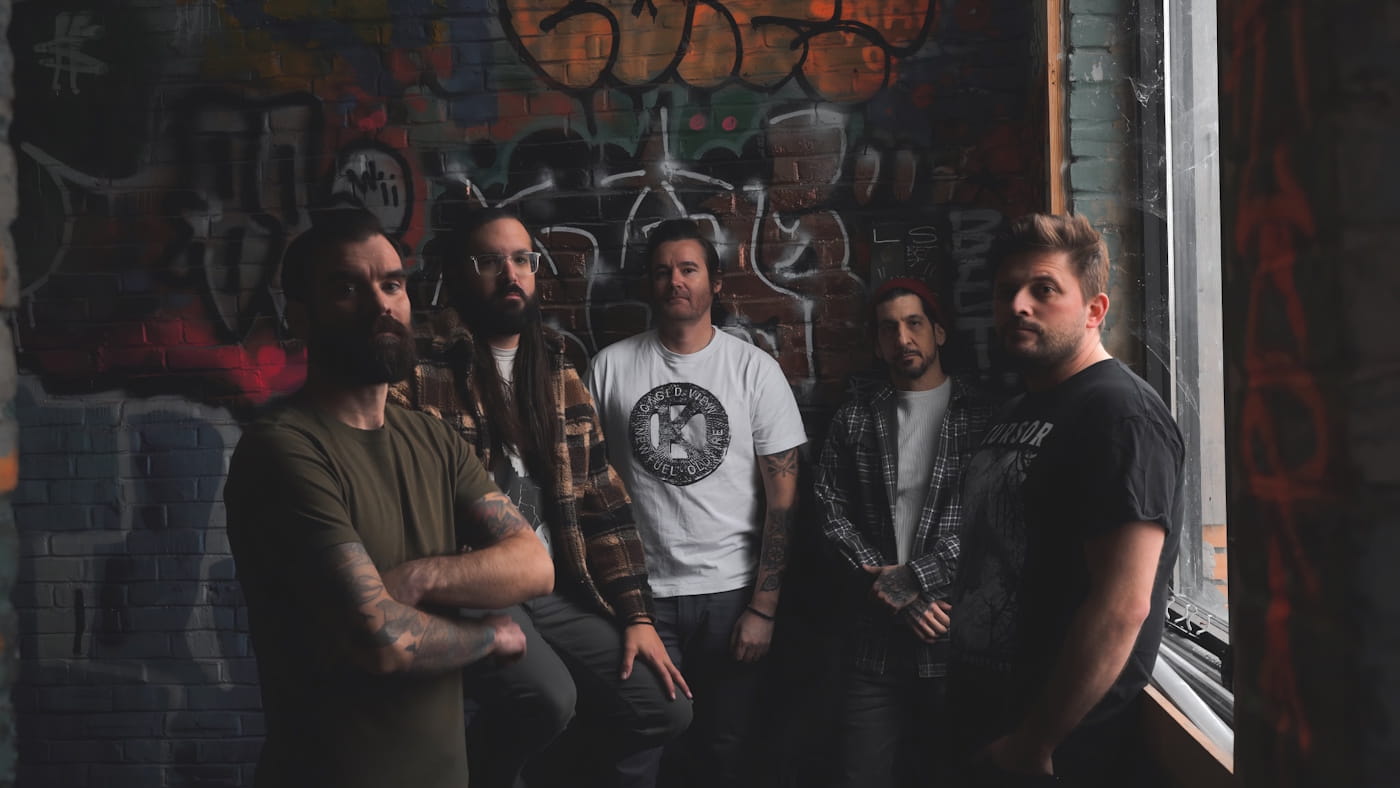


There’s a specific weight to French screamo when it’s done right—when it channels something beyond performance, when the chaos feels necessary rather than decorative. “Le sang des pierres” carries that weight. It’s the kind of record that brought back the emotions we felt listening to Sed Non Satiata and Daïtro for the first time, around twenty years ago. And I don’t mean nostalgia, but recognition. This is one of our favorite moods in European post-hardcore and screamo – the kind that doesn’t just sound heavy, but feels like it was pulled from somewhere real.
Gros Enfant Mort, a band from Poitiers rooted in French screamo and post-hardcore traditions, released their new album on January 23rd via Moment of Collapse Records. But “Le sang des pierres” wasn’t planned as an album. It started as notes on a phone—sentences, images, obsessive thoughts written without filter during a period of complete collapse.
“I found myself in survival mode, professionally, socially and philosophically lost,” explains the band’s songwriter, Alexis. “During this period, I wrote constantly on my phone. Like a journal. I told myself it might eventually become songs, but at the time I was incapable of composing—among the symptoms were memory loss and great difficulty projecting myself or structuring anything.”
When those notes were reread later, something became clear: they were already telling a story, almost chronologically. “The album was already there, implicitly. All that remained was to give it a musical form, to compose soundtracks for these notes.”
The result is documentation. Where their 2022 album “La banalité du mal” dissected everyday cruelty, “Le sang des pierres” turns inward—but never treats depression as a personal flaw. Instead, it positions psychological suffering as a symptom of conditions that produce exhaustion, shame, and isolation on a massive scale.
Opening track “Cloué au sol” speaks about a diffuse sense of guilt—”that of not being able to find meaning or joy in life while others seem to manage, either by ignoring reality or driven by some mysterious force.” The perception of reality becomes distorted, always oriented toward the worst possible scenario. The world feels crushing, and the only imaginable escape is flight, disappearing. But immobility wins. Pinned to the ground, as the title suggests.
“Saigne! Saigne! Saigne!” was born from suffocation in the face of social norms and the rejection of being reduced to a simple economic function. “The suffering here goes far beyond my personal case. It is collective, linked to class struggle, social domination and the crushing of gender minorities by a reactionary wave that demands conformity.”
With “Château de cartes,” the focus shifts to the end of a relationship of almost ten years. “I wanted to write this track as a tribute to those moments, without denying the suffering and without erasing the value of what existed. Some houses of cards deserve to have been built, even if they were not meant to last.”
Then comes “3114,” the darkest point. A period when the brain seemed to function in slow motion, when simple gestures became impossible and memory slipped away. “I also speak about the exhaustion of having tried to restart my life too many times and having left all my energy there. The lights at the end of the tunnel became mirages.” The number in the title becomes almost the last barrier between dark thoughts and asking for help.
“Étranger à la terre” rejects injunctions to resilience entirely. “I reject the idea that depression should be a trial one necessarily emerges from stronger. That narrative is guilt inducing for those who do not manage to do so.” After so many shipwrecks, there’s no feeling of strength—just a growing sense of being foreign to the world, drifting away.
“Paillasson 4ever” starts from hyper-adaptation—wanting to match what others expected to the point of no longer knowing how to set boundaries. While psychiatric explanations like self-diagnosis of autism or ADHD offer some framework, the track questions their ability to liberate when they lock the individual into an identity that individualizes the problem. “At the core, the question remains existential: is it the human condition or a sick brain, and what does that change about loneliness.”
“L’art de perdre” speaks about conscious abandonment of everything society transmitted in a violent way—trying to unlearn racist, sexist, and classist affects. “Having seen enough of the world means understanding that every group creates its scapegoats and lets others die on the sidewalks. Learning to lose, for me, is losing this deadly inheritance, refusing revenge and refusing to reproduce internalized violence.”
“Merci les cendres” marks a turning point—the beginning of feeling positive emotions again after stepping outside the environment that was detrimental. “When you have nothing left to lose, paradoxically there is everything to gain. It is this feeling of freedom that I pay tribute to.” But that freedom requires revolt and politicization of the traps we’re sometimes raised into.
The closing track “Le sang des pierres” draws a parallel between depression and parched land, awakened by the smell of the first drops of rain after a long storm. It responds directly to “3114” and the obsessive search for a light at the end of the tunnel. “Today, I see that light as a dangerous illusion. It was not its absence that destroyed me, but its relentless pursuit. The answer is to accept uncertainty, to inhabit the tunnel and to find a form of joy and freedom there.”
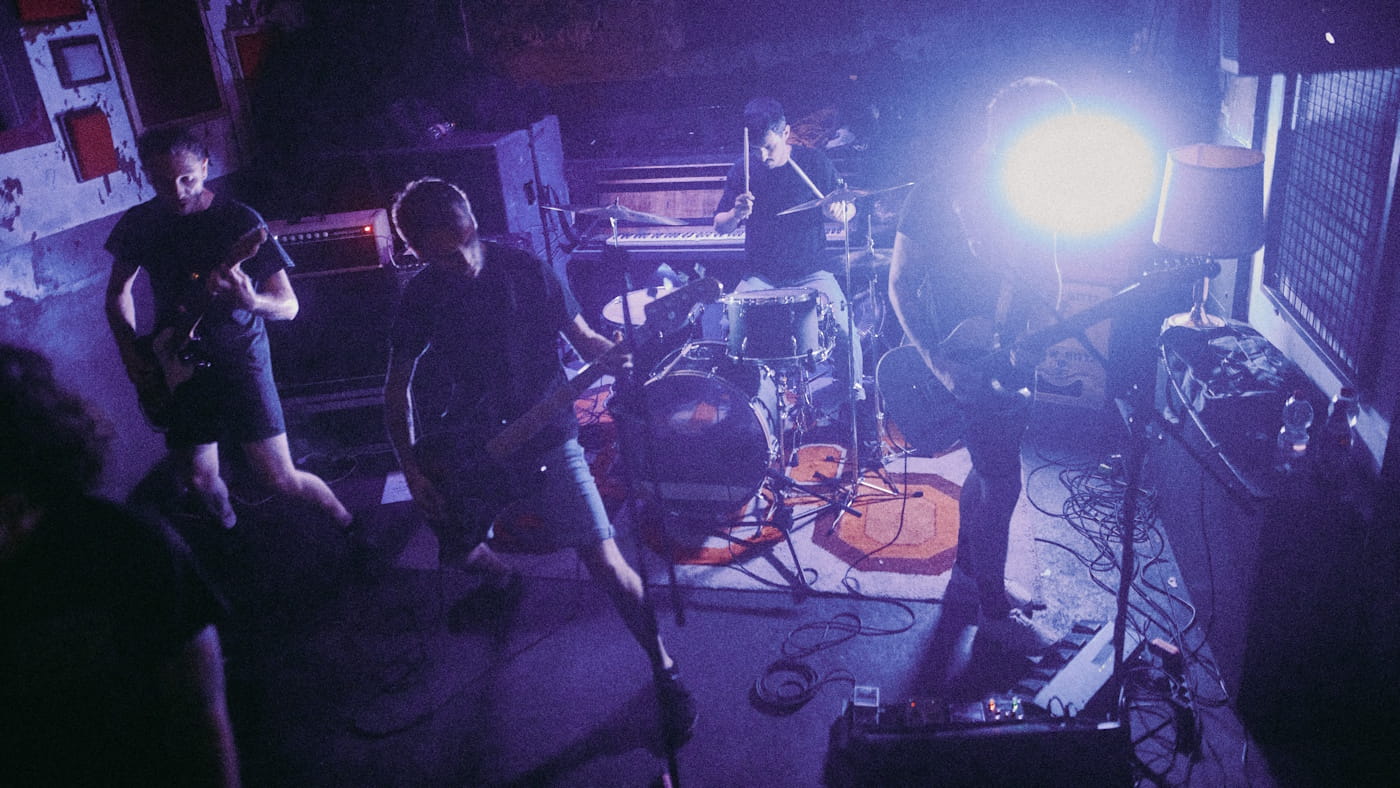
Musically, the album hits harder than anything Gros Enfant Mort have done before. Guitars slash through walls of noise, drums hammer like a trapped heartbeat, while fleeting melodic fragments flicker through the ruins. It’s chaotic, but never directionless—a precise portrait of collapse and resistance intertwined. Dense, raw, relentless. Just the way you’d want it in this specific niche of post hardcore. You can literally feel it being ripped straight from the chest—emotion that flows with a force that’s devastating, gut-wrenching, raw to the point of collapse.
View this post on Instagram
Recorded in April 2025 in Parthenay and Poitiers, engineered by Louis Bastide at Studio Stadie, mixed by Caryl Marolleau at Studio Safuzz, and mastered by Thibault Chaumont at Deviant Lab Studio.
Writing the album didn’t make the suffering disappear, but it changed the way it’s inhabited. “I learned not to let myself be completely submerged, to recognize what was paralyzing me and to find points of anchorage. Revolt became a way to survive—not a heroic posture, but a concrete gesture to avoid being locked in by dark thoughts.”
The band is clear about what they want listeners to take away: “Depression is far from being the only psychological disorder, but its scale says something about our time. When such a massive part of the population goes through states of shock, exhaustion or despair at some point, it becomes difficult to see it as a sum of individual failures.”
“I would like the album to leave the idea that psychological suffering is neither a moral fault nor an individual anomaly. That it is part of personal trajectories, but also of social and political frameworks that produce wear, shame and silence. This record is not an album about depression, it was written from within it.”
View this post on Instagram
If it can offer a direction—even fragile, even incomplete—to people as lost as they were, it will have found its meaning. And beyond that, it becomes one more stone in the construction of collective revolt, a reminder that suffering is not individual, and that refusing to be locked into it together is the only option for the years to come.
“Le sang des pierres” is out now on Moment of Collapse Records (Europe), Fireflies Fall (France), No Funeral Records (North America), and Spleencore Records (tape). The album is available on vinyl (standard and limited editions), CD, and digital formats.
View this post on Instagram