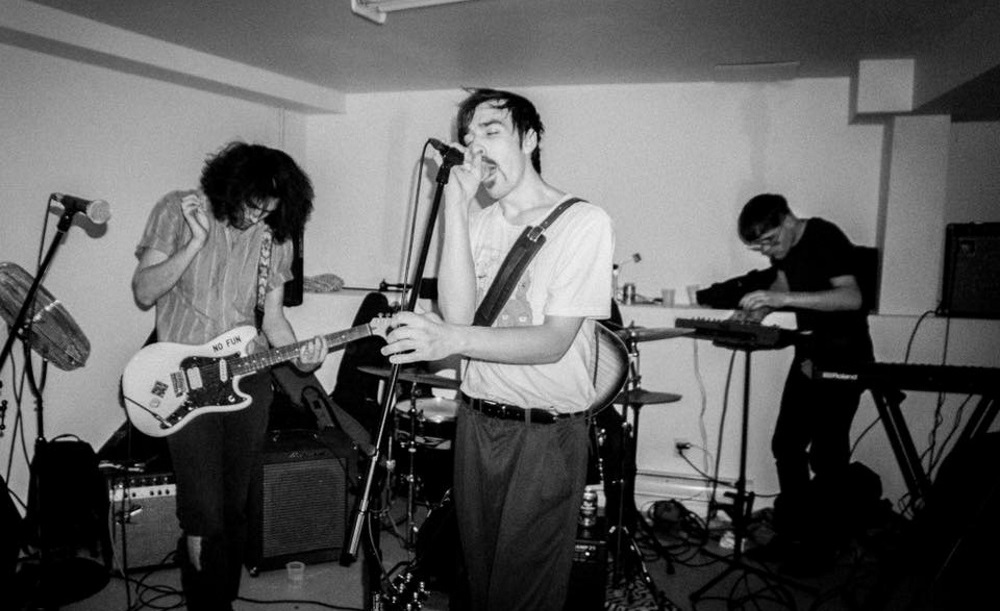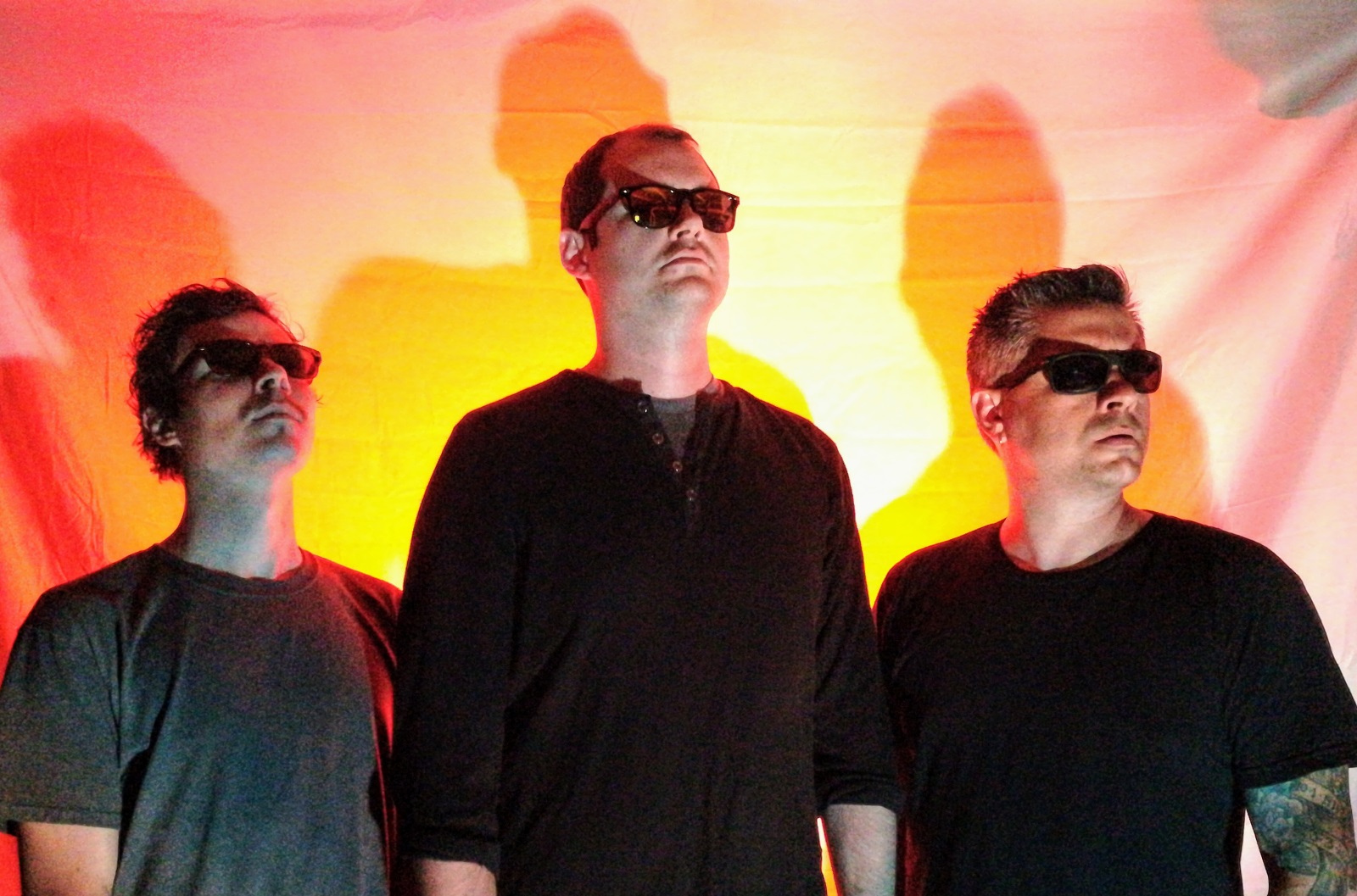

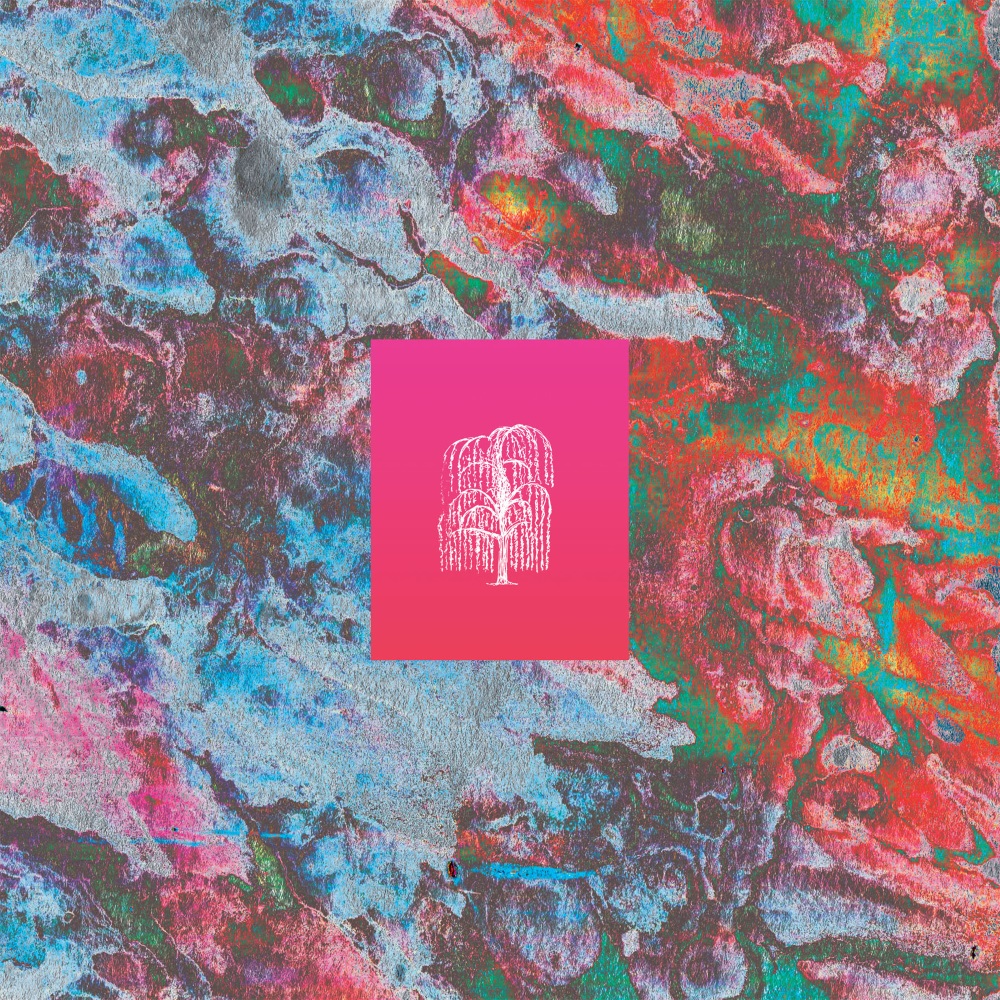
A little over two years since the release of their latest EP “The Way That We Ache“, Rochester, New York’s powerful, emotive post hardcore band DRUSE are back with a classy debut LP “Honey From The Rock”. Diving a little deeper into ambiance and indulging a bit more in the richness of non-obvious sounds, this passionately written record marks the dazzling culmination of DRUSE’s last four years of work, gathering up elements of everything they’ve done well and combining it with the mastery of their acclaimed peers and predecessors. We’re honored to give you the record’s premiere below, along with the insightful, in-depth commentary for each and every track.
With their unique take on the style of heavy, emotive, technical post-hardcore fleshed out in the late ’90s by bands like Botch and Frodus, Druse has spent the last three years carving out a place of their own in today’s fickle and ever-evolving heavy music community. With a handful of powerful and infectious EPs, and an indefatigable work ethic, Druse has proven themselves a force to be reckoned with.
This, their debut LP, takes their unique and powerful approach to this complicated genre to a whole new level. An experiment in personal and musical growth, Honey From The Rock finds these Rochester natives pushing the boundaries of the worlds they come from, and shaping a whole new one around them.
“Honey From The Rock” comes out Friday, July 13th on vinyl and digital, and can be pre-ordered now at Head2Wall Records online store.
Grace Period:
I believe these were the very first lyrics I wrote for this record. I had a pretty vague idea in mind for what I wanted “Honey From the Rock” to be about thematically right from when we first started writing the record. It’s a loose concept album about love, Jewish mysticism, psychedelics and grief. This song basically sets the stage for the whole thing’s narrative arc, so to speak. This is where we first meet the two characters we’ll be following for the next 10 songs and see the events that kick off everything that transpires.
As an isolated song, this one’s about eating fistfuls of drugs and committing homicide with your partner.
Last Days of the Syracuse, New York Astral Projection Cult:
I was listening to a lot of Coast to Coast (RIP Art Bell) and getting drunk all the time when I wrote this one – just generally behaving like a hapless, stubborn child and sinking pretty deep into a prison of my own self-destructive paranoia. It had been a month or two since I finished writing “Grace Period” and couldn’t figure out where to go next. I had a beginning, middle and end in mind for the album’s story but I couldn’t fill the cracks in-between. I had hit a wall almost immediately.
One night I was driving back home to Rochester from Syracuse after seeing a show and thought the whole city looked pretty eerie from the highway. There was this really unsettling fog everywhere and I felt like I was exiting some sort of bizarre temporal realm. I started thinking about how that city would be a fitting place for a cult obsessed with self-transcendence and astral projection to exist – in this little pocket of rust belt civilization surrounded by perpetually frozen wilderness.
I got home at one in the morning, sat down and wrote the whole song. I’ll let people draw their own conclusions on this one. Rory Van Grol sings on it too and did an amazing job.
The Alphabet
The title of this song is taken from the poem of the same name by Karl Shapiro. I wrote this song when I first started really diving into Jewish mysticism after a few illuminating conversations with my partner’s father. He mailed me a copy of “Honey from the Rock” by Lawrence Kushner (which is the direct inspiration for this album’s title), and I’ve been pouring over it to this day. It’s led me down a path that’s been marked with endless discovery, both internally and through the works of others.
Karl Shapiro’s poem, which I discovered on some cold afternoon while digging through books of Jewish poetry, inspired me to try and write something more meditative and chant-like. Our two characters are attempting to restore themselves in a brief moment of rest and clarity.
The “perch itself within my soul” line is inspired by the poem “Hope” by Emily Dickinson, which my mother had framed in our house growing up. The stanza that inspired it is:
“‘Hope’ is the thing with feathers –
That perches in the soul –
And sings the tune without the words –
And never stops – at all -”
“The Alphabet” is a song about being loved.
Echinacea:
Joe’s guitar on this one is so powerful to me. It still hits me in such a weird, mysterious way every time we play this song live. The whole song has this upward mobility to it that all kind of cascades outwards by the end. It’s the natural end to the promise of a song like “The Alphabet”, I think.
Narratively speaking, this is sort of a flashback for one of the characters that was dredged up from their unconscious mind by the journey taken in “The Alphabet”. It’s about the dichotomy of human loss and the natural world.
Sometimes you see a deceased loved one’s favorite flower in a neighborhood garden and remember they’re not there anymore. The world is in all things unknowable stillness and beauty.
Annalisa:
Annalisa is a song about the strength and persistence of Jewish love in an era where anti-semitism and Nazism are becoming new normals. In the narrative, however, here’s where we get a little perspective on what our two characters were doing the night before the final events in “Grace Period” and what some of their motivations might have been for carrying them out.
My partner inspired the “Ginger to settle, ginseng to balance” stanza because she’s introduced me to a whole world of naturalistic healing and holistic remedies that I once dismissed outright out of pure arrogance. Her unparalleled intelligence, love and belief in these systems made me discard whatever armor I was holding up and let something unfamiliar into my life.
Annalisa is a song about healing.
Red in Your Beard
This song is pretty heavy, lyrically, so I’ll start with a funny little anecdote: the working title for this one was “Sierra Nevada Celebration Ale” because, for whatever reason, the sound of the guitars at the begging made me picture the little snowy cabin on the beer’s label. I can’t really explain that one either, sorry. Still, that opening build up into the crashing syncopation that immediately follows it is one of my favorite things on the album.
Red in Your Beard is about being a caretaker for someone with a highly debilitating mental illness and watching them grow up. This is the former job of one of the two characters in the story of this record. I don’t want to dive to deeply on this one because I won’t be able to do its themes justice in a few sentences.
Together This Time
So, Together This Time is probably the easiest song to decipher lyrically on “Honey From the Rock” and it’s also my favorite song on the record. Thematically it’s another flashback to a happier (or at least more consistent) time in the two character’s lives. It’s about domestic love and sex and the kind of weathered, formidable bond that forms between two people who have loved each other for a long time.
Personally, all cards on the table, it’s a love song to my partner. It’s about never wanting to leave her in the morning, thinking about her and attempting to channel her energy on my work commute and feeling her inform all the positive decisions and changes I make in my life. It’s about working all the time and persevering through the foundation of your shared lives. The original title was “Love in the Time of Wage Slavery”
I tried out a lot of singing on it because I didn’t want her to think I was just screaming at her, because that would be pretty scary.
Bamboo
I believe these were the last lyrics that I wrote for “Honey From the Rock”. Watching Joe, Joel and Ryan play this song at practice is remarkable because that ending is so cacophonous but has to be so precise to work at all.
In the wake of the loss found in “Quiet and Slowly”, one of the characters has sunk back into a deep depression and is reliving some of the more traumatic aspects of his early life.
Quiet and Slowly, Blue of My Heart
This song brings us back to the present in the story of “Honey From the Rock”. A friend and loved one of the two characters has died, and as we’ll see in the next song, the grief that overtakes the both of them has caused them to drift apart even after all they’ve been through together.
The title of this song is taken from the movie “Blue” by Derek Jarman, the world’s greatest filmmaker and a man who I find infinitely fascinating and reaffirming. His work is so empathetic, considerate and humanely powerful. Whenever I hit a roadblock in my writing for this record I turned to him for inspiration. Read his book “Derek Jarman’s Garden” too. Remarkable stuff.
Also, the line “you can sing me anything” is lifted from “The Book of Love” by The Magnetic Fields, which is one of the best songs ever.
Yom Kippur
I was taking a good amount of LSD and reading a few books on Kabbalah over and over when I wrote these lyrics. I kept having these trips where when I would walk over grass I could vividly see myself hovering over miles of treetops, but then when I looked back up I was back on earth. There were a few times where I would close my eyes and get this staggeringly clear vision of my partner and I fasting for Yom Kippur a few years ago, sitting by the water and walking to the library together.
I would come down from trips, get stoned, read all night and go to work in the morning. It was a rich and rewarding time in my life but I wanted to write about and experience like it from the perspective of the character in “Bamboo”, who’s just been blindsided by loss. They’re returning to the faith and drug use they shared positively with the other character back in “The Alphabet” and attempting to reach that same plane of clarity.
Through to the End
This song mirrors “Grace Period” in a few different ways. First of all, the title is taken from the aforementioned song’s line “Made through my will, through to the end” which is the tattoo that the two characters give each other. Secondly, musically the ending of the song is a mirror image of the very first riff in “Grace Period”, but with slightly more of an uplifting, optimistic spin.
We’re at the funeral of the loved one who passed away in “Quiet and Slowly”, and the character from the past two songs has sunk into a fairly dark place. He’s fucked up and miserable and writes the other character’s name in the guest book as a depraved sort of joke, assuming that she won’t show up. She does, however, and the narrative arc of the record completes itself while entering something of a perpetual feedback loop.
Their refrain is “endless”. The cycle will continue until a force strong enough puts a stop to it. But nothing ever truly ends. They both know this.
The will perseveres and the wheel turns on, through to the end.