

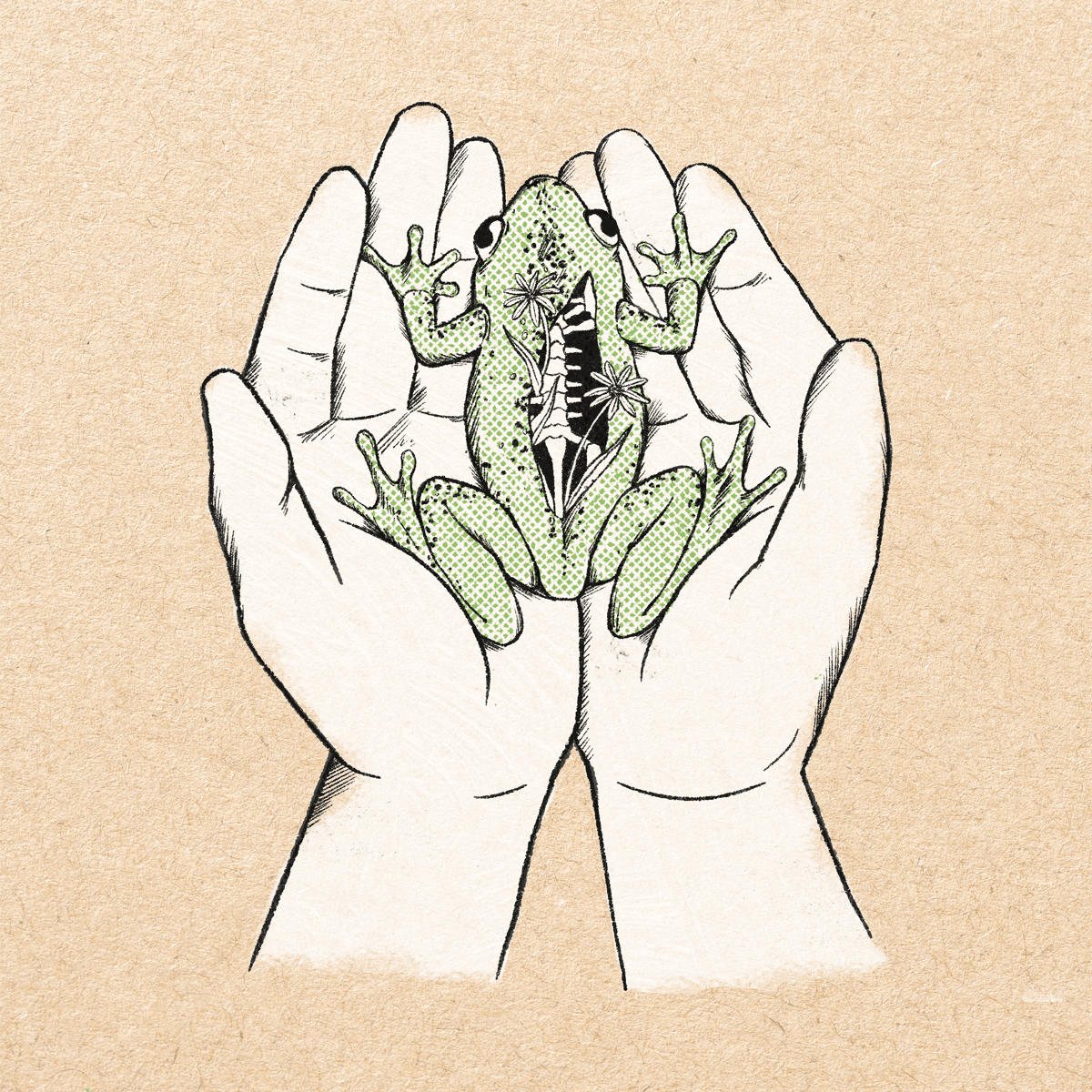
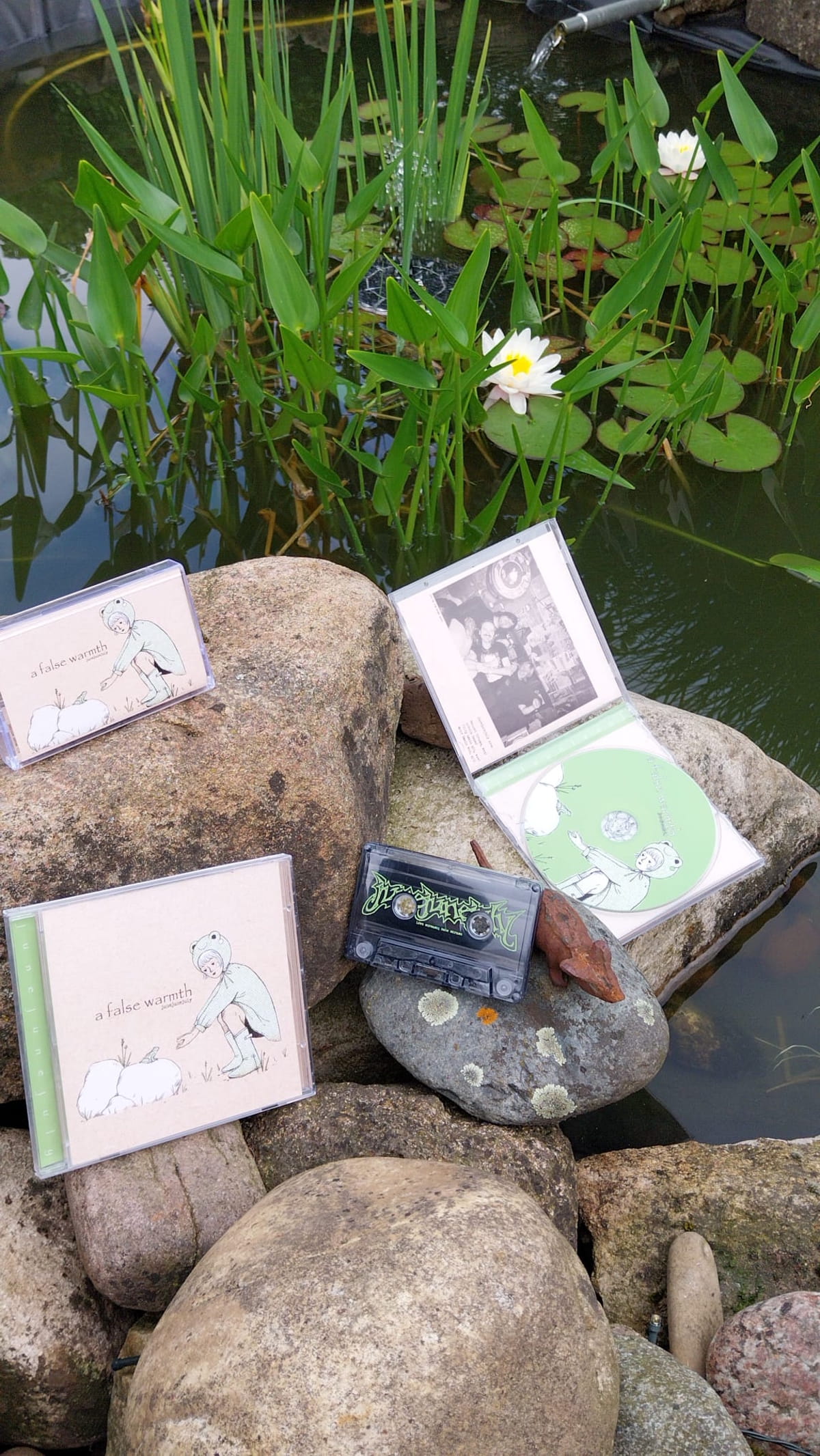
On the back cover of “a false warmth“, a child holds a frog. The frog has been split open and stuffed with flowers. Julia Leister drew it in the style of nineteenth-century woodcuts, the kind of soft pencil work that wouldn’t look out of place in a Pixi children’s book. The image is the title doing its job: something gentle holding something gutted, and the warmth is the lie.
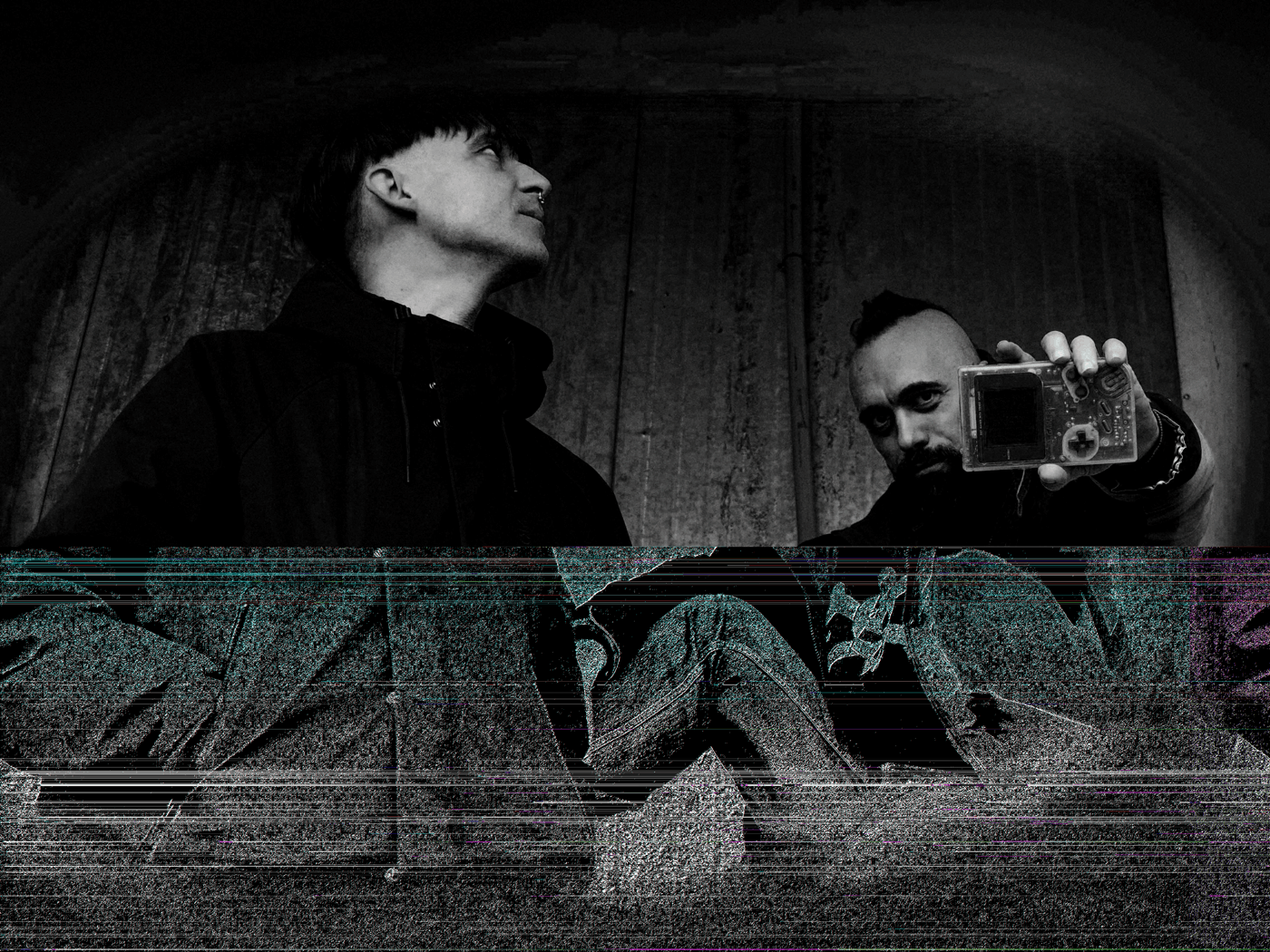
junejunejuly are a four-piece from Herford, in the East Westphalia region of west Germany. They call themselves jjj for short. The five-song debut came out June 12, simultaneously on five DIY labels: Self Versed Records (USA), Fragile Records (UK), Villus Records (China), BSDJ Label (Japan), and Gizzmoix Records, the EU imprint vocalist Maximilian “Maxx” Schulz runs out of the same town the band practices in.
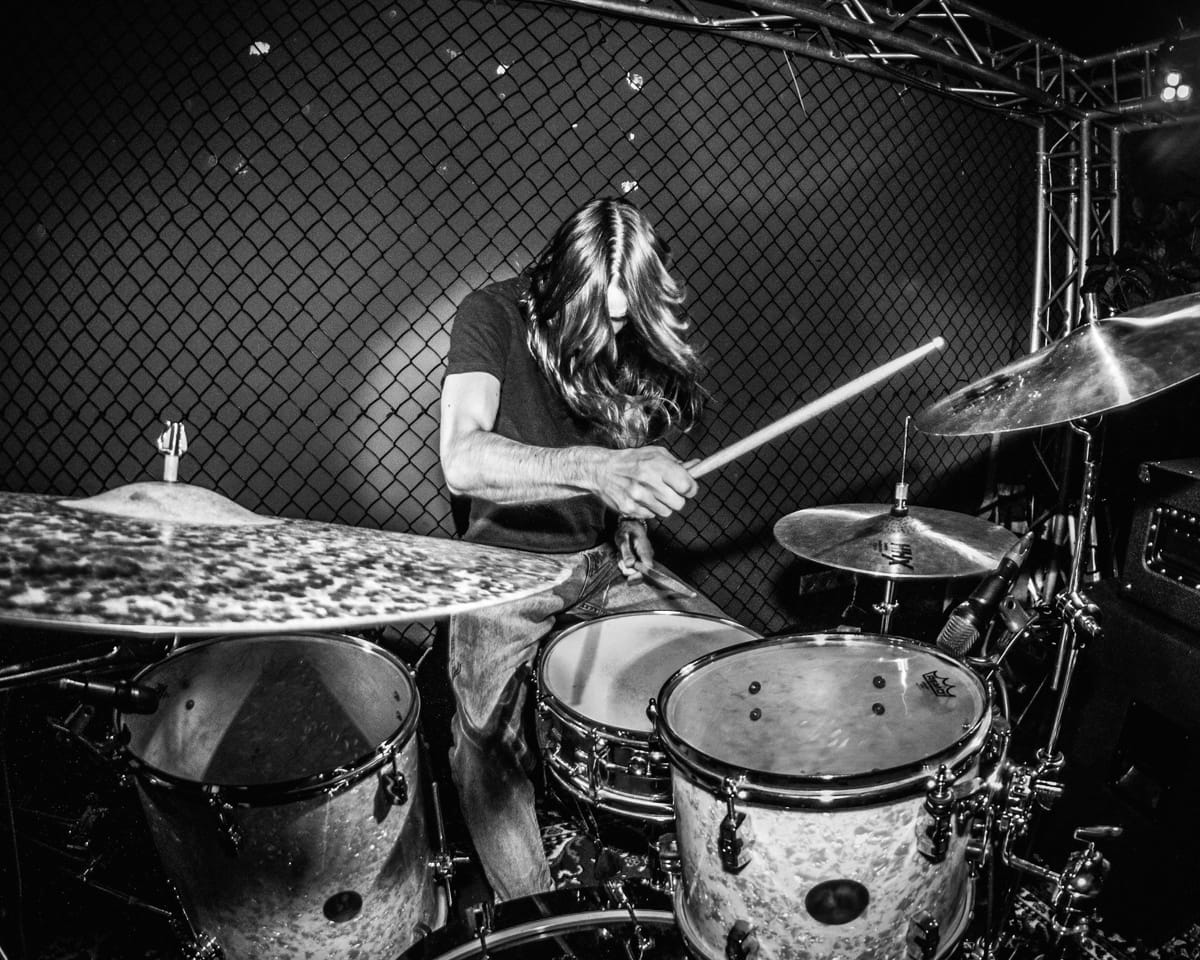
Drummer Bennet Fuchs recorded, mixed and mastered the whole thing. The tracklist runs “spit out your heart”, “romance dawn”, “relief! relief! (it was a lonely breath)”, “raincoats”, and the title track. Most songs do without a chorus.
The band started, as most do here, at FLAFLA, the self-governed DIY social centre in Herford. Filip Grbovic, who plays guitar and shares vocals with Schulz, met Schulz at his first FLAFLA show, the night Blue Limerance played.
He kept coming back. Over months of “Flacore” and “Flaternative” nights, the two talked themselves around a band idea without ever getting to a rehearsal. The night Commuted played FLAFLA, Schulz pointed at a drummer he half-remembered and told Filip to go talk to “Simon.” The drummer’s name was Bennet Fuchs.
“I’m terrible with names, but I think that awkward mix-up ended up breaking the ice between all of us,” Schulz says.
Filip walked over anyway. “I’m not usually the type to just walk up to strangers, but I did it anyway. That’s how Bennet and I struck up a conversation, and he was just as excited about the idea of starting an emo band as I was.”
Two or three weeks later, they met at Bennet’s place. “Spit out your heart” came together that same evening. The whole EP would eventually take shape across roughly five writing sessions, and Schulz, who plays guitar in the band, doesn’t play it well. He says the comments on his playing during those sessions were brutal. Filip puts the early days with the kind of self-deprecation the EP is full of: “I was glad to have someone like Bennet by my side, because it was the first time I’d played with a drummer who could not only execute my ideas but actually take them to the next level. From that moment on, I knew I had to step up my game and put more time into practicing. I didn’t even realize I was holding the pick wrong for the first 12 years.”
Bennet had been making emo and screamo songs alone in his bedroom for years, under the name kirrahe. He didn’t think Herford had a place where that kind of music lived. Schulz found him through a comment Bennet had left under a tour post by the band YAAMC. “I knew I wanted to make emo/screamo music for a long time, but I did not know anything about how to join a scene or even just find people, who were into the same kind of music,” Bennet says. He brought a different approach to the writing sessions than the others were used to: “From all my years of playing in bands I was kinda fed up with jamming on a half-finished riff for an hour or watching two guys trying out each others instruments. I wanted to write new music in a structured and effective way.” He says he was frustrated at first. Then the band found a working rhythm and got productive fast. He also played his first ever solo kirrahe show earlier this year, which he says he’s still grateful for.
Schulz was coming out of a relationship the EP keeps returning to. His fiancée had eloped with a guy from her dancing class. He was newly co-parenting his daughter every other week. “I didn’t want to spend those weeks lying in bed feeling sorry for myself, so starting a band felt like a good way to channel all that energy into something positive.”
The four of them bonded over Lego Bionicles.
Wyświetl ten post na Instagramie
The original lineup had Klemens on bass. He played one show, then vanished for half a year. Filip’s cousin Nikola Koutoukas filled in for a weekend of dates on what was supposed to be temporary terms. He learned the songs on a Monday, rehearsed Wednesday, played three shows, and that was that. He’d been mostly producing beats for the better part of a decade and hadn’t played in front of people in ten years. “I was pretty nervous because it had been about ten years since I’d last played in front of people, but I quickly realized how much I had missed being on stage with Filip, like in the good old days.” The band asked him to stay in a Burger King parking lot.
FLAFLA is Germany’s oldest self-governed DIY social centre.
It is also the place where every member of junejunejuly first realized they were going to spend their twenties doing this. Filip’s whole friend group came out of the room. Bennet only walked through the door last year, and credits it with a wider personal shift: “Starting to realize that I can actually change the path of my life by just taking one step towards the things I wish for, leaving my comfort zone and being a little brave sometimes.” Nikola found it late, after a long stretch of bigger concerts and no DIY connection at all. He says he’d be sad if it closed mainly because other people wouldn’t get to experience what he experienced there.
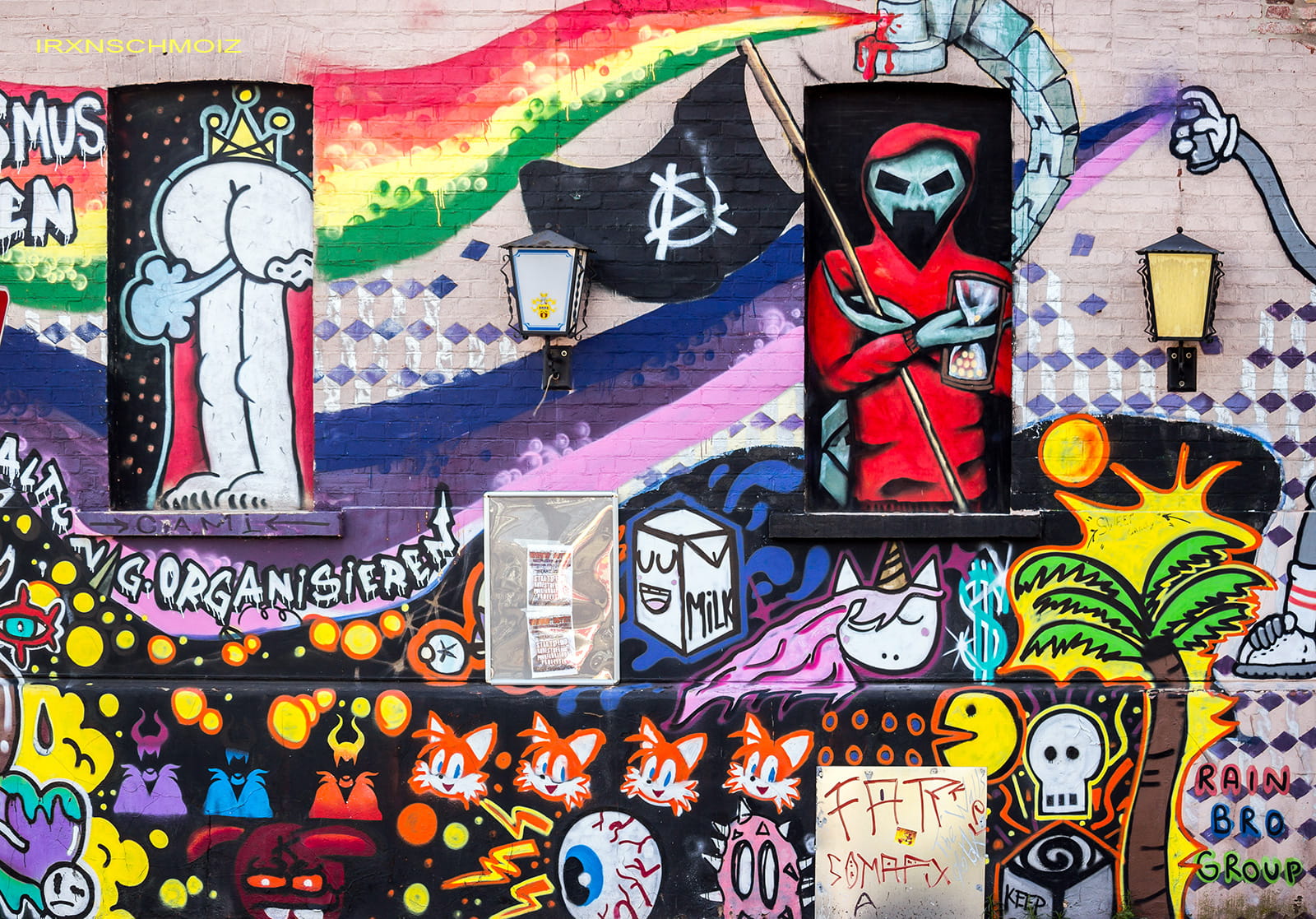
Schulz has the longest history with it. He found the building when he was sixteen, riding the bus home from high school. He noticed an old former brothel covered in graffiti, googled “brothel graffiti Herford,” landed on the FLAFLA site, and went to a street punk show that night.
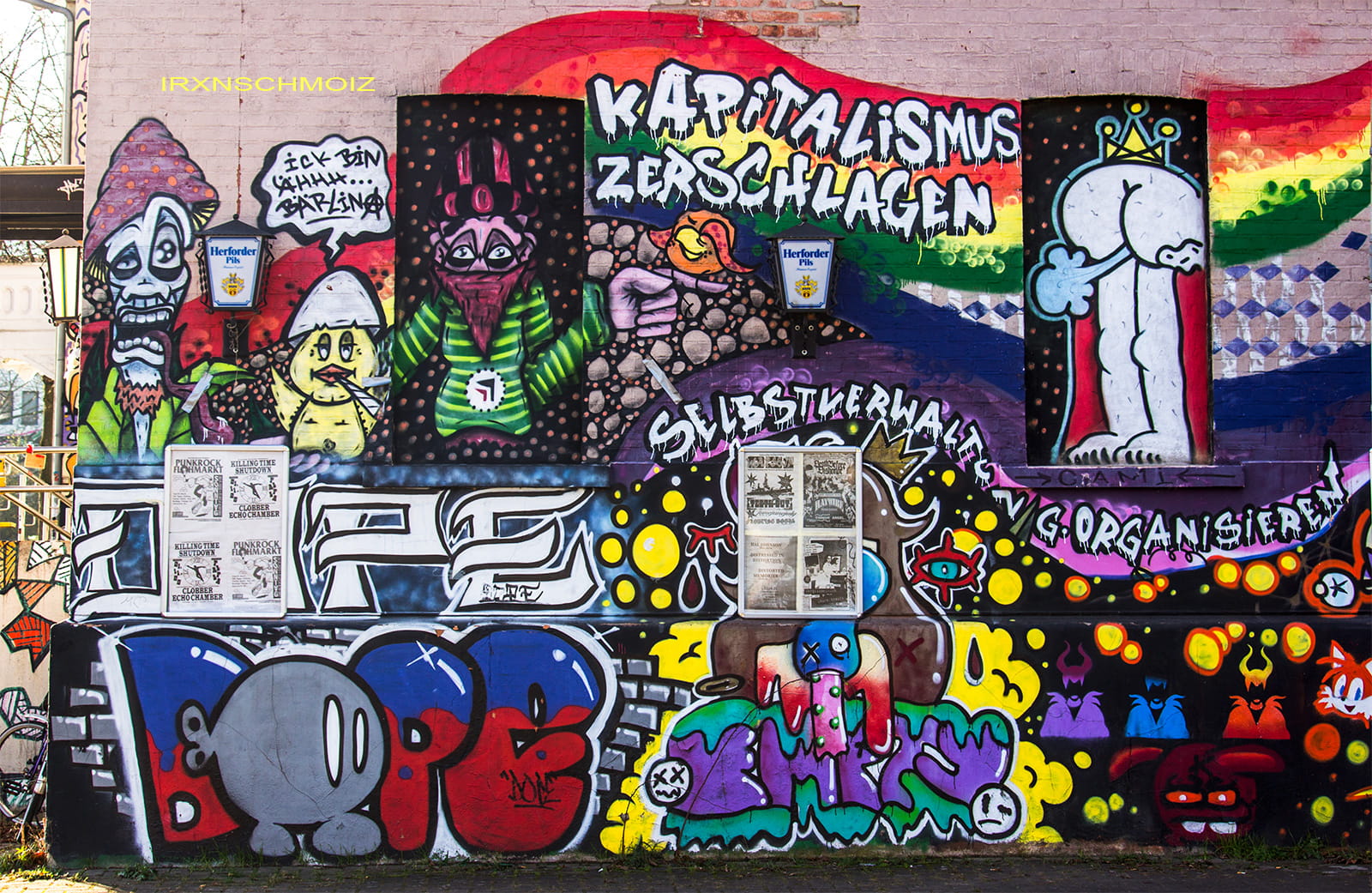
For a few years he was a regular guest, drinking heavily and listening to mostly terrible music. Then Covid hit and FLAFLA almost died. When things reopened, maybe four people were still active. No guests, no shows. So Schulz booked one. Six people came. He didn’t stop. Together with his brother and some friends he started Flacore Booking, which has put on ninety-nine hardcore shows out of FLAFLA so far. The hundredth will be a festival in July.
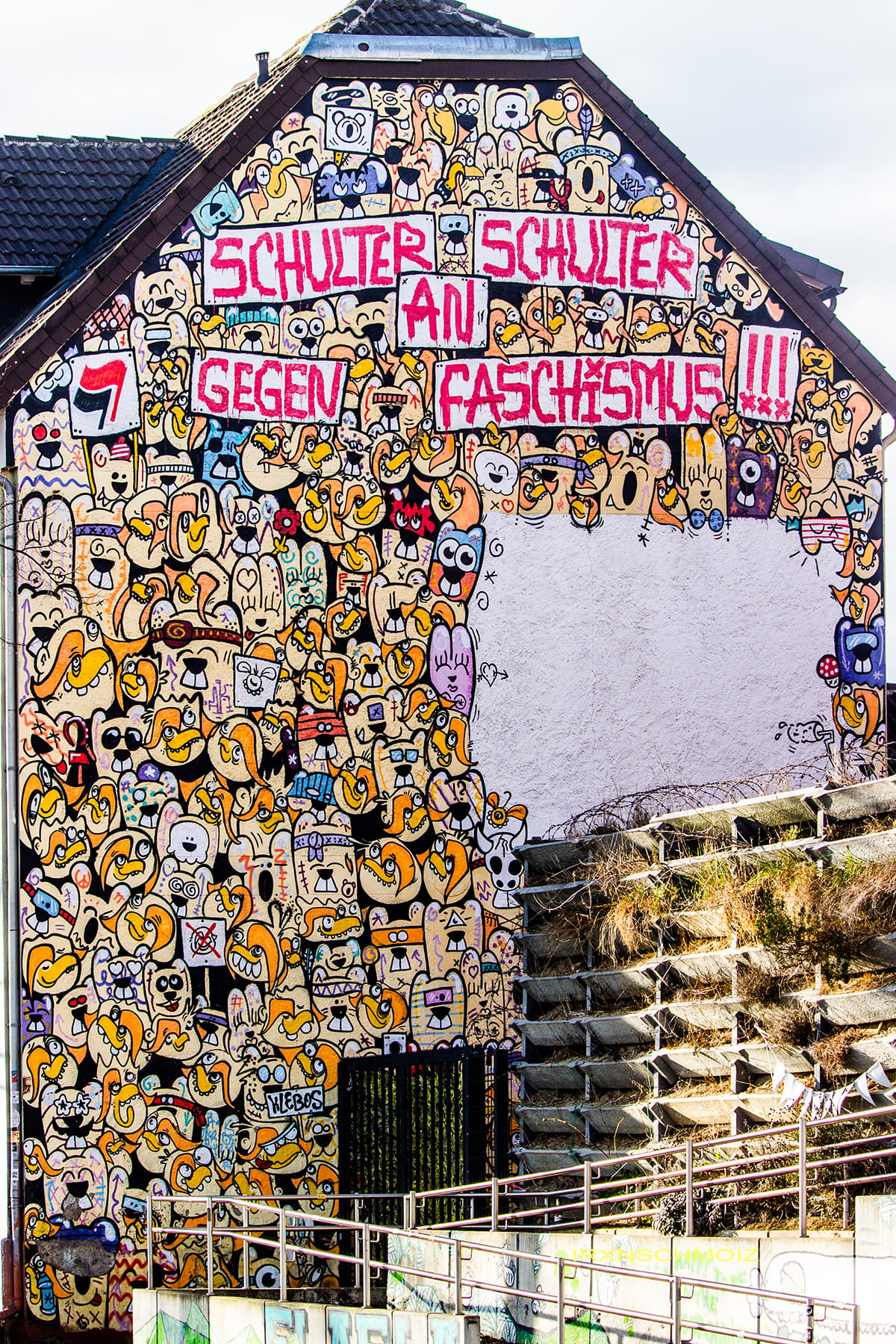
“FLAFLA gave me the freedom to try things, make mistakes, and build something of my own,” Schulz says. “FLAFLA gave me friendships, opportunities, and a sense of purpose. I’d hate to imagine a future where other kids don’t get to grow up with a place like that.” Herford is now called Hardcore Hauptstadt, the hardcore capital, by people in the German scene. Seven different promoters work out of the same small-town DIY venue. Most weeks see one to three shows.
Schulz wrote his bachelor thesis on the youth-centre movement this region produced. The short version: after World War II, a generation grew up in a country that wouldn’t talk about what their parents and grandparents had done. The oil crisis, mass unemployment, housing collapse, and rapid urbanisation hit at the same time as a wave of teenagers who felt politically unrepresented. They occupied empty buildings. A lot of what those occupations turned into is still standing: DIY venues, women’s shelters, social centres, autonomous youth clubs. FLAFLA is one of the oldest still operating in roughly the spirit it started with. It has been forced to relocate around eleven times.
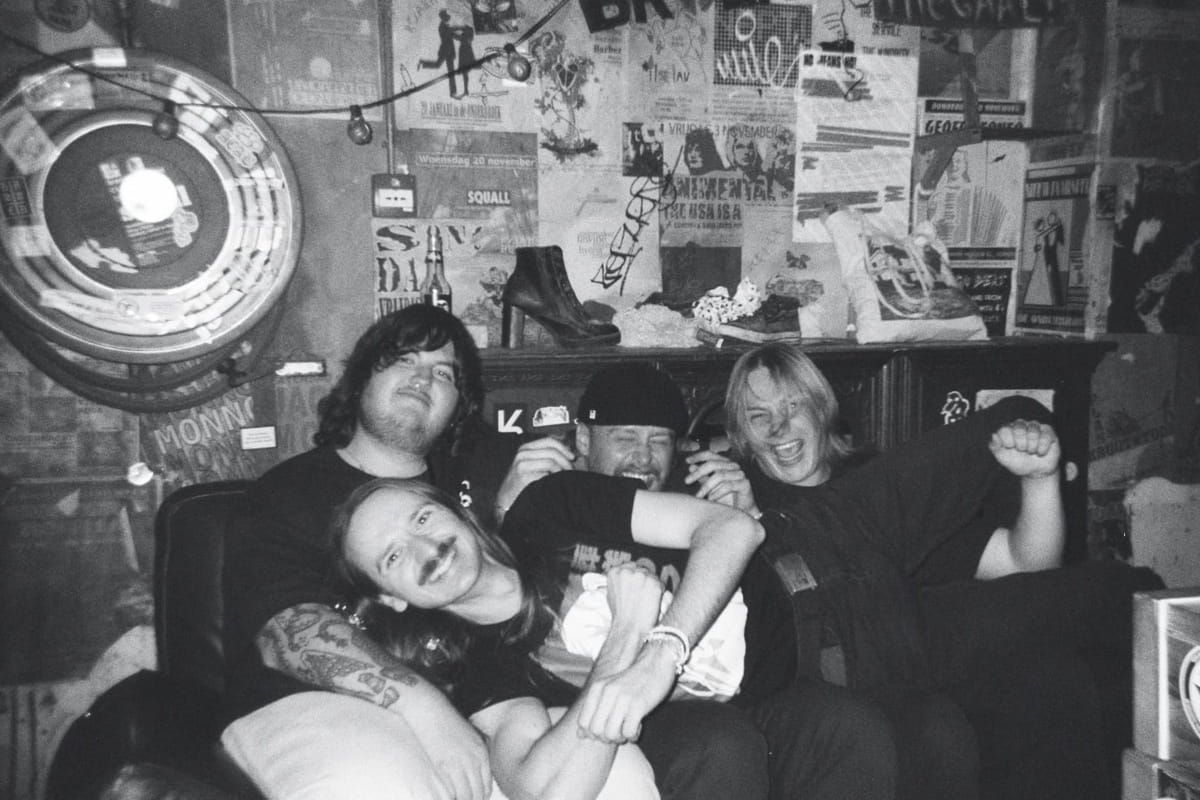
The British Army of the Rhine had its headquarters in Herford, which is why British punk hit this part of Germany before it reached most of the major cities. The A-Heads are one of the early examples. The region’s other surviving spaces sit on the same timeline: Kamp Bielefeld, AJZ Bielefeld (the venue many mainland European hardcore and emo bands still describe as where their scene started), KNUP Oerlinghausen, and FLAFLA Herford. “Every time a right-wing local government gets elected, people get nervous,” Schulz says. Bielefeld itself has shifted into more crust and grind these days. Herford is the emo and hardcore one.
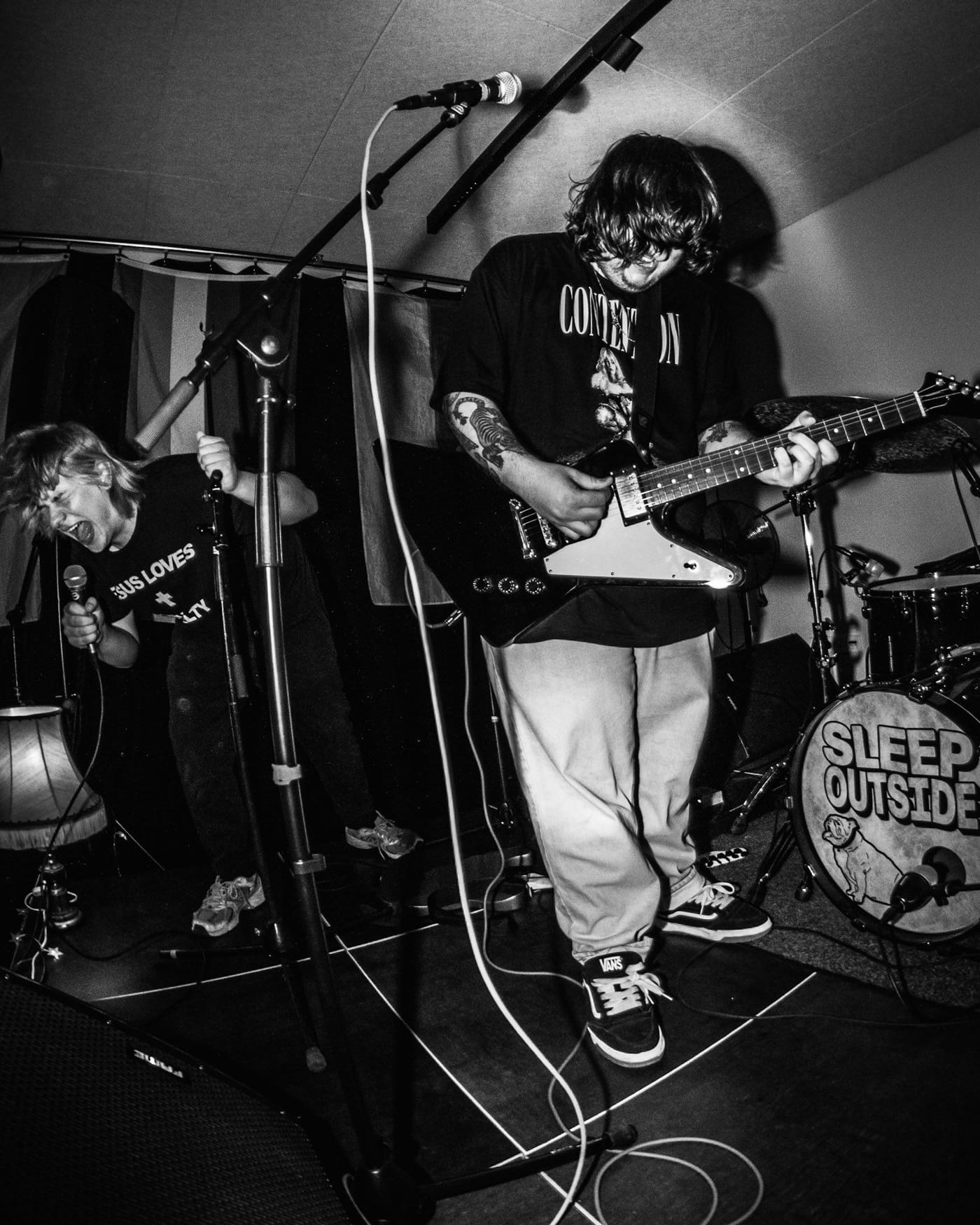
“a false warmth” is mostly about toxic relationships, transience, and being let down. Sometimes sad, often angry. Schulz handles most of the lyrics on this record, and the opening and closing tracks (“spit out your heart” and the title track) are the only two he says are directly about specific people and events in his life. He’d rather leave it at that. He’ll also admit that the writing process is not particularly precious to him: he has sung complete gibberish live before lyrics existed, and let random sounds gradually congeal into phrases and ideas.
Filip writes the other lyrics with more code. “If you read the lyrics to ‘romance dawn’ or ‘raincoats’, for example, you would never guess what the song is actually about. That is exactly how I like it and that is how I often interpreted the lyrics of my favorite bands, and to this day, I still don’t know what many of my favorite songwrites originally had in mind. Sometimes you have to earn it yourself.” Nikola, who’s written one song that isn’t public yet, writes more plainly. He says he uses it as an outlet to work through things. Bennet doesn’t always know what either of them are writing about. He focuses on the performance: “During our shows I feel like we are connected in our mutual expression of our individual emotions, if that makes any sense at all.”
The spoken word section on “romance dawn” was lifted from a piece called “erleuchte mich” by Leonard Ritter, also known as paniq. Schulz pinned the credit in the Bandcamp notes as “stolen shamelessly.” Filip says it plainer: “For us, writing and performing music is a longing for liberation. That is why every movement on stage is a reaction of the whole self. We don’t let loose because we can, but because we have to.”
Julia Leister, who illustrated the cover, studied communication design with Schulz at university. She lives in France now and has illustrated for Pixi, one of the best-known children’s-book publishers in Germany. She tends toward woodcuts, engravings, and copper prints, the nineteenth-century stuff Schulz has always loved. The frog on the cover is Filip’s fault. “Filip likes frogs,” Schulz says. “He wears green all the time.” The cardboard background was a choice for “maximum emo authenticity.” Schulz did the layout and colouring himself.
The five-label rollout sounds elaborate on paper and isn’t really. Schulz has been running Gizzmoix Records long enough to know most of the people who run small DIY labels in the same orbit. There is an Instagram group chat with around thirty of them sharing packaging tips, talking about new releases, and shitposting. He puts those labels in the same category as the bands they release: part of, or product of, what he calls the 5th wave emo movement. For “a false warmth” he sent everyone the artwork and told them to do whatever they wanted with it. Each label presses however many copies they think they can sell. “I’m a big believer in the Daniel Johnston approach: ‘Hi, how are you?'”
The whole release came out on CD and tape, no vinyl. Schulz’s call. He doesn’t even like CDs. “When I started Gizzmoix, CDs were basically dead,” he says. “I honestly don’t know exactly when it happened, but emo has such a young audience that once vinyl prices started getting ridiculous, kids naturally gravitated back toward CDs. They’re cheap, they’re easy to collect, and you can find a CD player for almost nothing.” His theory is that every scene picks its format: Beatles fans want vinyl, powerviolence punks want tapes, emo kids are buying CDs again. He’s seen fourteen-year-olds picking them up at his table. Gizzmoix is purely a hobby. Any money that comes in goes back into the next release. He doesn’t pay himself.
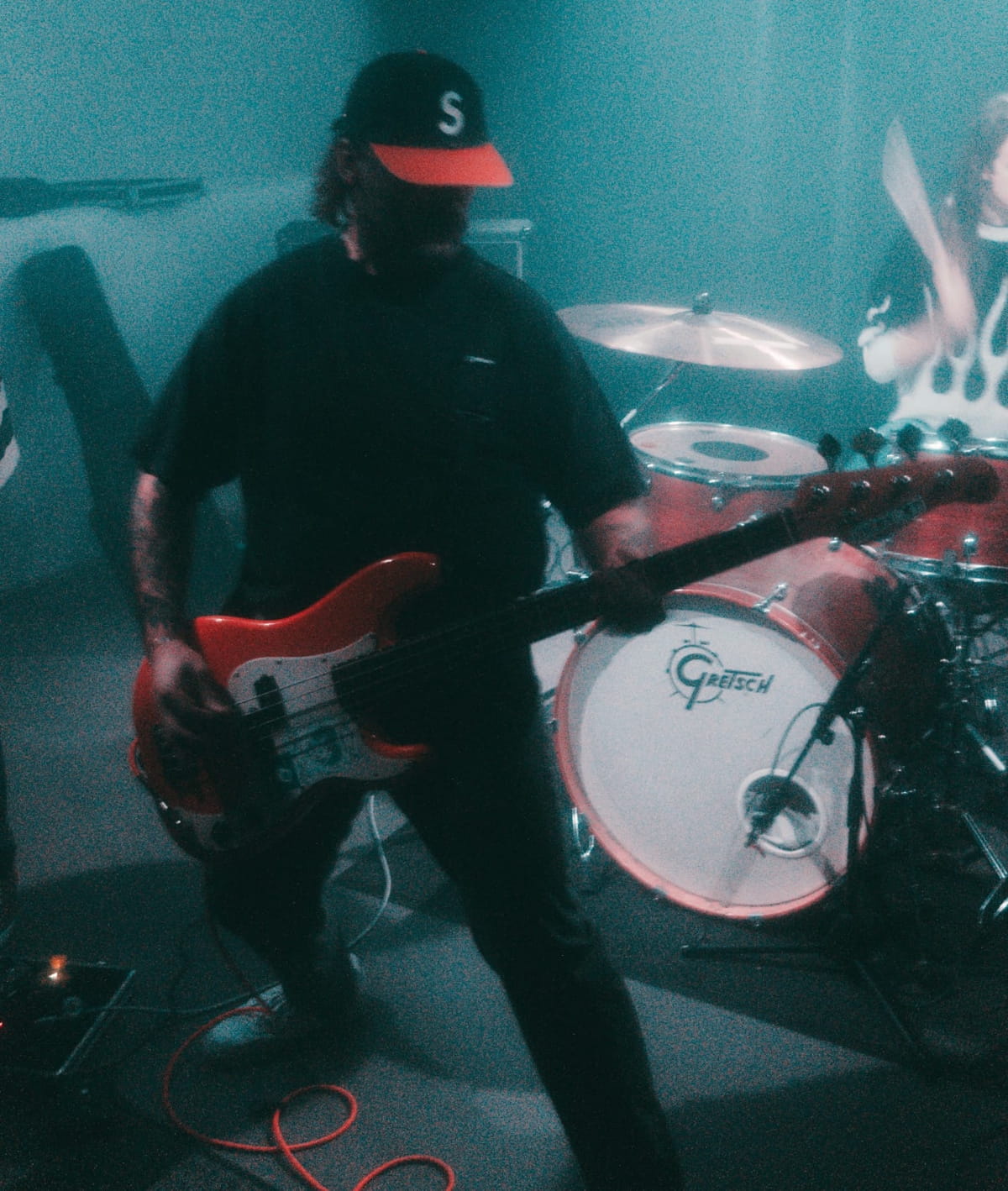
Outside junejunejuly, everyone in the band is in at least one other project. Filip plays bass in the hardcore band Price2Pay and recently started a straight edge band with Schulz’s younger brother called x no right to judge x. Nikola plays bass in the Bielefeld emoviolence band Floating Woods. Bennet drums in the stoner-rock band ROVAR, which he says has more Turnstile in it lately than anything from the stoner scene proper. Nikola and Filip have also started a separate emotional metalcore band called Cherubim, with Floating Woods’ drummer and guitarist plus the guitarist’s wife on vocals. Schulz is currently rounding up people for a straight edge project he wants to call EDGExSHEERAN.
Bennet is blunt about Rovar: “I never considered myself as part of the stoner scene at any point. Neither musically nor ideologically.” Rovar’s early sound was three people from different musical directions jamming, and they ended up booked onto a lot of stoner lineups and festivals more or less by accident. junejunejuly is the emo band Bennet says he always dreamt about having in his teens and early twenties.
Filip and Nikola had a band together in high school, a pop-punk one Filip describes as locked to the standard intro/verse/chorus/verse/bridge structure. His playing and singing have both completely changed since then. junejunejuly mostly skips choruses. He still listens to pop-punk every day. Nikola spent the years between making beats and not singing in front of anyone. “My singing back then was honestly pretty terrible.” He took two things away from that band: a habit of imitating bass players he liked, which he’s mostly out of, and a firm rule that he is never playing another band contest for the rest of his life.
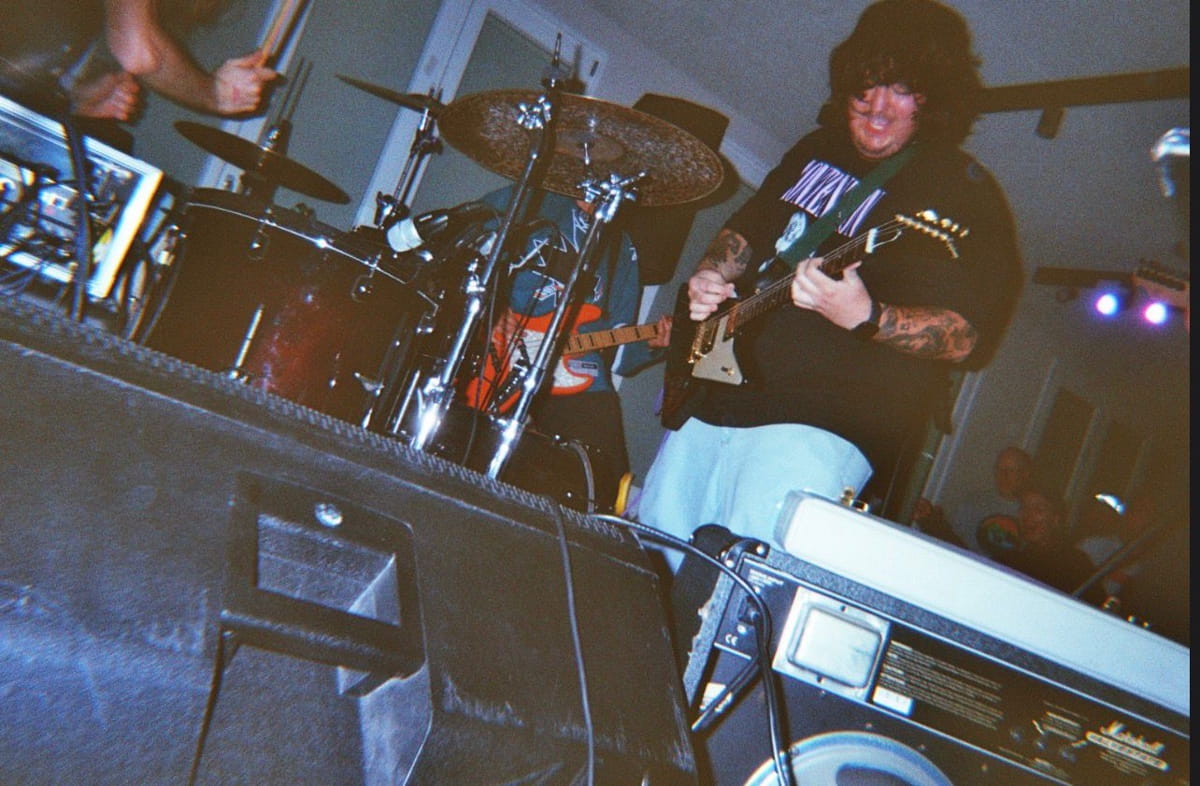
The German screamo scene Schulz keeps recommending has been quiet for a while and is loud again. He credits the hardcore promoters who started booking emo shows, or putting them on mixed bills, for letting the new wave find an audience. East Germany in particular has been producing bands at a clip: pennwood rd, i practice saying sorry so i can …, older friends, zhne, only, jota. He’d add Floating Woods, Medikinet, and Piteous to anyone’s list. The older German emo-adjacent generation, Turbostaat, Düsenjäger, Elmariachi, mostly never identified as emo. They saw themselves as punk first. Schulz thinks it’s a shame. He’d like to see one of those bands on a mixed bill with the new one.
Filip doesn’t see junejunejuly as a pure screamo band either. “We basically play a mix of emo, screamo, pop-punk and hardcore.” He points to Blush from Hanover, HAVN and Floating Woods from Bielefeld, Never Yours from Nuremberg. He thinks the German emo, screamo, punk, and hardcore scene is in solid shape right now and doesn’t think bands like Turbostaat or El Mariachi have lost touch with it: it’s just a different audience, and he’s not sure how many bands hold a younger crowd after a twenty-five-year career without a TikTok hype. They were a huge influence on him anyway. Nikola has a more international list of touchstones: Raein from Italy, Mavro Gala from Greece, The Khayembii Communiqué from the US, Envy from Japan, and Floating Woods because, well, he plays bass in them now.
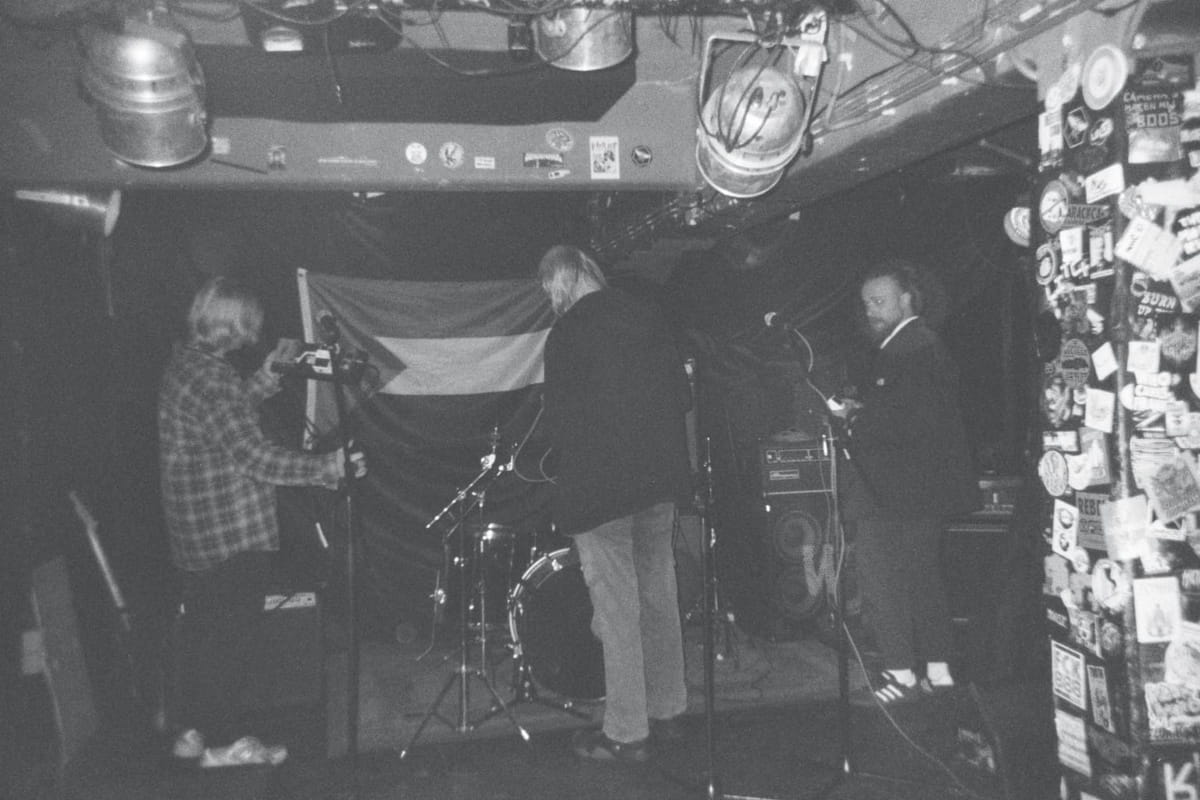
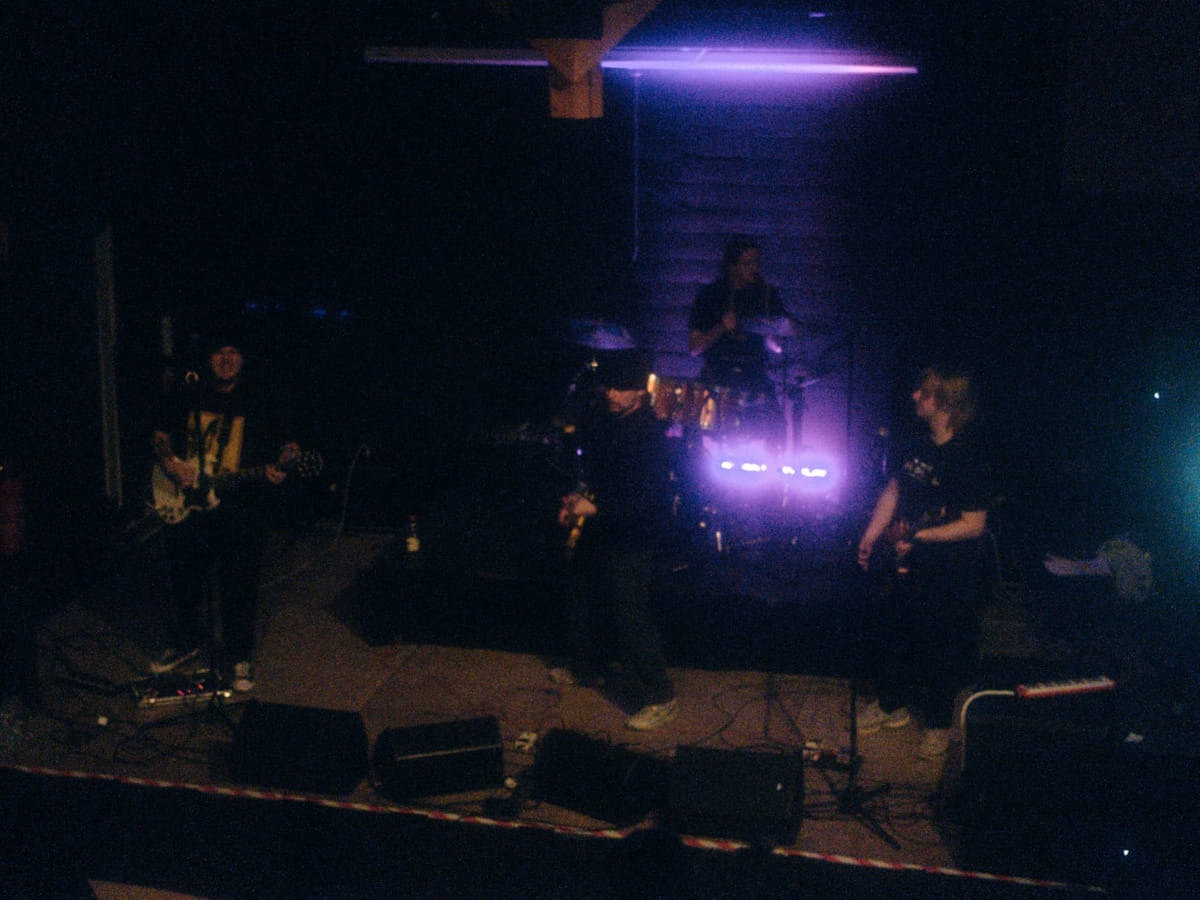
junejunejuly played close to twenty shows before “a false warmth” existed as a release. The release show was at FLAFLA on June 14, supporting February. A ten-day tour in October will take them through France, the Netherlands, Luxembourg, and Germany with i practice saying sorry so i can … and pennwood rd. “Honestly? A mix of knowing people and sending a ridiculous amount of emails,” Schulz says about how it came together.
His take on being in an independent band right now is plain. Don’t expect money. Be kind, show up to other people’s shows, get on flyers, become part of your local scene. DIY music is a hobby, not a profession. Filip more or less agrees: nearly twenty shows in two countries without an official release, because people gave them a chance. Nikola says he just wants to be on stage with his friends. The shared sentence between all three: you have to keep showing up.
The social media side is split. Schulz: “Instagram is basically what zines were in the ’90s. Where else are you going to hear about shows, discover new bands, or keep up with what’s happening in your scene?” Filip says Schulz is extremely good at it, which is why ten or more people show up to the gigs, and adds that posting a flyer no longer does the work it used to. Nikola is mostly a passive user but understands what the algorithm rewards. Bennet has the most jaded read, after burning out trying to make Instagram work for Rovar: “if you want to do social media, it has to be in a way that feels true to yourself not only as an artist, but also as a person. Something you would share anyway.”
The credits on “a false warmth” run long. Reingeblitzt. i’m home here tapes. Speedbump. Teeth Out. Sonnenwende. 32elephants. Floating Woods. anb nord. pennwood rd. i practice saying sorry… Sleep Outside. Flacore. Hattivatit. Distressed in Distortion. Mayapapaya. Emotional Support. Good Boys. Hilly Weird. Vadim. Friends and family. The same network the EP came out on. The 5th wave emo crowd Schulz keeps talking about. The full Herford weekly DIY rotation. The table where the CDs go at the end of every show.
The frog is on the back cover too. Closer up. Stuffed with flowers.
🔔 IDIOTEQ is ad-free, independent, and runs on one person’s time. If you want it to stay that way: DONATE via PayPal 𝗈𝗋 SUPPORT via Patreon.
Stay connected via Newsletter · Instagram · Facebook · X (Twitter) · Threads · Bluesky · Messenger · WhatsApp.