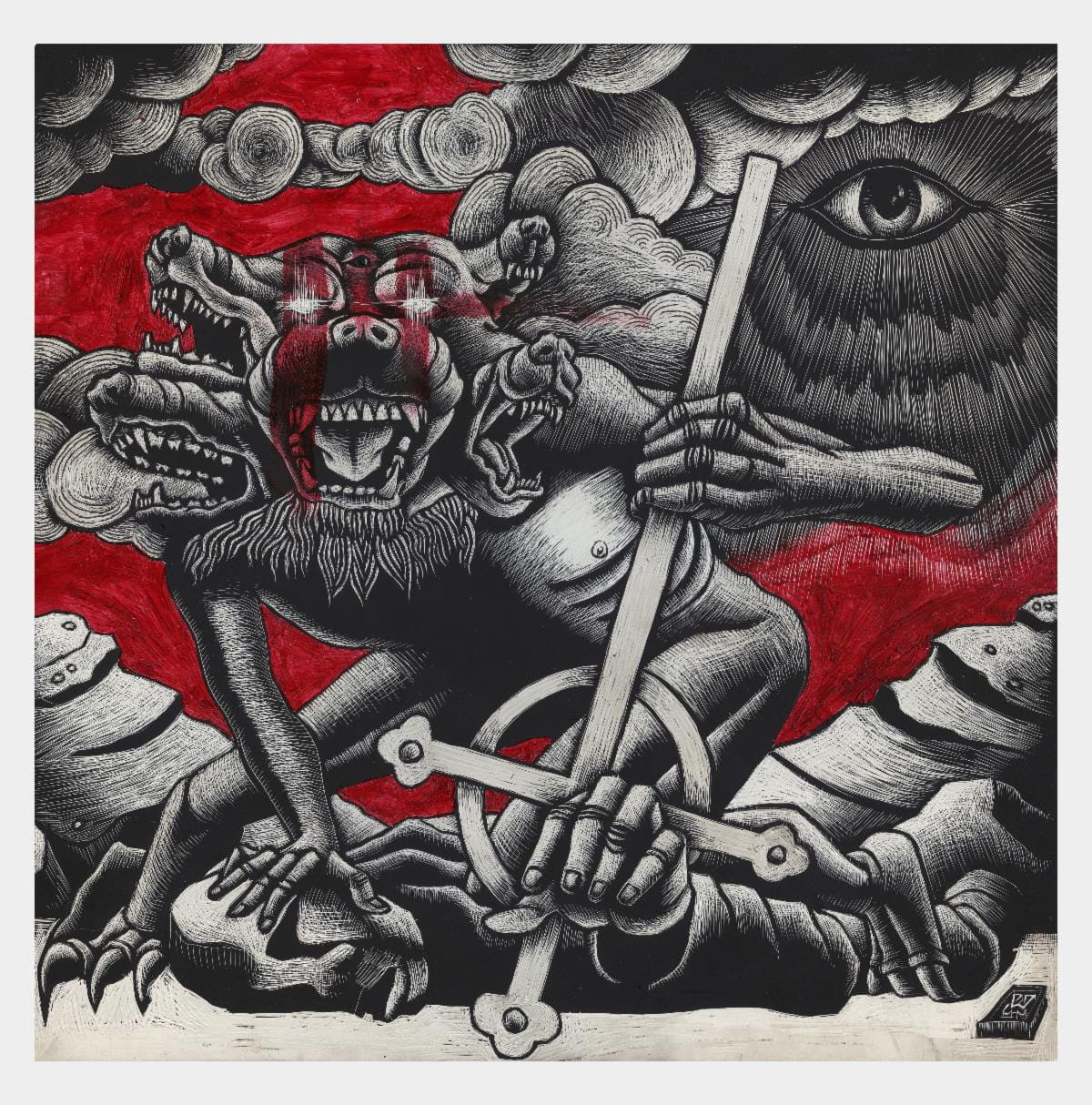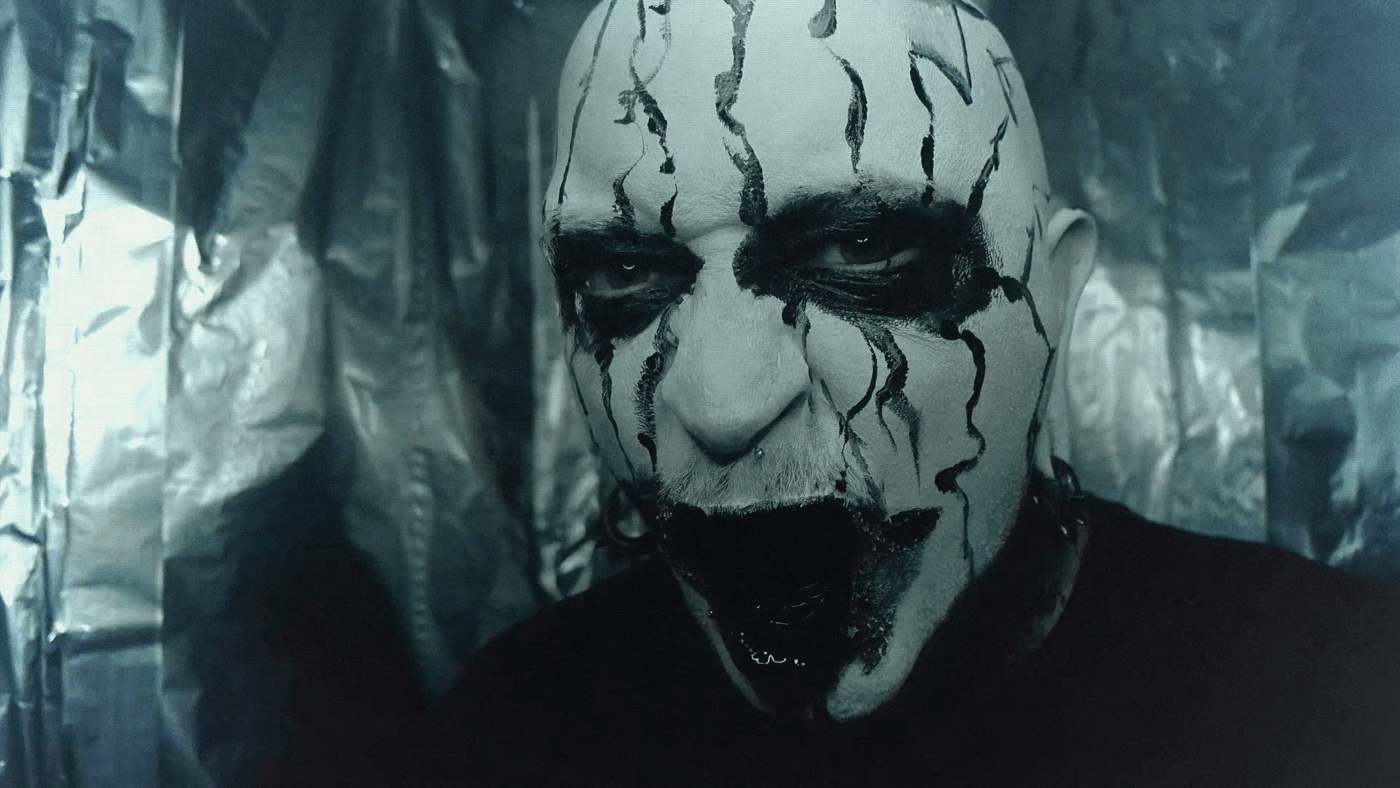


Antillectual are spending 2026 marking twenty-five years as a band. After anniversary shows in the Netherlands and Canada, their summer run reached Germany and Austria. Another European stretch will follow towards the end of the year, alongside the publication of a book collecting stories from their years on the road.
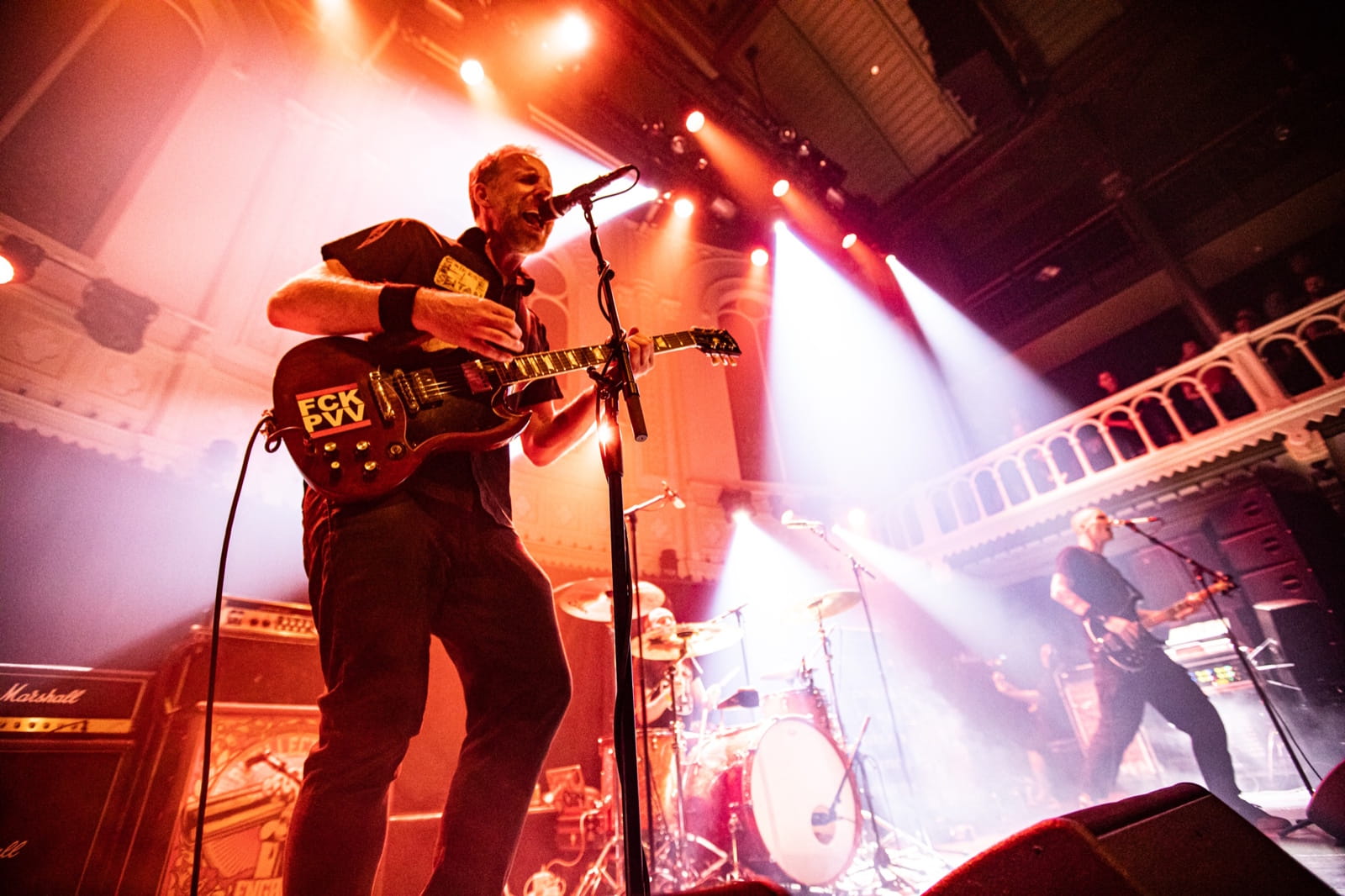
For IDIOTEQ, singer and guitarist Willem Heijmans kept notes during a July weekend at Juz Mannheim and Knrd Fest. Touring bands are usually seen through the visible part: the set, the crowd, the poster and the next city. Willem stays with everything that makes those moments possible, from seven hours in a van without air conditioning and equipment other bands are waiting for to local organisers, friendships maintained across years, damaged vocals, jobs and families at home, and the decision to keep returning. His report reads as a working account of how a punk band survives long enough to have an anniversary at all.
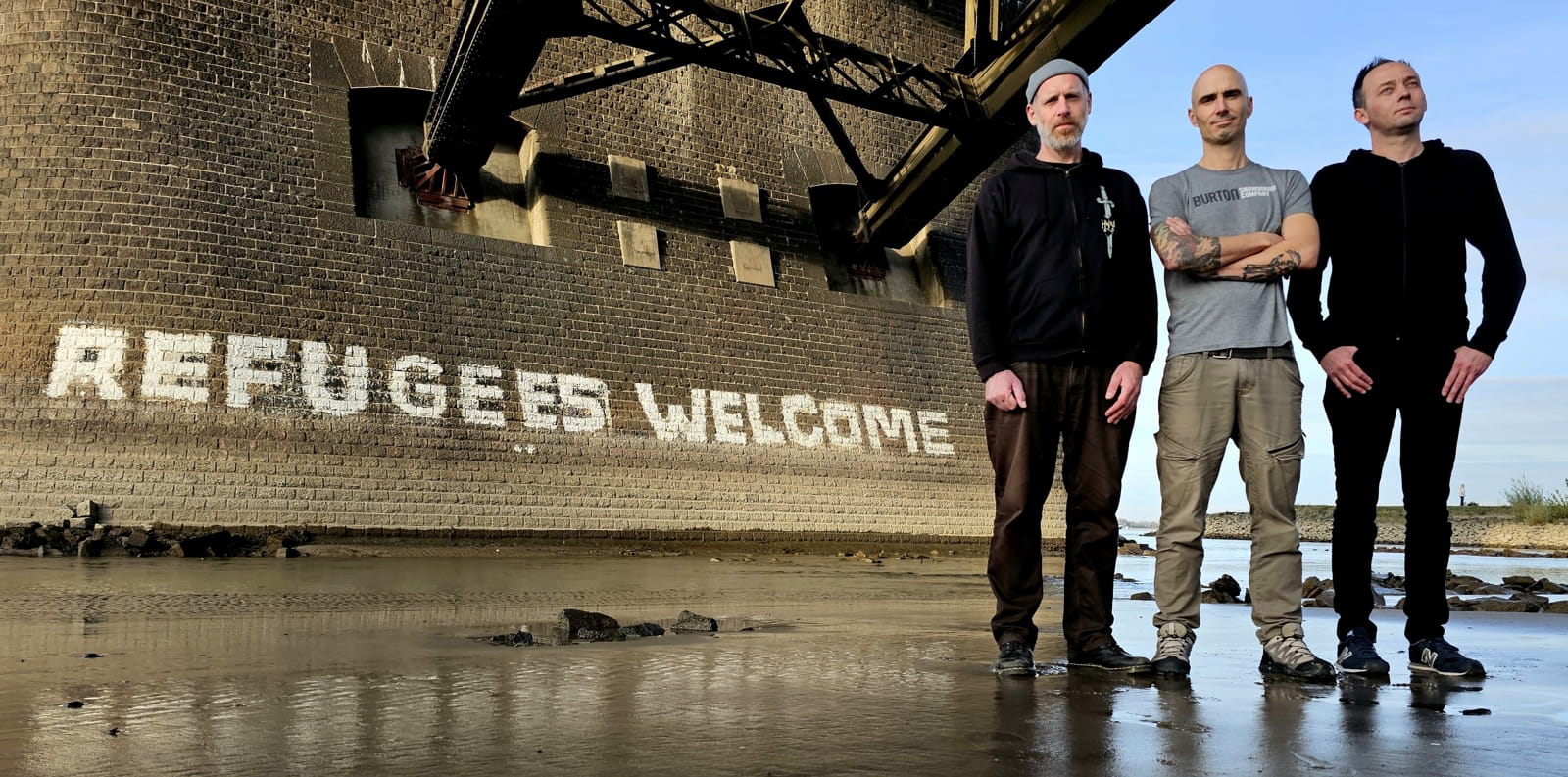
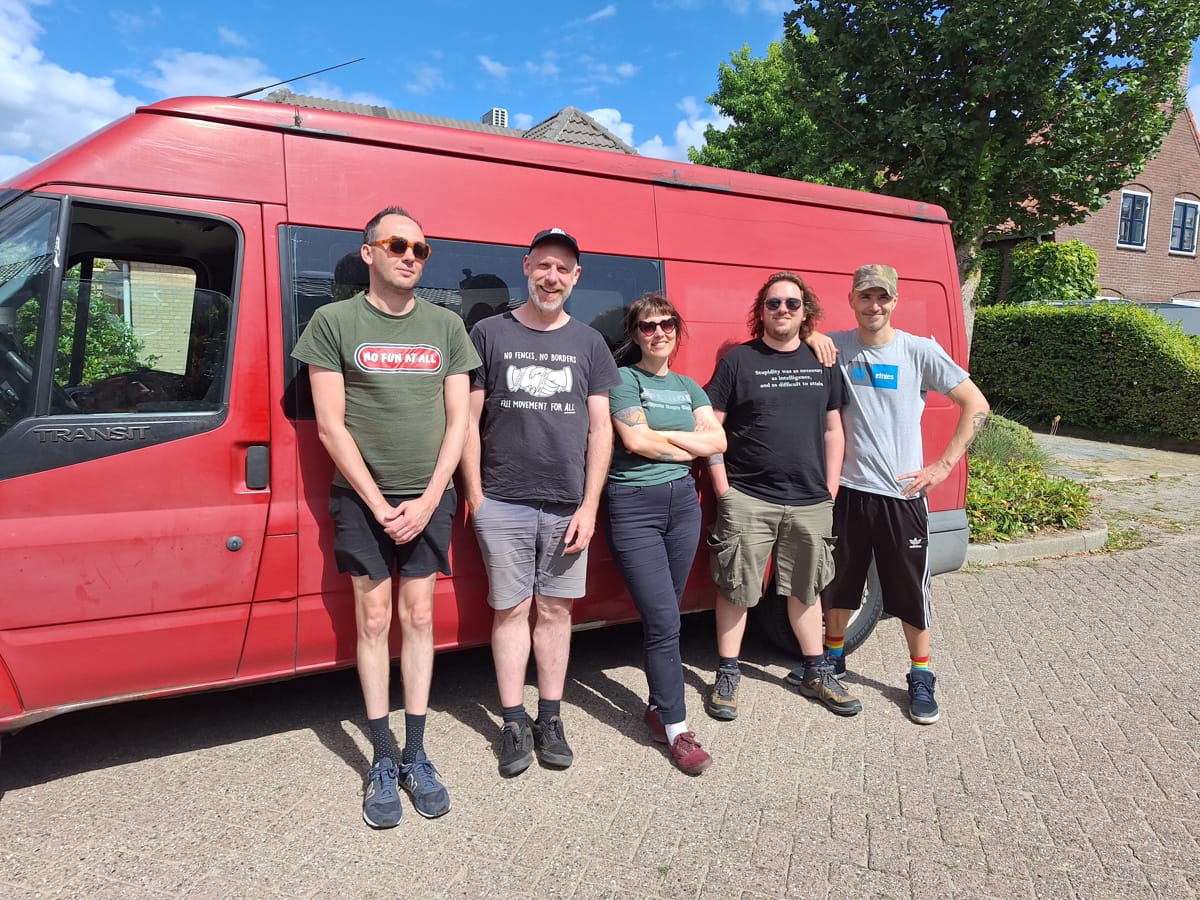
The current Antillectual line-up is Willem on vocals and guitar, Riekus on drums and vocals, and Ben on bass and vocals. Their anniversary set draws from early records and newer songs rather than treating the shows as a retrospective.
Antillectual trace their beginning to 2001, although they admit that identifying the exact start of any band is arbitrary. They began releasing albums and touring in 2005, and have since played more than a thousand shows across North, Central and South America, Europe, Turkey, Russia and Japan.
They have toured with Propagandhi, Boysetsfire, Ten Foot Pole and Satanic Surfers, and shared shows with Nofx, Rise Against, Bad Religion and Pussy Riot. Their festival history includes The Fest in Gainesville, Punk Rock Holiday, Jera On Air, Brakrock, Eurosonic Noorderslag and Zwarte Cross.
Chris Hannah of Propagandhi, Nathan Gray of Boysetsfire and Thomas Barnett of Strike Anywhere have also contributed guest vocals to Antillectual releases.
“Hall Of Mirrors” and a changed protest culture
Antillectual’s latest single, “Hall Of Mirrors“, was recorded in Antwerp during the tenth-anniversary Pizza Sessions organised by Big Dog Recordings.
The weekend combined recording tension with pizza relief. The resulting compilation also features Tusky, Batwölf, F.o.d., Loud Love, Mike Noegraf, St. Plaster, Charlie Bit My Finger, Craig’s Brother, Harsh Realms and Bridle. White Russian Records have released a vinyl edition.
“Hall Of Mirrors” came from watching progressive protest methods and anti-establishment language being adopted by conservative, reactionary and other right-wing political movements.
Antillectual point to the pandemic protests as a moment when conservative and reactionary groups began adopting the language and methods of progressive protest. Opposition to Covid restrictions was often presented as a fight for “freedom”, while anti-establishment rhetoric became increasingly tied to right-wing conspiracies, populism and patriotism.
The band also describe a loose alliance of anti-vaxxers, climate change deniers, farmer protestors, anti-migration activists and other populist groups presenting themselves as a new counterculture. In their view, this has left progressive people in the strange position of defending public institutions and government policies against movements that claim the role of the underdog.
I was raised to feed the underdog
I was taught to fight the prime establishment
I will stay down til’ I’m underground
And I was brought up to fight crooked governments
In the hall of mirrors
What the fuck am I looking at?
Former foe, future friend
Who the hell is the greatest threat?
Holy, hoax, hypocrite
You are faking to be the underdog
Now I feel forced to endorse the prime establishment
If I wanna stay down with the underground
Then I am bound to selflessly defend our current government
The band’s conclusion: things are looking bleak when the status quo is worth defending.
The following tour report was written by Willem Heijmans and lightly edited for grammar and clarity.
Friday, July 17: Juz Mannheim
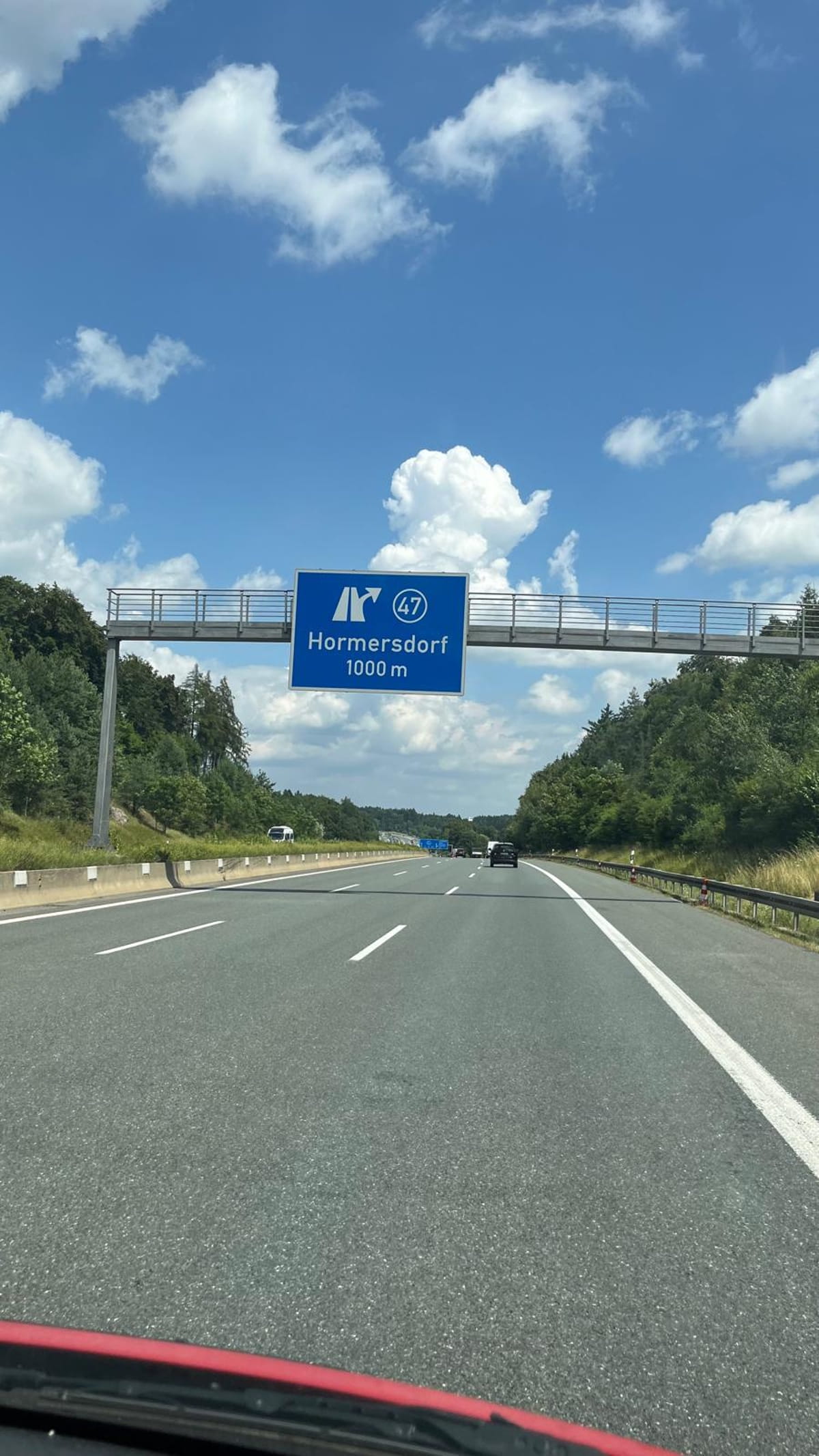
The baking-hot highways are completely filled with tourists going south for their holidays and people leaving the Ruhr area after another working week. Travelling in a van without air conditioning leads to our brains cooking and raises questions such as: “How many holes does a straw have?”, “Do we live in a simulation?” and “Is everything soup?”
Some issues get resolved, but most do not. This probably will not be the last time we spend seven hours straight on the autobahn, so we can resolve the other issues next time.
It must be the final days of the World Cup, because for a band that generally dislikes football, a lot of conversations about it happen during these hot drives. For a band that plays music, very little music is played in the van. I am sure it is the heat and the open windows, which make enjoying music on the highway quite hard.
Our first show is at Juz Mannheim, a place we have visited many times in the past. Mostly to play, obviously, but sometimes also to have somewhere to sleep during a travel day on tour.
Our last visit was sixteen years ago, so I am wondering whether we will recognise the place, whether it will still have the same typical Juz and autonomous-centre character, and whether we will see some familiar faces from back in the day.
Because of the traffic, we arrive an hour and a half late. From the road, we have already told the promoter that we can skip our soundcheck if necessary.
We still rush as much as possible because Nevver and Pathwalker are depending on the drum kit we are bringing for their soundchecks.
Something unusual about this evening is that both other bands use digital backlines, apart from the drums. They do not use amplifiers or speaker cabinets. Every guitar and bass sound is created digitally through a pedal and sent directly to the PA.
We are always looking for ways to improve our live setup. Whenever we come across a band using a digital backline, I wonder whether the approach would help us or whether it would defeat the purpose of having a compact setup with a great sound.
The bands do not sound bad or anything, but I do not think we will make the switch to digital yet. Who knows, maybe one day?
To my surprise, Juz Mannheim has not changed at all. If you told me that every single sticker on the walls was in exactly the same place as when we last saw it in 2010, I would believe you.
The promoter who booked us last time is no longer around, and we do not see any familiar faces among the current crew.
It always makes me a little sad to think about how many people we have met over the years and never seen again. That applies to me personally and to us as a band, but also to punk as a community.
If people stay around for longer, it becomes easier to maintain a healthy scene with well-attended shows, active collectives, venues and bands.
People returning to venues and concerts in a city can be a sign that the local community is healthy and that people feel welcome and included. Young people wanting to enter that community is another good sign, of course.
It is all about balance in the end.
The show is well attended, with people from Mannheim who have never seen us before and people who have travelled from out of town.
For a long-running band, it is a compliment to have a mixed audience. There are people who have known you for years and have returned to see you again, alongside people who have only recently found the band and want to see you live.
People who come for the other bands and discover you during the show are a nice bonus.
That is one benefit of playing with younger and newer bands such as Nevver and Pathwalker. They bring young people who may not know Antillectual yet. Booknerds.de picked up on that and wrote some nice words about the evening.
After twenty-five years, we are still happy to be a band with a message. There was enough shit happening in the world to shout about when we started, and unfortunately there is still enough shit happening now.
This can bring your morale down. You might have hoped the world would become a better place, perhaps with music contributing something in the best possible scenario.
At the same time, the current state of the world feeds the fire behind being a political band and reminds us why we do what we do.
When we see an information stand at Juz Mannheim, I ask what it is about. From the explanation in German, I understand that the local conservative CDU party is threatening the protection of trans people’s rights.
The stand has a petition calling for those rights to be protected. We sign it.
Our song “raisedffistfuckyou” creates the right opportunity to bring the petition to the attention of the people in the room. During our set, we dedicate the song to the initiative and ask people to sign.
“I would love our songs about transphobia, homophobia and women’s rights to be outdated, but if anything, they’re more relevant than ever before.”
I suppose there has been some progress around animal rights and vegetarian or vegan ways of living. Put that next to a wider sustainable approach and the attempt to prevent global warming, however, and we are failing miserably as a species.
From the perspective of a band, it is good to have a song from our first album that still feels relevant and has a purpose twenty years after its release.
From every other perspective, it would be better if that song no longer needed to be played.
The petition also places the argument behind “Hall Of Mirrors” directly in front of us. A song from our first album is being used to defend trans rights, while our newest song asks what happens when reactionary politics begins presenting itself as resistance.
We initially booked the Mannheim show to shorten the drive to Knrd Fest on Saturday. With traffic already delaying us on this supposedly shorter journey, our plan makes sense. We would not have reached Knrd Fest in time if we had tried to travel the entire distance in one day.
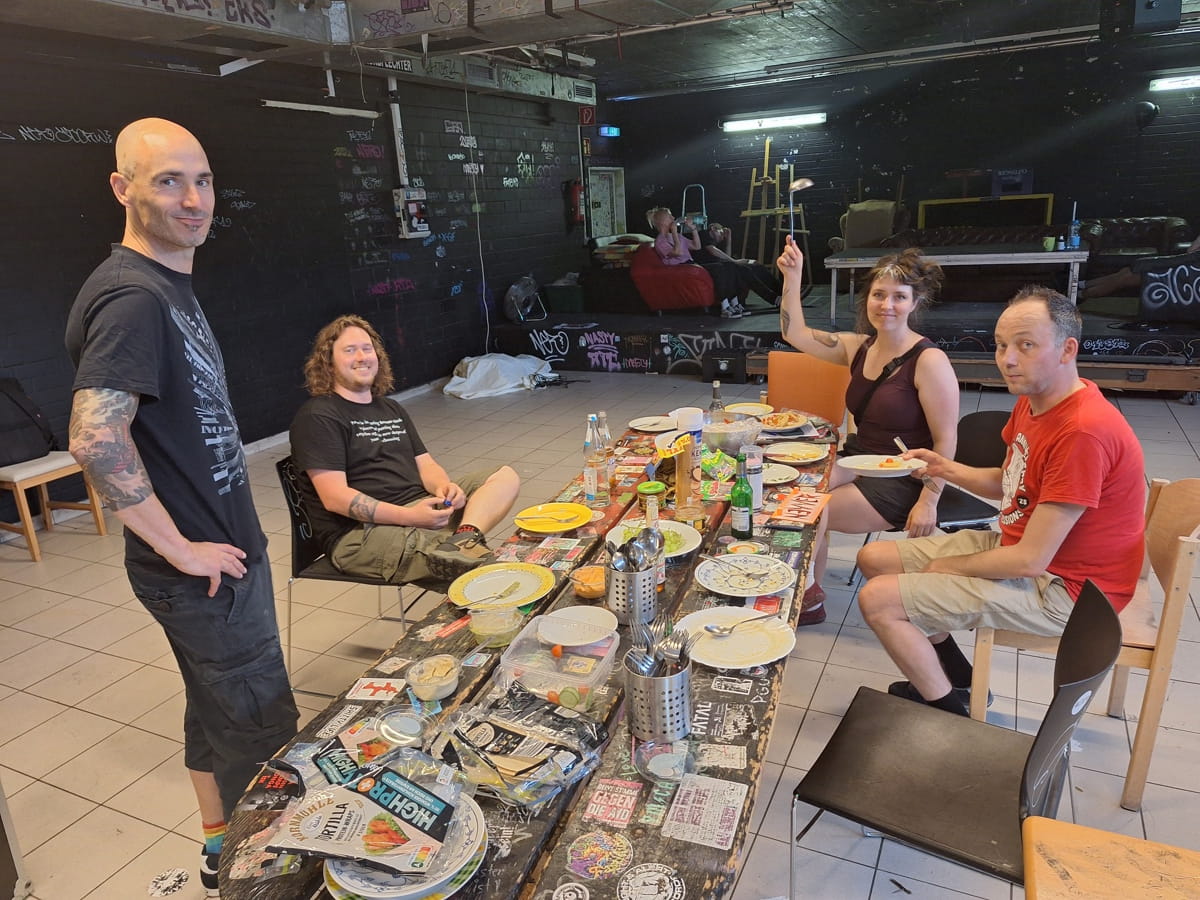
All in all, it is a fun Friday night. Mission accomplished.
Saturday, July 18: Knrd Fest
Both Knrd Fest and Juz Mannheim are established parts of the punk community.
Knrd Fest manages to create a parallel society for one weekend, in the Bavarian woods of all places. It includes its own Olympic games, yoga, hiking, quizzes and other extra activities.
Especially at a time when the world keeps getting darker, these alternative safe spaces should be protected.
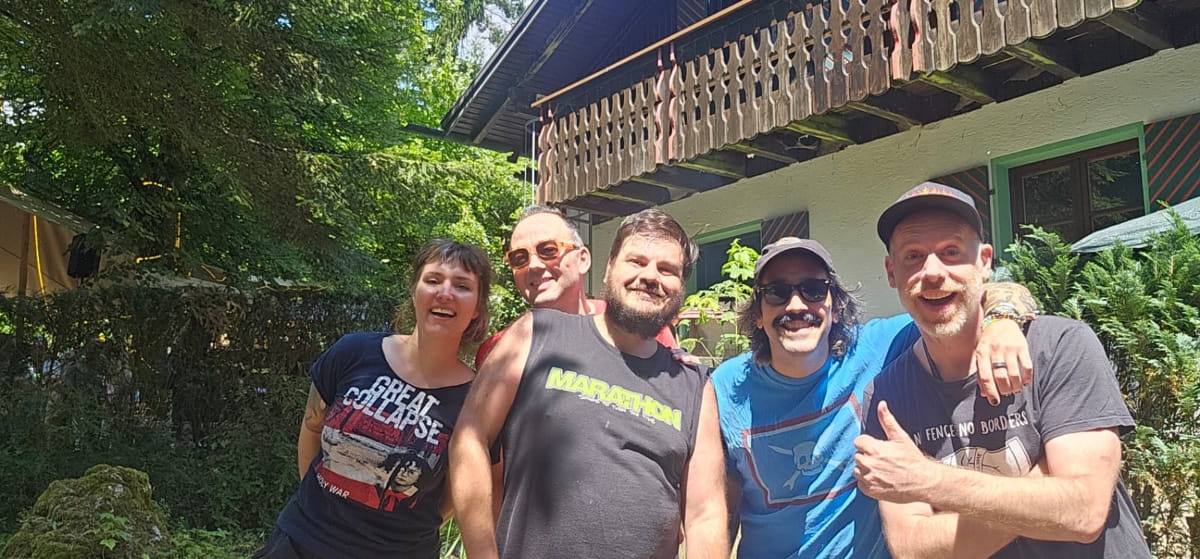
The sense of community at autonomous venues and DIY festivals offers something increasingly difficult to find in a music industry shaped by commercial priorities and mainstream market logic.
It is important to keep these spaces available. The fact that they remain active, and are sometimes even growing, shows that they meet a need the commercial market does not serve.
People want places where they can gather outside contemporary society’s commercialised public spaces and so-called third places.
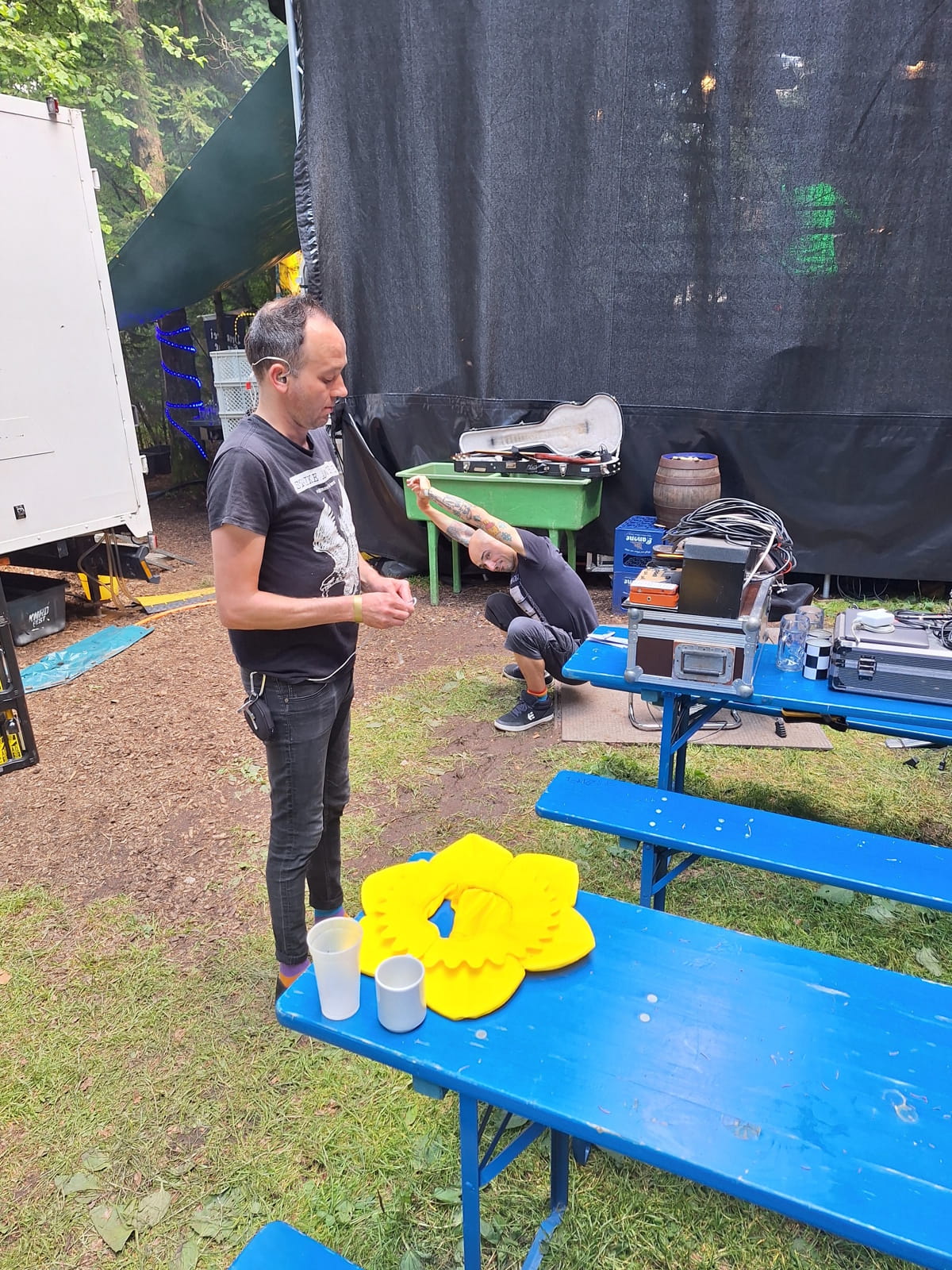
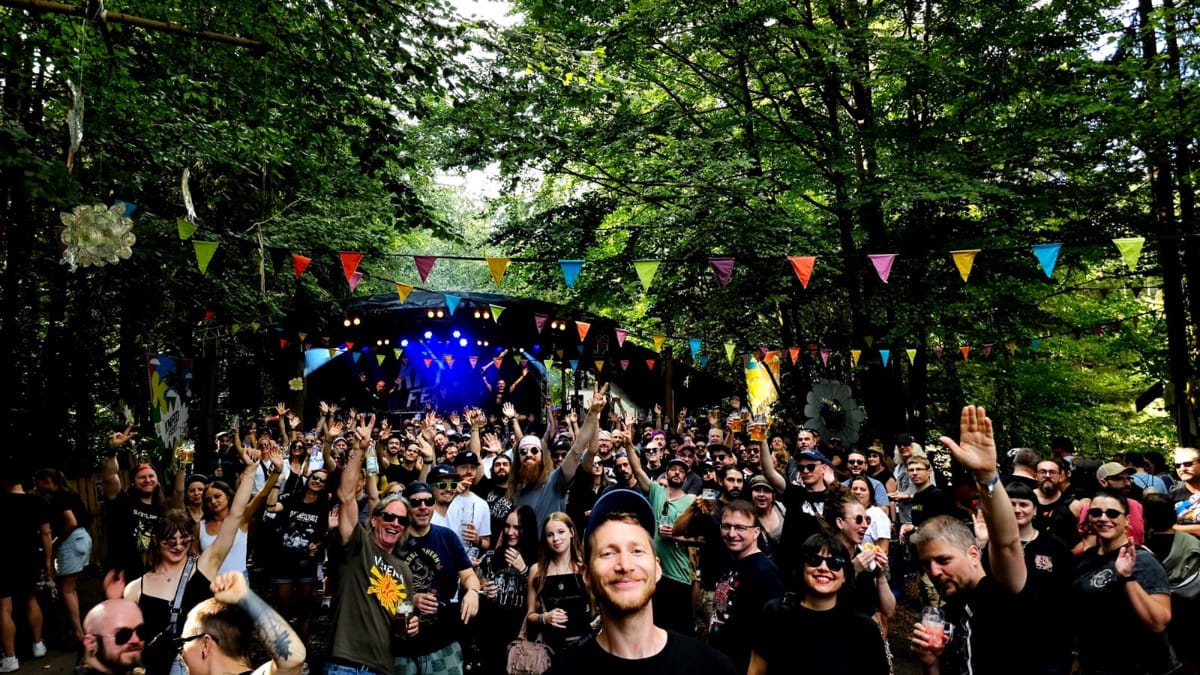
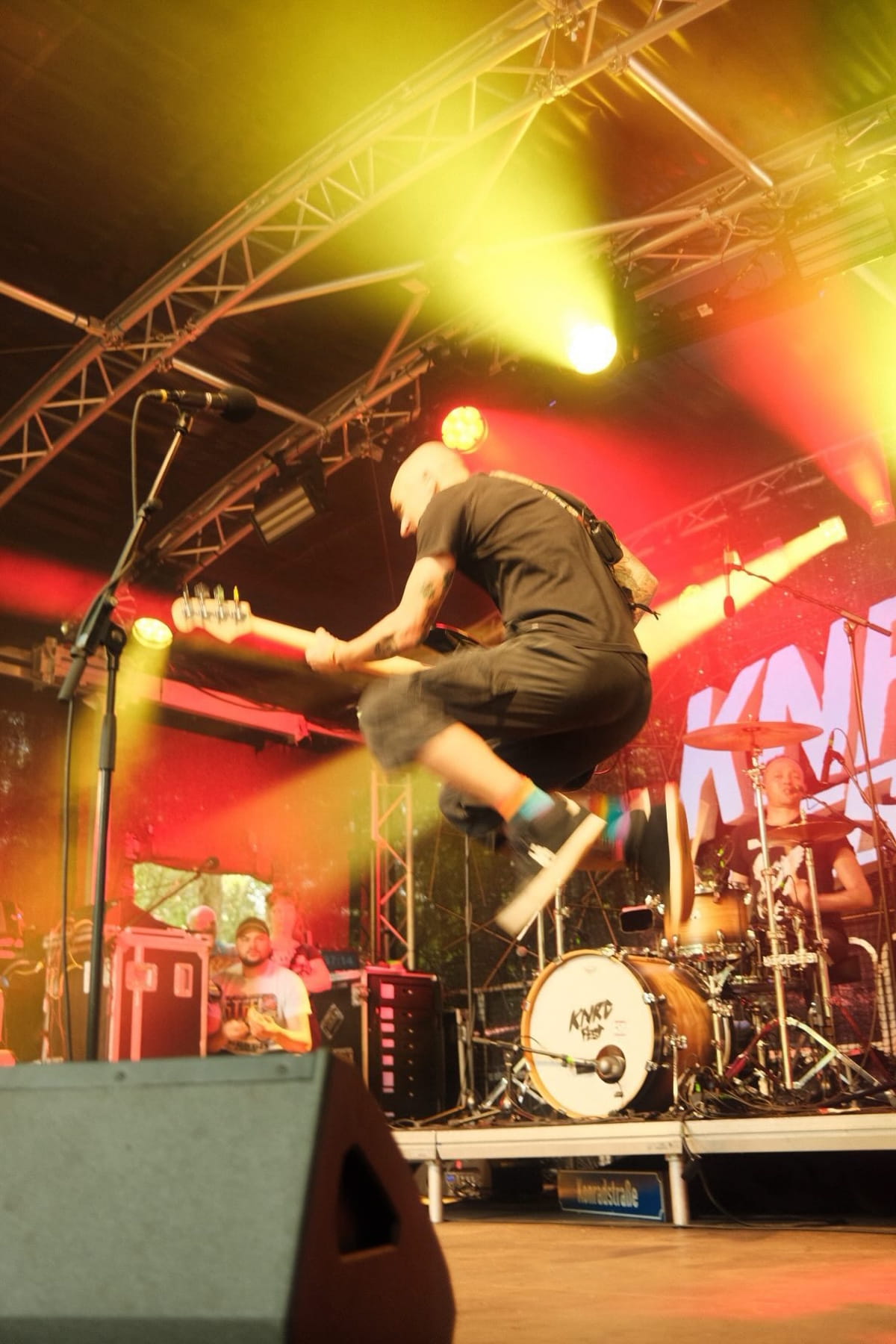
The show at Knrd is amazing. When we begin, the field has already filled up, and the crowd stretches from the front of the stage to the sound booth.
People sing along, nod their heads and dance despite the extremely high temperature.
One person at the front starts shouting at me about “baby making possibilities”. I offer to discuss the subject in more detail after the show. I never see him again.
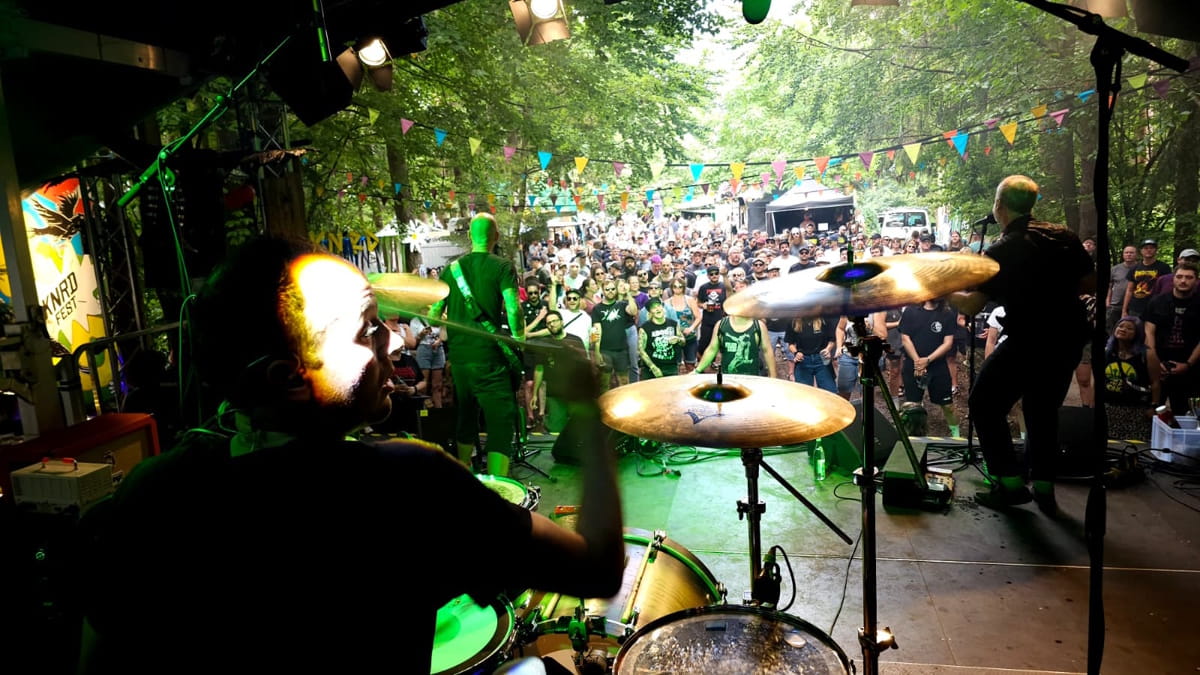
We already know that Knrd Fest will be one of the highlights of the summer for us, so the anticipation is high. Maybe it is a little too high, because I damage my voice through over-excitement.
The quick linecheck does not help. My vocals are not loud enough in the monitor, which makes me scream harder than necessary.
It does not bother me too much during the show, and judging by the response from the crowd, most people do not notice.
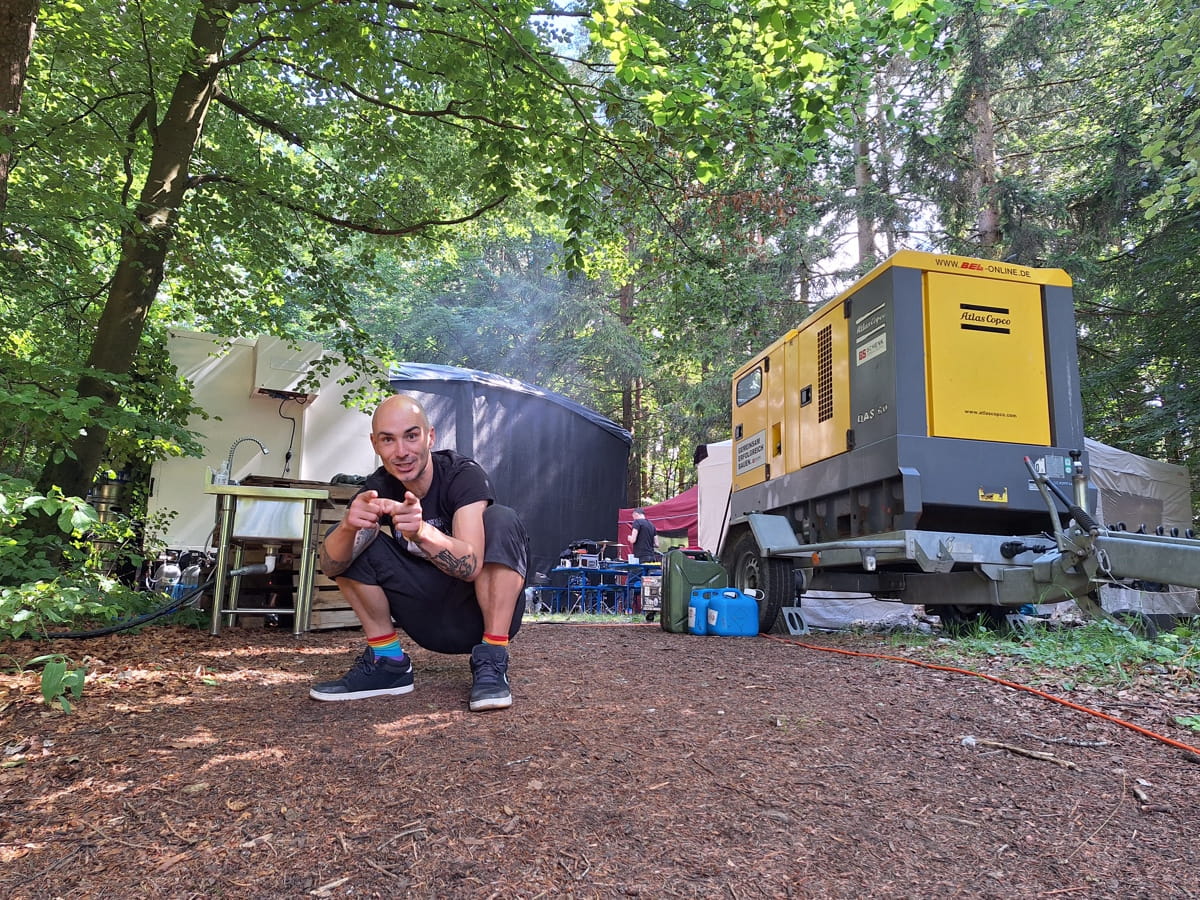
Shows with this much energy are rarely the most technically flawless, but I think we find the right balance for the Knrd crowd.
I always feel ambivalent when bands take crowd photographs from the stage. Maybe it seems cheesy or self-centred. On the other hand, it is good to keep memories from shows like this.
We have found another way to take the photograph. We ask the audience to turn around and have the picture taken from the sound booth.
The audience is at the front, while we are visible onstage in the distance.
We tried this at Punk Rock Holiday and repeat it at Knrd Fest. Both photographs have become great memories, with the most important people placed at the front of the picture.
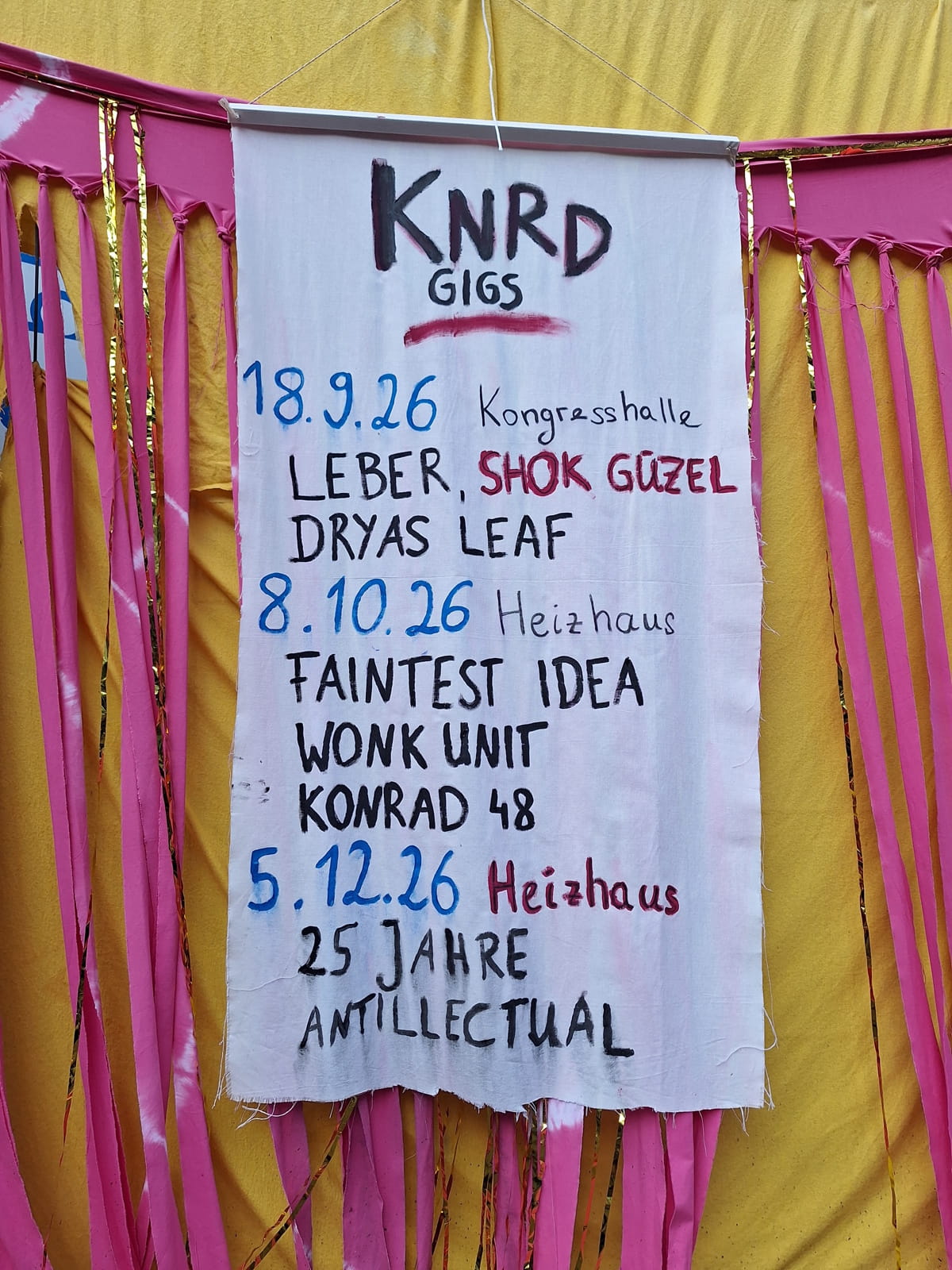
Knrd Fest is also a large scene and family meeting. You get to see people you have not met in years because they live on the other side of the continent.
We tour frequently, but that does not mean we play every part of Europe each year.
Festivals such as Knrd make it possible to play for people from across Germany, Europe and further away, then meet them after the show, have a drink and watch the other bands together.
A lot of people stop at the merch table. Most buy a shirt or an album. Others want to discuss arranging shows in their area.
One person asks about download codes that were not included with our albums.
Customer support in full effect.
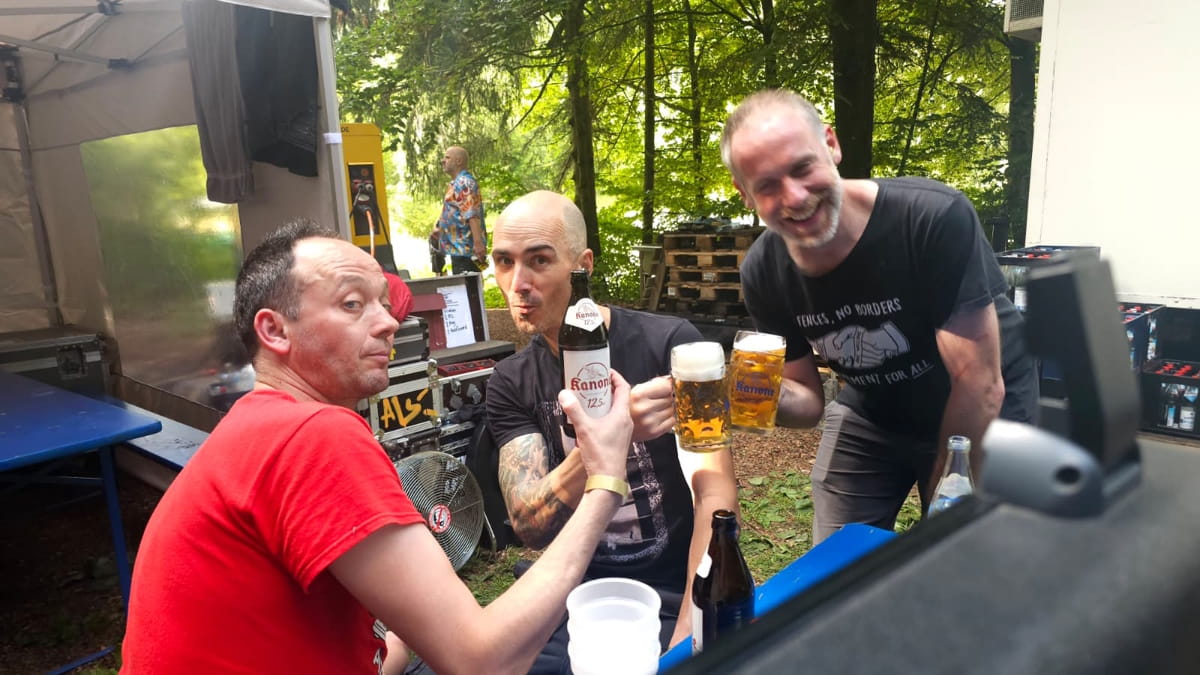
Our merch space is next to Lesley and the UK-based Lockjaw Records. They have been helping us with releases since 2010, but most of our communication happens through email.
Meeting partners and friends like this in person reminds you why you wanted to work with them in the first place.
Festivals such as Knrd, Punk Rock Holiday and Brakrock keep a small community like ours connected. Without these festivals, it would be much harder to stay in contact with people.
A lot of those relationships might exist only through social media, with the obvious disadvantages that come with it.
Besides meeting people and bands you already know, Knrd Fest is a good opportunity to discover new ones.
We are scheduled directly before Buds. from the UK.
After we leave the stage, dripping with sweat and still carrying the excitement of the show, they compliment our set and say that we have left very large shoes for them to fill.
Then they begin their soundcheck with metalcore-style riffs and vocal checks.
We immediately think: “Yeah, that’s not gonna cut it for the Knrd crowd.”
During the soundcheck, they apologise and tell everyone: “Our songs don’t sound anything like this, don’t worry!”
I think that is odd, but whatever.
When their show begins, they prove us completely wrong. Their songs are catchy, singalong punk rock, not unlike The Menzingers, but better. Make sure you check them out.
After twenty-five years, you would think we had learned this lesson already: do not judge a band by its soundcheck.
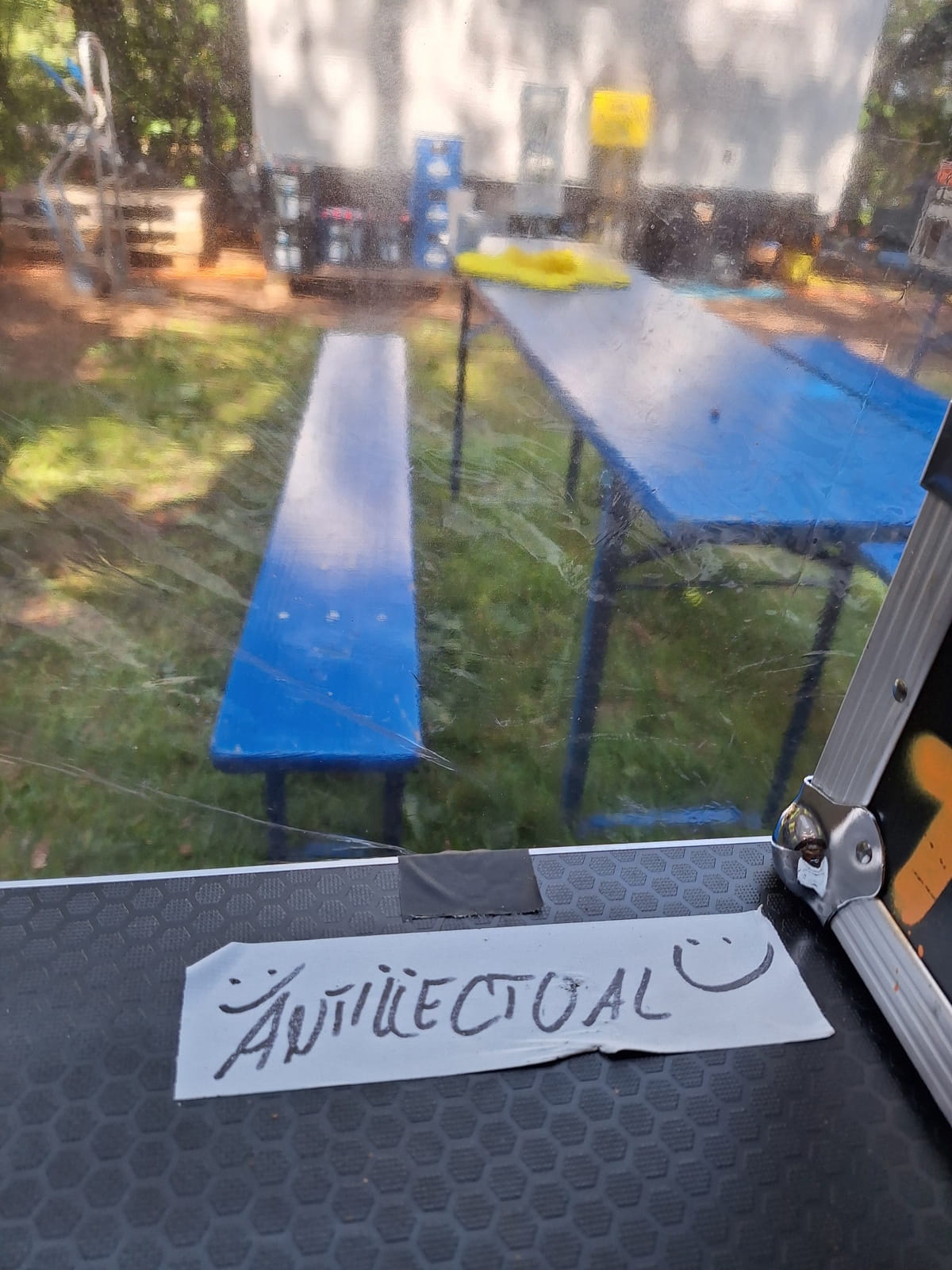
The people who make the shows possible
Another valuable lesson we should have learned after twenty-five years, or perhaps one we keep learning, is that working with other people is essential.
They can help in areas where you cannot do everything yourself, perhaps because you do not have the local contacts of a label, promoter or booking agent.
Matt from Variant Cover Blog and Highway Fifteen Records booked the Mannheim show. Knrd Fest is organised by a DIY collective who arrange shows around Nürnberg.
They mostly work with smaller bands, although Knrd has also hosted some larger headliners.
These events happen because people put serious time and effort into their local communities. Without people organising shows, it would be impossible to tour or function as a band.
Do It Yourself often also means Do It Together.
At the same time, the person working hardest for your band will probably always be you.
Labels and bookers have other bands to work with, and many of them run their businesses part-time alongside another job.
Unless your band pays their rent or mortgage, it is difficult to compete with every other band, project or responsibility that needs their attention.
In the end, you will always be the person with the greatest interest in your own band and the person putting in the most work.
No outside partner will feel exactly the same ambition. Nobody else will understand the members, the audience and what is good or bad for the band in quite the same way.
That is another lesson we have learned from being a band for twenty-five years.
Why we are still doing this
The question we are asked most often lately is why and how we are still doing this after twenty-five years.
I am afraid it is difficult to give a concrete and complete answer.
Of course, it has something to do with a love for punk rock. The music and the message are where everything begins.
The secret ingredient that allows us, or any other band, to continue for twenty-five years remains a secret. I do not know what it is.
I do not believe in a unique magical chemistry between a specific group of band members, which some people see as the key to maintaining a band. I believe that eventually any member can be replaced.
The willingness to work hard and remain committed is essential. Perhaps you also need to be slightly addicted to or obsessed with your band.
A little naivety, ignorance and occasional denial can help, especially when adult expectations and responsibilities begin competing with it.
You have to be willing to make sacrifices.
“Full-time job, family of four, social life, hobbies, mortgage and being on tour non-stop? Impossible, you can’t have all that.”
Being in a band involves much less music than people might expect.
It means sending emails, making social media posts, handling accounts, repairing vans, moving equipment, booking studio dates, completing interviews and paying taxes.
The list of chores that never appears in films about rock bands is endless.
Flexibility is equally important.
You might start a band with romantic expectations created by music media and social platforms. Then reality arrives, and you discover that even the bands you admire have other jobs and struggle to keep everything working.
You have to lower some expectations without losing the reason you started.
It is the biggest cliché, and perhaps the easiest answer, but I think you are doing something right when, after twenty-five years or more, you are still doing it for fun.
If you have become thirsty for more Antillectual stories, the band will publish “25 Years Of Resistance & Persistence” in December 2026 and tour around its release.
Twenty-five years of records
Antillectual grew up on 1990s skate punk, 2000s emo and 2010s orgcore. Their reference points also include the DIY politics of Crass, the directness of Hüsker Dü and Van Halen’s guitar work.
Their album discography includes:
- “Silencing Civilization”, 2005
- “Testimony”, 2008
- “Start From Scratch!”, 2010
- “Perspectives & Objectives”, 2013
- “Engage!”, 2016
- “Together”, 2023
Their EP and seven-inch releases include:
- “Waves”, 2007
- “Pull The Plug”, 2009
- “Future History”, 2012
- “20 Years of Hell”, 2014
- “Covers EP”, 2020
- “Antillectueel EP”, 2025
The anniversary tour continues
The full twenty-fifth anniversary schedule is:
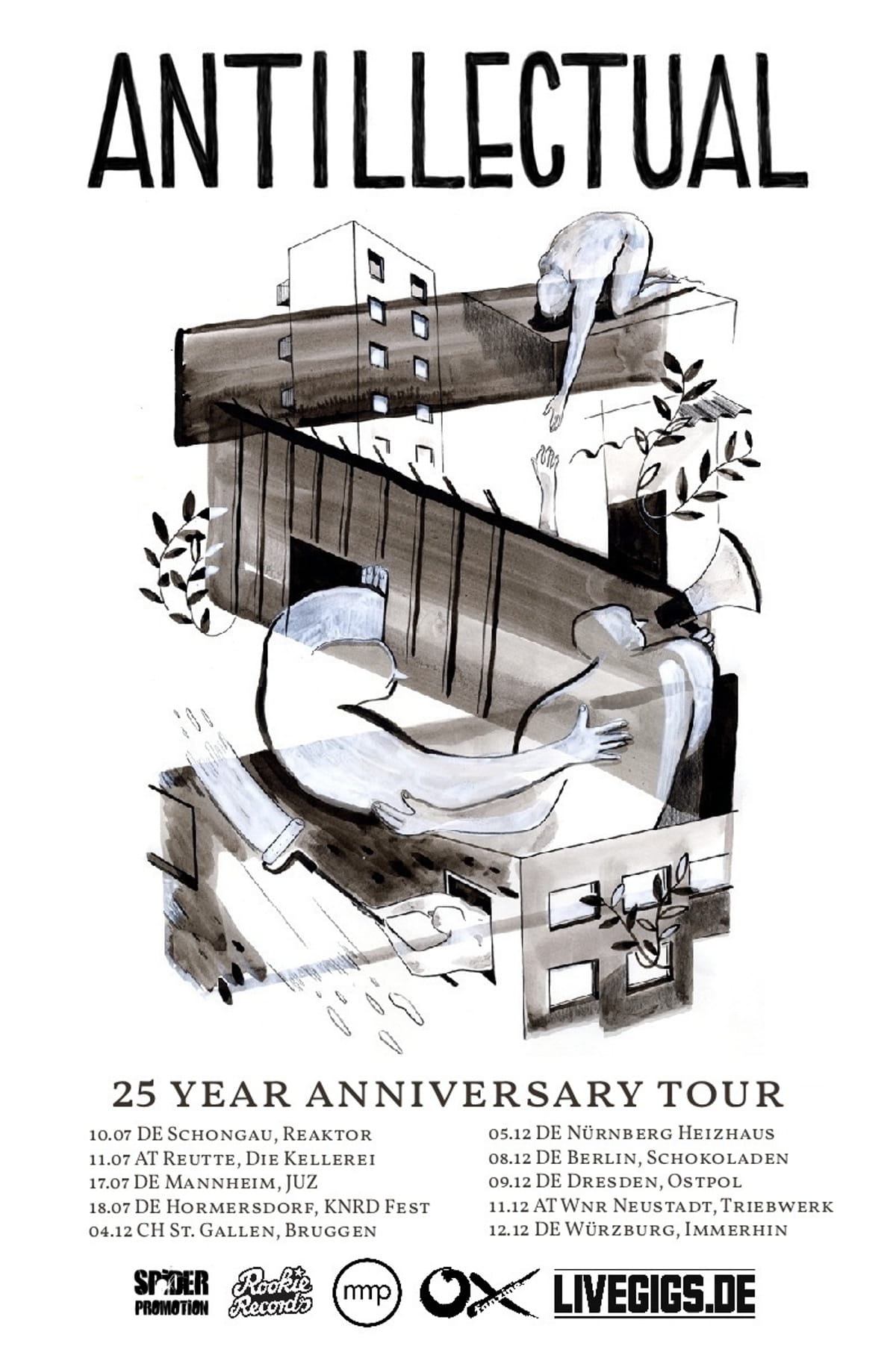
July 10, Schongau, Germany, Reaktor
July 11, Reutte, Austria, Die Kellerei
July 17, Mannheim, Germany, Juz
July 18, Hormersdorf, Germany, Knrd Fest
September 5, Nijmegen, Netherlands, De Opstand
November 28, Terneuzen, Netherlands, Pit Punk Fest
December 4, St. Gallen, Switzerland, Bahnhof Bruggen
December 5, Nürnberg, Germany, Heizhaus
December 8, Berlin, Germany, Schokoladen
December 9, Dresden, Germany, Ostpol
December 11, Wiener Neustadt, Austria, Triebwerk
December 12, Würzburg, Germany, Immerhin
🔔 IDIOTEQ is ad-free, independent, and runs on one person’s time. If you want it to stay that way: DONATE via PayPal or SUPPORT via Patreon.
NEW: IDIOTEQ Explore 🗺️ Browse 15+ years of our archive by city, country, and style. Find artists on the world map or trace related sounds through the styles map.
Stay connected via Newsletter · Instagram · Facebook · X (Twitter) · Threads · Bluesky · Messenger · WhatsApp.