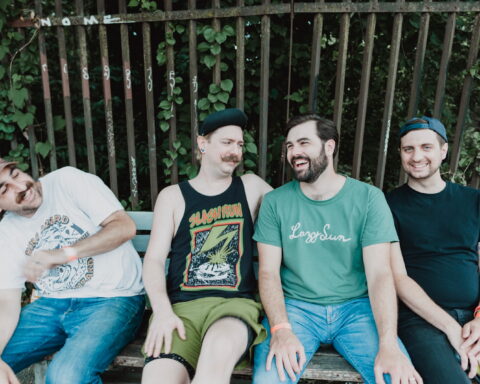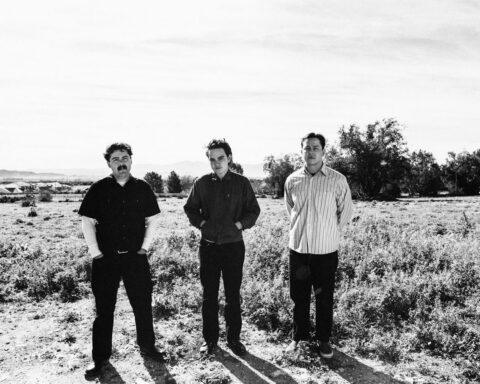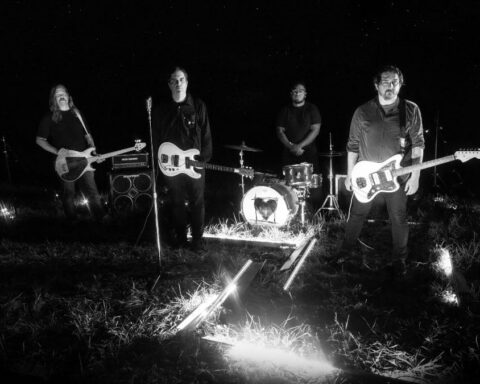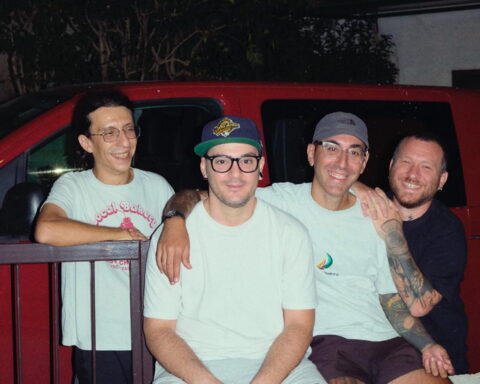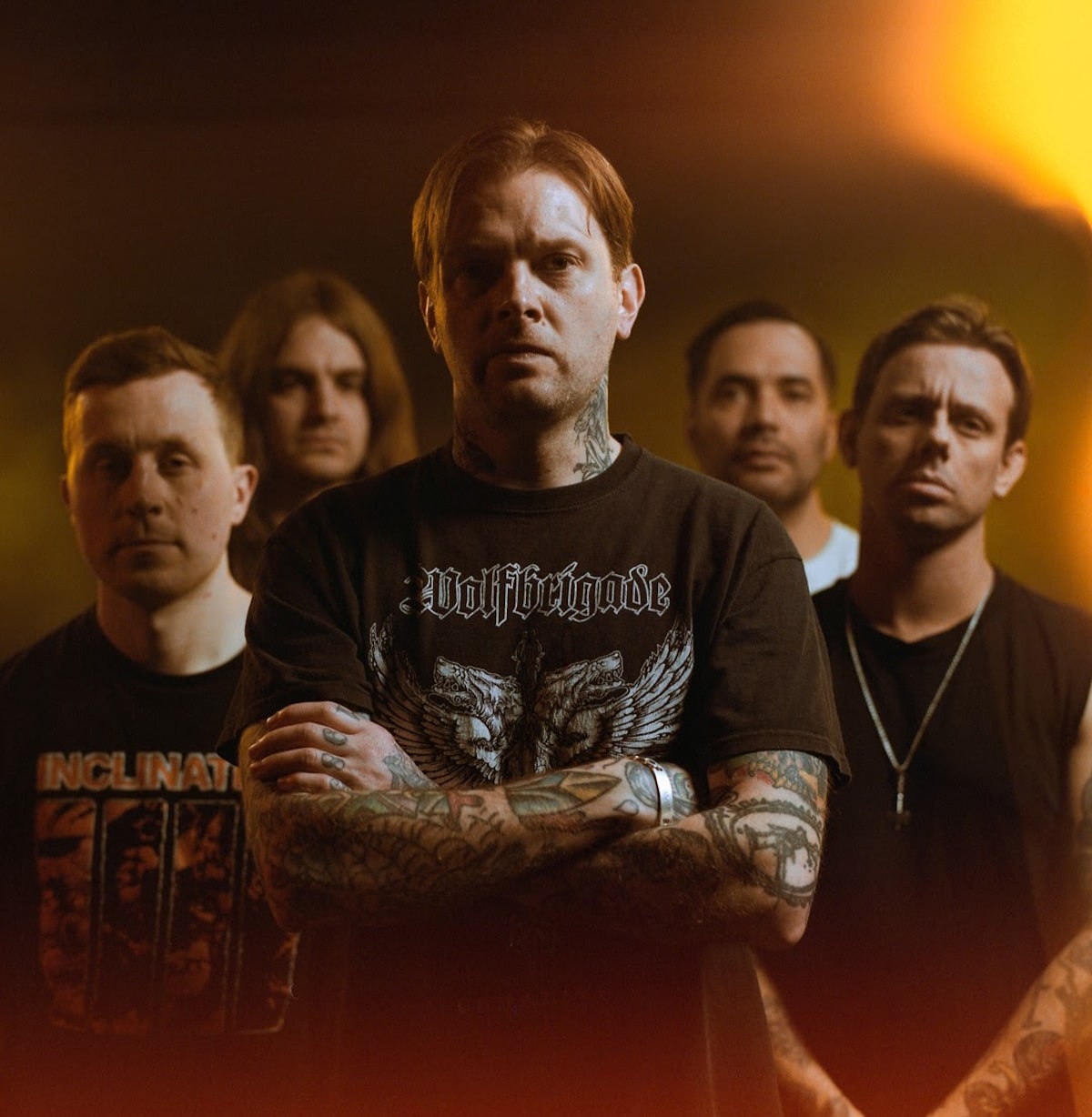

After nearly ten years away, Alabama alternative hardcore punk band Latin For Truth have come back together with “Southern Fantasia,” their third full-length and first new record since 2013.
Alongside the core eight songs, the Bandcamp edition also carries twelve extras: acoustic reinterpretations and raw demos written during the album’s development between December 2024 and April 2025.
The return wasn’t guaranteed as guitarist and lyricist Charles Hastings faced heart failure in late 2024, with doctors warning of a short prognosis. In that state, he began sketching what became the lyrical backbone of “Southern Fantasia.”
As he put it, “I wrote most of the lyrics while on seven different heart medications the first few weeks out of the hospital when I thought I was gonna die in the next year or so.” The first song to emerge, “Dyin’s like graduation day,” read more like a poem than a punk track—a meditation on surrender and the inevitability of death—but it set the tone for everything that followed.
“Southern Fantasia” follows 2013’s “It’s good to be clown shoes when you work at the circus” EP and picks up after nearly a decade of hiatus.
Latin For Truth’s lineup—Michael Hughes (vocals), Hastings (guitar/vocals/art), Zack Venable (guitar/vocals), Christian Caudle (bass), and Corey Killough (drums)—decided to push forward, recording at Lucky Sound Studio in Fort Payne with engineer Lucas Smith, a long-time figure in their local scene. They tracked material that spanned years of riffs, ideas, and new writing, shaping it into a record both urgent and expansive. Guest vocals came from Drew Justice on “Bulldog” and Bradley Wyrosdick on “Love in a dying language biome.”
The record carries forward the same refusal to fit neatly into punk’s genre boxes that has followed the band since their start in 2005. This time, the focus is on dispossession—economic, spiritual, and personal—and on how people navigate life under capitalism. Hastings described “Southern Fantasia” as a document of “goofy big questions,” asking what it means to surrender control, how love survives in a transactional world, and whether horizontal organizing can provide real agency when political fandom fails.
“Knife Odyssee,” a nearly seven-minute piece, draws on Greek poetic structures to push those themes further. “It was my crack at turning the subject into a bastard child of a Greek poem,” Hastings said, pointing to the chant-like choruses that function like a Greek chorus in miniature. The title track, “Southern Fantasia,” turns its focus on how individuals lean into political avatars and cultural symbols as substitutes for material agency. Both tracks were paired with hand-drawn animated videos—tens of thousands of frames in total—illustrated by Hastings himself.
This release follows the band’s 2013 EP “It’s good to be clown shoes when you work at the circus” and earlier full-lengths “Eleven Eleven” (2009) and “Youth Crew Blues” (2011). Where those records were marked by touring struggles, mislabeling, and scene politics, “Southern Fantasia” lands as both continuation and reckoning, recorded by the same five members who first cemented Latin For Truth’s identity in the mid-2000s.
What the album leaves behind is a raw, tightly written set of eight songs, surrounded by sketches, alternate takes, and stripped-down acoustics that show its process. It’s not just a comeback but a re-entry into unfinished work, sharpened by age, health scares, and time apart.
Below you’ll find the full, detailed story of the band, including some details where they expand on the themes, the recording process, and how “Southern Fantasia” came together.

Hello, my name is Charles Hastings Jr. I play guitar, sing, yell, write lyrics, and create the art/animation for Latin For Truth. Disclaimer: sorry, if I misremember or leave anything out. My memory is garbage. Read in good faith.
“Local Era”
Latin For Truth started in Scottsboro, AL, July of 2005. I graduated high school. My bandmates were all leaving town for college. Our drummer introduced me to a thirteen year old local drummer prodigy named Corey Killough. Basically my previous drummer was like,
When I leave, you should start jamming with this kid. He’s better than me…
Though I was skeptical, we jammed and it clicked instantly. We improvised well together and would write entire songs by the time we got done jamming out the different parts; writing a three minute song after ten minutes of jamming. He was the first musician I met in rural Alabama that wanted to play fast, technical punk music and also could keep that tempo easily. Felt like meeting a genius child who was waiting to be introduced to higher forms of musical abstractions. Our mutual friend, andrew paul, joined on bass. He was also a ridiculous young talent; still in high school. The three of us were really good at bullshitting through songs and kind of soloing over everything we played.
In scottsboro, alabama at the time, there wasn’t much to do. You couldn’t skate in public without being harassed by police. There was nowhere to hang out besides churches and restaurants, so there was a lot of very talented bedroom musicians around that didn’t know how to go about making music or booking shows. I had no personal experiences with going to shows or booking them. I liked records/cds. Music in the boombox. Most of us in Scottsboro were too poor to drive to a show. I wasn’t experienced or grew up around anyone in the business or even amatuer musicians really, so my impulses and expectations weren’t glamorous or cool. I had spent most my teens years reading books about punk bands, “get in the van”, punk label biographies, music scene biographies, and basically was building a large tool box to use when I got my first serious band together. So that’s how I began our career.
I would draw fliers, print out two thousand copies, and ask local teens to hand them out at their high school & youth groups. Renting out spaces and throwing shows in those spaces without telling the owners what we were doing. Renting out co-ops and event centers. Draining pools and performing inside the pools. Playing in living rooms; garages; backyards; park stages; bowling alleys; in front of coffee shops after football games; teen centers; teen worship venues; and any other place we could plug in and be loud for a few hours.
We played our first show about a month and half after jamming for the first time as a band. Our name was kind of a “first thought, best thought.” concept. Not to say it was frivolous, but there weren’t many other thoughts of band names after latin for truth was written on a piece of paper. It looked right. Felt right. You imagine walking up to a mic and saying, “hi, we’re latin for truth.” and it makes you chuckle a bit.
The name has lots of meaning. If your name has the band’s intent clearly stated, it makes the project’s death drive much clearer. I’ve always thought when it comes to naming things, it’s another chance to supercharge the symbolism in your work with layers of meaning. Latin for truth is a reference to the pretentious band names on fliers to shows I couldn’t afford to attend back in 2004 to 2006. Instead of veritus or whatever variant, if i was gonna have to explain the name over and over, might as well call ourselves latin for truth. It also clearly stated we were a band that wanted to dissolve etiquette and symbolic interfaces to communication. Art is communication, human artifacts we trade back and forth, a shared language that amplifies in meaning/social value the more it’s used and is useful. it’s value is social, and when you can make people aware of the language they navigate and use, it can create a deeper connection to the material it represents.
Our first EP we self-released in the first year. It was a burned cd with 22 of our songs on it called, kids fighting over solos. It included live recordings from a show we played at a bowling alley in bridgeport, AL; songs I wrote/recorded with borrowed gear; and a few demos we did with a guy who had a portable recording setup. I think we sold about a hundred of those.
I would never attempt to take any of his shine away as a musician by suggesting I solely steered Corey in any one direction, but I was an older(18-19) punk musician feeding him stuff like desaparecidos, weakerthans, latterman, fugazi, lifetime, gorilla biscuits, and jawbreaker so it was a situation where I got to funnel a lot of his natural talent and curiosity in a general direction. Which is why when we track records, he usually knocks out the drums for the entire record in a few hours. Even when improvising or flowing in the studio, he makes the right choices and expresses the pocket in interesting ways. We have similar music dna. Corey was a child skater so he had already been exposed to a lot of skater punk, hardcore, metalcore, and the general pop-derivatives of those genres. It was specific references within the genres of punk and hardcore I think that gave us a lot of our core elements. That’s why we didn’t really sound like other local bands. Most local bands made fun of us for not being a strict genre band. Since I got my first guitar at 16, I was pretty new to writing, recording, and booking punk shows. Corey and I developed our skills and refined our taste at a similar rate for a few years. It took about three years for us to find the other puzzle pieces to what felt like the concrete version of Latin For Truth. The rest of the current line up joined between 2006 to 2008, zack venable on guitar, christian caudle on bass, and michael hughes to front the band as the main vocalist.
Zack was the metal kid and riff wizard; Christian was the rock n roll kid, could pick up anything musical; and Michael was a good-dude-backed-hard buddy I knew since 7th grade. Michael had not fronted a punk or hardcore band, but he was great at yelling and was like a sponge with new music. He pretty quickly was as invested as us and got better every show.
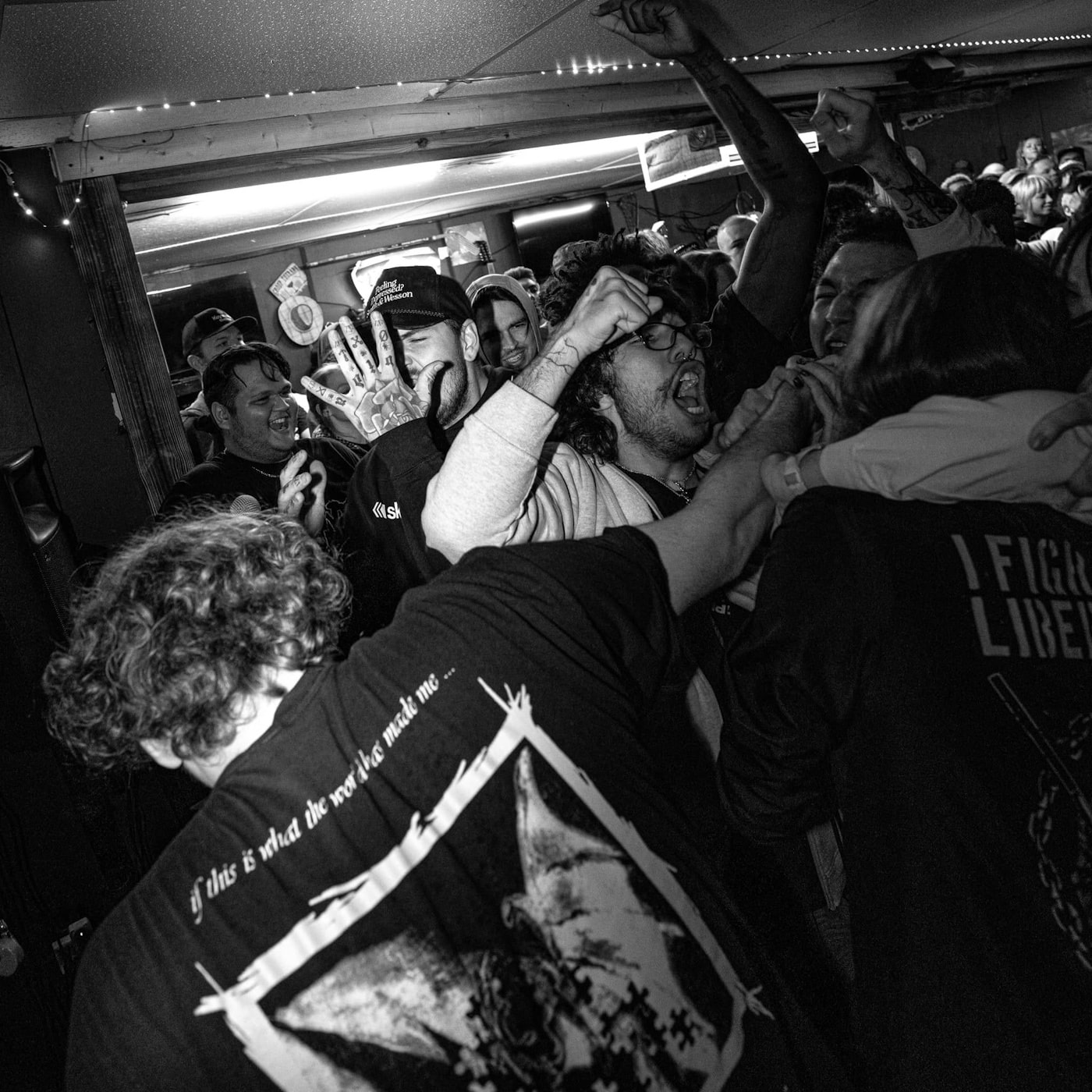
The first five years of the band was like an after-school program, even after the three young guys in the band left school. The parents in the community felt comfortable letting teens come out to latin for truth shows unsupervised because the shows were all-ages. we were often confused with the christian hardcore/metalcore scene because of our name. a lot of the bands playing our shows were also teenagers, and we wouldn’t let ppl drink or visibly be on drugs(hard to police if you ingest drugs before show/in car, etc.). We weren’t straight edge, but there were so many young people coming to our shows between 2005 to 2010 that we felt obligated to our scene, to our community, to keep it going, to make sure everyone felt safe and not exposed to the adult nihilist punk rock aesthetics and shadow tendencies of destructive musicians. That eventually dissolved after we started touring. We couldn’t afford to rent out venues to book local shows that weren’t our own shows or for touring bands. Our band members all moved to different cities; and we began playing more bars the more we toured. We began to drink and smoke at our shows. Our local audience aged with us, but we didn’t realize that was alienating to the next crowd of teen musicians and show-goers in North Alabama.
We started with a blank slate and could build stuff up how we thought stuff should be ran till we ran out of venues. The next crop had less venues and these older musicians who were drunk and self-isolating. It’s alienating. I understand that now. We tried to keep everything safe, productive, and positive, but I was maybe too young to be in a leadership role. I think the all ages aspect is what kept the scene moving so well.
In this five years, we were soaking up modern punk, hardcore, metal, and as we got better at our instruments, crafting songs, and our band members reached adulthood, we pushed towards more technical uptempo music. We started including more “weirder” influences. Soaking up bands like Shai Hulud, Have Heart, Comeback Kid, Torche, Mastodon, Ceremony, Between The Buried and Me, Fucked Up, and basically all the dope punk, hardcore, and metal coming out. There was a beautiful window of production in the 2000’s before everyone autotuned and compressed the shit out of their vocals. stuff was overproduced for punk/hardcore, but still very raw. The thought was we want to be like a thrashy version of gorilla biscuits. The modern equivalents for what we had in mind was bands like A Wilhelm Scream, Bane, Daggermouth, and Propagandhi.
We recorded two studio EP’s between 2006 and 2008, but both are awful. There were core elements of what we do now, but the engineer hated us, our music, and mixed it in the goofiest way. The bass is kind of sitting on top of the guitars cause he hated my cheap solid state amps. So it’s a funny listen, but not a fun listen. With context, if you can imagine, a nu-metal type dude begrudgingly engineering two days in a studio with a band full of young teenagers yelling and screaming in his mics. I don’t think we even mastered the stuff before we sent it off to press. When you have no mentors, your mistakes are your teacher.

Our first full length, eleven eleven, came out in 2009 on a small label, Wisteria. A lot of the riffs for the songs had been written years before then, with 3/5ths of the band being 14-15 yrs old. People outside of our state and region started listening to us. So folks who have never seen us live were enjoying our music. We were labeled an easycore band because of some of our sardonic titles and absurd breakdowns. That’s when we learned audiences without printed context or visual context to the tone of a project do not handle irony, sardonic tones, or dark humor very well. You can’t write a song making fun of a type of song or idea exclusively experienced within a small culture, cause without context, people think you’re doing the original thing. If you get misbranded, the general audience will just avoid the material that doesn’t reflect their comprehension of your band. It didn’t help that the production on the record was different than the material we wrote.
In Alabama, there weren’t a lot of studios that understood what we wanted to do. Engineers would make fun of our music to our face while recording. It was slim pickings for production for that record, but Joseph Mcqueen was doing the best work at that time in our price range(2008). He’s dope at what he does. That being said, eleven eleven was similar to if saosin tried producing a gorilla biscuits record. Produced to sound like something. Not a failure, but a mismatch.
The entire thing was recorded in four/five days, so there wasn’t a lot of great takes. A lot of “fix it in post”. It was just us kind of running through every part of the record to our best ability spite fatigue or physical limitations within a day of yelling and singing all the parts on a record. So it’s hard to listen to that record as an adult now. Especially knowing what I know now about music production and writing music.
So that record comes out and everyone thinks of us as a-day-to-remember type band, but live we sounded like a melodic punk/hardcore band singing about homelessness, poverty, wage slavery, class identity, staying positive, staying active in your community, and keeping your empathy alive. We realized we can’t really make this mistake again cause we lost several years playing shows and touring with pop punk bands. Our music and tone was a lot different than what was considered our peers so people were either very disappointed that we weren’t a chugga-chugga band or preferred us as a live band over our recordings.

Over the next several releases, Diatribe or Die EP on Mightier than Sword Records and The ‘95 Sound 7” on Pitfall Records, we got rid of any blatant reductive chugging breakdown parts and began avoiding our more reductive breakdown tunes from eleven eleven in our live sets. We were also included in a Kid Dynamite tribute record, and recorded a cover of Table 19. Dan Yemen (Lifetime, Kid Dynamite, Paint It Black, Open City) is a huge part of the latin for truth DNA. Never met the guy, but his work is in my work. Other ppl weren’t happy about us being included on the compilation, but it was a dream come true for us. One of those misbranding issues.

“Youth Crew Blues, 2nd album”
At the end of 2010 we start writing our 2nd full length, Youth Crew Blues. Michael leaves the band about two months before we’re supposed to record to start a family and focus on his day job. Christian steps away from the bass. Our very talented friend, Tom Lovejoy, stepped in on bass and guitar for the album cycle and our next two ep releases afterwards. We have to rewrite Youth Crew Blues on short notice with me and Tom doing the vocals.
We successfully do so and the record sounds a lot different than our first full length. We record again with Joseph Mcqueen in Alabama. He’s more experienced at production and gets a little closer to what we sound like live. We recorded the album in a few days in early 2011.

We release youth crew blues in November on Better Days Records. All the band members are young adults now. At this point, we toured for a few years. We met cool bands and people from coast-to-coast that are interested in what we do. We have lots of amazing, cool, life-affirming stories, but also experienced a lot of the negative aspects of being in a regional/national punk band.
A short list, not including every goofy thing you experience as a punk band trying to create a part-of-the-year career (borderline full time band): lying predatory extractive indie labels; lots of dickhead bands that ppl love, but rob promoters and small bands across the u.s.; bands you look up to letting you down hard; pay-for-play music journalism; popular bands who cry on stage to sell merch; headlining bands on tour shorting us on show guarantees to the point of bankrupting the band; local bands trying to steal our gear and break our equipment cause “we can afford to buy it now” when we in fact, have never been poorer as individuals; people you thought were your friends making up stories about you and your band cause your band is now a visible abstraction to use to manipulate others; musician friends becoming drug addicts and alcoholics who lash out at the music scene and you; bad musicians emailing your label pretending to be good friends with you, saying you vouch for them; the bands you do vouch for robbing your friend’s label; meeting amoral punks who use their influence to manipulate ppl out of money, drugs, and sex, etc. etc.
That was what youth crew blues was about. It was me going from being homeless as a teen to making records and touring the country, having a religious relationship with the construct of punk and art, but realizing that punk isn’t this cultural anti-capitalist haven of pure creativity and decommodification. Most people don’t see it or comprehend it as exiting our vertical relationship with an immutable corporate-state culture.
Most the punks and variants want to be commodified. They believe in the capitalist modalities of identity and the merit of our fetishization of identity as consumable artifacts. Their politics are aesthetics. Most want to be vacuumed up by a vertical culture and turned into expensive symbols of a freedom that is simulated through consumption and experience of controlled, repeatable spectacle. Bands in Alabama(not all obviously) try to make and sell merch before they make records, and I don’t want to sound holier-than-thou, I do understand touring acts becoming merch stores to earn a living, but what is a local band trying to merchandise without music, a reciprocal community, or art fandom? Can’t sell a ticket to people outside your friend group, but you need merch? Cant draw a crowd, but need merchandising? Without a strong comprehension of what you do or who you are, what’s the point of creating merch? It’s goofy and antithetical to the spirit of music and art, but normal because people want to be famous/visible; act out and curate the profilicity of a celebrity. Cant stop till capitalist culture lets the adult infants reenter the womb. Obviously, I’m annoying, but I thought punk was the place for goofy artists.
At that point and still to this day, I felt a little burned out or let down by what the indie punk music scene was supposed to be, and then actually navigating it, felt like most bands were merch stores that hated their fanbase. Everything set up to build extractive vertical relationships with the audience. Extractive relationships with yr peers. Not saying that was the whole experience, but that is what a lot of youth crew blues is about. Realizing punk, like most cultural symbolism, can be used as a reactionary mask for the same capitalist death drive we wanted to escape with our art/music.
Youth Crew Blues was great to us. We hit the mark and there was lots of creative stuff on that record, but the public did not want to check it out. It received maybe 1/4th the engagement as our first full length, Eleven Eleven. We struggled to tour on the material. We became a band’s band, which is career suicide. Usually means only a seasoned band or musician understands the difficulty and skill to create and perform your music. Most ppl want dope music to listen to, not art to decode and contextualize. The deeper you go into your magick bag of art/craft/skills, you have to be aware you’re going to lose some people.
When we started touring on youth crew blues in early 2012, Jesse Clark joins the band on bass, Tom moves over to third guitarist. We now sound ridiculously huge live. 3 guitarists, 4 vocalists. A mountain of guitar shredding. “Grip ‘ n’ Rip” becomes the band motto over the next few years.
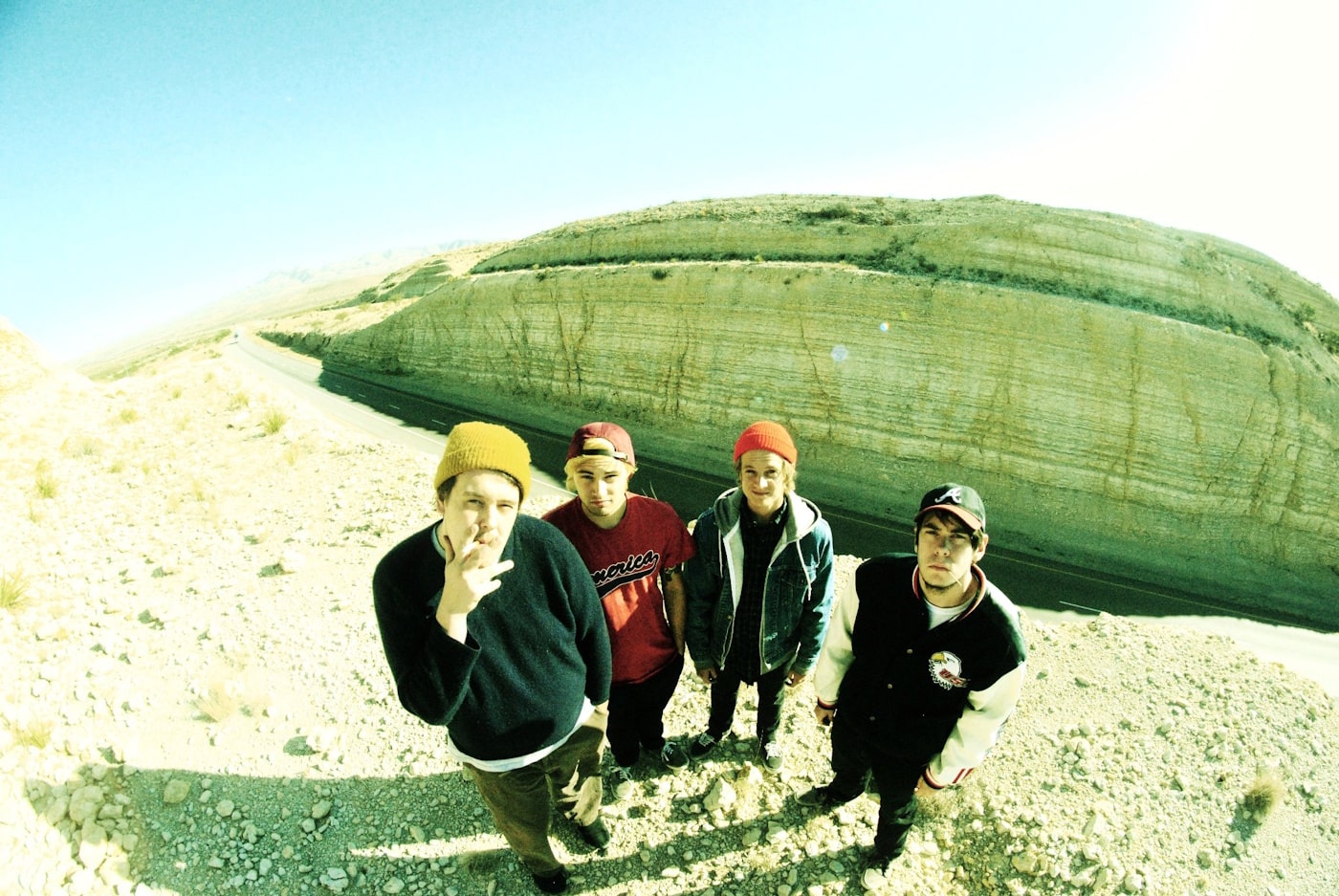
We self-released another studio EP, It’s Good To Be Clown Shoes When You Work at The Circus, in 2013, which was to date the best representation of what we do musically and what we sound like live on a well-rehearsed night. Folks didn’t really check out that release either. We spend two more years being a regional band till we went on hiatus in 2015.
Reason for the hiatus was financial mostly, and also due to my alcoholism. I feel like I let everyone down by being a drunk for a few years. The band no longer had people asking us to put out records on their labels. Most the bands we were pals with were gearing down to being completely inactive. Every band member lived in different cities; Tom in a different state. So there was no hanging out, rehearsing, fleshing out music, or being close friends anymore. Most of it caused by financial issues. The material world supersedes costly art.
I internalized a lot of it as personal failure, and I’m a self-isolating person. when I feel like I’ve fucked everything up it’s hard to be social, even as an artist. I couldn’t make enough money for the band to be functional, and so I turned to drinking like a fish. If you’re already a depressed person, a few years of boozing hard will take you right to the bottom of everything. The hiatus was supposed to be short term so we could save up money to work on the next full length or waiting for some miracle wad of cash to appear to make a record. We always paid for our own records, which is why we have the masters to everything. Point being, the burden of creating was upfront on every project so we could choose to promote or do with our records what we willed. Everybody’s pockets were empty. Rent supersedes art.
It’s the correct and moral thing to do with a project like this. If you’ve lost the light in your eyes, you have to stop and refind it. I felt like a preacher who lost their connection with god. No one should be on stage if it’s exclusively extractive or to sell merch. You have to radiate grace for the people spending time with you. It’s weird to have a room full of people facing you and watching your every move, then you yell all your fears, loves, and experiences at them. You can’t be a despiritualized drunk and do that well. It’s disrespectful to the audience and that hyperspace of meaning/performance. The stage is a holy place where you get to die over and over again and ppl applaud every time you die in a cathartic way.
“Now; Southern Fantasia”
A short hiatus turned into nearly a decade. In that time, Christian, Corey, and Michael had children. I worked on Solo Monk records; quit boozing at the end of 2018; taught myself 2d animation(the hardest and most time-consuming discipline I’ve ever taken up); and scaled up my audio production skills. Zack spent those years riffing for private pleasure, working, and fishing(we are from Alabama). Tom wrote/released lots of dope music (maze book and word travels fast for melodic techy punk fans) and toured in a lot of sick bands. Tom’s always working on something cool. Jesse’s band Wielded Steel is doing well and making dope heavy music.
The eleven eleven line up finally came back together late 2024 because of my heart failure. We couldn’t really wait any longer on having a wad of cash to throw at another record. I had unchecked Atrial Fibrillation for a long time that was misdiagnosed as anxiety or symptoms of depression. I had a really bad 6 months of going in and out of AFIB, and it exhausted my heart to a refraction rate of 12%. I spent a couple of weeks in the ICU and the first person to call me was Corey. I explained my situation to him. My doctor said I could possibly not recover and it could be fatal within the next year or two. If I did recover, it would take over a year to feel back to “normal”. We talked about if I got the strength to do it, maybe doing some shows where we play our first two albums in full. Do some reunion shows for local mutual aid.

After getting out of the hospital, I started drawing animations for latin for truth tunes, illustrating new covers for our old releases, and it made me miss what we did together as a band. I wrote most of the lyrics for southern fantasia while on 7 different heart medications the first few weeks out of the hospital in october when I thought I was gonna die in the next year or so.
First tune “dyin’s like graduation day” was a poem I wrote to kind of absolve myself of the worry of death. A meditation on surrender.
“Dyin’s like graduation day”
Dying’s like graduation day,
No hell on earth, no more playing games
No men of note to demand yr life
Be burned by capital or a blond haired christ
Love will hold me till I cross the path
Between material and a past life dance
Surrender all and you win everything
Just let go, focus to hear the trumpets sing
Hear the trumpets,
Hear the trumpets sing
They call for you, they call for me; so many dead and dying have heard the same ring
From gaza to ferguson to birmingham to helsinki; so much violence to crown our heavenly kings
dyin’s like graduation day; all thats left is the unwritten page
most are finished by a faded faith; the holy spirit of the conscious and the strange
So we gather our lives and caste our light
In the darkest age, temper the tow of time,
sire the soul to accept impermanent grace
Absolve our shadows in the specter’s gaze
an impermanent grace in the darkest age
They call for you, they call for me, so many dead and dying have heard the same ring
From gaza to ferguson to birmingham to helsinki; so much violence to crown our heavenly kings

That was going to be the tone for a new LFT record if we were going to make one. Wishful thinking at that point cause I was too weak to lift my laundry. But my brain is hyperactive, so I was fixated on what the themes of the record would be.
How do you give up these illusions of control and self to properly surrender to the vast nothingness beyond this corporal form? Does the hedonic treadmill fulfill anything or is it modernity’s first line of distraction for the dispossessed? How do you exit your vertical relationship with corporate-state assigned ideology? How do the dispossessed survive political fandom and develop more agency via horizontal organizing? In a transactional world, how can love exist? How do we survive the despiritualization individuals experience under capitalism?
Goofy big questions.
I wrote maybe 130 pages of lyrics that was whittled down to abt 30 songs, 20 or so I demo’d out, and in december I moved into a spare room at Zack’s house, back in Scottsboro, AL, and we started demoing out all the riffs he had backlogged for latin for truth. I took lyrics from my demos and added them to his music. He learned some of my riffs and updated them to his style. We built up a collection of really good demos to trade between band members. Too much music for one record, but that’s a good place to be. We picked the best of the litter and tried to nail them in the studio after nailing them in the demos a few times.
We chose Lucky Sound Studio in Fort Payne, AL, to record Southern Fantasia due to it’s location and Lucas Smith’s familiarity with our band and the style of music we made. He had been coming to local shows since 2008 or before. He was always playing in cool bands or helping good local bands make records. heel turn’s last record was really good. Jesse, Corey, and I made When I’m Older’s album, Church, with him and our friend, Adenine, in 2015.
If I talk to Lucas about Have Heart’s production as a reference, he usually knows exactly what I’m talking about. He’s a quiet, helpful dude and is great at capturing and mixing a raw powerful sound.


Recorded multiple solos on southern fantasia with this tele build.

The first two tunes we recorded in January of 2025 were the title track, “Southern Fantasia”, and the nearly 7 minute epic punk tune, “Knife Odyssee”. I began animations for them shortly after we recorded so we could share these tunes with the ideal visuals. 40,000 hand drawn frames later, we are close to finishing the full length and we have something cool to share with the extended LFT family.

“Southern Fantasia”
bogart a bummer from the jaws of joy
repression; regalia; mnemonic waves in the noise
nothing separates me from the endless scroll
thank the ghost of guilt for leaving enough rope
shined a worker’s satori, semiotics short
buck breakin’ bark, singin love outside my door
new shadows grow dark, grow long with each step
what do we kill when the enemy is in our head
in our heads!
shadow of shame grows in our heads
binary bullshit is what we’re fed
as long we’re all suckin’ the boot
we cant grab our problems by the fuckin’ root
exit our death march for capital and culture
we dance for simulacrum and vertical vultures
as long as we’re all suckin’ the boot
cant grab our problems by the root
what do we choose; do we all choose
suffering begins at the root
feel like the trash, floorboard me in the passenger seat
thought itd get better, survived my desolate twenties
never found god, his son, a sign, or the spirit
wrote ten thousand pages, possessed by a lyric
cant escape my behavior
sire new gods from the urinal
cant escape the light I chase
a dying fixation, signal to rage
was the dream just heated bait
trust bent and bound to a cobalt cage
sub-sign life I’d love to hate
built a cross from the burning page
sing beneath the dirt shoveled, lie to myself
wet weight is a comfort, we act out our hell
follow the shadows to avoid clarity and the light
suffering, avoidance; day drunk or dead dry
This song is about how the individual will lean into political fandom and simulate wins through cultural avatars to avoid their material experience and spiritual dispossession(owning neither your time, space, or the symbols you use to give your life value/meaning). I’m not going to over explain cause there’s a lot in the lyrics already. Watch the animation below.
The animation is supposed to be a very abstract visual of dispossession. Losing yourself in the friction of false agency or moving/traveling/acting in a reactionary state of mind changes you; especially in vehicles(not just cars, but constructs that simulate frictionless states or planes like the internet).

“Knife Odyssee”
reference to a reference, copy of an inverted symbol
puree a pound of grace, serve cold in an occupied thimble
mothers in service, fathers out for smokes; sign false memories in rancid gold
precious asset at the acheron river, crossing wet long after we’re cold
we avoid death, avoid our habits, paternal love to a permanent state
daddies and dandies dream of ouroboros; evertide, ouroborus the drain
mythical faucets that run without sources, existential fear w/ hooves for a hike
a system we forget till we’re climbing the knife, till we’re scalin’ the knife
we’re holding the knife
we’re chugging the knife
we’re biting the knife
we’re loving the knife
easy to surrender, mouth on cloud daddy’s gun
affection for death, charming cheers out the chumps
stomping fetish boots clean in the empire’s pews
speaking in tongues; shuffling youth crew blues
mass culture crowned for local culture’s sake,
fast fashion sales for the mimes and the breaks
new positions peak, we mirror and joyfully feign,
deep breaths and squeals in the static of pain
Oh the static of pain, oh sweet pitchless pain
Oh the static of pain, oh sweet pitchless pain
ladder like a knife, we bleed out before we reach the top
it disappears before we even realize we’ve dropped, cascading bodies, confused by the drop
falling through the flat black abyss to a peak of a dead man’s wage
shadows in a shallow cave, to avoid the light we strangle the brave
bury the blade in the mind of the brave
spiritual death to the radical brain,
subordinate heart stuttering in a vaulted grave
spiritual death to the radical brain
exit the spectacle, don’t follow the shadows
don’t give up hope, we’re the adults we dream of
The whole record is about how ppl deal with dispossession under capitalism and this song was my crack at turning the subject into a bastard child of a greek poem, including the team chant parts being similar to a greek chorus, popping in to sum up the previous verse.
Dispossessed ppl invest themselves in immutable vertical symbolism because the other side of that consciousness coin is realizing you have a small table of symbols to choose from to simulate your social imperatives. Gated lexicon filled with misnomers. Every choice trains you to be human capital or the managers of human capital. It’s a long road to exit the empire and develop class consciousness. I feel like the hiatus was my odyssey, and at the end, I felt more committed to the initial artistic charge: produce anti-capitalist art and music or to create space/musical landscapes for liberation to take root. Our agency comes from horizontal organizing and sticking to principled class solidarity beyond all borders. You have to kill your previous comprehension of the material and symbolic world to get a clearer view; outside of the reactionary mire of dispossession. You can watch the animation below.
This animation was 9,000 frames long, I did four to six layers on most of the scenes, with three renders. That’s a lot of loose jargon to say, I spent months drawing it and I hope you watch it without me explaining every image paired with the lyrics and music. It’s fun, abstract, lots of details and minutia, and fluid like the heavy tune it accompanies.

The Future
We’ve got one more half day in the studio, then we’re done with principle tracking. We tried to knock out the sessions in three weekends, but we had snow and tornado delays for recording two of the weekends we booked. So it’s been finished in the spare days the studio has open. It was a big project to turn into an 8 song album, but I’m certain anyone who gives the record a listen or two will enjoy it. It’s packed with cool riffs, drum parts, strong lyrics, and all the markers of a dope small-c punk classic.
The record is out all streamers september 5th, 2025. We will be releasing it a month early on bandcamp via purchase(no streaming). thank you for your patience.