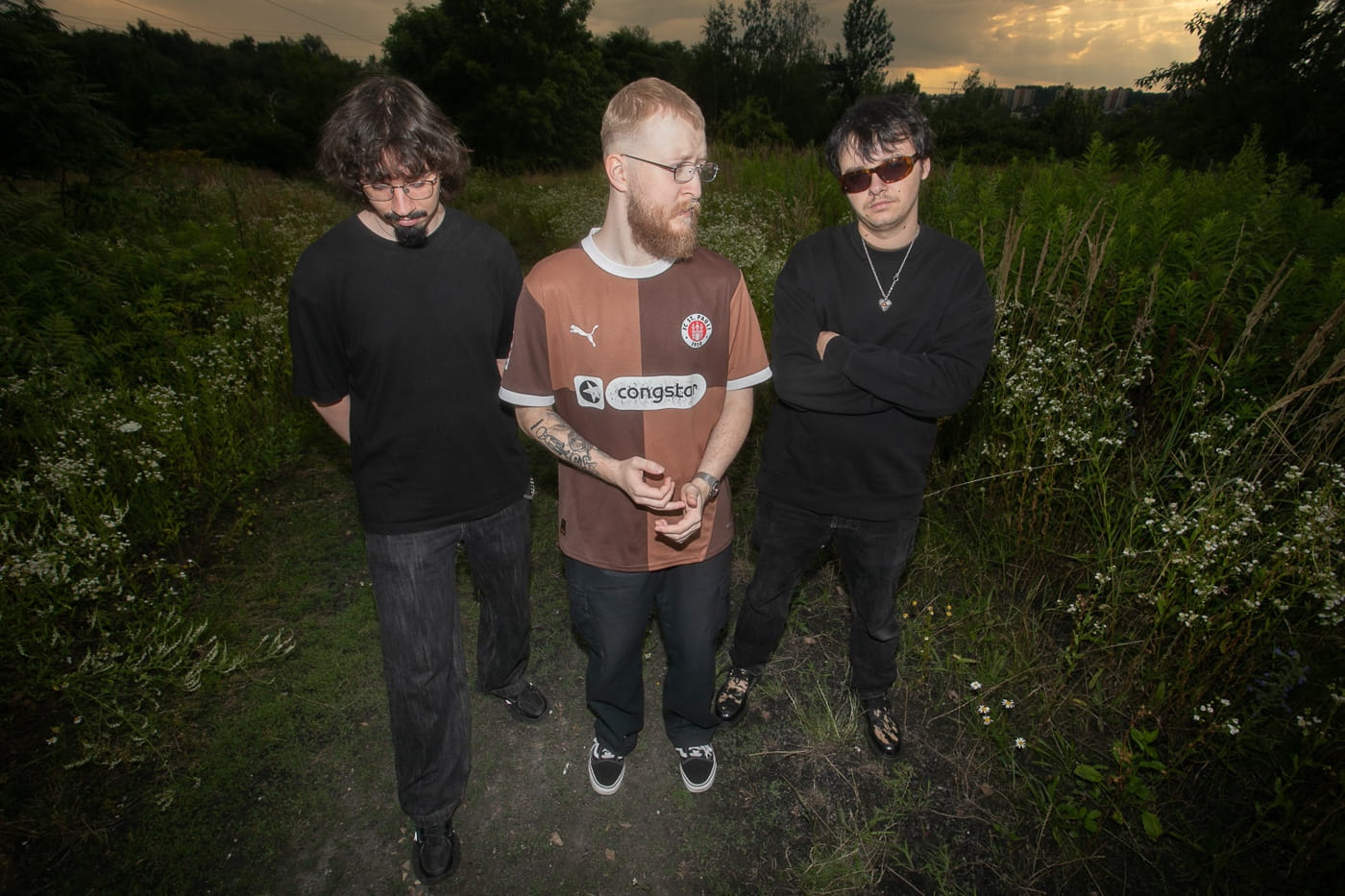


On August 20, after Firstline had played Oxnard midway through their US tour, somebody from the crowd came over wearing a football shirt from one of the countries the band call home. They had been living alone in California for three years. Before much else was said, the shirt had already made the connection.
Then the person told them that Firstline’s music had stayed with them through those three years. The songs had helped with the weight of migration and with living in California during a period when immigration had become a constant source of pressure for Latino communities. Firstline had written those songs from their own lives, years before meeting this person thousands of kilometres away.
“We wrote those songs from our own experience. We know where they come from. But hearing that someone on the other side of the world was living through exactly the same thing, and that they found something in those lyrics to hold on to, that changes the meaning of the songs forever. They’re not just ours anymore.”
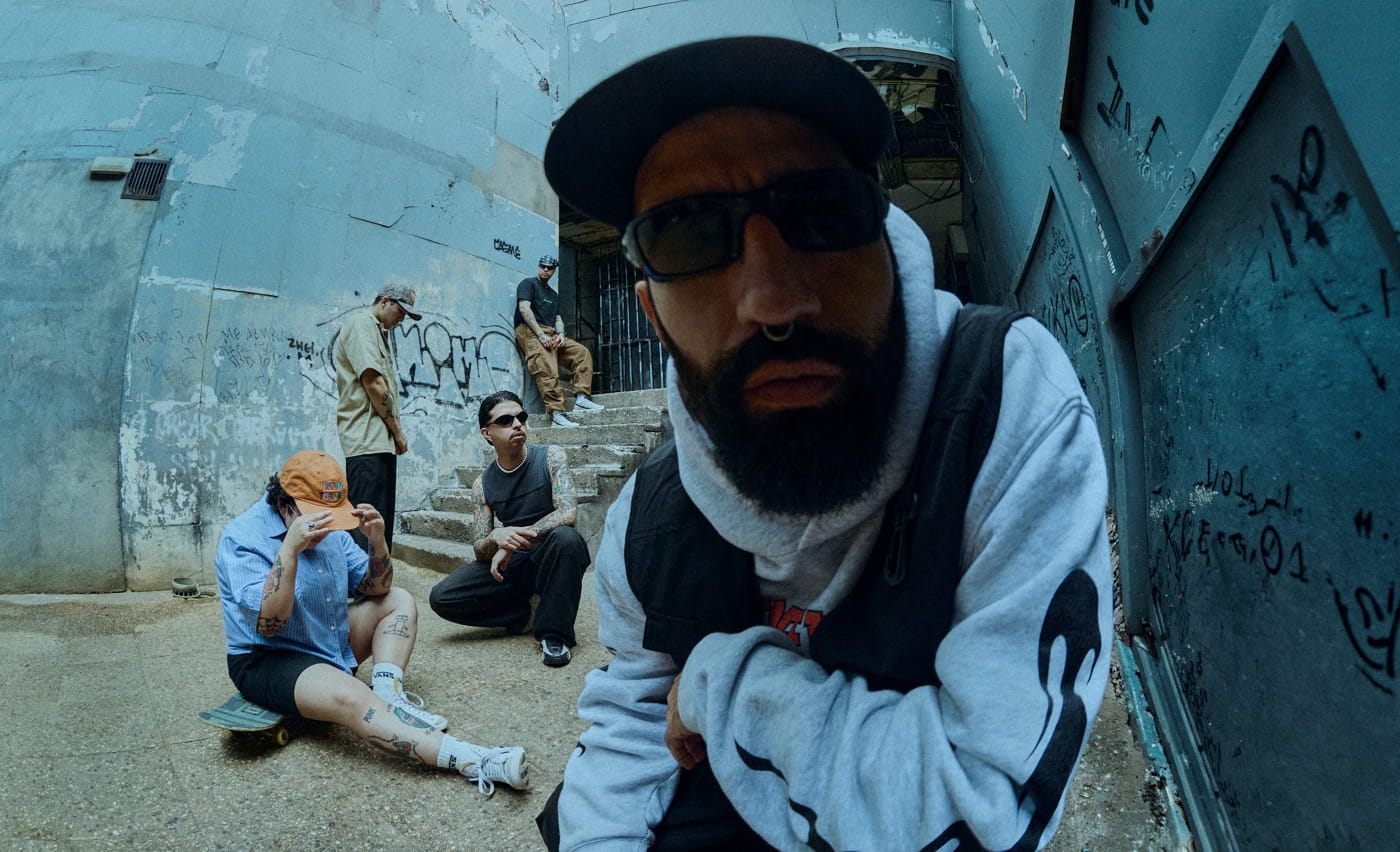
That meeting came after years of movement in different directions. Firstline are based in Madrid and presented by Asilo Records, but the lives inside the band run through Colombia, Venezuela and Spain. David Méndez, also known as Rat, is from Bogotá and has been in Spain for ten years. His first years there included construction work, kitchens and shelters, the sort of jobs he could get without a network, contacts or papers.
Music kept going alongside all of it. He met Maizo and Gus around people carrying similar stories, making music and looking for somewhere to put whatever they were dealing with. Firstline started from those friendships.
“The band was that before it was a band.”
Maizo also came from Bogotá, arriving in Spain eight years ago. Madrid initially struck him as a city that ignored you until you worked out how it operated yourself. He repaired aeroplanes and took other work outside his field before getting the opportunity to work in photography, another long-term interest of his. The music scene arrived later, once the hardest period of settling in had passed.
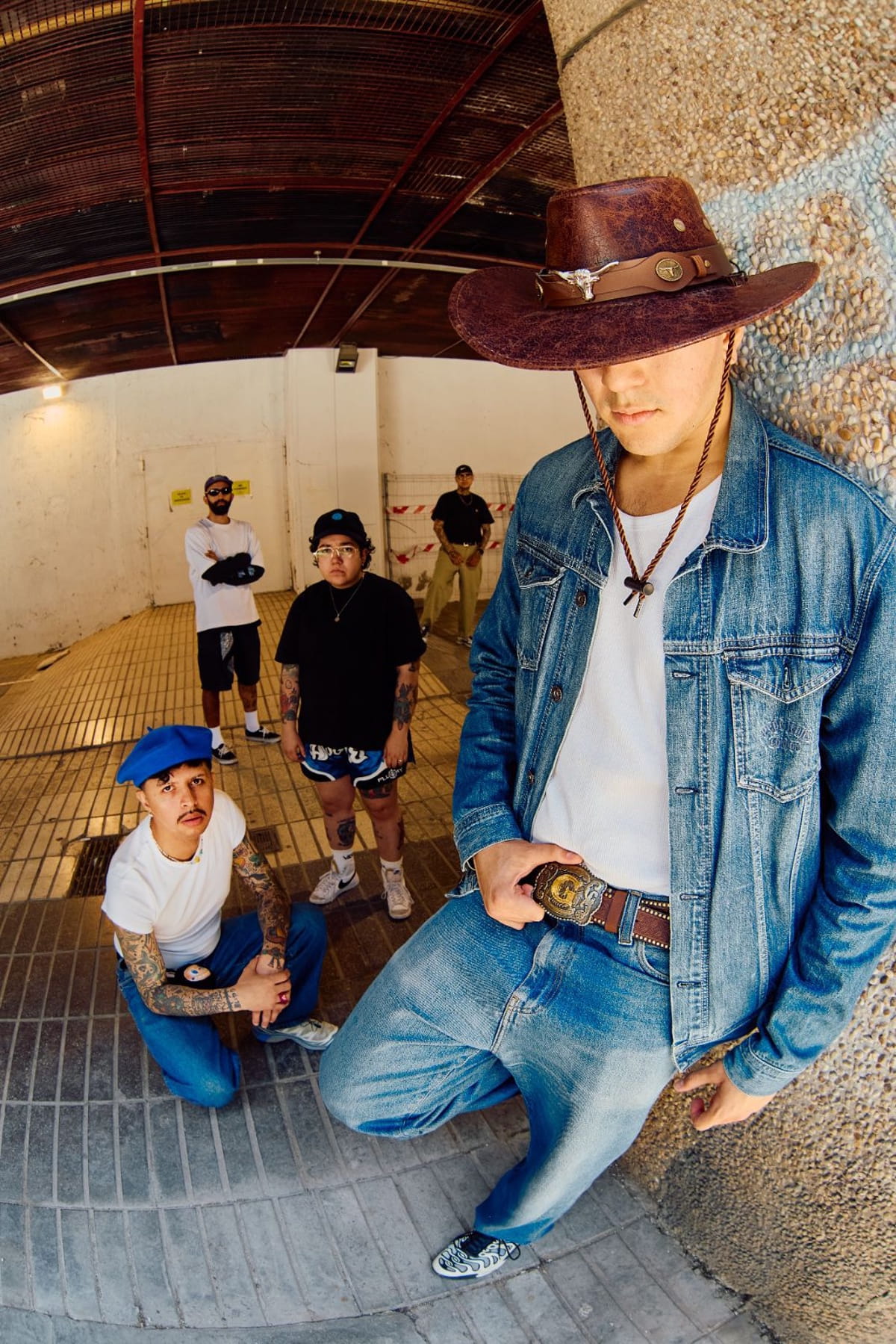
Gus moved from Barranquilla seven years ago. The difference was immediate: the rhythm of the city, the weather and the way people interacted were all far removed from home.
He had come to study and to live somewhere outside what he already knew. At his first Madrid shows he felt like a spectator standing inside somebody else’s space.
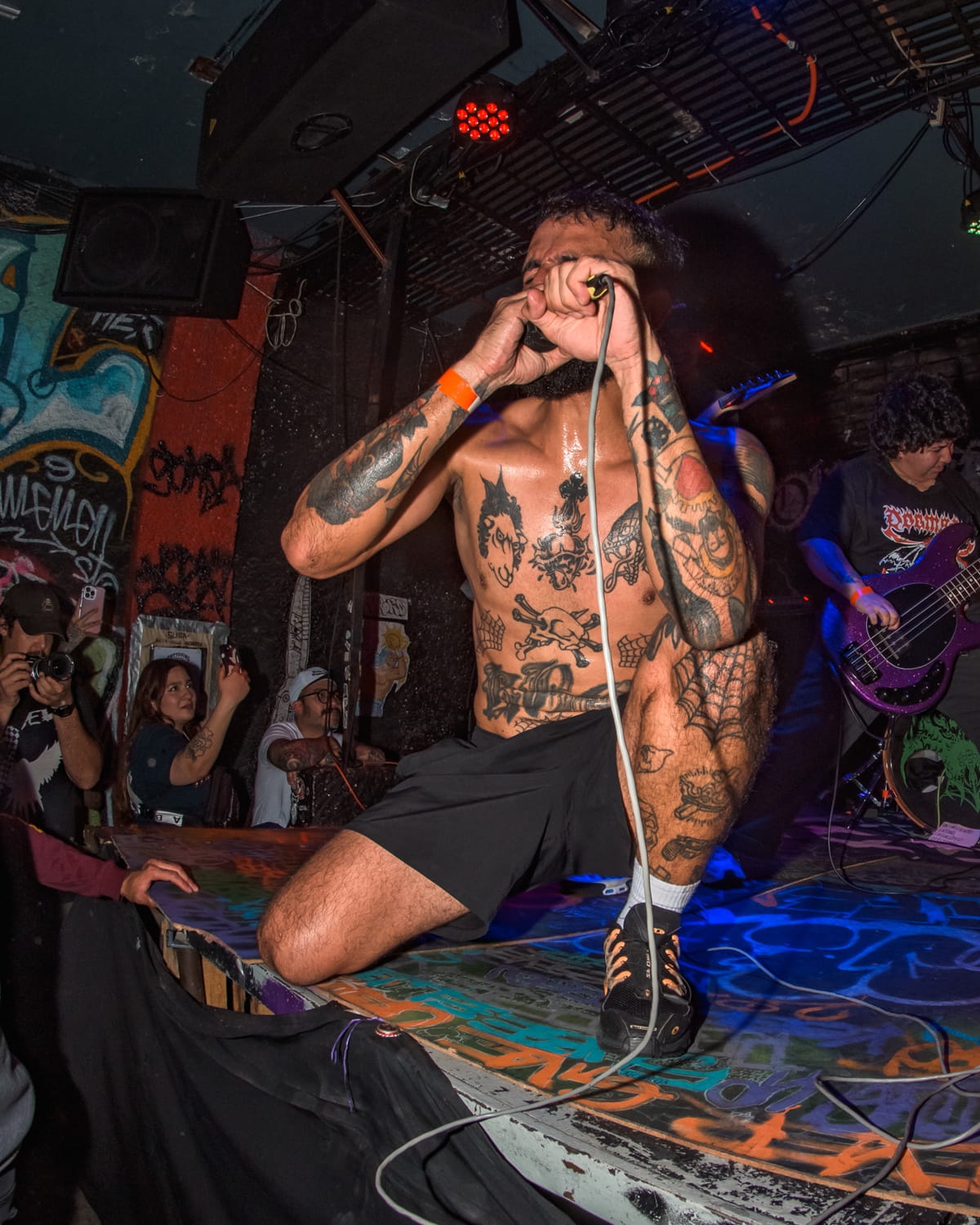
Kiwi came from Venezuela with her family as a teenager, part of the Venezuelan diaspora looking elsewhere for other possibilities. Moving younger meant adapting differently, while also losing things earlier.
She grew up between two places without feeling that either one belonged to her completely. Hardcore entered her life in Spain, which meant she was learning that scene from the outside at the same time as she was learning a new country.
Gaspar’s route is different again. He is the son of Venezuelan migrants and grew up in Spain. He never experienced the arrival himself, but grew up around his parents’ story and the recurring question of where he belonged within it.
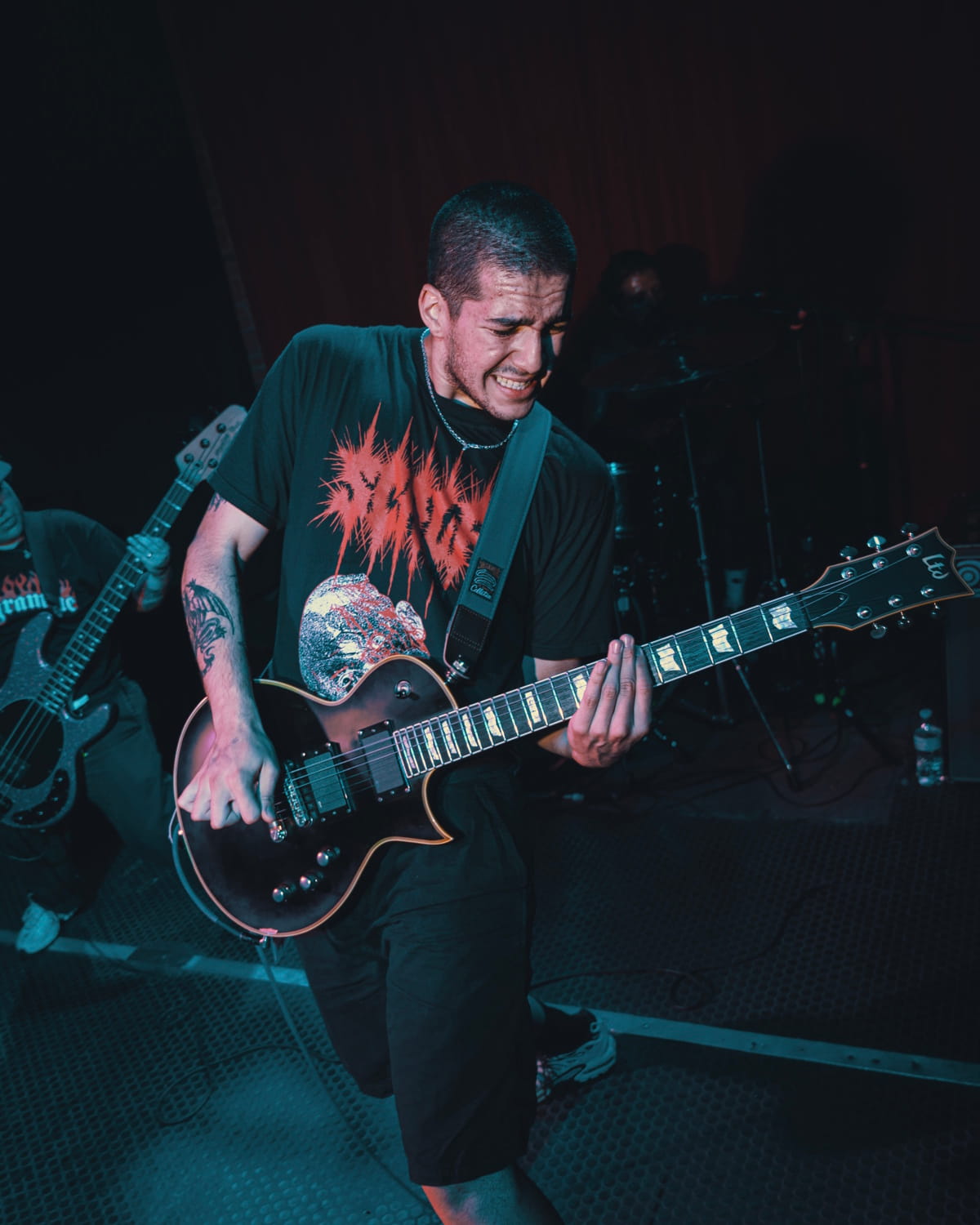
“Even though we come from different countries, we feel like we’re part of the same continent, the same history.
Colombia, Venezuela, and all of Latin America share a very particular sensibility in how we see the world, how we resist, how we laugh, how we feel, and how we fight through whatever comes our way. That bleeds into everything we do.”
Madrid’s hardcore scene did not immediately solve the question of belonging.
From Firstline’s perspective, the stages had historically been built around Spanish artists, with Latinos much easier to find in the audience. Becoming one of the bands meant pushing into space where they did not necessarily see themselves represented.
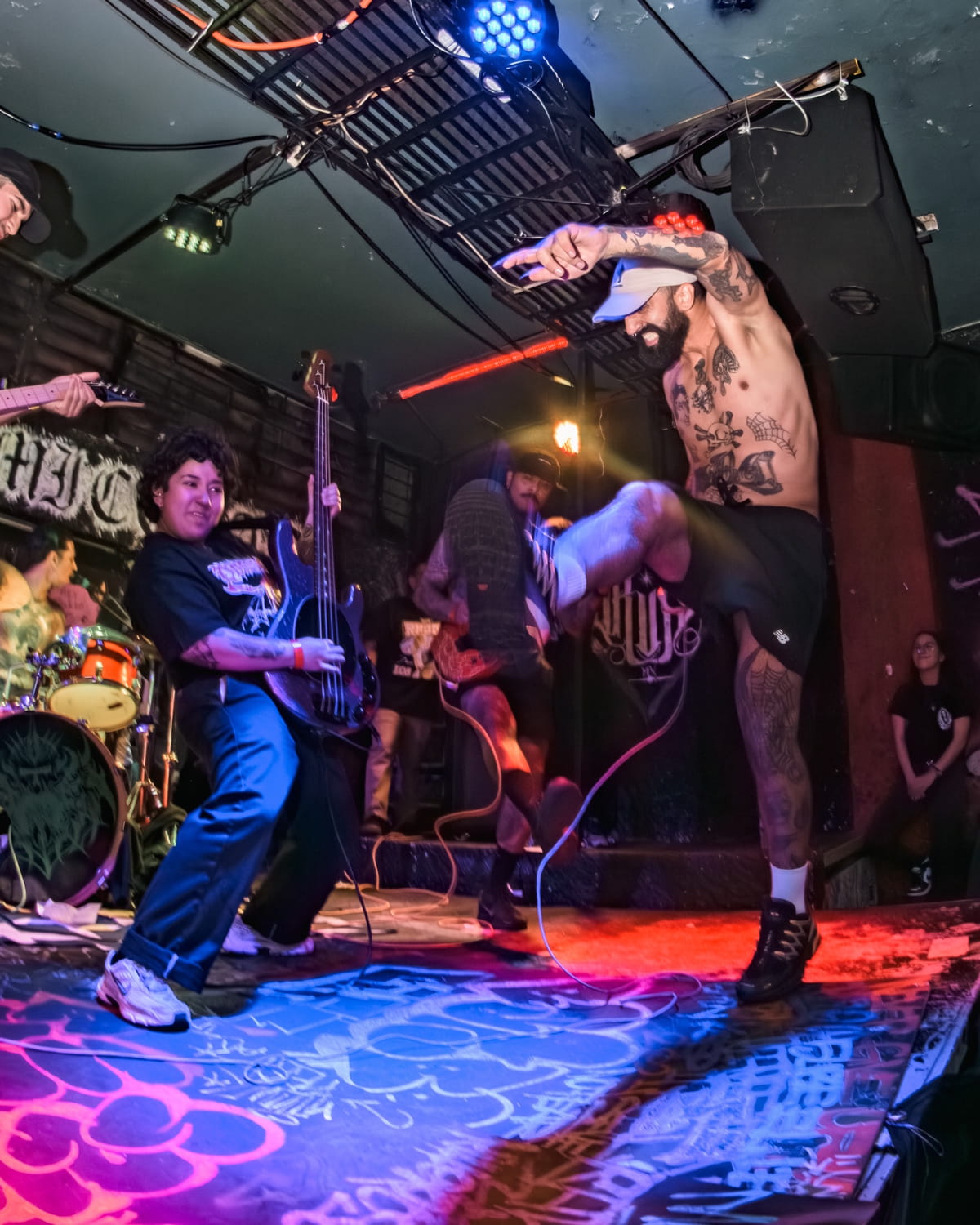
The cultural gap could also get tiring. Different ways of talking, behaving and reading a room sometimes required explanations that other bands did not have to make.
“The hardest part is getting people to really understand where you come from. Getting them to empathize with your way of communicating, your way of being, your cultural codes. Sometimes you feel like you have to over-explain yourself just so people understand there are other valid ways of seeing the world. That wears you down.”
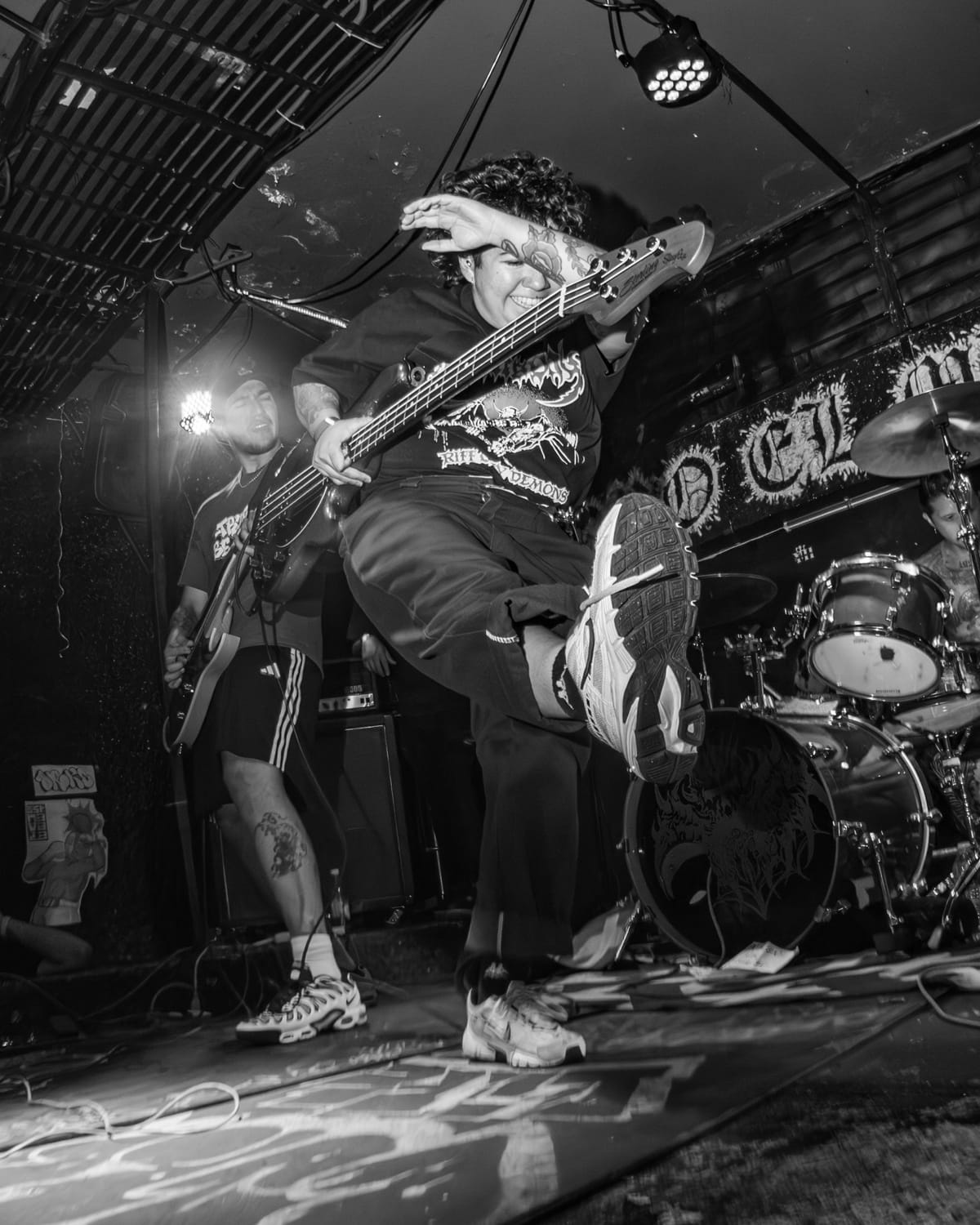
Their families needed their own explanation of hardcore. Parents who had grown up with vallenato and salsa suddenly had children involved with bands that screamed. The first response was sometimes brutally simple: “but what’s this for?”
Support came anyway. The songs gave Firstline somewhere to talk about stories their families knew intimately and had not always known how to tell themselves. Their parents could hear their own lives inside those stories even if they would never have chosen the accompanying guitars.
For the band, that support also carries pride. Their families may come from another musical generation, but they understand what Firstline are trying to say and recognise themselves in parts of it.
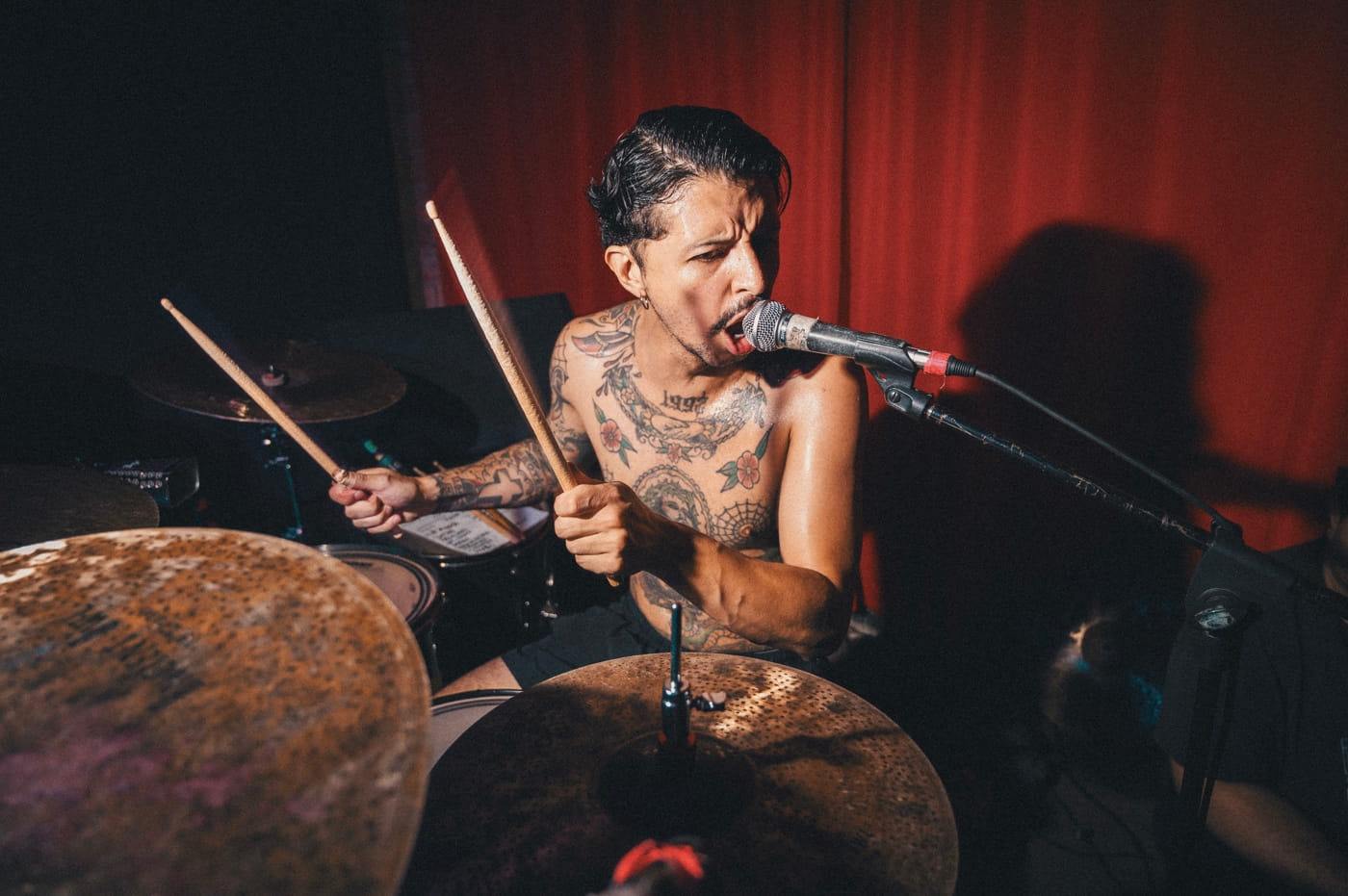
By 2024 Firstline had released their debut album, “No Place Like Home”.
They had played around Spain as well as London, Oslo, the United States, Mexico and Colombia, sharing stages with F.A.C.A from the US, Colombia’s Grito, Brothers Till We Die from Spain and Peruvian band Tomar Control.
The 2025 run through the United States, Mexico and Colombia ended up feeding directly into “TRIBU”.
Wyświetl ten post na Instagramie
Latin America changed how the band experienced some of their own songs. They came away from those dates talking about people working with very little, figuring things out with whatever they had and fighting for opportunities that could be easier to access in Europe. Live music itself could be harder to come by.
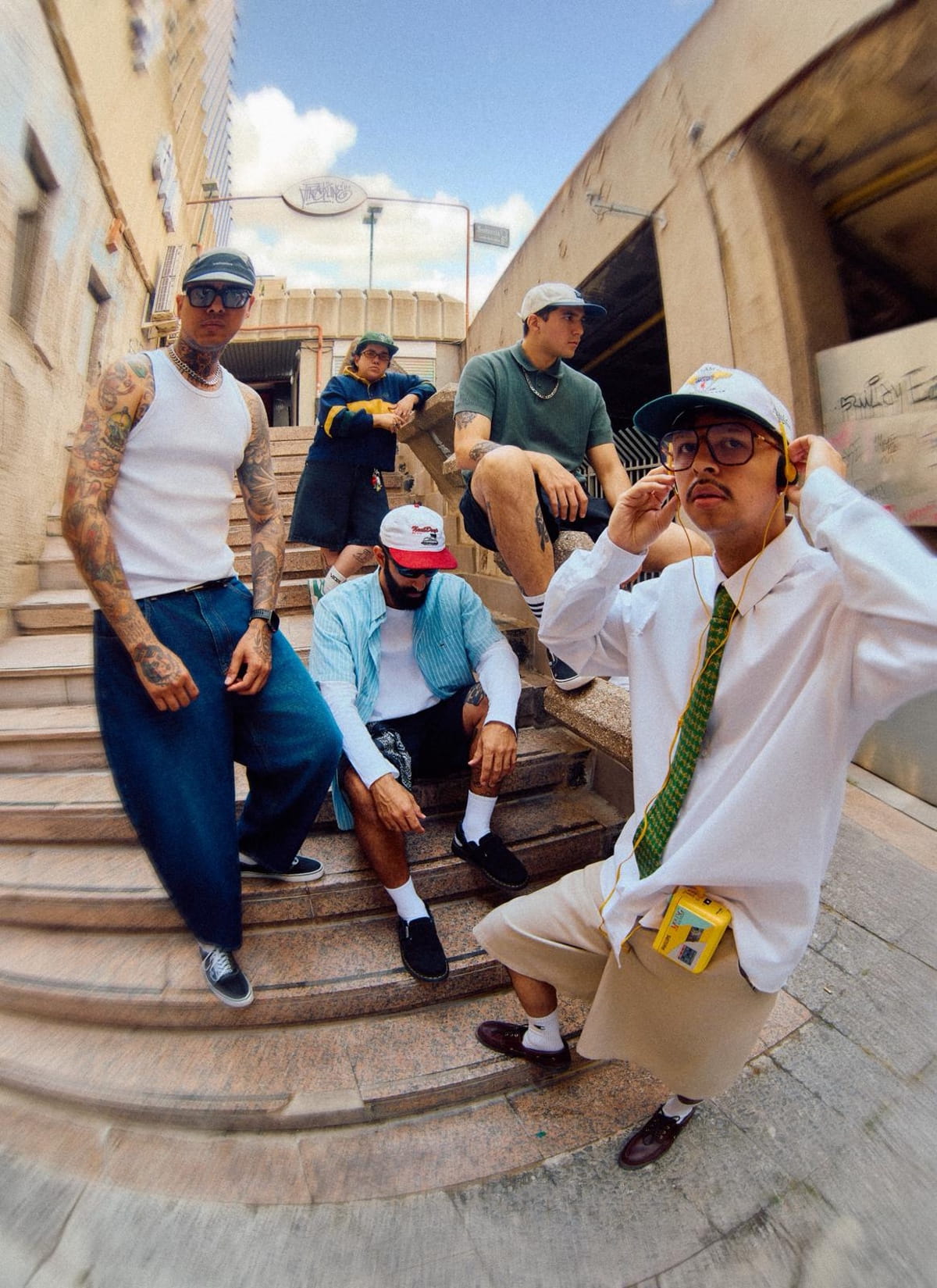
They also found a difference in how shows were treated.
“Latin America experiences music from a different place. There, people work with the bare minimum, they figure things out, they fight for every opportunity. The audience values every single show enormously, because access to live music isn’t so easy.
In Europe there are more resources and more ease, and sometimes that means the sense of effort and community gets a little lost. The energy there is more intense, more urgent.”
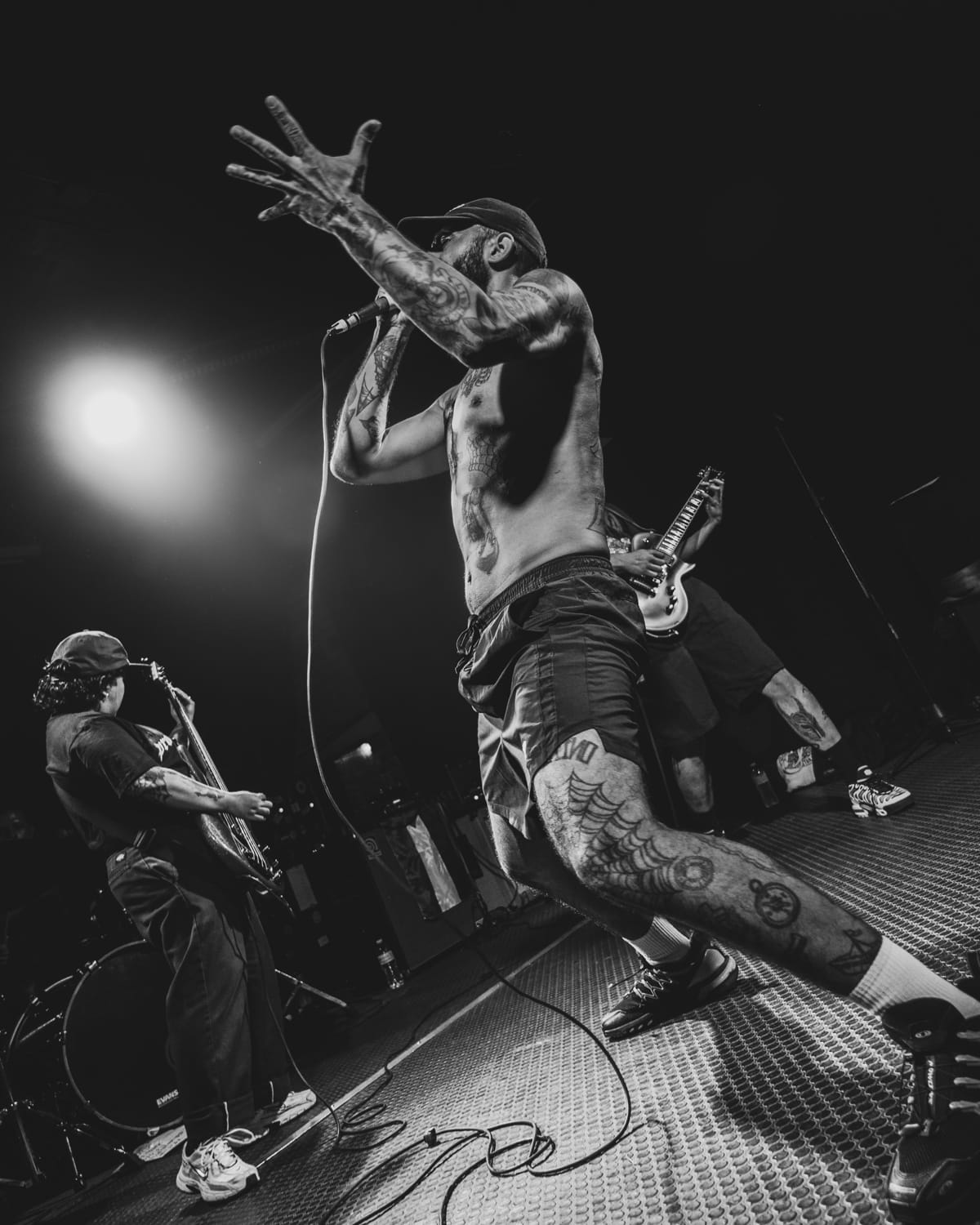
Mexico caught them with the level of commitment in the room. Audiences could make them feel at home in a country that was not theirs, showing what the band remember as genuine gratitude for the show itself. Songs that occasionally met more distance in Europe were being taken up as something shared.
Colombia carried another kind of weight. David and Maizo were back in Bogotá with a record called “No Place Like Home”. The tour also reached Cúcuta, where the reception stuck with them partly because smaller Colombian cities do not get the same amount of touring traffic.
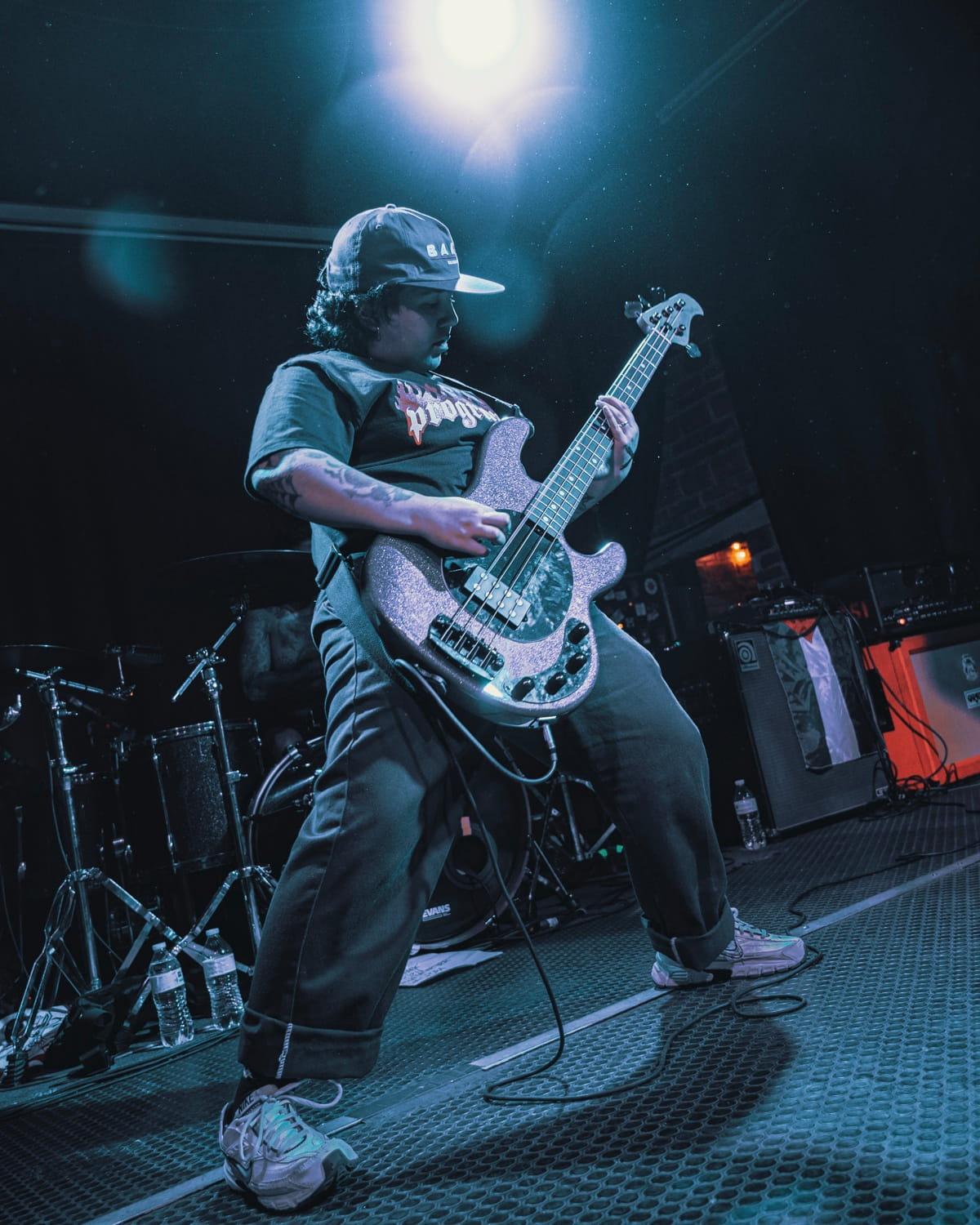
For Kiwi and Gaspar, it was their first time in Colombia. Gaspar was meeting part of his family’s Latin American history directly, starting with the food and everyday interactions and extending all the way to altitude sickness at Bogotá’s roughly 2,600 metres. Things David, Maizo and Gus hardly had to think about were completely new to him.
Audiences there largely read Firstline as their own.
“We didn’t arrive as a European band playing hardcore with Latin influences. We arrived as what we are: Latinos who live in Spain.”
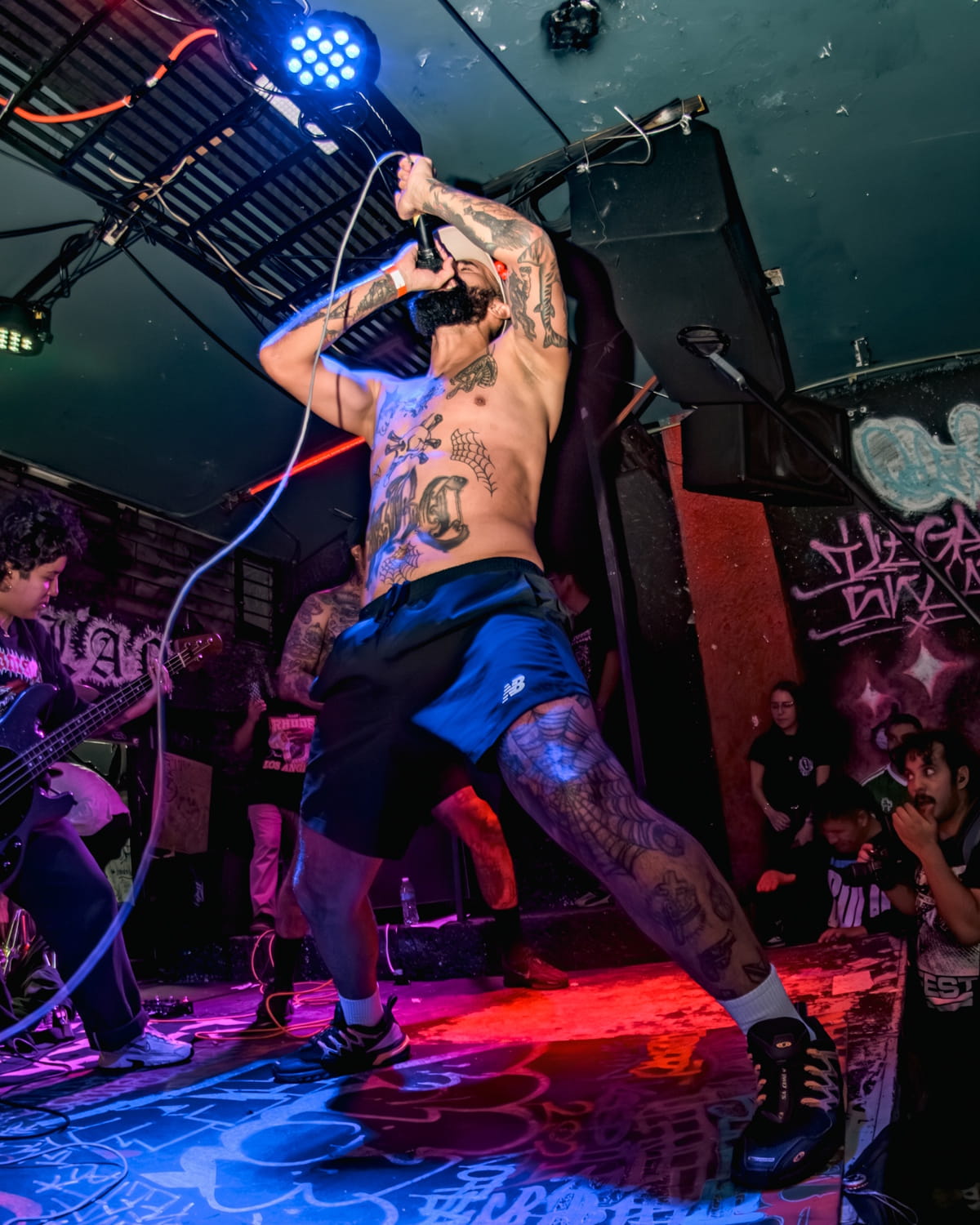
That is also how they prefer to use “Latin hardcore“. The term can easily become another graphic slapped on a poster or a marketing shortcut. Firstline are aware of that, especially at a moment when they see Latin identity turning into something fashionable outside the communities it comes from. They point to the Bad Bunny line about how “now everyone wants to be Latino.”
For them, the phrase stays literal. They are Latinos making hardcore, carrying their own sounds, symbols and ideas into it. They want Firstline understood as a Latin hardcore band working from Europe and connecting outward.
“TRIBU” arrived in June 2026 and became their most directly political record so far. The band have connected it to migration, identity and what they see as discrimination and increasingly normalised radical ideas around them. The title also widens the circle beyond passports or language.
“The tribe isn’t a geography. It’s not just Latin America, it’s not just Spanish speakers. The tribe is anyone who has had to rebuild themselves far from where they were born, who has lived migration as a loss and a gain at the same time, who carries two cultures without ever fully belonging to either. The name of the EP is a statement: we exist in community, not in isolation. The tribe is chosen as much as it is born into.”
David produced the EP and wrote most of its music and lyrics. He is also Firstline’s drummer and has composed much of the band’s catalogue. Writing has been with him since childhood, and he still starts with whatever he is living through or needs to get out at the time. Whatever he is currently listening to can enter the process too, with the idea of keeping his roots close already somewhere in the background.
On “TRIBU”, that becomes dembow and merengue at the level of rhythm before the band have even started talking about samples or references. Once David brings songs into rehearsal, everyone adds their own parts.
“I wanted to give the songs a special aura using elements that accompany Latin culture and sounds that are part of our identity, without leaving aside the force and energy of hardcore punk and metal,” he said.
Daniel Flórez mixed and mastered the EP at BigStudio.
There was also a version that never made it. Firstline had wanted another artist involved on one of the songs, tried the collaboration and found that the chemistry was wrong for what they wanted to communicate. They dropped it.
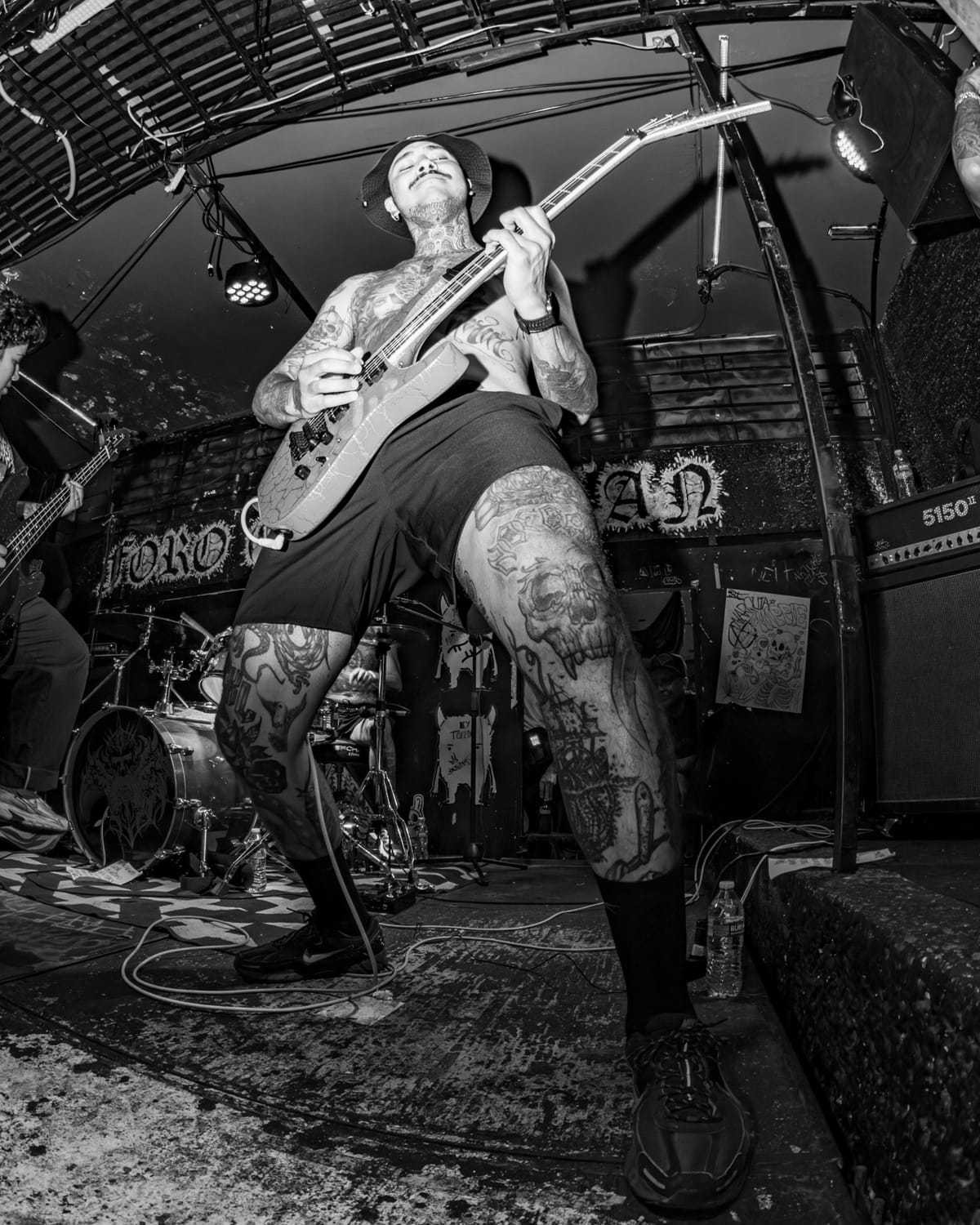
Their basic rule for combining these sounds is fairly simple. Hardcore and Latin rhythms need enough room to remain recognisable on their own terms. They keep experimenting, but neither side should disappear inside the other.
With funk and pop pushing further into hardcore these days, it is a real pleasure to hear a mix this catchy without sanding off the harder edges. Firstline sound tight, direct and properly in-your-face, but there is still something loose and natural running through the whole EP.
And yeah, these guys are a proper crossover bomb. Latin American rhythms, fast hardcore, danceable sections that could easily grab someone into Slope or Turnstile, then straight back into harder territory. The energy still comes from small rooms and underground shows, not giant festival stages. Where that takes them next, who knows. For now, “TRIBU” is ridiculously fun, colourful and full of movement, the kind of EP that keeps throwing another flavour at you before you have finished processing the last one.
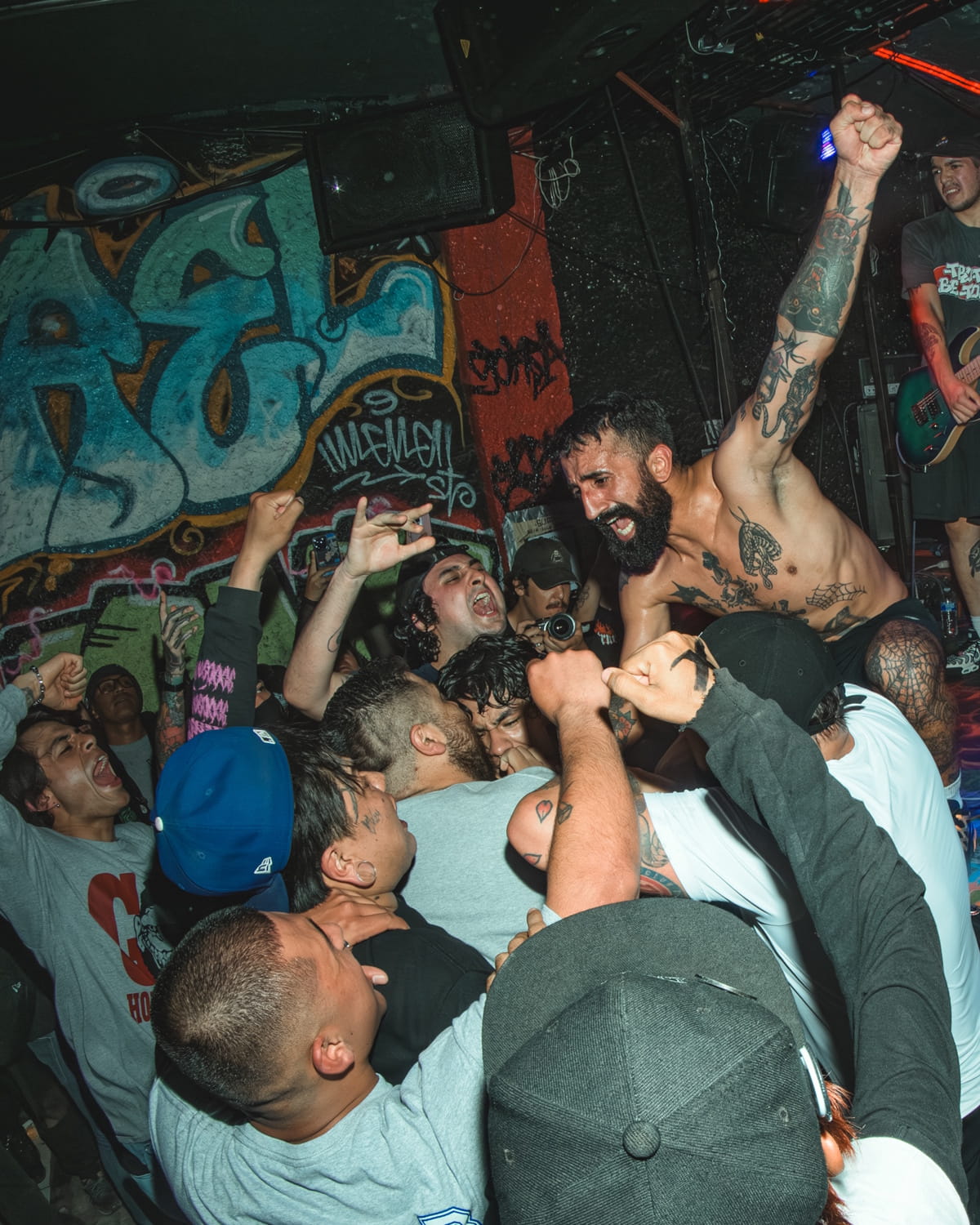
You can hear that most clearly when the songs are broken down by the second.
“Niveles”, made with Mexican band Uno a Uno, begins with its drums carrying a dembow pattern until roughly 0:37. It is the same rhythmic base that has driven reggaetón since the early 2000s. At 2:27, Wisin & Yandel appear through a direct sample.
The reference is that specific. It comes from the generation of reggaetón Firstline grew up hearing at home and around their neighbourhoods.
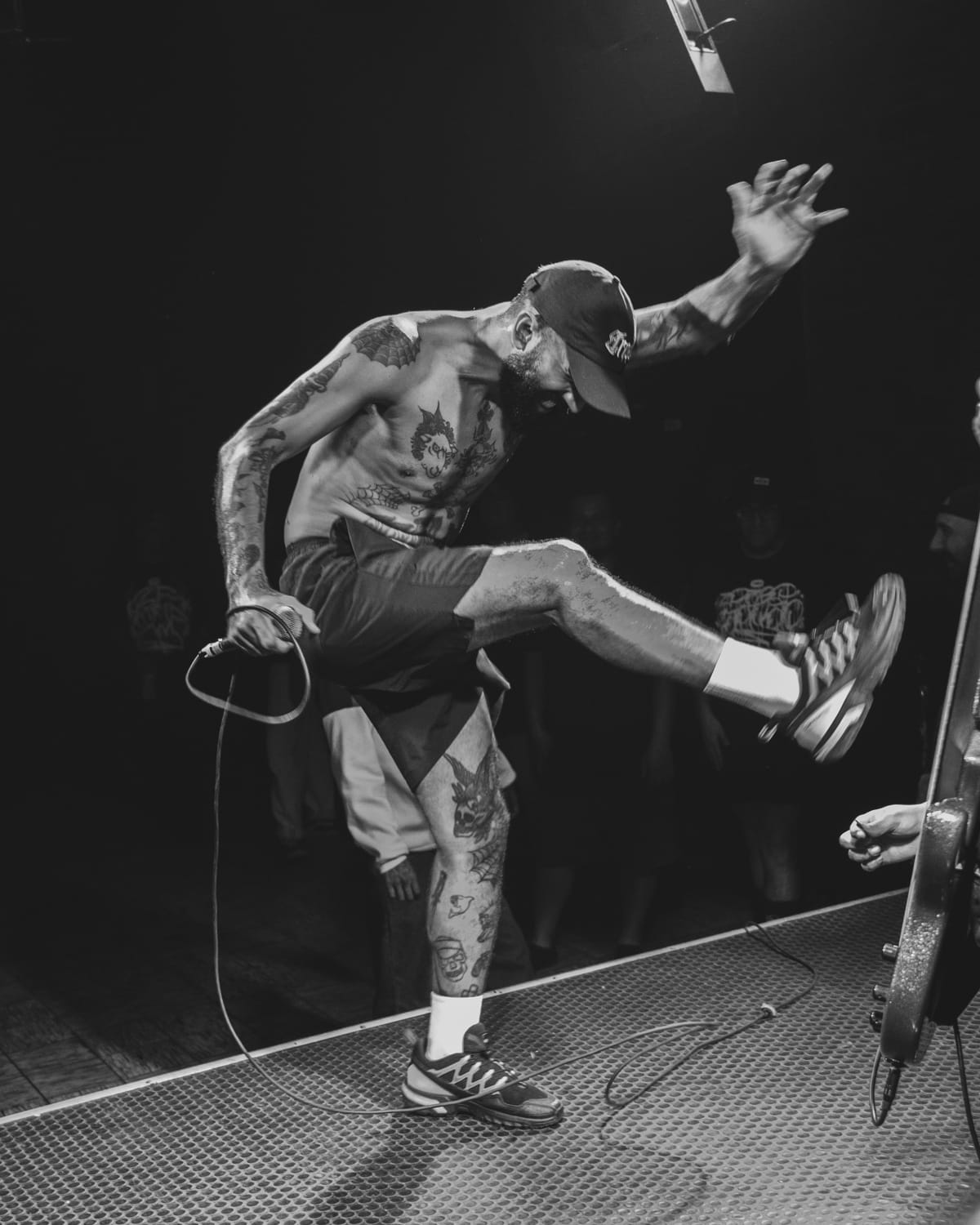
“Niveles” also carries one of the EP’s street-level ideas of survival. Its lyrics keep coming back to avoiding traps, holding your ground and refusing to be pulled down. Uno a Uno bring another Latin American hardcore connection directly into the track.
“Jauría“, featuring Germany’s Defiance HC, moves between generations in the space of less than half a minute. At 1:15 the line “pa’ fuera, pa’ la calle” points directly towards El Gran Combo de Puerto Rico and “No hay cama pa’ tanta gente”. The rhythm shifts with it, moving towards salsa before the song goes back into hardcore.
At 1:41 comes another recognisable piece of the band’s youth: the phone sample from Wisin & Yandel’s “El Teléfono“.
El Gran Combo were playing at family parties. Wisin & Yandel were blasting around the neighbourhood. Salsa belonged to their parents’ generation and reggaetón followed them through their own youth. The members of Firstline are different ages, but they do not experience those styles as opposing worlds. Both are part of the same musical history they grew up inside.
“Nobody sat down and said ‘let’s put some merengue in this’. It came out because it’s the rhythm we carry in our bodies, from the tropical world that’s always with us.”
The opening song, “Firstline“, pulls from another kind of memory.
David brought in the introduction from Jorge Barón Televisión’s “El Show de las Estrellas”, a Colombian music programme that spent decades bringing major artists onto television screens across the country. José José, Julio Iglesias, Juan Gabriel, Soda Stereo and Village People were among the artists who appeared on it.
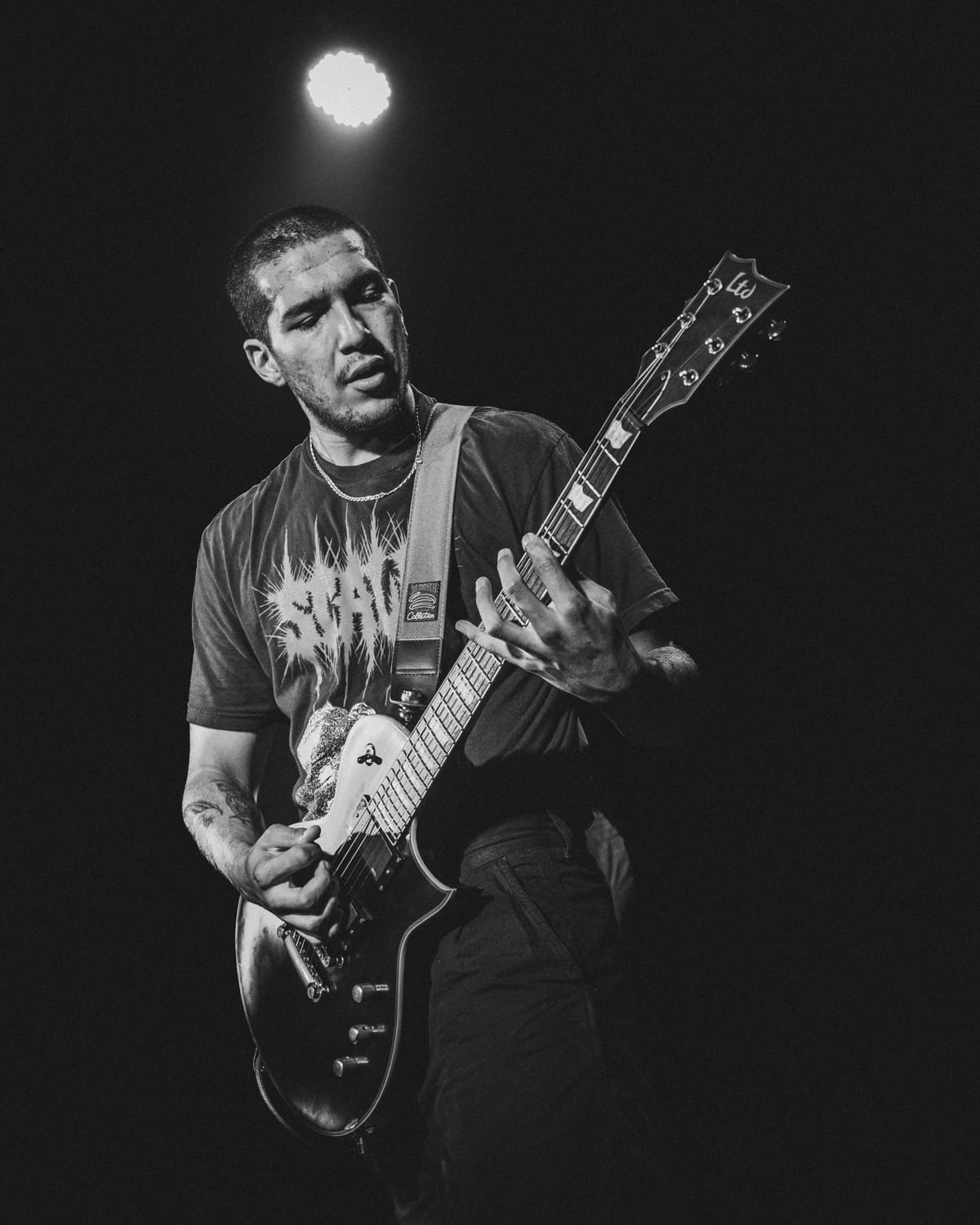
For Colombians and Venezuelans from a certain generation, hearing those few seconds can bring back Sunday television at their grandparents’ house. In Madrid, somebody with no connection to that history may simply hear a sample.
Firstline are perfectly comfortable with the gap.
“We’ve always said there are things on this record that aren’t made for everyone to understand the same way, and that’s part of the point. Not everything has to reach everyone. Music that tries to be universal for everyone ends up being specific to no one.”
David remembers “El Show de las Estrellas” from his childhood. It also carries another small connection for the band: the programme gave Colombian and international musicians somewhere to put their music in front of people. Firstline see a loose analogy with what they are doing now with their own work.
“We’d rather have someone who grew up with Jorge Barón feel it in their gut, even if someone somewhere else just hears an interesting sample and it sparks curiosity about the EP’s and the show’s storytelling.”
It is the only television sample on “TRIBU”.
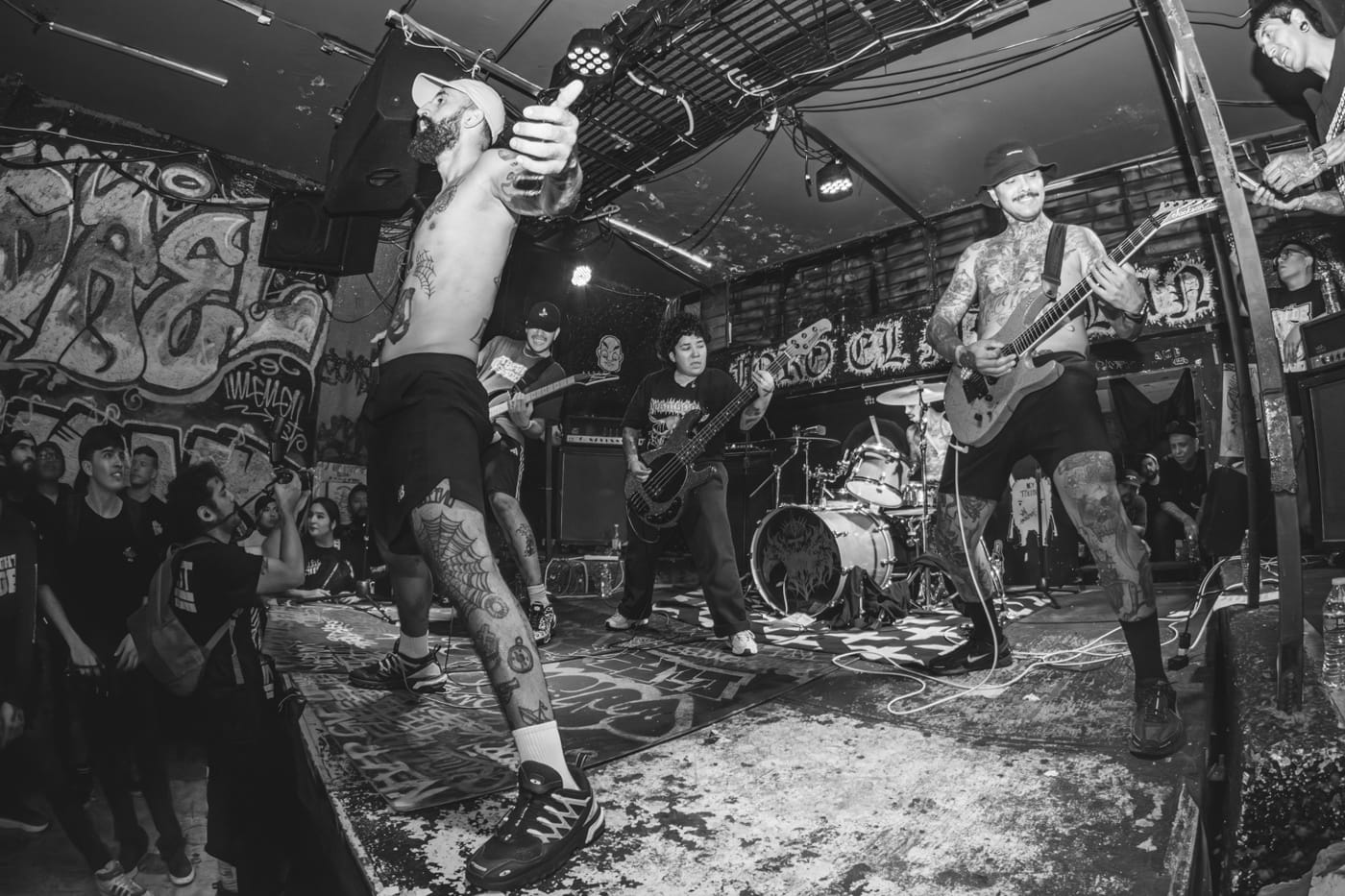
Venezuelan urban artist Razzer Buccarelli also appears on “Firstline“, taking the guest list outside hardcore and giving the song another direct line into the Latin diaspora.
The track itself is the EP’s most celebratory moment. Its lyrics call people to the front, invoke Latin America directly and raise a hand for family and for migrants who refuse to bow down.
“Tibios” turns much harder. It targets people Firstline see as burying their roots for convenience, trading principles and looking away when conflict arrives. The lyrics also include an explicit reference to deportation, tying the song back into the fears that were already around the band before their 2026 US tour.
“Bitácora” goes closer to David’s own history. It contains a sample from “Poeta“, a Colombian-German-Swedish film, and works as a letter looking backwards at what had to be left behind during migration. Distance, regret and gratitude for the people around him now all appear inside it.
Several of those people are named directly: Maizo, Gus, Gaspar and Kiwi, followed by Asilo.
“Maizo, Gus, Gaspar, kiwi, siempre en la zona
Con todo Asilo haciendo historia mientras suena esta rola.”
“Cacique”, featuring F.A.C.A from the United States, closes the EP by going further back into ancestry.
A cacique is a political, social or spiritual leader of an Indigenous community. The word comes from the Taíno “kasike” and was adopted by the Spanish during the conquest for local leaders among Indigenous peoples in the Americas.
The song uses the word directly as its central declaration:
“We are the caciques of a village you could never burn down
We are a race on fire that you couldn’t erase with fire
Sons of a war I never wanted but had to fight
We are a jaguar facing the enemy when it invades this jungle.”
Wyświetl ten post na Instagramie
The lyrics continue through ancestors, ritual and the idea of surviving attempts at erasure, with F.A.C.A and Firstline named together towards the end.
The band also supplied another short lyric, from “Preso”, that puts origin and exclusion in much plainer terms:
“Prisoner
Even while free, I was a prisoner
You’ve treated me with contempt
Because of my origin, I fall into this
Never forget.”
Firstline have had some resistance from hardcore listeners over all of this. It is not always direct. They describe pockets of the scene where purism remains strong and where moving outside one accepted version of hardcore can be read as diluting it.
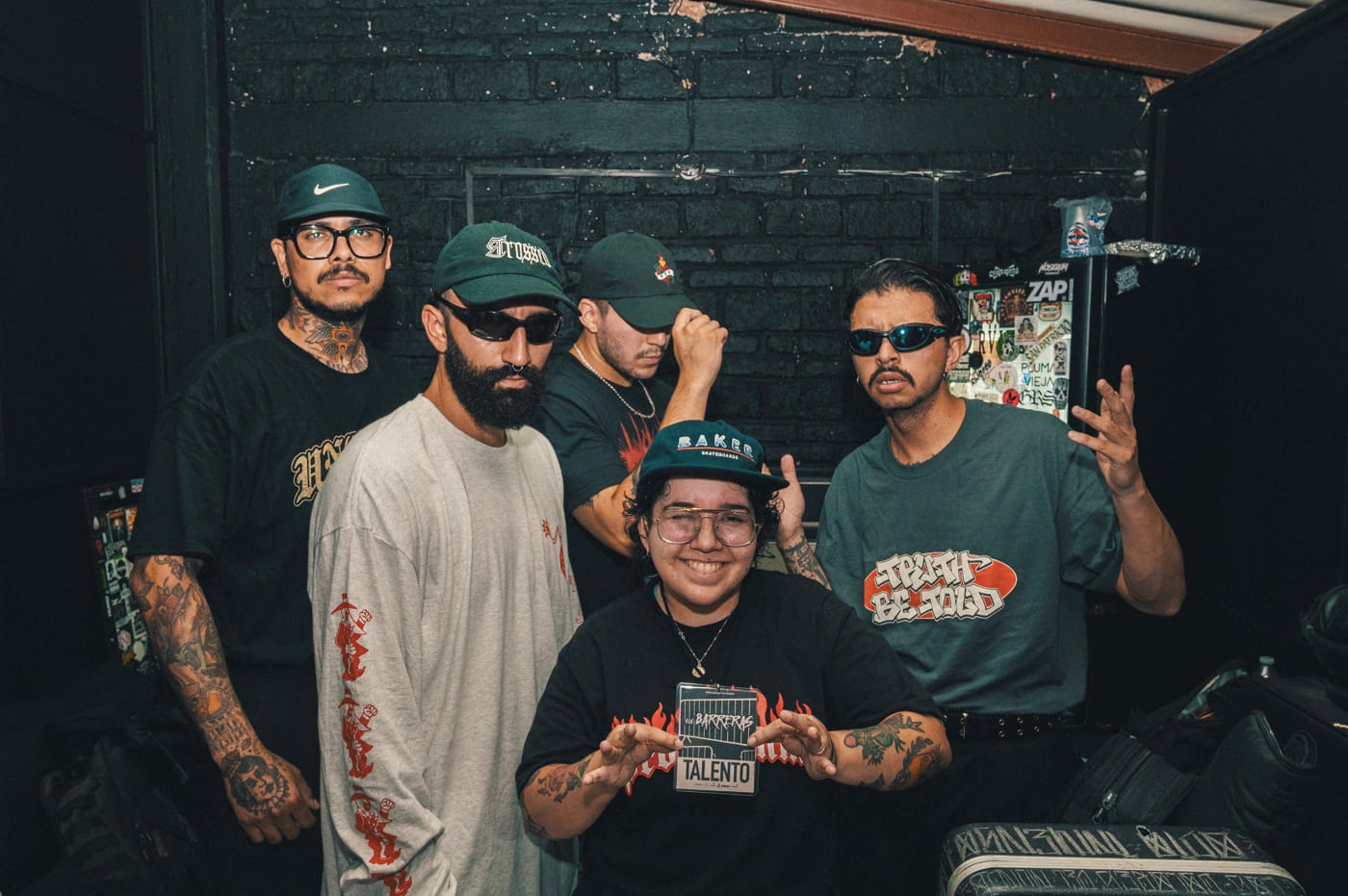
The production has taken criticism too. Some listeners have told them their songs sound too clean. Firstline have stuck with that choice. Their position is that hardcore punk can still be recorded and presented with the level of quality they want to give an audience.
Before heading to the United States in August 2026, they already expected “TRIBU” to change once those songs were being played there.
The band spoke about ICE, deportations and families being separated, describing Latino migration in the US as an active crisis with identifiable people caught inside it. Their lyrics had been written from Europe, but they expected the words to carry another weight once they were standing on American stages in front of Latino audiences who had lived similar stories.
They also intended to speak from those stages.
“There will always be words and a message from the stage, because we can’t play these songs right now without saying something. That would be dishonest.”
Before crossing the Atlantic, Firstline played a July 19 benefit for Venezuela at Sala Wurlitzer in Madrid.
The US run started August 14 in Tucson. Phoenix followed on the 15th, Yuma on the 16th, Pomona on the 17th, Bakersfield on the 18th, Visalia on the 19th and Oxnard on the 20th. They continued through Fullerton on August 21 and Long Beach on August 22, then crossed the country for New York on the 25th, Philadelphia on the 26th and New Jersey on the 27th.
Wyświetl ten post na Instagramie
Somewhere between Tucson and Long Beach, the thing they had predicted before leaving stopped being hypothetical.
Oxnard gave them the clearest example. Somebody who had spent three years alone in California was standing in front of them saying these songs had been company during their own migration and had helped them carry what life there had become.
The football shirt made the first connection. The conversation made the rest.
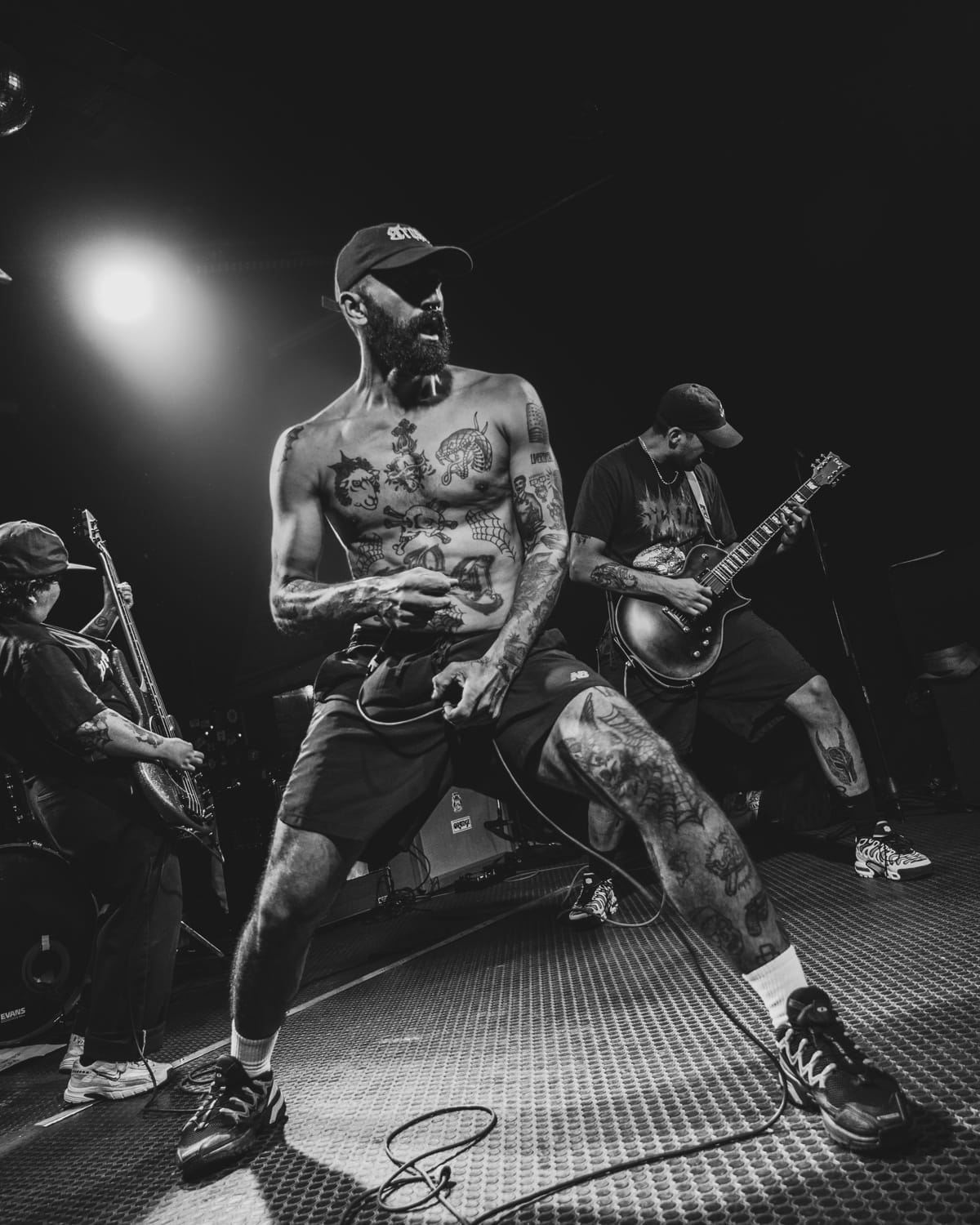
Firstline had already learned something similar in Mexico and Colombia in 2025, when audiences thousands of kilometres apart heard the same songs through very different personal histories and still took them as their own. By 2026, “TRIBU” had travelled back through some of the routes, cultures and communities that helped create it in the first place.
The band are also due back in Mexico in November.
“They’re not just ours anymore.”
🔔 IDIOTEQ is ad-free, independent, and runs on one person’s time. If you want it to stay that way: DONATE via PayPal or SUPPORT via Patreon.
NEW: IDIOTEQ Explore 🗺️ Browse 15+ years of our archive by city, country, and style. Find artists on the world map or trace related sounds through the styles map.
Stay connected via Newsletter · Instagram · Facebook · X (Twitter) · Threads · Bluesky · Messenger · WhatsApp.