

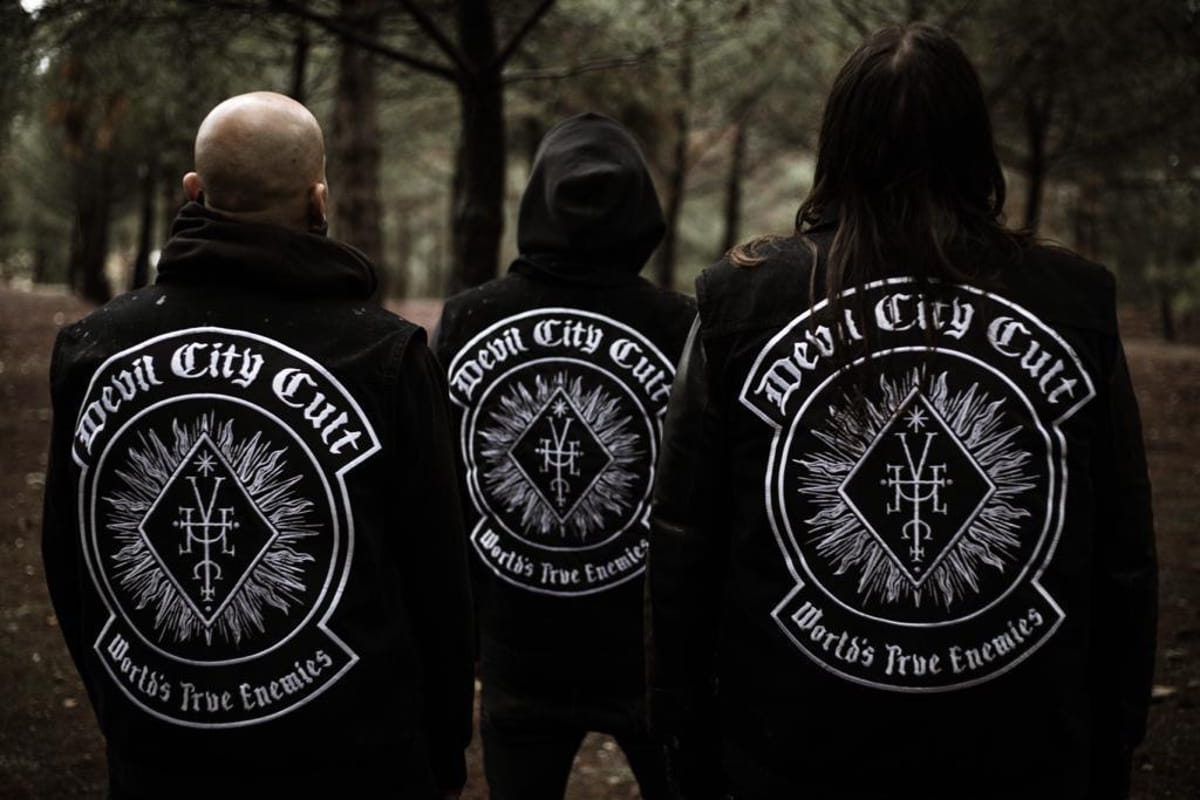
Pablo plays bass in Devil City Cult, Gravecurse and Inward Cold. The two guitarists from Sacramento are also in Inward Cold. Go back another step and the three people in Devil City Cult lead to Iraka, Coilbox, Terroristars, Cuernos de Chivo and Khmer. In Madrid, a band list quickly turns into a people list.
Devil City Cult are a relatively recent band, but Pablo, vocalist Hevor and guitarist Rubén had known each other around Madrid’s metal underground for years. Pablo was the link between the other two. He met Rubén through the scene and the bands and projects Rubén had played in, then met Hevor by a different route. The initial thought was loose: “we should get together and see what happens.” Rehearsals and songwriting slowly turned that into a band, once the songs started settling into a sound they recognised as their own.
There was plenty behind them already. Iraka gave Pablo a certain openness and much of his DIY habit. “You don’t wait for someone to give you permission to do things. You compose, record, organize shows, meet people, and make things happen yourself.”
Hevor came from Coilbox with a different background and his own approach to vocals and writing. Rubén had played in Cuernos de Chivo, Khmer and Terroristars, bringing years of rehearsals, records, shows, an instinctive approach to playing and arranging, an understanding of how bands work beyond writing songs, and what Pablo calls “some dark riffs”.
What carried over was experience, attitude and habit. Musically, Devil City Cult developed separately from those earlier bands.
Pablo has also been the one carrying Devil City Cult forward recently. On “Murderous Retribution” he appears under the name Kaz and plays bass. Gbor is Hevor on vocals, and Mayhem is Rubén on guitar. Those are pseudonyms, and the same trio remains the main Devil City Cult line-up.
They started with a simple musical brief. “We wanted to make something violent, dark and intense,” Pablo said. “We just wanted to create music that felt aggressive and cold at the same time.” Black metal gave them coldness, darkness, distance and hostility. Hardcore punk brought urgency, rage, directness and the physical hit they wanted. Devil City Cult play blackened hardcore, black metal and crust punk, treating those styles as overlapping territory. “We are not particularly interested in drawing a precise line between where hardcore ends and black metal begins,” Pablo said.
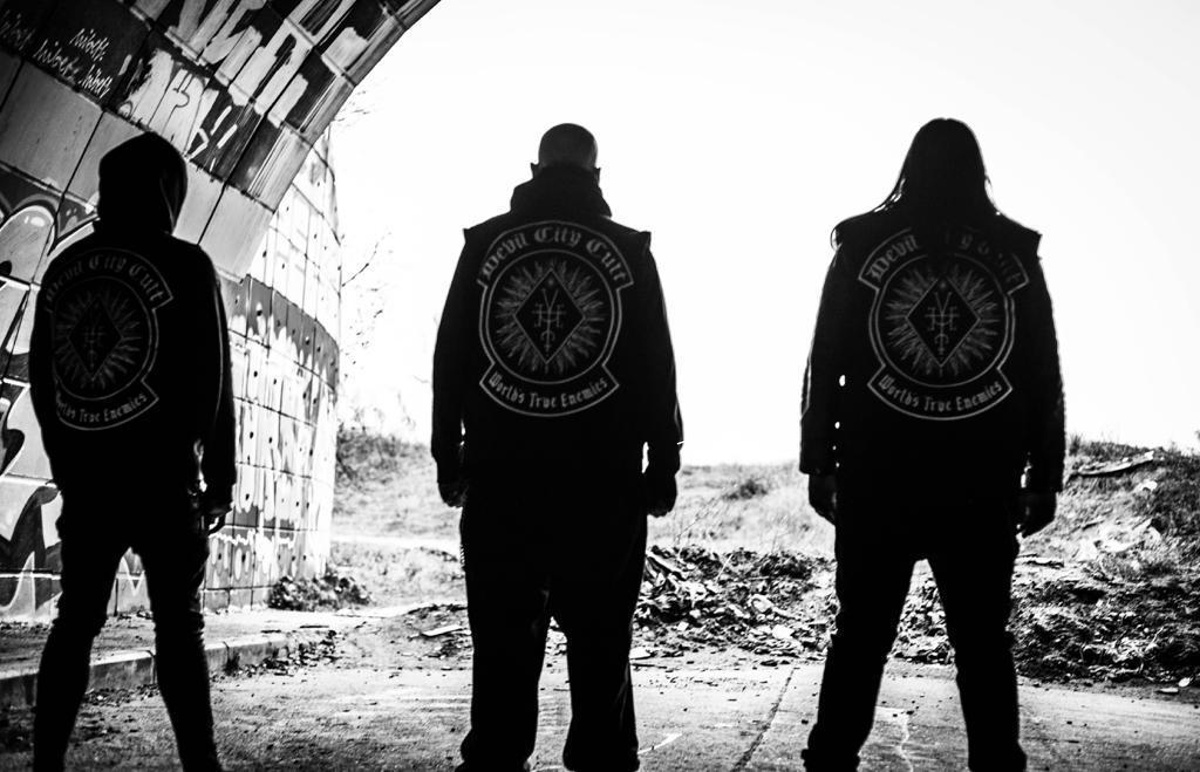
Across Madrid, musicians move between punk, hardcore, crust, screamo, grindcore, black metal, death metal and other extreme styles with little concern for keeping each camp tidy. Devil City Cult are one result of that movement. Gravecurse, Inward Cold and Sacramento make the same point from three different directions.
Luis Caretti is another connection. He worked on “Murderous Retribution”, and he also recorded the vocals for Inward Cold through Protege Moi. Pablo’s place in both bands made the overlap a natural one. The same friends, studios and musicians keep reappearing because they have spent years crossing the same small part of a very large city.
View this post on Instagram
“Murderous Retribution” came out on December 5, 2025. The November 30 date in the band’s first email was an error. It is their latest full-length and runs for 32 minutes across nine songs that stay close to murder, revenge, punishment, psychological violence, obsession, desperation and people pushed past a limit.
“Murder, revenge, punishment and violence are not used simply to shock people,” Pablo said. He likes psycho killers, revenge stories and characters operating outside what society accepts, especially the point where anger turns into obsession or ordinary ideas of justice stop being enough. The songs work as separate scenes. “I wouldn’t describe the album as a concept record with one continuous narrative,” he said. Each track has its own characters and situation, with the same violent world around them.
Eight of those stories are fictional. “Knives Out” is the exception, built from the case of Marianne Bachmeier, the German woman who in 1981 shot and killed the man accused of murdering her daughter during his trial. Pablo had previously referred to the song as “Puñales por la espalda”, the Spanish title he was using for “Knives Out”, not a separate track. The phrase came from the same interest in betrayal and revenge, with the violence imagined as coming from somebody close enough to stand behind you.
Bachmeier’s story was there early in the writing. “What interested me wasn’t simply the idea of revenge itself. It was the extreme emotional territory surrounding the case: grief, rage, justice, punishment and the moment when someone decides to cross a line.” He was interested in the case’s emotional and psychological pressure, with Bachmeier as a real reference that helped shape the song from the beginning. The other eight tracks are fictional, and there was no story that became so close to reality that the band had to substantially rewrite it.
View this post on Instagram
Pablo’s other band Gravecurse play old-school death metal and point directly to Entombed. He recommends “At The Burial You Will Find Peace”, an HM-2-driven track he describes as direct and aggressive.
Inward Cold play blackened hardcore punk with Converge and Cursed among their reference points; “Anxiety”, from “From the Grave to Victory”, is Pablo’s doorway into that band.
Sacramento’s two guitarists also play in Inward Cold. Their “No God to Pray”, from “Four Nails”, pulls death metal and crust into the same web.
Crossed are one of the names Pablo thinks have travelled furthest beyond Madrid while staying tied to the local underground. He sees them as an easy first step for somebody coming in cold; his pick is “Distrés”, a dark, aggressive piece of metallic hardcore.
Podré Tocar los Dientes de la Noche go somewhere more abrasive with “Zigurat”, an extremely intense run of blackened screamo and metallic hardcore.
Pablo likes the fact that they follow their own path without sanding it down for anybody.
HEDØR’s “Tras Las Grietas” sits in dark crust and punk, with the abrasive attack, energy and attitude Pablo associates with the most direct end of the scene.
WARTIMES bring heavy, hard-hitting beatdown and metallic hardcore on “Integridad”.
Their records are the place to start, though Pablo thinks seeing bands like this live makes the shared people around Madrid easier to spot. VOUL widen the picture again with the cavernous sludge and metal of “Concrete Cult”. “Madrid doesn’t have a unified sound,” Pablo said.
Septiembre Negro are his clearest pointer towards younger blood. “Colapso”, from “Abismo”, is doom/sludge, and Pablo sees the band as part of a newer movement, with young musicians starting fresh projects of their own.
The nine bands span different age groups and styles. Together they show how much traffic now runs between hardcore, punk, black metal, death metal, screamo and sludge.
By late August, Pablo’s own summary was super straight: “I think the honest answer is that the scene is both healthy and under pressure.”
CSO Diskordia had recently been evicted. CSO La Animosa was still going, with relatively few concerts. News had also just reached them that Gruta 77 was closing. For Pablo, the loss of a self-managed social centre means losing cheap shows, meeting points, organising space and somewhere people can rehearse and connect outside the commercial circuit. Gruta 77 carries another kind of weight. It has hosted punk, hardcore, metal and alternative bands for years and is one of the venues he connects directly with Madrid’s underground history.
View this post on Instagram
Wurlitzer is another venue with years of hardcore and metal shows behind it. La Trinchera de Vallekas sits inside the wider social and underground life of Vallecas and hosts the In Memory Fest that Pablo organises with a friend. Entredarts and Hortaleza Punks belong more to the people and collectives doing the organising, promoting and connecting around shows.
Pablo puts the day-to-day pressure on a mix of venue costs, administrative requirements and licensing, along with the city’s broader political and urban direction. “The right-wing government in Madrid has been making life increasingly difficult for autonomous and self-managed spaces,” he said. He also said public schemes aimed at independent culture still leave small venues and autonomous spaces dealing with the same weekly costs and admin. In his view, Madrid increasingly has room for large commercial cultural events and less room for small autonomous underground culture.
Somebody entering Madrid hardcore at 19 in 2026 meets fewer spaces that feel permanent. Pablo still sees younger bands forming, new people organising shows and the same basic DIY instinct he knew earlier, now with more movement between hardcore, punk and extreme metal projects. A lot of the practical knowledge still sits with people who have been doing it for years, so the same names keep appearing when somebody needs a show booked, a touring band connected with Madrid, a record put out or a room found.
Pablo would not try to name a definitive set of scene “connectors” because he does not feel close enough to the whole organisational network to do that without leaving people out. He points instead to the jobs around the bands: photographers, promoters, label people, venue workers, poster artists, people who put touring bands on a floor for the night, and musicians who keep moving between projects. His own summary is blunt: “That network is probably much more important than any individual band.”
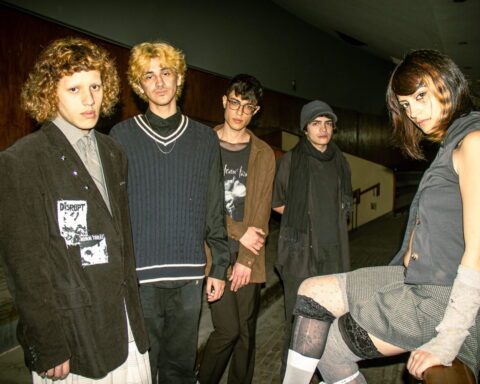
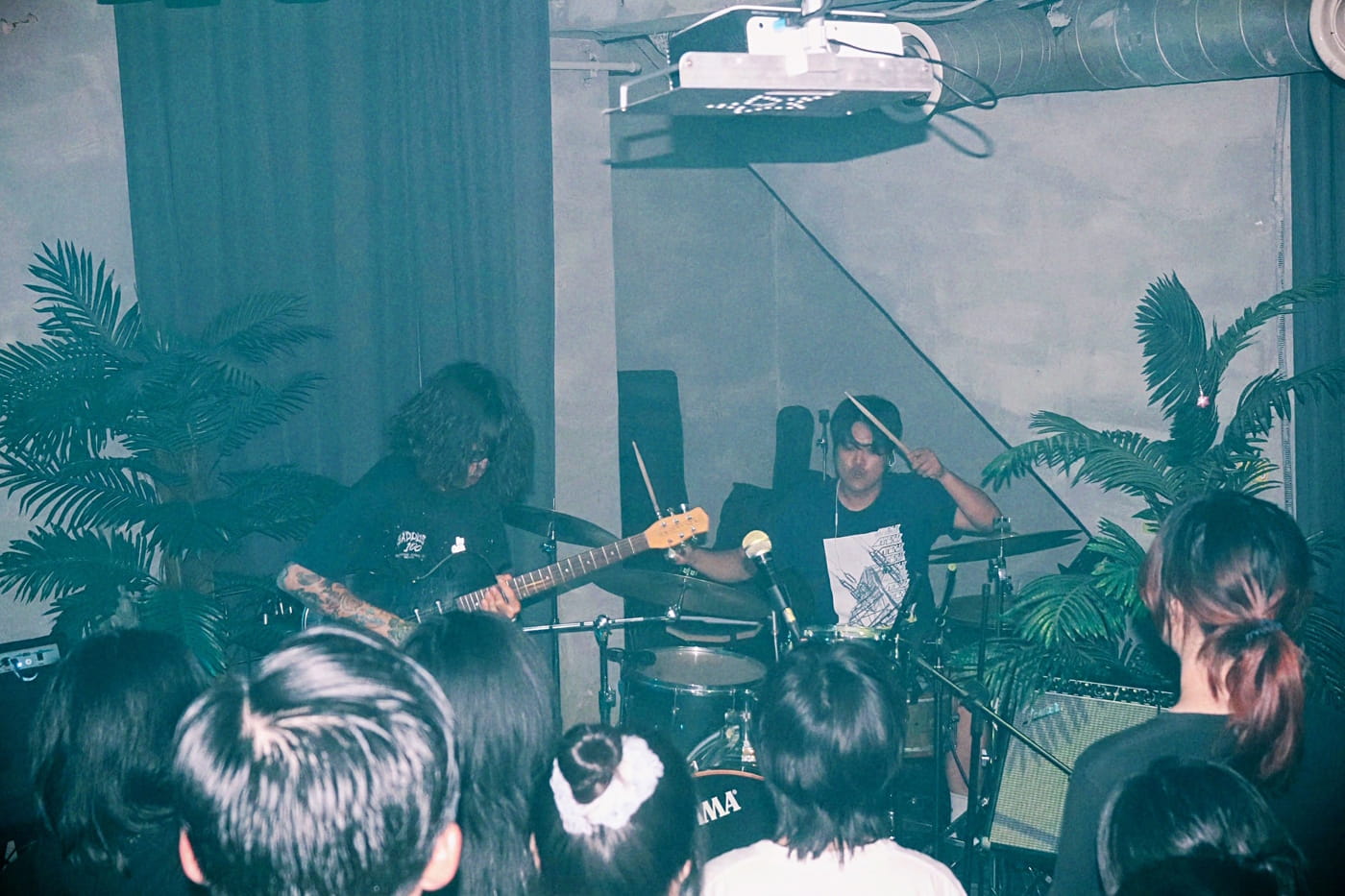
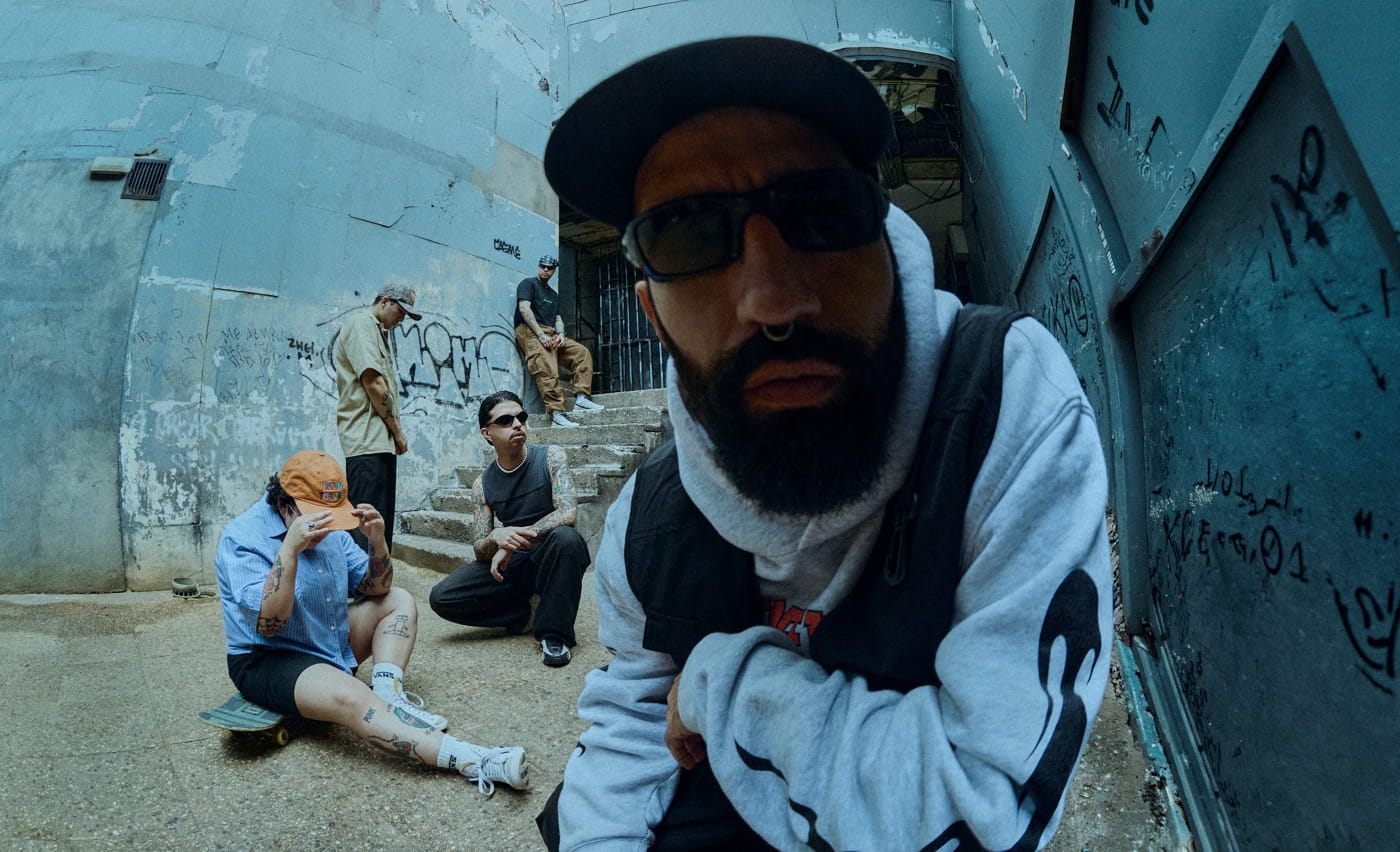
One person he can name is Guillermo Barrera. Through Dreadfilms, Guillermo has shot Devil City Cult and made their music videos. Guillermo has also shot a set of previously unpublished Devil City Cult photos. Pablo also dug out old photographs of Coilbox, Terroristars and Iraka, showing Hevor, Rubén and Pablo before Devil City Cult existed. The photographers behind those older images are unknown, so those archive shots need to be treated accordingly.
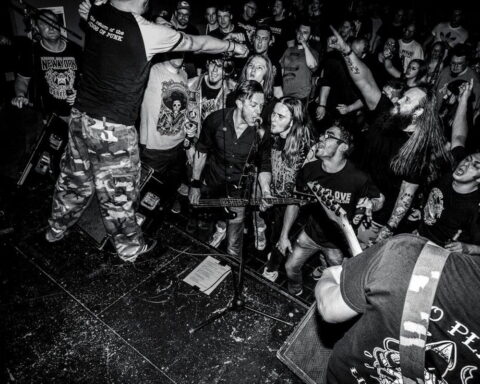
The best example of the DIY work is the routine stuff: carrying gear, helping a band, working the door, sorting transport, making posters, finding somewhere for visitors to sleep and fixing whatever goes wrong at the last minute. In Memory Fest is his clearest example. He and a friend organise it at La Trinchera de Vallekas, and nobody gets to stay in one role for long. All the money raised goes to causes supporting Palestine or to local initiatives helping people in need. Once a year, it also brings people from different parts of the scene into the same room.
“The audience sees the bands playing, but behind that there are always several people quietly making sure everything works. Nobody is doing it because they’re getting rich from it. People do it because they want the show to happen and because they want the scene to exist.”