

There’s a steel water tower at the end of a gravel turn on the outskirts of Portland, half-swallowed by evergreens, immense and alien and industrial against all that green.
Nathan Urbach grew up nearby, used to walk down to it daily, sit underneath it, sometimes climb it. “It has this almost extraterrestrial, kind of existentially overwhelming energy to it,” he says.
That water tower is on the cover of “Leave The Light On,” the new Pileup record — and if you’re looking for a single image that captures what the album is doing, that’s probably it. Something permanent and strange in a place that should just be trees and houses. Something you can’t stop looking at.
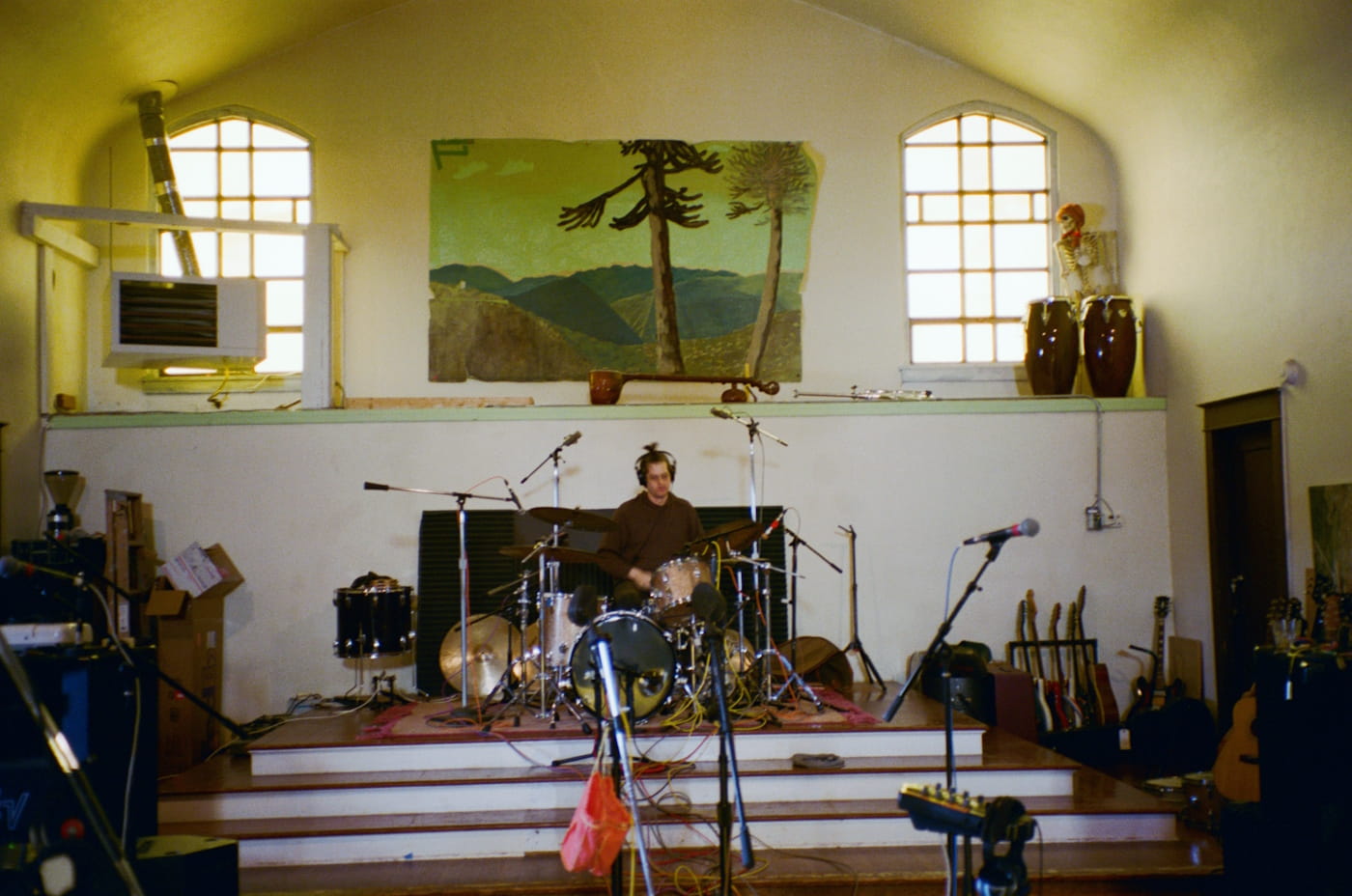
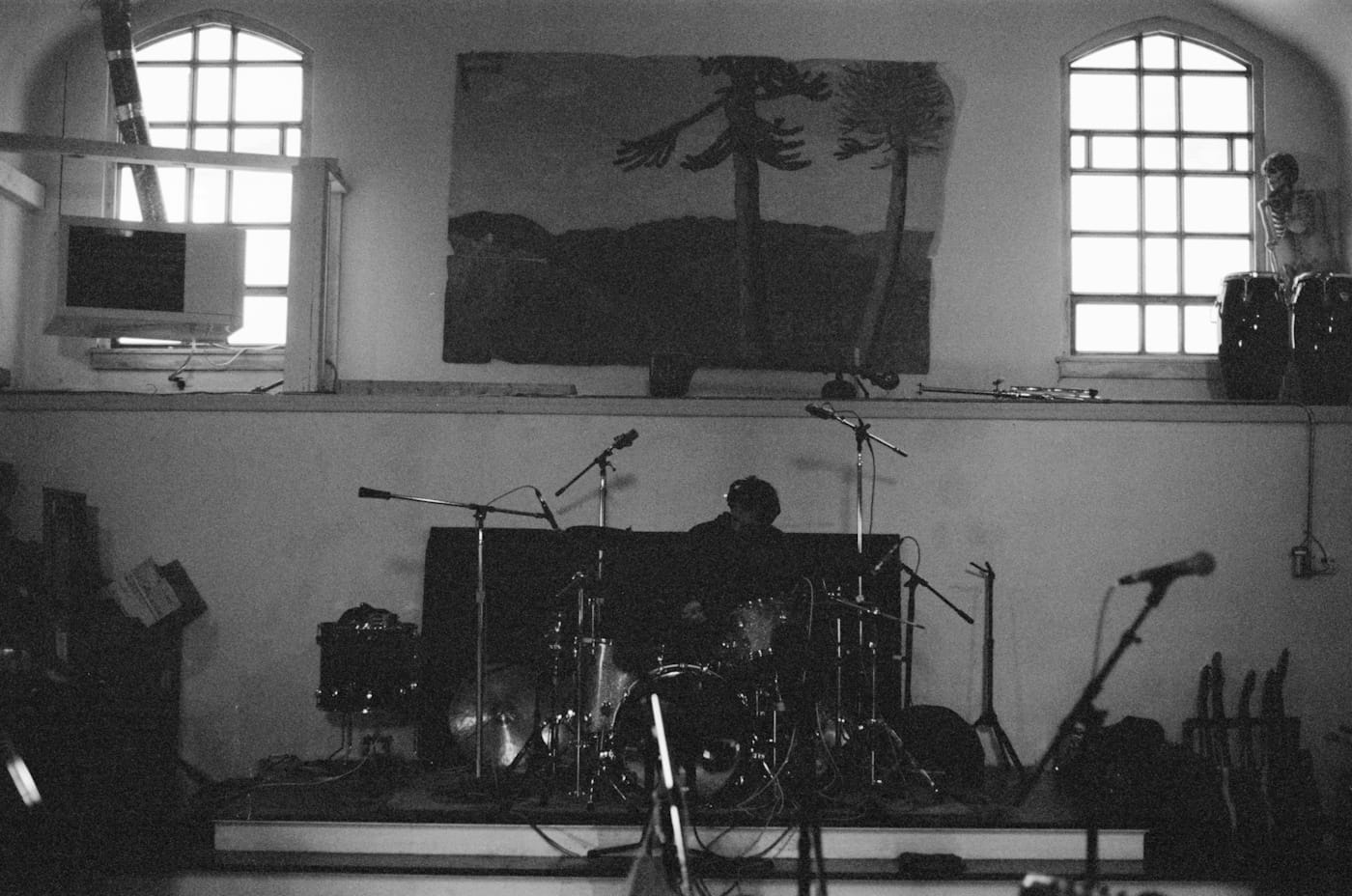
Pileup released “Leave The Light On” on February 24th via Pleasure Tapes and Flesh and Bone Records. The album was recorded in February 2025 at The Unknown — an old Croatian church in Anacortes, Washington — engineered, mixed, and mastered by Nicholas Wilbur.
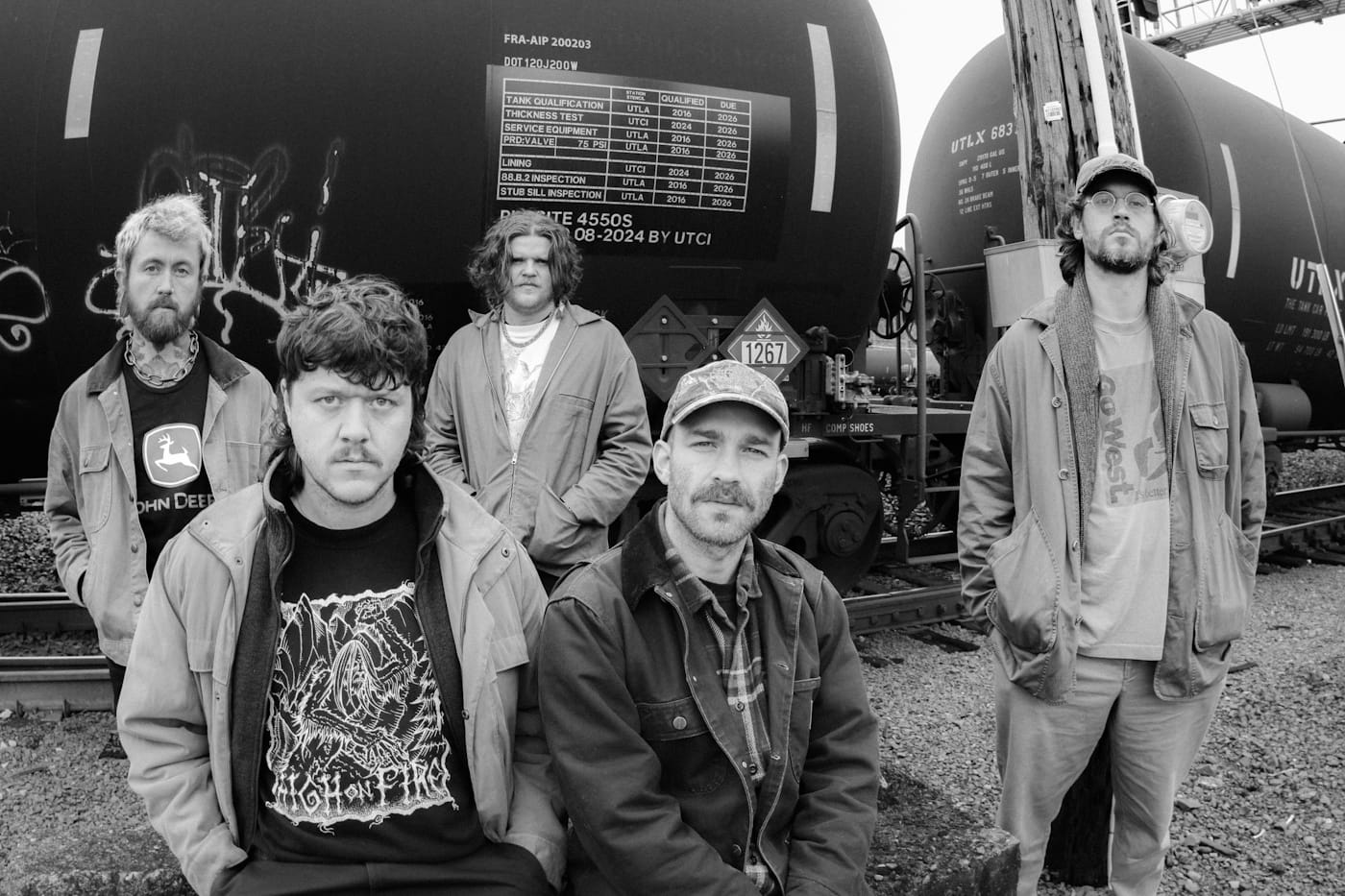
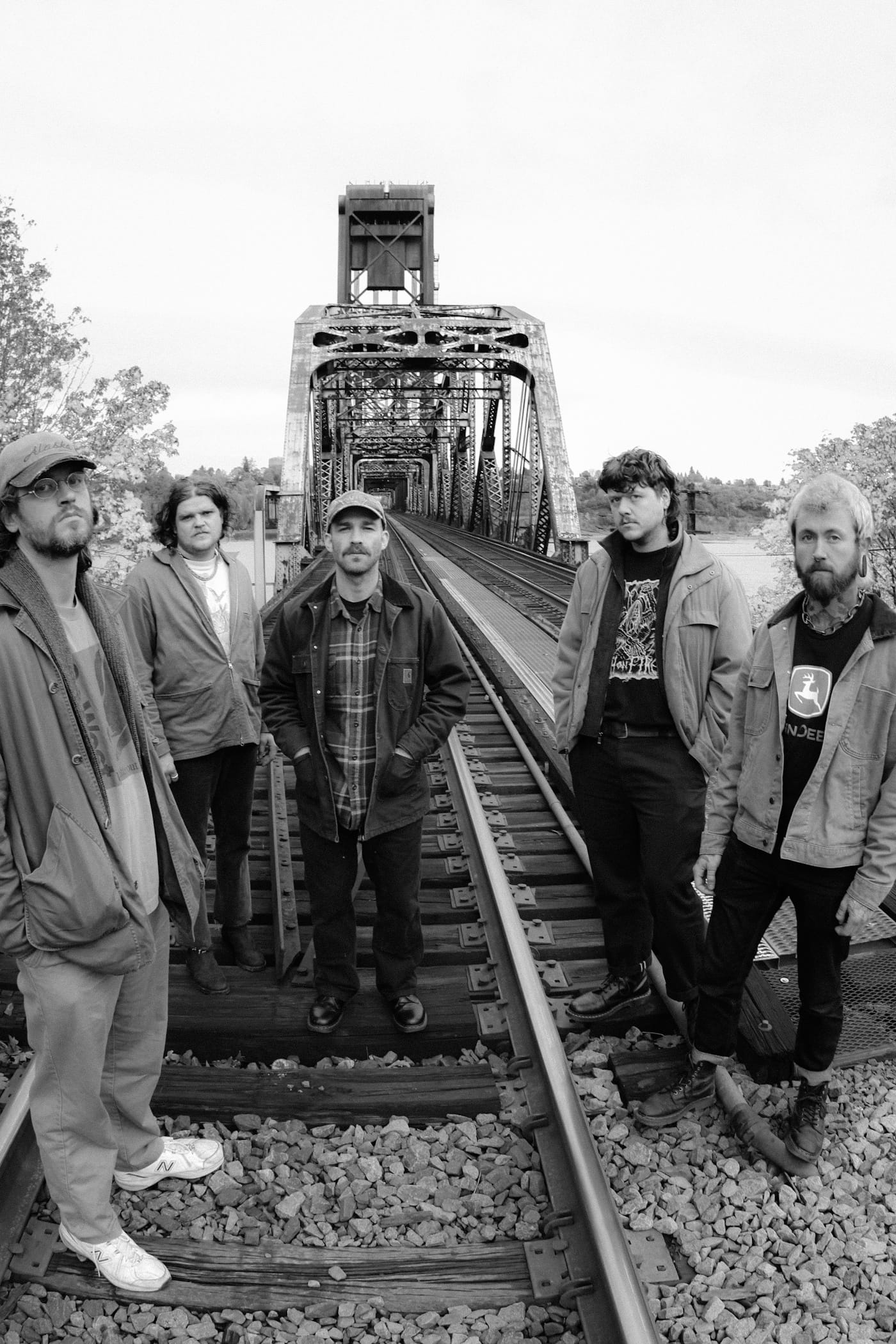
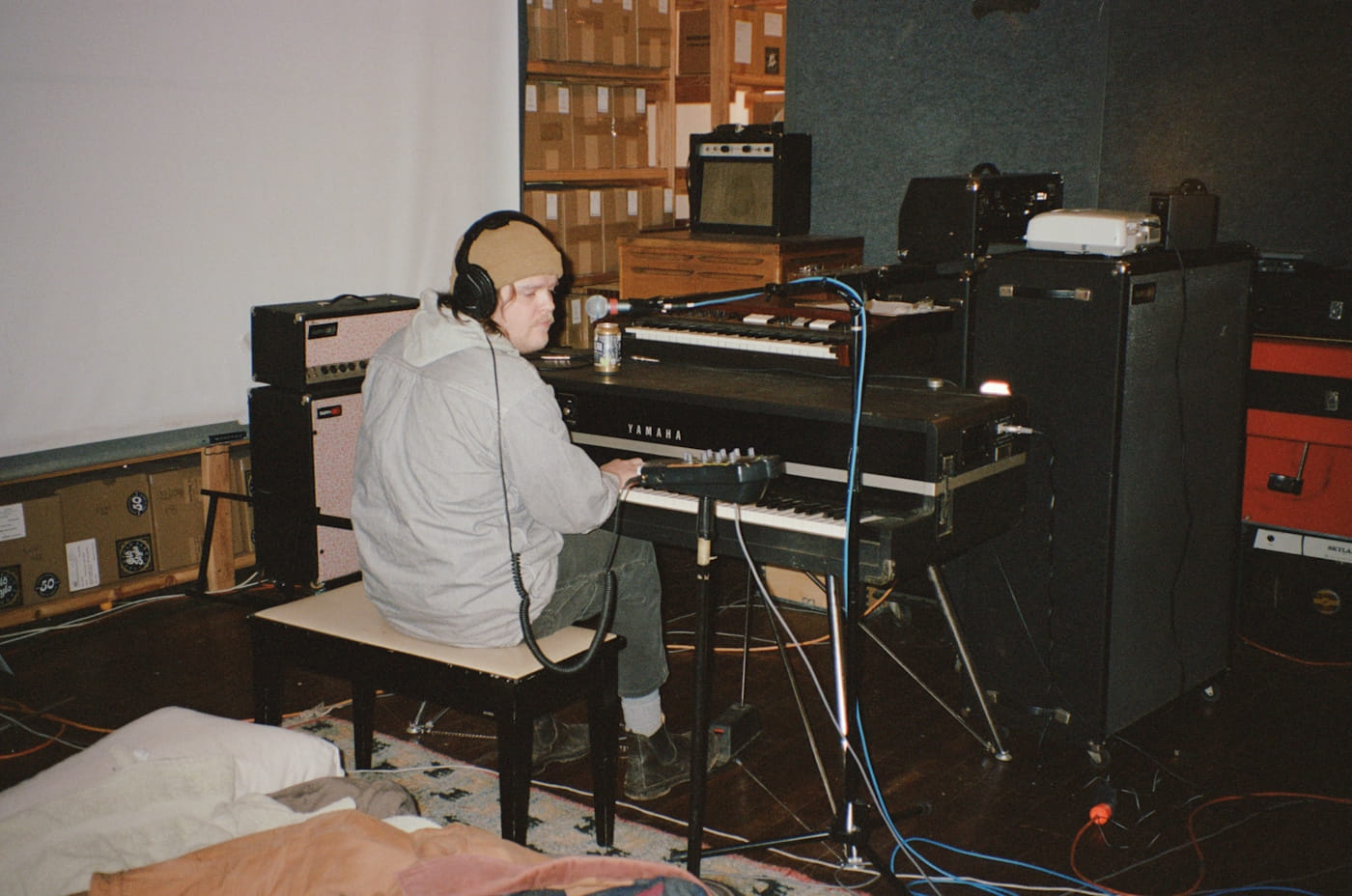
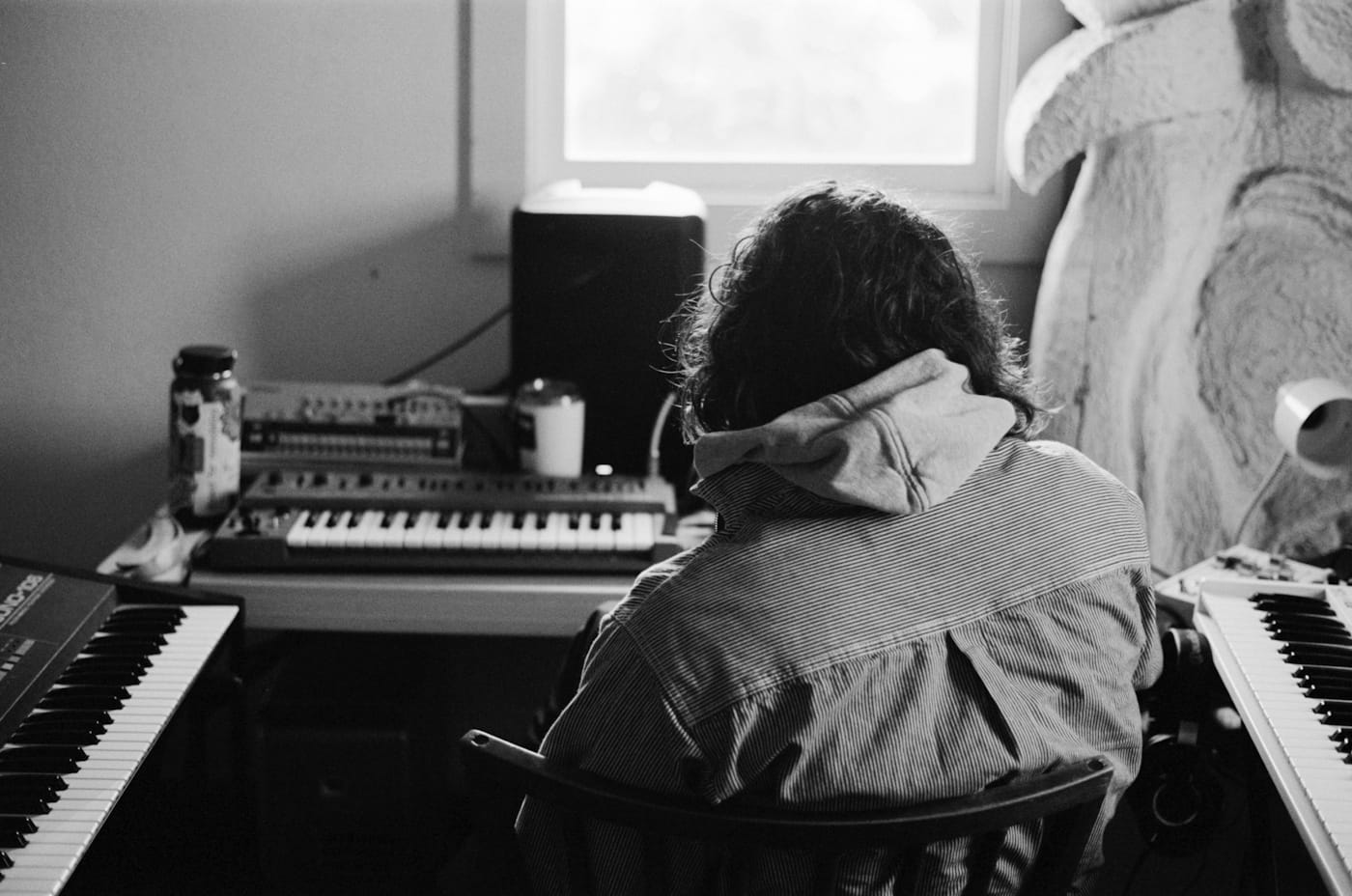
The current lineup is Nathan Urbach on guitars and vocals, Elian Conroy on guitars, vocals, percussion, piano, and trumpet, Gray Hunter on bass, Kyle Rosse on drums, and Jordan Krinsky on synthesizer, keyboards, samples, and sound design. Tyler Maxwell plays banjo on “Lightning.”
The band’s history is longer and more convoluted than the lineup suggests. Urbach started writing seriously while at the University of Oregon in Eugene, drifted to Long Beach after graduating in 2015, and fell in with drummer Tom Hughes and bassist Cole Brossus, both then studying music at school and well-connected in the LA County scene.
By 2018, the group had expanded to include Diego Ramos on lead guitar, Gracie Gray on rhythm guitar, and Noah Kaufman on keys. They played shows, self-recorded, toured a couple of times, and then the pandemic arrived.
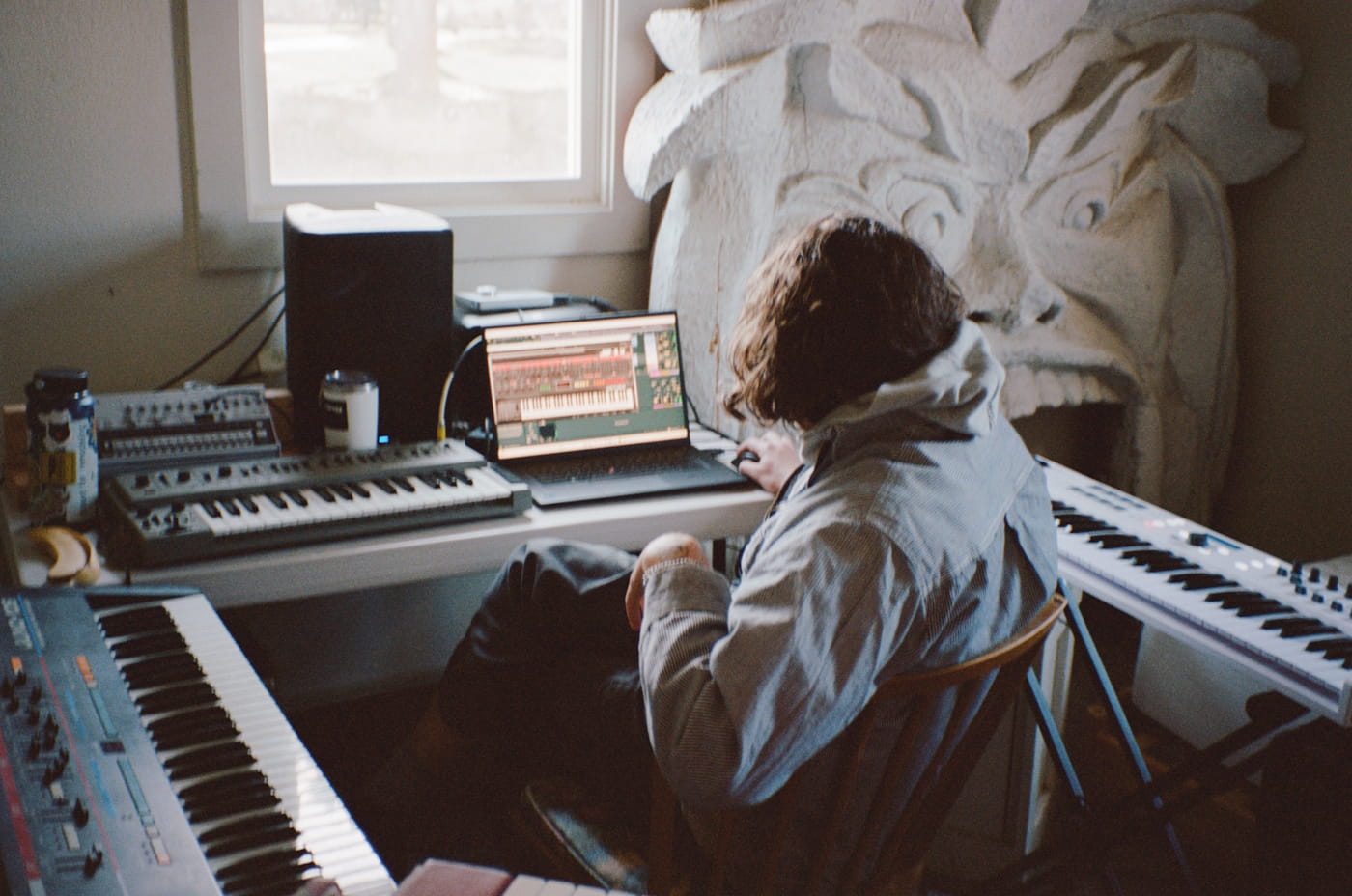
Rather than shelve the songs, the band finished a full-length in lockdown — each member recording their own parts remotely, with Peter Stone and Jacob Allen of Long Beach production outfit Dead Music helping fold everything into a coherent record.
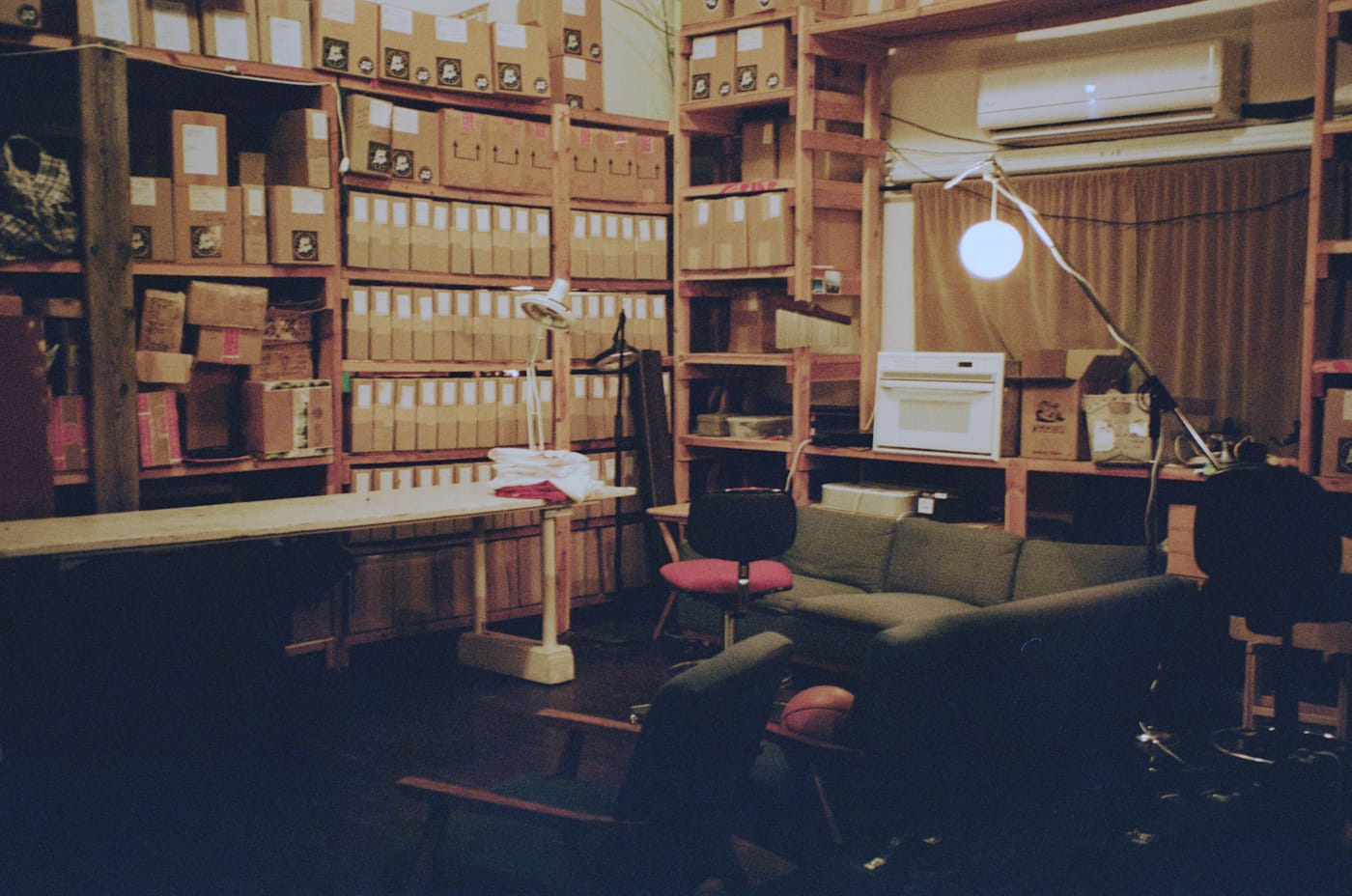
Urbach tracked vocals and acoustic guitar in a makeshift isolation booth built inside his father’s pottery studio in Portland; electric guitars went down at a warehouse lockout space on the southeast waterfront. Elian recorded trumpet from wherever they were. The result was “Creature,” Pileup’s first album.
After vaccines, after shows came back, after Urbach moved into Jordan Krinsky’s house venue Rainforest Cafe, the band gradually reconstituted around a new core.
Gray Hunter and Kyle Rosse joined on bass and drums. Jordan Krinsky and Isabel Zacharias came aboard around the time of the “Creature” release show. Isabel later left for graduate school.
The new lineup spent roughly two years writing ten songs in the basement of Rainforest Cafe before driving up to Anacortes to record with Wilbur.
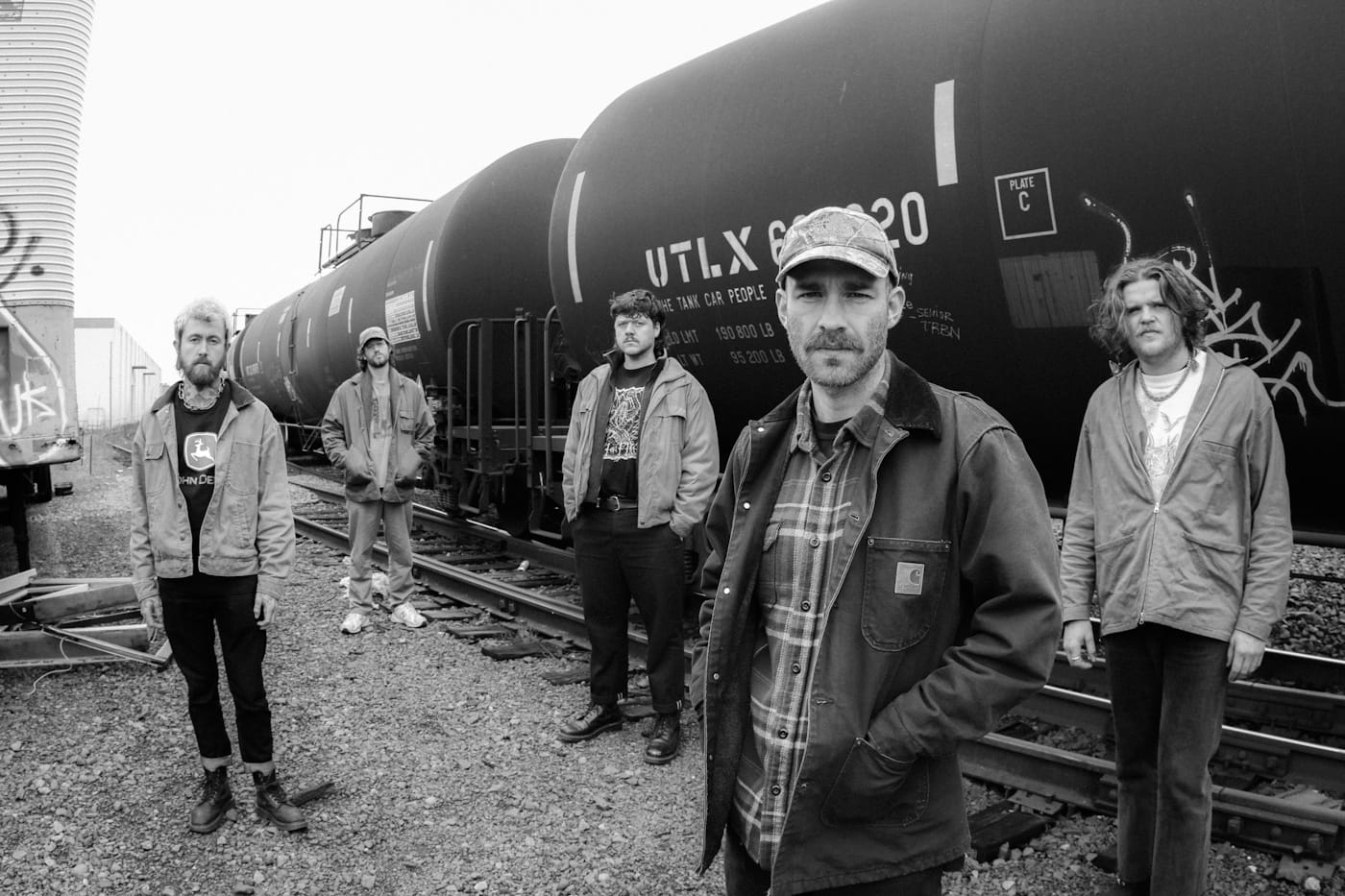
“We lived there for a little over a week, tracking, listening, eating, sleeping, all within that church,” Urbach says. The sessions felt different from “Creature” in ways that mattered to him. Where the first record was largely written by Urbach alone — other members playing parts he’d directed rather than developed — “Leave The Light On” was built collectively. “I cannot stress enough how easy it is to write with these people. We don’t even need to talk that much, we just play, and all of our roles in the song fall into these discrete, defined jobs.”
The album has a thesis. Urbach wrote a poem on December 4th, 2018, and a single line from it became the organizing idea for everything that followed: joy peeks in through a sunburst, a fallen leaf on soaked pavement. That’s the only text on the Bandcamp page. It sets the register: small, precise, not reaching for anything large.
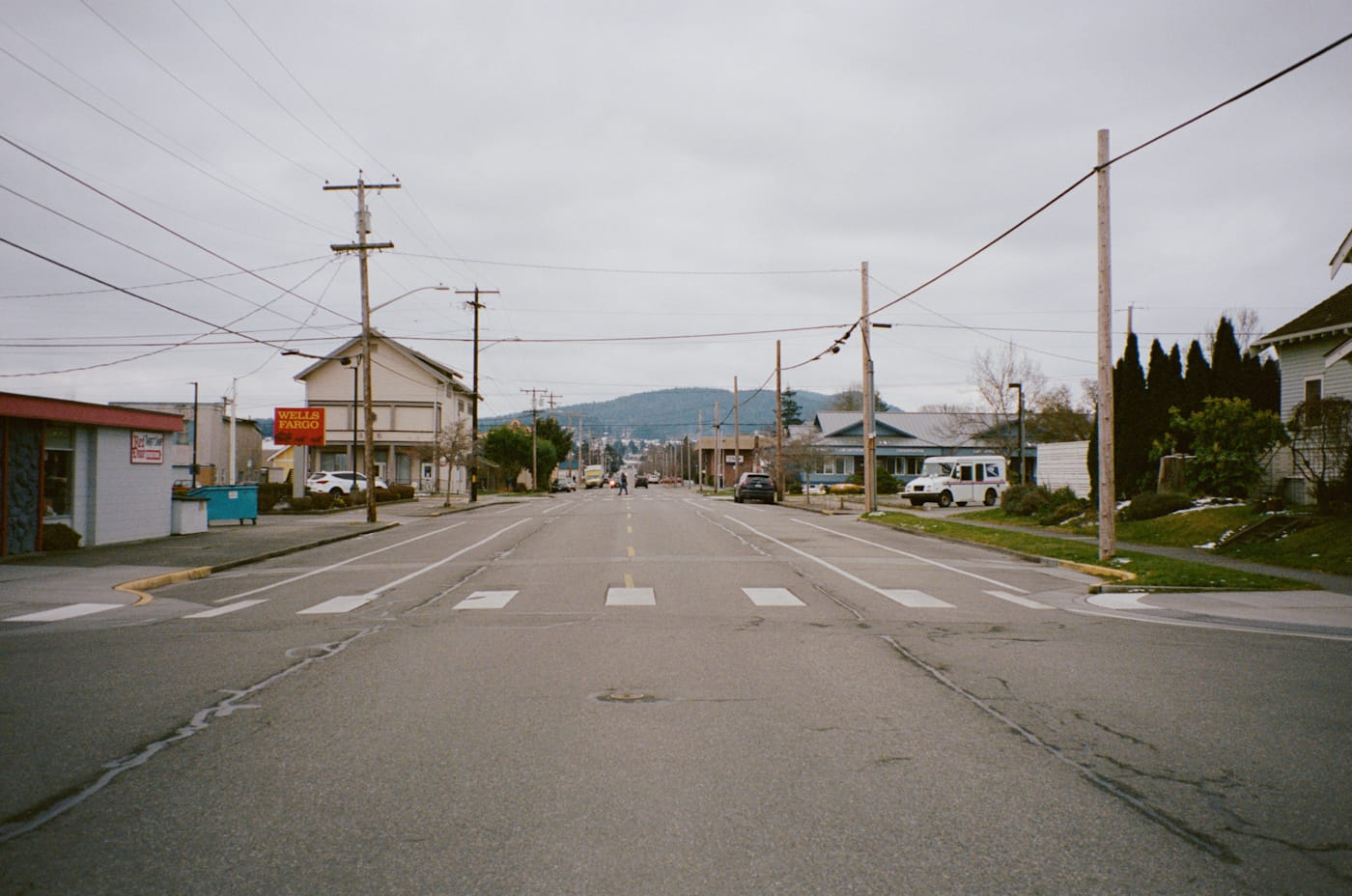
Thematically, “Leave The Light On” is about home — about what it means to carry a place with you after you’ve left it, and what it costs to leave and not feel ready to return.
Urbach’s mother used to leave the porch lights on until he got home, sometimes until 3 or 4 in the morning. After both sons had moved out, she’d still leave them on when she missed them.
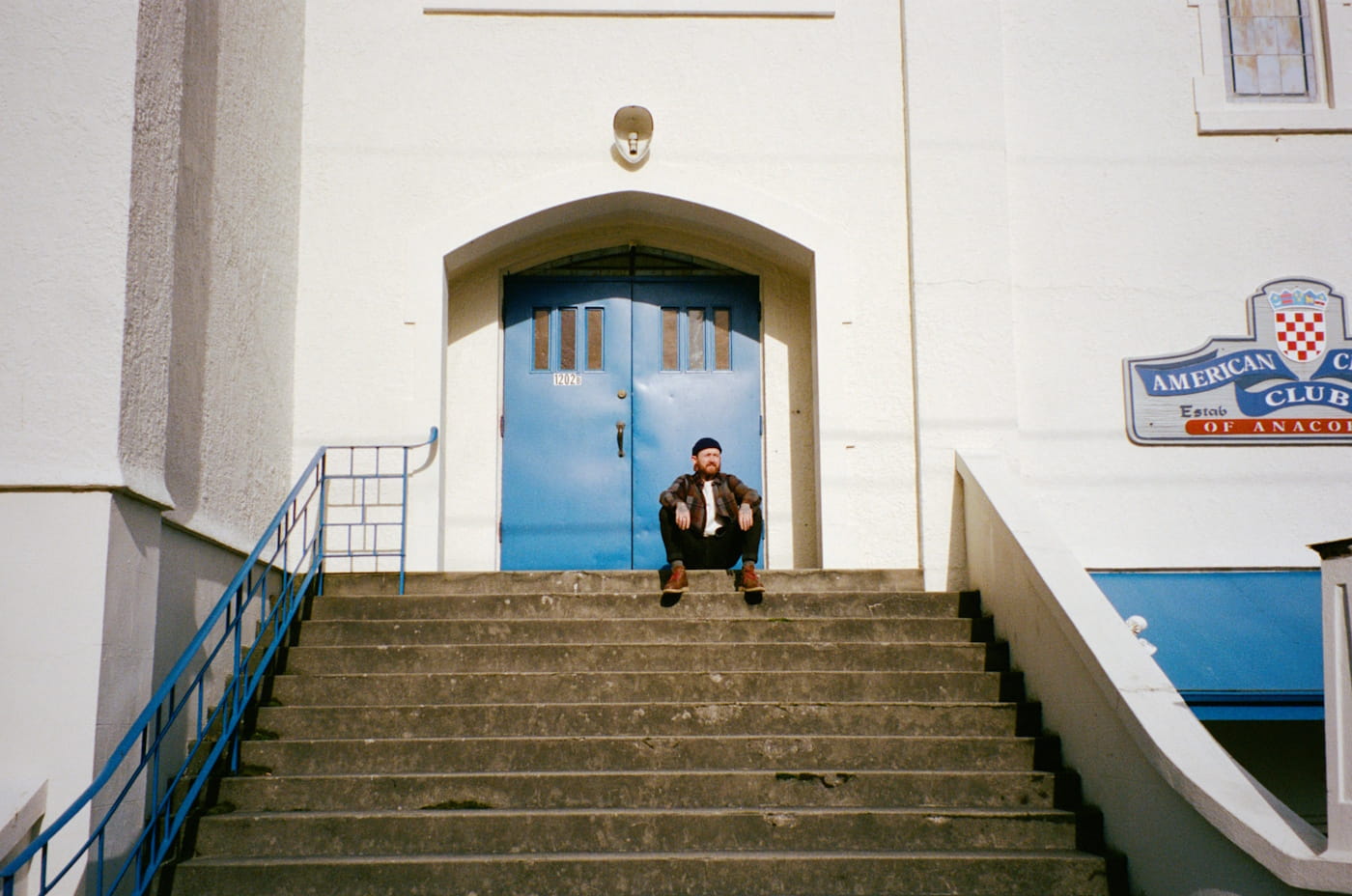
“I’m not sure if she still does that to this day, but it really moves me to think about, as an act of love and spirit,” he says. The album orbits that image: home as constant, childhood as something that dies slowly, the passage of time as something to mourn before it’s even finished.
Below, Urbach walks through each track.
Chain
“The working title for Chain was ‘Summer Song.’ We were trying to evoke that kind of buzzing, manic anxiety of summertime. Sadness and trepidation feel different when it’s blazing hot out, when there are no clouds in the sky and the sun is melting the concrete beneath your feet.
This song is about avoidance, feelings of anxiety and overwhelm, feelings of regret and being lost in memory. It’s about attachment styles, and how they play into one another, how one person being anxiously attached can make another person feel avoidant, which then increases the anxious attachment, which then increases the avoidance, and so on.
It’s about wanting to be free of these kind of cycles, all contextualized within the heat of summer. The summers in Long Beach and LA don’t even feel real; it’s so hot and there are no trees and everything is just totally insane.”
Lightning
“This one is literally just about a lightning storm that I got caught out in. I used to work at this little old coffee shop in Long Beach, and one evening, there was this huge lightning storm that was crawling out to sea over our heads.
I stood under this lemon tree so that I wouldn’t be the tallest thing out there, and just watched as this storm moved out over these huge oil barges out on the ocean. It made me think of eternity and foreverness, which made me think about fatalism. Sometimes, against all odds and reasoning, even if you don’t believe in fatalism and destiny, things just feel fated and inescapable. That’s what that storm made me feel, and it’s what this song is about.”
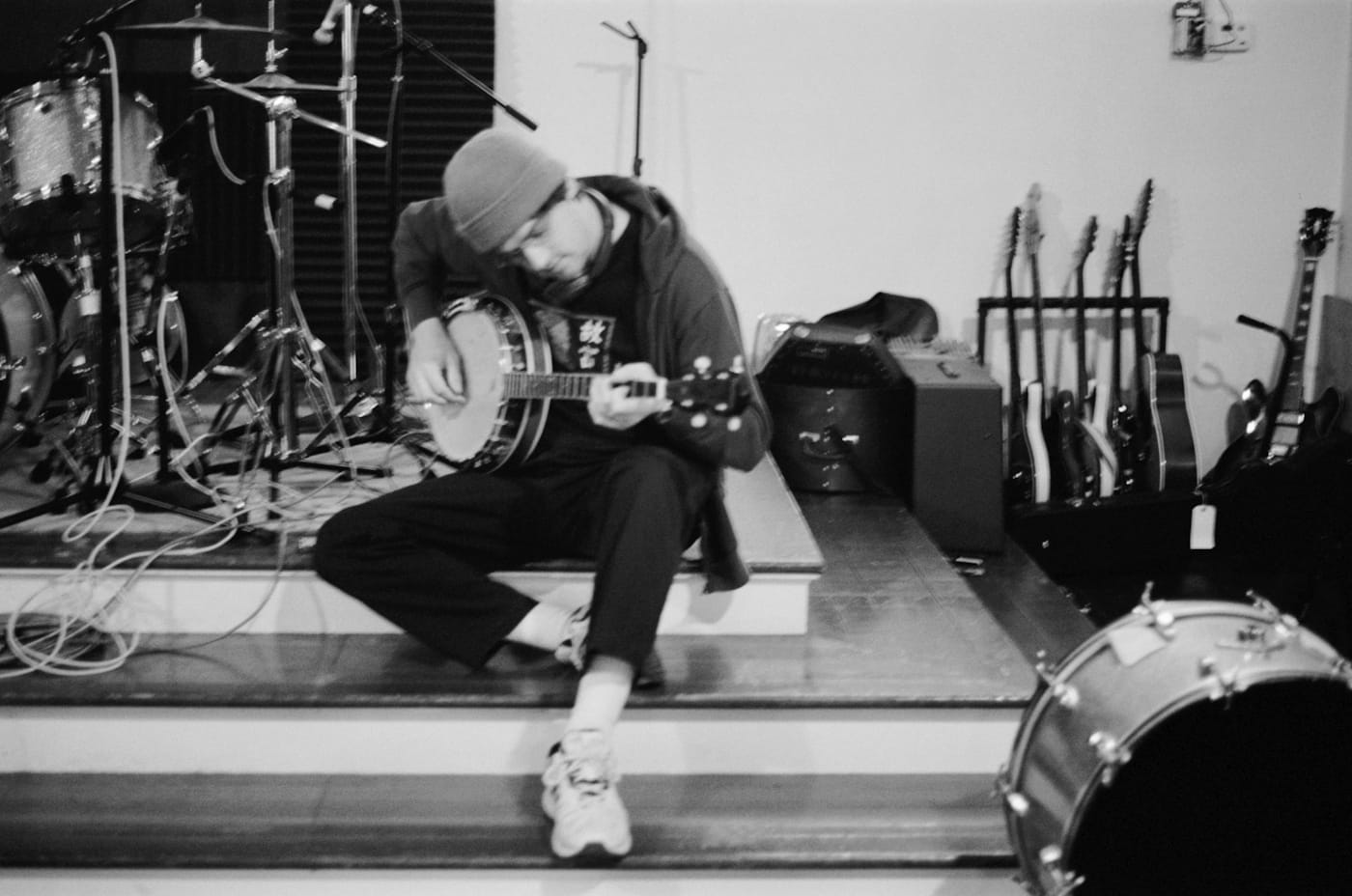
Tyler Maxwell plays banjo on the track.
Something Caught Beneath The Wheel
“This song is a little hard to talk about in a literal sense. It was inspired by a very traumatic thing that happened suddenly in my life. In an abstract way, it is about this thing that most humans do when they witness random violence, or anything horrifying and inexplicable; they try to reason with it. It’s kind of this knee-jerk reaction to try and make sense of it happening, by any means necessary, even if the situation is beyond explanation or justification.
I think people still have this urge to ascribe meaning and intentionality to it, even if it means reaching for the fantastical and metaphysical to wring out an explanation. It’s like when people say ‘everything happens for a reason.’ I hear people say that all the time, someone just said it to me the other day. Sure, everything happens for a reason in a literal sense — things occur, which cause other things to occur afterward — but that’s not what people mean when they say that.
They’re talking about fatalism and divine intention, they are deriving comfort from this idea that there are machinations that are too immense and too elegant for them to even perceive, and that there is some force pulling the strings, such that a thing that seems horrifying and meaningless and random might give way to something that seems beautiful and meaningful and nice.”
Omen On The Rail
“We talked about trying to evoke a very specific scene with this song: the perspective begins from kind of the ‘god’ or ‘cinematic viewer’ angle, above and looking down. It is the dead of winter night; cold, nearly freezing rain pelts down from turquoise-black cloud cover, thick like a wool blanket, obscuring any detail in the sky.
We are looking down at a highway, maybe the interstate, maybe not. On each side of the road are towering walls of evergreen trees, endless forest, blackened in the darkness. A single, old compact pickup truck, like from the 90s or early 2000s, barrels down this road. Now, we are inside the truck, from the perspective of the driver.
The driver is never shown, we just become them. Rain punishes the windshield in too high of volume for the tiny windshield wipers to keep up. The cab smells like cold leather and pine. The driver may or may not be aware of where they’re going. They may or may not be headed somewhere with something in mind.
But they know that they must travel through the night, through this storm, as fast as humanly possible. The driver contemplates failure, escape, memories of home, of belonging, of friendship. To their right, in the center of the passenger seat, lies a handgun.”
Going Away
“This song is pretty straightforward, I think. It’s really just about leaving. It has a feeling of resignation, of throwing up one’s hands, feeling that one has done all that one can do, and that now it’s time to go. Musically, this song took form into something anthemic and resolute, which I think is fitting for these themes. There’s this kind of decisiveness in the lyrics and the instrumentation, like you feel when you finally make a decision that you’ve been working up to for a long time.”
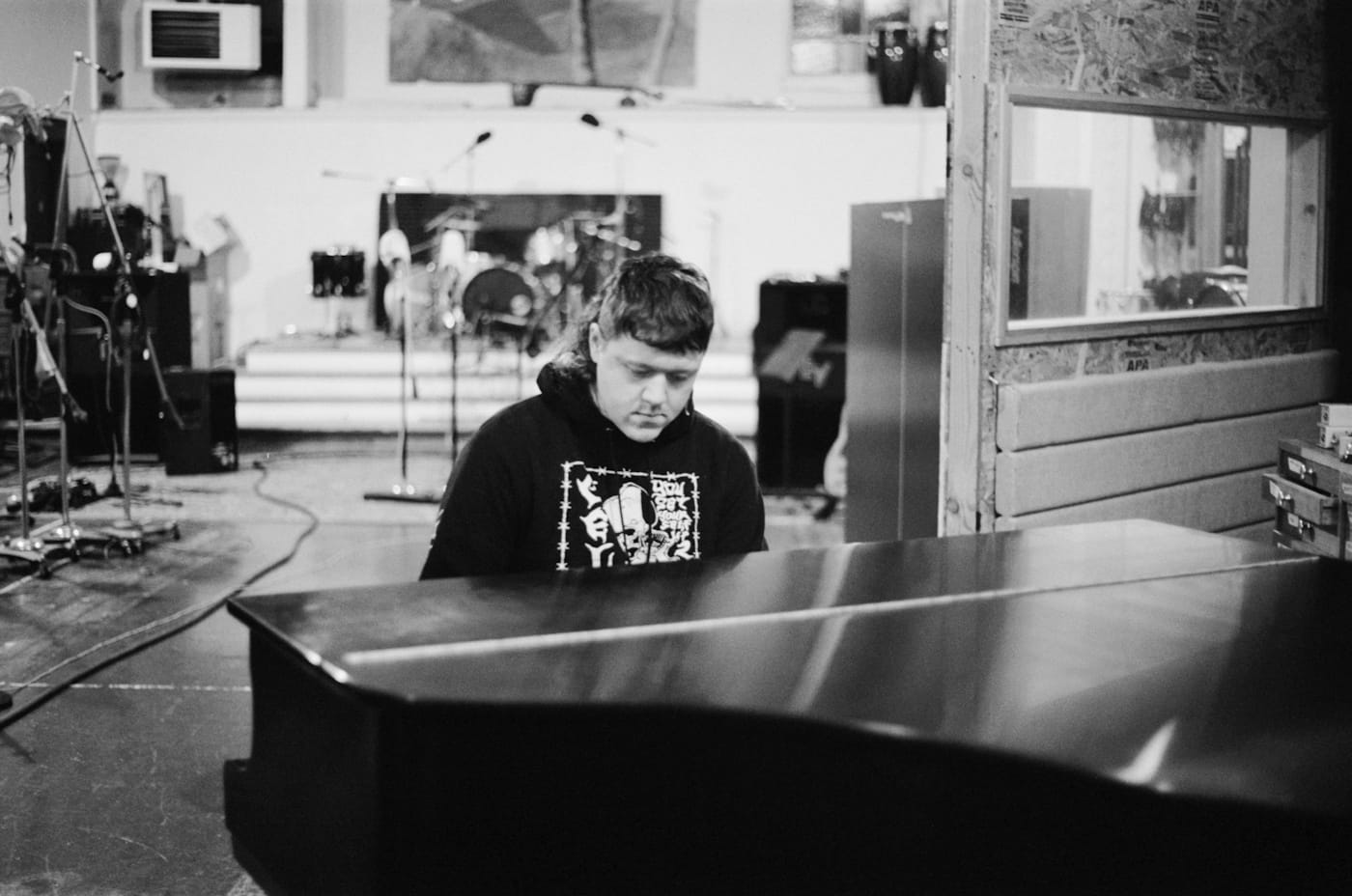
Elian Conroy plays piano and trumpet on this track.
Leave The Light On
“Atop the aforementioned meaning of ‘leave the light on’ for me, this song adds a layer of admission to a desire to believe in fatalism, or maybe a desire to be proven wrong in a staunch position against it. Like, beginning from a standpoint of critique against fatalism, against magical thinking, kind of this self-righteous pragmatism, but secretly hoping for a fated thing, for destiny to actually come and take control. Deus ex machina. And this desire for deus ex machina taking form as a secret conviction that a one true love waits in the shadows of the future, their face obscured by unknown variables and an inability to understand the self. This feeling that one should wait, in the safety and comfort of home until the nature and identity of this love has finally been revealed.”
Willow Leaves
“This song is about the death of childhood pets. We had a lot of pets die throughout my childhood. But there’s something different about a pet surviving from childhood into adulthood, and not dying until you’re already grown up. That’s a different kind of loss. This animal has known you through so much of your development. It has loved you, comforted you, spent time with you, watched you cry, watched you wake up and go to sleep, played with you.
Animals grow up so fast that to them, humans must seem like they stay children forever, only slowly progressing into adulthood. I think it must seem so strange to like a cat or a dog; they are born, they make their first memories while you’re still young, but you already exist. By the time they’re thinking and creating memories, you are there.
And if you get them when they’re born and you are a young child, they grow old and near the end of their life only as you begin your adulthood. It’s hard to imagine. We must seem like angels or something to them, like eternals. And there’s something so simple about the relationship between you, as a child, and a little animal.
They become this living, breathing embodiment of home. They take on the qualities of your home — how it smells, how it feels, what it looks like — and when you grow up and visit home, you can always find them there, right where you left them. When it’s finally time for them to die, it literally feels like your home, your childhood is dying.
And forever more, after they’re gone, you’ll still look for them there. You’ll still see them when you round the corner, look to the front door to see if they got out or want to come inside. Search for them absent-mindedly in the places they used to curl up and sleep, realizing only after that they won’t be there, that they’re gone. I imagined the vet who came to put her down as Death personified, a gentle reaper arrived in the night, on a whisper, to take away my family.”
The song closes with a reference to the final passage of Allen Ginsberg’s 1955 poem “A Supermarket in California”:
Ah, dear father, graybeard, lonely old courageteacher, what America did you have when Charon quit poling his ferry and you got out on a smoking bank and stood watching the boat disappear on the black waters of Lethe?
Turning
“Turning was the first song that we wrote together as a band following the release of Creature. We put it together in the basement of Rainforest Cafe in February 2023. It is so special to me, because of this. Like I said, Creature was written almost entirely by me, but this was not the way I wanted the project to go.
I always imagined Pileup to be a collective of minds all working in tandem to create something larger than ourselves. The feeling of creating this song with the others was something that I had always dreamed of. It’s about ending and beginning, about death and rebirth. The narrator has passed on to another place, and floats above their city, visiting places that have meant something to them, painting vignettes of each along the way.”
The song was inspired by “Blue Factory Flame” by Songs: Ohia, which opens:
When I die / Put my bones in an empty street / To remind me how it used to be / Don’t write my name on stone / Bring a Coleman lantern and a radio / A Cleveland game and two fishing poles / And watch with me from the shore / Ghostly steel and iron ore / Ships coming home
Urbach was also drawing on a poem he wrote in March 2018, “The Right Product,” which ends:
My worth / to be singular. / Worth / to be singular. / Worth / to be singular. / Virtue / to be absolute / and glowing.
No Pyre, No Remembrance
“This song was inspired by a very simple set of ideas: two photographs, both taken at Neskowin beach here in Oregon. One is of the tide coming in over the beach itself, and one is of my friend Colin looking out upon the ocean in the night. That latter image became the interior design of the physical album.”
The track takes its name from a poem Urbach wrote on January 10th, 2019:
two dragon eyes of light / gnarled by the shade of cloudburst over / mountain of half-felled evergreen / respect for the river below / honor to the harsh wind the chilling rain the / looming forever sky of low hanging grey clouds / do not take her lightly, / she will consume you beyond a shadow of a memory / for your tiny life / no pyre, no remembrance / simply your form against the jagged horizon / and then, in a moment, no more / oh, yellow house / somebody painted you yellow / oh, yards of abandoned automobiles / they did not love you enough / oh, tunnel of patient mossy trees / you live in measures of billions / and you know not of love
Elian Conroy plays trumpet on the track.
Lying In The Road
“This song is the final acceptance of this belief in fatalism that the narrator has been wrestling with for the duration of the album. One lays oneself down in the middle of the street in the dead of winter and submits oneself to something that one knows is not safe or even healthy, but that one feels is fated and unavoidable. Just this thing, and nothing else, forever.”
View this post on Instagram
The release show for “Leave The Light On” was held at Leaven Community in Portland — another old church, as Urbach notes — on March 1st, facilitated by Coral of Mallbrawlreds Booking. Pileup play Treefort Music Fest in Boise, Idaho on March 27th at 6 PM on the Realms stage. A west coast tour in support of the album is set for the end of April, the first of several planned runs.
View this post on Instagram
The album is out now on Pleasure Tapes and Flesh and Bone Records.
Kayla of Pleasure Tapes, who’d first reached out after “Creature” and later helped put together a show with Finnish Postcard, co-released the record alongside Jake of Flesh and Bone Records in Chicago. “I really can’t say enough good things about Kayla,” Urbach says.
“She is unbelievably kind and generous with her time and resources, and has an unmatched intuition when it comes to visual design and marketing. She has her ear to the ground and seems almost premonitory with regard to the pulse of the greater DIY rock music community.”
“Leave The Light On” is available on Bandcamp.