

Cello and bowed bass climb in long rises against a low end that turns sludgy and patient. A fiddle pulls one direction, a distorted bass cab pulls the other, and the room stays open for both. “Babylon,” the second album from The Huntress and Holder of Hands, sits across sludgy weight, the diversity of folk, the accessibility of indie rock, and the dusty warmth of Americana phrasing without picking a side. Though it’s a bit tricky to use any labels in their case.
Five players hold ground inside arrangements that breathe and bruise in the same passage. Songs about love, loss, power, and strength get pulled through string-heavy harmony and a bottom end that’s read more pages of doom than the band’s debut ever did.
The Providence, Rhode Island project has been MorganEve Swain’s vessel for grief and growth since the death of her husband and musical partner, Dave Lamb of Brown Bird, in 2014. A decade after her debut “Avalon,” “Babylon” arrived on June 5th as a fuller, heavier expansion of that work. The songs deal with corruption, confusion, violence, redemption, hope, and sanctuary, built by a five-piece that’s spent ten years figuring out how to make all of that fit together.
“It seems unreal to me that it’s been almost a decade since I put out a Huntress record,” Swain says. “On one hand, it feels like the band just formed, and it’s 2016 and we’re just getting off the ground all over again. On the other, it feels like Chris, Emily and Liz are my backbone, connected to my body and soul in a sibling kind of way— like there’s some kind of connective tissue involved that lets us be completely separate and sometimes not see each other or speak for months, but also lets us exist as one entity. Somehow it feels like we’ve never not been doing this.”
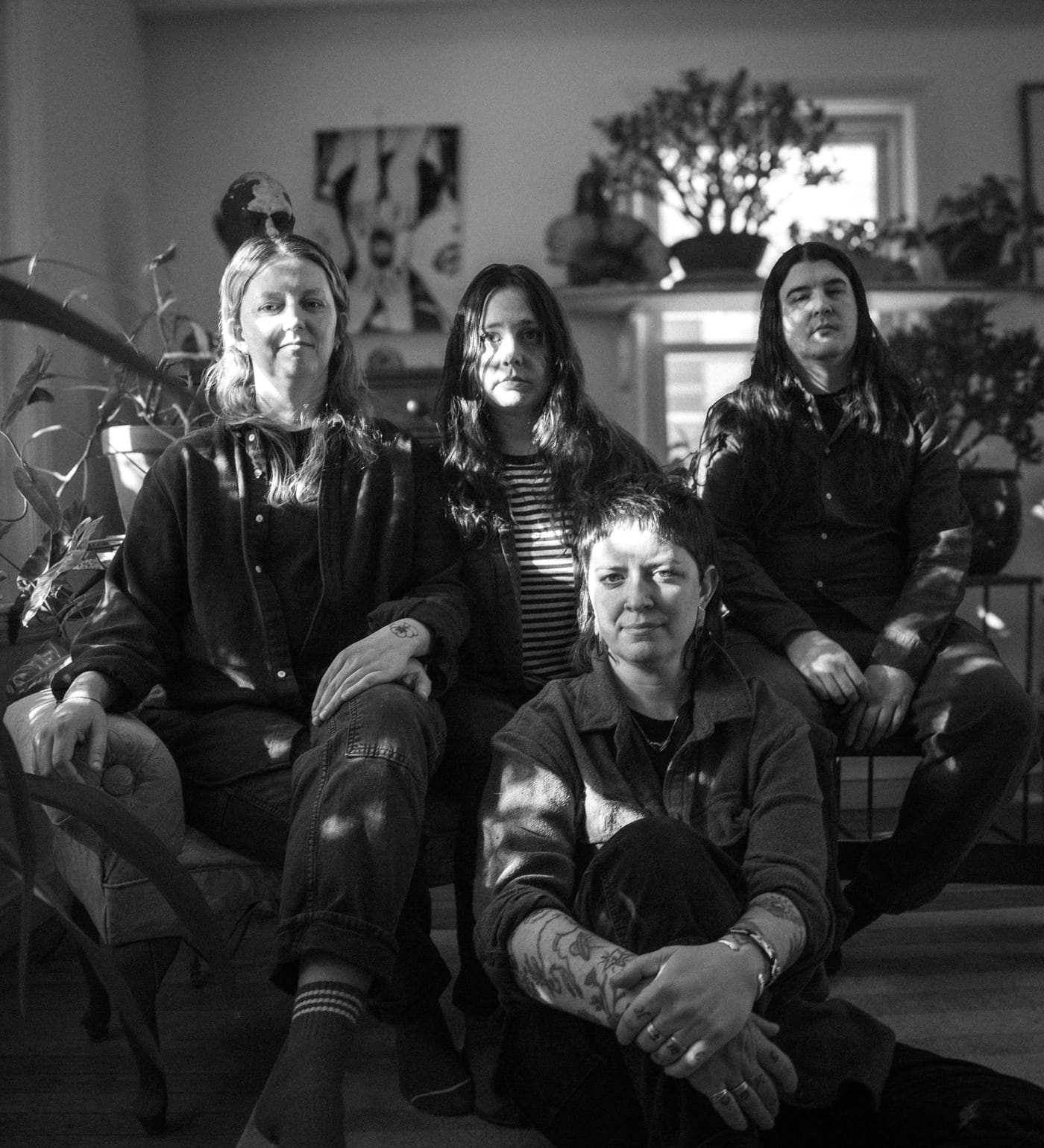
The Chris, Emily, and Liz she names are bassist Christopher Sadlers, cellist Emily Dix Thomas, and Liz Isenberg. They’ve been the constant across both records while the drum chair rotated. “We’ve played with several drummers over the years– Rachel Blumberg, James Maple, Joel Thibideau, Matt Swain and now Matt Slobogan,” Swain says, “and we’ve brought artillery musicians in for both records– Ian O’Neil for Avalon, and Penn Sultan for Babylon, but the backbone has always been Chris, Liz and Emily. This band wouldn’t survive without them.”
She traces the three back to where she found them. Isenberg first, in 2003. “She is the first friend I made when I arrived at college. We were in the same orientation group, fittingly ‘Women in Music’ and I latched onto her like a lost puppy and refused to let go. All throughout college we lived close by, if not together, mostly because I was a suburban girl who was unworldly and insecure and didn’t know how to make friends and Liz put up with me.” Isenberg taught Swain to write. “At that age I barely played guitar and she was a whiz. I thought she was the coolest. The first original song I ever wrote we recorded in my dorm room with her playing guitar. It was angsty as all hell.”
Dix Thomas came in during the same stretch, through a mutual friend’s senior project. “Now, when we sing together, sometimes I can’t tell whose voice is whose. Her cello playing is everything I wish I could do.” Swain herself picked up cello inside Brown Bird as what she calls “a gateway drug to the upright bass,” and says she’ll never get to where Dix Thomas already is on the instrument.
Sadlers gets the most quietly reverent passage. “I don’t give him nearly as much praise as he deserves. The guy is so quiet and humble, I always just assume he knows how much I appreciate and need him. But who knows? Maybe he thinks I’m a horrible bitch. In any case, Chris’s bass playing is like no other. He is an absolute wizard with pedals and sounds and often during live shows I hear something from his corner that is so feral and brilliant and perfect that all I can do is smile in his direction. But his head is always down, and his hair is always in his face, so I doubt he knows how happy his playing makes me. Maybe he’ll read this and my secret will be out.”
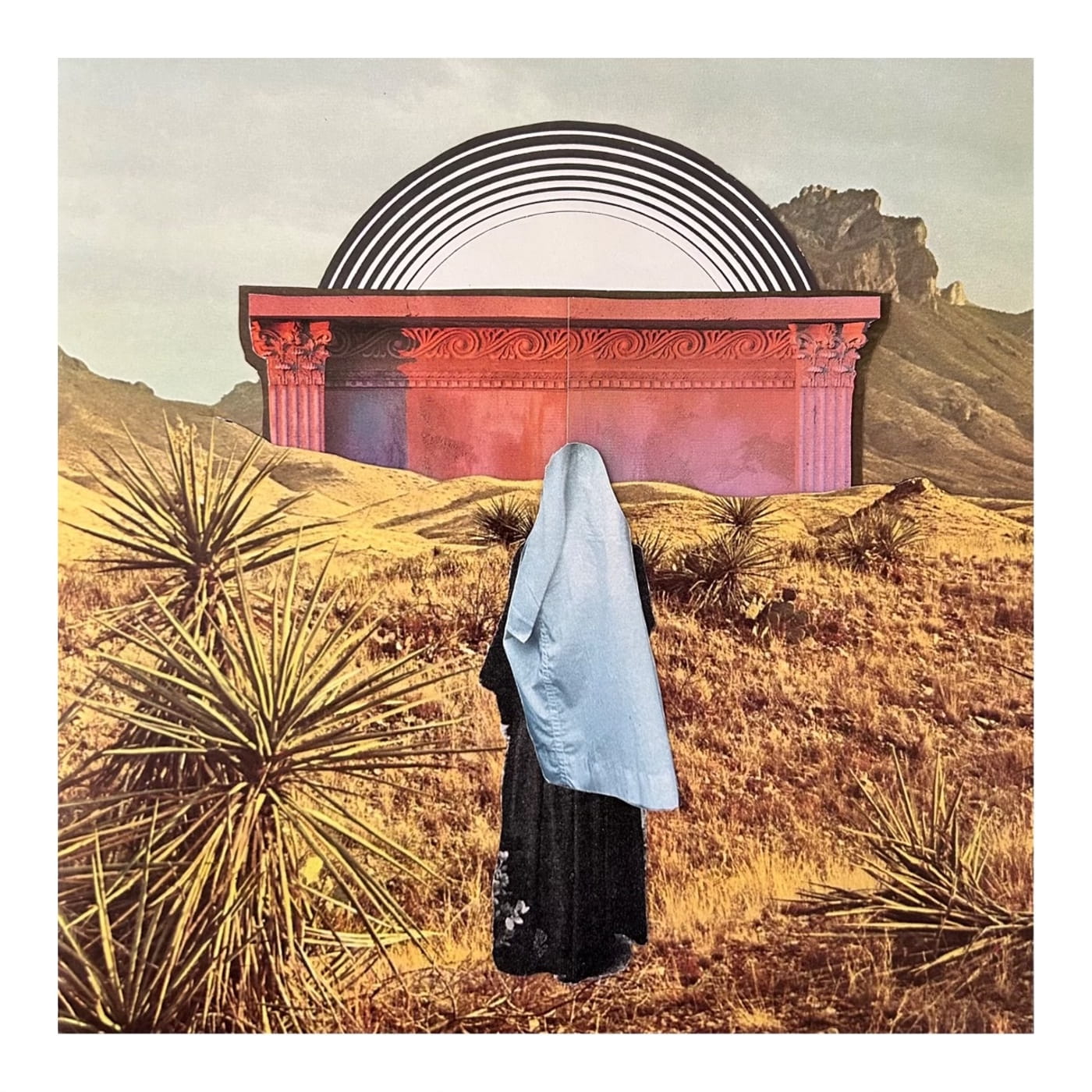
The Huntress and Holder of Hands didn’t start out as a band. It started in Swain’s apartment, with engineer Seth Manchester of Machines with Magnets, finishing Brown Bird’s final record “Axis Mundi” after Lamb’s death. “Quite literally fueled by bourbon and tears,” she says. “There was a moment when I wondered what I’d do now. Would I play music ever again? Who was I as a musician without Dave? That deep dark place is where The Huntress was born. At first, I had no intention of performing as The Huntress. It was only to be a recording project, and a way to process my grief. But good friends know when to push someone out of the darkness, and The Huntress was booked for a show before I even had a band.”
What started as a grief vehicle has, ten years later, become a thing she no longer steers alone. “From that place, it’s become this beast with its own legs. With that backbone of Emily and Chris and Liz. They know what this band is supposed to be, and they know exactly how to feed it. They know what it thrives on, and how to make it grow. I don’t control it anymore. It’s my child, but it’s been let loose from the womb and given its own autonomy.”
That release of grip changes what the songs are about. “Chris and Emily and Liz have given it its adult voice, and with that growth the subject matter has naturally become more universal. Not that grief isn’t already universal, because obviously, it is. But it’s so much bigger than me now. It’s not about me and Dave; it’s about the whole broken world and all the people in it. It’s about you and me and the children who are inheriting this mess of a planet.”
“Babylon” was tracked at Machines with Magnets in Providence and at Dirt Floor Studio in Middletown, Connecticut. The arrangements lean on Sadlers’ bass moving between sludge and supportive drive, Isenberg and Dix Thomas layering cello, bowed string bass, and vocal harmonies, with Matt Swain (Two Feet) on drums and Joel Thibedau (Death Vessel) and Penn Sultan (Museum Legs, Last Good Tooth) handling percussion and texture. MorganEve carries lead vocal, electric guitar, and violin throughout.
The world Swain talks about is what the tracklist puts in the room. “Beasts We Are” and “Ritual” turn outward, asking whether humanity can still change, whether we’re learning, what we leave behind. “Absence” and “Timbre Inaudible” turn inward, where her personal grief stays an active well. “Rocky Coast” comes from Emily Dix Thomas. “Swim Again” was written and recorded across distance during the pandemic, a Postal Service-style file exchange between Swain, Isenberg, Sadlers, Dix Thomas, and former bandmate Rachel Blumberg, borrowing words from the late Dave Noyes (Seekonk, Rustic Overtones). A live cover of Brown Bird’s “Bilgewater” makes the record’s debt to Lamb explicit.
Closer “Thunderstorm” thins the arrangement out to near-empty space, its ending nodding to Gavin Bryars’ “The Sinking of the Titanic.” The question hanging behind the song is whether the ship we’re on now gets to sink quietly too, or whether someone tells a different story.
The current single, “Doctrine,” is the protest piece at the center of the record. A thumping kick rides under twangy guitar strums that grow into a moody, noisy climax. Strings swell, the bottom gets heavier, vocals climb into something close to an invocation. The song was written in 2017 and reshaped through several versions before landing here.
“‘Doctrine‘ is a protest song,” Swain says. “It was written in 2017 and has gone through several sonic iterations before landing here. Honestly, I was hoping it would be obsolete by now, but instead these words now feel like an incantation we need more than ever.”
View this post on Instagram
The band plays the East Coast through summer and into early fall. Cambridge’s Lizard Lounge on July 17th with Wyn & The White Light, a New Haven house show with Old Milk Mooney on July 18th, North Falmouth on September 10th with The Glass Hours, Portland, ME on September 12th (TBA), and Egremont, MA at The Buttonball Barn on September 19th with DiTrani Brothers. The Devil Makes Three, where Swain now plays full-time, has Servant Jazz Quarters in Alta, WY (August 7–9), Rhythm and Roots Festival in Charlestown, RI (September 4–6), and Bourbon & Beyond in Louisville, KY (September 24–27).
“And, I suppose, it’s still a Call to Arms, a decade after that song was written,” Swain says. The empire is still there. So is she. So, now, is the band.
🔔 IDIOTEQ is ad-free, independent, and runs on one person’s time. If you want it to stay that way: DONATE via PayPal 𝗈𝗋 SUPPORT via Patreon.
Stay connected via Newsletter · Instagram · Facebook · X (Twitter) · Threads · Bluesky · Messenger · WhatsApp.