

Adiós Cometa and Cissné made “Zero / Uno” as a conversation between two bands, and the conversation began before Adiós Cometa had written their song. Hiiro, Cissné‘s guitarist and main composer, sent Emanuel Mora two demos; Ema chose the one that became “Zero“. About a month later the finished recording arrived, and Adiós Cometa still had not started composing their side. The Japanese track already had its title. The San José five-piece eventually called their answer “Uno“, “one” in Spanish.
For Ema, the shared unrest is love, loneliness and the need to feel accompanied in the world. Hikage, Cissné’s vocalist, is more specific about “Zero“: loneliness created by denying your own feelings. “Uno” reaches toward the belief that connection can survive time and distance. They have separate narrators and stories. The first song still gave the second a starting point.
Adiós Cometa have reached the point where seeing their name on a new release gets my attention straight away. I already know there will be plenty of emotion somewhere around screamo and post-hardcore, with shoegaze, sad space rock and other shades coming through depending on the song. They sit in the same mental drawer for me as those European screamo bands with a strong post-rock pull: when something new appears, I want to hear it. “Zero / Uno” did exactly what I hoped it would.
“Zero” and “Uno” also move very differently. “Zero” runs 3:45 and stays loud through most of its first two minutes, drops for roughly half a minute, then rises again for the final stretch. “Uno” lasts 6:21, drops noticeably around the three-minute mark, stays lower for close to a minute, then rises into a long final section. Adiós Cometa have always carried plenty of chorus, reverb and shoegaze into their post-hardcore, and this is their fullest move into screamo so far. Cissné’s writing leaves space for ambient passages and quieter sections before the volume comes back.
Hearing “Zero” raised the bar for Adiós Cometa. “It definitely put some serious pressure on us to come up with something good because it’s a real banger!” Ema said. Adiós Cometa had wanted to write this far into screamo for years. “We’d wanted to write a song like this for years. We’d always flirted with this sound, but we’d never fully committed to it. This split became the perfect excuse to take that leap. We all grew up obsessed with screamo and emo, so the real challenge was figuring out how to channel that intensity while still sounding unmistakably like Adiós Cometa.”
Wyświetl ten post na Instagramie
Hikage wrote “Zero” around a fictional woman who grew up in an environment where she was never able to make her own choices and eventually gave up on love. She can look fortunate from the outside and still carry a loneliness she cannot tell anyone about, trying to get through daily life with an urge to scream. She suppresses her feelings for so long that joy and loneliness start to become difficult for her to tell apart.
Hikage uses that fictional woman to carry feelings that belong to her. One sentence sat at the start of the story: “If I changed my name and moved somewhere where nobody knows me, could I become someone else?” She often writes people and situations that never happened, then gives them her own emotions. The lyrics have the woman imagining a different name, move through seasons and a girl crying in a park, and finish with her caught between zero and one without saying goodbye.
“Uno” moves toward the need to believe in love. Ema even calls finding love something people often treat as the ultimate human goal, with romantic love only one part of it. He is talking about a love that can overwhelm you, something people want to believe exists somewhere and can be reached. The refrain keeps coming back to “No, no habrá final”, then says neither time nor space can separate the people in the song. For Ema, that repetition is an attempt to reassure himself that such a bond exists, almost an act of faith.
Ema connects part of that idea to becoming a parent. Parenthood made them more sensitive to certain emotions and gave them access to a new kind of love. He sees that experience as one concrete example of the bigger, universal love in “Uno”.
For the interview, each band received the other song’s lyrics without an explanation first.
Ema called “Zero” deeply personal and compared reading it to opening someone else’s diary. The little references sounded private to him, yet the loneliness was clear enough that he heard the song as the cry of someone trying to live while carrying that burden.
Hikage got close to “Uno” too. She heard a “passionate desire to believe deeply in love” together with sadness and urgency, as though the repeated words were being used to convince the singer or someone else. She also said that if “Zero” had been written from the man’s perspective, it might have come out very close to “Uno”.
Ema considered the Spanish-to-English translation straightforward enough here to preserve what he wanted. Hikage only speaks Japanese and chose one specific “Zero” line because he could not judge how much English preserves. Even in Japanese, he considers it one of the song’s lines most open to interpretation. The literal translation ends with a request to smile and say, “You’re hopeless.” At face value it can read as resignation, with the woman imagining reaching the end of her life and still being unable to forget someone. Hikage says the buried impulse is immediate: she already knows she wants to go back now, and her circumstances make her force the feeling down. She thinks the performance carries part of that conflict beyond the words themselves.
“Zero” was originally meant for “Awake Children Under the Moon“, the Cissné EP built as one continuous piece around different forms of struggle and the difficulty of living. Once the EP was finished, Hiiro saw that sequence as complete. “Zero” carried the same emotions outside it, and pairing the song with “Uno” gave it its own place after the EP was already finished.
On “Zero“, Hiiro wrote the music and produced, Kamushita “Dual Core” Shion recorded, and Greenface mixed and mastered. Hikage is on vocals, Hiiro on guitar, Ai on bass and Takefuji on drums.
“Uno” is Adiós Cometa’s first composition after “Un Destello de Luz”, the 2026 album released by Spinda Records in Spain, Steadfast Records in the US and Furia in Costa Rica. The band see the song as the beginning of another batch. It was written after the album sessions were finished, and Ema says they are now more open to using these emo and screamo influences when a song calls for them.
Mark Murillo, Emanuel Mora and Jonathan Villalobos share the lyric credit on “Uno“. Mark, Ema, Jonathan, Pablo Matamoros and Gabriel Piedra all share the music credit, and Pablo Ocampo produced, mixed and mastered the recording. Mark plays bass and sings, Ema plays guitar and sings, Jonathan and Gabriel play guitar, and Pablo Matamoros plays drums.
Adiós Cometa have spent seven years deciding which parts of their sound they want to keep pushing. They have three vocalists and have tried different sides of that sound across the years. Ema says the music coming most naturally now is darker and angrier, with a brighter, more cathartic pull at the same time. Sometimes that means choosing a direction and leaving another one alone for a while.
“Transparente” has done better in streaming terms. Ema is clear about what chasing that result again would mean for them now. “We could choose to keep making songs like ‘Transparente’, which are the ones that have been more successful in terms of streams or whatever, but we wouldn’t be being honest with ourselves or with where we are at this point in our lives. At least not right now.”
Cabeza de Agua was Ema’s separate experiment with a couple of friends. In 2024, with Adiós Cometa’s first album still underway, he thought a song like “Uno” was probably further off even though the emo direction already made sense to him. He was the only Adiós Cometa member in Cabeza de Agua. They recorded a few songs, played one show, and stopped after guitarist Diego moved out of Costa Rica. There are loose plans to do something when Diego visits again, with nothing concrete yet. Adiós Cometa’s current move deeper into emo and screamo has happened inside Adiós Cometa itself.
Their 2026 album “Un Destello de Luz” was the record they were making as those emo influences opened up. Bandcamp Daily described Adiós Cometa as moving “between light and dark, heavy and slight, fear and hope”; Remezcla singled out the darker shoegaze and post-punk side, the noisy pedalboards and delicate ambient textures. KEXP and Radio 3 also featured the album. Their 2026 schedule includes a Mexico tour, a support slot for Chapterhouse in Costa Rica and further dates still to be announced.
View this post on Instagram
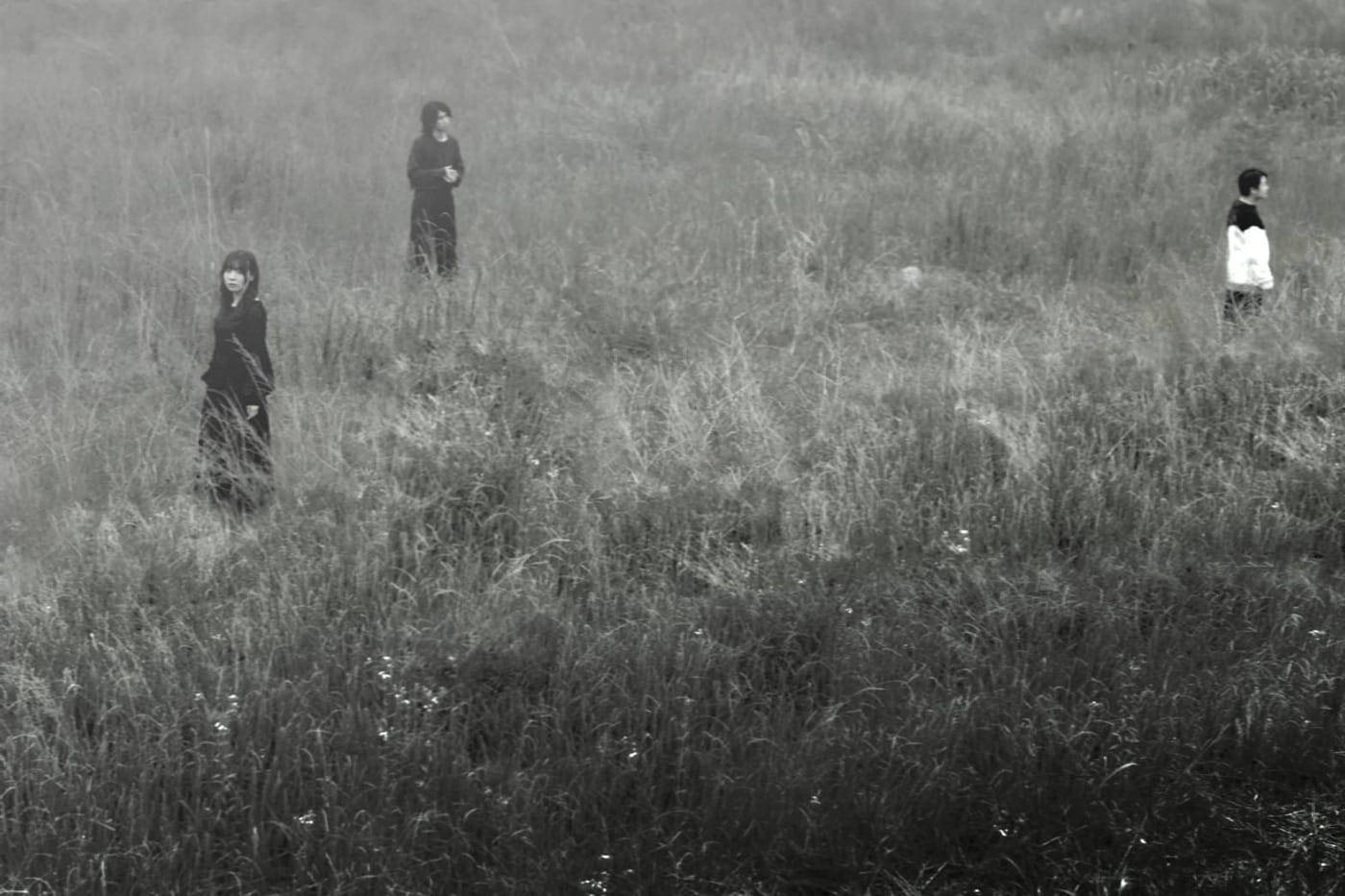
Cissné formed in late 2025 around Hikage, Hiiro and Ai, and started working out what the band was through the debut EP and live shows almost immediately. The Tokyo band came together from musicians with histories in swancry, sunsetinfall and to overflow evidence. Takefuji plays drums on “Zero”. They began with a shared idea of the music and aesthetic they wanted, then heard those ideas change as they wrote “Awake Children Under the Moon”.
Playing live changed the picture again. “When we actually started performing those songs live, we realized that Cissné was much more intense and immediate than we had imagined,” Hiiro said. He never identified one point where the band suddenly became complete. Their cycle is writing, recording, playing the songs in front of people and then writing again; each pass tells them a little more about what the band is. By the end of the EP they had found the band’s centre, and the new music is already moving further beyond “Zero”.
“Maybe, for us, feeling ‘this is Cissné’ and defining ‘Cissné is this’ are two different things.”
View this post on Instagram
Lauren Records released “Awake Children Under the Moon”, with Dog Knights Productions later handling a UK vinyl edition. Cissné have already toured Thailand on their first international run, and they have a Latin American tour confirmed for 2027.
The split itself began with two people messaging each other. Hiiro and Ema got in touch after Hiiro’s previous band and Adiós Cometa had released their respective debut albums through Daydream Records. They told each other they liked the other’s music, and the split idea followed.
Lauren Records had released Cissné’s debut EP and came on board for “Zero / Uno”. Five hundred vinyl copies were pressed in the US. Sugar & Spice in Europe, Devil Dog in the UK and Disk Union in Japan joined through Lauren’s distribution links. Gerpfast Records in Indonesia are friends with Cissné and took on the cassette, and Sello Furia is Ema’s local label in Costa Rica. “Zero / Uno” is out now digitally and on vinyl through Lauren Records, with the cassette through Gerpfast.
Hiiro put the scale of it this way: “We never started out with a plan like ‘let’s bring together labels from all over the world and turn this into a huge international release.'” People found the music online, started talking and kept talking until some of those relationships became friendships. Hiiro talks about Lauren and the other people involved as personal contacts, people who hear a record, pass it along and help get it to listeners where they live. That chain reached the US, Japan, Costa Rica, Europe, the UK and Indonesia.
“For us, it’s probably more accurate to say that we met people online through music, kept talking to them, and somewhere along the way those relationships became friendships,” Hiiro said. For him, the same process can pull listeners toward the other band’s world across language and distance.
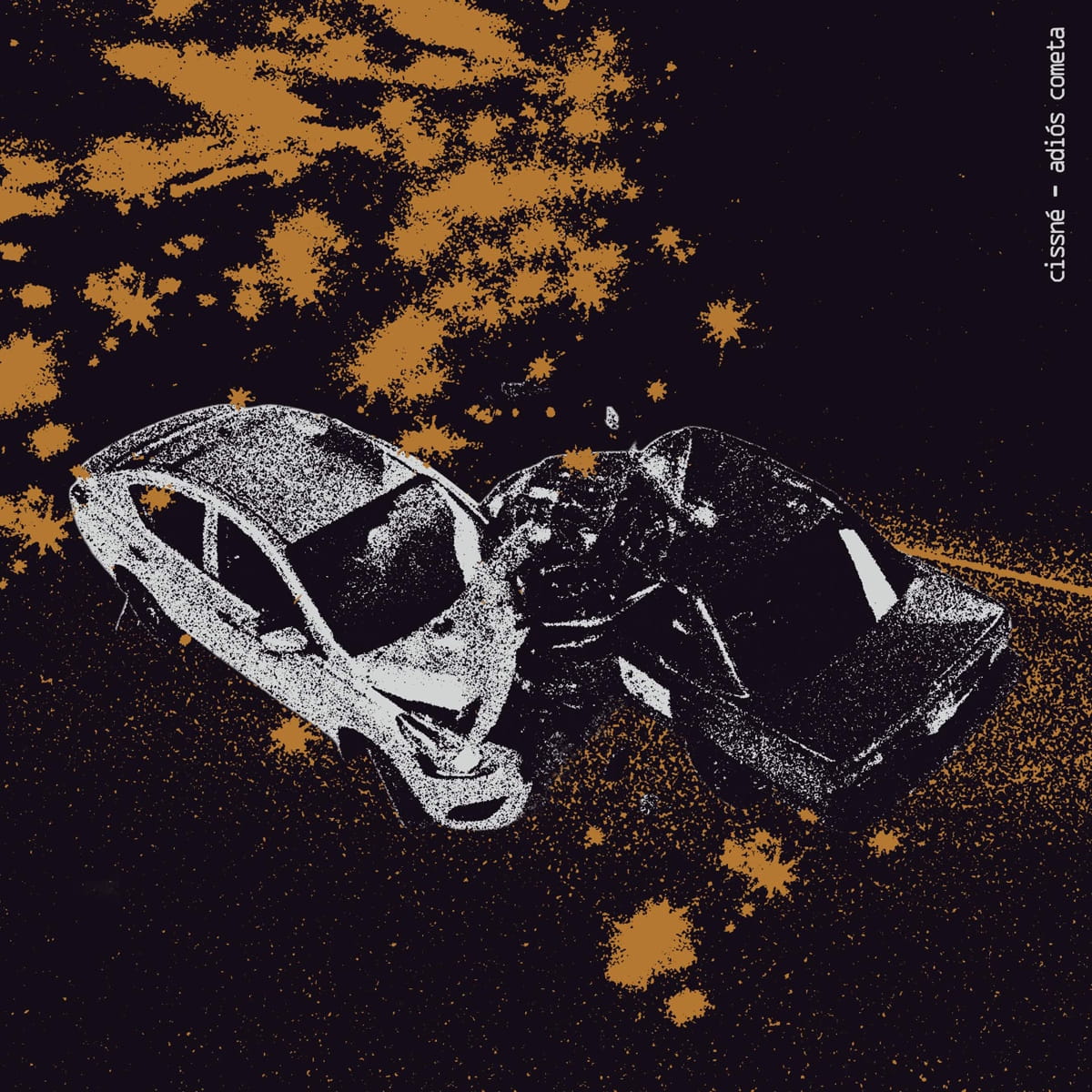
Julieta García put that same story on the cover: two cars colliding, two routes arriving at one point. Lauren Records edited the artwork, and Esteban Garita shot Adiós Cometa’s band photo for the release.
❞𝑭𝒐𝒓 𝒖𝒔, 𝒕𝒉𝒂𝒕 𝒉𝒖𝒎𝒂𝒏 𝒔𝒊𝒅𝒆 𝒐𝒇 𝒕𝒉𝒆 𝒓𝒆𝒍𝒆𝒂𝒔𝒆 𝒊𝒔 𝒎𝒐𝒓𝒆 𝒊𝒏𝒕𝒆𝒓𝒆𝒔𝒕𝒊𝒏𝒈 𝒂𝒏𝒅 𝒎𝒆𝒂𝒏𝒊𝒏𝒈𝒇𝒖𝒍 𝒕𝒉𝒂𝒏 𝒕𝒉𝒆 𝒏𝒖𝒎𝒃𝒆𝒓 𝒐𝒇 𝒄𝒐𝒑𝒊𝒆𝒔 𝒑𝒓𝒆𝒔𝒔𝒆𝒅 𝒐𝒓 𝒕𝒉𝒆 𝒏𝒖𝒎𝒃𝒆𝒓 𝒐𝒇 𝒄𝒐𝒖𝒏𝒕𝒓𝒊𝒆𝒔 𝒊𝒏𝒗𝒐𝒍𝒗𝒆𝒅.❞
Want more screamo?
Check out our huge Spotify playlist, updated on daily basis: