

The name Gr4v1 is lifted from Roadside Picnic — the Strugatsky brothers’ novel where the zones surrounding an alien visitation are riddled with incomprehensible phenomena, including gravitational anomalies that warp physical space without explanation.
Tarkovsky adapted it as Stalker. Alberto Casu and Giovanni Santagostino, both long embedded in the Italian underground through their other band Fourthsun, latched onto that image — invisible forces distorting the environment around them — because it mapped onto something they kept stumbling into while building the project: “a couple of happy accidents we experienced during our loops between electronic and real instruments,” as they put it.
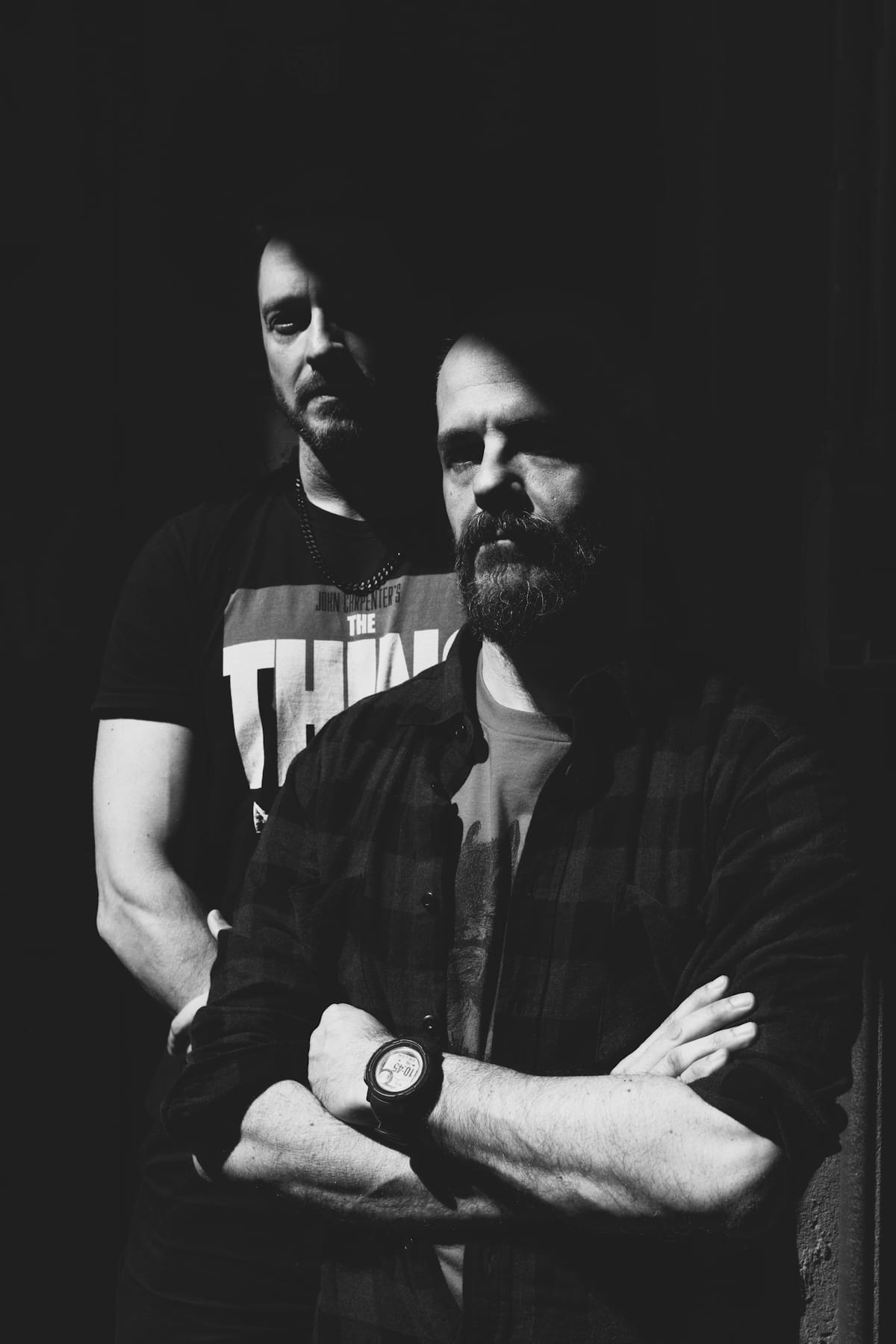
Gr4v1 is a two-piece from Milan: Casu on bass and drones, Santagostino on drums and drones. (Giovanni also runs a solo ambient/drone project called henoa.) The two first discovered their shared musical ground through Fourthsun, where the usual band rituals of comparing references revealed a mutual pull toward industrial and heavy, non-guitar-driven electronic music — Scorn, Godflesh, Techno Animal — the kind of stuff that sits outside the hardcore and metal spaces they’d been circling. Gr4v1 grew out of that overlap.
The process they settled on is iterative and circular. Beats and bass lines get programmed or written on pads, fed into a software grid and textured there, then pulled back into live performance — real drums and bass rearranging what the machine already shaped. The goal isn’t to imitate electronic music with instruments, or the reverse. “The final goal,” they write, “is to build an environment where organic playing and mechanical elements coexist and influence each other.”
The surrounding textures lean atonal — drones, noise fragments, electronic layers building walls of sound — designed to stay open enough that listeners project their own readings onto it rather than follow a melodic argument.
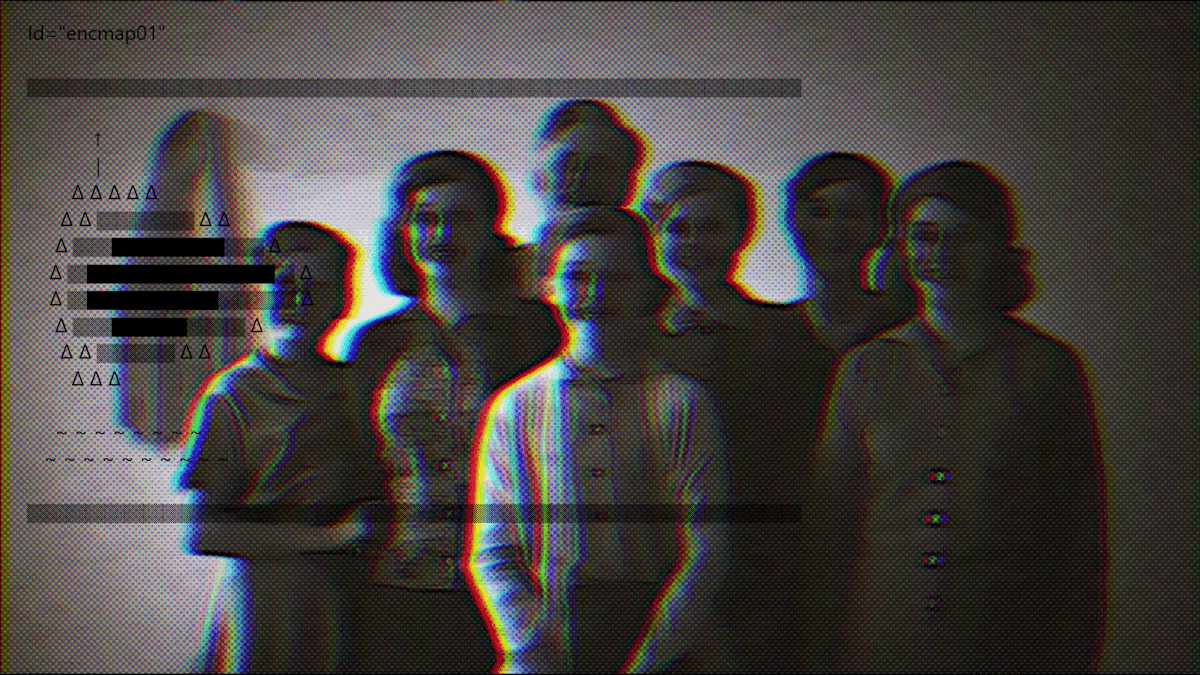
The debut EP, due out in June via Gladivs records and their Brumes Production on digital and tape, runs five long-form tracks. Non-verbal titles. Each piece is structured to develop gradually, textures and rhythms emerging, colliding, and dissolving — mood pieces more than songs, built to carry tension and density without narrative resolution. “The intended result for us is to create music that sits somewhere between industrial weight, ambient drift, and experimental sound design without giving a univocal and definite interpretation of the journey.”
Wyświetl ten post na Instagramie
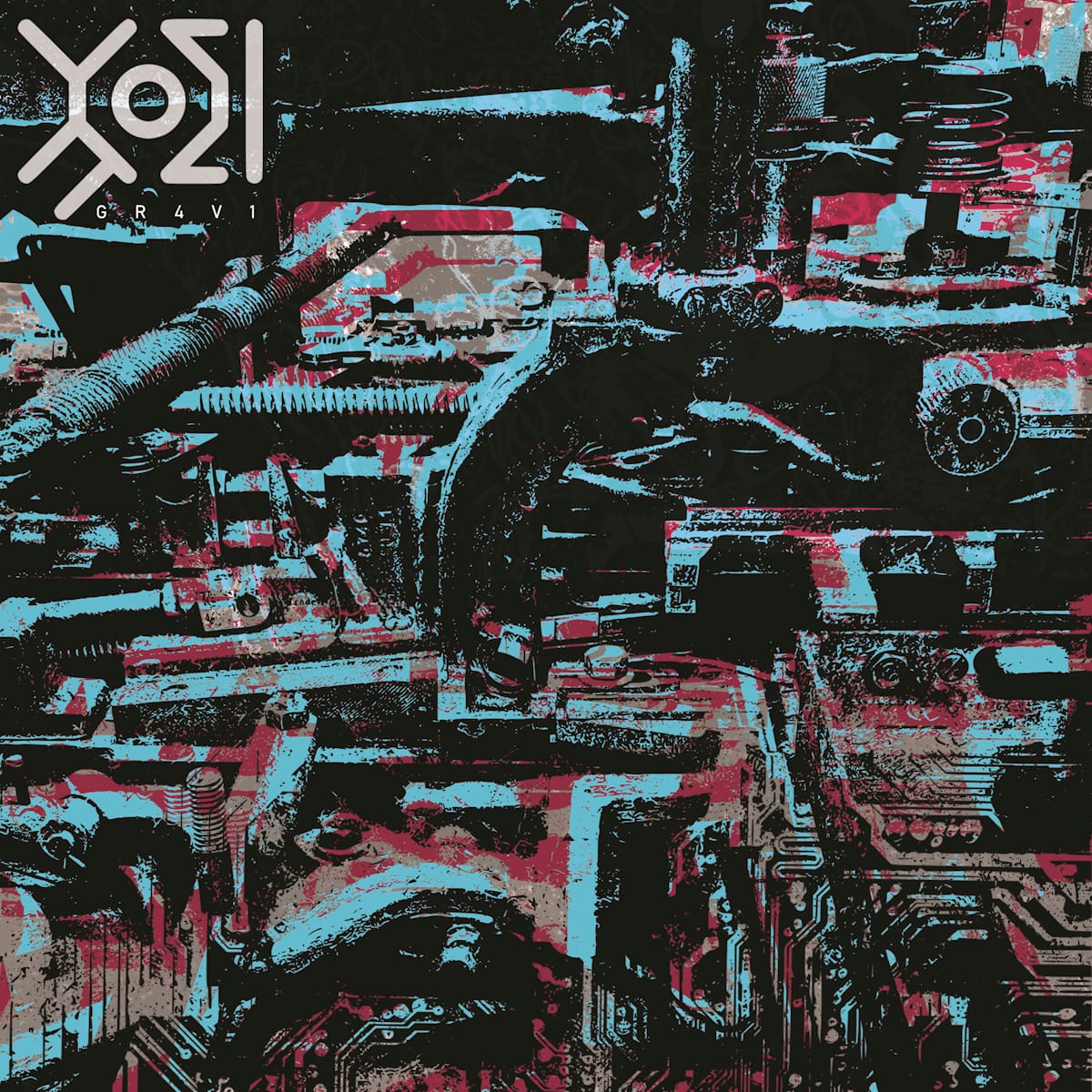
Visuals for the project come from a collaboration with mächinalis (machinal.is), an audiovisual experimenter whose practice centers on the human-machine feedback loop and what he calls “the creative freedom found within the act of failure.”
The visual process starts with AI-generated imagery — run through multiple systems and deliberately inviting hallucinations and unpredictable output — which is then edited and transformed using audio-reactive tools and what they describe as “unorthodox live practices.” The whole thing is unscripted, treating the broken and the glitched as the actual creative engine rather than something to be corrected.
Casu and Santagostino also wrote at length about what it means to be making this kind of music now, and it’s worth quoting directly:
“We live in a time where artistic value is often measured through numbers: followers, views, algorithms, engagement. Visibility has become a currency, and sometimes it feels as if the creative process itself is shaped by the need to constantly feed those mechanisms to crunch more numbers… Artists are often pushed to turn themselves into content generators for engagement, running an endless race for attention and relevance where the tool has become the goal and the goal has been lost.”
Against that backdrop, they describe Gr4v1 as a reaction — not a manifesto, just a project that exists because they enjoy building and shaping sound together. “Maybe the most radical gesture today is simply returning to the basics: making left-field music out of curiosity and passion, not out of strategy.”
Below, the band breaks down the eight records — four each — that most directly shaped where Gr4v1 ended up. Their words.
Alberto’s picks:
Dälek – Absence
When this album came out it hit me like a ton of bricks. The tension and menace of the musical constructions behind MC Dälek’s rapping are at the same time unhinged and clinically textured and have been a reference ever since. This is one of my desert island albums. (cfr. “Distorted Prose”)
The Bug vs. Earth – Concrete Desert
This is a clash of titans: the inventor of the modern drone is paired with one of the heaviest bass-abusing producers to produce… a mostly atmospheric and meditative album of bleak ambience that feels like exploring an abandoned city. Hushed but not welcoming. (cfr. “Agoraphobia”)
Ulver – Perdition City
A trip hop album produced by a black metal band is something not that out there nowadays, but less so in 2000. At the time this sparse and nocturnal piece of music was quite a stretch from my guitar-heavy listening habits, but it gave me a glimpse of a different way to approach music, even if you are a metalhead. (cfr. “The Future Sound of Music”)
Nearly God – Nearly God
I think all the albums Tricky put out up to Juxtapose are great in their own way and his voice is something else, but this almost-unofficial sophomore album (google it if you’re curious) might be The One. It’s full of collaborations, heavily loopy and laid-back, but also gritty and slightly unsettling. A good soundtrack for driving at night. (cfr. “Keep Your Mouth Shut”)
Giovanni’s picks:
Swans – Filth
Early Swans represents the blueprint of bass distortion and the oppressive atmosphere of modern cities, while also representing the starting point of various genres, from grindcore and industrial to noise, sludge and so on. (cfr. “Filth”)
Mick Harris
I’m a big fan of Mick Harris. He was the backbone of early Napalm Death, and subsequently started Scorn and many other projects and collaborations ranging from industrial to heavy dub. His sonical identity has had a massive impact on the way I process music. (cfr. “Evanescence,” “Greetings from Birmingham,” “Stealth”)
Richard David James (Aphex Twin)
His sound research from old ZX Spectrum 8-bit sound to glitchy drums and all present melancholic atmosphere. (cfr. Selected Ambient Works 85-92, …I Care Because You Do)
Scott Hansen (Tycho)
The summary of nearly five decades of electronic music and instrumental composition, from dub uptempos, ambient, shoegaze, new wave. To my taste, his apex was in the middle 2010s. (cfr. Dive, Awake)
Beyond music, the band cites a constellation of film and literature that informed the project’s tone and aesthetic — Eraserhead, Begotten, Tetsuo: The Iron Man, Aronofsky’s Pi (with its Clint Mansell score), the two Ghost in the Shell animated films by Mamoru Oshii; and in print, Roadside Picnic, William Gibson’s Sprawl trilogy, the cyberpunk novels of K.W. Jeter, and Tsutomu Nihei’s manga Blame!, whose post-human figures navigate a labyrinthine megacity that carries the shadow of H.R. Giger throughout.
The EP arrives via Gladivs records in June.