

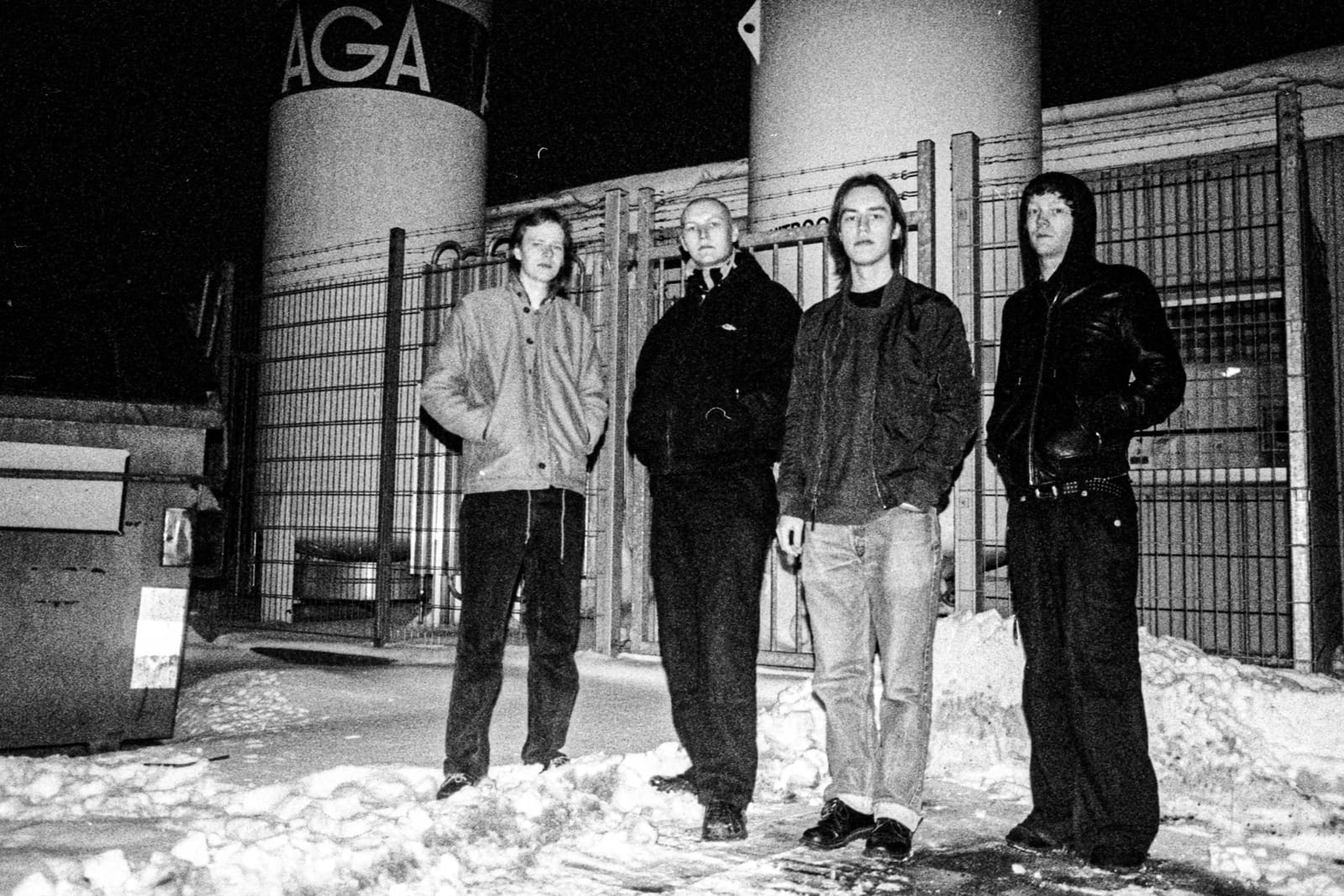
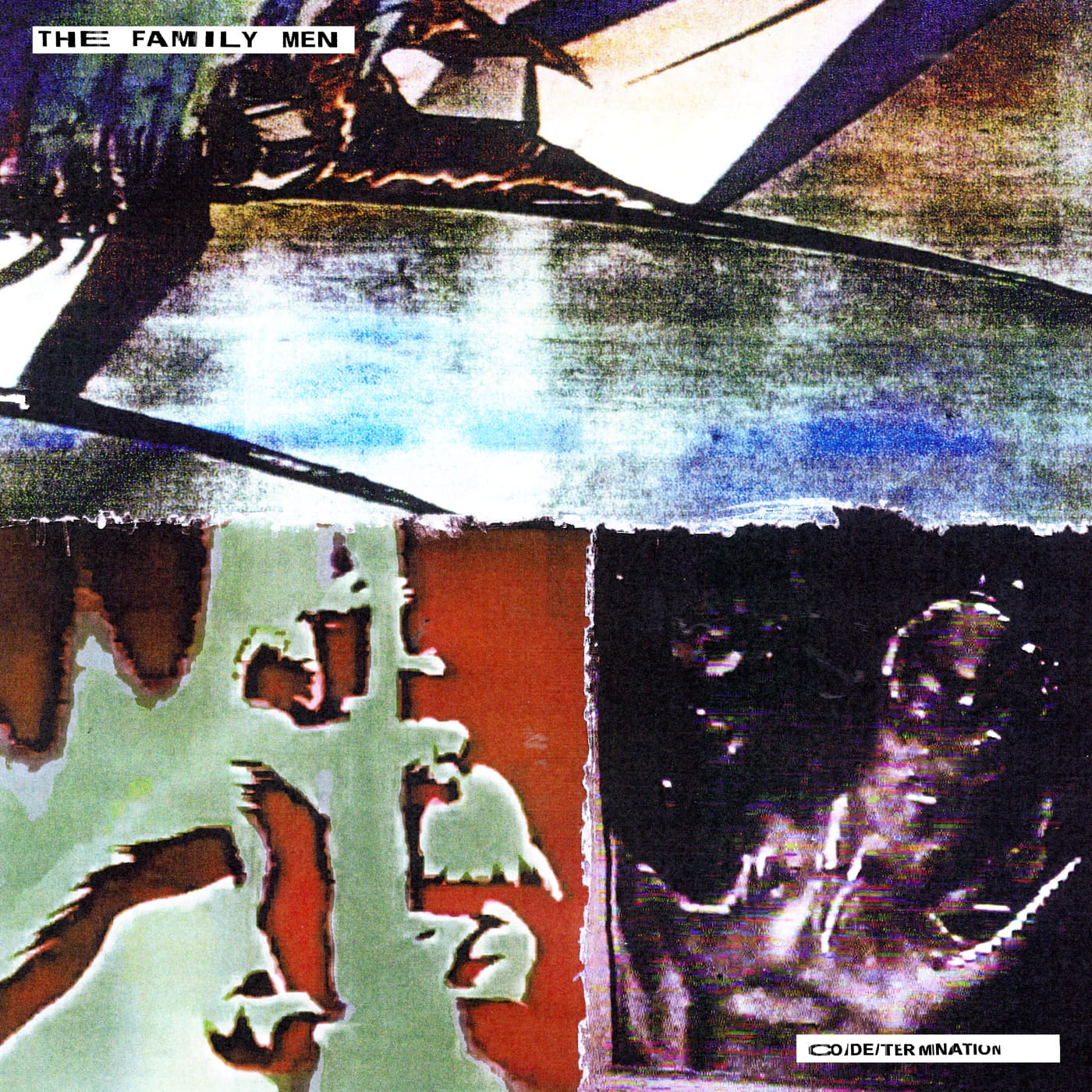
The album title comes from a CCRU text. Gustav Danielsbacka can’t remember which one. “It struck me for its ambiguity,” the vocalist and guitarist says. “Initially, it was supposed to be a track title, but for lack of a better title for the album, it was chosen.”
The Coventry-based cultural theory collective sits alongside Kenji Siratori, William Gibson, and Katherine Hayles in the reading list that fed the lyrics on “Co/de/termination,” The Family Men‘s second full-length, out today, May 8th, via Welfare Sounds & Records.
The Gothenburg band’s debut, “No Sound Forever,” was tracked on an 8-track reel-to-reel, with songs demoed on 4-track. “We were tape-fanatics,” Gustav says. The new one was built in a computer, and the change shows. “Working in the computer and having the possibility of layering literally endless amounts of sounds and textures and not being restricted to eight tracks definitely changed how the songs sound this time around.”
Vidar describes the writing as starting with a flood and ending with subtraction.
“When we start working on a new track there’s always the urge to just add more and more tracks, which is great for getting all of the ideas down and testing out all different directions the song can go in. But sooner or later you’ve gotta trim the fat, so I usually start muting tracks until it sounds as good as possible with the least amount of things going on at the same time. I’m way more into the idea of a few well defined elements constituting a song rather than a huge wall of noise. That’s when our arrangements work the best in my opinion. When muting any of the remaining tracks feels like taking away an integral part of the song, that’s usually the sign of a well arranged tune.”
The samplers, broken electronics, and tape loops that show up across the record came from a similar approach. “A lot of it is just exploration,” Vidar says.
“Like, ‘what would happen if we plugged this into this’. For example, sampling the reverb tail from an old pop record, distorting it, then time-stretching it to hell turns out to make a great pad sound!”
Gustav backs that up. “It’s pretty rare that we start writing a song by searching for a specific sound. Its usually mucking about with stuff and recording it all til something strikes us as extra interesting. Sometimes it’s a specific feeling or image we want to try and evoke, which can steer how we go about finding sounds, but many a genesis for songs have come from pure chance.”
The lyrics keep returning to bodies, machines, damage, control, medicine, screens, and collapse. Vidar tends to start without words. “I usually start with recording scratch tracks of random gibberish to get the idea down, then I’ll write lyrics that fit the pacing and sound of the demo track. I like writing lyrics around the vocals instead of starting with the lyrics, it’s more fun that way!” Gustav switches direction depending on the song. Sometimes the lyric exists first and the music gets built around it. Sometimes the instrumental conjures a scene and the words come later.
Wyświetl ten post na Instagramie
“Calamity” plants one of the album’s blunter sentences near the centre: Nothing human makes it out of the future. “It’s pretty important,” Gustav says. “I had to take away one word to make it fit and sound good. A disturbing amount of people seem to have never seen Terminator.”
“AOR” loops back to the title of the first record, dropping No sound forever into the chorus. “New Clear” sits between nuclear fear, technical failure, and the habit people have of acting like things are still under control.
The Stuxnet line that opens it came from Kim Zetter’s book on digital warfare. “I became fascinated with Stuxnet and the idea of digital warfare in general after reading Kim Zetter’s book,” Gustav says. “I’ve been wanting to build a song around those themes for a while.”
“Scanner” routes a related anxiety through systems eating themselves. “The lyrics to that song mostly came from me growing paranoid thinking about different kinds of feedback loops,” Vidar says. “Something feeding into itself over and over, growing exponentially each time, with no way to break the cycle. It’s fucking scary!”
“Noumena” closes the album and feels like the rest of it compressed into one track: finance, flesh, code, infection, wetware, divinity, death, all stacked. “I took words and phrases from books and texts I like and cut em up and put them back together until it made sense to me,” Gustav says.
“I like the onslaught of information. It’s like a lyrical distillation of all the themes touched upon previously in the record. It was one of the last songs we wrote and assembled for the record, but we didnt think of it as a bookender right away, but I’m pleased with how it finishes it off.”
The live show is part of the band’s identity, with VHS projections, walls of feedback, and Gustav frequently leaving the stage to perform from inside the crowd. “I always strive for a state of mind where I just do what feels right with the music at a given moment. Catharsis. I want to give people a show that I would be stoked seeing myself. It’s important for crowds to remember they’re a part of something living and breathing taking shape, not just static observers.”
Vidar’s read on what gets missed when people only call the band “intense” is shorter. “For me it’s about sincerity. It has to be for real. When I perform live I don’t sound angry just for the sake of it, I’m pissed as hell. Playing a show is probably more intense for us than it is for the crowd.”
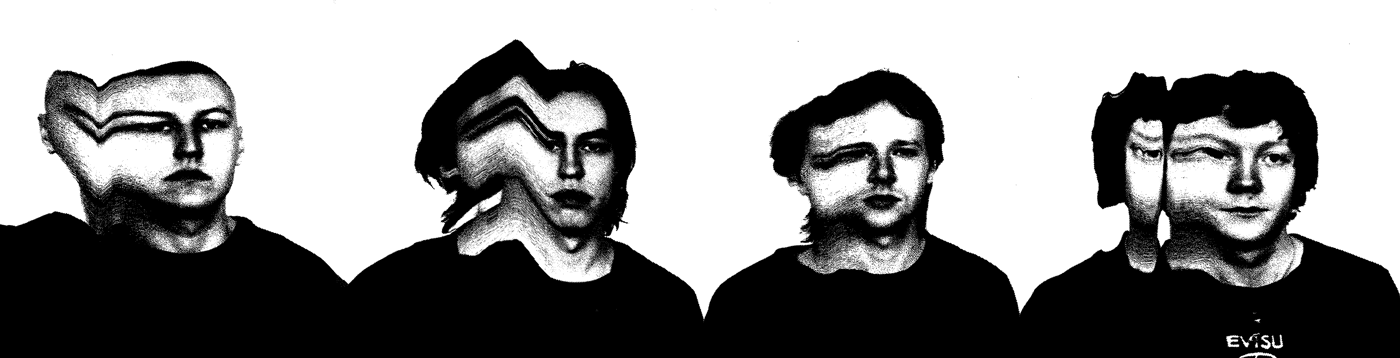
“No Sound Forever” was written during COVID, which meant the songs hit the studio without being road-tested. “Co/de/termination” reversed that. “This was the first time we were able to try out the songs live before recording them ‘properly’,” Vidar says. “So bringing that energy to the final record felt pretty natural.”
Touring did its own work on the band. Vidar’s main lesson from playing more shows since the debut: “I’ve realized I really have to become better at sleeping in a moving car.” Gustav offers his own: “I’ve learned the hard way that DVD players are prone to skip if they are exposed to high volumes of frequencies below 60 hz.”
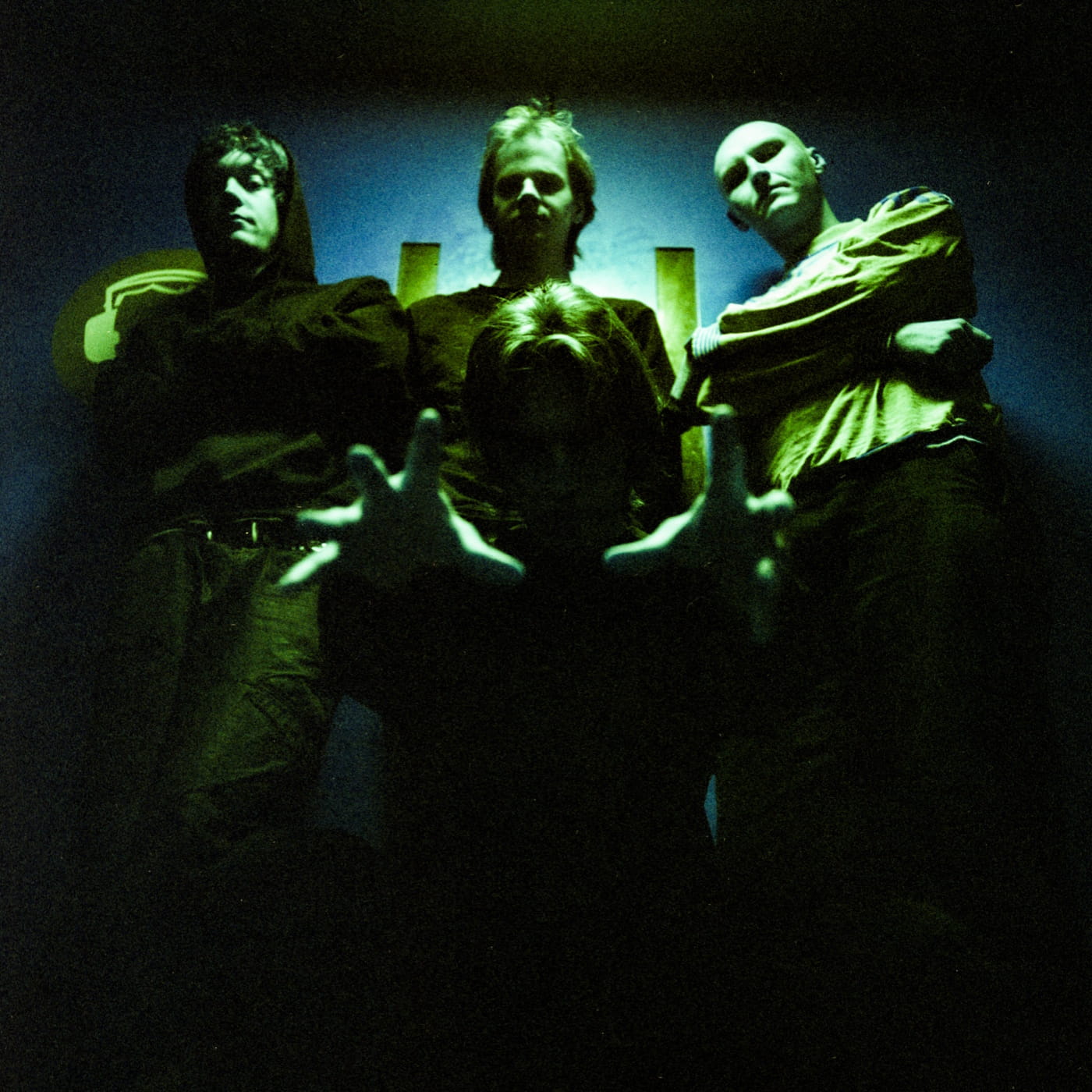
Asked how close Welfare Sounds sit to the actual work, Vidar keeps it short. “We don’t even let them into the studio!” Their labelmates Sylvie’s Head, Boy With Apple, and Mud Grief all get a nod, alongside a longer list of Gothenburg names that have caught Gustav’s attention recently.
The new Alyssa album, a duo of Dan Johansson from Sewer Election and Irma Krook from Makthaverskan, gets singled out. So does the Gothenburg lineage that pulled him into experimental music in the first place: Discreet Music, Neutral, Amateur Hour, Treasury of Puppies. Vidar adds Nuclear Unity, “who make strange dream-music.” Gustav also mentions the new album by The Shits from England, the upcoming eat-girls record, and a band of teenagers from town called Deisel Benzin.
The Swans, Nine Inch Nails, and Jesus Lizard comparisons that follow the record around get the response they always do from a band that lives inside its own thing. “That we sound nothing like those bands!” Vidar says.
Whether the new songs stay close to the recorded versions on tour is open. “It can very much depend,” Gustav says. “You’ll have to come and see for yourselves!” The one thing Vidar’s still chewing on now that the album is done: “That I still can’t wrap my head around the Kurzweil K2500!”
Live dates:
Wyświetl ten post na Instagramie
May 11 – Super 9, Tours, FR
May 12 – Cartonnerie, Reims, FR
May 13 – La Fosse, Laval, FR
May 14 – Supersonic Block Party, Paris, FR
May 21 – Roodkapje, Rotterdam, NE
May 22 – Klub9030, Gent, BE
May 23 – Les Nuits Botanique, Brussels, BE
May 29 – Musikens Hus, Gothenburg, SE
June 13 – Spice99, Stockholm, SE
June 24–28 – Germany TBA
July 4 – Resurrection Fest, Lugo, ES
🔔 IDIOTEQ is ad-free, independent, and runs on one person’s time. If you want it to stay that way: DONATE via PayPal 𝗈𝗋 SUPPORT via Patreon.
Stay connected via Newsletter · Instagram · Facebook · X (Twitter) · Threads · Bluesky · Messenger · WhatsApp.