
Milan Trachta — Mr. Banana to anyone who spent time on the European hardcore circuit — didn’t set out to write a music feature. He was dealing with some health issues, had more time on his hands than usual, and started putting thoughts down about a specific corner of punk he’d been sitting inside for thirty-plus years. It went long enough that a Facebook post didn’t seem like the right container for it anymore.
That tracks for someone with his biography. Mr.Banana is a straight edge punk rocker born in 1979 in Pilsen who’s been tangled up in the Czech underground since 1994 — organizing hundreds of shows at 007 Club in Prague, playing in Balaclava, Lahar, and currently in 50m Znak, Thulsa, and international sxe project Remain Sane.
For the last two decades he’s run a punk radio show at Czech National Radio. He also used to play in Protijed. He’s hosted most of the bands on this list at his home over the years, which gives the piece a texture that a lot of list writing lacks — he’s not cataloguing from a distance.
The spark for the whole thing was a 2024 record. “The reissue of Lip Cream Records resulted in a greater concentration of Japanese punk on my turntable,” he writes, “and with that came an interesting element. Thinking about and then testing which NON-JAPANESE bands were able to approach the intensity and sound of this very specific style called Japano punk.” The style in question is the “Burning Spirit” strand — fast hardcore punk built on a Motörhead backbone, explosive sound, chanted choruses, no breathing room.
Key originators: Lip Cream, Deathside, Judgement, Bastard, Nightmare, Gudon, Forward, Warhead, Paintbox.
See the full list of his picks below.
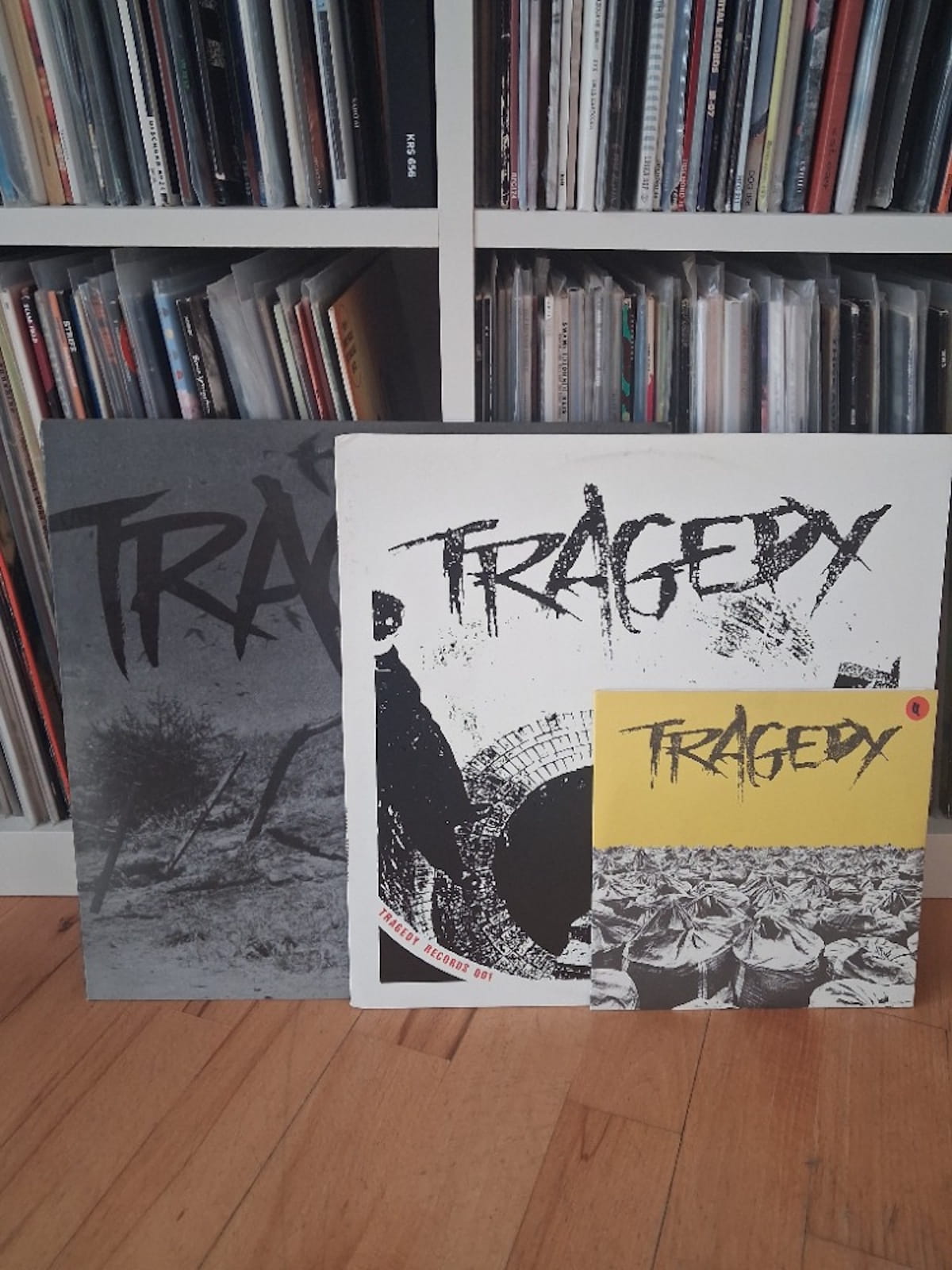
1. Tragedy — “Can We Call This Life” (Tragedy Records, 2001)
“Sure, it’s a bit of a cheap shot to start with, but there’s no other way.” Mr.Banana solved the first/second album dilemma by going with the EP between them, when Burning Spirit’s influence on the band was at its most concentrated — before the collision of that influence with Tragedy’s own inventiveness produced what he calls “a brand new style in the field of punk music.” Filip Fuchs of See You in Hell once wrote in his Hluboka Orba fanzine that Tragedy fans should pay attention to what t-shirts the band members are wearing and go from there.
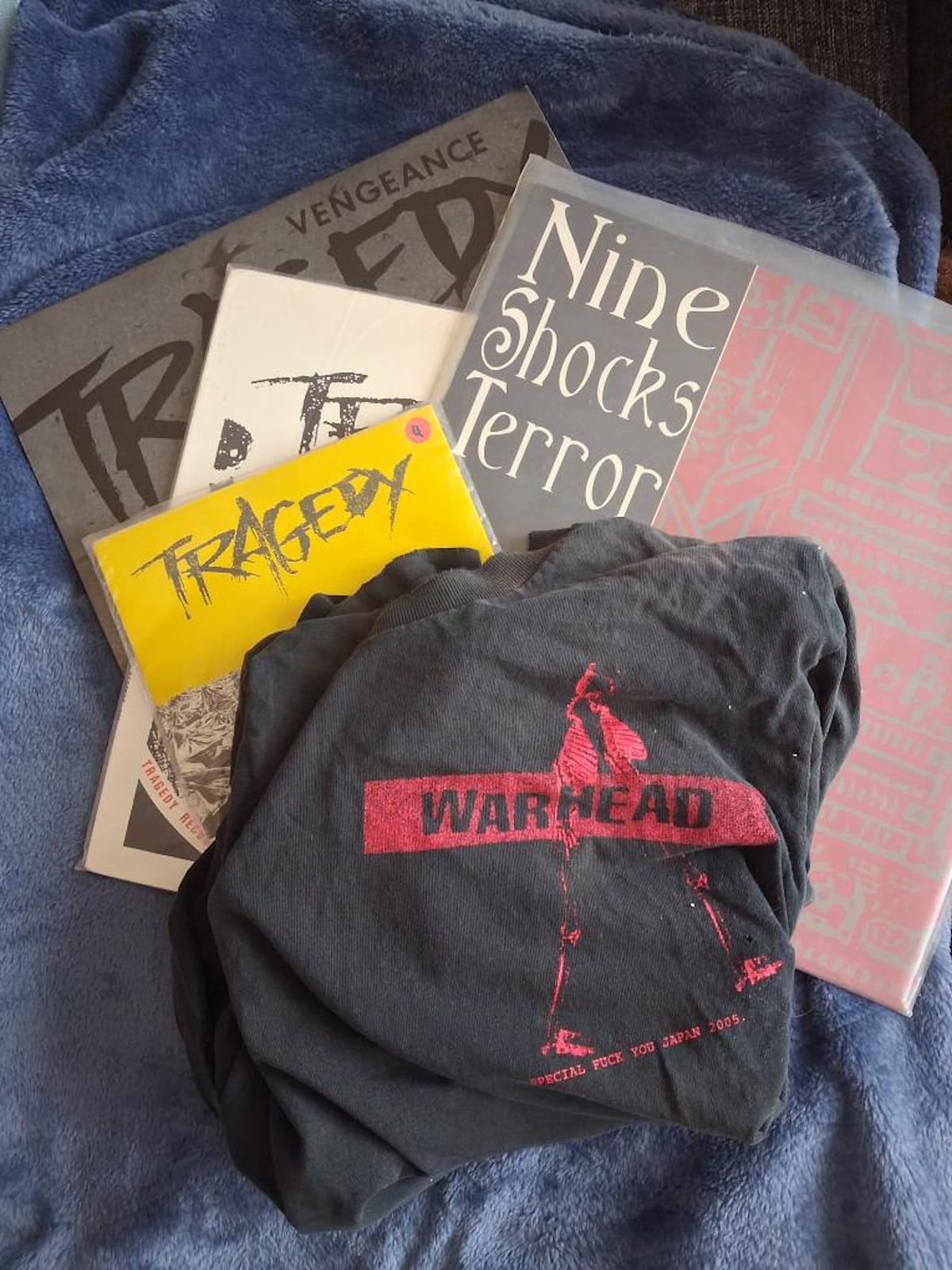
Mr.Banana has a firsthand footnote: after Tragedy’s double show at 007 Club in Prague in 2009, Todd left three shirts behind. One in the bathroom, sleeveless — Nightmare. One in the bedroom — Judgement. One long-sleeved, on the balcony — Warhead.
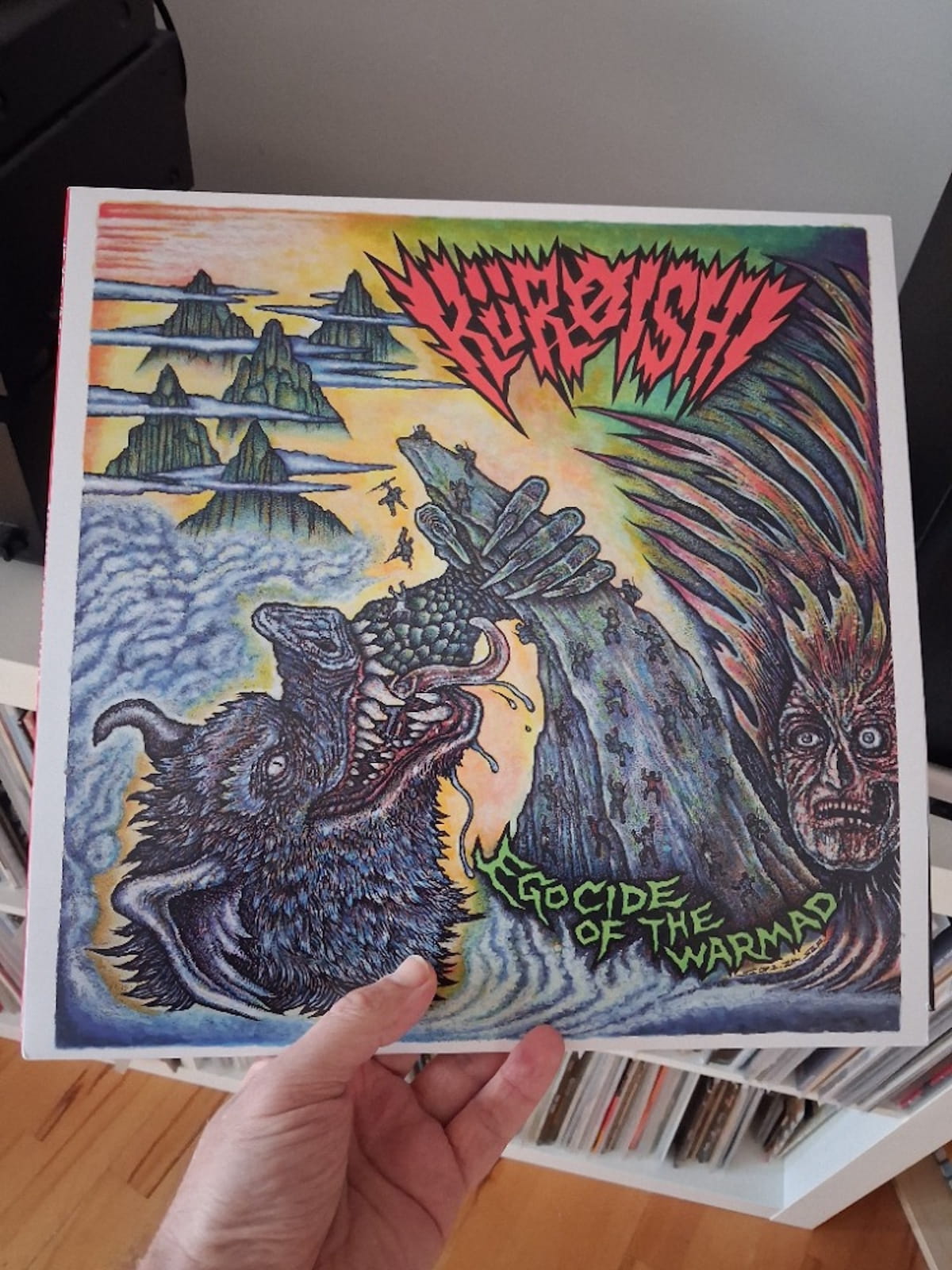
2. Küroishi — “Egocide of the Warmad” (SPHC, 2024)
The record that triggered the whole article. Mr.Banana didn’t know Küroishi at all, but caught the cover art — done by Sugi, whose work tends to be a reliable signal — and hit play. “I was literally knocked out by the total barrage that followed immediately after the classic ‘uuh’!” The Finnish band execute Burning Spirit style with full commitment while adding their own moves: heavier metal riffs, harder breakdowns, spoken word moments, always in service of momentum rather than decoration. “Really one of the biggest surprises of recent times, and I take my hat off to them.”
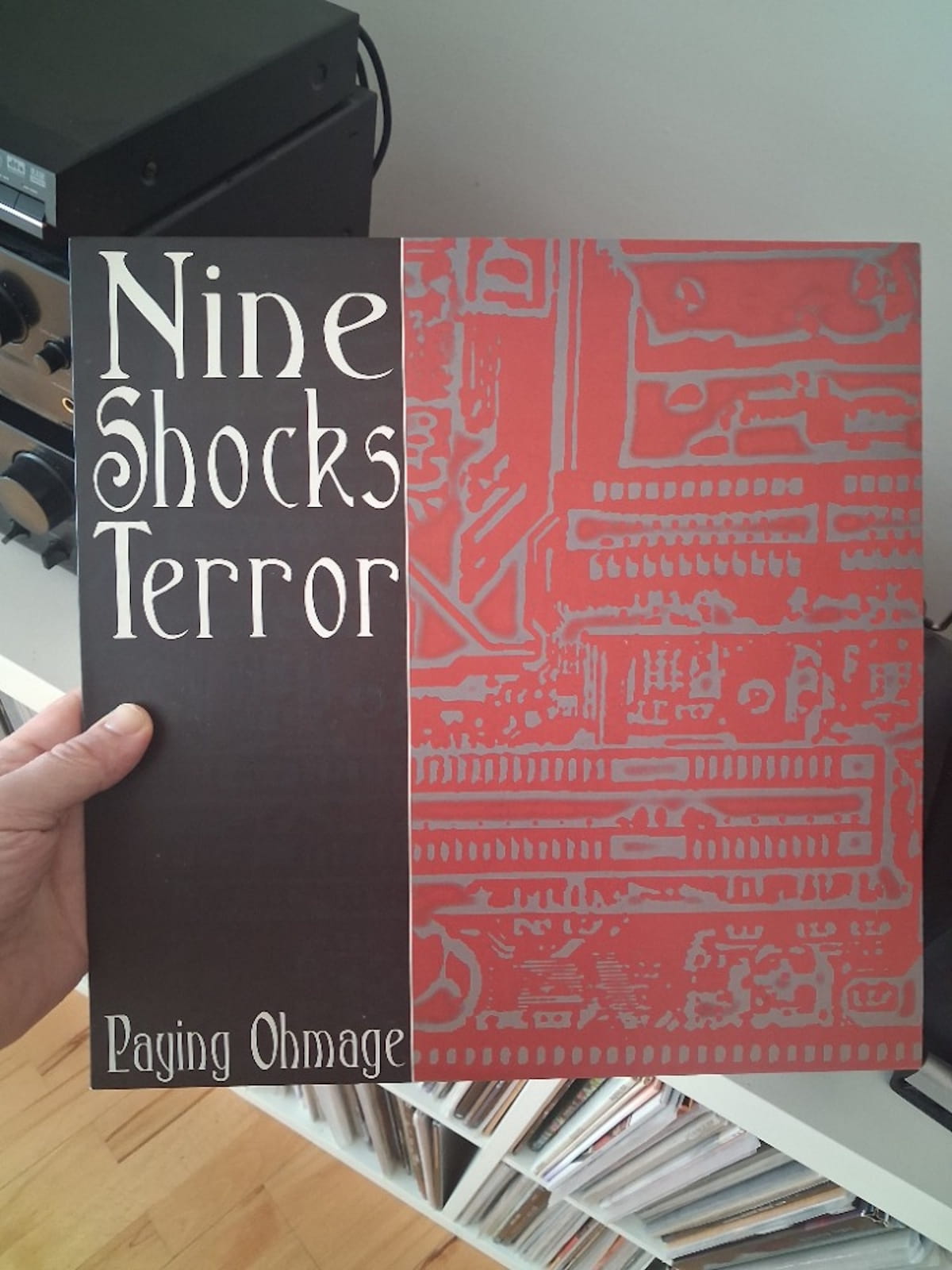
3. 9 Shocks Terror — “Paying Ohmage” (Sound Pollution, 2001)
The band name comes from a Lip Cream record. The Stalin cover closes side A. The Cleveland scene delivered. “A brutal, uncompromising beatdown, but at the same time, of course, with hooks and a clear Japanese vibe.” Mr.Banana also namechecks Gordon Solie Motherfuckers as a local influence, pulling 9ST slightly toward 80s thrash textures. “Oh, and the bass is really killer here!”
Their live shows had a reputation. When Felix Havoc banned all pyrotechnics from their Havoc Fest slot — apparently a recurring feature of 9ST performances — the band’s friends responded by bringing bags of black coal to throw instead. They realized too late that throwing coal is essentially throwing stones. As members of DS 13, who were on tour in the US and played the same show, described it: “Bass player Ebra was hit just above the eye, blood started gushing out, and the whole place turned into a riot. Pieces of coal, boards, decorations, basically anything that could be thrown, flew through the air. Total chaos!”
4. Burial — “Never Give Up…Never Give In” (Hate Records, 2005)
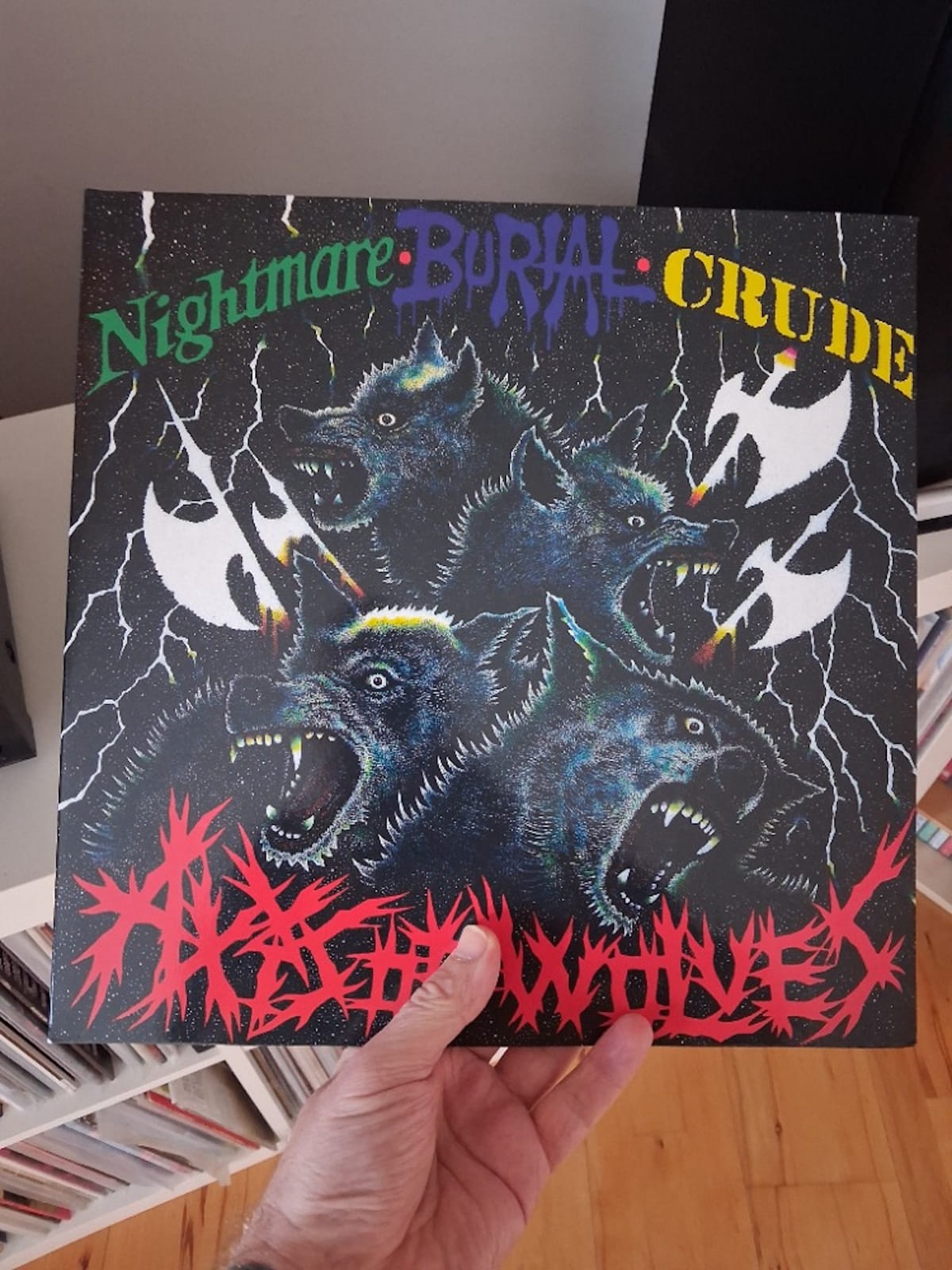
Burial didn’t have it easy. “They started playing their rip-off Burning Spirit immediately after their formation, but it was met with a rather indulgent smile by all those in the know.” Classic German stiffness, lack of energy, no original angle — the early shows were bland. Then they toured Japan twice. The second tour changed something. The album they made after coming back is, in Trachta’s words, “murderously good.” Nearly 100% plagiarism, but everything locks in — explosive sound, well-written songs, shows that became actual bangers. He also singles out their tracks on the three-way split with Crude and Nightmare: “I would even dare to say that they are the best of the three bands.”
5. Butcher — “Return to Nothingness” (Desolate Record, 2018)
Jack Control’s full-commitment Japancore project, pulling in members of WBTD and Asshole Parade’s drummer. Mr.Banana caught them on the last day of K-Town, waiting in “a semi-coma” when they hit the stage — “a bunch of punk debt collectors” by the look of them. “In a few minutes, the first carpet bombing came over the drum toms and boom — ultra-fast, crushing fire, evil vocals, constant chanting of choruses and zero chance to breathe. About 20 minutes in one go and the complete destruction of everything within reach.” The album delivers the same at volume.
6. Selfish — “Life Has No Vacant Time” (Feral Ward, 2013)
Similar trajectory to Burial — early records that go nowhere, then a decisive shift. In Selfish’s case the turning point was guitarist Otto Itkonen spending several years living in Japan. On his return, the band released “Burning Sensation” with cover art by Sugi, and the signals were there. “Life Has No Vacant Time” is the culmination — a complete tribute to the style, every detail executed cleanly, songs that move like a whip. Released by Yannick from Tragedy on Feral Ward. “Personally, I also really like the cover, which stands out for its precise workmanship.” One caveat: “I can’t help but mention that live performances were always a bit of a letdown…”
7. Harum Scarum — “The Last Light” (Partners in Crime, 2005)
“It never really dawned on me until recently, but this swan song from the Portland punks definitely belongs in this article.” Mr.Banana always filed Harum Scarum under anarcho-punk, which isn’t wrong — but “The Last Light” is harder than everything they’d done before, especially in the rhythm section, and the Japanese influence is unmistakable. The guitars stay melodic and melancholic, which gives the record its particular mood, but the momentum doesn’t let up. “Just like in the case of Tragedy, for example, it’s very original and distinctive, even though all the inspirations are proudly acknowledged.”
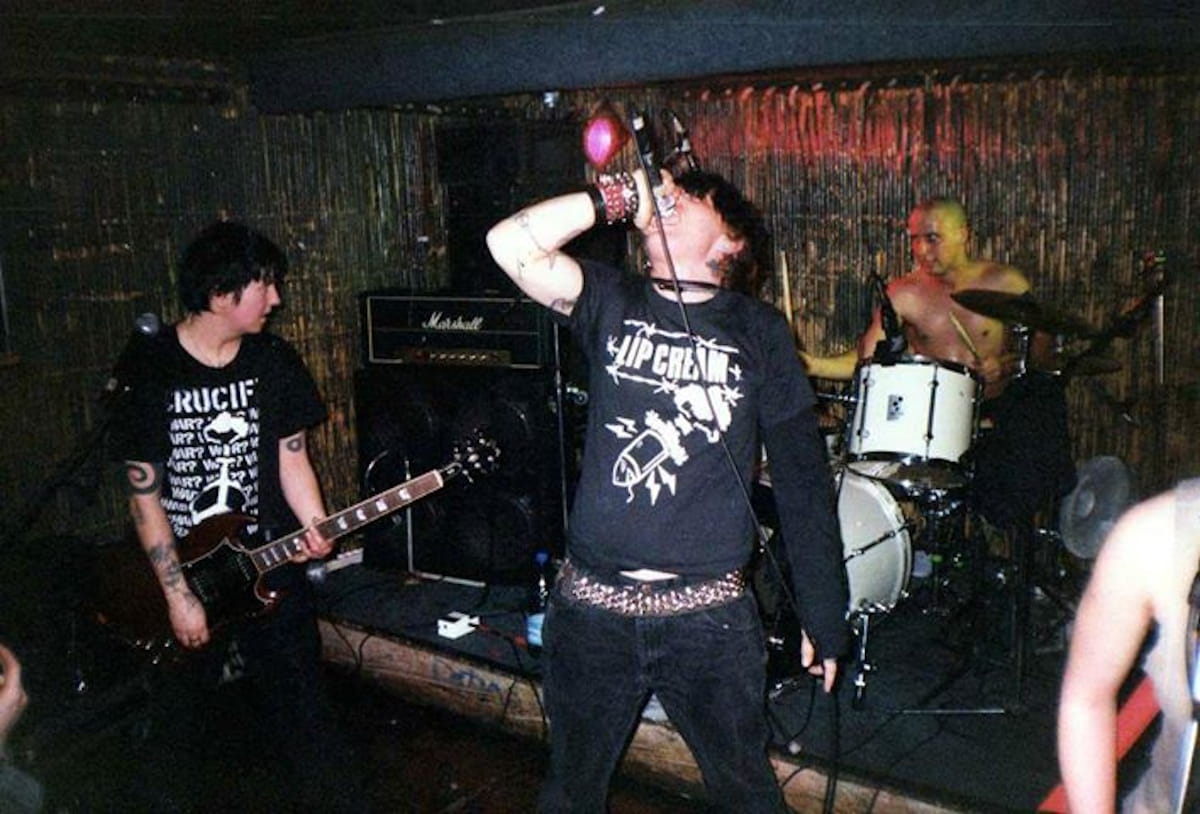
Mr.Banana organized a Harum Scarum show at 007 Club on 29 February 2004. A week before the gig, Shari broke her wrist while skateboarding in Finland and couldn’t drum — so she sang instead, with Jukka from Manifesto Jukebox stepping in on drums for the remaining shows.
8. Cluster Bomb Unit — “Abgesang” (Power it Up!, 2023)
Another German band, another bumpy road. CBU had always shown signs of Japanese influence, but it kept getting buried under muddy production and drums that thudded where they should crack. “At the same time, it must be admitted that CBU did stand out a little and tried to play this style with at least a little inventiveness.” Their 2023 album clears it all up. The Burning Spirit influence is front and center, the songs have more air in them, and the crust element — rather than muddying the whole — adds a necessary edge. “It smells a bit of Anticimex and it works like a charm.” Mr.Banana acknowledges the record still sits closer to the noisy/crusty end of the spectrum, vocals leaning more Lebenden Toten than classic Burning Spirit, “but with all the aspects together, this record definitely has the place in this list.”
9. See You in Hell — “Jed” (Insane Society, 2012)
Writing from Czechia, Mr.Banana wanted to include something local and couldn’t think of anything — until his friend Marek Rybenský (Gasmask Records) pointed him toward this one. “And he was right!” See You in Hell built toward this album across two Japan tours and splits with Contrast Attitude, Systematic Death, and Crow. On “Jed,” the confidence in songwriting finally caught up with the ambition: “their expression was suddenly illuminated by much greater confidence in songwriting, the band picked up speed and was once again not afraid to admit where it drew its greatest inspiration.” Recordings mastered by Jack Control at Enormous Door. The band’s tireless engine, Filip Fuchs — formerly of cult band Mrtvá Budoucnost — died of cancer ten years ago. The band continues.
10. Smash Detox — s/t EP (Prank Records, 2011)
“And so we come to the end, to a band that shouldn’t really be here, but at the same time has to be here.” Smash Detox was Jack Control’s project built from the actual source material: Muka Chin on drums (Judgement, Death Side), Souichi from Gudon on guitar, Tomo Iizawa from Bastard and Judgement on bass. Ashley from Signal Lost also appears. Recorded at Our House in Japan — the studio run for decades by Mr. Yanagida, where Death Side, Judgement, Paintbox, Forward, and Gudon all cut their records, and where Deathreat tracked “Consider It War.” A circle, closed.
Bonus: Boris — “No” (Blood Sucker / Fangs Anal Satan, 2020)
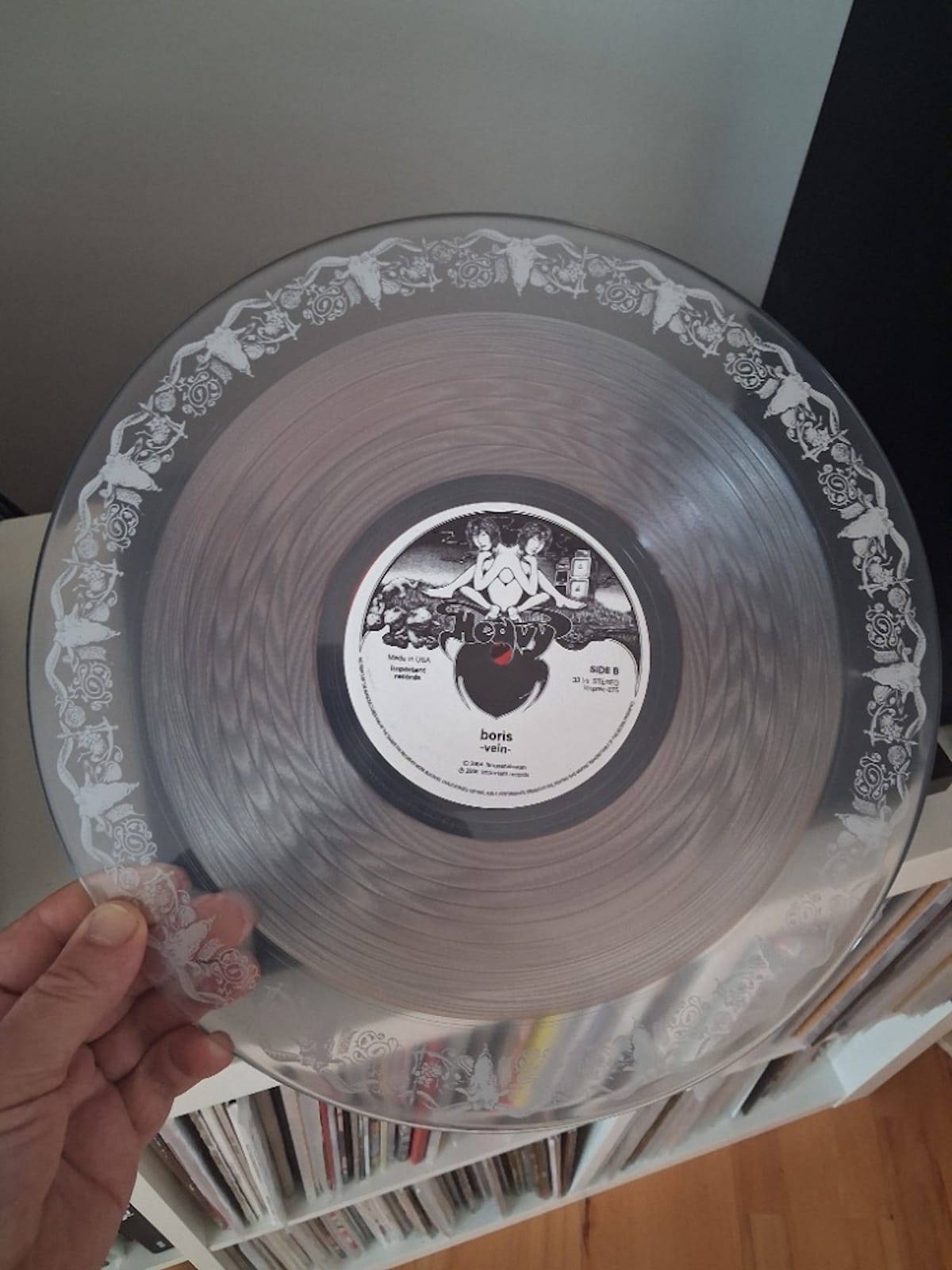
Boris occupy their own category — a Japanese band that normally plays something else entirely (though with Boris, “normally” is a relative concept) recording an album as a tribute to Burning Spirit hardcore. Mr.Banana reads it as confirmation that Atsuo and Watta are “absolute music fanatics and nerds, and therefore also great lovers and connoisseurs of Japanese hardcore in general.” He also notes the parallel with Boris’s 2006 album “Vein,” a crust and noisy punk tribute released in two versions — identical covers, completely different music — with no way to know which version you’d bought until you played it. His copy, purchased the year it came out, turned out to be the crust version. “The one I wanted.”
On “No,” Boris stick roughly to traditional song structures, in their own way. The opener “Genesis” is slow and heavy. By the fourth track, “Temple of Hatred,” the Japancore markers are unmistakable — speed, weight, hooks, unorthodox approach. It ends with a cover of Gudon’s “Fundamental Error,” played close to the original. “I know many orthodox Burning Spirit fans probably won’t be able to stomach this album, but from my perspective, it’s an extremely interesting insight into this subject matter.”
Milan Trachta aka Mr. Banana is a straight edge punk rocker, longtime 007 Club show organizer, radio host, and member of 50m Znak, Thulsa, and Remain Sane.