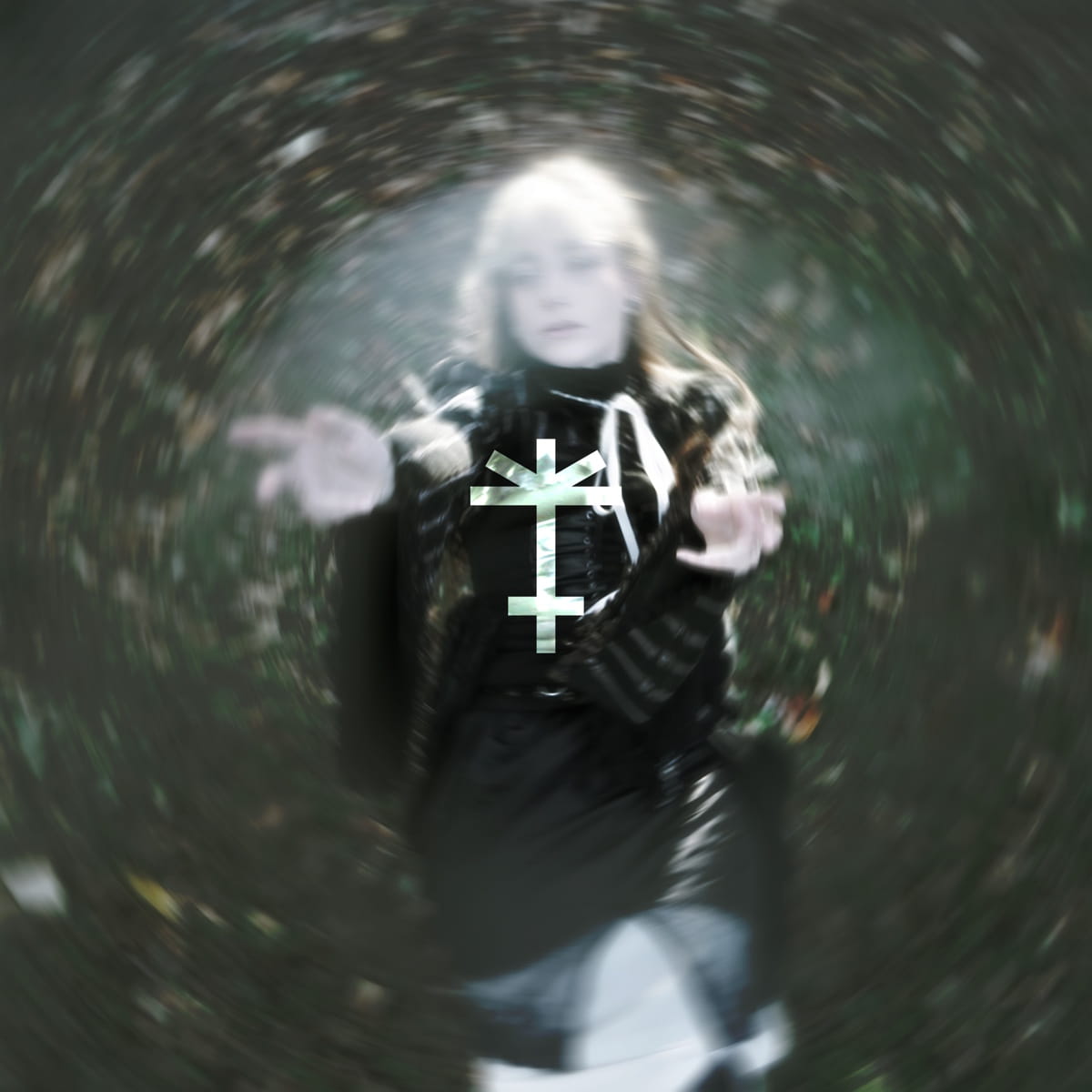



The title of Hammock’s fourteenth album comes from a specific night. Two friends on LSD, both raised fundamentalist Christian, sitting on a gazebo over a pond in small-town Arkansas, watching a light expand behind the hills and bracing for the Rapture to start. It was a moonrise.
“The Second Coming Was a Moonrise“, out May 22 on Hammock’s own Hammock Music label, sits around that misreading and a few others: religion, drugs, politics, algorithms, every form of the gap between what’s happening and what we believe is happening.
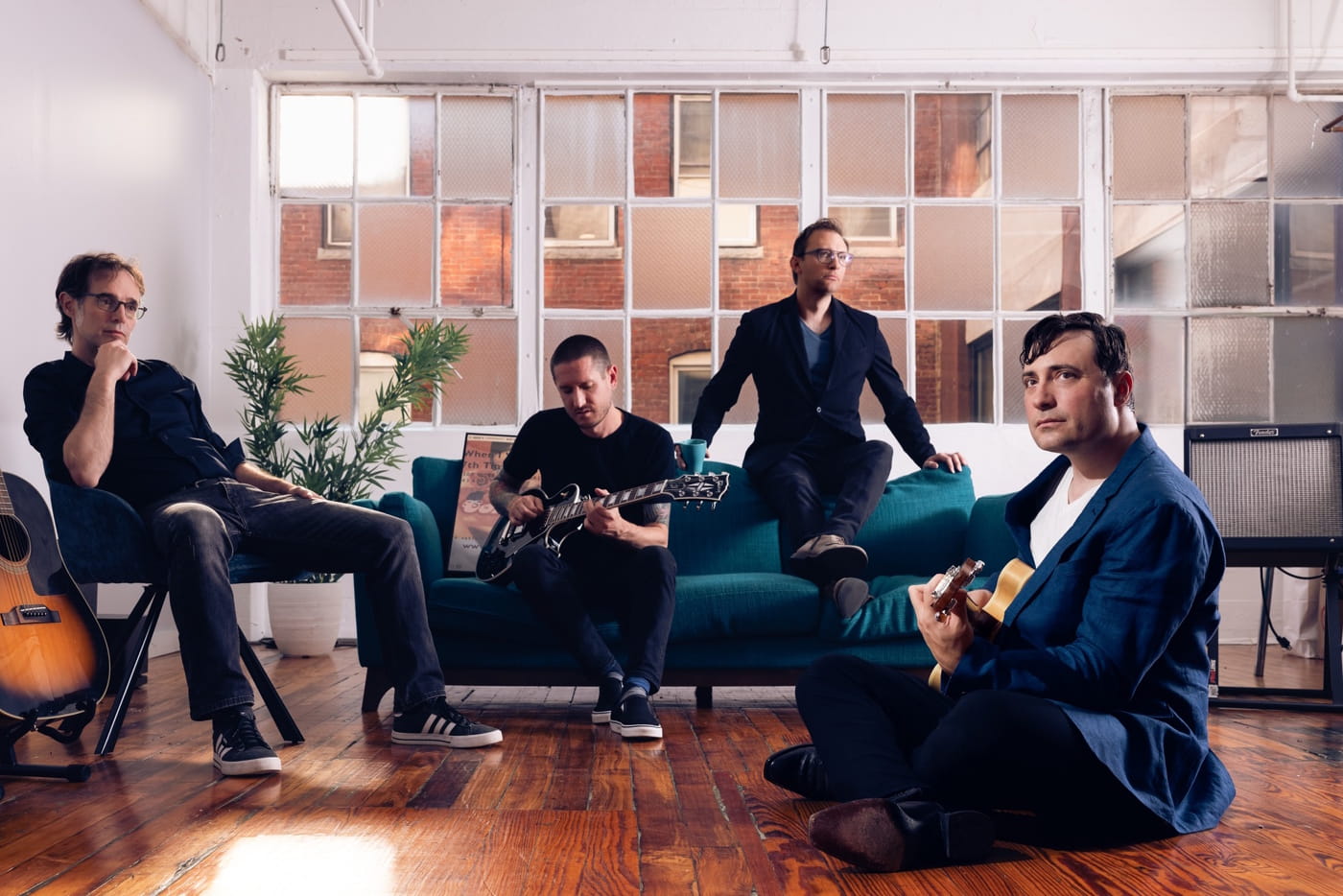
Marc Byrd and Andrew Thompson have been working as a duo in Nashville for twenty-two years now, releasing instrumental records that get filed under ambient, post-rock, shoegaze, neoclassical, often all at once. Byrd has said listeners just call it loud Hammock or quiet Hammock. This one sits across both.
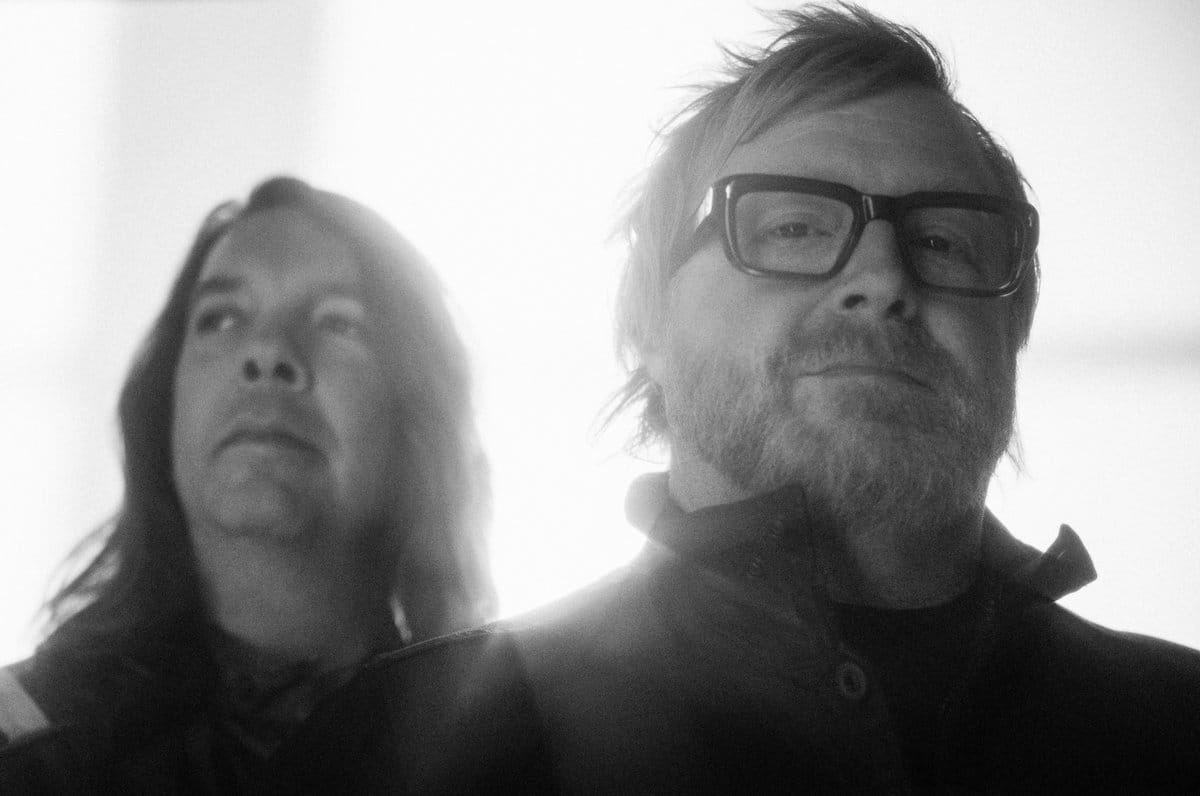
Self-produced by Byrd and Thompson, mixed by Emery Dobyns, mastered by Emre Ramazanoglu, with engineering from Dylan Alldredge, Scottie Prudhoe, and Preston Cochran, the record runs ten songs across roughly an hour. The album follows “Nevertheless”, released in July 2025.
“The Second Coming Was a Moonrise” reaches across registers in ways that earlier Hammock albums kept more separate.
“Like Sinking Stars” pulled from an actual tornado that tore through Thompson’s home and studio, in a two-week stretch that also included his uncle’s death from COVID and his wife losing her job.
“Deconstructing” lands as a song title with weight, written for anyone who has left an evangelical background and recognises the language. Byrd talks about transcending and including: keeping what was beautiful from the upbringing while letting go of what was toxic.
“We Close Our Eyes So We Can See” carries an explicit nod to Stars of the Lid, with a note in the interview about Brian McBride’s passing.
The album closes with “All the Pain You Can’t Explain” and doesn’t try to resolve any of it.
We spoke to Byrd and Thompson about the gazebo night in Arkansas, Thompson’s tornado, the Wayne Coyne and Steven Drozd collaboration and the finality around it, the Stars of the Lid nod in “We Close Our Eyes So We Can See”, David Hinton’s writing on Chinese landscape painting and how it shaped their use of space, the word “incautious” Byrd uses about this record, and what it means to revisit faith and unknowing fourteen records in. Read the full interview below.
The title comes from a very specific moment. What actually happened that night, as concretely as you can remember it? Less interested in the big meaning of it and more in the texture of the experience itself. What you saw, what you thought was happening, how long before the misreading collapsed. And growing up inside a fundamentalist frame, the Rapture isn’t abstract, it’s a thing that could happen at any second. How did living inside that kind of waiting shape you?
MB: I grew up in a small town in Arkansas. I was raised a fundamentalist, with a good dose of Christian (it isn’t) nationalism. In the fourth grade, I was pulled out of public school and placed in a private school where I wore white button down shirts with blue slacks three days a week and on the other two days I wore a red golf shirt with blue slacks. On Wednesdays I was expected to wear a clip on tie with an American flag, a bald eagle and a Bible printed on it. I was taught not to misbehave because Jesus could come back at any second and/or the rapture could happen and if I had any unconfessed sins I would be left behind. I lived in a lot of fear. My home life wasn’t good.
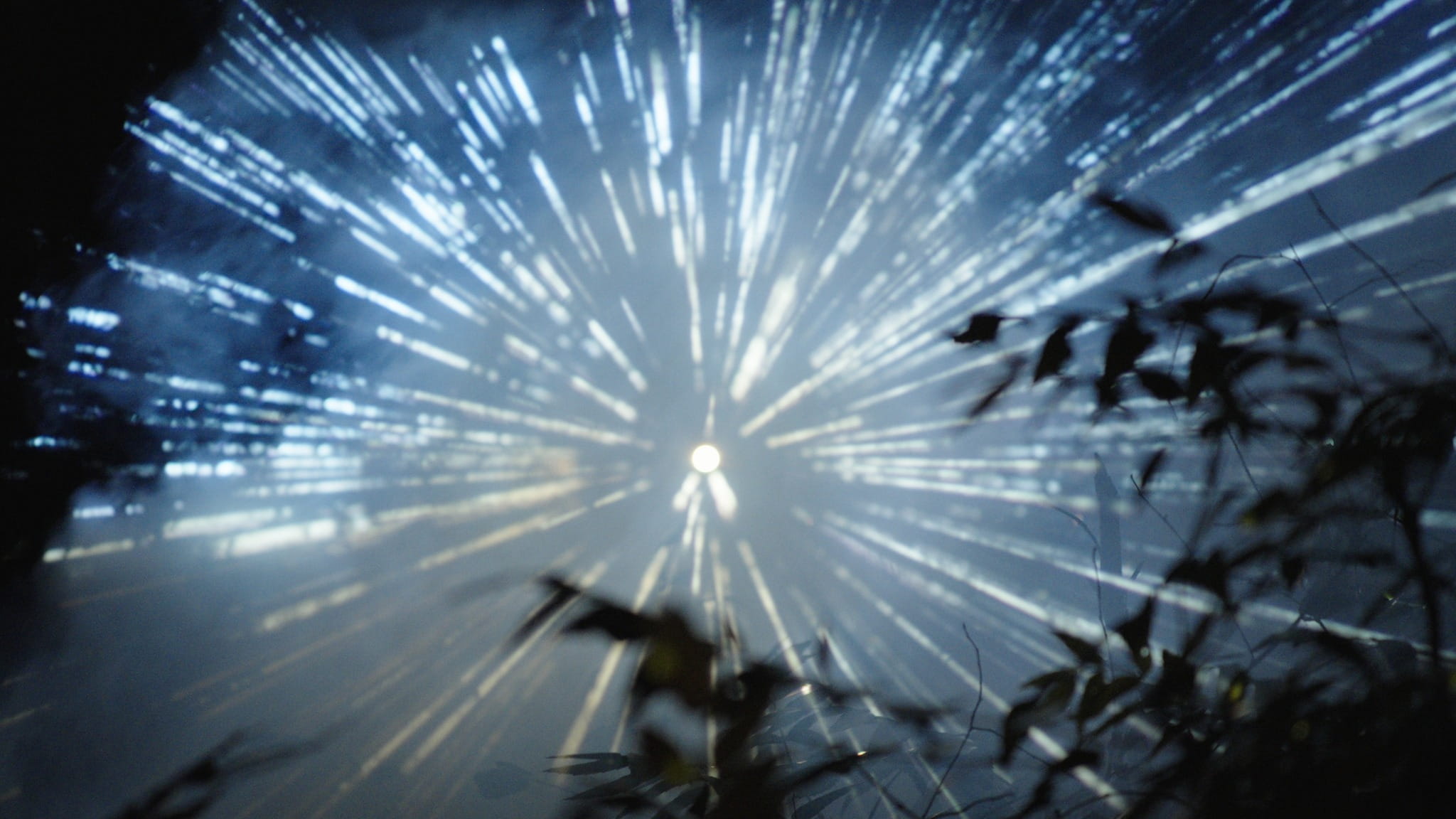
Fast forward a few years… I was sitting on a gazebo with a friend, overlooking a pond filled with stars, and tripping on acid. Both of us raised fundamentalist, and both of us on drugs. There were hills in the distance with a light glowing behind them. It kept getting brighter and expanding. My friend got real paranoid and started saying, “This is it! It’s Jesus! It’s happening?” So then I started freaking out. I couldn’t quit staring at the light behind the hills. Maybe we’re about to see Jesus and his horse riding army galloping across the sky… My friend dropped to his knees and began to panic and pray. “Oh Jesus, no. Please, God… Forgive me. I’m sorry.” We were both bracing for impact.
Then I noticed a circular sliver of light rising from behind the hills. I tapped my friend on the back of the head and told him, “It’s just the moon. We’re gonna be okay.” I think he hugged me and then we prayed?… Just kidding, we didn’t pray, we smoked a bowl. We obviously weren’t scared enough to quit using drugs.
AT: I don’t have a story as dramatic as that, but Marc and I both shared the experience of that southern, Biblical literalism, soaked in the fear of the rapture. It’s nearly impossible to escape it here in the south, regardless of the denomination of your upbringing (or the lack thereof). It’s baked into the culture in such a way that it becomes impossible to escape.
The LSD experience sits next to that moonrise memory in a strange way. On paper they seem opposed, one doctrinal, one chemical, but both are states where perception gets rewired. Do you see them as echoes of each other, or as separate events that just happen to share imagery?
MB: Oh, they’re both connected. It’s ALL about perception and how we’ve been taught and conditioned to see and interpret reality. We rarely see things the way they are… we see things the way WE are. Psychedelics and religion can warp reality and/or reveal it.
But I agree with Alfred North Whitehead, “Music comes before religion, as emotion comes before thought, and sound before sense.” In other words… experience precedes interpretation. Misinterpretation, wether through drugs or upbringing or bad religion or political and national identity or having every opinion formed by algorithms… any misinterpretation is dangerous when it leads to a dysfunctional relationship with reality.
“Deconstructing” shows up as a track title, and that word carries real weight for anyone who’s left an evangelical or fundamentalist background. How intentional was the theological charge there? Is that process something that’s finished for you, or does the record suggest it’s still ongoing, still unfinished?
MB: Yes. It’s intentionally meant to grab the attention of those who might call themselves EX-vangelicals. Personally, I abhor the word, EX-vangelical. It sounds like a marketing slogan, like a WWJD bracelet.
My first connection with the word, Deconstruction is from the documentary film, Derrida. It’s about the French philosopher, Jacques Derrida. I bought it years ago because of the soundtrack by Ryuichi Sakamoto and I’m also a freak for almost anything that explores philosophical/theological speculation.
We’ve always sprinkled our song titles with theological and philosophical words and phrases. Beginning in 2005, when we called our first album, Kenotic. Or the title of our second album, Raising Your Voice… Trying to Stop an Echo, which comes from a Zen Koan.
And yes, the process of deconstruction, reconstruction, new construction is always ongoing and unfinished. When it comes to my past, I try to practice transcending and including. Transcend what was harmful/traumatic, toxic and untrue, but include what was good, true, and beautiful. This approach has helped to not be so cynical.
AT: We’re always in the process of deconstruction and reconstruction, in our music and in our lives. The music goes through the initial creation process and is deconstructed, reevaluated, reconstructed and distilled over a long period of time. The pieces that continue to speak to us throughout that process are the ones that end up out in the world.
We have literally hundreds of unreleased songs (per record) that don’t make it onto the final release, for one reason or another. Some just don’t fit the feel of that particular project and may be used at some later point in time. Others may not be released at all, but the act of creation is the point. To find what’s real and true to us always involves a groping towards something. It’s never a closed system.
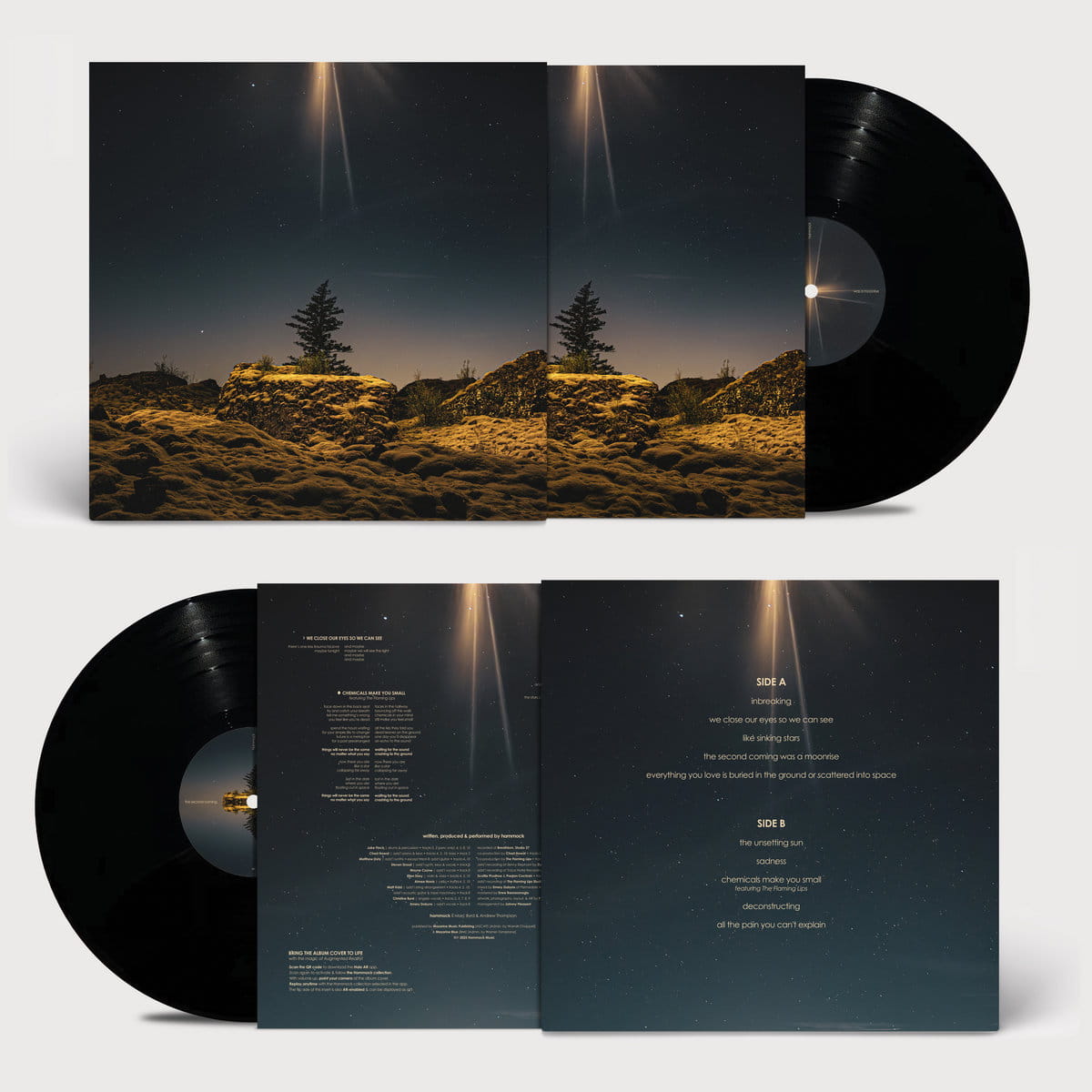
“We Close Our Eyes So We Can See” might be the whole album condensed into a single line. When did that phrase arrive, and does the record mostly rest on that idea, that clarity sometimes needs closing off, not opening up? Misreading as generative rather than as a mistake, basically.
MB: I don’t remember when the title of the song appeared but I do know it was intentionally chosen after the lyrics were written and the album title was settled. The dangers of misinterpretation and the acceptance of paradox are definitely threads that run through the whole album.
Shunryu Suzuki said, “In the beginner’s mind there are many possibilities, but in the expert’s there are few.” In the cloud of unknowing is clarity. In the dark night of the soul is light. In emptiness is fullness. The backwards step is forward. The way out is in. Stillness in motion… We Close Our Eyes So We Can See.
It’s also a reference to Stars of the Lid. RIP Brian McBride.
“Like Sinking Stars” pulls from Andrew’s home and studio being hit by a tornado. That’s a different kind of rupture than the one at the center of the title track.
AT: The physical and emotional loss was all too real, without a doubt. It was not just the initial tornado damage, it was the beginning of the shutdown due to the Coronavirus, my Uncle Billy’s death from the virus and my wife’s job loss (also Covid related) all within a two week period of time. Our home reconstruction would continue for another 6 months.
The perception of that loss has been the ongoing struggle and is probably why the song initially came about in the first place. Both Marc and I have been able to use the creation of our music as a form of catharsis at different times in our career. I believe that it has literally saved our lives on more than a few occasions.
MB: I think I started working on the music after listening to Charlotte Sometimes by The Cure. It’s definitely the most post punk type song on the album.
Actual destruction, not misreading. How did you translate that experience into the song, and did it sit comfortably on a record that’s otherwise about perception rather than physical loss?
MB: I think it does sit comfortably on the album. Andrew’s wife was deeply asleep that night. When Andrew tried to wake her, she thought it was a train. Trains don’t run by their house. So I think it ties in pretty well with the theme of the album.
Sometimes we believe something is happening when it isn’t. Sometimes we don’t want to believe what is happening is actually happening… It’s too painful or scary to accept or we’ve made up a story about what we THINK is happening. The truth can set you free, but first it might make you miserable.
Marc, you’ve talked about contemporary forms of missing what’s actually there. Politics, algorithms, social media silos. Does this record want to sit as a corrective to that, or more as a lament for how pervasive the tunnel vision has become? Is there a continuity between Rapture-waiting as a teenager and the apocalyptic energy people live inside now?
MB: It’s definitely a lament. We would never pretend to know how to correct what’s happening. We just know beauty is always needed and necessary. No matter what’s going on, it’s good to have reminders that the world is more than just manipulative algorithms, political corruption, unnecessary wars, or silos of misinformation.
Our mission statement for Hammock and the label has always been, “Beauty is timeless.” We’re not talking about a fake or manufactured beauty that seems more like a form of toxic positivity. It’s the beauty of the whole catastrophe… ALL of it.
Regarding the apocalyptic energy we find ourselves living in… The original meaning and definition of the word apocalypse is “unveiling”. Not predictions about a future doomsday. It’s sad that every time there’s a war or conflict in the middle east, the false prophets and fear mongers come out of the woodwork to not only cause but profit from human pain.
The weaponization of religion and the twisting of texts to justify dropping bombs on human beings is disgusting. Andrew and I have had a sticker hanging in one of our studios that asks, Who Would Jesus Bomb (WWJB?). We may have a lot of doubts and unanswered questions, but we’ve never once questioned that bombs being dropped on children is what Jesus would want. That’s obscene and absurd.
You two work deep in the technical weeds. Guitar processing, spatial mixing, production craft. But the end result lands emotionally before it lands technically. Is that a conscious pull in opposite directions while you’re making it, or does it only resolve that way in the mix? Where do you catch yourselves overthinking, and where underthinking?
AT: If the music doesn’t move us emotionally, it doesn’t get released, regardless of the technical merit of the track. There’s enough guitar gymnastics going on in the world as it is. We try our best to play what’s right for the song, no more and no less. That’s where the process of deconstruction and reconstruction becomes so important, it helps us stay honest to the core of each piece.
MB: We are 90% of the time aware when we are breaking a technical rule of recording or sacrificing some clarity for the sake of build up in order to sustain a moment of emotional impact. There’s so many ways to overthink… Carving away frequencies until what seemed like magic becomes lifeless. Taming too many reverb hangovers because of the modulation that can build up when tracks are combined.
We know there is definitely such a thing as too much, but we’ve always considered ourselves to be more like abstract painters… feeling our way towards a cohesive whole rather than technicians. Having said that, we always strive for a good performance so we’re more than okay with leaving imperfections in order to maintain the integrity of the performance.
Space is doing a lot of work on this album, not only as a mixing choice. There’s something psychological to it. What does distance, or vastness, let you say that a denser arrangement can’t? And is there a point where space tips over into something that unsettles you?
AT: Space and breathing room are key to the music, though you might be surprised at how dense the arrangement of a fairly simple sounding track might be. Once again, the shared experience of growing up in the south has given us a leaning towards distance and vastness. It’s something we’ve always embraced.
MB: I’ve been readig some books by David Hinton. Particularly, his book, Existence. In it, he talks about the philosophy behind Chinese landscape painting and how absence and presence are expressed by the use of distance, open sky, and horizon. The figure in the painting sees the mountains in the distance, then becomes immersed in the vastness and then dissolves into the forest mist.
Andrew and I have always tried to create a soundworld. A world of sound that can merge with the life of the listener. In the original definition of ambient music, the music was meant to merge with one’s surroundings, disappearing into the atmosphere. With our music, we’ve tried to create a space where it’s almost like seeing the world with music in your eyes.
The music inhabits the listener, the listener inhabits the music and it affects how they inhabit the moment. Space and vastness can make the world seem less suffocating, but for some it can be a reminder of our smallness. We think that’s a good thing… especially if we can remember we’re never really separate from the Cosmos… we are it.
“Chemicals Make You Small” carries a different weight given it might be one of the last things to feature both Wayne and Steven together. Did the song feel loaded at the time or only in retrospect? Does the album’s concern with impermanence read differently now because of that?
MB: The song has been around since the Love In the Void sessions. It’s one of my favorite lyrics that I’ve ever written. It’s small town devastation due to drug abuse. Based on a true story, it’s the false sense of enlargement and expansion through chemicals, when in reality they just make the person a much smaller version of the person they used to be or could become.
We thought maybe Wayne and Steven could relate to this, based on some of the things Wayne has said about his life in Oklahoma City. We originally just wanted them to sing on the bridge section. But they ended up singing the whole song. Steven added string pads and keys and they also made the song shorter. So it was way more than we expected.
I think they began their work on this in January of 2024 so things were definitely different between the two of them at the time. All things must pass but maybe some things can be reconciled??
AT: We were, and still are, in shock that they agreed to do it in the first place. It just seemed too fantastical of a wish to ever come true. It turned out so much better than we ever expected. I really hope this song is not the last thing Wayne and Steven will work on, but maybe that’s just the optimist in me…
Marc, you described this as “the same old Hammock but new and maybe even incautious.” Incautious is an unusual word for a duo working in ambient music, where restraint is often the whole point. What felt incautious about making this one? Where did you push somewhere you wouldn’t have before?
MB: I think I was referring to the willingness to be more open about our past and our upbringing, as well as how difficult it can be to completely let go of the safety and illusion of certainty.
Musically, we think this album can still capture the atmosphere of sitting on a car underneath the stars, when being young was serious, and one night could feel like the end of the world. The difference is that we’re older now. Now the reckless abandonment of that youthful spirit is more in the service of the music and not as destructive or out of control.
We know how to tap into it without losing ourselves in the process. No matter if it’s loud Hammock or quiet Hammock, there’s always a sonic quality unique to us that ends up coming through.
Fourteen records in, you’ve come back to certain ideas more than once. Faith, loss, perception, unknowing. What does it mean to revisit those now versus fifteen years ago? Is there anything you thought you understood about them that the years have made stranger?
AT: There are way too many themes that have moved from the theoretical into reality as we’ve gotten older. Ideas that seemed so far away and romantic in our youth are suddenly way too real and sometimes sacred in our “adulthood”.
MB: There are times when you think you’ve figured some things out and settled on a place to land in life, but then something happens to upend everything, yet again. Anything that can make what once seemed old, or settled, or figured out seem strange again can almost always be a good thing. But I could be wrong.
One last one, feel free to skip if it doesn’t land. When you made this, what was the moment you knew it had found itself? Not the first draft, not the finished master, but the point where the record stopped being a set of pieces and started being one thing.
AT: That’s always the hardest part in making a record like this, or any record for that matter.
Finding the soul of it and staying honest to that. The process of choosing the final songs has always been a struggle, but having Wayne and Steven involved on “Chemicals Make You Small” and knowing what the title of the album was gonna be, gave us the anchor point we knew the other songs would revolve around. The sun in our solar system so to speak.
🔔 IDIOTEQ is ad-free, independent, and runs on one person’s time. If you want it to stay that way: DONATE via PayPal 𝗈𝗋 SUPPORT via Patreon.
Stay connected via Newsletter · Instagram · Facebook · X (Twitter) · Threads · Bluesky · Messenger · WhatsApp.