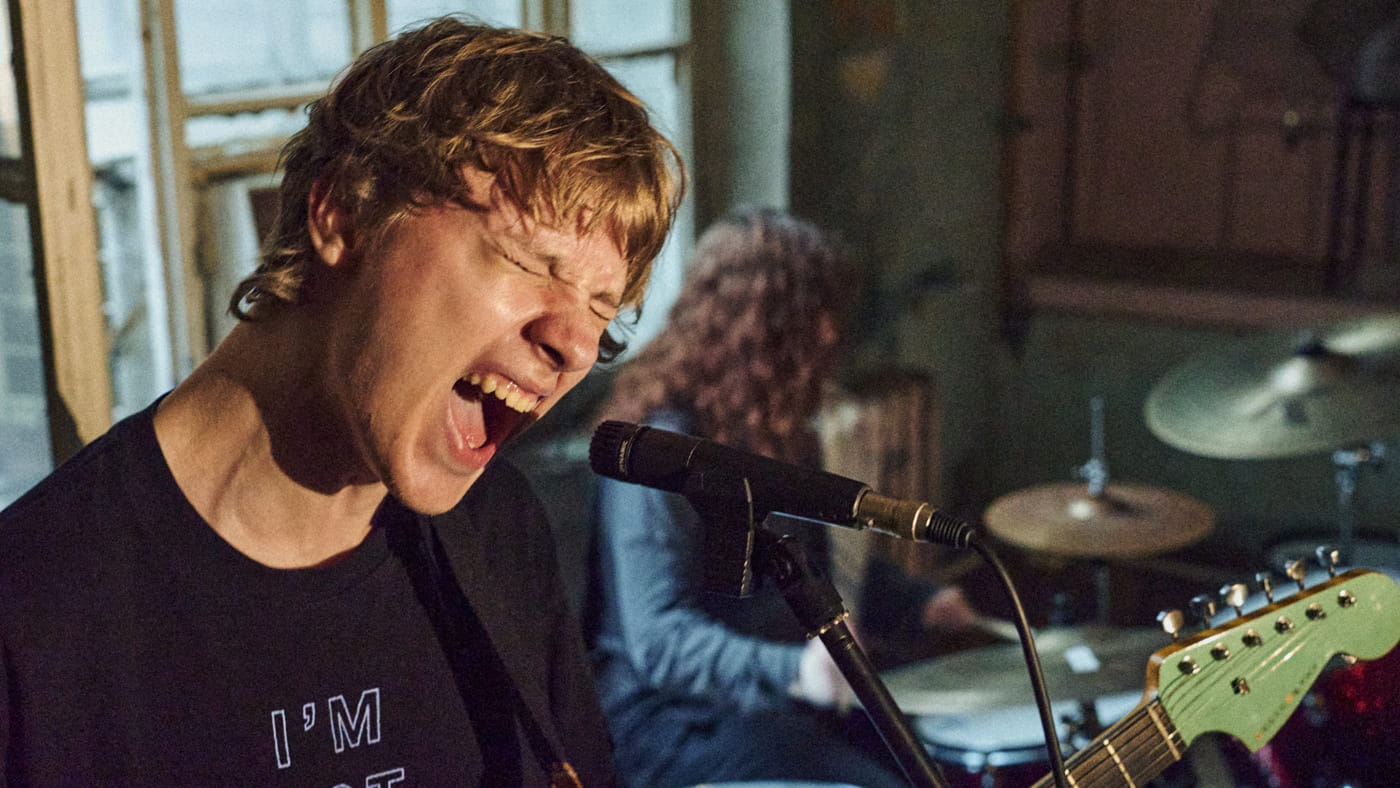

The newest single from Teeth Kids runs on eerie repetition. It burns low, guitars and bass locked into a slow patient crawl, and by the time the drums start pushing you can feel where the song has been steering you. It’s noise rock built like a migraine. Slow-burn post-hardcore that never picks up speed and never lets you off. If Aronofsky’s “Pi” had a b-side, this would be on it. That’s my first association. “Collateral” belongs in that same fluorescent black-and-white register. Something is moving in the walls and you know you’re not going to like what it turns out to be.
The horror sits in the body language of the lyrics too: “Fused limbs and cells and bones and said forever.” Five and a half minutes coiling around your skull, ending on “everything,” left dangling.
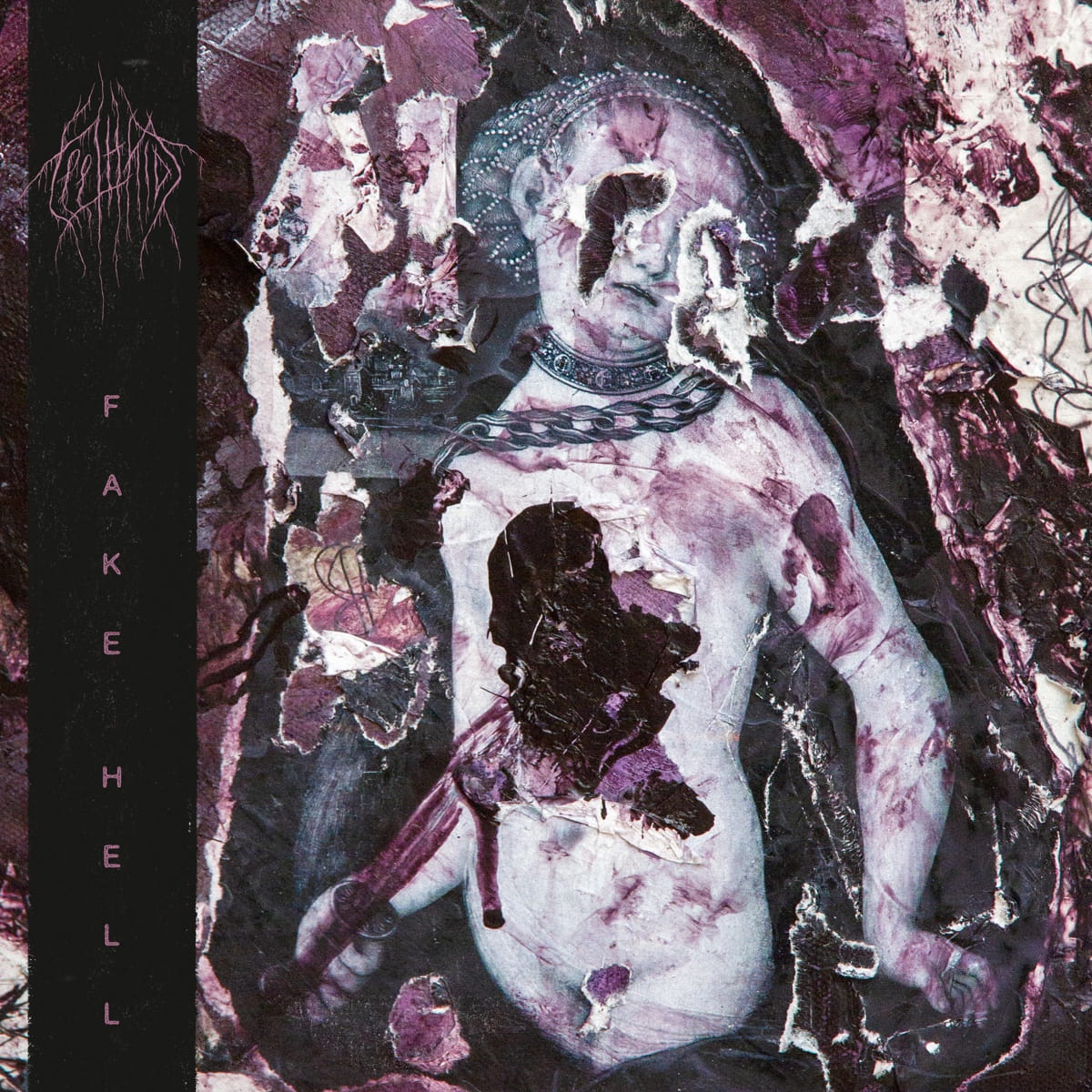
“Collateral” is the lead single from “Fake Hell“, the debut LP from Chicago six-piece Teeth Kids, out August 7.
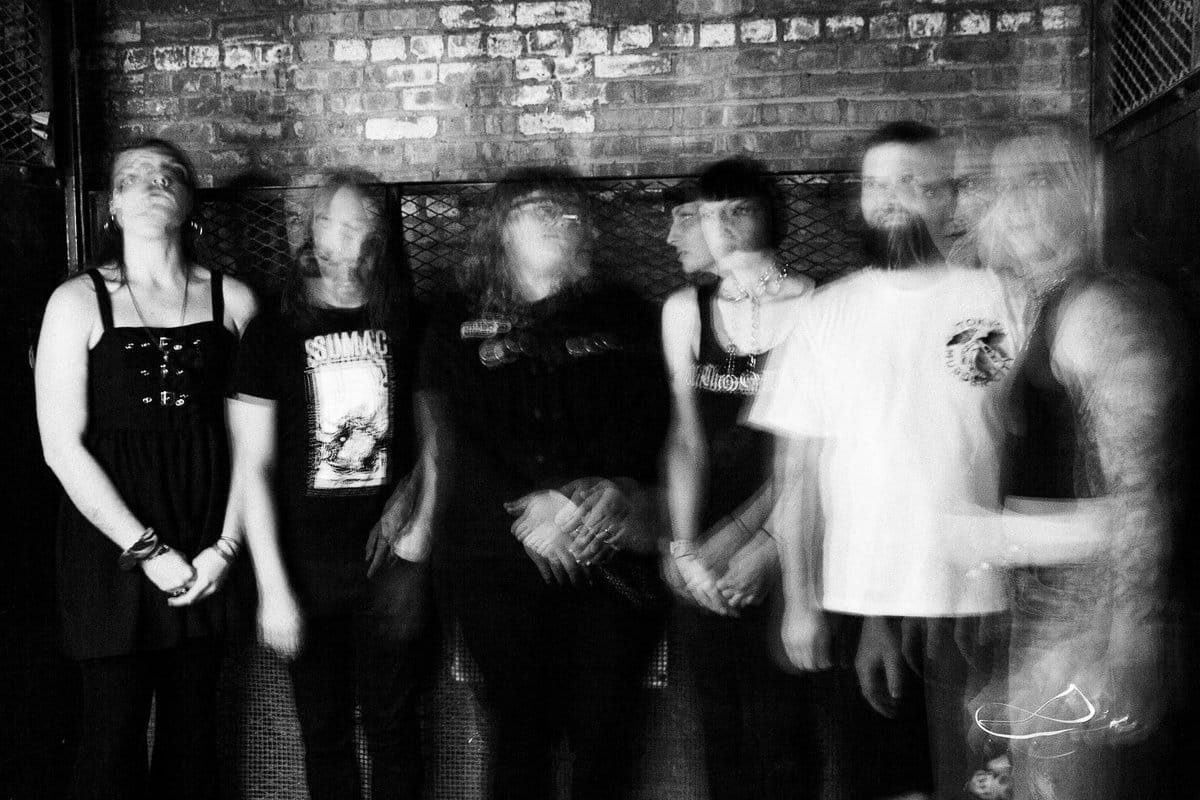
The lineup is Cam Daigle (vocals), Clementine Kee (bass), Cooper Glodoski (drums), Emily Moore (guitar, vocals on “Fake Hell”), June Stutz (synthesizers and programming), and Sawyer Hildebrandt (guitar).
Simon Small engineered and mixed the record at Tunnel of Reverb. Aki McCullough mastered it at Nuhouse Studios.
Wyświetl ten post na Instagramie
Teeth Kids play the LP in full at the Empty Bottle in Chicago on July 28. Chat Pile, Oxbow, Kowloon Walled City, meWithoutYou, KEN Mode, and Breather Resist are the reference points.
Wyświetl ten post na Instagramie
Chicago
Bassist Clementine talks about the Chicago scene the way people usually talk about a family they didn’t expect to find.
“Chicago is just crammed full of a bunch of the kindest, most creative and interesting people I’ve encountered, and everyone is just so excited to be making things, it feels pretty magical,” they say. “I’ve lived all over the place and been part of scenes in a bunch of places, but everyone here is just so supportive and open to weird stuff, I think a lot of the more experimental stuff comes easy.”
There are material reasons for it too. Lower rent than most large US cities. A lineage of abrasive Chicago acts (Meth., Bongripper, Oozing Wound, Imelda Marcos, Stress Positions) that means audiences in the heavy scene lean into antagonistic music instead of pulling away from it. Clementine hears that receptivity in the record. “People in the heavy music scene here are just pretty receptive to antagonistic stuff, which, at least to me, you can hear in the Teeth Kids record.”
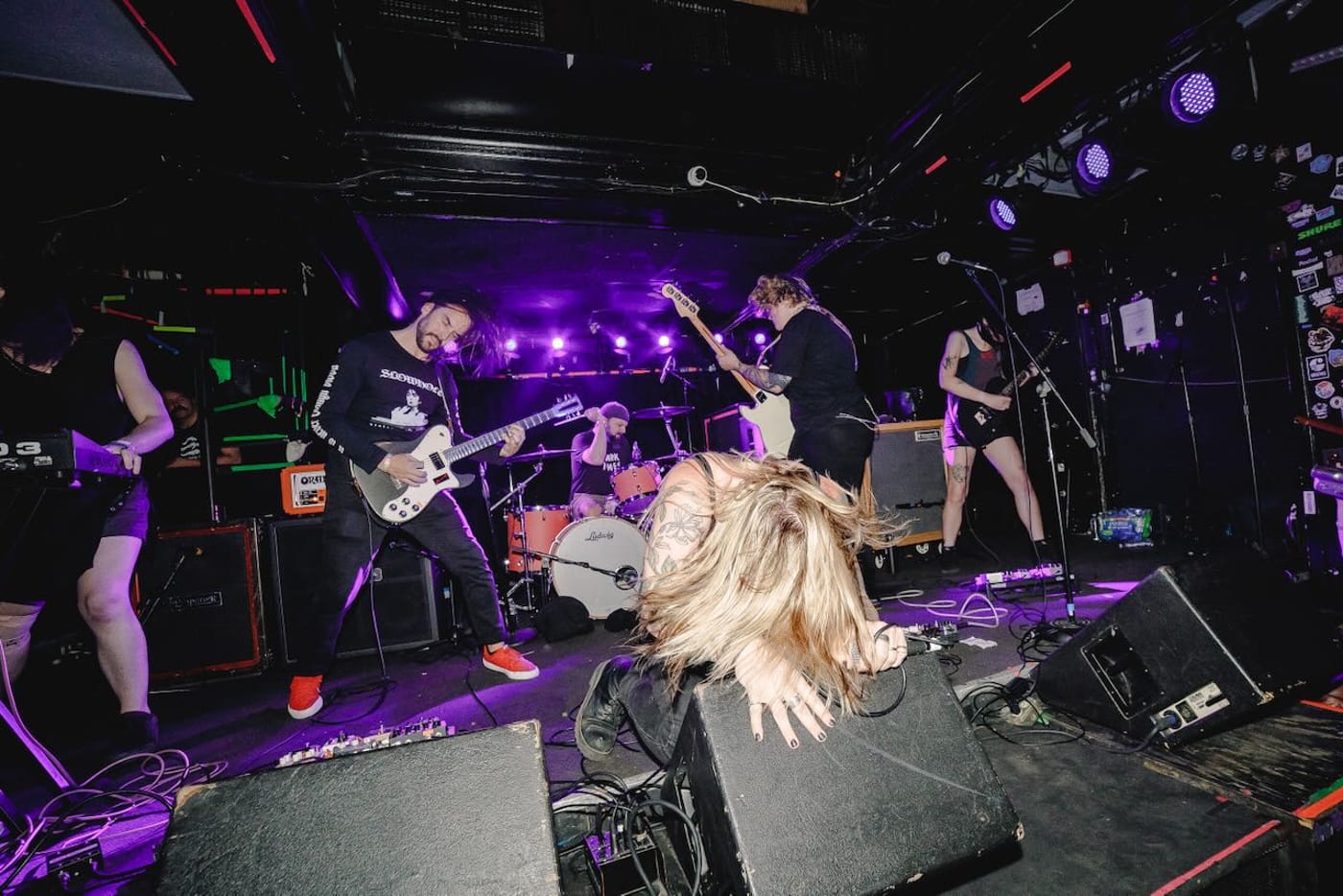
They point to a wider cohort of Chicago bands playing the same rooms and the same bills: Ira Glass, MENSA, trashdotcom, Pet Peeves.
“We’re lucky to have friends that are also pushing limits and patience and the ideas of what live music has to look like. We’re surrounded by people who make us want to do better and make weirder stuff and find new ways to push what a ‘metal’ band can be.” Teeth Kids don’t play with many other Chicago metal acts. “Folks just don’t always know what to do with us, but we sure do have a really incredible cohort of weirdos we share space with.”
Wyświetl ten post na Instagramie
The clearest snapshot of that scene is Distress Fest, a two-day event Clementine helped organize where almost the entire bill was local or midwestern.
Teeth Kids played their first show at Subterranean in 2024, and Distress Fest happened in the same room two years later.
“It felt like a real culmination to be part of a huge event in that same space full of people making the same kind of weird, noisy stuff we are just two years later. I still don’t really know what to call this scene or movement or whatever you wanna call it, but I’m very thankful we get to be a small part of it.”
Wyświetl ten post na Instagramie
That receptivity translates into how the band writes. While tracking “Invictus“, Simon dropped a line Clementine still thinks about: “How do you make 14 seconds of feedback feel short? Put three 30 second blocks of feedback right before it.”
The song went through a lot of changes, and its big spacy section came out of the band playing it live and testing how long they could stand and do nothing on stage before an audience thought the song was over. “I’ve toured a lot with my other band Latter, and Chicago still feels like the only place we could do that with an unreleased song and have people excited rather than annoyed.”
The lyrics come over instrumental scratch tracks. Every Teeth Kids song has been built that way: the rest of the band puts the piece together, hands it to Cam “on a silver platter,” and then the words get pushed as far as they can. “This process is such a luxury. It allows me to then spend all my creative energy pushing the lyrical tones and themes as far as I can.”
The themes come out of who they are. Cam grew up evangelical and conservative, is trans, and has decades of relationships they still navigate. Cam is, by their own account, a romantic about lyrics. “I believe that if I can inject a song with the truest emotions that I can muster, I don’t have to spell out what each line means to me in order for the lyrics to metaphysically carry the weight of meaning for someone else.”
Two vocabularies run parallel across the tracklist: medical (“Remission”, “Drip Feed”, “CSF”) and religious (“Benediction”, “Invictus”). Body and soul as two sites for the same suffering, or maybe the opposite of that.
Track by track, the record moves through it like this.
“Benediction” is a warning; they sing from the perspective of someone you absolutely do not want to be listening to, someone who thinks they have a ticket to immortality and everyone else is doomed.
“Collateral” is about how growth and change affect relationships. “Remission” is a lifetime of exhaustion from carrying and then letting go of an old belief system.
“Drip Feed” is body horror.
“Invictus” channels fury at people who think the harm they cause in the name of their belief system is necessary. “CSF” is existential defiance; when Cam posted the initial vocal take, Emily described it as “Fitter Happier being fed into an industrial trash compactor.”
The record closes on “Fake Hell“, which Cam sees as “a gesture of sorrow and compassion for people whose entire belief system has been built not on salvation, but the punishment that they believe makes salvation necessary.”
June’s synths
June Stutz’s synths function as a third vocabulary underneath both. She has autoimmune and spine-related disabilities, and the language of Teeth Kids has pushed her toward, in her words, “wanting to make sounds that hurt.
Pained drones, sequenced patches that feel like knife against bone, and sirens powered by corroded batteries.” Her main instrument is a slowly degrading Sequential Circuits Pro3 that has cut her hands, sprained a finger, and once broke her foot when she caught it in a fall. She hears its hybrid nature (analog subtractive at war with digital wavetables and fx) as an analogy for both body and music.
Her approach clicked when she dropped her usual reference points. “I abandoned my usual influences of Nine Inch Nails and the whole 90s UK Warp records scene, and leant on my love for Can, Roxy Music, and Suicide.” “Spoon” by Can, “Frankie Teardrop” by Suicide, and “In Every Dream Home A Heartache” by Roxy Music became her holy trinity for Teeth Kids patches.
“Emily and Sawyer are riffing their fucking guts out. I don’t need to be foundational to the track, I need to be the nagging pain in the back of your neck as you’re trying to engage something. Scoring a scene means not dominating the dialogue, which Frankie Teardrop demonstrates perfectly, and I have tried to capture since.”
The songs also keep changing after the tape stops rolling. “The way we play these songs live has continued to evolve beyond the snapshot of them that happened during recording the album,” guitarist Sawyer says. “‘CSF’ especially has become so much more of a whole-band improvised piece, where we are all feeding off each other and the energy of the room in the moment. I think if we recorded it again now it would probably sound appreciably different.”
The title track
“Fake Hell” was the last song written for the record, and the band pushed themselves by handing the middle section over to electronics. Emily’s vocals on it happened almost by accident. She was demoing ideas for that middle stretch and sang Cam’s lyrics over it to give the rest of the band a sense of how she thought they should fit. It stuck.
“This was the last song written for the record and we were trying to push ourselves to do something different by having electronics really take the lead on the middle section. I think having a different voice in there ended up reinforcing the feeling of this part of the song coming from somewhere else. They’re still Cam’s words and phrasing, but it becomes like a different character entering the space just before Cam brings it home for the end section. To me it almost suggests someone whispering these lines into their ear.”
Clementine ties it back to what Cam does behind the mic. “Cam’s voice is so distinct and such a part of what this band is that pulling the rug in the last song and title track by taking it away from the listener felt very powerful. It knocks you a little bit off balance and makes the whole thing feel more disorienting, which is what we wanted.”
Clementine has a name for what Cam does up front: “I’ve joked that Teeth Kids is liturgical sludge, because Cam delivers a lot like some kind of nightmarish preacher, and to me Emily’s voice coming in reminds you that Cam isn’t alone in this stuff. Just because one person is voicing something doesn’t mean they’re the only one feeling or experiencing it.”
Simon Small
Which brings the record back to Simon Small. The engineer at Tunnel of Reverb who tracked and mixed the LP was, in Clementine’s words, “genuinely part of how and why Teeth Kids is the band that it is.” Simon heard most of these songs while they were still coming together. He pushed the band to make them bigger, weirder, louder, and he understood what they were reaching for at the extremes.
“He may not have written the songs, but when I listen to them, I hear his hand guiding us and pushing us to make things more interesting at every step. Teeth Kids sounds a very specific way, and I don’t think we could have found that signature if he hadn’t been alongside us.”
Simon got to hear the finished LP after Aki McCullough mastered it and before he passed. He couldn’t stop playing it for people.
“He played it for tons of people who just happened to be passing through his studio just because he was excited about it.” For Clementine, releasing “Fake Hell” is harder than being proud of it. “It’s finally letting go of the last thing I’ll ever collaborate with on a friend. I’ll be hearing that doofy accent of his in my head for the rest of my life, and I’m just thankful we got to work with someone so talented and who so deeply understood what we were aiming for.”
“Fake Hell” is out August 7. Teeth Kids play it in full at the Empty Bottle in Chicago on July 28. Be sure to drop by if you’re near.