Before the old Magnavox radio ended up on a French Inhaler record, it spent some time in Adam O’Leary’s dining room.
He had tracked it down specifically for the band’s recording session, brought it home, set it up and got attached to it. His wife would leave it playing while they ate, tuning into classical and jazz stations. Adam liked the warmth of the ageing circuits and the crackle between signals. When the final day in the studio arrived, the radio came with him.
“I brought it into the studio with me on the final day of the session and the band was very open to the idea,” he recalls. “It took me a couple takes to get the hand movement down and spin the dial and find a sweet spot between stations to pick up just the right amount of static and sparse conversations for the effect.”
The radio appears on “White Noise“, slipping into the intro, bridge and outro almost like another instrument. Adam still owns it.
“A magic radio. A radio with guts.”
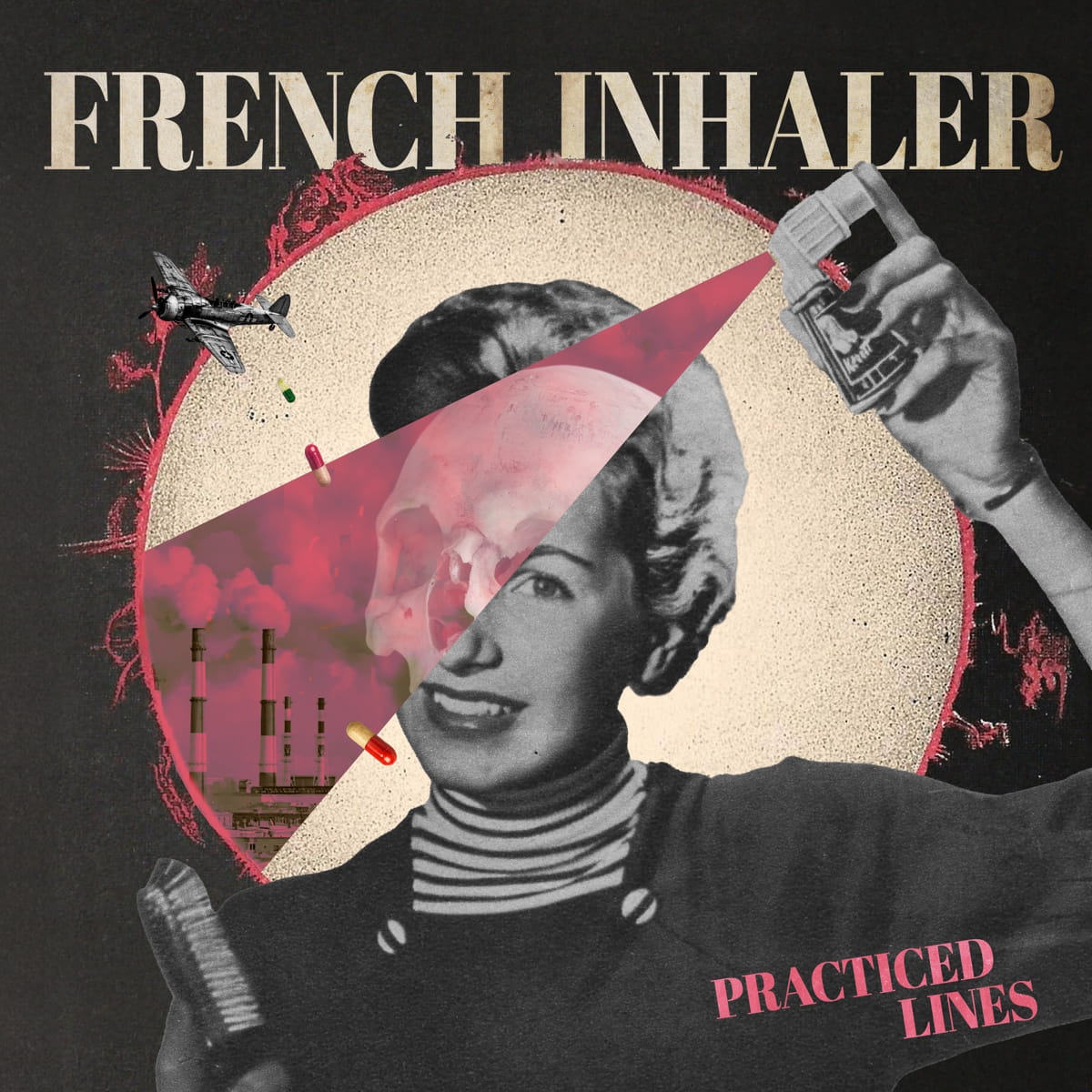
That little story says quite a lot about French Inhaler’s debut full-length, “Practiced Lines“. This is synth-pop and new wave with plenty of early post-punk in its bloodstream, but the electronic surface never completely hides the room underneath it. Bass moves in firm, repetitive lines. The drums keep things physical. Synths add the colour and melody that another band might hand to a guitar. The songs move easily enough for a dark dancefloor, but there is still something slightly sad sitting underneath them.
It is easy to imagine these songs playing around a goodbye or a return, somewhere late in the night when dancing and thinking too much start happening at the same time. There is nostalgia here, although French Inhaler do not turn it into costume drama. The reference points are clear enough. The trio name Joy Division, The Cure and Kraftwerk, but “Practiced Lines” is at its best when those records stop being references and simply become part of the band’s vocabulary.
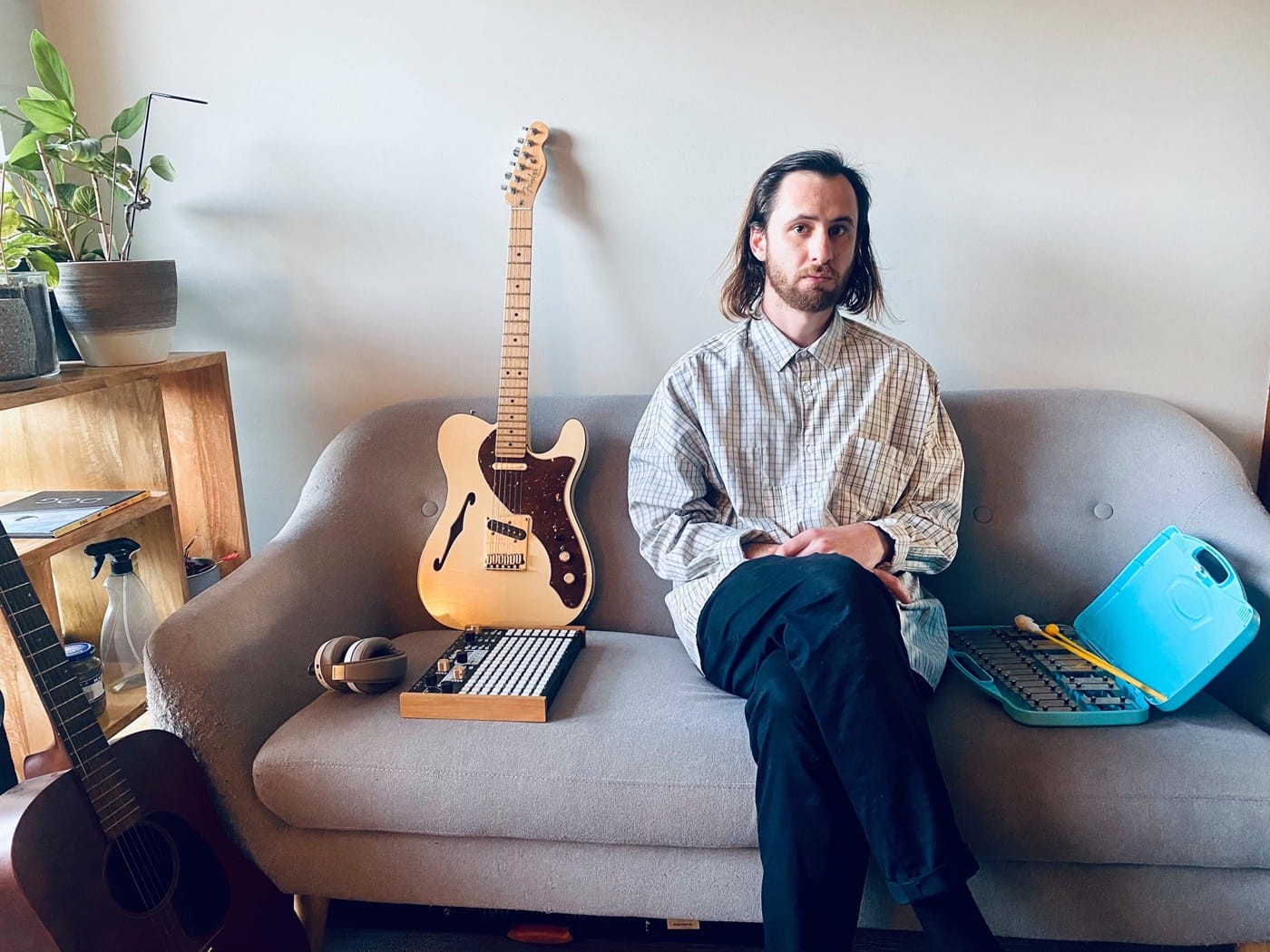
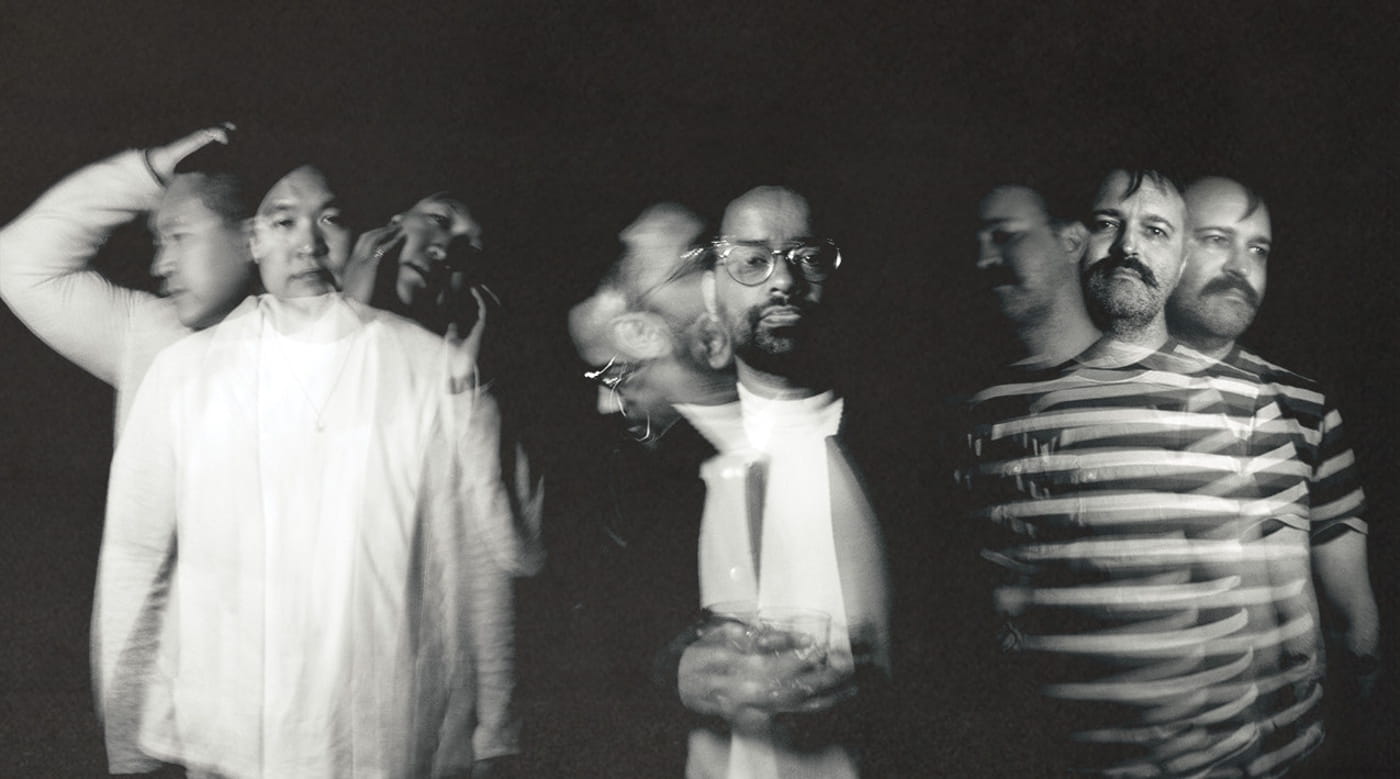
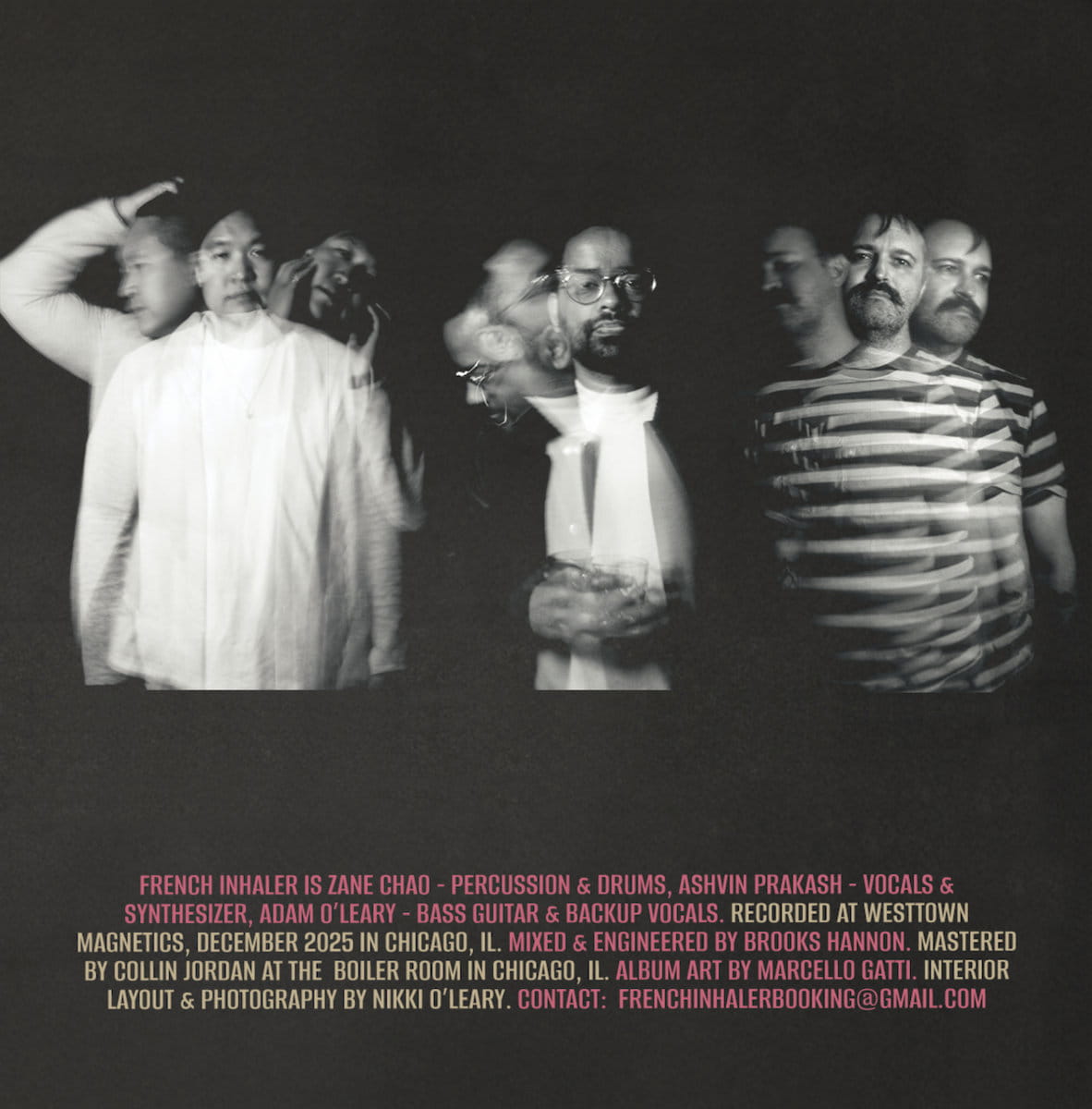
French Inhaler are singer and keyboardist Ashvin Prakash, bassist and backing vocalist Adam O’Leary, and drummer and percussionist Zane Chao. They are based in Logan Square, Chicago, and the record arrives August 13 through local tape label LittleHEADbutt. It was recorded at Westtown Magnetics in December 2025, engineered and mixed by Brooks Hannon, then mastered by Collin Jordan at The Boiler Room Mastering in Chicago. Marcello Gatti handled the artwork and cover layout.
The album title began much earlier.
“TV Love” was one of the first French Inhaler songs. Ashvin wrote the lyric when the band were just getting started, including the line that eventually named the record: “Practiced lines that can’t be changed.”
The title was not imposed on the songs beforehand. The line came first. French Inhaler finished the record, looked back at what they had made, and realised that the phrase had quietly spread through it.
“The line stood out to us because it became a recurring theme throughout the recording of the album,” Adam says. “Literally rehearsing the songs over and over but also in the sense of masking and withholding your feelings and an overall feeling of detachment.”
The phrase works in two pretty obvious ways. A band rehearses the same lines until everybody knows where to enter. People do much the same thing outside rehearsal rooms. The right answer at work, the acceptable version of yourself at dinner, the sentence that keeps an uncomfortable conversation moving, the expression that says everything is fine. Eventually you repeat the script without really thinking about it.
“TV Love” gets there through television, cameras and mediated affection. Its narrator hears exactly what he wants to hear while knowing he is being sold something:
“You were saying the words that I wanted to hear / You were selling me out and it felt so real.”

Elsewhere the lyric moves through red lights, bad conversations, people fading into backgrounds, explosions somewhere in the distance and cameras overhead. Romance, spectacle and anxiety become difficult to separate. TThe song itself stays catchy and direct, which makes those lyrics easier to miss on the first listen. French Inhaler make alienation surprisingly easy to move to.
The song had already brought the trio some attention before the album arrived, including airplay on WXAV and WHCM. The Big Takeover wrote that “TV Love” turns the modern feedback loop into something danceable, while EARMILK called it “a stunning piece of modern alternative music.” Thoughts Words Action went with “hypnotic, addictive, and irresistible”, and Magnetic Magazine heard the song taking early 1980s coldness somewhere more current.
Past “TV Love“, Ashvin points directly to “White Noise” when asked where the central idea surfaces most clearly.
“If we’re talking about the idea of having a script you’re supposed to be rehearsing, then WHITE NOISE.”
For him, it is about accepting a sequence of ordinary choices because they promise belonging and happiness, even if getting a seat at the table means letting individuality disappear behind the routine.
The radio noise makes particular sense there. It is not the foundation of the song, Adam says, but a textural part that arrives at selected moments. Voices surface from between stations and disappear again. It is a simple studio device, done by turning a real dial with a hand until the interference sounded right.
Wyświetl ten post na Instagramie
French Inhaler could easily have cleaned this whole world up much further. They chose tape instead.
“We didn’t use a whole lot of studio gimmickry,” Adam says. “We recorded analog on tape. Everything you hear on the record was played by humans.”
For a band using loopers and samples live, recording this way made things harder than they needed to be. They went with it anyway.
And inconvenience definitely arrived.
On the first day at Westtown Magnetics, while everyone was setting up in the live room, Ashvin told the others that he had recently visited a fortune teller. According to the reading, a djin had attached itself to him.
After that, the band had somebody to blame.
Whenever the tape machine broke or a track mysteriously disappeared, it was the djin.
The joke became particularly useful while they were working on “Middle Class“. Adam was playing a Washburn Force 8, an unusual Japanese bass from the 1980s with what he describes as a P-bass type configuration and pickups stacked backwards. He liked how it sounded and had never seen a reason to change them.
One live take seemed done. The band listened back, liked the tone, liked the way it sat, and decided to keep it. Only during mixdown, with the bass isolated, did they hear a pop that had gone unnoticed.
There was no practical rescue job.
Punching a small correction into analogue tape without making the edit obvious can be exacting, so Adam played the whole part again. Eventually they discovered the cause. He had been hitting the old bass hard enough to disturb the wiring around the pickups, briefly shorting the instrument and cutting the signal.
“Recording and mixing to tape can be very rewarding but also brutally unforgiving,” he says. “This was definitely the most challenging record I have ever done but also the best experience I have ever had in a studio.”
Tape was only part of the problem. French Inhaler are three guitarists who made an album without guitars.
For a while, that sounded almost like a band rule. Adam says it was never really formalised.
“When we started out it was just me and Ashvin. A synth, a bass guitar, and a drum machine. The drum machine sucked, so we fired it and asked Zane to join the band.”
A guitarist was discussed more than once as the band’s sound grew, but the trio held.
“Being a trio is where it’s at for me,” Adam says. “Another way to look at the whole no guitars thing is more of a potential creative writing challenge. It allows us to weave and write melodies where normally an electric guitar would do the job.”
That leaves Ashvin carrying vocals and keyboard parts at the same time, including some tightly syncopated passages. On stage he uses a couple of loopers, while Zane keeps a sample pad with his drum kit for parts that cannot be reproduced with the basic three-piece setup.
Adam has his own solution. His bass runs through a pedalboard built into an old suitcase, with compression, preamp, chorus, distortion and delay giving him enough control over the low end and its edges that so far he has never felt the band needed another instrument there.
Wyświetl ten post na Instagramie
Other problems are smaller and much funnier.
There is glockenspiel on “Middle Class” and “Concorde”. “American Dream” uses vibraslap, another small part that became a problem when the band started thinking about how to reproduce the record live. They eventually used a sample instead.
“I’m not gonna spend 100 hours mastering the vibraslap.”
The studio ideas can get bigger than the trio, but they still have to figure out how three people are going to play them live.
That physical side separates the album from simply recreating an early 1980s electronic template. The bass has space to push the songs around. Zane’s drums keep them from becoming sequenced exercises. Ashvin’s synth parts often do the job that guitar would normally do, carrying melody without filling every available space. It stays danceable, but never completely light.
Chicago is part of the record’s life outside the studio too. French Inhaler call Logan Square their home base, and Adam reels off a small geography of nearby places that have supported them: Reed’s Local, Cafe Mustache, The Empty Bottle, Burlington Bar, Cole’s Bar and Sleeping Village.
For him these venues are part of the same concentrated underground community, close enough to sit within roughly a mile of one another. Adam sees more local bands heading out on national tours and reaching bigger stages, while French Inhaler get to watch it happen as both musicians and fans.
Adam mentions Bev Rage and The Drinks, labelmates Bussy Kween Power Trip, Body Shop, The Cell Phones, Click Bait, Speed Babes, Sex Dream, Claw Toe, 8-bit Creeps and their friends in Hoverboard. Mini Skirt have been opening for Jack White. Cabeza de Chivo bring psychedelic samba into the same orbit, and Adam singles out their live shows as particularly fun.
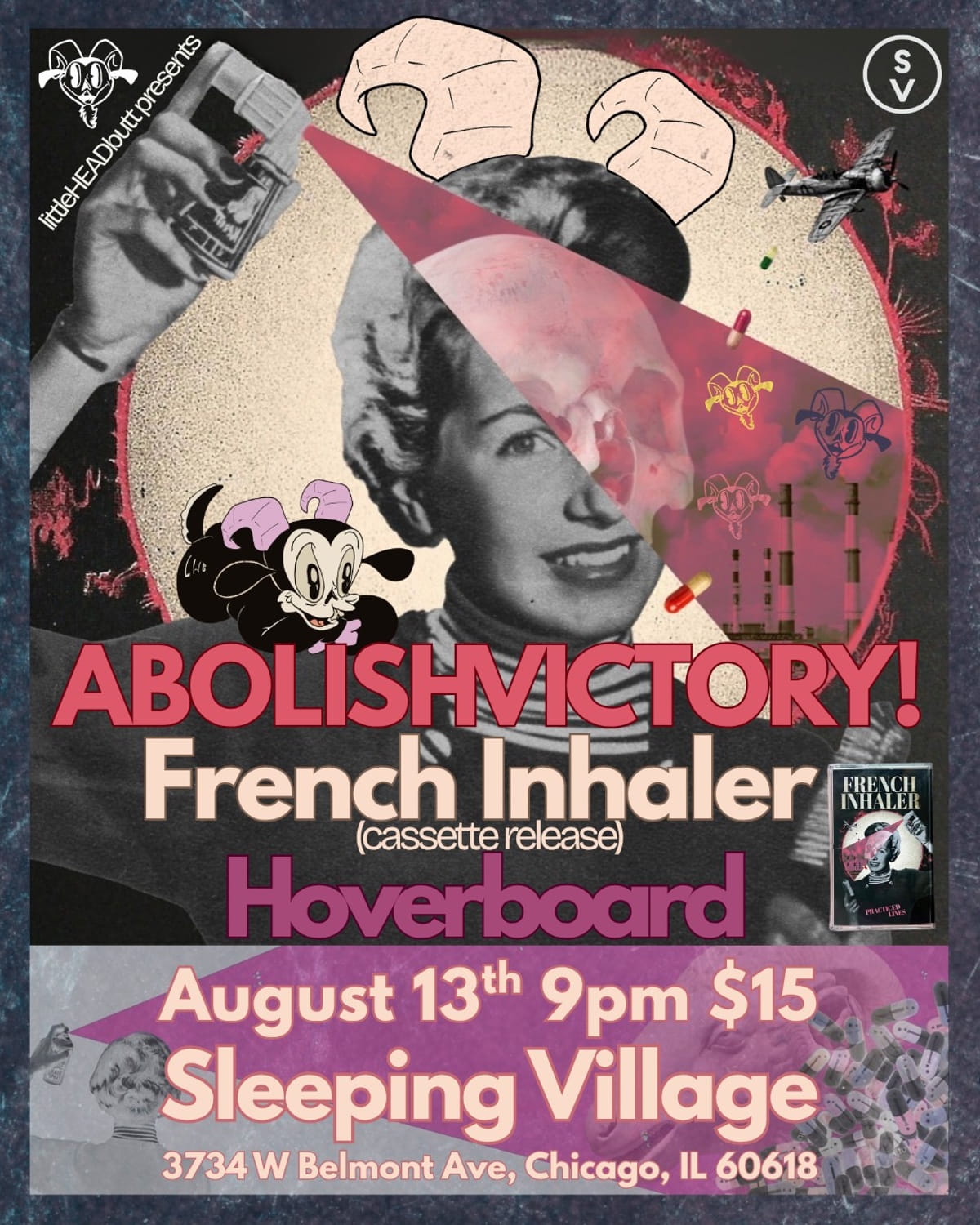
The release show brings some of that local connection back to Sleeping Village on August 13, the same day “Practiced Lines” comes out. French Inhaler will play with Abolishvictory! and Hoverboard, with tickets available here.
LittleHEADbutt fits the story as a local tape label rather neatly, although Adam’s cassette interests run much wider. He follows Mississippi Records for mixtapes assembled from obscure records, including hard-to-find vinyl cuts. He points to Hout Sounds and a recent power rock mixtape featuring Chicago bands, Already Dead in Los Angeles, who released a tape by Chicago rock’n’roll band 96 Cougar, and RIP Records in Tallahassee for hardcore and punk. Adam thinks RIP was where he first came across Body Shop.
Then he brings it home again to LittleHEADbutt, specifically recommending the label’s releases for Bussy Kween and Nude.
That affection for physical things keeps returning throughout the French Inhaler story. Tape. An old bass with peculiar pickups. A radio left playing during dinner. A suitcase turned into a pedalboard. A cheap vibraslap rejected in favour of a sample. None of these things need to become a philosophy. They simply explain why “Practiced Lines” carries a little dirt around the edges of its tidy electronic shapes.
The title came after the album was finished, but the line itself had been there almost from the start. By then the band realised it described much more than one song: repetition, rehearsal, hiding things, and all the little scripts people learn to live with.
🔔 IDIOTEQ is ad-free, independent, and runs on one person’s time. If you want it to stay that way: DONATE via PayPal or SUPPORT via Patreon.
NEW: IDIOTEQ Explore 🗺️ Browse 15+ years of our archive by city, country, and style. Find artists on the world map or trace related sounds through the styles map.
Stay connected via Newsletter · Instagram · Facebook · X (Twitter) · Threads · Bluesky · Messenger · WhatsApp.