


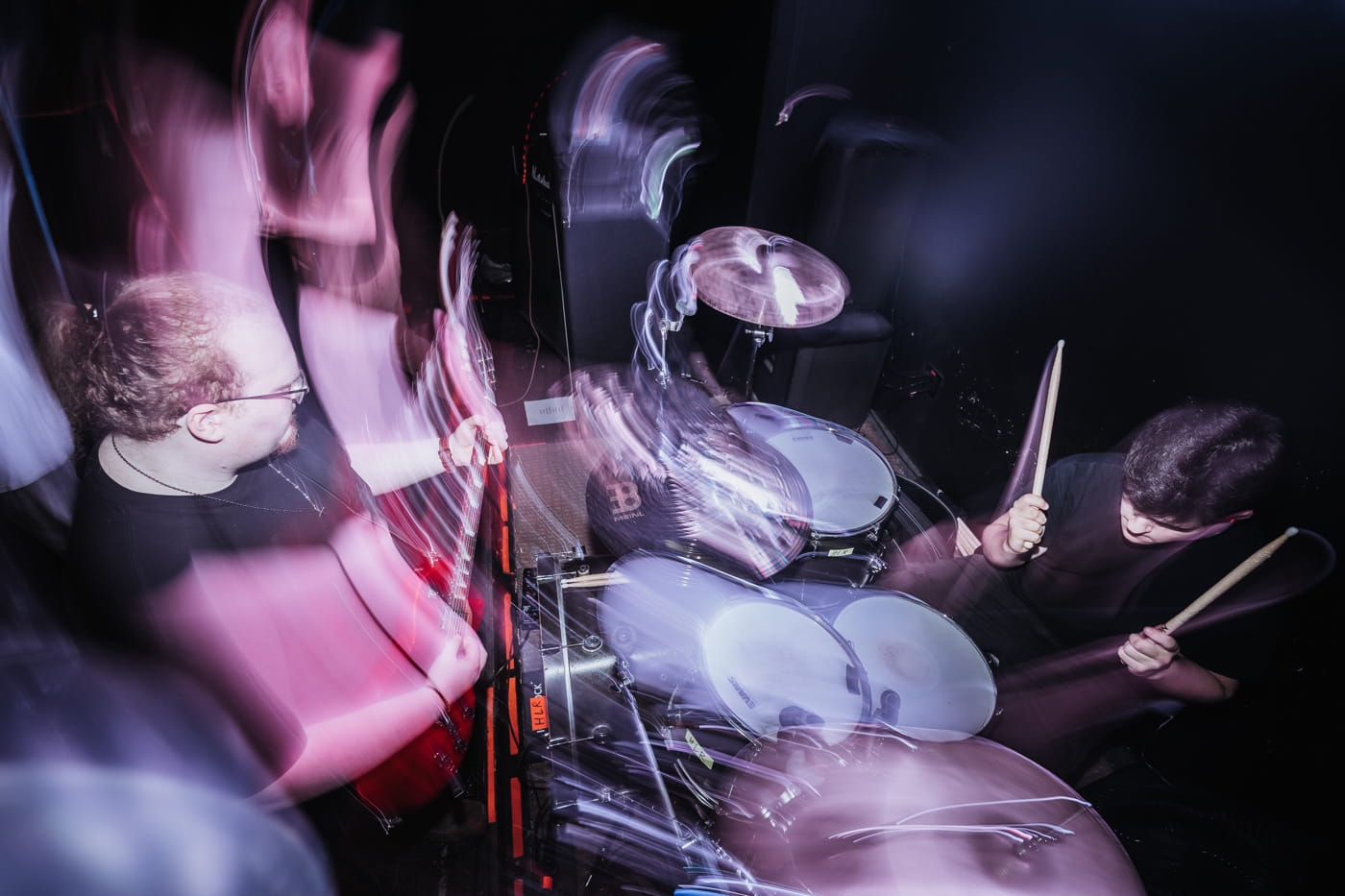
Altar of Hiraeth made “Introspective” completely themselves, from writing and recording through production and release, with no label and no outside studio. Their base is post-metal and alt-metal, with more melody than on their earlier stuff, and Seamus Robertson names Deftones, Thornhill, Loathe and Helmet among the bands closest to what they had in mind.
The four members also hear the same songs in slightly different ways. “Requiem” began as a one-take message Seamus wrote for someone close to him, while Ben McCarthy and Ryan Long both hear hope in it. That difference keeps coming up across the album, so from here the band take us through “Introspective” song by song, with Seamus’s original ideas sitting alongside what Ben, Ryan and Zion found in them later.
Seamus found the word hiraeth while trying to name the feeling of missing a part of yourself. He was thinking about parts lost through anxiety, depression, betrayal, obsession, illness and mental health problems. The rest of the band name deals with trying to get some of that back, or changing into something better along the way.
“Altar” gave him room for another meaning. Seamus likes writing things that work literally and metaphorically.
“The literal context of the name for us is ‘A place built around absence’ but the metaphorical context for it can mean ‘Holding onto something you’ve lost’, ‘Devotion to Regaining something’, and it can also mean different things depending on the individual looking into it.”
Wyświetl ten post na Instagramie
He wants the name to stay open enough for other people to find their own meaning in it, and “Introspective” was written with the same freedom. Seamus describes the album as “more a map of the places your mind goes when you’re trying to hold onto something that’s already disappearing, or is already gone.”
Grief, memory and emotional dislocation keep coming back through the record. Musically, the band kept the heavy post-metal and alt-metal base of their earlier stuff, added more melody, and pushed between what Seamus called “atmospheric restraint and full dynamic collapse.”
That connection between the band name and the album is clearest in “Angels“. Seamus sees it as a song about damage coming from outside and slowly changing the way somebody sees both themselves and the world around them, to the point where he called it “almost like a thesis for the album in general.”
Ben’s reading starts with losing faith in other people.
“Angels is about seeing people in a different light, like how they can’t always be good. People are selfish by nature”
For Ryan, the damage goes further and changes the person themselves.
“Angels – I feel like this song is about transforming into a person you don’t want to be, but no matter what you do you’ll never truly be the same person you were.”
From there, “Stygian“, “Limbo” and “Marionette” stay around damaged relationships, dependence and what happens after trust has already been broken.
For Seamus, “Stygian” comes from friendships he believed would last, then having those relationships fall apart and still finding reminders of them everywhere. Ben describes the same aftermath as being screwed over by somebody and being unable to get them out of your head.
Ryan picks up on the distance between those people, especially in one line:
“Stygian – This song is about trying to reach someone but they are unreachable. ‘Walls won’t listen.'”
“Limbo” keeps the same character stuck around the question of whether they can really manage alone. Seamus writes them as somebody who keeps insisting they do not need help, then keeps ending up back with other people when that isolation stops working.
Ben reduces it to one line: “Limbo is the denial of needing help when you in fact really do need help.”
Ryan reads the song more as an argument happening inside one person, caught between two decisions and unable to settle either of them.
By “Marionette“, the character has started trusting people again and asks the wrong ones for help. For Seamus, the damage comes from being valued for what you can give somebody while still feeling “observed but not understood.”
Ben hears manipulation in that relationship.
“Marionette is having someone you rely on manipulate and puppet you for their benefit”
Ryan focuses on the moment the person finally realises what has happened to them.
“Marionette- I believe this song talks about realizing that you’ve been played, and manipulated like a puppet.”
Wyświetl ten post na Instagramie
“Requiem” picks up after “Marionette“, but Seamus shifts the story to the Grim Reaper. Here, the Reaper envies the living and tries to help them keep going because he no longer has that chance himself. He eventually meets someone who has given up and no longer wants to carry the pain they are living with.
There is a real person behind that story too. Seamus calls “Requiem” the darkest song on the album, and recorded it in a single take without editing because he had written it as a message to someone close to him.
“For Requiem that someone was not in the band, but was someone I was close with who came to me and told me some heavy things. I’ve never been good with my words when talking, so I made a song about it for the person to let them know they’re not alone. they’ve heard it before and they know it’s for them.”
He wanted that message to reach further too, towards anyone dealing with severe depression who needs somewhere to go, some kind of community and love.
Ben and Ryan both found hope in the song. For Ben, it is also tied to the uneven way people recover.
“Requiem is having hope when you need it the most. To me it says that progress isn’t linear.”
Ryan put it simply: “Requiem I believe is about having hope even in the darkest of times.”
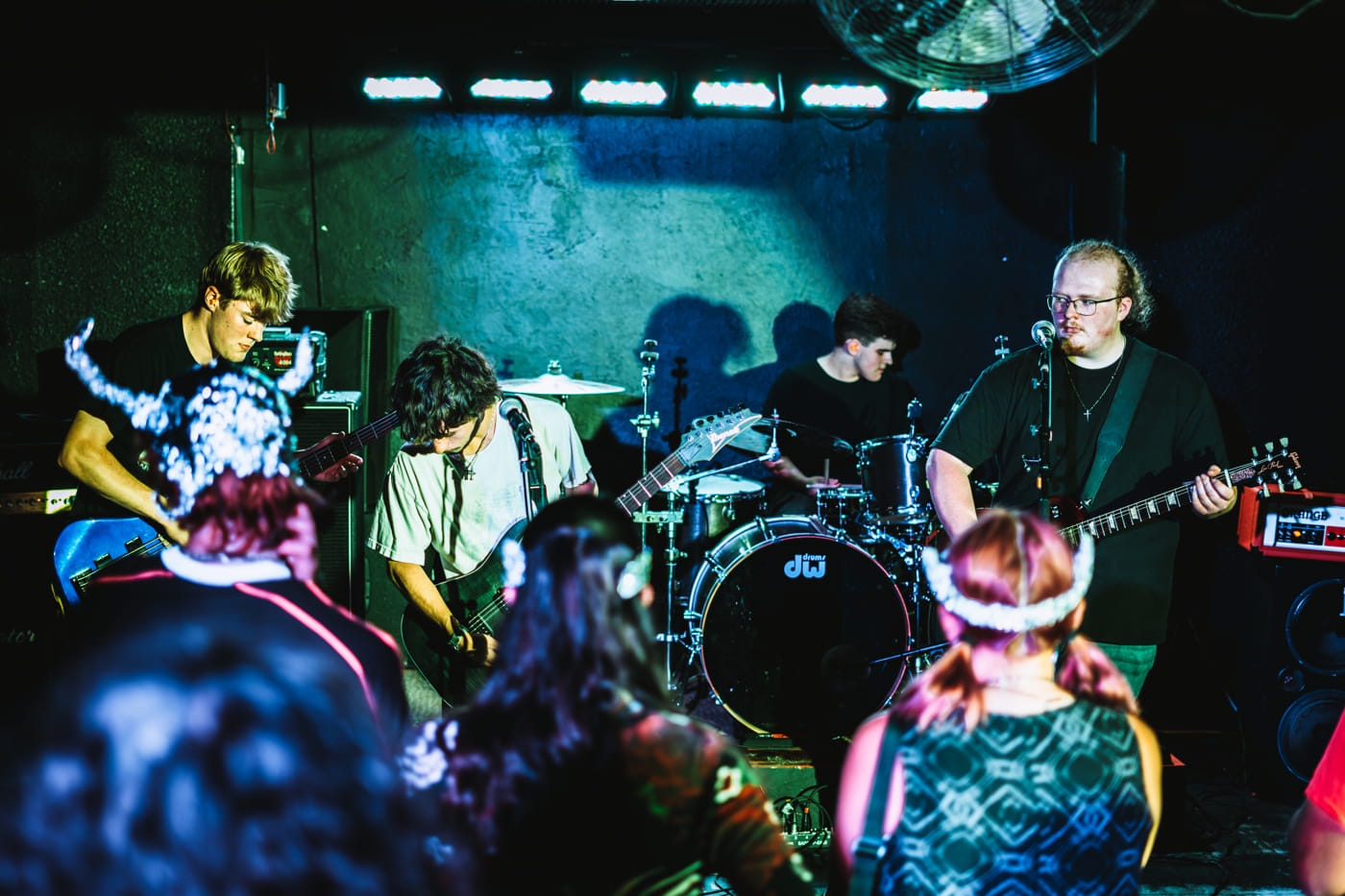
“Knives” gets very close to Seamus’s own life. He wrote it around the strange position of hating yourself and still wanting to find some way to love yourself, with medical problems he had dealt with over the years sitting behind that feeling. In the song, he turns it into a relationship between two people, with one of them begging for love from somebody who hates them.
Ben found his own experience in the same song.
“Knives is about hating yourself, for me it’s my mental health. I constantly need that self assurance of ‘I want to hear you love me too'”
For Ryan, it comes back to abandonment and wanting to know that somebody still cares.
That need for other people carries into “Baroness“, where the recurring character has started putting them above himself. Seamus ties the song to people-pleasing and to his own habit of doing too much for others until it begins eating into his life and sense of self.
“The character for baroness is the character that is concurrent throughout the whole album, and the tragic context is all of the things that were detailed in the album’s songs. and it’s also related to a problem I have personally where I tend to go out of my way for people too much, where it starts to damage my own life and my own identity.”
Ben put it more simply as “people pleasing to the point of forgetting about yourself.” Ryan picked up on the obsession in it, especially the line “royalty to my mind.”
“I believe Baroness is about putting someone on a pedestal and obsessing over them ‘royalty to my mind.'”
Zion Cloutier said the other members’ readings were basically the same as his, but he singled out the second verse of “Baroness” for one additional thought.
“Baroness second verse is cool. Shows how someone might push someone away who loves them instead of actually embracing something they may need. Like an addicts whole thought process right there.”
For Zion, that verse brought to mind the way somebody can reject the help or affection they actually need, with addiction as the comparison he used to describe it.
“Somatization” comes after all of that without lyrics. Seamus brought in both the clinical term and the idea for the instrumental, using it to gather up the pain and damage already dealt with elsewhere on the album. The piano starts sad and melancholy in his description, then grows angry and frustrated as the piece goes on.
“Almost like it’s frustrating to have to deal with it.”
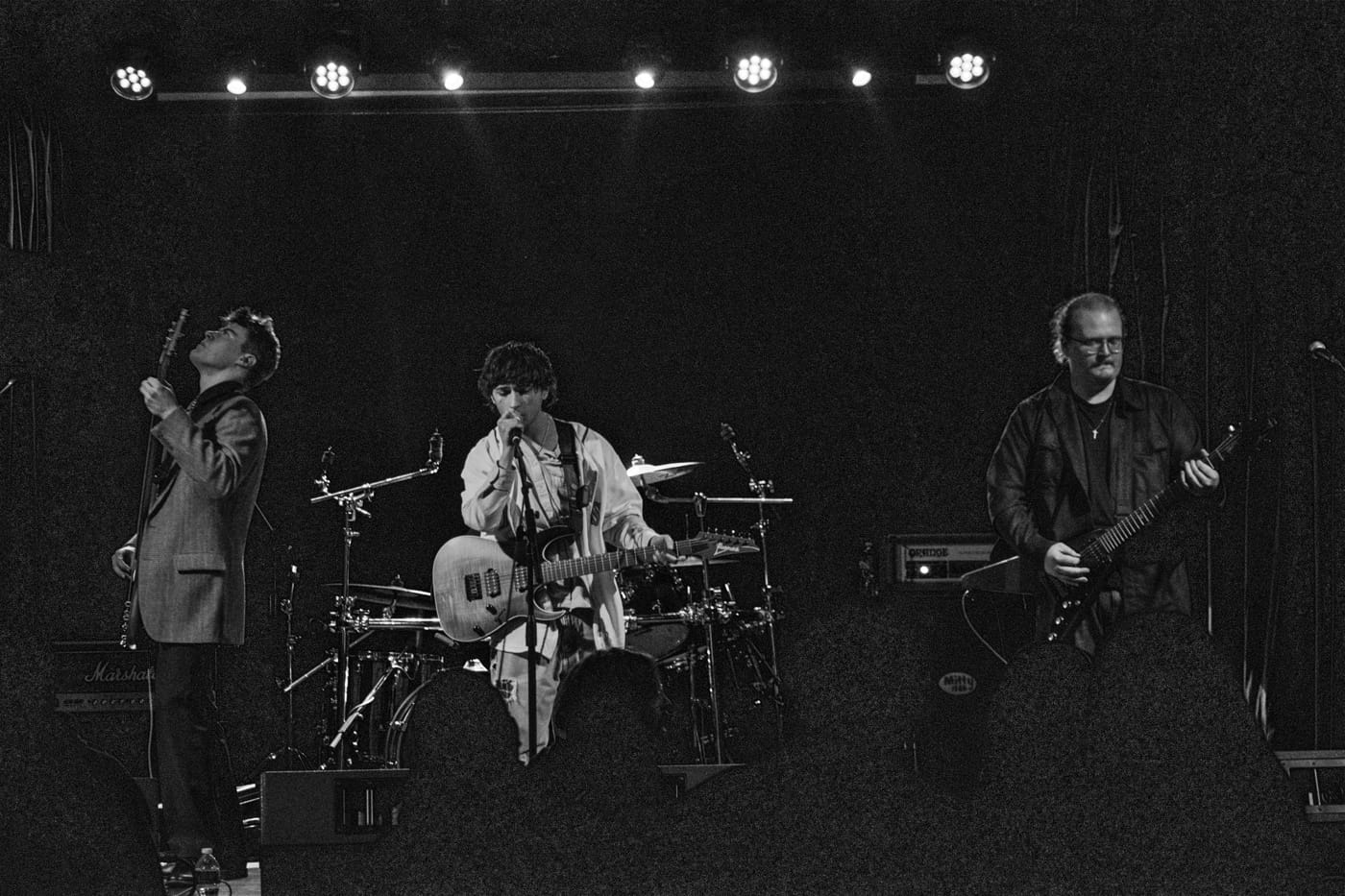
The entire album stayed within Altar of Hiraeth. They wrote it, recorded it, produced it and are releasing it themselves. No label is attached and they did not use an outside studio.
Benjamin Aiden McCarthy is credited as Executive Engineer, with Seamus Ryan Robertson as Co-Executive Engineer. Ben mixed “Introspective” and Seamus mastered it. Both worked across much of the engineering, with Ben taking the executive credit because he handled most of that work.
Seamus had learned mastering in class and decided to do it himself. He wanted to keep control over how the album ended up sounding, and money was part of the decision because the members are “not wealthy.”
Ben ended up doing most of the engineering and mixing, partly because he could take the kind of loose descriptions Seamus and Ryan were giving him and actually turn them into something usable.
“Ben has an ear that I do not for mixing however and was also very good at taking the words from me and ryan explaining what sounds we should have and making it happen. He is a much more talented engineer than I am, but I did a TON of the writing for the album, so he wanted my opinion on how it should sound.”
That back-and-forth ran through much of “Introspective”, with Seamus heavily involved because he had written a large part of the record. Ben also made the album artwork.
Altar of Hiraeth recorded it as Seamus Robertson on vocals and guitar, Ben McCarthy on guitar, Ryan Long on drums and Zion Cloutier on bass. Zion leaves after September 6 to go to college, so “Introspective” will also be his last release with this lineup. The band specifically wanted him credited here as their bassist.