

Gooseberry got part of their second album moving by writing down card games and forcing songs out of the titles. “Durak“, “Go Fish“, “Solitaire“, “Bluff” and “Gin Rummy” all sit on “Simple Sucker“, but the Brooklyn trio only saw the bigger idea after the last tracks were finished. Again and again, somebody on this record ends up looking like a fool, including the person doing the judging.
We’re premiering opener and focus track “Gnash” today, a day before “Simple Sucker” arrives on September 25. The song gets straight to that “perfect fool” idea through a narrator wound up by ego, greed, frustration and the feeling that time is running out. Opposite him is somebody who still believes in hope, grace, kindness and love. He calls them a “simple sucker paragon”, which leaves plenty of room to wonder who is actually making the bigger fool of themselves.
We don’t get this kind of loose, unbothered rock’n’roll kick and strut too often around here. Every once in a while, it’s worth just giving in to it. “Gnash” is exactly the right place to do that, and Asa Daniels has a pretty direct explanation for putting it first.
“It slaps you in the face and then shakes you repeatedly and never lets up. And it is so undeniably a good ol’ rock song. We spent a lot of time building the world of this record. Gnash immediately drops you into that world without any exposition needed.”
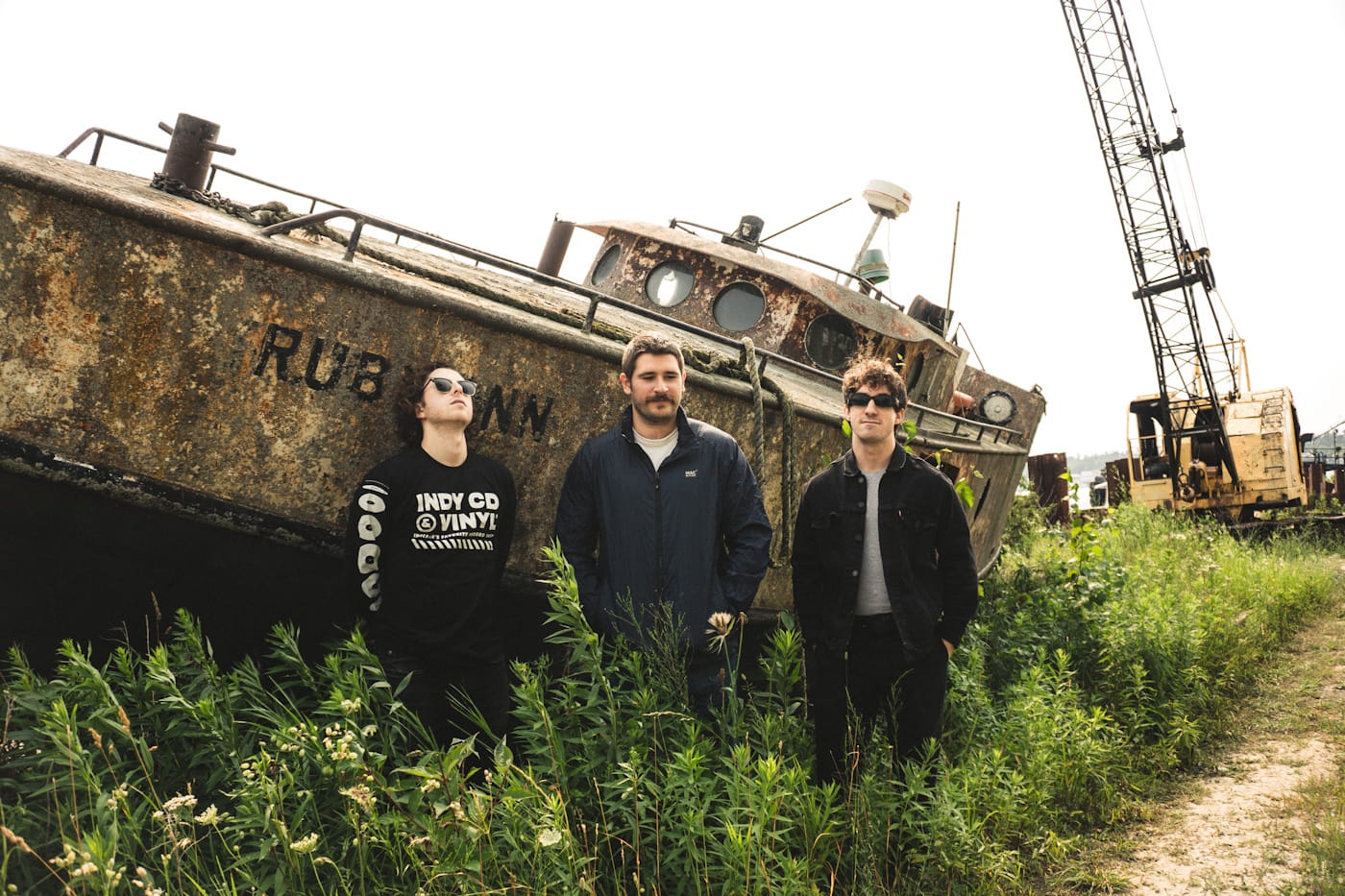
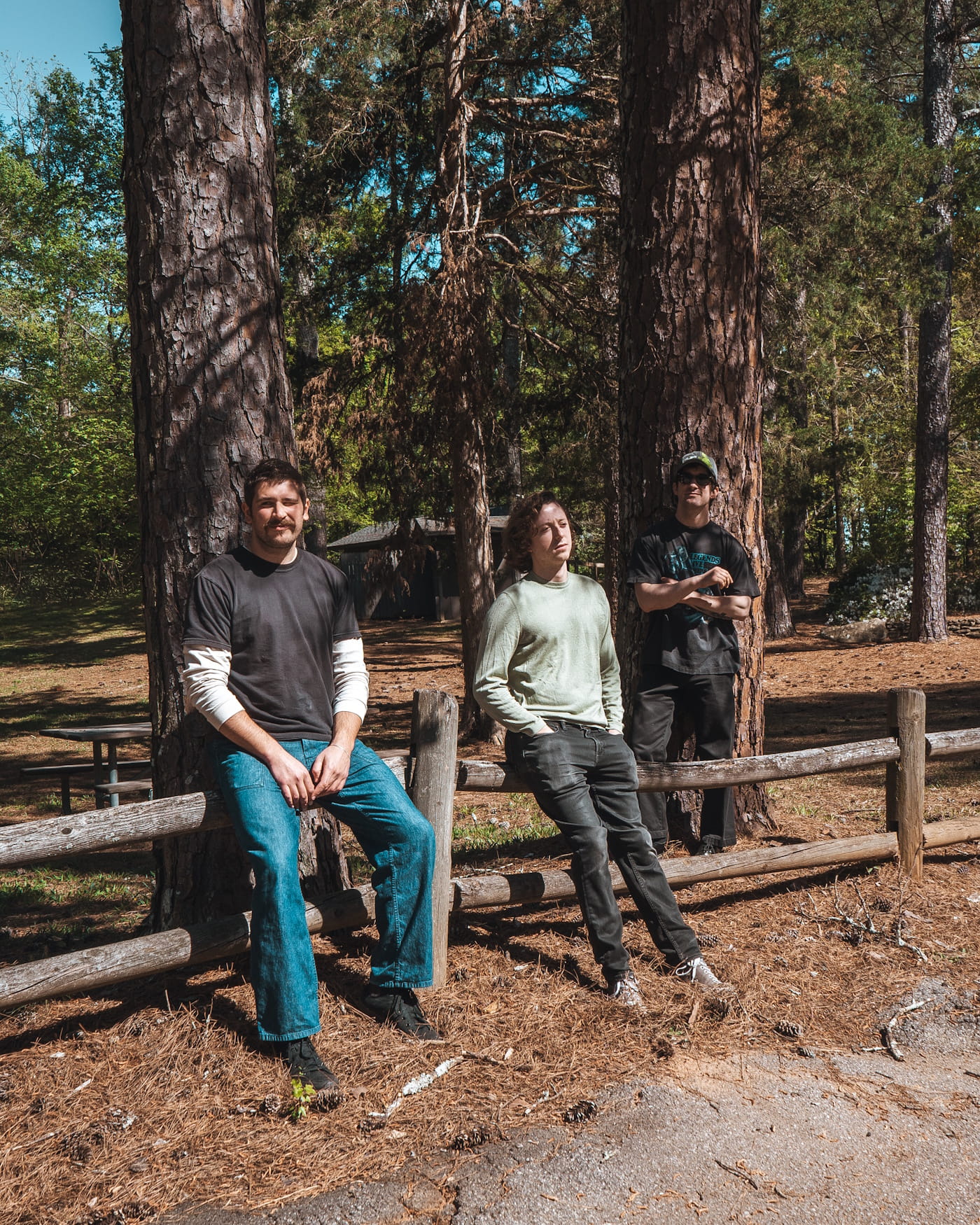
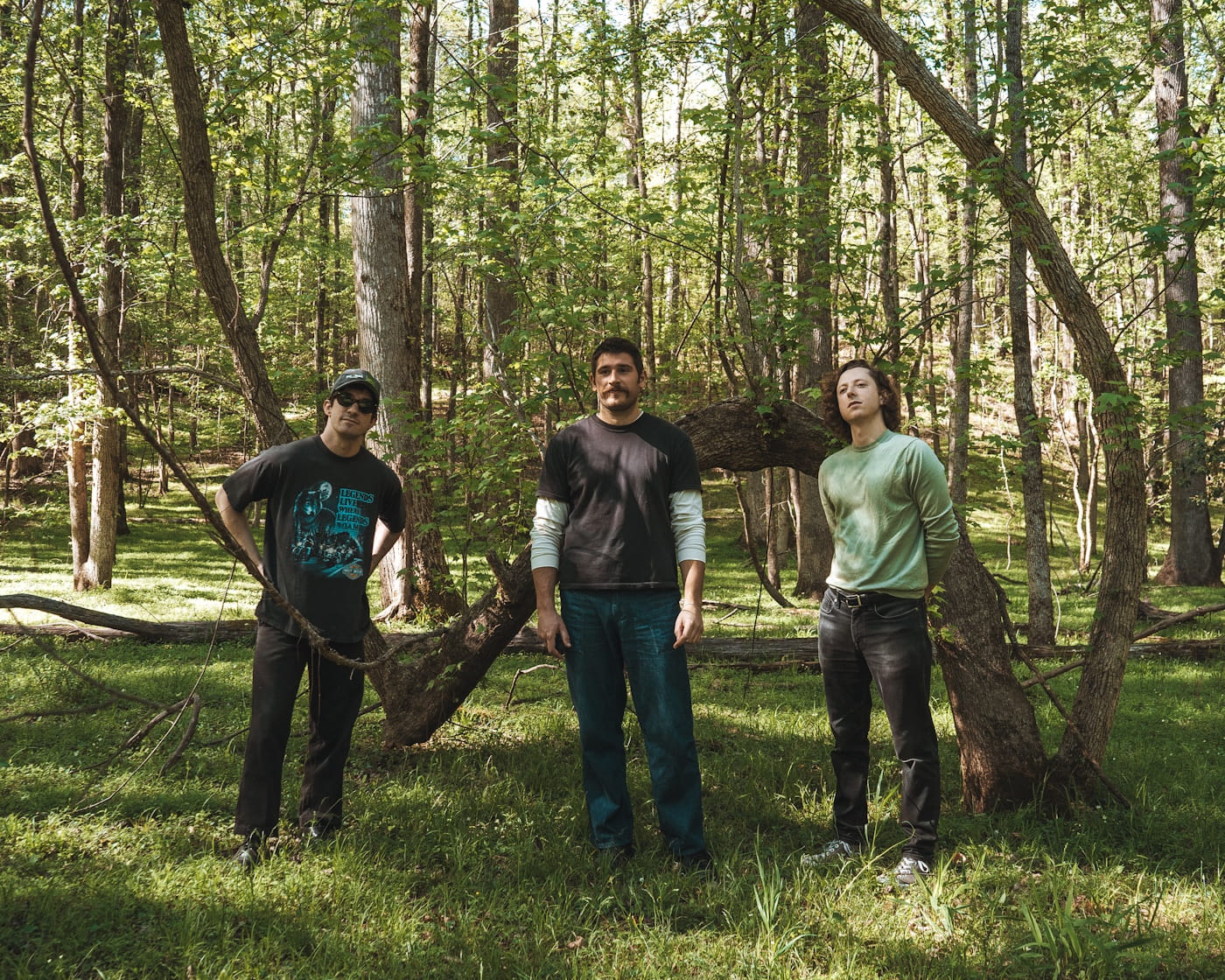
Gooseberry formed in Brooklyn in 2019 around Asa on guitar and vocals, bassist Will Hammond and drummer Evin Rossington. Asa writes the songs and lyrics. “Simple Sucker” is their second LP, following “All My Friends Are Cattle” from 2024, and comes after enough touring for the band to have spent a lot of time finding out which songs survive outside the rehearsal room. Guitar World have also included Gooseberry in their coverage of younger guitar bands coming out of New York City.
The album-wide “fool” idea arrived late. Gooseberry do not work by knocking out dozens of songs and selecting the ten they like most. Getting ten or fifteen they actually believe in already takes time, so each song starts life as its own problem.
“Probably around the same time we realized we had enough tracks for a full record. Some bands are blessed with the ability to write 40-50 songs at a time and choose from the best. That… is not our process (unfortunately). We’re pretty critical of our own work. It takes a while before we’ve got 10-15 songs that we feel confident in. So the focus is always first on writing the best song or best piece of music we possibly can. Seems counterintuitive, but this process has often led to the final songs centering around a theme almost organically. Or maybe it’s just been dumb luck. At any rate, it wasn’t really until the last tracks were completed that we could take a breath and assess the whole body of work. Once we did that, this throughline of the “fool” made itself undeniable. It’s nice when things work out that way.”
That fool takes several forms across the record. Sometimes it is somebody blinded by bigotry, arrogance or fear, completely convinced of their own intelligence. Elsewhere it is somebody making an idiot of themselves through love, memory or nostalgia. Gooseberry also leave themselves inside that group, especially once songs such as “Go Fish” and “Fault Lines” turn back towards Asa’s own habits.
The card-game part was there much earlier. “Durak” came directly from a game Asa learned from his fiancée, and he had already started using card titles as a writing exercise. It went further than naming songs. “Gin Rummy” took something from the actual numerical shape of the game.
“That was there from the start. A lot of the ideas sprung out of a writing exercise as just a way to knock things loose. I began with a list of titles of different card games that I love (Gin Rummy, Durak, Omaha, etc.), and then forced myself to come up with songs roughly based around them. So for Durak, the title may be the defining feature, and so you come up with ideas of a loud, brash asshole. But then for something like Gin Rummy, the goal of the game is to get to two runs of three cards and one run of four. That led me to play around with different meters, and you end up with a funky riff that is two bars of 3/8 and one bar of 4/8. Initially, I thought about naming all the songs after card games, but that felt disingenuous to the songs that didn’t necessarily come from that exercise. Which is a thing literally no one will know or care about. But I’ll know. And that would eat at me until I cease to exist, and maybe even beyond that.”
That loose writing game gave them a few different ways into the same subject. “Durak” takes the most openly satirical route. Its central character sees himself as smart, attractive and entitled to say whatever he wants without consequences. Underneath that confidence sit bigotry, nostalgia, fear, prejudice and a steady supply of anger.
He has relatives in older Gooseberry songs. Asa has connected him with “One of the Good Ones” and, to a degree, “Validate Me”. The same kind of person keeps coming back because there is still plenty to write about.
“My favorite stories are character-driven, not plot-driven. Give me the slow-burn development over forty chapters or six seasons, rather than a car crash every ten minutes. And so I guess I keep going back to this particular well because, to me, there’s so much to explore. How do you end up like this? Thinking everyone is trying to get something over on you or that the world has gone to shit because it doesn’t go according to your expectations? That kind of paranoia and misplaced aggression colors so many interactions for so many people, from the daily psychosis of an internet comments section to the declarations from the president’s house. In many ways, I think writing songs from that perspective forces me to work my way towards some kind of understanding. Or at least prevent myself from somehow turning into this character.”
“King of Wit” comes at a nearby type from another direction, full of empty declarations of wisdom, visionaries, preachers and people talking in platitudes. “D.B. Cooper” picks up self-mythologising. Asa used the famous hijacker as a way into the stories people and whole generations tell about themselves, especially the habit of arranging history so we somehow end up standing in the middle of it.
“Go Fish” is much closer to home. It deals with aging, losing youth, inspiration getting harder to reach and the strange comfort of looking backwards. Some of that nostalgia is tied to places that have physically changed or disappeared from Asa’s life, including his childhood home after it was sold.
“I’d like to think we’ve always maintained a good balance of pointing the finger outwards and inwards. The reality is we’re no better than anyone else. I think people relate to that in our music because it comes from an honest place. Nostalgia is a scary thing, mainly because of how good it feels. Sometimes it’s easier for me to just crawl back inside a memory of how things were, even if my recollection has conveniently sanded the edges. But we all gotta move forward. It’s the only way to grow. It’s uncomfy, but it can also be exciting, and that anxiety powers a lot of these tunes.”
“Fault Lines” comes out of leaving New York and moving more than 300 miles away. Watching the old scene continue through social media made the distance stranger, and homesickness and isolation began messing with how Asa saw what he had left behind.
“Bluff” gets into aging from another side, with status, possessions and the worry over where adulthood is actually heading. A relationship with another person sits in the middle of it. “Gin Rummy” deals with memory and moments that disappear, even as its crooked little rhythmic idea came directly from those runs of three, three and four cards. “Solitaire” pulls patience, pain, faith, anger and self-awareness into the same song.
Then there is “Daffodils“, a much more direct love song. It gives “Simple Sucker” a little room away from the louder characters and all their certainty, paranoia and self-made problems.
Some of these songs had already been kicked around onstage long before the album was recorded. Gooseberry have travelled across North America, change their set every night and regularly throw unfinished songs into shows to see what survives. “Durak” and “Go Fish” both went through that process. “Gnash” and “Bluff” took the opposite route and first became proper songs in the studio.
“Playing live is the ultimate test of whether your material is worth a damn. We’ve had the great fortune of traveling all over North America playing our music, and soon we’ll be bringing that noise over to Europe. We change the set every night. That also includes tossing in new stuff we’re working through and seeing how things land. Sometimes it’s a trainwreck. Sometimes it’s magic. We played some of the songs from this record like Durak and Go Fish a bunch before we tracked them.”
The experience of making “All My Friends Are Cattle” also left them more comfortable recording something before an audience had tested it. “Gnash” is one of those songs, a studio-first opener with none of the live trial runs that helped shape some of its neighbours.
For Gooseberry, trusting those studio instincts became one of the useful leftovers from the first LP.
“If anything though, I’d say the real lesson from All My Friends Are Cattle was the confidence to record songs we hadn’t yet played live and to trust our instincts. Songs like Gnash and Bluff came to life in the studio before they ever hit the stage and those are some of my favorites from the album.”
Gooseberry live shows:
9/17/26 – Burlington, VT – Higher Ground
9/20/26 – Montreal, QC – Turbo Haus
10/2/26 – Amarillo, TX – GoldenLight Cantina
10/3/26 – Dallas, TX – TX Tea Room
Fall European Dates:
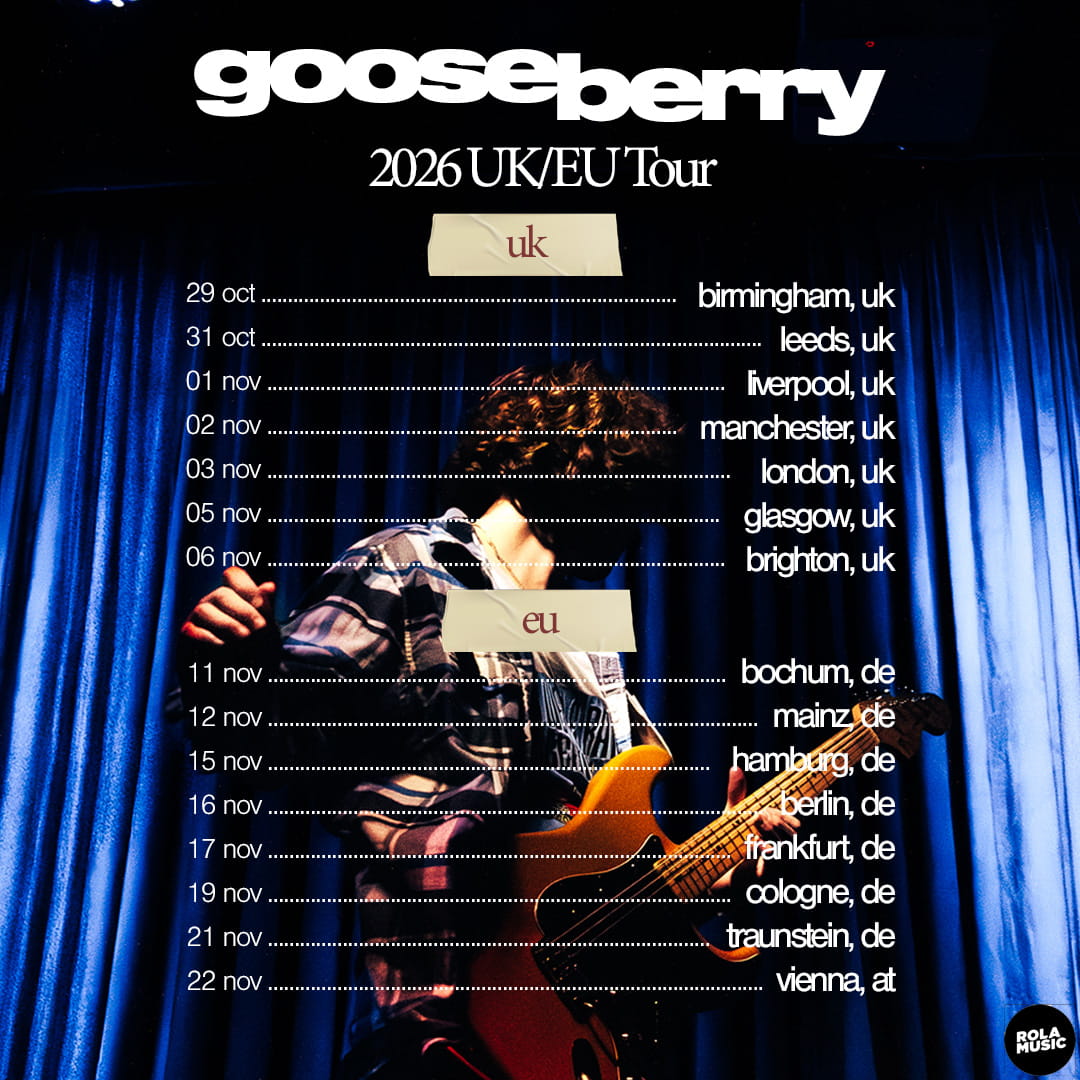
10/29 – Birmingham, UK – The Sunflower Lounge
10/31 – Leeds, UK – Northern Guitars Cafe Bar
11/1 – Liverpool, UK – EGBGS
11/2 – Manchester, UK – Lions Den Manchester
11/3 – London, UK – Barfly Camden
11/5 – Glasgow, UK – Nice N Sleazy
11/11 – Bochum, Germany – Platform 9
11/12 – Mains, Germany – tremble
11/15 – Hamburg, Germany – Hebebühne
11/16 – Berlin, Germany – Lark
11/17 – Frankfurt, Germany – Elfer Music Club
11/19 – Köln, Germany – Subway
11/21 – Traunstein, Germany – Café-Festung
11/22 – Wien, Austria – Club Lucia