

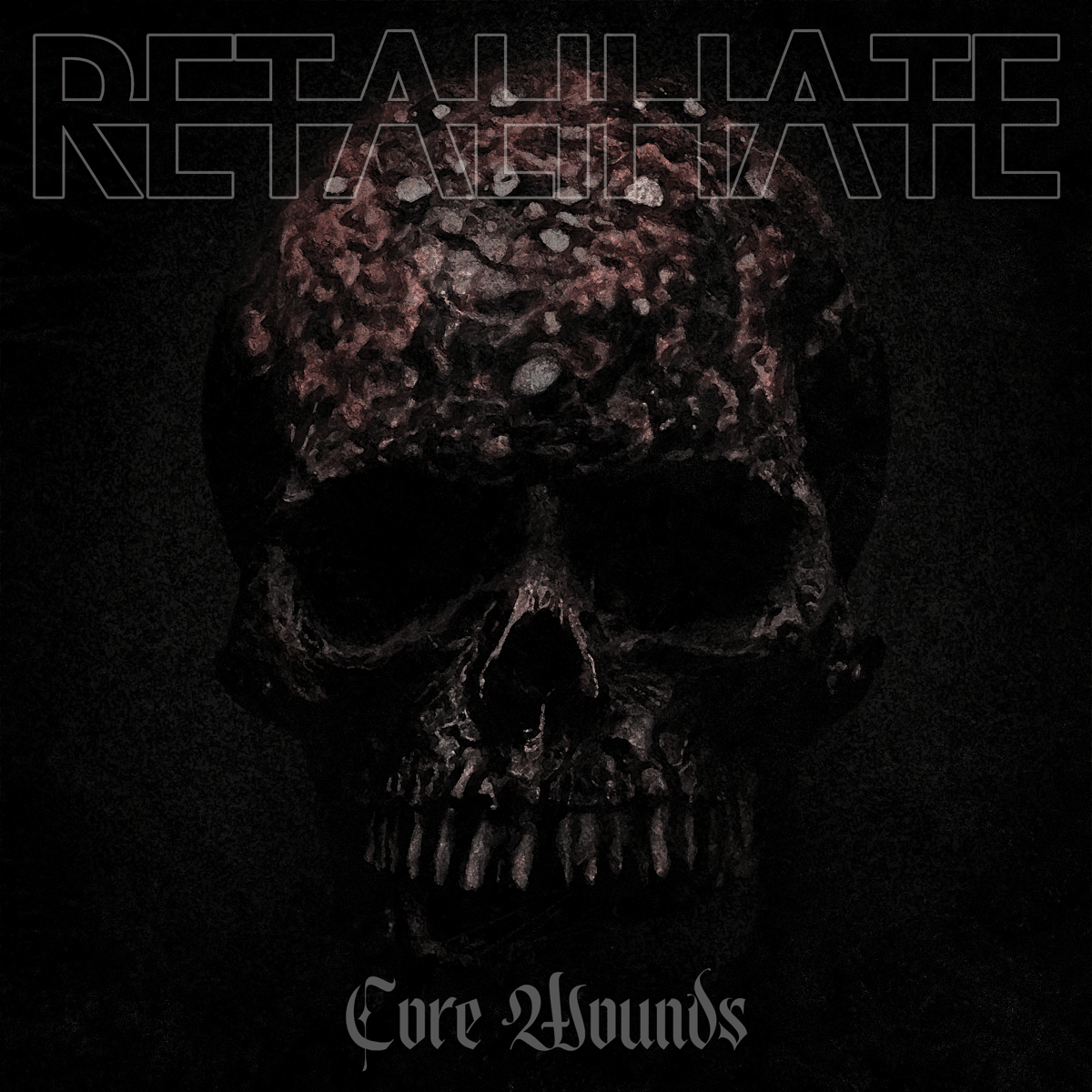
Retalihate’s “Core Wounds” is a skull-kicking run of ten songs in less than fifteen minutes. The Vancouver debut throws metallic hardcore, grind and powerviolence into a frenzy somewhere between outright madness and precise brutality, with riffs and drums moving fast and chaotic under an almost mechatronic sense of timing. There is a trace of the machine-tight metal Fear Factory made sound new years ago, then decades of metal-hardcore hybrids piled on after it. By the end, you can feel slightly unhinged.
Mike Rosen wrote, played, recorded and produced the whole record in his home studio. He plays keys and backing vocals in Dead Quiet and has spent decades moving through country, indie rock, folk and heavier bands in Vancouver, Montreal, Toronto and London, Ontario. Across those years, extreme hardcore and metal stayed mostly private. He had never made anything this deep in that world before Retalihate.
“Core Wounds” also took shape as Mike and his wife were expecting a child. Becoming a father made him think hard about the behaviour a child would pick up from him, and eventually about what he had inherited himself, what really belonged to him and what he did not want to hand to the next generation.
He had already noticed another habit in his older music. Being impressive mattered. So did proving he was a good musician or a clever songwriter.
“I think part of that is that, with a lot of the music I’ve made in the past, it felt important to me that I was impressive to other people. Like I was trying to convince people that I was good at music, or that I was a clever songwriter, or whatever. This was an opportunity to let go of all of that and allow the music to be as raw and ugly as it needed to be.”
Anger, frustration and sadness had been shoved aside for years. Mike had been ashamed of some of those feelings and had tried to hide them. With “Core Wounds“, he let them stay ugly.
“It feels like the most honest songwriting I’ve ever done. It feels like the most me of anything I’ve ever released, which is kind of wild considering how raw and aggressive and angry it is. But those are parts of me too. It doesn’t mean I’m angry all the time. It means I contain anger, just like anybody else, and I spent decades pretending it wasn’t there, being ashamed of it or trying to hide it from people.”
The prospect of becoming a parent made all of that harder to push aside.
“A lot of it started when my wife was pregnant and I began thinking seriously about how I wanted to show up in the world, because suddenly there was going to be another person looking to me for some kind of blueprint. How I treat my partner, how I show up in friendships, professionally, how I deal with conflict, how I carry myself through the world — all of that started to feel much more consequential.”
That took him back into childhood experiences, parental trauma and things he had previously minimised or never properly dealt with. He started individual therapy and group therapy, kept a regular meditation practice, used plant medicine and made a broader effort to stop avoiding those patterns.
Music became part of the same work. Sometimes he would sit quietly or meditate, notice what was coming up and take the feeling straight into a song. Then he could listen back and understand a little more clearly what had been sitting underneath it. Rough mixes followed him into the car and onto long walks.
“I could actually feel things shifting while I was making it. I’d listen to rough mixes in the car, or listen over and over while I was out walking, and there were so many times I’d listen back and just weep. It was so heavy and so crazy to hear myself saying these things back to myself in such a powerful way. The record became this incredibly potent mirror for the depth of some of these wounds I wasn’t looking at.”
Fatherhood brought the family part into focus. “A lot of patterns feel normal until you realize that you’re about to hand them to someone else, and that made me want to understand what was passed down, what was mine, and what I don’t want to carry forward. Making Core Wounds was a huge part of that process. It was a way of sitting with anger, fear, confusion, and trying not to just repeat it unconsciously, and I definitely think that thread is present in those songs.”
“I Alone” and “Misdirected” carry that directly. “I Alone” includes “Fuelled by the violence bestowed by my name”. “Misdirected” goes through “A second-hand incision”, “A second cross to bear” and “Perpetuate tradition”. Mike later confirmed that the connection to intergenerational patterns was intentional.
The title is literal. The songs come from family relationships, friendships, problems that have repeated across different relationships and Mike’s relationship with himself. Each song takes a separate part of that history. The violent language matches the record. Every feeling and situation behind it comes from something real.
“They’re extreme versions of real situations and real feelings, because that’s the language of this record, but it’s all real. None of it is just me inventing something horrible because it sounds good in a hardcore song.”
Wyświetl ten post na Instagramie
“Never Again” comes from a person, relationship, wider dynamic or social pressure slowly making someone quiet their own voice. Mike writes about pretending to be somebody else, making himself smaller and living with that long enough for it to become punishing and destructive. The song reaches the point where he takes his voice back and refuses to let people keep pushing him around. “Hands on my throat and a gun to my head” eventually gives way to “Now nothing holds me back, now no one owns me.”
“Less Than Nothing” came from toxic and unhealthy relationships where he felt undervalued, treated like shit or barely acknowledged. Some of those situations had been allowed to continue for a long time. This time he wanted to stay with the anger long enough to deal with it.
“A big part of that song was letting myself actually sit in the anger around that instead of trying to soften it or move past it too quickly. I wanted to let myself get as angry and upset as possible, because that was part of processing the frustration, disappointment, and the impact those kinds of relationships can have on you.”
“The Hand That Feeds” deals with giving somebody care, time and thought, getting very little back and sometimes feeling punished for the effort. The imbalance eventually has to change, either inside the relationship or by leaving it.
“These are all very real experiences for me, and the song was a way of processing the anger and frustration that comes from feeling like you’ve been carrying far more than your share.”
The other tracks are “Don’t Care”, “Trigger Finger”, “Silent Suffocation”, “Left for Dead” and “Narcissist”. Together with “I Alone”, “Misdirected”, “Never Again”, “Less Than Nothing” and “The Hand That Feeds”, they make ten very short songs built over roughly a year and a half.
There was no fixed way into a song. Sometimes it started with a guitar riff. Sometimes a drum part came first, or the drums forced Mike to change the riff. A lyric, a relationship, a situation or one specific feeling could start the whole thing too. He would work out what the song needed to do and build from there.
He still loves making music with other people. Another musician can hear an idea differently and take it somewhere he would never have reached alone. He has moved back and forth between solo and collaborative work for years. “Core Wounds” stayed in his hands because the writing was tied so closely to what he was going through.
His routine was simple: record a section, put on headphones, go outside and walk with it, listen over and over, come home and change whatever was wrong. Then do it again. That went on for about eighteen months.
Structure and feeling developed together. A break in the emotion could mean a break in the arrangement. A breakdown could appear exactly where he imagined bodies starting to move. He was picturing the physical response of a hardcore show from the beginning, including the violence and release of a pit. Nothing stayed simply to make a track longer. Mike kept working at sections until they did what he wanted.
Vocals always came last. He wanted the instruments to feel like a finished band before he stepped in front of them, even though he had built that band himself one part at a time. The vocal takes were punishing enough that he could only do so many before risking actual damage.
It was also the first time he had used this kind of hardcore voice. Hearing it back caught him off guard. “In some ways it still doesn’t even sound like me to me. I’m still familiarizing myself with it. But it is me.”
Then came the line that says plenty about why Retalihate exist at all. “It’s like, holy shit, that guy’s been in there the whole time. I’ve just been suppressing him, and now I’m letting him come out.”
The short running time was part instinct, part love of Nails. Mike liked how Nails could fit ten songs and a complete emotional run into less than fifteen minutes, enough intensity to leave him exhausted without stretching it out.
He never set a hard limit for “Core Wounds”. If a song felt finished at 45 seconds, he left it there. Full of Hell, Kickback and Scarab were also among the reference points around the record.
One image kept returning while he worked: the old THX visual of a man in a chair being physically blasted by sound. Mike carried that idea right down to the mastering and the spaces between tracks. He wanted some of the feel of a live set, with the songs arriving hard enough and close enough together to overload the nervous system. Listening to the finished masters, there is barely time to recover before the next song is already on top of you.
At first, Mike did not know if the project would ever come out. It started as something he was making for himself. As the songs developed, he wanted other people to hear them and became ready to let this side of himself out into the world.
“In a lot of ways, this record is me planting a flag and saying: I’m working through some shit too. I’m not afraid to look at it. And it’s big.”
He pushed his own rough mixes as far as he could, then started A/B testing them against some of the records he had been using as references. That was the point where he knew he wanted somebody else to mix it.
Jesse Gander had already worked on every Dead Quiet album and on several other projects involving Mike. Mike trusted his taste and his understanding of this kind of music. The choice became obvious at a Dead Quiet show when he spotted Gander in the front row.
“You’ve got to send these mixes to Jesse. He’s the guy.”
Gander was into the project, and the mix happened quickly because the rough versions had already made the direction clear. Brad Boatright at AudioSiege handled mastering.
“Brad Boatright is just the guy, in my opinion.”
Mike had Nails in mind here again, especially “Abandon All Life“, one of the best-sounding records he has heard. He credits Kurt Ballou, Nails themselves and everyone involved in making that album, and Boatright’s mastering was part of why the record stuck with him. Boatright was available, so Mike sent him “Core Wounds”. He came away very happy with how the finished record sounded.
Most of Mike’s recent band work has put him behind keys or bass. Since around 2016 he has played keys, piano and backing vocals with David Beckingham from Hey Ocean. He spent roughly a decade playing periodically with The Wild North, mainly on keyboards and backing vocals; most of that band’s members are now in City and Colour.
From around 2018 or 2019 until 2021, he played bass with Alex Little and the Suspicious Minds, shared some of the songwriting and played guitar on recordings. They released an album in 2020. Mike has played keys and sung backing vocals in Dead Quiet since 2019. Various solo and singer-songwriter projects sit around those bands, along with earlier music made in Vancouver, Montreal, Toronto and London, Ontario.
He had never gone this far into extreme metal and aggressive hardcore before.
Vancouver is part of Retalihate’s world, though Mike does not pretend to have a complete map of its current hardcore scene. A young child means he is simply not out enough to speak for every room, promoter or local pocket.
“There is a great, thriving hardcore scene here in Vancouver, but I’m probably not the right person to pretend I have my finger completely on the pulse of it.”
The music he is excited about locally reaches through hardcore, punk, post-punk and heavier stuff. Sleep Country are the band he is most excited about right now, playing post-punk. Erosion are a Vancouver band he has loved for years. Woolworm got another immediate recommendation. Waitless had just released a new single that, in Mike’s words, “rips”. As Retalihate develop, he hopes the band can find their own place among that wider group of local bands.
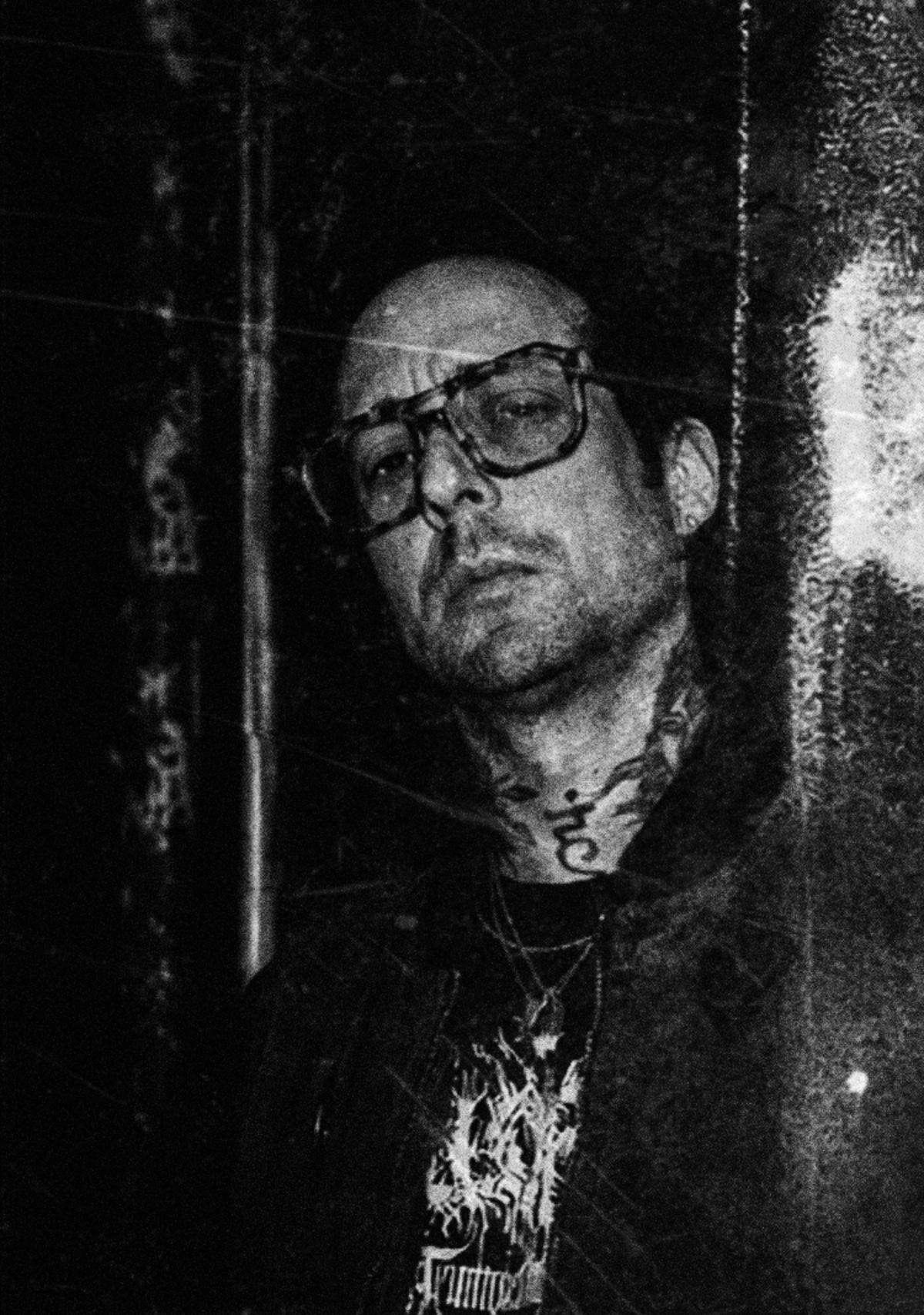
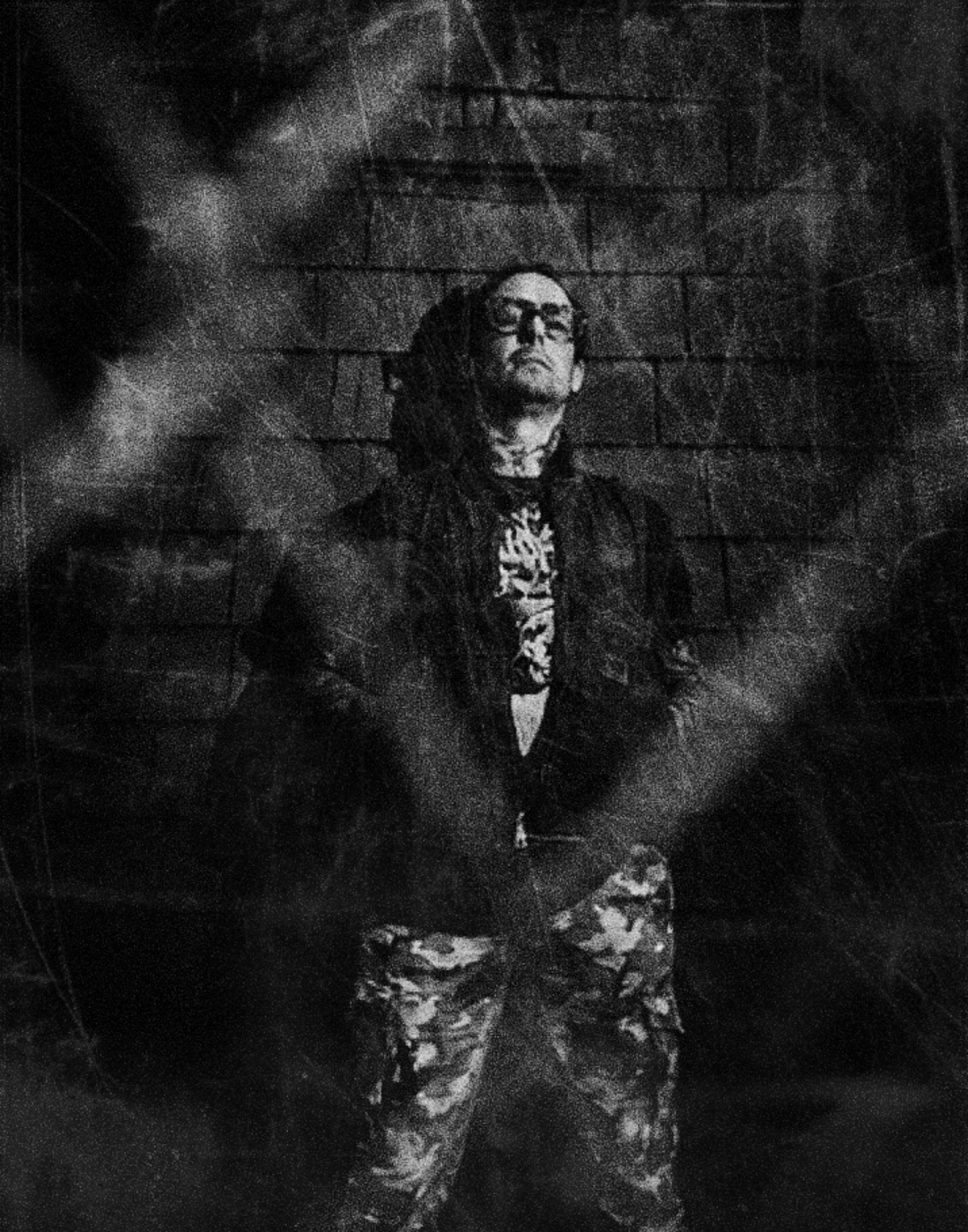
“Core Wounds” came out on 8 September as an independent release. Rozone Records is the name Mike created for his own releases. He remains open to working with anyone who hears something in the record and wants to help take it further. Mike made the artwork himself, and the two black-and-white press photos are by Meghann O’Brien.
Phage Tapes in Minneapolis are handling a limited cassette run. That started after Phage followed the Retalihate Instagram account while Mike was slowly posting teasers. He already liked the label’s work, so he messaged them and offered to send the album. The reply came quickly with an offer to do a tape and support the release.
Phage’s catalogue reaches into industrial and experimental music as well as music closer to Retalihate. Mike liked the fit. A stranger outside his own circle had heard something he initially made for himself and wanted to be involved.
“When a stranger who’s been doing something you’ve respected for a long time listens to your music and then says, I want to be involved with this, that’s incredibly validating.”
Retalihate were always supposed to play live. Even when Mike was alone at home, he wrote sections while picturing people moving, getting activated and throwing themselves into a pit. He has now started putting out feelers and having early conversations with musicians he trusts, ideally people he has played with before or already has a real connection with.
Once other players join him, they will bring their own instincts and personality to the songs. Mike sees the anger, frustration and pain in “Core Wounds” as things other people can recognise in themselves. A room full of people gives those feelings somewhere physical to go.
“For me, sharing something that feels this guttural, intense and real has a communal aspect to it. You put something difficult out into the room, other people recognize something of themselves in it, and everyone gets to move through that energy together. There’s something really powerful about being seen that way and seeing other people respond to the same things.”
“Ideally it becomes a way of taking anger, frustration and pain that might otherwise just sit inside you and turning it into something physical, collective and ultimately productive.”
The album is available at retalihate.bandcamp.com. Retalihate are @retalihate on Instagram.