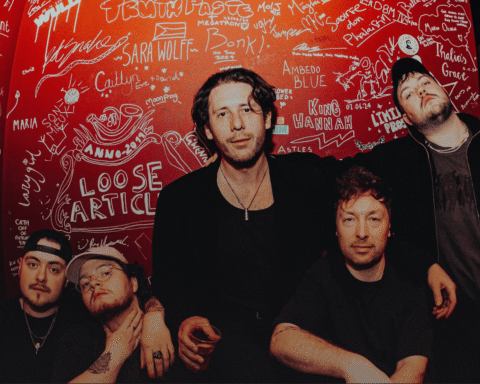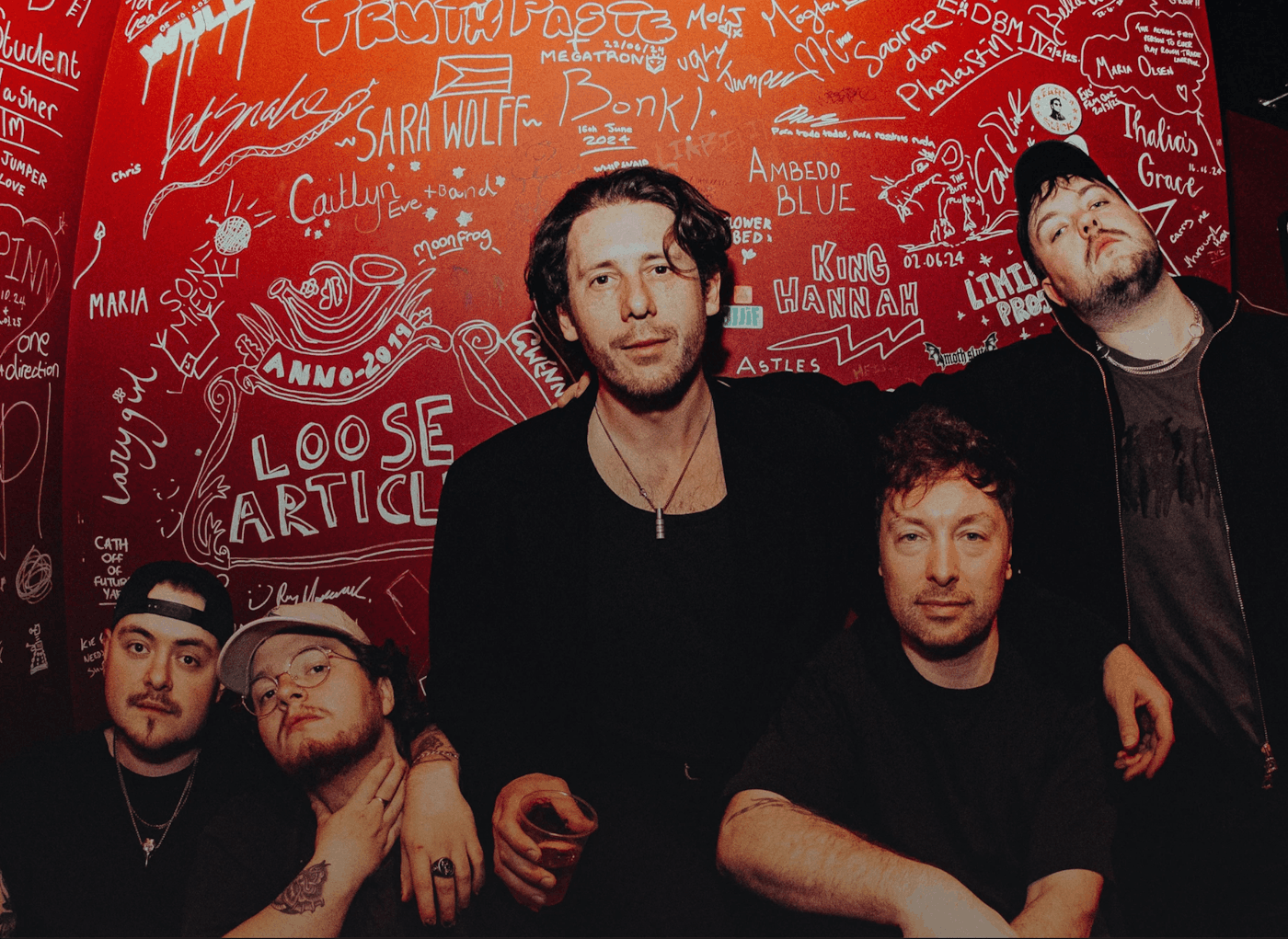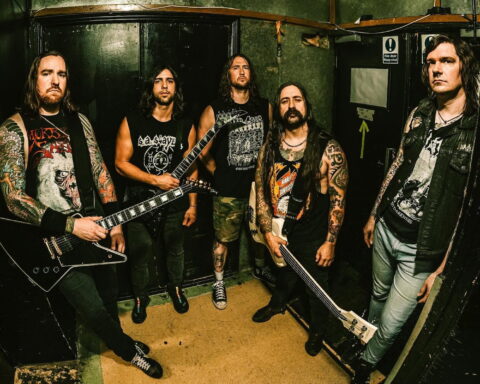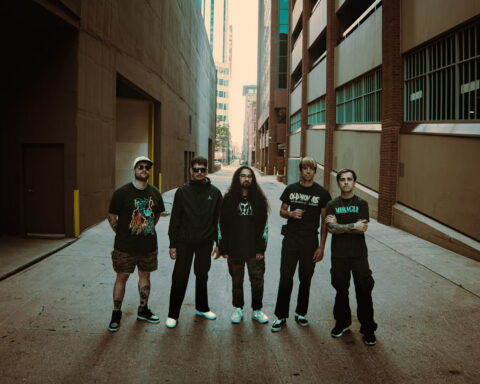


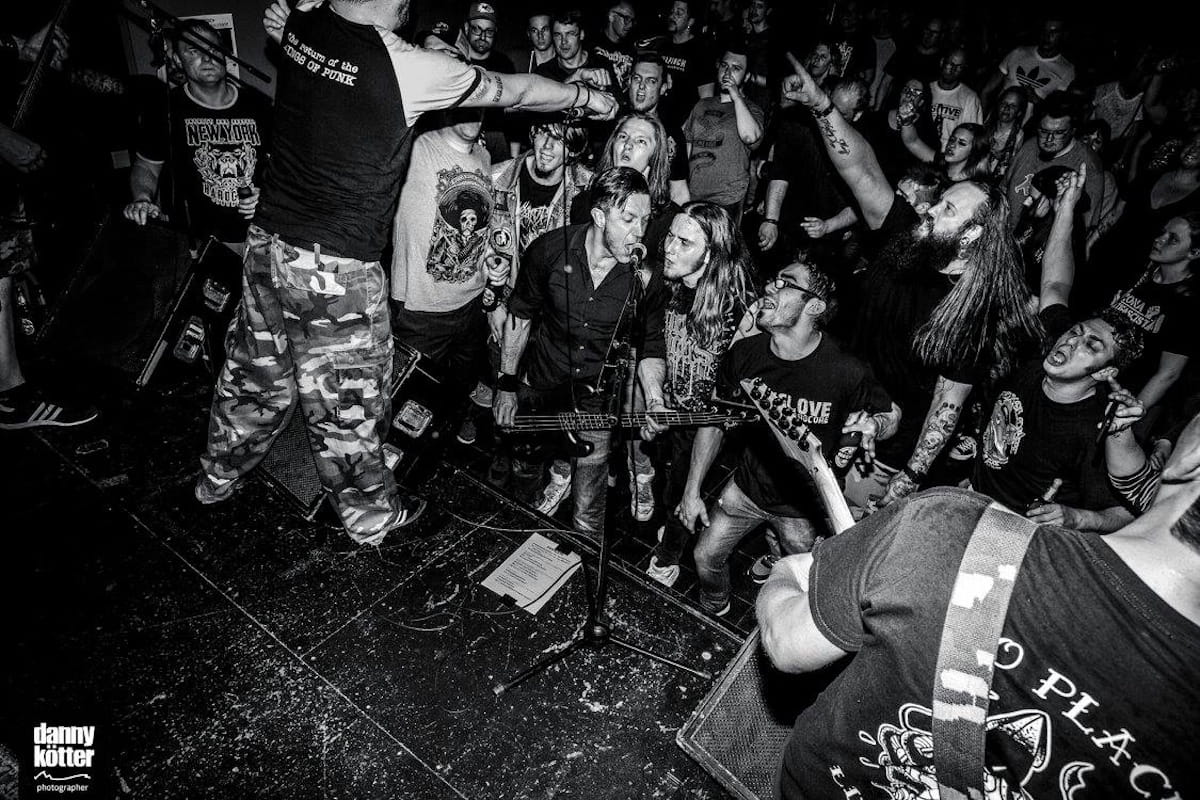
FOXGLOVE have been fitting hardcore around jobs, families and five separate calendars for years now. The Bielefeld band play direct, heavy hardcore rooted in the New York tradition, and their fourth record, “Bloodbound“, has arrived almost nine years after the previous one. They’ve had exactly the same five members since starting in 2010, though most of their history together goes back much further, to the clubs, youth centres and bands of the early 1990s around Ostwestfalen-Lippe (OWL).
For bassist and co-vocalist André Müller, that history is a big part of why FOXGLOVE are still here. Almost everyone in the band has become a father, careers have developed, family situations have changed, and there have been serious personal and health problems along the way. They have quite different lives outside music, and keeping a band going means accepting that some weeks, or even whole stretches of time, there are other things to deal with.
“FOXGLOVE is probably the one constant, safe harbour for all five of us while everything around us keeps changing and storms keep coming,” André says. “That is also where the title ‘Bloodbound’ comes from for us. It is not really about blood in the literal sense. It is about a connection that feels stronger than that.”
Long before FOXGLOVE, Zoshi and guitarist Frank were playing together in Reject. André was in Brace A.P., and the regional circle also included Galeforce, Just Us, Backslide, Catchphrase and Super Soccer Worldcup. These were young people playing wherever someone would organise a show, hanging out together and exchanging records and tapes. Many kept in touch long after their original bands had stopped.
Around the middle of the 1990s, some of those musicians went on to form Thumb in Gütersloh, including Reject’s former drummer and Galeforce’s bassist. Thumb later found much wider success, but the early connections were all local.
“People played in bands together, went to each other’s shows, exchanged music and simply spent a huge part of their lives together. A lot of those friendships and connections are still there today.”
One venue still comes up immediately whenever those years are discussed: AJZ Bielefeld. André remembers it as almost their own version of CBGB’s. It was the place you wanted to play when you were young and making hardcore music around the region.
“When we were young, playing the AJZ with your own band felt like the ultimate goal. If you managed that, you had basically made it.”
FOXGLOVE eventually got that show too.
There were plenty of other places keeping things going. FlaFla in Herford and Weberei in Gütersloh are both still around, while JZ Oerlinghausen continues hosting concerts. ZAK in Bielefeld-Jöllenbeck and smaller youth centres also provided opportunities for bands that needed somewhere to play.
Bastard Club has remained important for hardcore and metal, and André gives particular credit to Schnalli for continuing to organise shows over so many years. FOXGLOVE recently played there with Cro-Mags, which was a pretty good reminder that the band can still get just as excited about certain invitations as they did years ago.
Kulturwerk in Herford has also been part of their more recent history. They played there with Slapshot a few years back and had a Sick Of It All show booked that unfortunately never happened.
Forum in Bielefeld maintains a broader alternative cultural programme, with hardcore forming one part of a much wider picture.
The band’s connections now extend well beyond OWL. Out Of Step from Hamburg, Keiler from Osnabrück and Ash Return are among the friends they’ve made elsewhere in Germany, with Dedication Records providing another link between bands.
As for the younger generation around Bielefeld, André readily admits that FOXGLOVE don’t have the same close view of the scene they had at 18 or 20. He mentions Primetime Failure, whose skate-punk and hardcore he rates highly, their friends in Bullfinch, and ZZZ Hacker, a Bielefeld punk band active since the early 1980s.
He has little interest in joining the familiar argument that hardcore was somehow better decades ago.
“I am not really interested in the classic ‘everything was better back then’ story. Things were different. That is all.”
There is, however, one thing he sometimes misses. Finding music used to take considerably more effort. Records circulated through friends, traded tapes and increasingly terrible copies of copies. If somebody had a cassette of a band you desperately wanted to hear, you tried to get your hands on it. Owning the actual record could take years.
André spent 32 years waiting to own an original copy of the first Gorilla Biscuits 7-inch.
“Music was scarce. You had to search for it, trade it and wait for it.”
He appreciates how much music is available online now, even if instant access has changed what discovering and owning a record means. The old physical copies still have a place in his life, and that will come up again when he talks about making “Bloodbound” on vinyl.
FOXGLOVE themselves began in 2010. Even the name came from a pretty ordinary detail of their early days. Their first rehearsal room was on Fingerhutweg, and “Fingerhut” translates to foxglove in English.
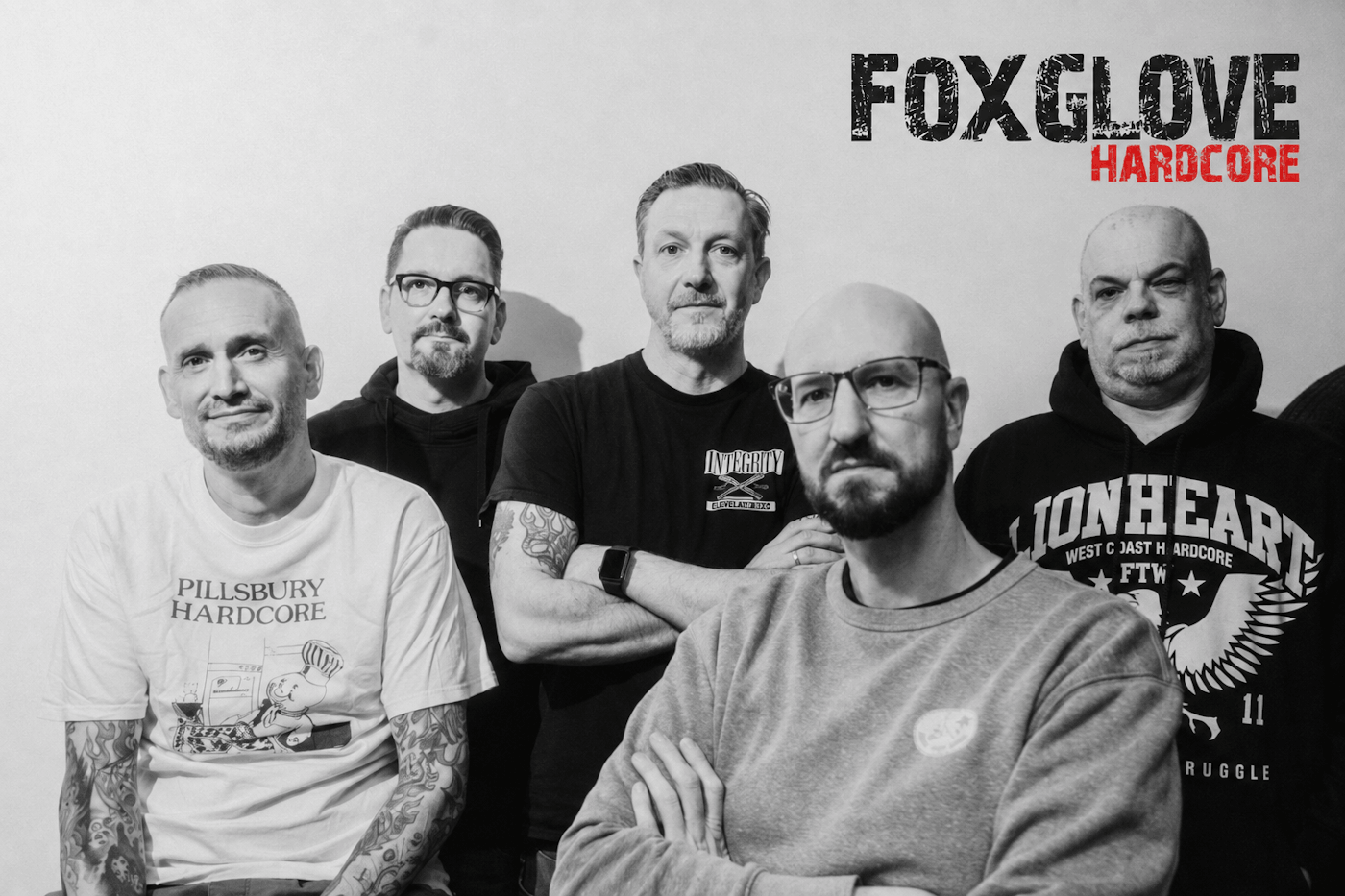
Zoshi handles vocals, Frank and Alex play guitar, André plays bass and shares vocal duties, and Robin is on drums. Sixteen years later, all five are still there.
It has occasionally been difficult to keep it that way. Members have reached points where they were exhausted, short of time or dealing with things that made continuing seem unrealistic. Some even offered to leave so the others could carry on more consistently.
Nobody was interested in finding somebody new to take their place.
“FOXGLOVE is the five of us. And that is it. Okay, maybe we are not really ‘the five boys’ anymore. :-) But if one of us leaves, all of us leave. Of course, you never know what life will bring. But honestly, I cannot imagine FOXGLOVE continuing with somebody else if one of us decided to leave. For me, this band is these five people.”
That has practical consequences. If one member cannot make a show, they turn it down. If somebody needs time away because of work or family, everyone else waits. André describes the band as everything from a pressure valve to a therapy centre, a rehabilitation clinic and, occasionally, a reform school.
They’re still happy to get a call about playing with Cro-Mags, of course.
Wyświetl ten post na Instagramie
Then comes the slightly less exciting job of checking whether all five can actually make the date.
“Of course we want to! Then reality immediately kicks in and we have to check five different lives, five calendars, jobs, families and everything else to see whether we can actually make the date work.”
It’s also how they ended up spending almost nine years between “Straight From The Heart” and “Bloodbound”.
There was no formal break. Families grew, work became more demanding, and Covid interrupted almost everything. For a while during the pandemic, the band barely felt like making music. They eventually amused themselves by re-recording an older song, “Stay Gold, Ponyboy”, with new lyrics about the pandemic and renaming it “Stay Home, Ponyboy”.
Making another proper record took longer. A lot had happened in the meantime, including some very difficult periods for individual members, and by the time they were writing “Bloodbound”, they had plenty to draw on.
“Bloodbound would not be the record it is today if we had not already experienced so much together and moved through so many different stages of our lives side by side.”
The lyrics are personal throughout. “Darkness” and “Drowning” deal with periods of fear, frustration and being so overwhelmed that finding a way forward seems almost impossible. Other songs deal with family, loyalty and the friends who remain close when things become difficult.
André and Christian Zocher wrote the lyrics, while all five members share the songwriting credit. Musically, FOXGLOVE have stuck with the classic New York hardcore approach that has been part of the band from the beginning: heavy, direct guitar riffs and a straightforward commitment to playing the music they grew up with.
The title track is particularly close to the circumstances of their lives now. André thinks listeners can take their own meaning from the songs, including the familiar hardcore ideas of standing together and having each other’s backs.
“Bloodbound can mean your family. Your children. Your partner. Your friends. The people who stay in your life and carry something with you when things get difficult. We are not interested in telling people exactly how they are supposed to understand our lyrics.”
André also thinks the record probably owes its existence to the long time it took to make. The five spent those years dealing with the sorts of experiences that eventually became songs. They still had the band to come back to whenever they could.
Wyświetl ten post na Instagramie
Recording meant returning to another old friend, Marco Mischak. FOXGLOVE have worked with him since “Impact Winter” in 2015, and he handled the production, recording, mixing and mastering of “Bloodbound” at The Marco in Bielefeld.
After working together for more than a decade, Marco knows the band well enough to understand how they want their records to sound, including which rough edges they want to keep and which parts need extra work. They’ve never needed to start over with somebody new every time they make another release.
Danny Kötter returned for the photography and artwork after previously working on “Impact Winter” and “Straight From The Heart“. Charlie Gogo contributed the fox illustration. These are people who have been involved with FOXGLOVE for years, and the band continue asking them back.
The same applies to Michael Deppe and Dedication Records. FOXGLOVE had released a demo CD before Michael started the label, then became the first band he put out. They’ve stayed with Dedication ever since “Impact Winter”. André values having a small DIY label that knows the band and continues supporting them whenever they eventually have something new to release, even if that only happens once every several years.
The release also arrives at a point when the members have spent considerably longer around hardcore than they ever could have imagined as teenagers. That experience has changed the way André thinks about some of the old scene slogans.
One song worth returning to is “Scene Report“, whose lyrics were written by Zoshi. Much of what he wrote back then still makes sense to the band. André is less certain about treating “UNITY” as the one word that should define what everybody involved in hardcore ought to believe or achieve.
“For us today, it is probably more about connection, loyalty, respect, friendship and shared history. Especially that idea of a shared past has become increasingly important to me.”
He has been hearing “Support your local scene” for something like 35 years, and he still believes in the principle. He also knows that local bands can struggle to attract audiences while larger American hardcore acts, especially those from New York, tend to get far more people out of the house. There’s no bitterness in how he describes it. Twenty, 50 or 100 people making the effort to come and see FOXGLOVE is enough to make the band happy. Sometimes they are still surprised anyone shows up after all these years.
André isn’t particularly worried about whether there will be enough young hardcore bands to keep the music going. He expects people will always find something in it. Some of the other music and subcultures he was into as a teenager gradually fell away, but hardcore stayed.
He is a little less enthusiastic about the way social media has changed everyday interaction. There’s more pressure to display what you’re doing, present yourself and keep everybody informed. He knows FOXGLOVE participate in the same thing, even if they’re considerably less skilled at it than some younger bands.
He also sees very little value in older people constantly telling younger generations how they ought to behave. He’s old enough to remember how that usually went when somebody tried telling him what to do.
“When we see young people at hardcore shows today, it simply makes us happy. Because we know what kind of strength hardcore music can give somebody and what an enormous role it can play in a person’s life.”
Now and then their own kids come to a FOXGLOVE show and grab the microphone to shout a few lines with them. Those are among the moments André especially appreciates, and he doesn’t need to turn every one of them into something for social media.
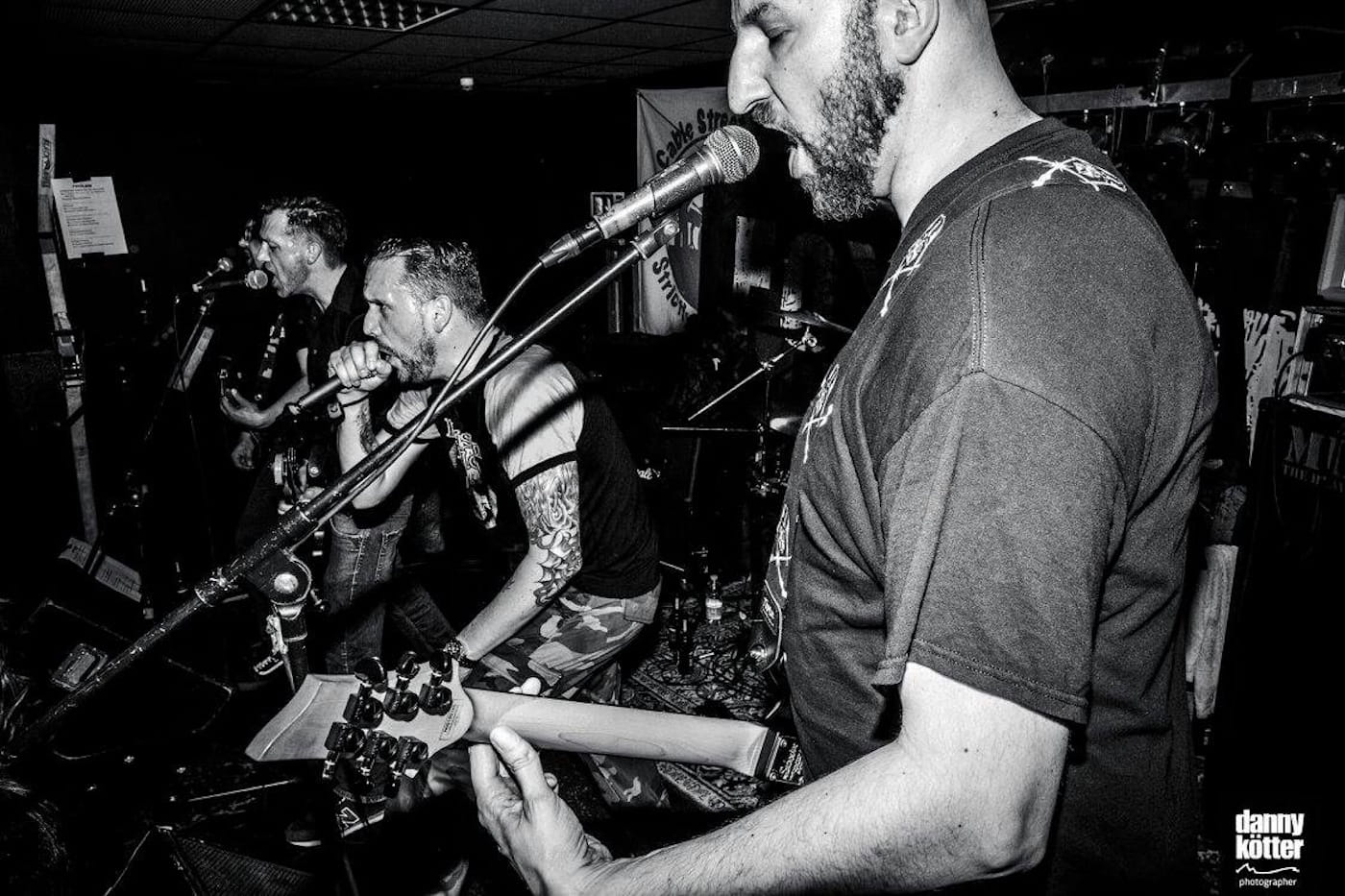
If FOXGLOVE wrote “Scene Report” again in 2026, André thinks it would sound different. The years have made him calmer about how other people experience hardcore, and more interested in sharing what it has meant in his own life.
“Listen to it. And make something of it yourself.”
There are subjects, however, where he has no intention of staying quiet. Politics is one of them, especially given what he sees happening in Germany.
“In times like these, I think it would be fatal to remain silent.”
André believes political forces and ideas are gaining influence again in Germany that threaten human dignity, freedom, diversity and the ability of people to live without fear of discrimination. He connects that concern directly to Germany’s history and the responsibility he believes people have to speak up when exclusionary ideas begin gaining acceptance.
He also has a particular reading of the old hardcore “us against them” mentality. Being part of a scene means sharing certain values, and sometimes those values require people to be clear about where they stand.
“For us, it should never be about saying: ‘We are better than you because we listen to hardcore.’ It is about being able to say clearly: There are values we will not negotiate.”
André names human dignity, freedom, diversity, respect and the right to be different among those values. In his view, the sense of belonging that hardcore has always offered can also encourage solidarity and resistance when those rights are threatened.
“Considering German history in particular, I believe we have a responsibility not to look away when ideas based on exclusion, contempt for others or the destruction of freedom and diversity begin to gain acceptance again.”
It’s a subject he approaches personally, while recognising that every hardcore song does not have to carry an explicit political message.
“Because there are moments when silence itself becomes a statement.
And I do not want ours to be silence.”
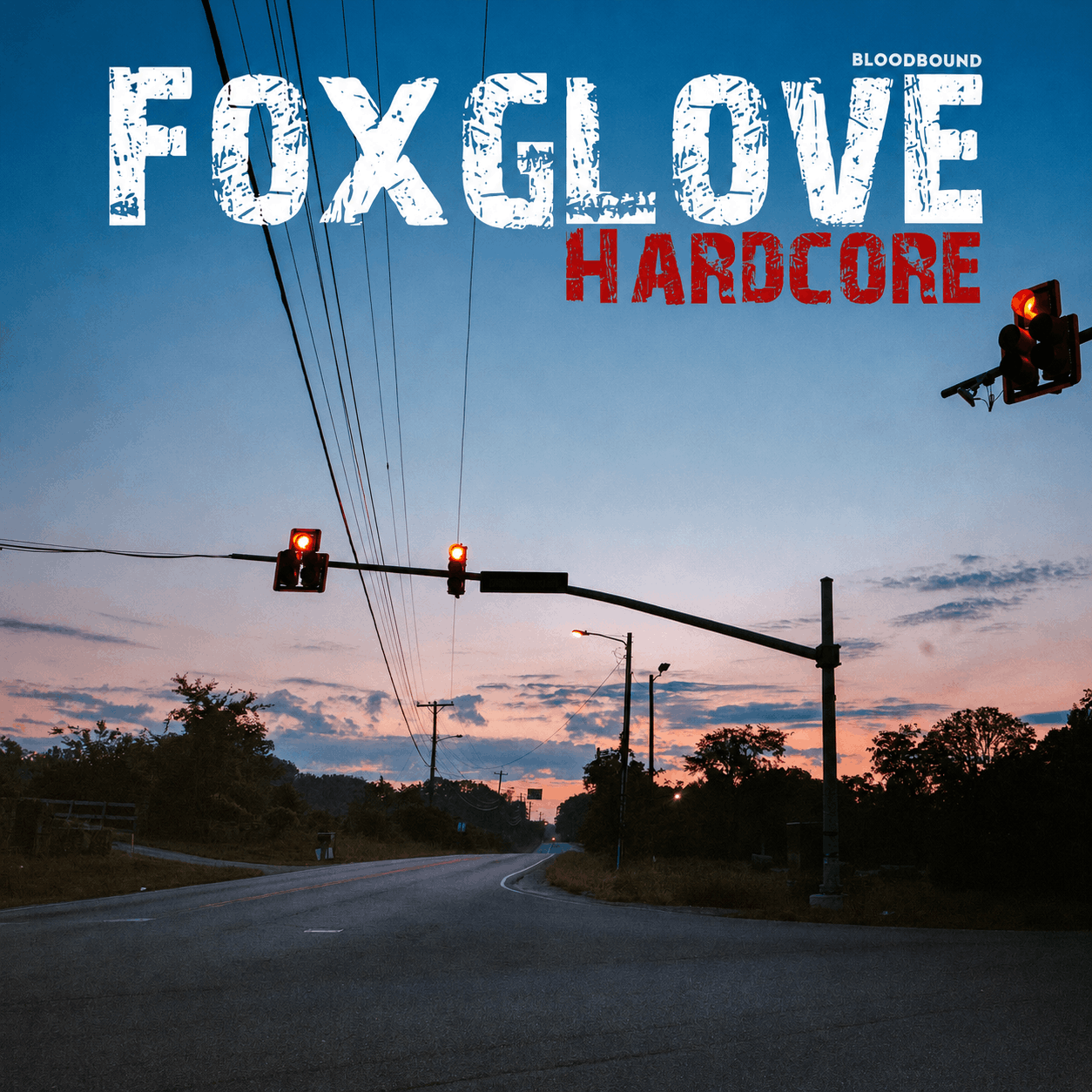
Back with the record itself, FOXGLOVE have finally done something the five of them had wanted to do for years: put out their own 10-inch.
They’ve released CDs and a 7-inch before, but a 10-inch had remained on the wish list. They’re all still fond of vinyl and of the experience of owning a record, taking it out of the sleeve and putting it on the turntable. André’s 32-year hunt for that Gorilla Biscuits single makes a bit more sense in this context.
Coretex is handling distribution alongside Dedication Records, continuing another relationship with a name that has been part of punk and hardcore for decades.
The blue vinyl, Marco’s work in the studio, Danny’s artwork and Michael keeping the label going all involve people who have been working with FOXGLOVE for years. They keep making records with friends they trust, whenever the five of them manage to get their lives lined up long enough to do it.
André has a simple reason for being happy about the finished physical release.
“And, after all these years, finally being able to put our own FOXGLOVE 10-inch between all those records that shaped us feels pretty damn good.”
“Bloodbound” was released on September 11, 2026 via Dedication Records. The limited blue 10-inch is pressed in 300 copies, with distribution through Dedication Records and Coretex. The full record can be streamed or ordered through this link, and the title track is available on Spotify.