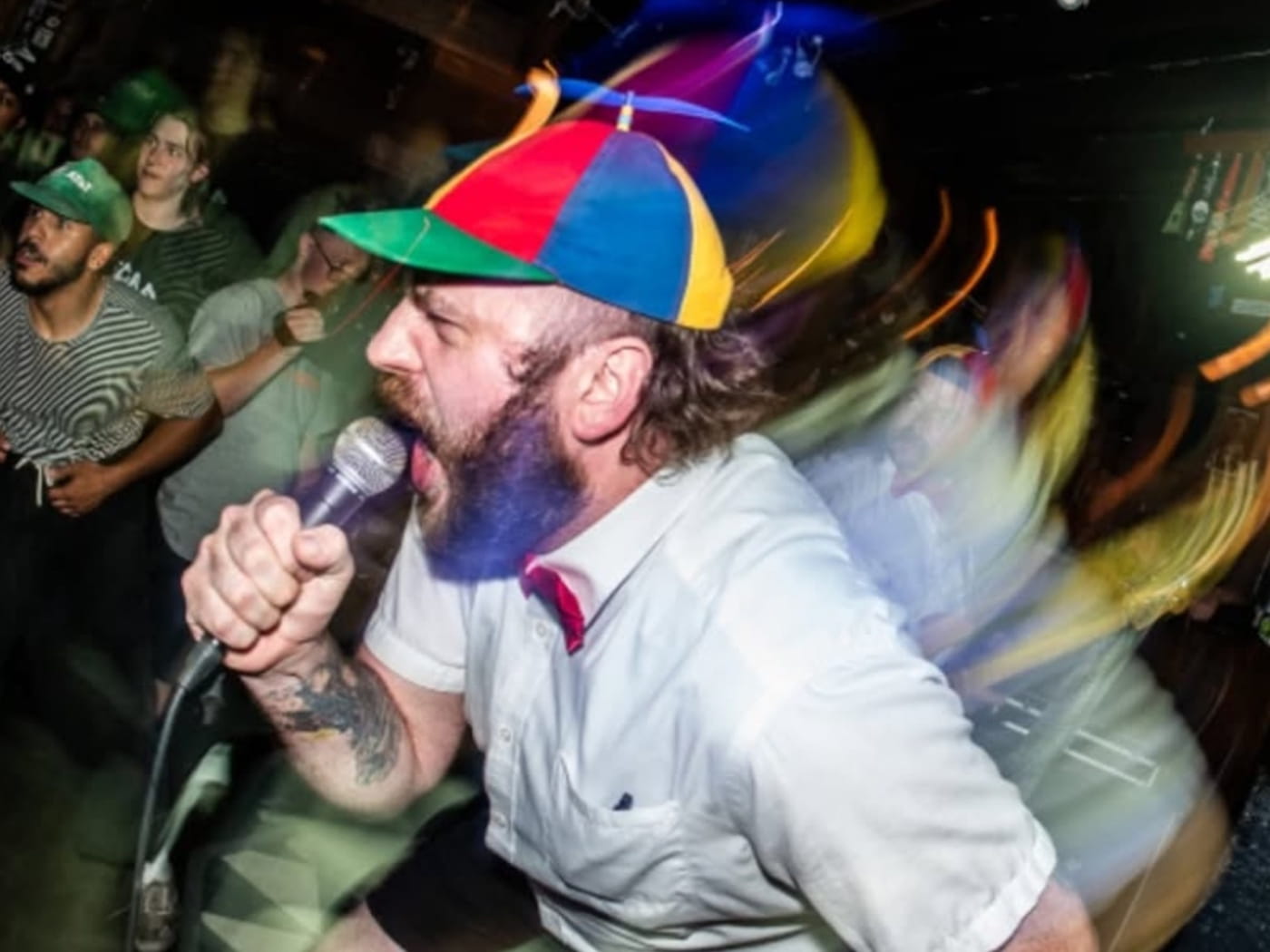


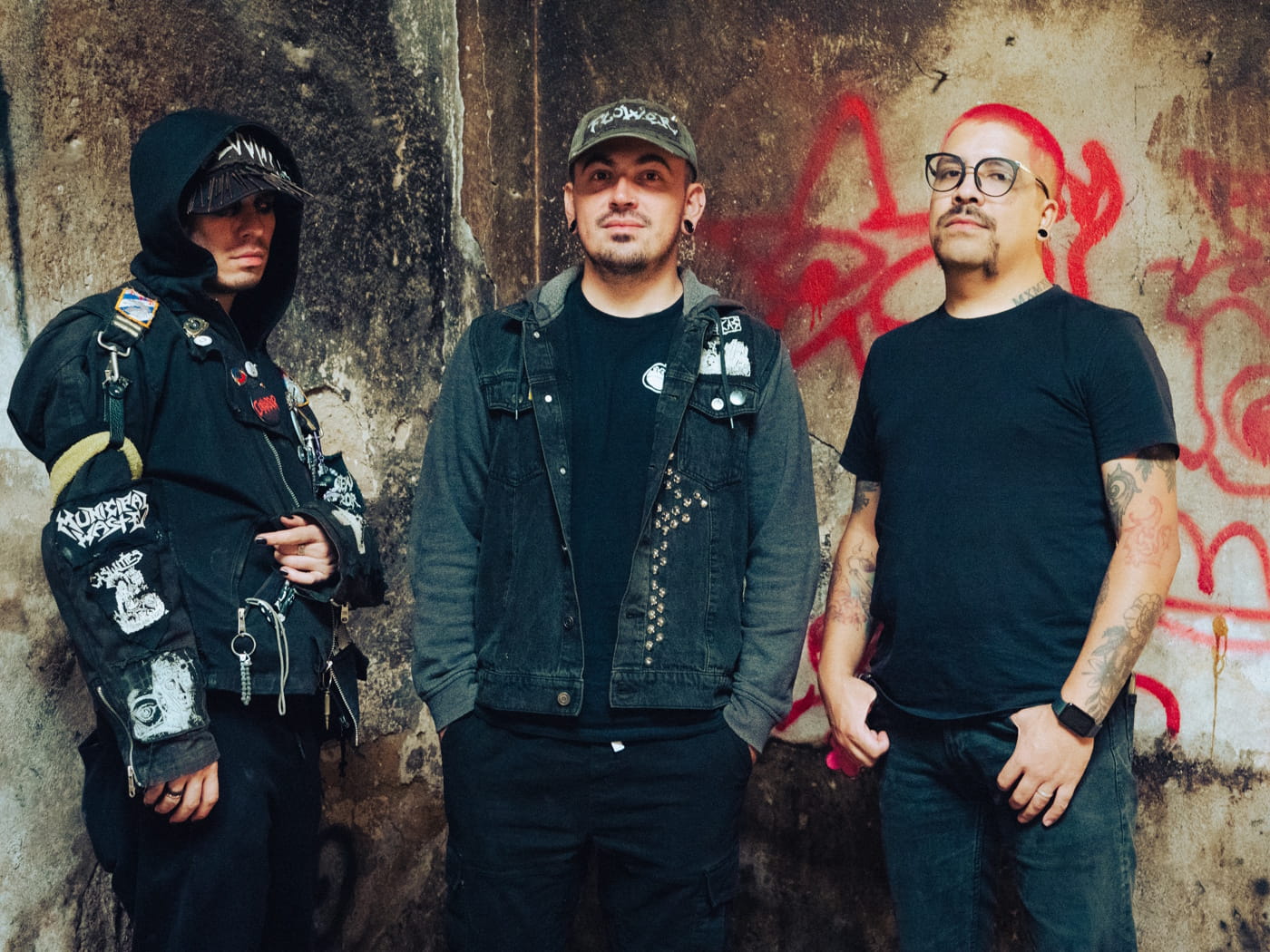
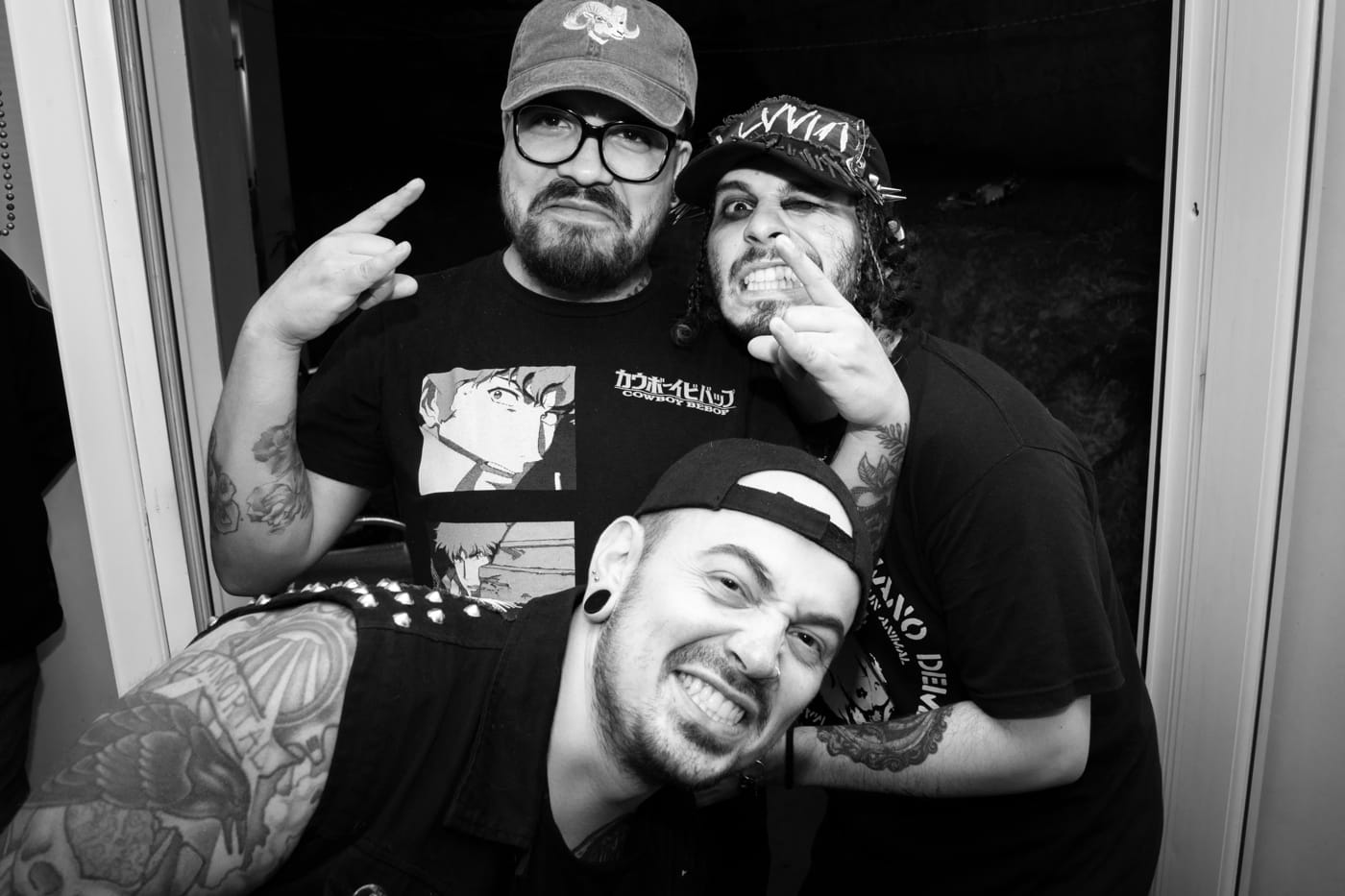
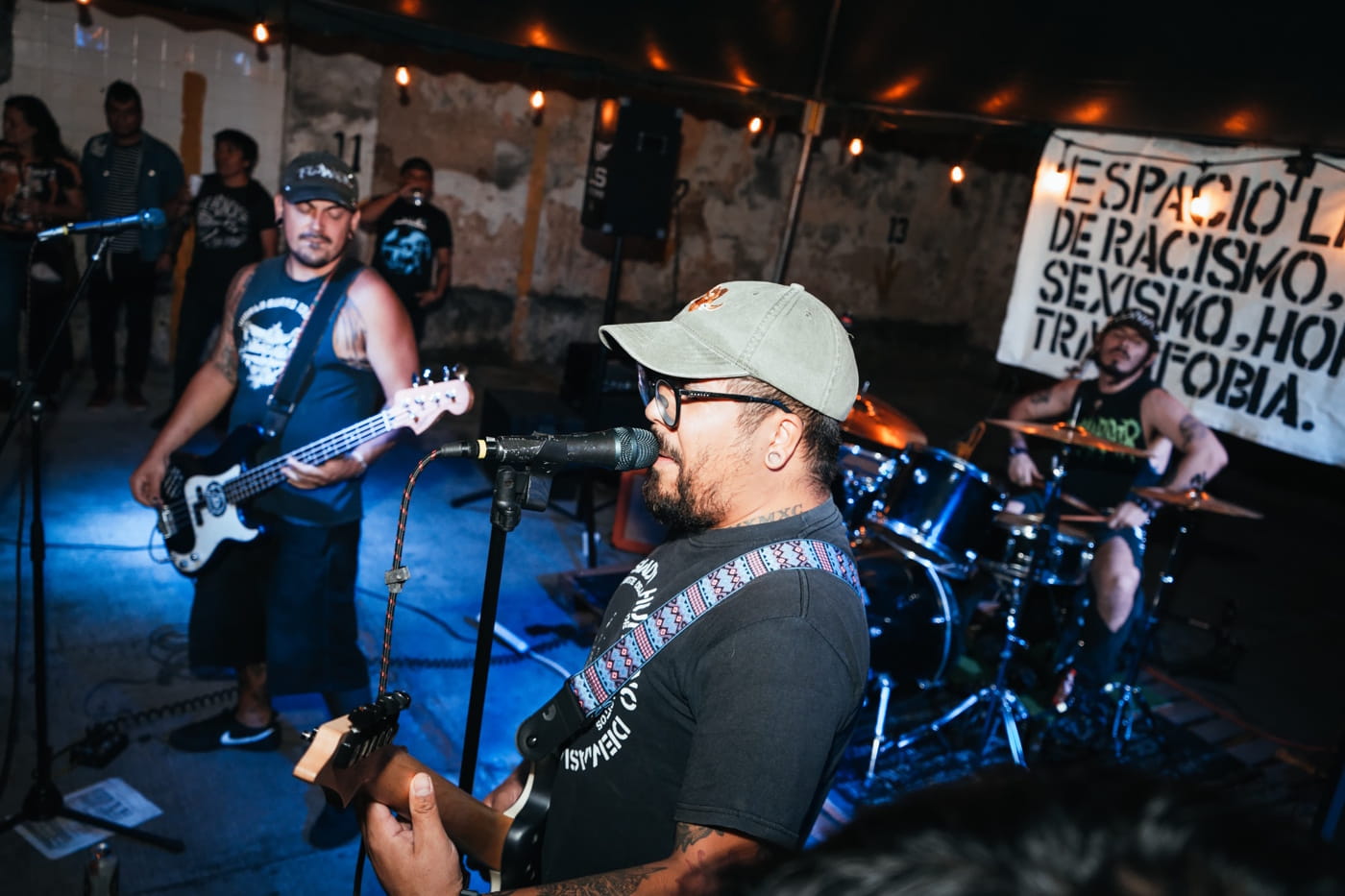
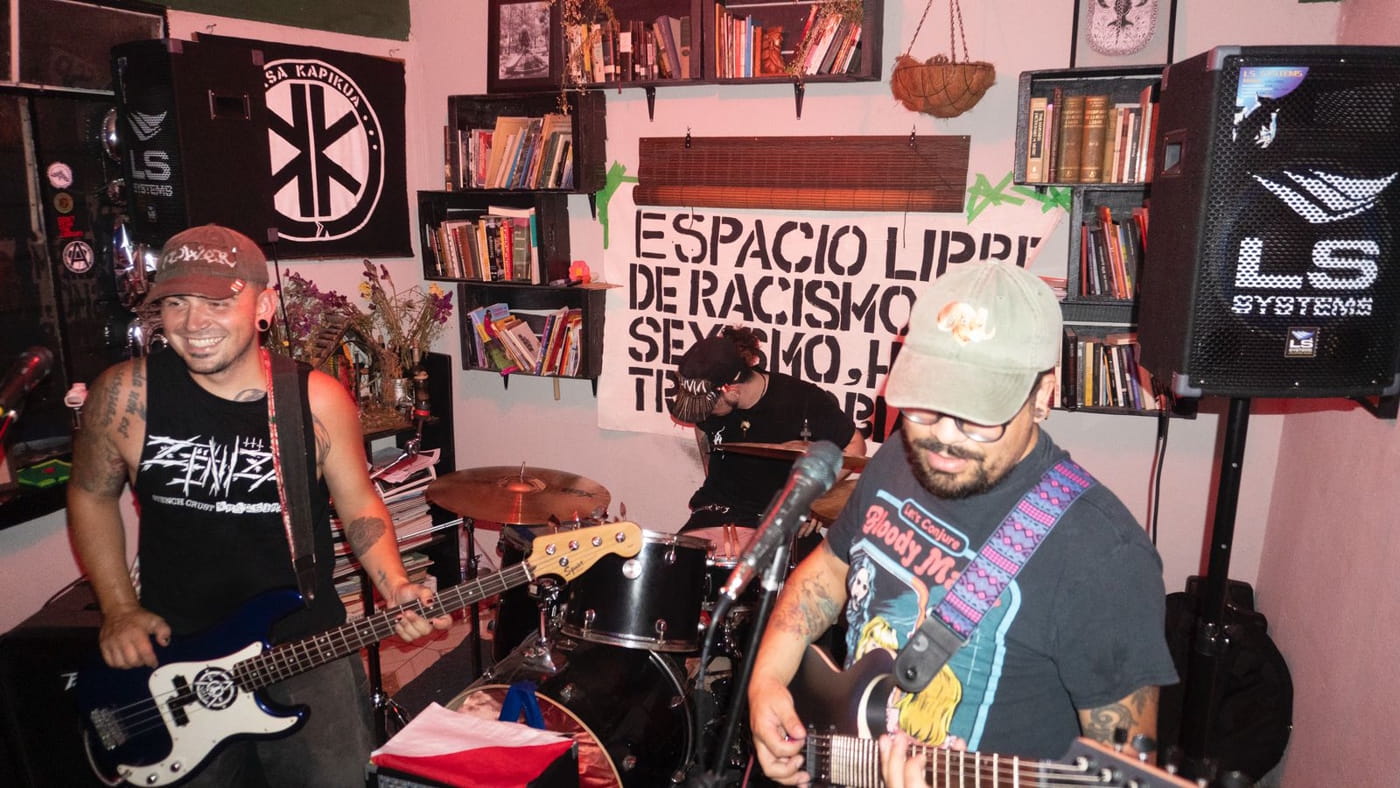
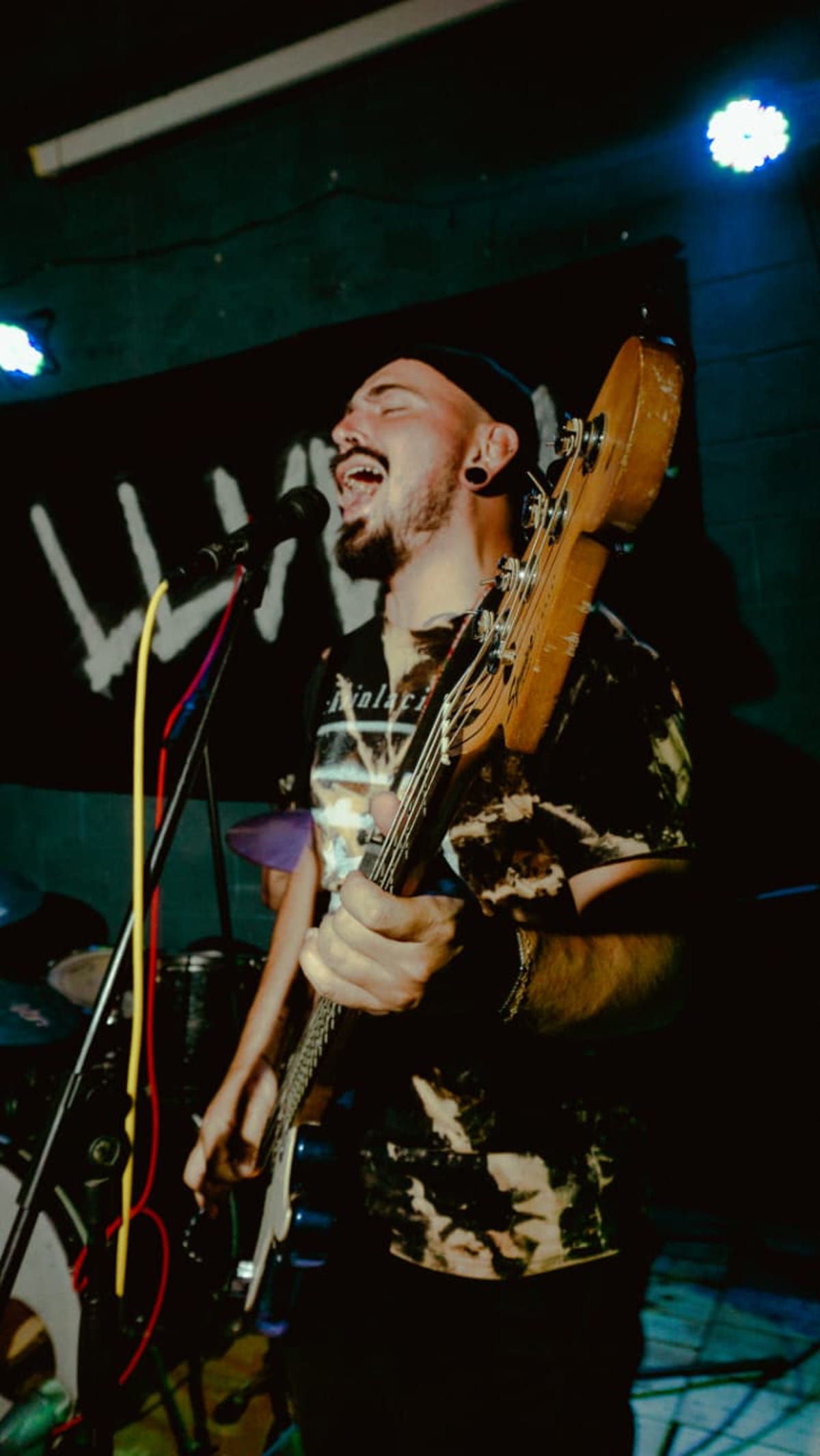
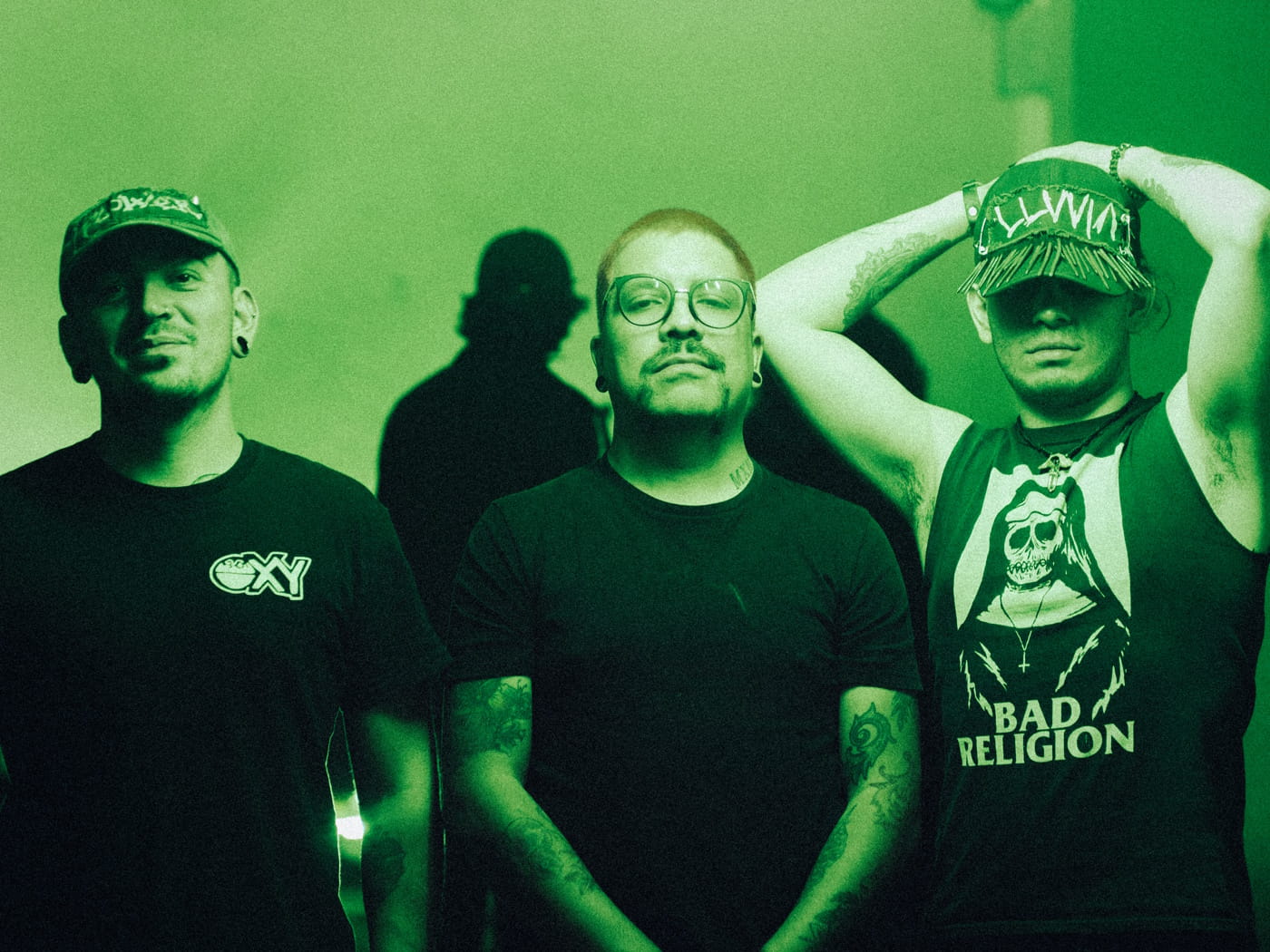
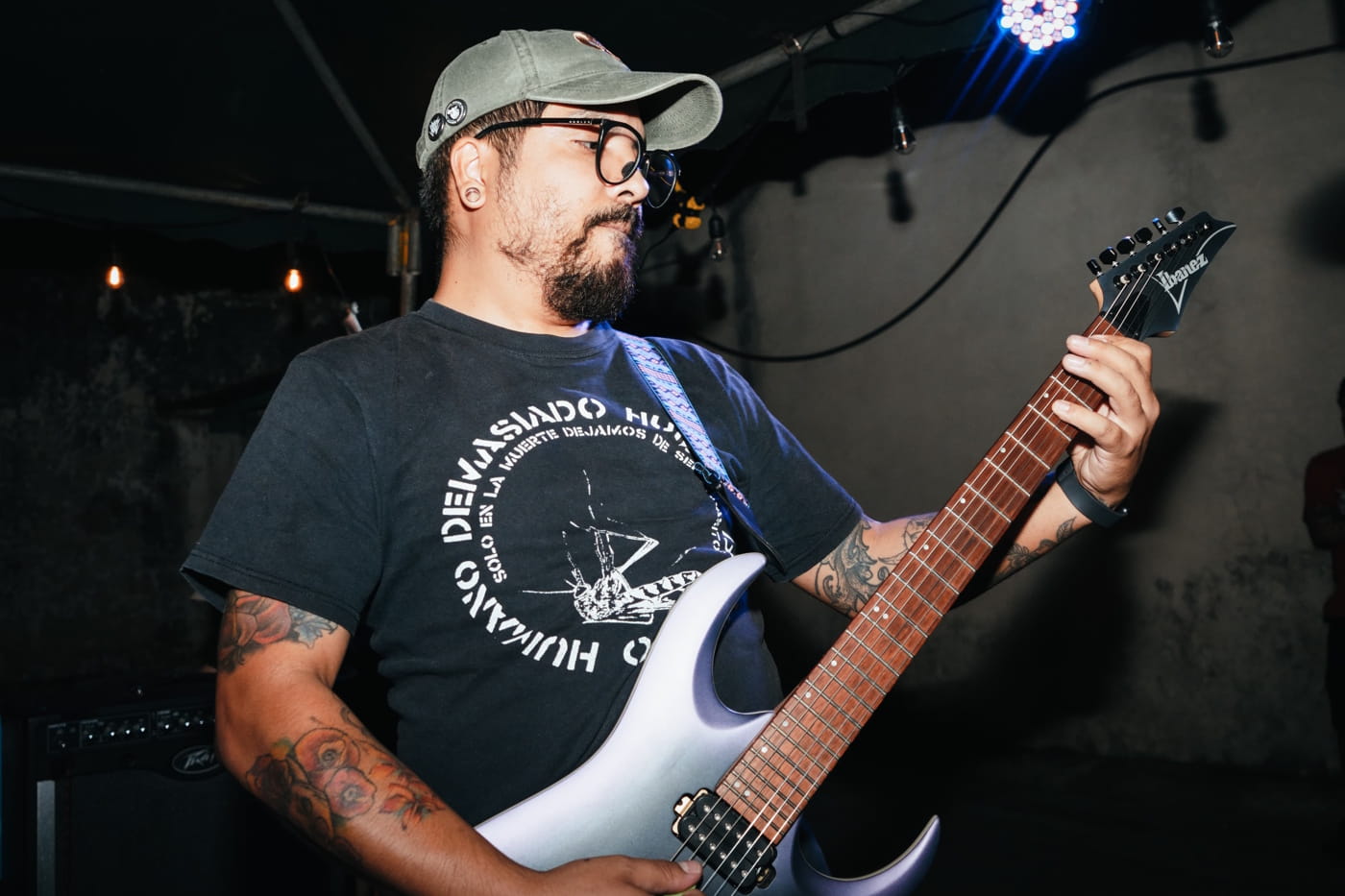
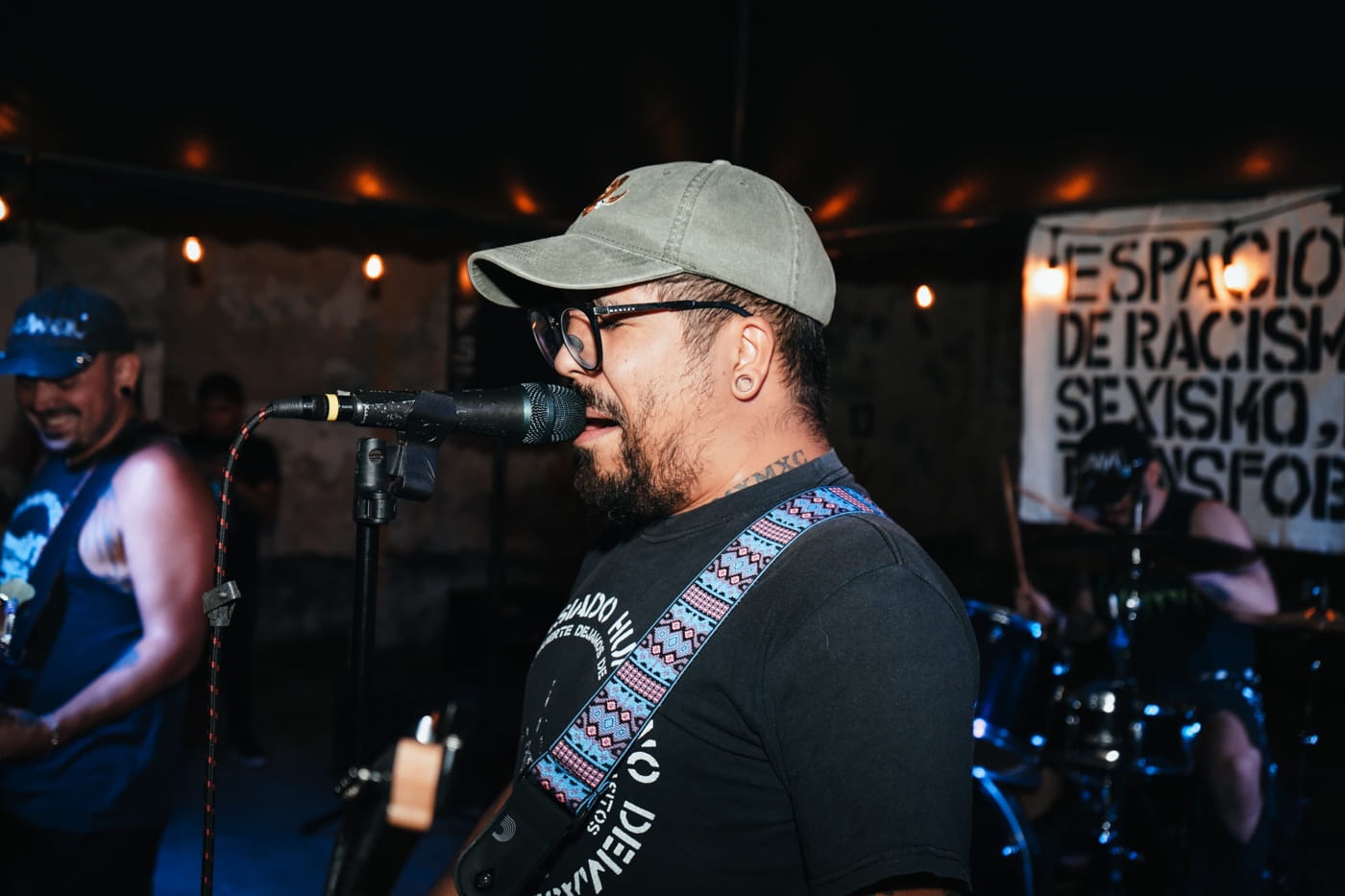
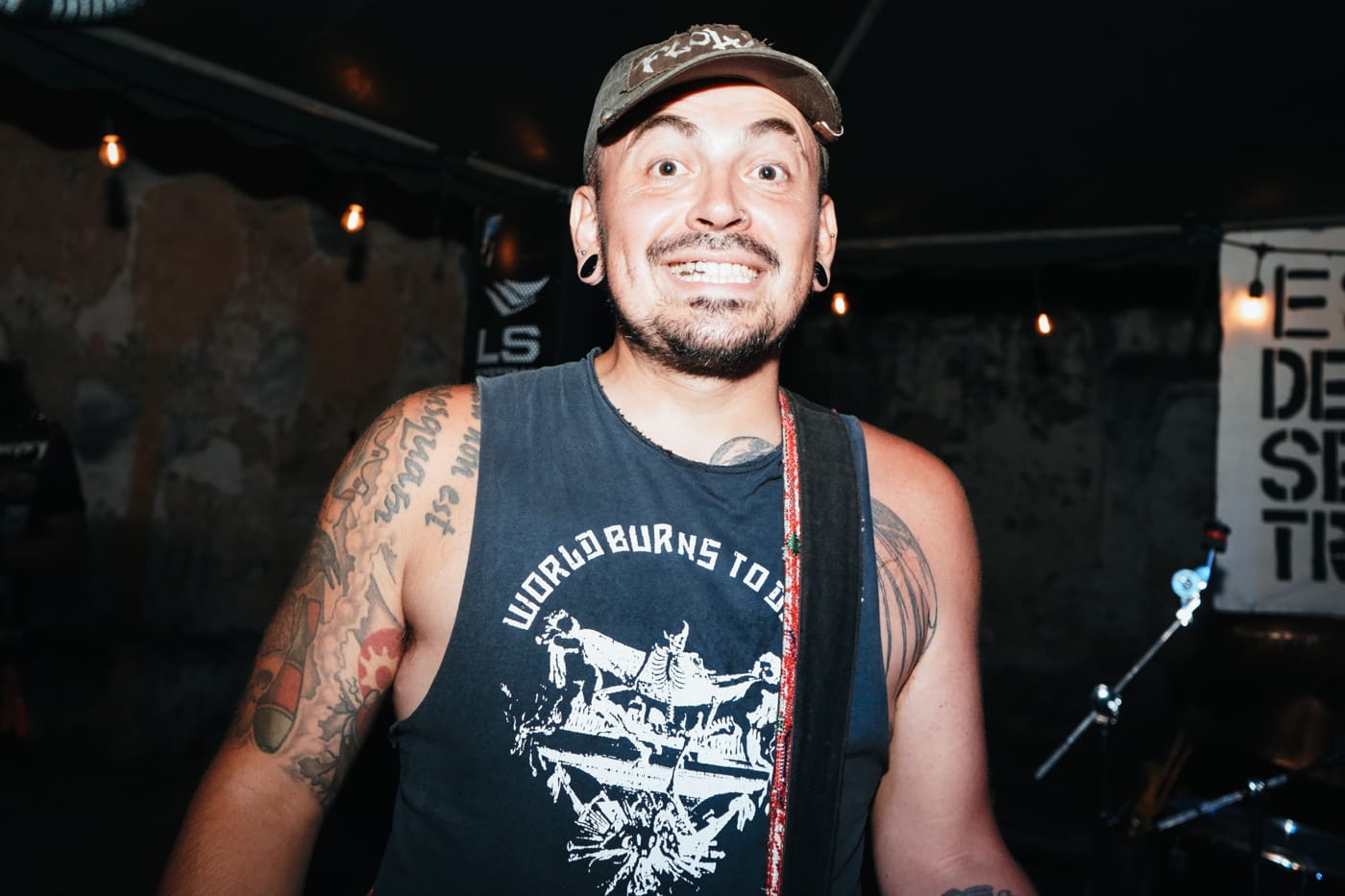
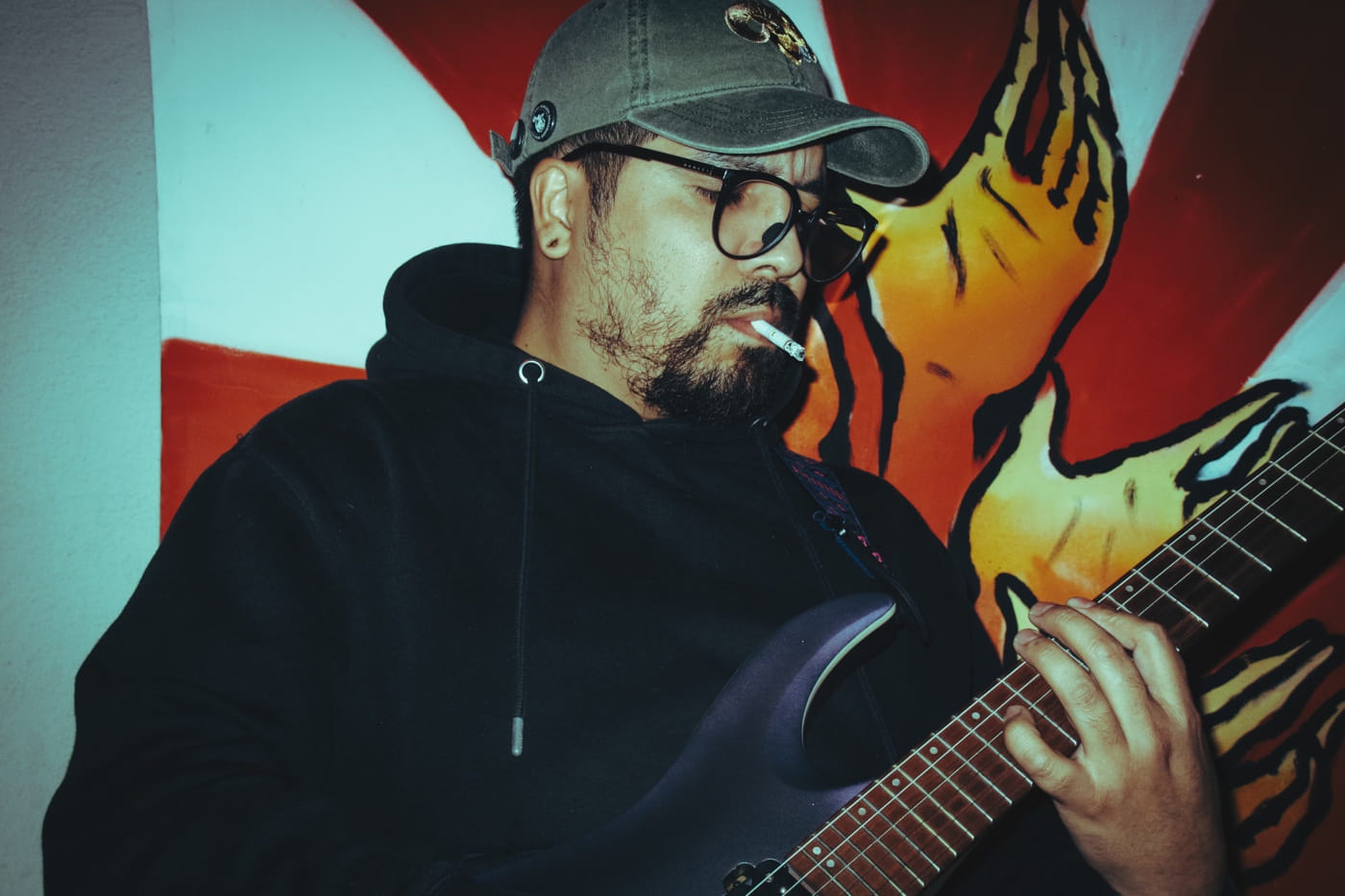
Guatemala crust punks LLVVIA are three people pulling the same band in slightly different directions. James runs the punk house and community space Kasa Kapikúa in Guatemala City’s Zona 1, and spent years playing in local punk bands Warning and Demasiado Humano.James runs the punk house and community space Kasa Kapikúa in Guatemala City’s Zona 1, and spent years playing in local punk bands Warning and Demasiado Humano.
Fidel has been around the local punk scene for more than fifteen years and still won’t call himself a punk, and 25-year-old Asko came in from Boca del Monte through conservatory drumming, metal and a younger DIY crowd. Their self-titled debut arrived on August 8 with eight songs about rain, grief, religion, shitty jobs and the country around them, and the three of them still disagree about how some of those songs were even written.
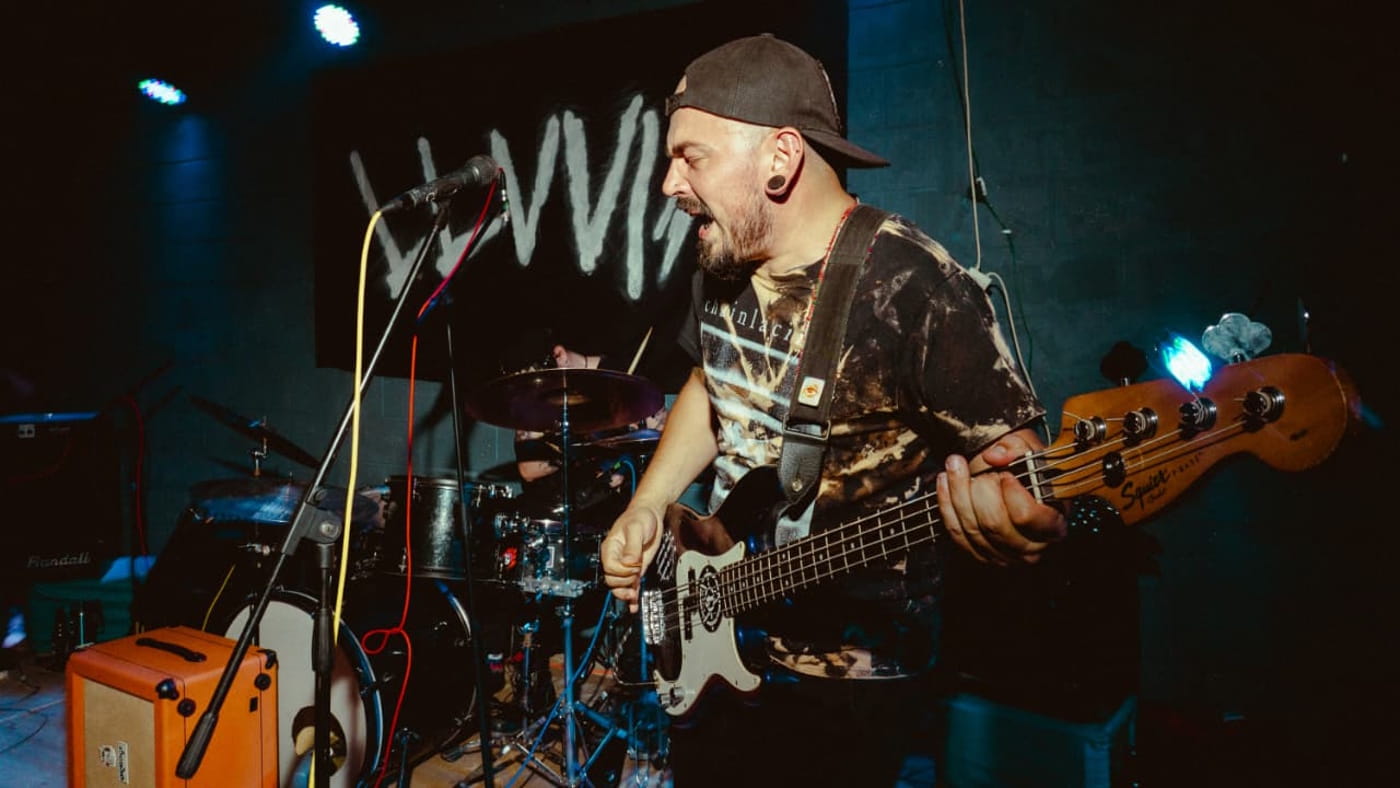
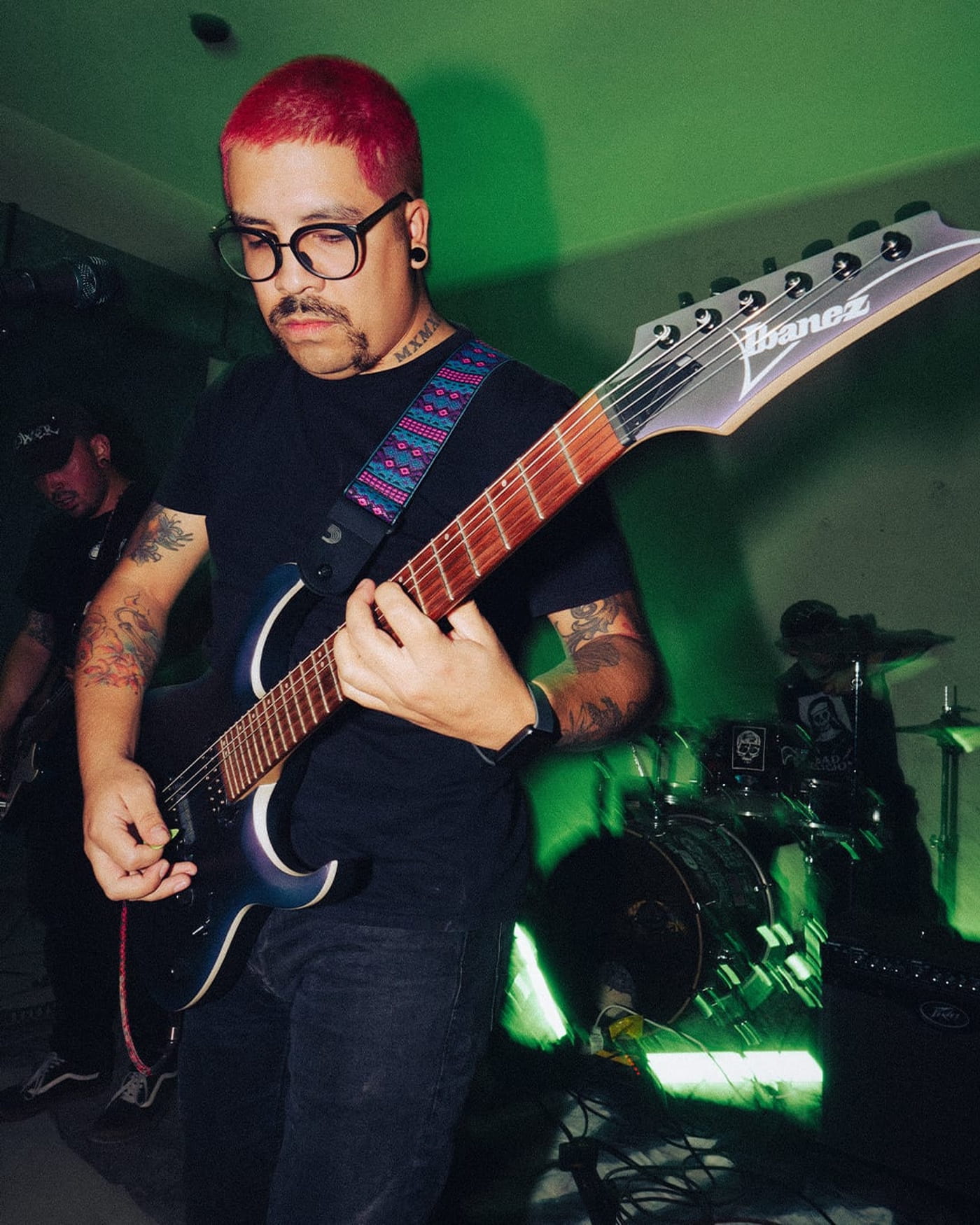
The setup is basic: James on bass and most of the vocals, Fidel on guitar and vocals, Asko on drums. LLVVIA started with the idea of getting melancholy and aggression into the same songs.
Asko wanted the speed and darker pull he had started finding in crust punk, Fidel brings a brain full of crust and d-beat but also power metal, hip-hop and drum and bass, and James has the older Guatemala punk years sitting behind him. James also has to scream most of this stuff while playing bass, which is one reason lyrics get changed around until he can physically pull them off.
They’ve argued plenty in the process. Fidel actually left the band for a while after problems around how LLVVIA were being run, what went onto social media, the direction of the music and the stuff they wanted to talk about. He came back. The argument was settled enough to keep going, though James and Fidel came away with two different understandings of how the band would work afterwards. That’s pretty much LLVVIA all over.
Even the rain means something slightly different once you know where the band are from.
The line that eventually gave LLVVIA their name, “que venga la lluvia a llevarme de acá“, existed years before the album. James wrote it for a fanzine. Cambray II, the community destroyed by a landslide in 2015, stayed in his head afterwards.
He was 22 and at university when it happened. One of his sociology teachers brought the disaster into class. Most of the other students were younger and, in James’s memory, not especially interested. What stuck with him was the story of people seeing an image of the Virgin Mary in the remains of the collapsed cliff.
“I didn’t see a fucking miracle and I remember it pissing me off.”
James later used an image connected with Cambray II for the artwork of LLVVIA’s “sentir el dolor” demo.
The old fanzine line ended up inside the opening song on “LLVVIA”: “Que venga la lluvia a llevarme de acá.”
He doesn’t have to invent a flood as punk imagery. In Guatemala, rain can actually wipe out homes and whole communities. James talks about those disasters alongside corruption, bad education, desperation and people being forced to live somewhere unsafe because there aren’t many other options.
Before the album was finished, LLVVIA had already written a version of this idea for a Casa Inhabitadx art event. The old text asks, “¿Qué pasa cuando una nube aparece en el cielo? ¿Agradecés la sombra o temés la tormenta?” Elsewhere: “Una lloradita y a seguir.” Have a little cry and keep going.
James later reworked that text for the album and says he’d barely change the old version now. Guatemala has the “eternal spring” nickname. LLVVIA kept staring at the amount of rain, the amount of crying and the lack of much changing underneath it.
James first found Guatemalan punk from the US through MySpace around 2006 or 2007. His mother is Guatemalan, his father is American, and he grew up mostly in the States as a military brat. Desadaptados and Disvergue gave him an early way into a country he was trying to understand from somewhere else.
Then he actually moved there.
He arrived in Guatemala in 2010, aged 18, and knew basically nobody in punk. In 2011 he met Aldo Alemán at the National Conservatory of Music and ended up singing in Union Stricken. Bass was what he really wanted to play, so after a Union Stricken set in 2012 he grabbed the microphone and announced that he was looking for a band.
Héctor Warning and Julio “Pijuy” came over that same night.
James auditioned for Warning before properly understanding how far back the band went. Héctor was also behind the Mohawk punk shop and had run Stage Punk shows for years. James suddenly had a seat inside a part of Guatemala punk that had been moving long before he got there.
He kept the useful parts.
“I guess the main things I learned from Hector and the whole Stage Punk era was to keep it DIY and keep it accessible.”
He also spent around a decade watching local bands get paid fuck all.
After Warning came occasional show organising, Cirugía, Ausense and Demasiado Humano with Edi and Camilo. By 2021 he had enough friends, contacts and years in that circuit to open Kasa Kapikúa.
Fidel’s route started in Mixco, which he describes as a ciudad dormitorio, basically a commuter town. Living there mostly made joining the scene harder because so much of it happened in Zona 1.
Before social media took over, you found gigs through photocopied and handmade flyers stuck to lamp posts and payphones, or because somebody told you. Guatemala didn’t have a fixed chain of punk bars. Punk ended up sharing whatever alternative spaces existed with metal, rock and hip-hop.
Los Katrines were a ska band made up of people from that punk circle. Fidel joined on guitar without actually knowing how to play guitar.
That worked out.
He later started Jesvs Carrera with Edi, the trumpet player from Los Katrines, and Manny. Years of doing that convinced him he didn’t need formal training before making music. Find people, figure out the common ground, play.
Fifteen-plus years later, he still has very little interest in turning any of this into an identity.
“I really don’t consider myself to be punk even though I share many of the political values and sentiments.”
Power metal can interest him as much as crust. Hip-hop and drum and bass are in there too. He doesn’t listen to much traditional punk outside crust, d-beat and hardcore. LLVVIA are absolutely a punk band in his mind, but he doesn’t want the word attached to himself as some kind of badge.
“I’m just a guy who participates in these spaces, that’s all.”
His definition of punk is still pretty demanding. DIY, community, a politically committed way of looking at the world, workshops, reading groups and support for struggles that have nothing to do with music all count. He gets pissed off when politics stops at slogans.
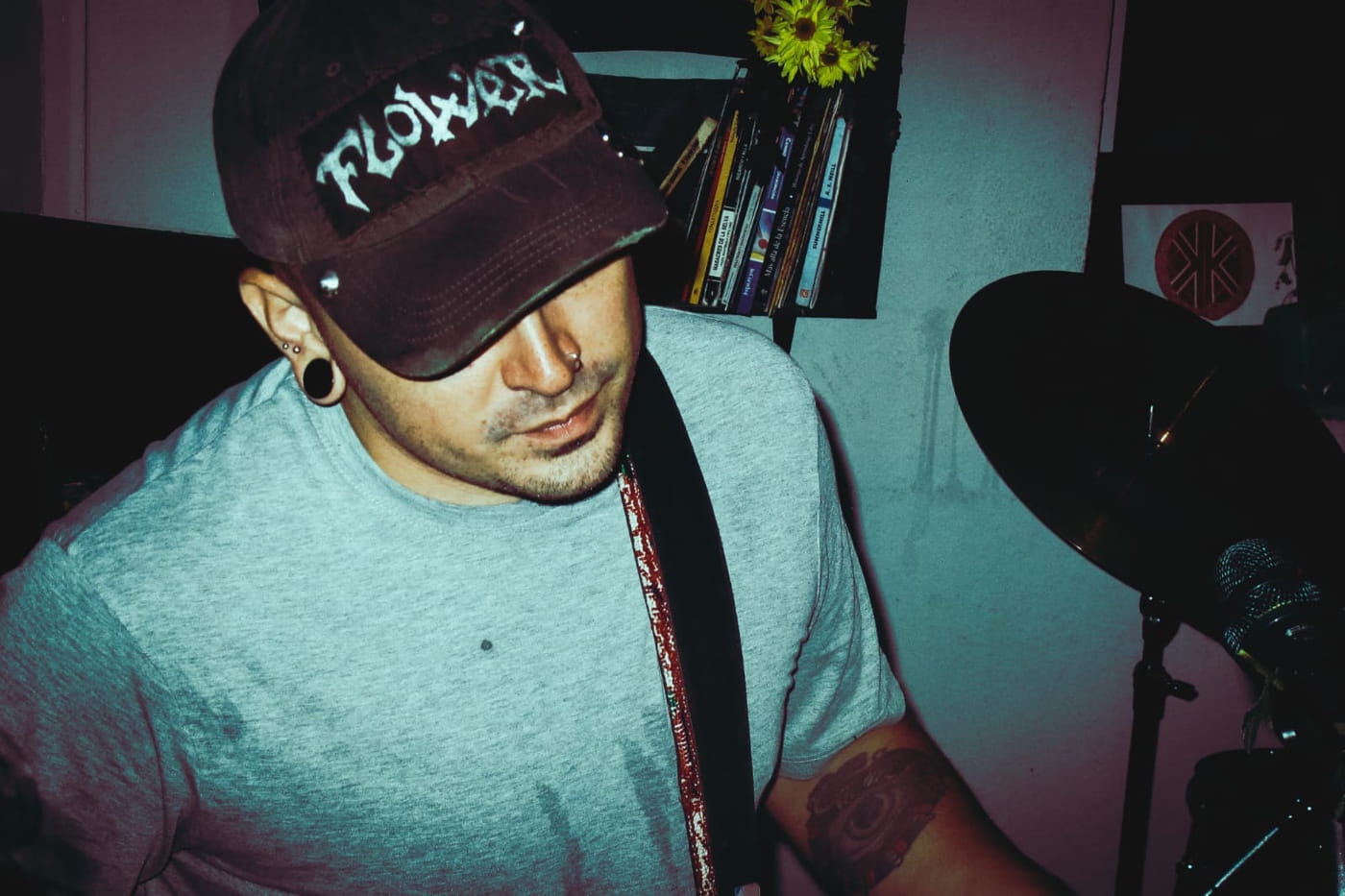
His relationship with the local scene is rough enough that he has tried to put some distance between himself and its internal decisions. He has access to LLVVIA’s social accounts and mostly leaves them alone. At one point he left the band too.
Asko is younger by enough years that he walked into a different Guatemala underground. Ask him when he was born and he’ll give you the exact time: February 26, 2001 at 10:55 in the morning.
He’s spent his whole life in Boca del Monte.
His father played guitar in church and listened heavily to prog rock. Asko inherited CDs and gear after his father moved to California. At ten, his parents put him into the Municipal Conservatory of Santa Catarina Pinula. By eleven he was its youngest and only drummer in the ensemble.
The kids carried their own instruments to educational shows around public schools and collaborations with the Germán Alcántara National Conservatory. Asko usually needed somebody else to help dismantle and move his drum kit. Their director Elfido could get angry enough that the students compared him with Terence Fletcher from “Whiplash” and, less respectfully, “a motherfucking angry toad”.
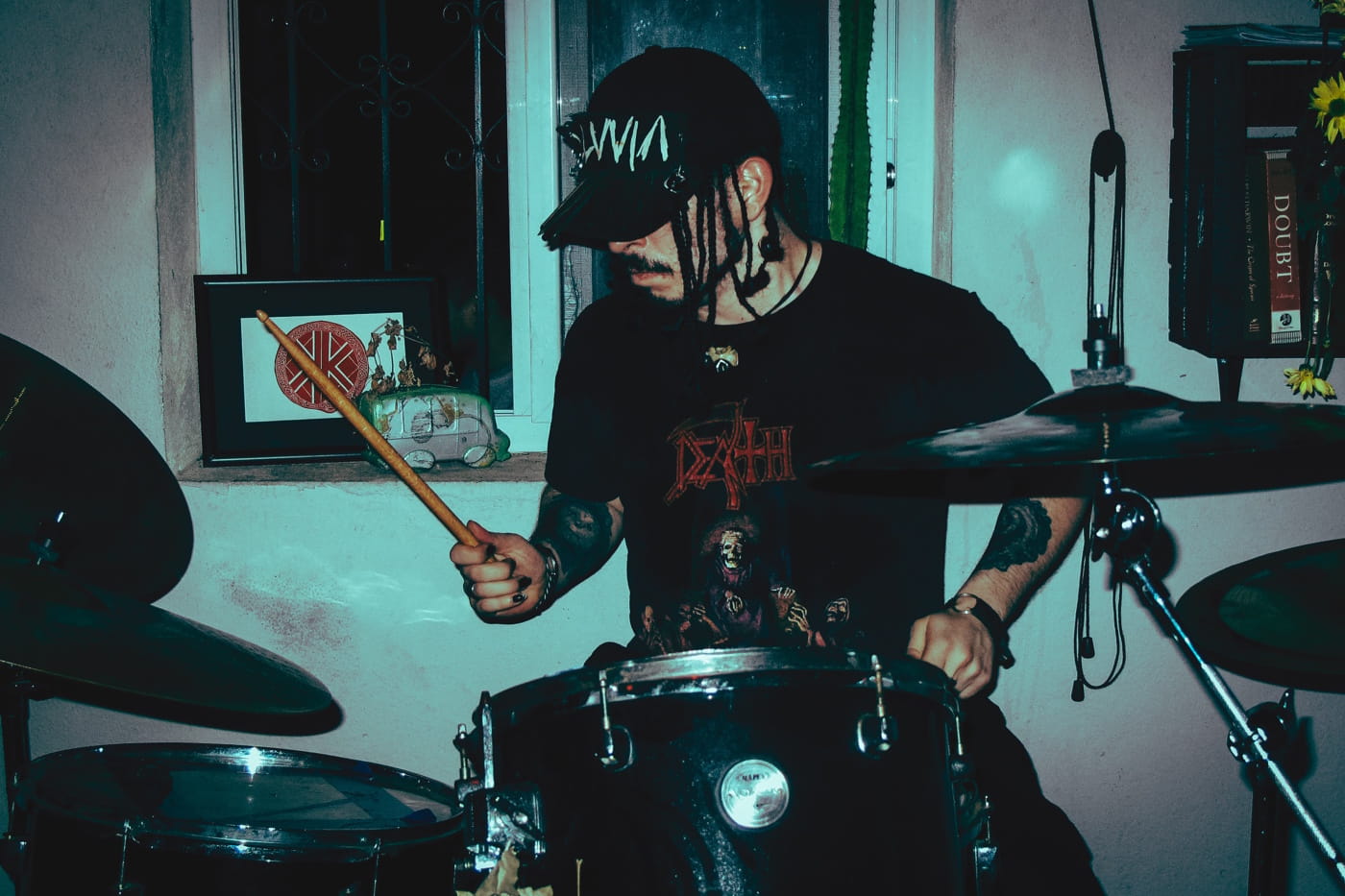
At 14, Asko started Chernodeath with Arturo Palomo, later of Suciedad, and Dante Parker, who would play with Warning. His mother managed to pull him out and the band replaced him.
Señor Cadejo came later, playing what Asko calls the old “Garra Chapina” kind of national rock. They got onto stages at El Rock’ol Vuh, La TrovaRock and whatever other places in the capital would have them.
One story from that period needed a correction before it could sit properly here. Asko had first put himself at 16 when Tomy Ernesto Chajón Luna, an 18-year-old drummer from the same conservatory circle, died after a brutal attack in 2013. He later checked himself. He was 12. He had also initially said Señor Cadejo played at Tomy’s funeral. The musical farewell came from the Santa Catarina Pinula conservatory community.
Tomy’s drum kit remained at the bassist’s house and Asko later played it with Señor Cadejo.
“I thought it could have been me.”
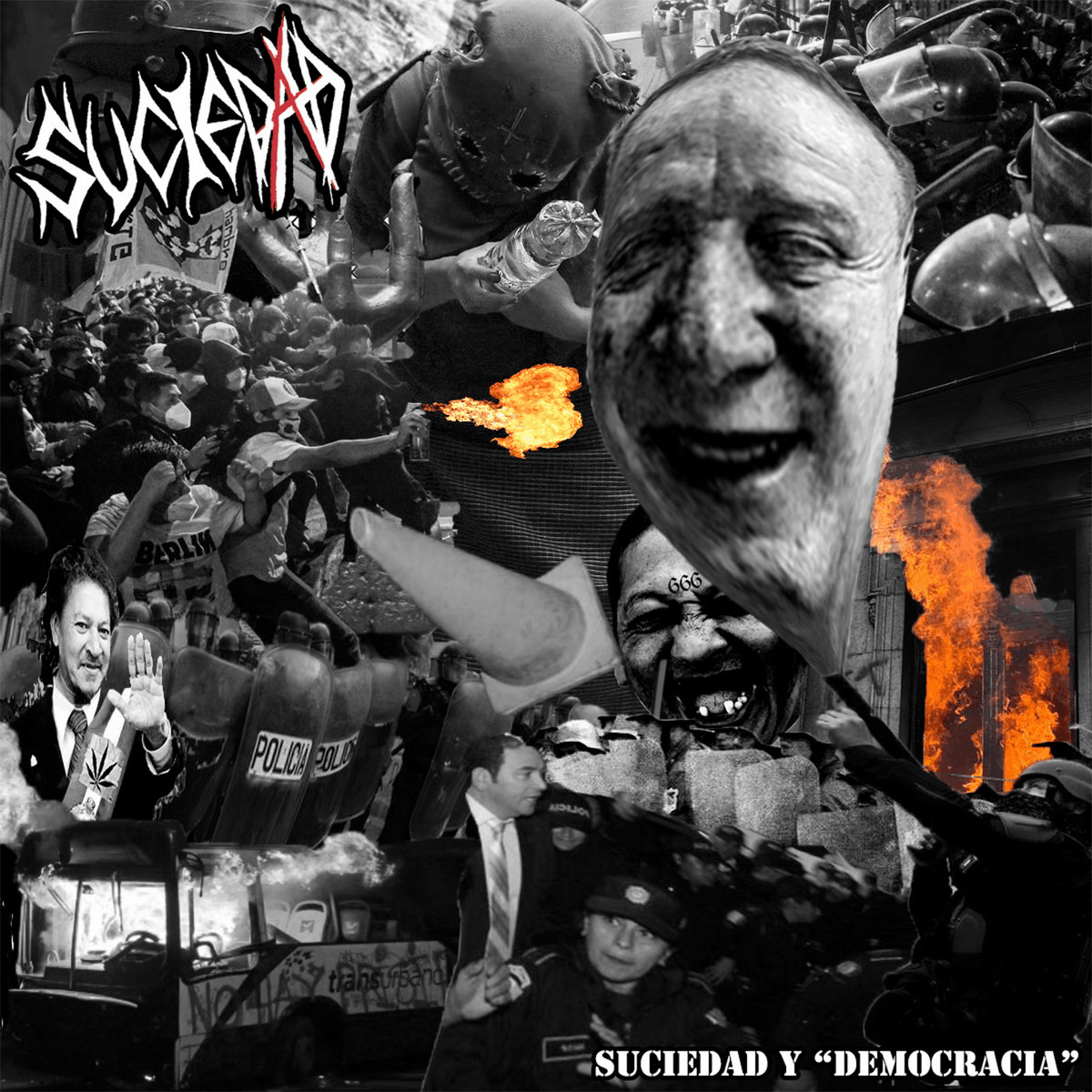
During the pandemic, Arturo Palomo contacted him from Florida about starting Suciedad as a crossover band, with stuff like D.R.I., Ratos de Porão, Municipal Waste and Toxic Holocaust in their heads. Asko recorded “Suciedad y DEMOcracia” in his bedroom in 2020 using a single Snowball USB microphone. Suciedad finally played live at TrovaRock on April 10, 2021.
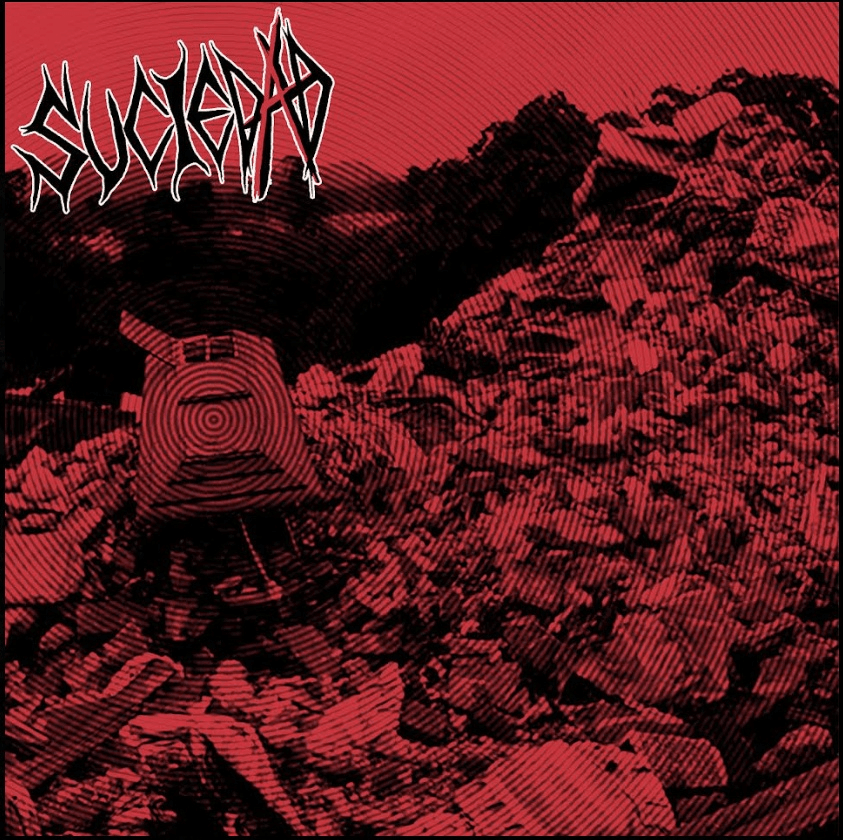
A Crone’s Orchard arrived around the same time and spent much more time jamming. Suciedad made immediate sense to the metal crowd. A Crone’s Orchard were the weird one for a while, leaning harder into long jams and a stoner streak.
Those two bands were Asko’s proper entrance into the underground that James and Fidel already knew.
He had even seen Demasiado Humano before meeting James. He arrived too late for the set, bought a shirt instead, and James happened to be the person selling it.
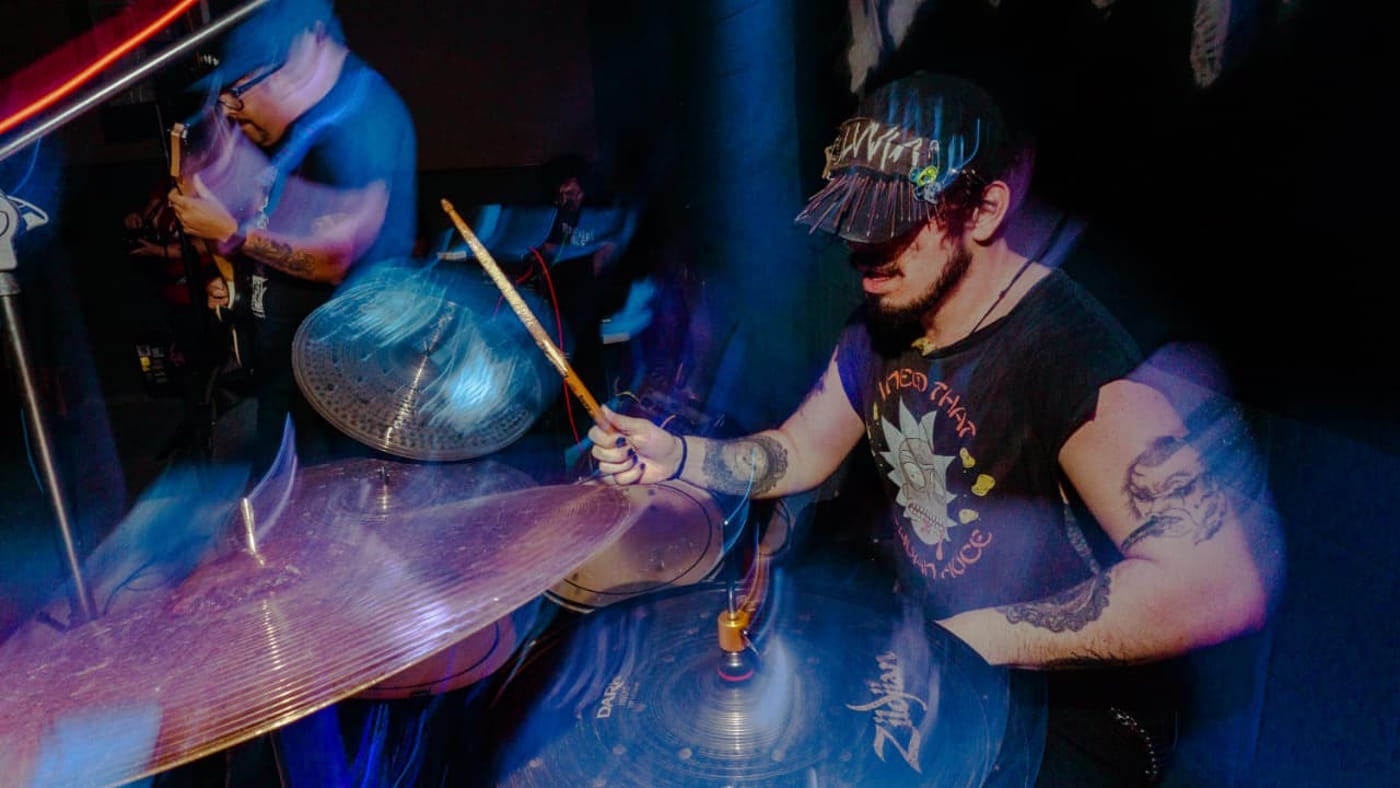
Guatemala’s subcultures looked pretty mixed from his side. One crowd could move between grindcore, post-punk, metal, punk and electronic stuff without spending much time worrying about the border. BlackPool GT became a second home for Asko for a couple of years. ANALÓGICOS works in a parking lot with records, local bands, merch, food and a different musical theme for each edition. LLVVIA played their Turnstile night at La Poporopera on February 28, 2026.
Asimov are one of Asko’s favourite local bands. He points people towards their KEXP session.
The link that finally pulled him into LLVVIA came through Kasa Kapikúa, an Obsolencia Programada show and Nosotras en la Escena. James messaged him on Instagram on August 8, 2022.
The audition song was “On the Fray” by From Ashes Rise.
Asko learnt it, brought his kit, turned up on time and discovered James and Fidel hadn’t properly learnt the song they’d told him to practise.
“These idiots.”
He was the first and last drummer to audition.
The name Asko has its own crooked history. It started with the Basque phrase “Asko Maite Zaitut”. Later he started playing with other meanings, including Ancient Greek “askós” and his own attachment to “Askaz”, an ash tree.
By the time he got into LLVVIA, James already had Kasa Kapikúa running in Zona 1.
Kasa is also where a lot of the bigger story around this band stops being about a band.
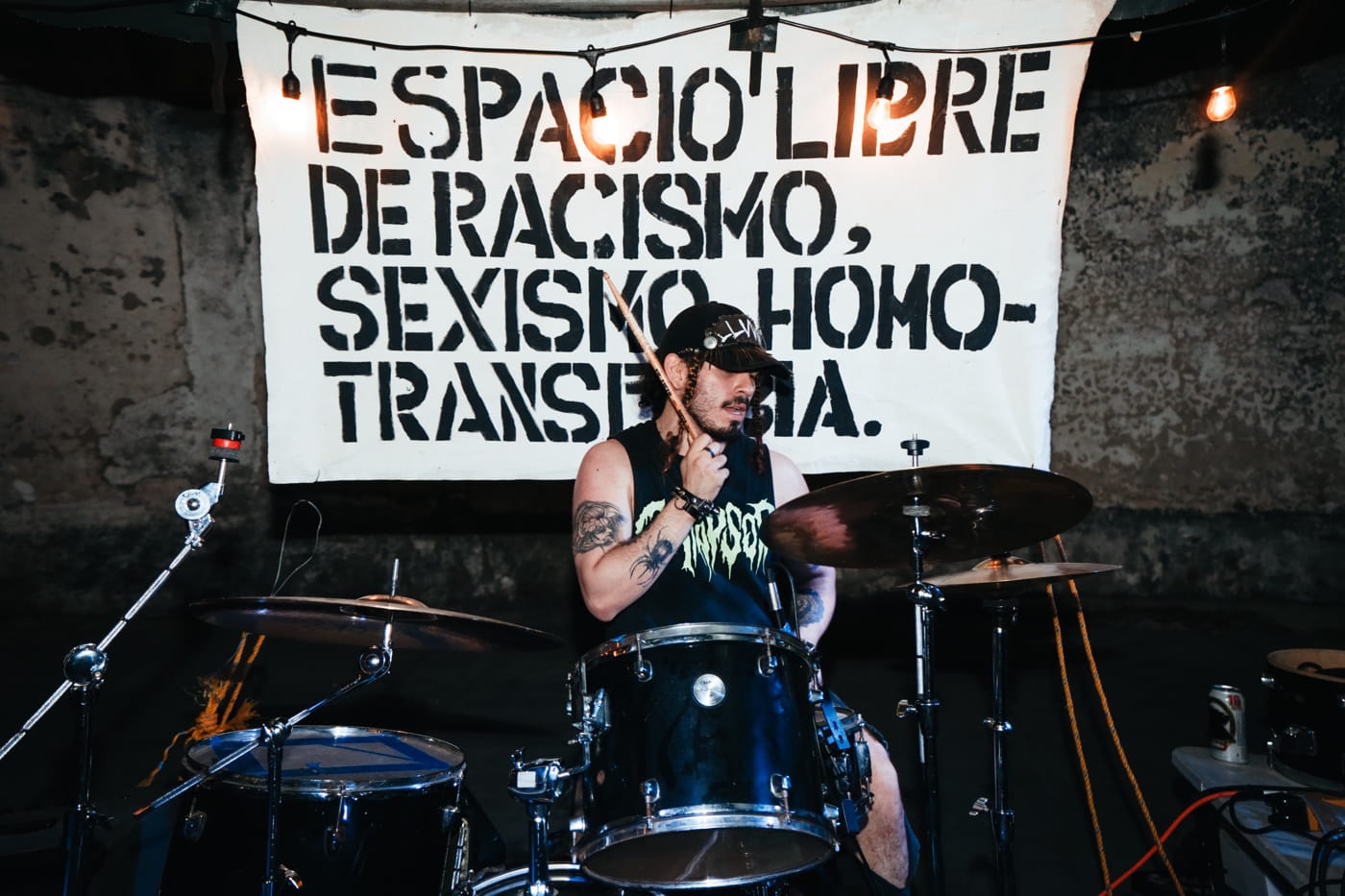
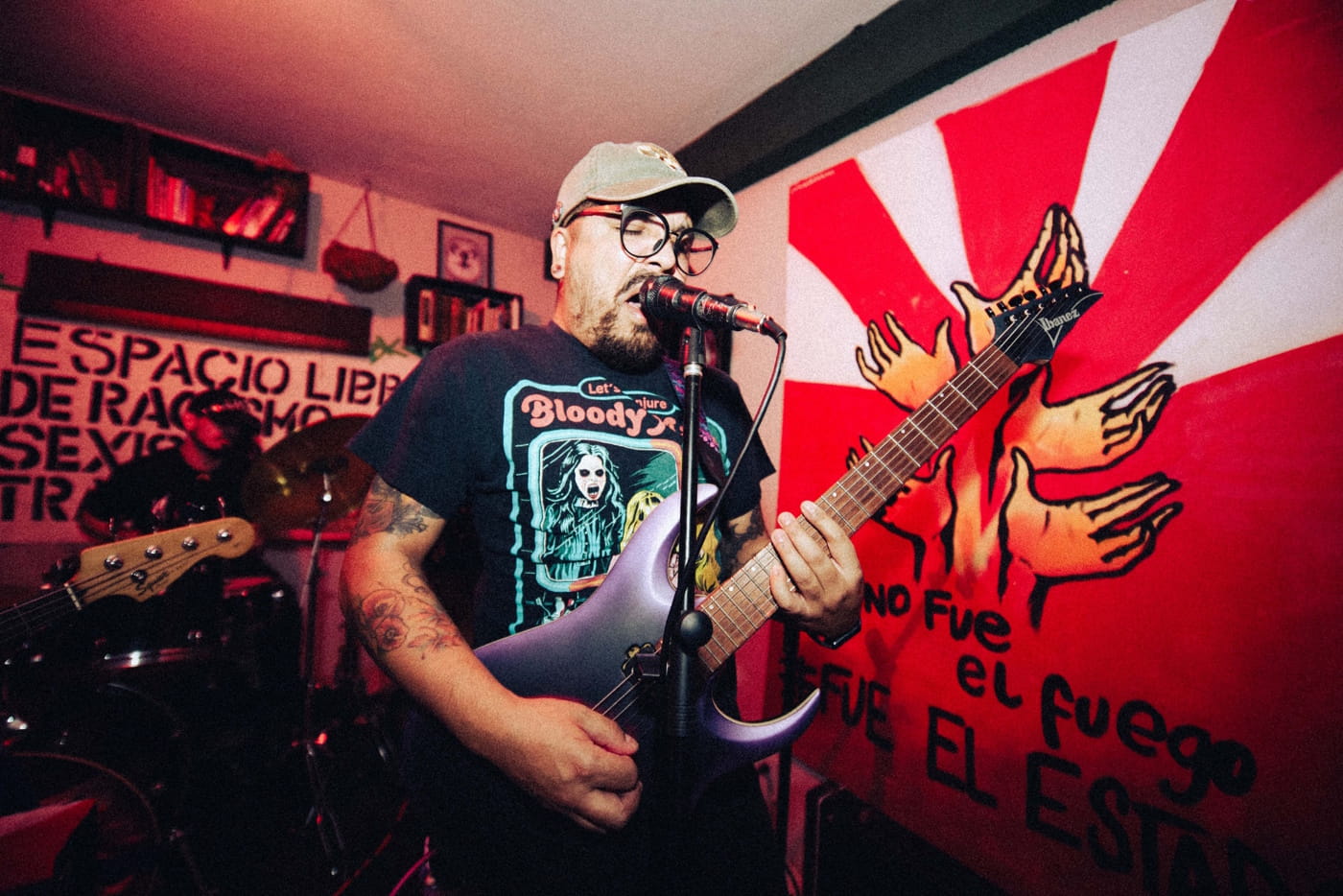
James opened the place in 2021 and lives there himself. It’s surrounded by public parking lots. A state-run girls’ home is opposite, police offices are nearby and there aren’t many direct residential neighbours. That’s useful when you have bands playing in your house.
It’s also cheap.
As James puts it, “since no one normal wants to live in a parking lot, it’s very cheap.”
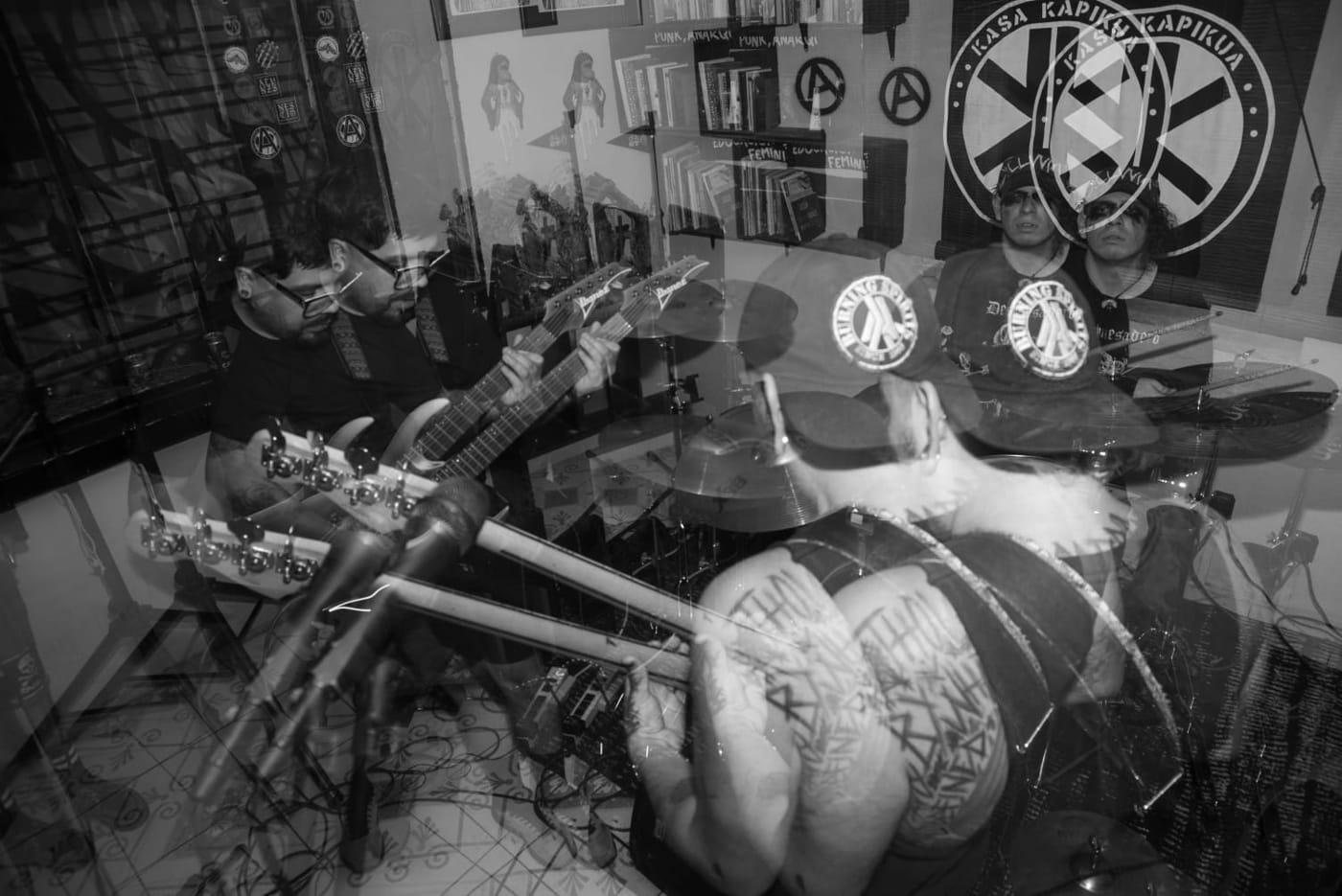
Kasa has hosted shows, art, film, fanzine workshops, mercadillos and political or anarchist discussion. Friends and volunteers have always helped. People come and go.
By December 2025, after four and a half years, James was burnt enough to stop promoting the place openly through social media. He announced that things would mostly move through word of mouth and house shows.
Cine Accidental and Bootleg Sessions got in touch anyway. The place kept going, only quieter and with a different network around it.
The rehearsal room is probably its busiest job in 2026.
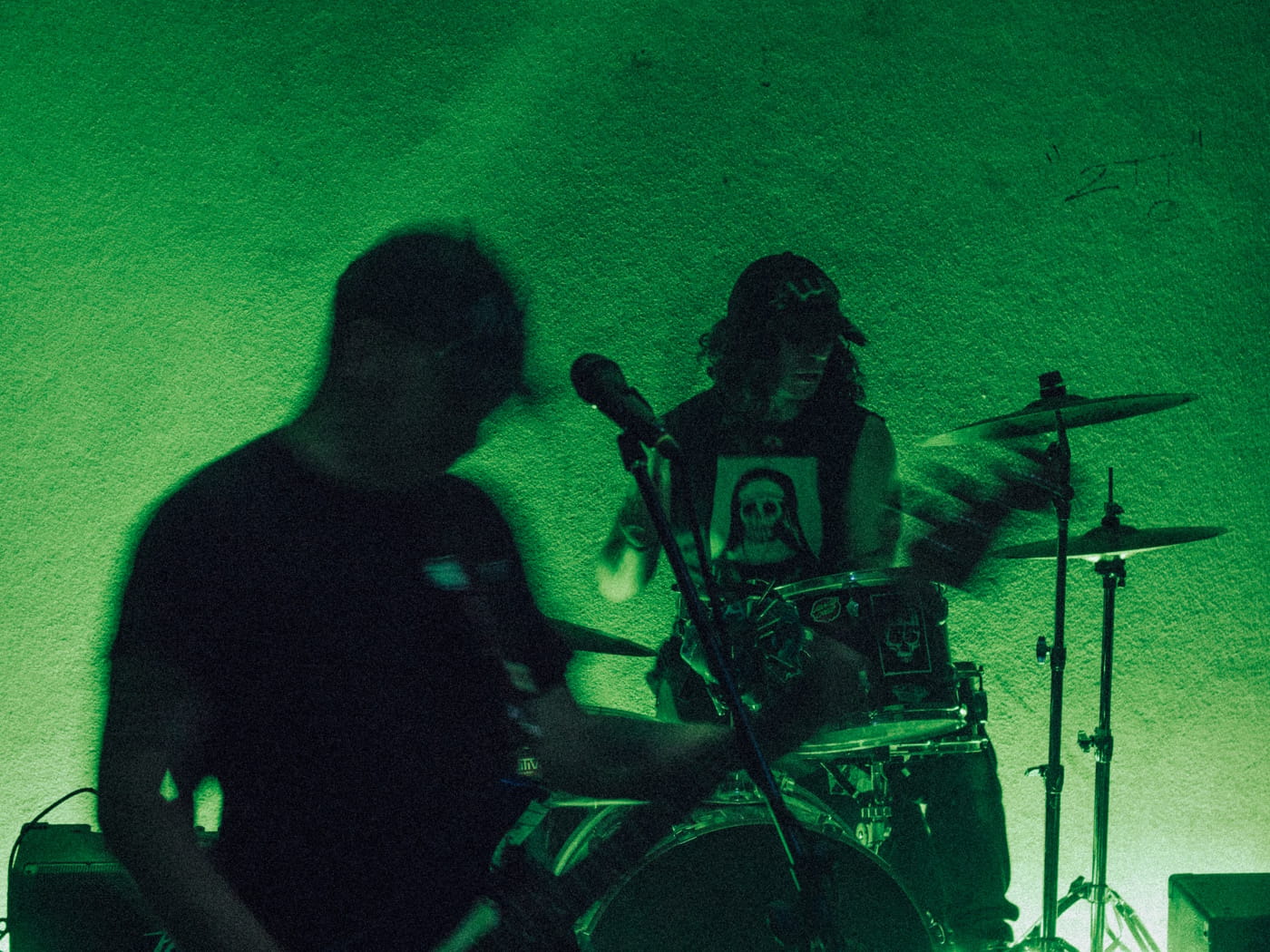
James will mention at shows that younger bands can use the space. Others come through friends or referrals. Experienced musicians are expected to kick something back. That can mean cash, cat food, toilet paper or something else the house actually needs.
He studied music and music education, so kids who are just learning get another deal. No charge at first. He’ll help with instruments or songs if they need it. Once they have a few gigs behind them, he starts asking them to contribute.
Some people have treated Kasa as a cheap rehearsal hack. He stopped working with them.
There’s enough traffic around the room now that James half-jokingly talks about a KK scene or loose music collective, though nothing is official.
Asko sees the access slightly differently. To him, the rehearsal space is mainly for friends and James’s “protégés”. From the younger side, though, Kasa is bigger than the room. Musicians, filmmakers, cyclists, shared meals, birthday parties, kids and whole families pass through.
“James can be very grumpy with the crowd, but that’s just him. He’s rough around the edges, but warm and kind enough to tell you to shut up and help out!”
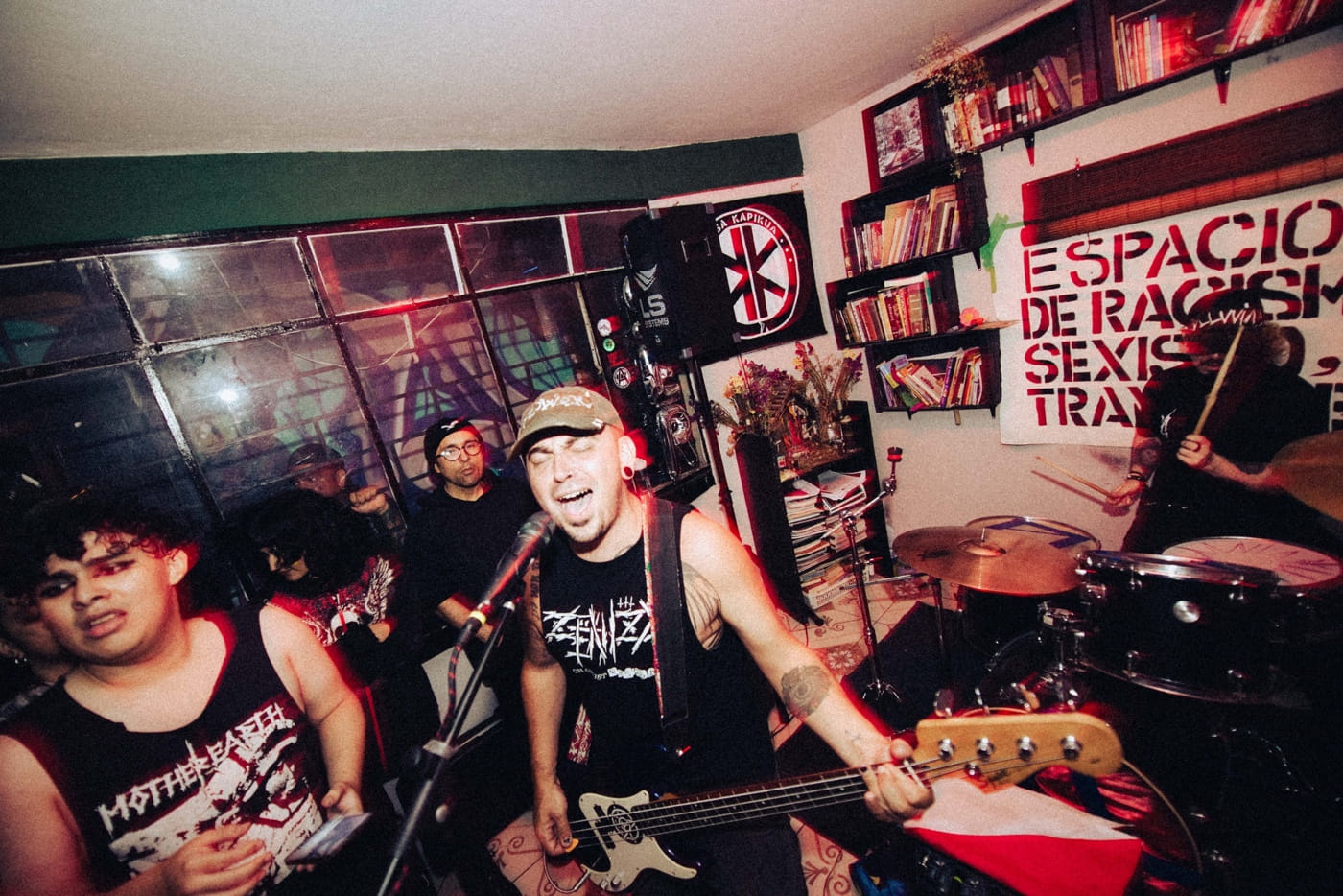
The money rule is clearer.
When Kasa organises a show, bands get something. James watched local bands play for free for too many years to carry that habit into his own place. They don’t always make money, but they rarely lose much and everybody gets paid something.
Asko has even less patience for beer-as-payment punk economics. He remembers promoters charging proper door prices while bands got a few drinks, free entry or, once, not even the beer they’d been promised.
“Being paid with beers and nachos is a fucking sin and a joke for weeks, months and even years of getting here. Stop taking the bullshit and DIY!”
Kasa doesn’t sit alone. Fidel points immediately to Tamal, Nescio, Ofelia, Asimov and Mother Earth, along with STM Distro and poet Hael López. Tianguis and zine workshops pull in people who aren’t necessarily punks at all.
James’s own shoutout list got much longer: Gaby from Daga, an online anarchist zine library and collective; Pedro from Encore Productions; Danny from La Guarida; Freddy from Gafat Records; Nerf from the Riot Punk shows; Mariano and Aldo from Union Stricken; Sammy from Nescio; Nosotras en la Escena; Chris Rebellion; Dirty Rejects; Sudor de Huevos; Trinky; Neurotóxico; Fosa Comun; Los Hijos de Su Madre; Ansiedad; La Oveja Negra; Casavieja; Dos Erres; Ofelia; Los Nadies; Warriors; Dezerebradoz; Asimov; Tamal; Mother Earth; Kaanek; YYYY and Malapraxis. He also threw in Traición from Monterrey and Beritan from Berlin.
Then he emailed again because he’d forgotten Aram Saq from STM Distro.
James considers Aram especially important to anarcho-punk activity outside the capital and to Indigenous punk circles in the interior of Guatemala. Forgetting him bothered James enough that he came back to fix it while this article was already being finished.
The eight songs on “LLVVIA” are buried in all of this.
The opening “llvvia” still carries that old fanzine line: “que venga la lluvia a llevarme de acá“. Cambray II sits behind it, along with the anger James felt when religious miracle stories appeared around the disaster.
There’s another voice on the song. Hael López wrote and recorded its spoken-word section specifically for the album. She’s been around the band for years and has also performed with Jesvs Carrera and LLVVIA.
Hael started publishing through tresnoventaytres in 2015 and moved into self-published fanzines in 2017. Her poetry has appeared at festivals and readings, in anthologies connected with Proyecto Editorial Los Zopilotes and Metáfora Editores, and her first collection, “Rutinas/Despedidas“, came out through Sion Editorial in 2018. Work has also appeared through Casi Literal and Gazeta, with English translations in Columbia Journal, Canarium Books and Guernica. She has mostly left social media behind.
“Soñadores perdidxs” goes somewhere heavier.
James wrote it after the death by suicide of his anarchist friend Kevo. The song isn’t only for him. All three members have lost people.
“Tanta presión que la muerte parece la solución.”
Later comes the line James picks as the centre of the song: “ya no verán el mundo que vamos a crear.”
The people who died won’t see the sunset, the moon, a child laughing, girls safe or the State burning.
“Las niñas seguras” is a direct reference to Hogar Seguro Virgen de la Asunción and the girls who died in the 2017 fire. The State-burning line is tied to the protests of November 21, 2020 and the fire inside Guatemala’s Congress.
James had earlier put “we” around the Congress fire. Asked exactly what that meant, he stopped there.
“It’s not safe to say at what extent I was involved.”
Asko wasn’t there. He followed events from elsewhere during the pandemic. Later he and Arturo used images from the Congress fire in Suciedad artwork. In his own head, “soñadores perdidxs” also carries the memory of Valentina, somebody he had lost.
A fragment of Eduardo Villalobos’ “Ixtab” sits in the song too.
“Un día menos” came right after it in LLVVIA’s early writing. “Soñadores perdidxs” was their second song. “Un día menos” was the third.
Fidel gave James the subject: the drag of having a shit job in a shit country.
The lyric answers with “Noches soñando de no despertar” and eventually, “lucho y lucho, pero nunca se acaba.”
All three have full-time jobs. James was clear that they aren’t living in poverty. He was just as clear that keeping a job, paying for normal life and still trying to stay politically involved can fuck with your head.
“Nuestra maldición” comes from the same frustration and points outward. “Vivimos contentos sin abrir los ojos.” James connects it with rich people ignoring everybody underneath them and working-class people picking up the same kind of apathy.
It also gives a tiny example of what happens when James’s Spanish meets Fidel’s.
James grew up speaking English and learnt much more Spanish after moving to Guatemala. Fidel hears the difference instantly.
James wrote: “Vivimos felices ignorando los demás.”
Fidel naturally sings: “Vivimos felices ignorando a los demás.”
The next line works the same way. James’s “darnos cuenta que” becomes “darnos cuenta de que” in Fidel’s mouth.
Fidel initially joked about “solid grammatical errors”, then walked that back. Most of what he’s talking about is prepositions and native phrasing. The meaning isn’t changing.
James doesn’t mind having his own voice in the writing. He does mind being wrong without anybody telling him.
“People I’ve played with say my broken Spanish gives the songs character, but I hate it when I write something wrong and no one says anything.”
Fidel’s Spanish is more natural and, in James’s view, more poetic. James writes plainer and then beats the metre into something he can scream over a bass line.
“Cada vez” goes back to the fear around ordinary life. “Mañana tal vez no vendrá, si apenas hoy se logró.” Tomorrow might not come when today barely happened.
“Sentir el dolor” is Fidel’s song.
He wrote the whole lyric himself and calls it the one he connects with most. The guitar intro also has a small curveball in it: he took inspiration from the main theme from “The Last of Us”.
The words deal with depression and mental health. One of James’s favourite lines on the record comes from there: “Venganza es lo único que pienso / Contra yo mismo, contra mi propio silencio.”
It is also the song where Fidel lets himself end somewhere other than anger.
“Me levantaré de nuevo.”
“I think and feel like all the other lyrics are direct criticisms of day-to-day situations, of the news, of our country, of our culture and history, of ourselves and our personal experiences, and the politics of it all… but none of the lyrics end in a hopeful/encouraging way of ‘there is something we can still do,’ like on ‘sentir el dolor’.”
“Sombras” started with Asko typing into his phone while dealing with a very personal mess. His first draft was much closer to an argument with one person, full of direct accusations and lines about betrayal.
James cut some of that away and kept the parts that could work outside the original argument.
“Date cuenta / De quien sos / Abrí tus ojos / ¡Abrílos ya!”
Asko hears his own Jungian shadow idea in the finished song. Somebody has to look at the ugly part before doing anything about it. James loves the song for a much less academic reason. To him it’s basically: “fuck you, get off your pedestal.”
“Sacramento de sangre” closes the album with another James lyric, written in a way he associates with Demasiado Humano.
“Sangre corrupta suele confundir.”
The song keeps kicking against whatever you’re told to inherit automatically: family, religion, ethnicity, nationality.
James grew up with a Guatemalan mother, a white American father and years of military life in the US. Latino kids there didn’t always believe he was one of them. People in Guatemala thought he was nuts for leaving the States voluntarily.
Eventually he got sick of trying to pass anybody’s test.
“I decided a long time ago that I wasn’t going to be identified by a flag so I just try to keep it real and live my life as some punk dude that doesn’t really belong anywhere.”
Religion shows up constantly across “LLVVIA”, though James and Asko got there by completely different routes.
James describes his Catholic upbringing in one sentence: “I’m traumatized by my Catholic upbringing and pissed off that the world still believes in so much religious bullshit.”
God, salvation, turning the other cheek and biblical rain keep appearing in his writing, usually as satire or criticism. Some people have still heard the religious vocabulary and assumed the songs are Christian, which he finds pretty funny.
Asko grew up evangelical in Boca del Monte, where his father played guitar in church. Religion was much more physical around the house. Between roughly five and nine, he remembers toys, books, Bionicles and other stuff getting burnt after somebody decided they were satanic.
The obvious result was that he wanted to see what all the forbidden shit was about.
Rock and metal came first. Then books, esoteric stuff, Satanism, theology, Tarot and whatever else he could get his hands on. He eventually got bored with Anton LaVey too. Jesus stayed, but in a different form. Asko has Jesus tattooed on one arm and an owl on the other.
“Silence creates Martyrs” is one phrase he came out with later.
His family stories run further back. A distant great-aunt was remembered as a witch. His older brother Joja later went through an Ajq’ij initiation connected with the Sacbé, the white road. Asko traces another part of the family’s memory to a Maya great-great-grandmother in Quetzaltenango, possibly Mam and, in his view, more likely K’iche’. He says later generations lost the Maya language as the family went through Ladino assimilation.
He’s careful about one part of that. For him, looking into family history doesn’t give somebody the right to walk into Indigenous spaces and claim the experience or social position of people who actually carry those identities every day.
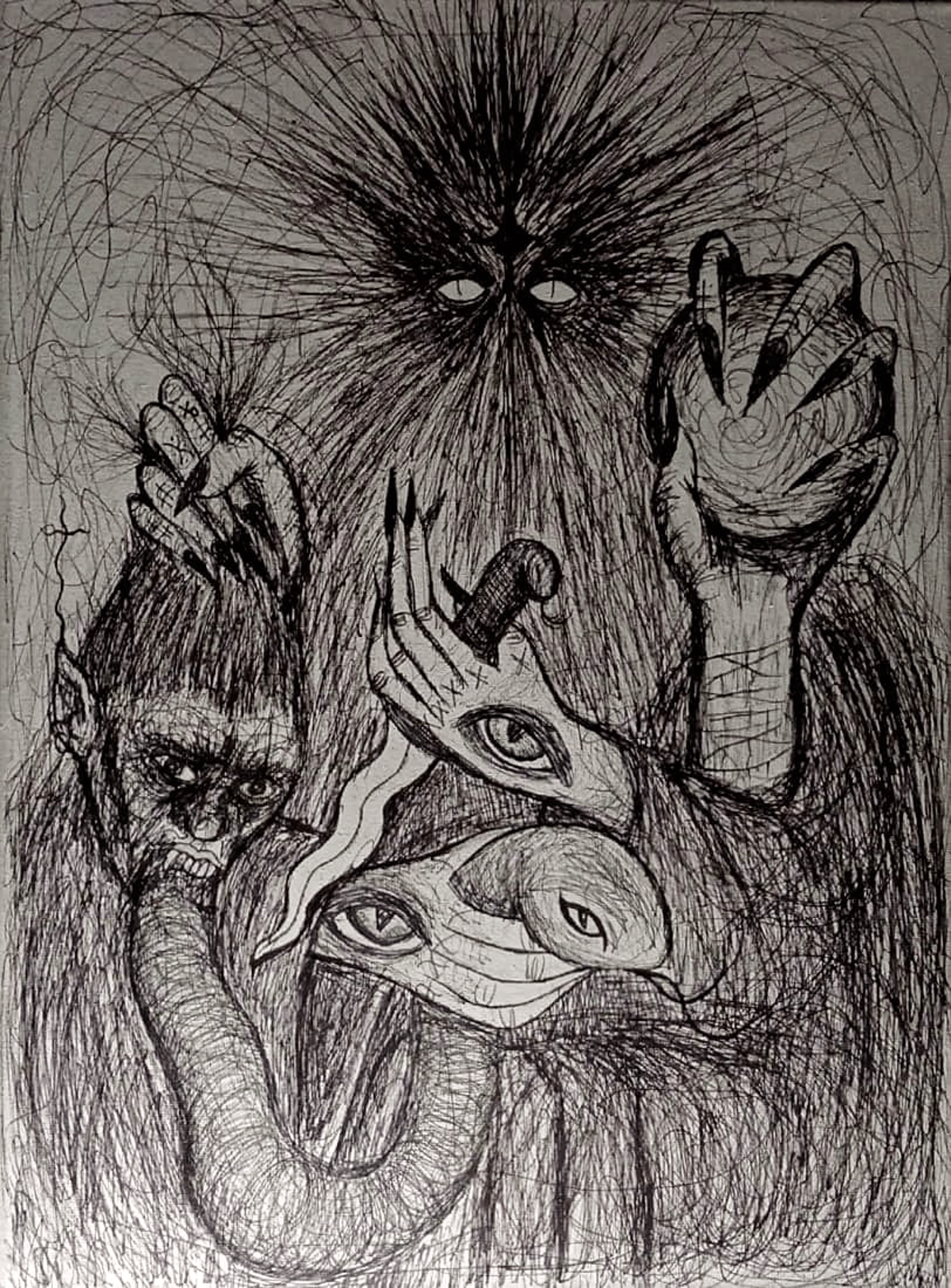
Boca del Monte gave him plenty of other stuff to fill his head with.
He talks about the curandero tradition around Viviano Martínez and his son José Jerónimo Martínez, known locally as Don Chomo. Maximón turns up at ANALÓGICOS, where organisers put up an altar. La Llorona stories, cemetery stories, brujería and Christianity all live close together in the way Asko remembers the place.
So does normal violence.
On the way to school one morning, he saw a partially burnt body under a blanket a few blocks from home. When he was seven, his mother was carjacked at gunpoint while driving him to football practice.
Then there’s the story he tells from around five in the morning on a Thursday. He was at the gate before going for a run when he heard wheels and chains moving down the alley. He looked and, in his account, saw a tall amorphous shadow moving under the streetlights as the usual morning noises disappeared. A neighbour died afterwards.
Asko believes he saw death.
That’s his reading of it. He puts it alongside the folklore he grew up hearing and the deaths he’d already seen around him.
“I believe that music is ritualistic magic: it moves you, transforms you, and can even manipulate your experience to the point of ecstasy.”
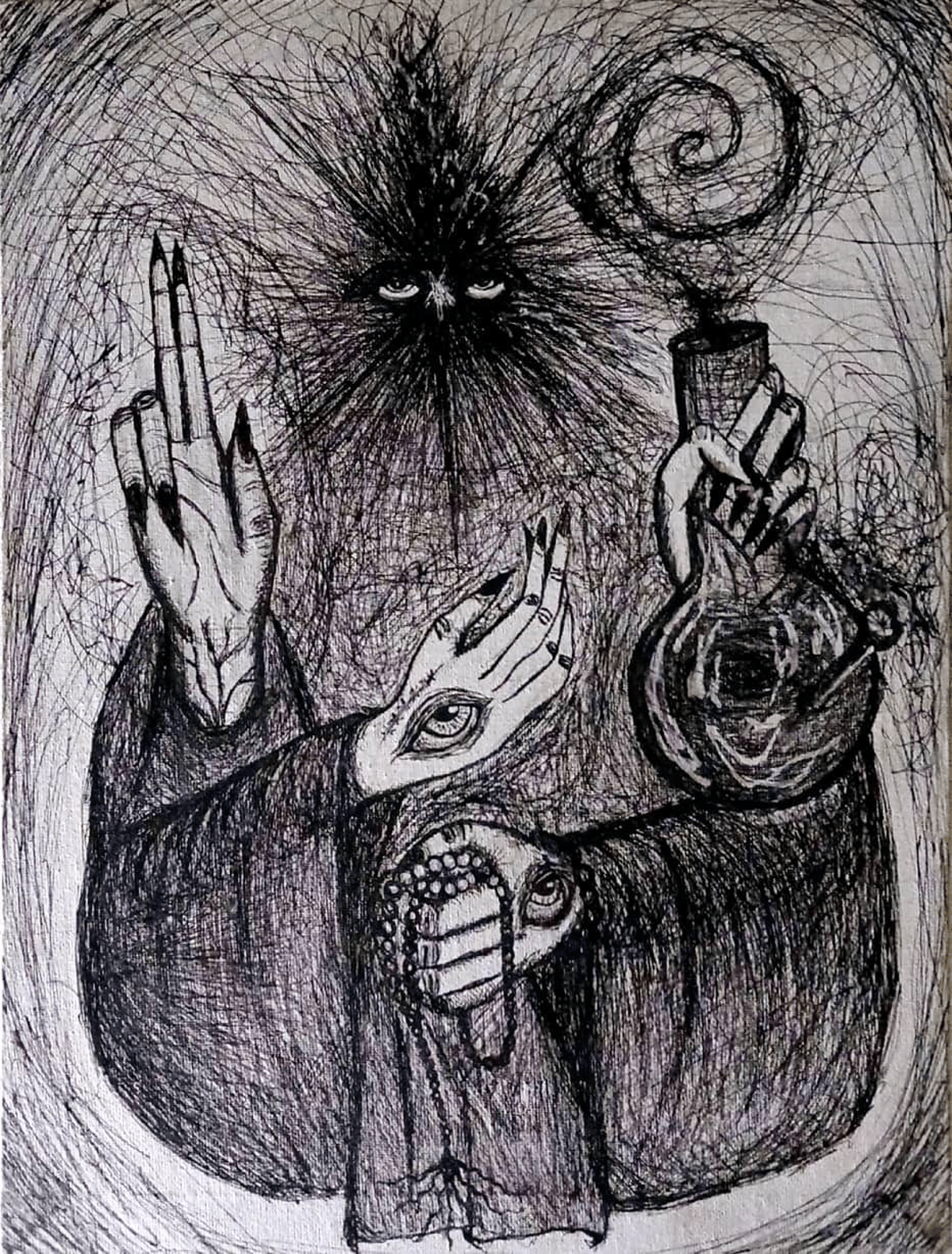
That head full of skulls, saints, martyrs and shadows goes straight into LLVVIA’s artwork.
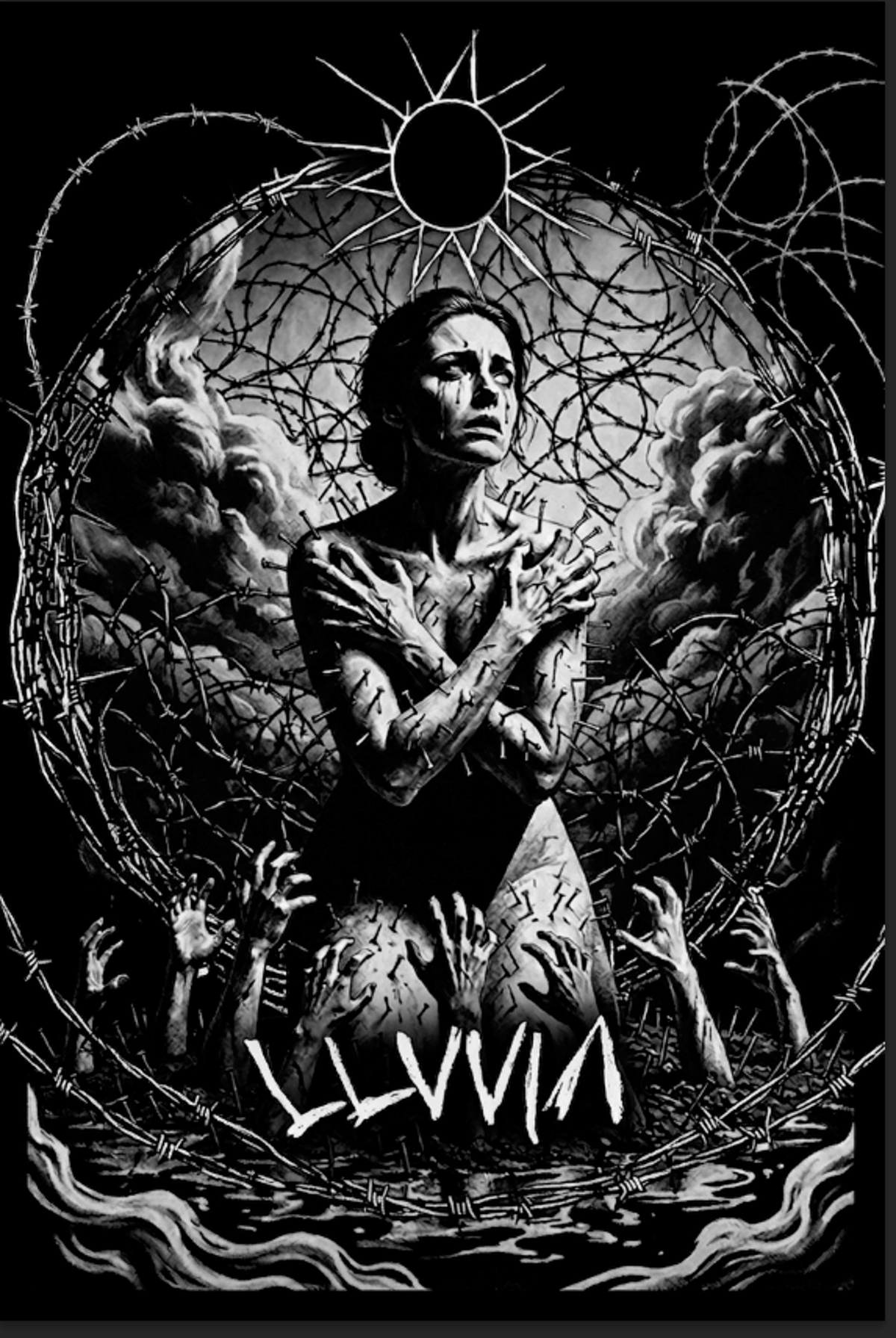
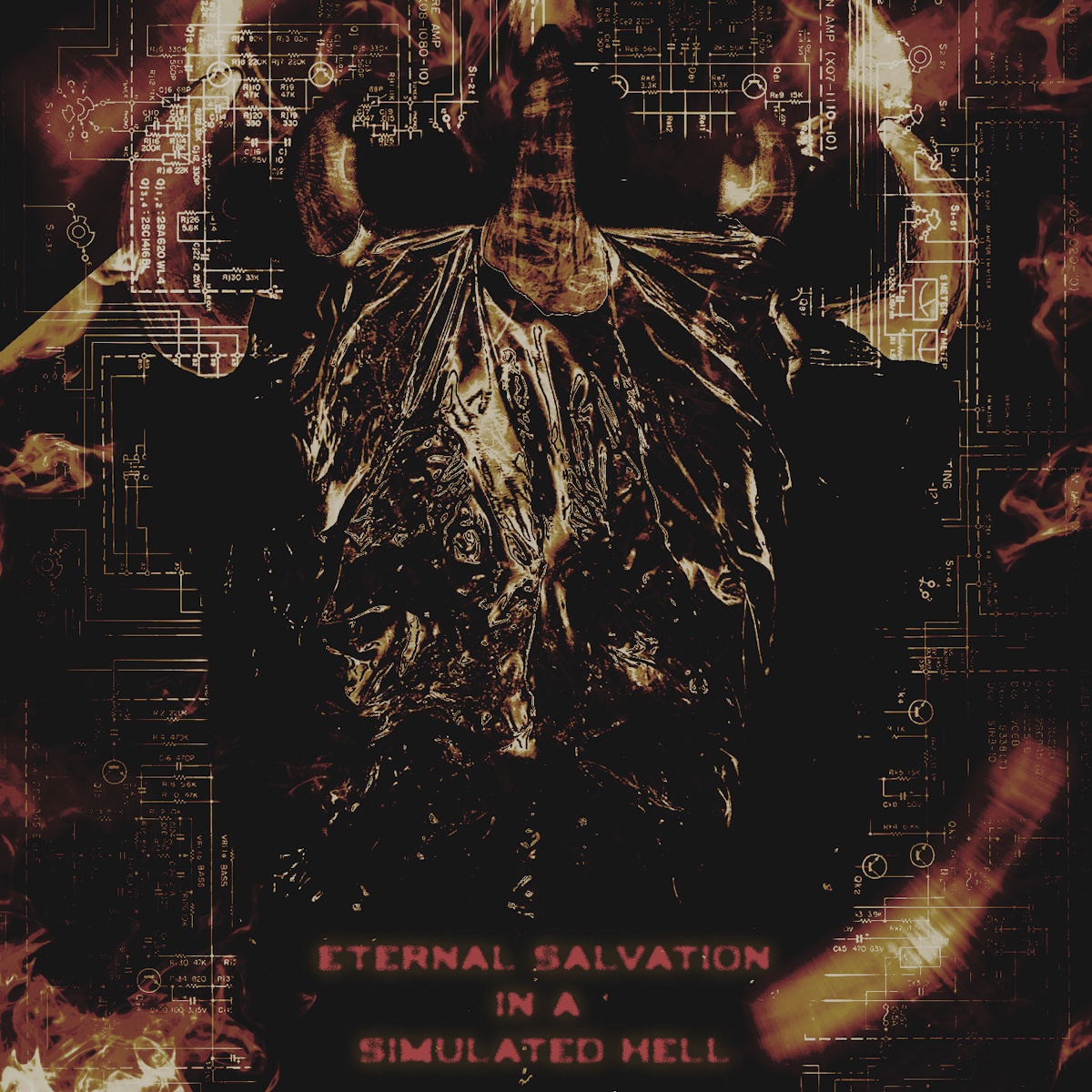
Álvaro Sánchez, @sanchezisdead, made the album cover. Asko altered parts of it and did most of the insert. James handles a lot of the band’s physical collage work, flyers and the CD poster.
Álvaro sent several drafts. Asko read the finished image through memento mori: a skull for death, Christ for martyrdom and a flayed body for pain. He pushed the contrast harder, reworked the LLVVIA logo into a circular sun shape, added another Christ figure and made the tracklist lettering with actual nails.
Then he made a punk poster with AI.
Well, sort of.
At the time, Asko was working as a CSR in what he calls “Panópticos digitales”. Every work state, minute and metric was tracked into his payroll. He couldn’t bring paper into work, the band had just gone through a big internal fight, and he wasn’t even sure they were going to finish the record.
So he messed around with AI at work and built an AI-assisted digital collage using generated pieces, the existing logos and his own Photoshop work.
He showed it to the band. Job done.
James eventually asked how he’d made it.
AI.
That was enough.
James printed the thing, tore it up and rebuilt it by hand as a physical collage.
Asko doesn’t really defend the first version now.
“AI can be a tool for brainstorming references, but it shouldn’t be sold as the final draft.”
He had originally told himself he’d draw the final thing after getting a reference he liked. He never did. James ended up being the friend who called him on it.
The rebuilt poster carries another text: “Our night has been too long. Had we left at dawn, we would already be there. The awakening of consciousness in Guatemala was brutally interrupted, and the country was condemned to the vicious cycle of repression. Prone to instability. The real struggle in Latin America is with ourselves.”
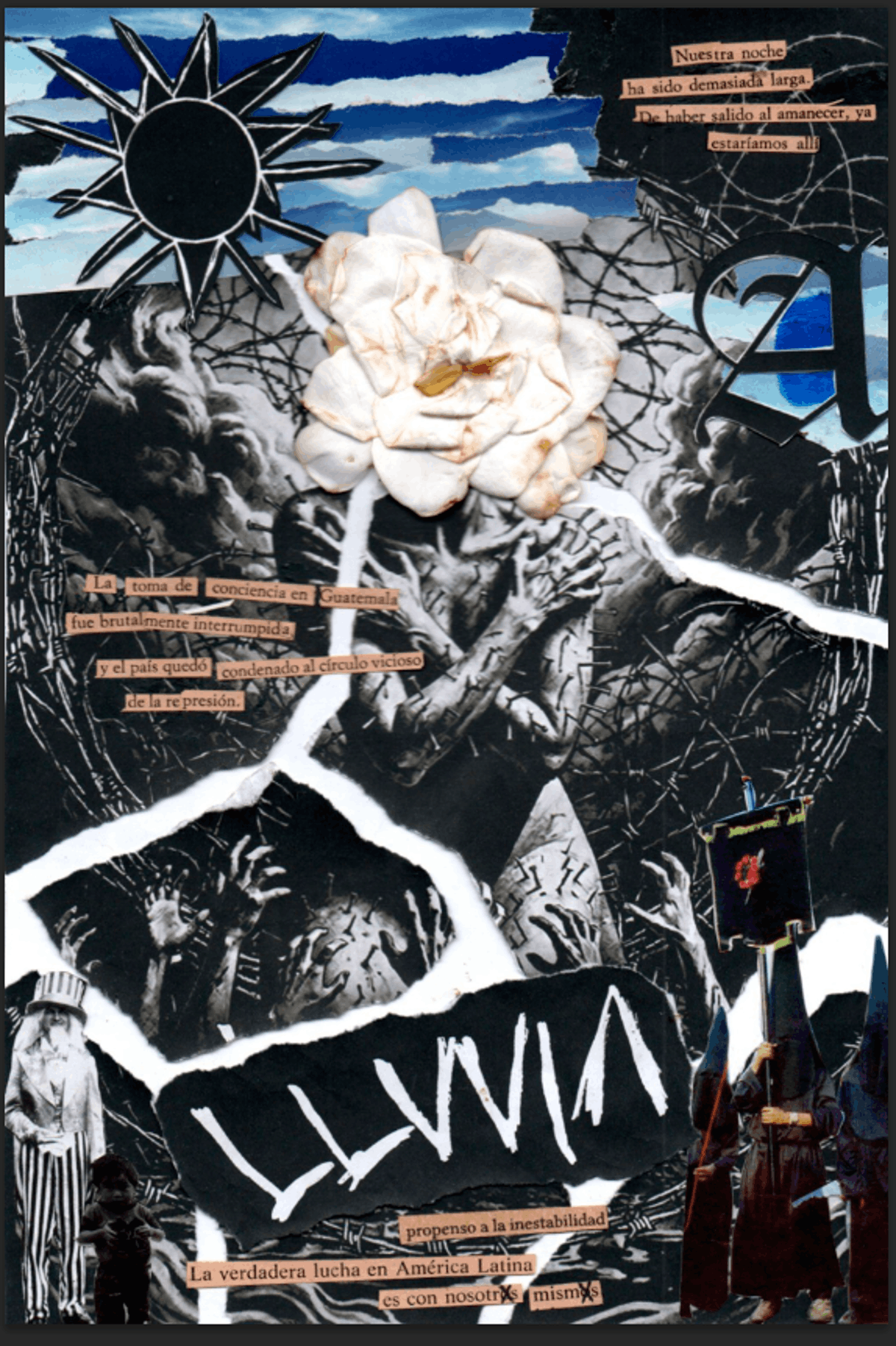
Asko reads those lines through Jacobo Árbenz, the 1954 coup and the decades that came after it. The collage also replaced a face with a gardenia.
The photos around the band have been just as communal. Adolfo Batz (@alenoyse), Hawk_AlexE (@hawk_alexe) and Nash (@heey.nash) supplied band photography, alongside self-portraits from James, Fidel and Asko. Álvaro handled the main cover. Asko did most of the insert work. James kept cutting and pasting paper.
Somewhere inside the poster argument was the bigger fight that nearly broke LLVVIA.
One flashpoint was a proposed political sit-in and gig at Universidad de San Carlos de Guatemala. Asko wanted the band there. Fidel didn’t. Asko saw that as the exact moment a political punk band should show up and got furious.
James ended up between them.
Fidel’s own version of the bigger problem is wider. He didn’t like several things around the band’s management, the social media, the subjects being pushed or the musical direction. His own way of working didn’t always line up with the other two either.
He left.
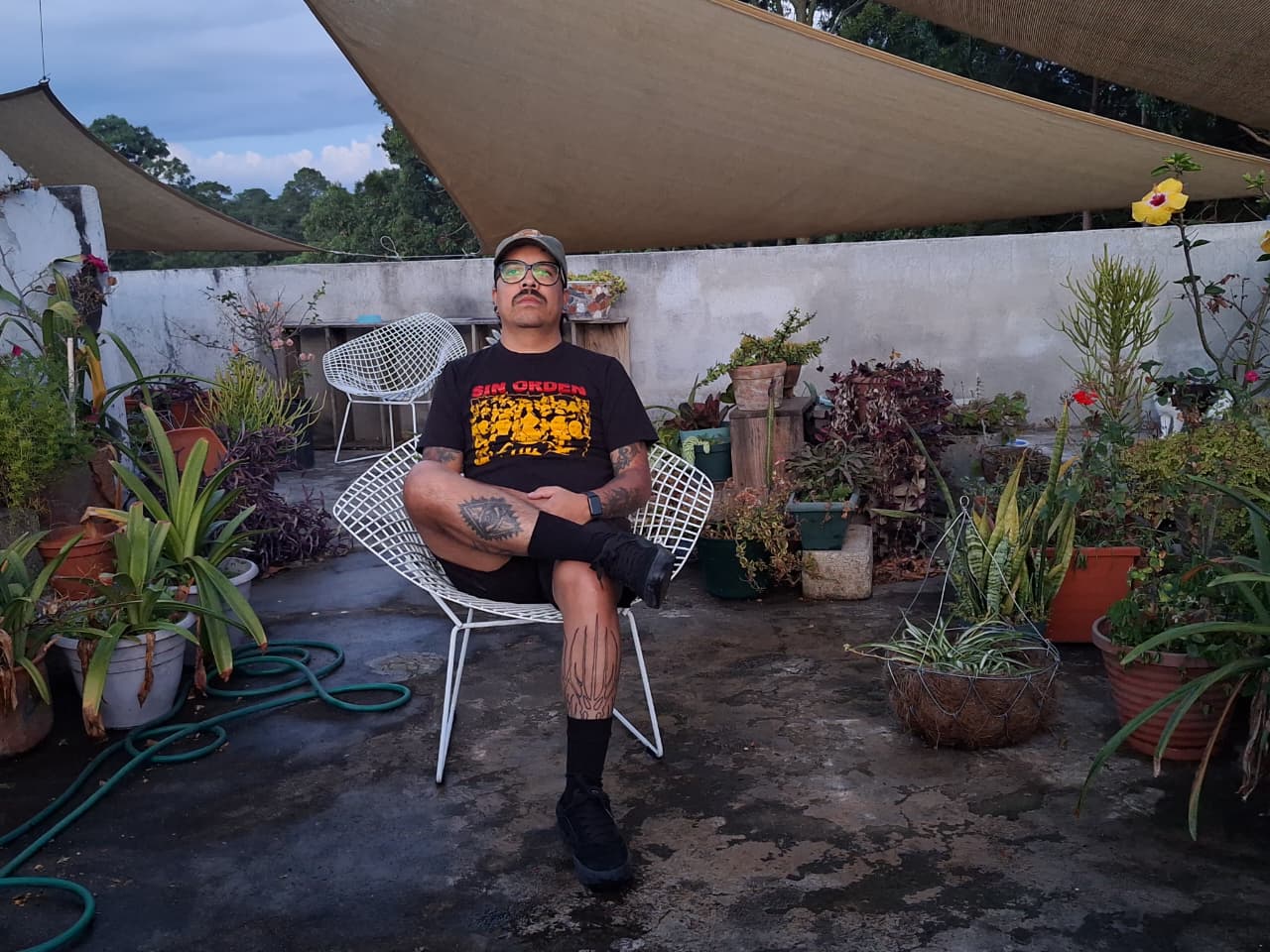
Then he came back.
His relationship with the band is still complicated enough that he can joke about maybe quitting one day, but he has not announced any plan to leave.
James thought the post-argument deal on lyrics was clear. Fidel would choose themes and tone, then James could go in and develop the words. “Sombras“, which started with Asko, had already worked in roughly that fashion.
Fidel came away from the same period with another version.
“As far as I am concerned, we jam on rehearsals and then we polish the ideas that we like and discard the others. Regarding the lyrics, I let James do his thing.”
He thinks they simply understood different things.
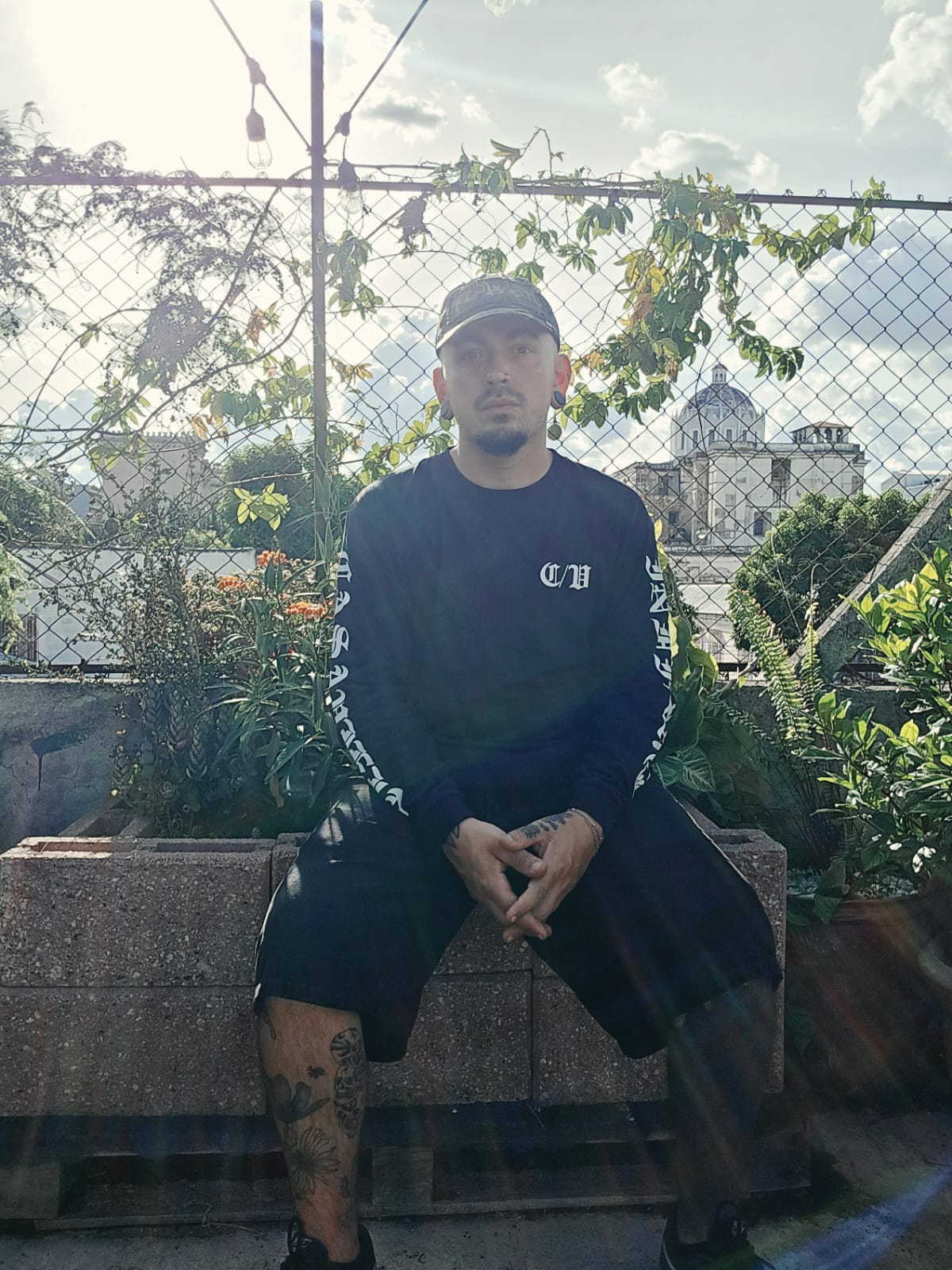
Musically, the band jam much more now. Fidel used to arrive with finished ideas because he felt that was what he was supposed to do. These days riffs get thrown around in rehearsal, Asko contributes too, and they keep whatever survives the room. Fidel found the old music-first, lyrics-second system too formulaic.
The political differences haven’t gone anywhere either.
Fidel thinks machismo, sexual harassment and the minimising of women’s voices are still present in the scene because they’re present in Guatemala at large. He once believed quite strongly in cancel culture when that language started travelling south from the US. His position changed.
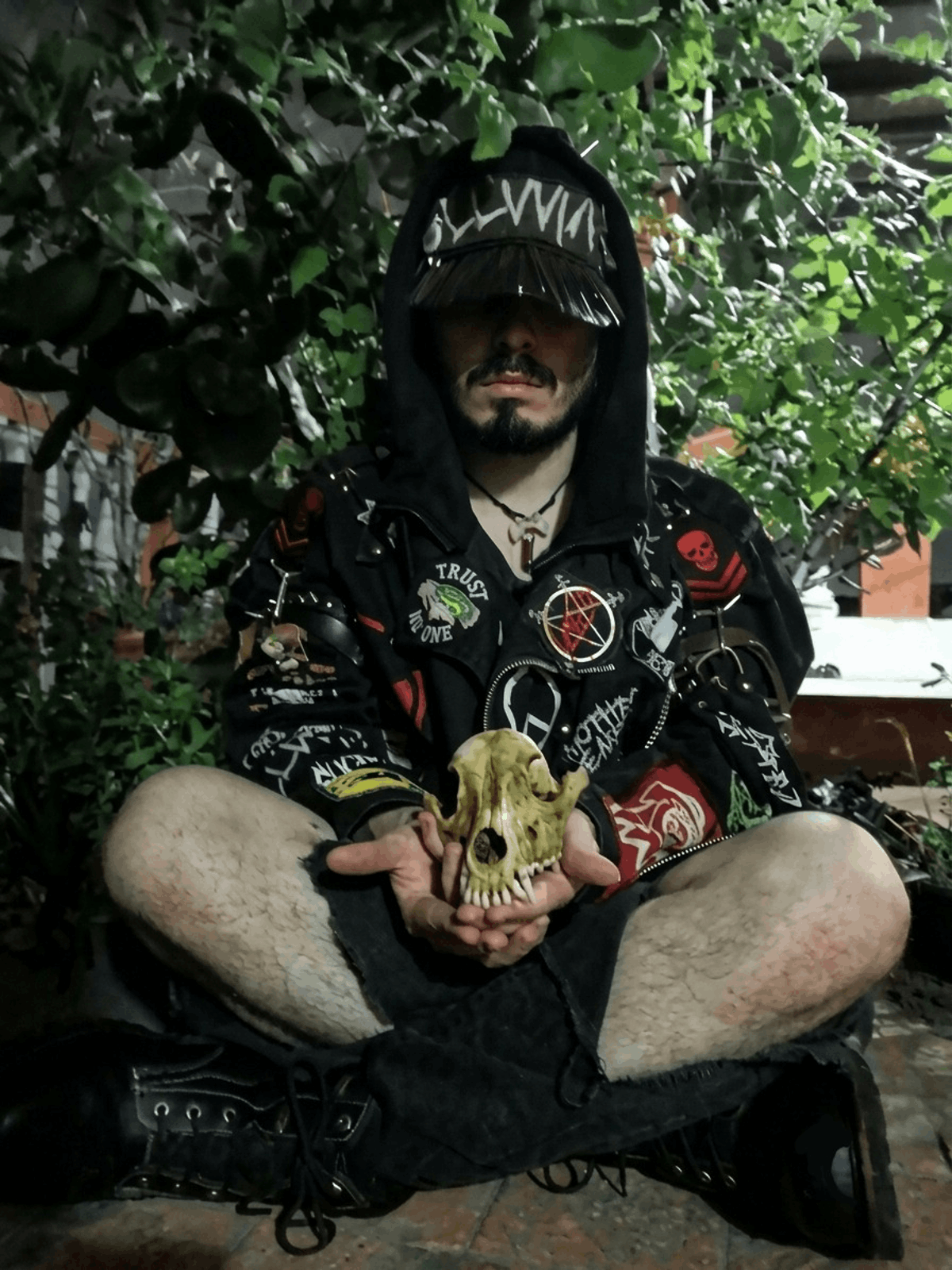
Funas did force people to talk about consent, boundaries and abuse. Some shows are now treated more explicitly as safe spaces where harassment can be reported and somebody causing trouble can be removed.
He’s still unconvinced by permanent exile as the only answer.
“To me actual accountability is about dialog, about restitution, about starting a conversation and seeking a common solution.”
He also thinks men in the scene need to know when to shut up. He can call out other men and give women space. He doesn’t want to sing as if he’s personally lived experiences he hasn’t.
Asko comes at the same mess much harder.
He talks about people with status being protected because they play in the right band, organise events or know everybody. Friends reduce serious complaints to “drama”. People who don’t want to be around it simply stop going to certain bars and events.
No names need to be dragged into that here. The pattern is what he’s talking about.
The older punk habit he absolutely wants to keep is physical presence. Turn up. Carry gear. Buy the tape. Trade the zine. Look somebody in the eye. Help clean up.
“The one toxic element MY generation needs to finally kill off is the legacy of performative solidarity that masks actual abuse and exploitation.”
His disgust with parts of the promoter circuit sits in the same place. Bands do the work, somebody else sells the tickets, then the musicians get beer.
That’s one reason Kasa matters to him.
It’s also one reason Fidel’s refusal to wear “punk” as an identity makes a weird kind of sense inside the same band. He’ll show up for the DIY part, the political conversations, workshops and community work. He just doesn’t want the label doing the thinking for him.
LLVVIA are now rehearsing “Conflicting Ideas” by Tragedy.
Yes, everyone noticed the title.
Fidel had wanted to cover it for a while. Gabriel from Nescio, Neurotóxico and Los Impuestos is due to add guest vocals. Earlier in the band’s life, From Ashes Rise, Demasiado Humano and Jesvs Carrera covers mostly helped pad out a short set. For the last couple of years, LLVVIA had been playing originals.
Then they got sick of playing the same songs.
The rule became: four new songs before they play again. And a cover counts.
Asko likes the rule because everybody has to stop relying on old muscle memory and actually write. He also admits that when you’re desperate to play live, the rule can make a jam feel like a deadline.
When James first talked about it, they had around two and a half new songs plus the Tragedy cover. School had just started and James, who works as a teacher, was talking about putting in extra time to get the rest finished.
The show has another problem anyway. They’re broke.
The official physical release show was first supposed to happen in September. Then September 26 or October 3 were floating around. Then it went on hold.
James says they still owe the producer about $200. A hundred CDs with a tabloid poster would run around $300. The tapes should cost about $50 because the band plan to do the printing themselves. Shirts, patches, posters and stickers add roughly another $300. He puts the recording and mastering at around $500, helped by a lot of friend prices.
Some friends work in print shops and may be able to knock the poster and insert costs down.
They’ve also talked about doing a double release with Ofelia, who have an EP coming, but nothing is confirmed. James was hoping they could finally make the show happen in November.
“LLVVIA” itself has been out since August 8. It’s up on the band’s Bandcamp. The CDs, tapes, extra stuff and release show can happen when the money is there.
As James put it, “the rent comes first.”
🔔 IDIOTEQ is ad-free, independent, and runs on one person’s time. If you want it to stay that way: DONATE via PayPal or SUPPORT via Patreon.
NEW: IDIOTEQ Explore 🗺️ Browse 15+ years of our archive by city, country, and style. Find artists on the world map or trace related sounds through the styles map.
Stay connected via Newsletter · Instagram · Facebook · X (Twitter) · Threads · Bluesky · Messenger · WhatsApp.