

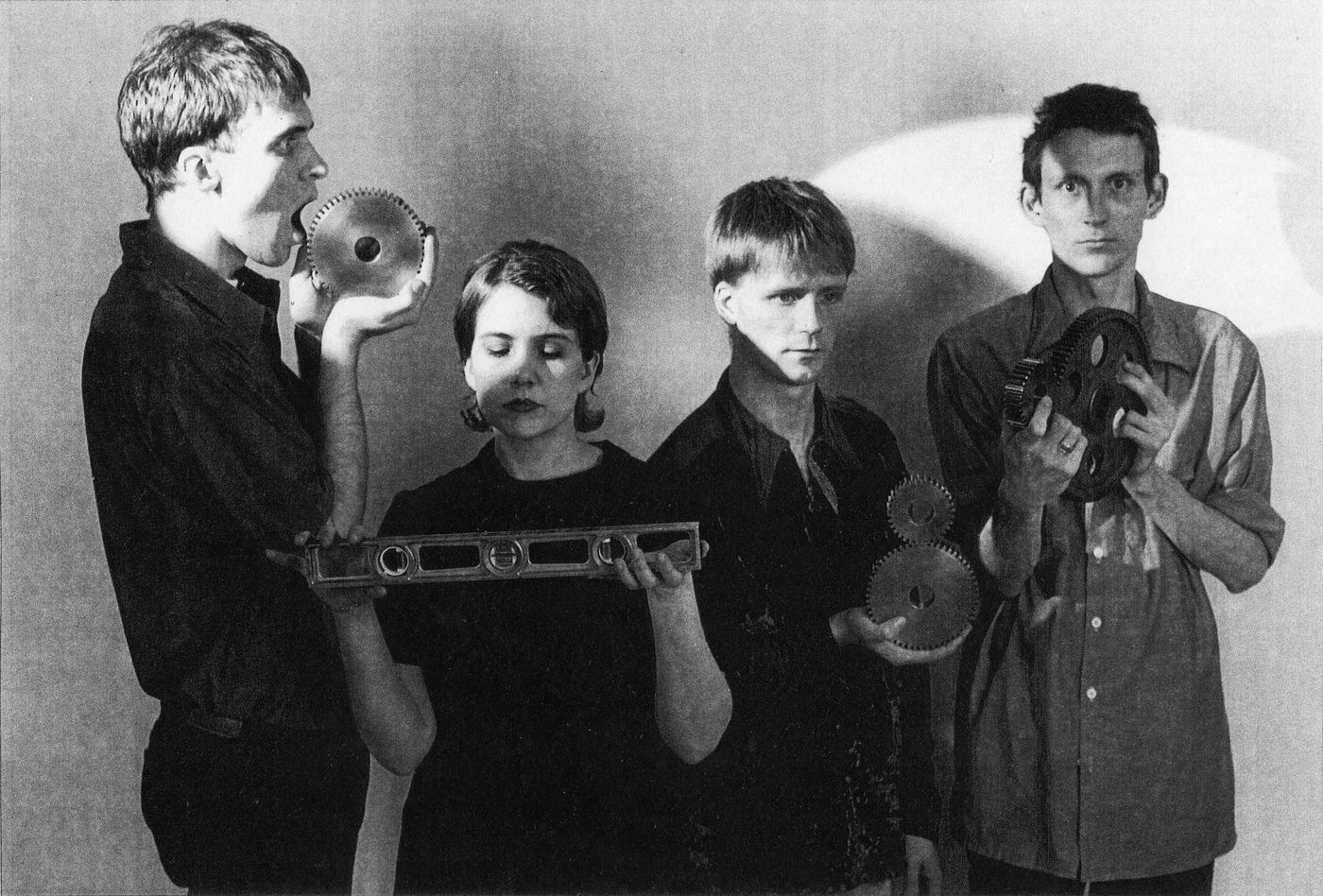
There was a period in the mid-90s when Poem Rocket could record four songs for twenty dollars, send the cassette to CMJ, and soon find people from record labels turning up at their New York shows. Their stuff was a strange sort of pop, full of harmonies, distorted guitars, guitar effects and arrangements that wandered well outside the usual song structures.
Some of it reached the British music press, some got picked up by a label with Atlantic manufacturing and Matador distribution, and some eventually disappeared into the half-forgotten corners of the underground.
Thirty years on, Silver Girl Records have brought those early recordings back on “Felix Culpa“, and Poem Rocket are recording together again for the first time in 19 years.
It’s quite a history for a band that came together through a series of accidents in Richmond, Virginia, and whose members have spent much of the intervening time wondering whether certain recordings would ever see the light of day. The title “Felix Culpa”, roughly meaning “happy error”, has turned out to be a useful description of how things kept happening to them, often when they were busy doing something else entirely.
Sandra Gardner grew up in Richmond after her family moved there from upstate New York when she was six. She always wanted to return north. Michael Peters came down from Ohio with his first band because the other members were reluctant to try New York, Boston or Washington, DC, and Richmond looked like a reasonable place to expand their touring. There was an art school, plenty of musicians and, crucially, very little expense. At one point, his band was living in a four-room house for $500 a month.
Dennis Bass had arrived for college. Michael knew him through Kinko’s, where Dennis would give him free photocopies before Michael eventually started working there himself. They became housemates, and Michael encouraged Dennis’s experiments with guitar noise and effects.
Richmond was small enough that musicians kept turning up in one another’s bands, yet Sandra hadn’t met either of them. On a night out at The Metro in August 1991, she got separated from her friends while leaving, went back inside and spotted Michael across the room.
“He shrugged and smiled,” she remembered, “and it was the most genuine, sweetest smile. It just struck me that this person was going to be important to me somehow.”
On September 7, her band opened for Texas group Glass Eye at the same venue. Michael knew her bandmates and wanted to get on their guest list, but everybody else’s was full. Sandra still had a spare place.
“There might not have ever been a Poem Rocket if I hadn’t gone back inside.”
Their relationship soon included a memorable visit to Sandra’s apartment after a party, where she invited Michael upstairs for buttered toast and casually removed the wig he hadn’t realised she was wearing. He was already impressed that she could sing and play guitar and keyboards. On their first date they went to her band’s rehearsal room. She had become annoyed at being restricted to keyboards, so Michael suggested trying bass instead. Later they ended up on the roof, playing acoustic guitar and singing to one another.
The following spring, Sandra stayed over at Michael’s house and slept in while he went to work at Kinko’s. She woke to a guitar coming from the back of the house, making sounds she couldn’t quite place. There was feedback, chorus and a thick wash of noise. She asked Michael about it when he got home.
“Oh, that must have been Dennis,” he told her.
Soon Sandra brought her bass over, and the three began playing together in Dennis’s spare bedroom. Michael already had New York in mind, and the move eventually took Poem Rocket into a much larger circle of musicians, clubs, little labels and recording spaces.
They arrived without a settled drummer. Among the people who briefly played with them were Steve West, just before his time in Pavement, and William Shin of Seam. Peter Aaron of the Chrome Cranks, whom Michael knew from his Ohio music days, suggested Andrew Nelson, who had been playing experimental percussion with Azalia Snail. The same connection gave them access to the Chrome Cranks’ rehearsal space, newly operating as Funhouse recording studio.
Poem Rocket became the first band outside the Chrome Cranks to record at Funhouse. Their first session cost just five dollars per song.
Funhouse was at 235a East Fourth Street, between Avenues A and B in Alphabet City. The Chrome Cranks’ William Gilmore Weber and Jerry Teel, also of the Honeymoon Killers, handled the first recordings, and Weber continued working with Poem Rocket through the sessions that became “Felix Culpa”.
Sandra had seen the Chrome Cranks at CBGB’s shortly after moving to New York and was somewhat intimidated by them. She knew Michael was friends with the band, but her own experience had been watching them on stage. Walking into their studio initially made her feel like an imposter. Bill, Jerry and Peter soon put her at ease.
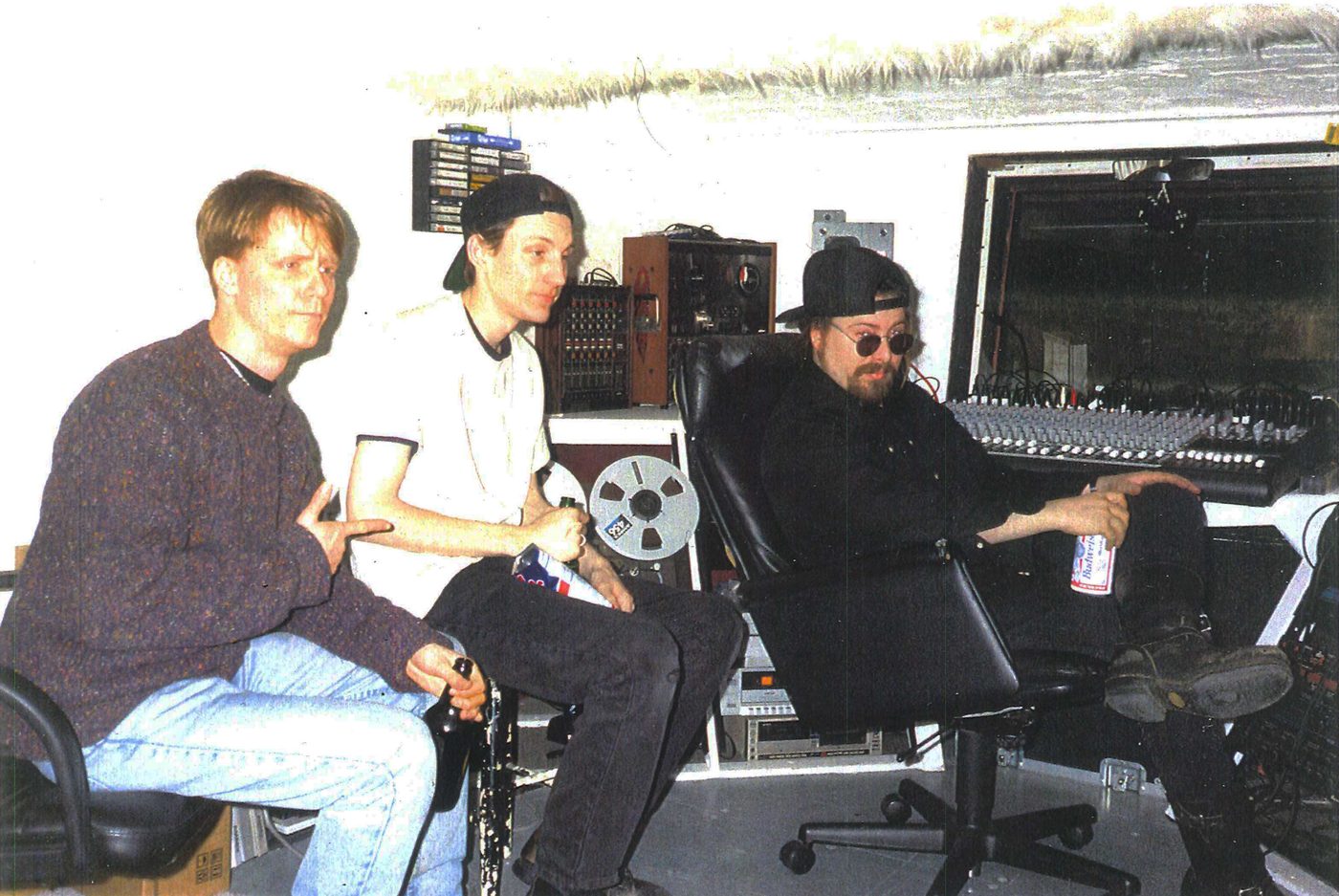
“The studio was cavelike without windows, the walls painted black with silkscreen rock posters all over the walls. The control room was in a tiny loft above the space and rickety steps in the back that led up to the space, which was covered in long, white, shag carpet from floor to ceiling.”
Michael’s memories are just as specific. Actual car seats were installed in the loft, which had such a low ceiling that you could barely stand. A rear-view mirror overlooked the recording area, with fuzzy dice hanging above the window. Cables were everywhere. Bright fluorescent posters covered the black walls. The control room was so cramped that Sandra eventually had a claustrophobic nightmare about it, though she liked how the recording space itself worked.
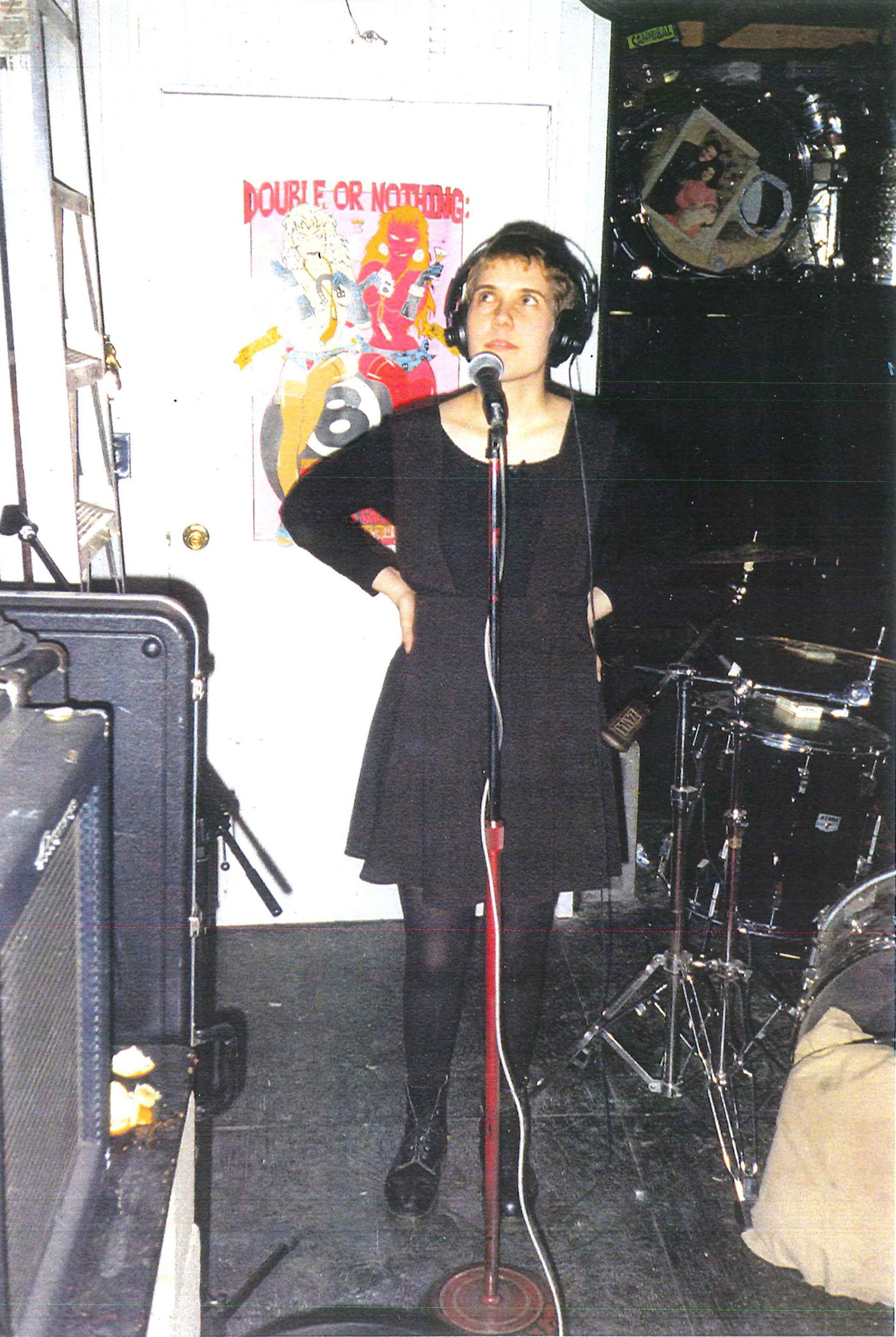
The photographs from those days show Andrew Nelson, Dennis Bass and Weber at the controls with the fuzzy dice visible above them, Michael Peters on the steps to the loft, and Sandra recording vocals. Sandra took the Funhouse snapshots apart from the photograph of herself, which Michael shot. Her artwork and design also appear on the “Felix Culpa” release.
The price went up a little after the first session. Jerry continued dropping in, while Bill spent considerable time helping them work out how to record the things they were trying to play.
“We didn’t know what we were doing yet as a band, and as we were figuring it out, both Saint Peter and Saint Bill always seemed to be looking out for us,” Michael remembered.
Funhouse became the place where most of the early songs were recorded or mixed, including recordings the band had started themselves on four-track cassette. The sessions ran through 1994 and 1995, with some additional work done elsewhere, including Marlborough Farms in Brooklyn with William Wells and Gary Olson.
Then came the cassette sent to College Music Journal.
Sandra remembers the attention developing quickly. Alternative Press reviewed the first recordings, the Chrome Cranks were taking an interest, and label representatives started appearing at shows. Some of those same industry people later ignored the band as though they had never met. It was one of the less pleasant parts of getting noticed.
Victoria Gentry, founder of the Seattle band Vain and a friend of Andrew Nelson, happened to cut Sandra’s hair around that time.
“You’ve got a real buzz about you,” she told her.
Sandra was surprised anybody had noticed.
The early records appeared through Bear Records and PCP Entertainment, with additional songs released on compilations. Bear and Carcrashh put out the “Into the Æther” 10-inch, which British weekly Melody Maker named its “Single of the Week” in November 1995. CMJ gave the EP and “Felix Culpa” its “Jackpot!” distinction.
Michael was on tour, stopping at his parents’ house in the Akron-Canton area after a show somewhere around Cleveland or Columbus, when Melody Maker called for a short interview. They had reached him at his parents’ home, and the whole situation seemed faintly absurd.
“Holy crap! Is this really happening?”
It was happening, and not only to Poem Rocket. Major labels had become increasingly interested in smaller underground acts. Michael remembers the excitement, the opportunism and the huge number of bands suddenly competing for attention.
He has a name for the period: the “Roaring 20s of Indie Rock”. Tara Key of Antietam refers to it as the “sweepstakes era”.
“The majors had their grubby hands on everything that was going on in the underground. Little bands were getting signed by big labels, and many of those bands were really crappy bands, subjectively speaking. The water was bloody.”
By 1996, Poem Rocket had received radio play and coverage from music magazines, and they had toured across the United States to the West Coast and back. The connection between little New York labels and much larger companies was making a real difference to the places their records could reach.
PCP Entertainment was run by the elusive Peter Kennis, usually known to the band as PK. Its roster included Unsane, the Chrome Cranks, Motherhead Bug, Speedball Baby, The Spitters and Slug. Sandra struggled to understand why Poem Rocket had been signed alongside those groups.
“We weren’t rock enough for some and we weren’t arty enough for others.”
PCP nevertheless had Atlantic manufacturing and Matador distribution. Poem Rocket’s records travelled through those channels, and the Matador association was so visible that some listeners assumed the band were signed directly to the label.
The original “Felix Culpa” gathered recordings made during this first phase. It was sold as a kind of Poem Rocket starter kit, collecting the singles and songs that had been spreading across small releases. For a band with an unusual approach to pop music, the attention was encouraging, though it also brought expectations about what kind of group they were supposed to be.
“We were pop! We made pop music with harmonies, but we messed up the formulas,” Sandra said. “We didn’t want our lyrics to rhyme and we didn’t want to always follow the predictable structure. I think a lot of this got lost in the noise and got buried under the wash of guitars.”
That seems worth keeping in mind when returning to the early recordings now. The band were interested in melody, vocal harmonies and the strange possibilities of conventional instruments. Dennis could make the guitar sound almost detached from its usual role, while Andrew introduced percussion ideas that sometimes had little to do with standard rock drumming.
Michael’s favourite example is “Milky White Entropy”. Sandra plays a sparse keyboard melody while Michael uses his index finger to thump a specially tuned acoustic guitar. Dennis adds long, heavily treated monotone notes and Andrew supplies the unusual percussion. Michael remembers being amazed by what they had discovered together.
“It was a real discovery, and I’m not sure I could ever reproduce the feelings I had when we made that. I got better at it in some ways, but that moment was such a revelation and a discovery, it can’t ever be duplicated.”
He connects the song’s ideas about entropy and the expanding universe with a love song about separation and the fear of losing an immediate connection with somebody. He also talks about the experience of reading a poem for the first time, when something can hit you in a way that becomes impossible to repeat once you know it.
“You want that feeling of discovery, and it gets harder and harder to recreate the more experience you gain.”
It’s an unusually personal account of a recording that might otherwise be filed away under one of the many genre names attached to Poem Rocket. Their early work drew comparisons involving krautrock, noise rock and downtown New York experimental music, though both Sandra and Michael still hear the pop ambitions clearly.
The video for “Small White Animal” and the archival live recording of “Deus Absconditus” at Brownies in New York offer two further pieces of the band’s early history. “Small White Animal” would eventually become particularly important, though nobody knew that at the time.
The end of the indie boom hit the band hard. PCP lost its Matador distribution arrangement, Atlantic manufacturing disappeared, and the network that had helped their records travel suddenly became much smaller.
Michael needed only five words to describe it.
“Snip, snip, snip went the scissors.”
There were immediate consequences. Shows on tour could draw just a handful of people. Getting records into shops became a personal job. Michael took to carrying a suitcase of merchandise and opening it in record stores like a travelling salesman, something Peter Gordon still enjoys impersonating.
The changes also arrived while the band were dealing with departures.
Dennis left when only half of “Infinite Retry on Parallel Time-Out” had been mixed at Wharton Tiers’ Fun City studio. Michael was forced to rethink his guitar playing. Dennis had been responsible for so much of the unusual texture in Poem Rocket’s music, and Michael had to find ways of covering that ground himself.
“I had to really push myself on guitar when Dennis Bass left the band with only half of Infinite Retry mixed at Fun City, Wharton Tiers’ studio. From Funhouse to Fun City? It felt like a crisis at the time.”
The new approach meant working harder with effects, drones and loops while still handling rhythm guitar. Andrew remained for a while, then left as well. Michael remembers being frustrated and frightened by how quickly things were changing.
Sandra tells the period quite differently.
“From my position, it wasn’t disintegrating! While the departures were hard, each one made us stronger.”
With Dennis gone, Michael developed a much wider guitar vocabulary. Andrew’s departure eventually brought Peter Gordon in on drums, and later Mike Knowlton joined the picture as a second guitarist. Sandra considers that configuration their strongest.
Both memories belong to the same stretch of years. Michael recalls exhaustion and financial trouble, with the wider industry collapsing around them. Sandra remembers new ways of playing together opening up after each departure.
The changes also coincided with Sandra and Michael getting married, playing fewer shows and carrying on with new recordings. “The Universe Explained in Six Songs” came out through Magic Eye, followed by work on “psychogeography”. The latter eventually appeared through Atavistic and was ranked number 33 in Alternative Press’s 50 best albums of 2000, as well as receiving a Critics Choice from the Chicago Reader.
Poem Rocket later found themselves working with Atavistic and Touch & Go distribution, though that came after the lean period when Michael was personally delivering records.
The title “Infinite Retry on Parallel Time-Out” came from an old computer error message, a phrase Michael remembered from PCs getting stuck in an odd state. He has since connected it to the upheaval of those years, when the band’s members and the businesses around them were all trying to work out what could happen next.
One unfinished recording would eventually have a much longer life than anyone expected.
Mike Knowlton had been playing with Peter Gordon in Gapeseed, but that band ended after their guitarist moved to San Francisco. Gordon joined Poem Rocket, and Knowlton remained close to the group through friendships and a shared rehearsal space. He had begun putting his energy into starting a business and didn’t want the full-time commitment of another band.
He could still play with his friends, however, and they wrote and recorded the songs that became “Lend-Lease” in 1999. The EP was supposed to be released through Atavistic. It never came out.
“When we eventually reconnected by chance at Dromfest, over twenty years later, and Michael Peters challenged me to learn ‘Small White Animal,’ it was on!” Knowlton said.
That reunion took a little time.
Poem Rocket had stopped playing shows after recording “Invasion!” in 2007, and Peter Gordon spent much of the intervening period wondering whether they would ever become active again. He sometimes found it difficult to listen to the old records because he missed playing the songs. There were occasional attempts to get together and rehearse, but nothing stuck.
Sandra and Michael had children, work and graduate school to deal with. The years kept passing.
In the meantime, Keith York at Silver Girl Records noticed that “Lend-Lease” was missing from Poem Rocket’s released catalogue. The label started working towards getting it out, and in 2024 the previously unreleased EP finally appeared.
Silver Girl’s involvement brought the old recordings back into circulation and got the band thinking about their catalogue again.
Another part of the comeback began at Dromfest.
Al Crisafulli of Dromedary Records had invited Poem Rocket to play the festival in 2023. They weren’t ready to accept, but Sandra and Michael attended anyway to see Ian James, Andrew Bordwin and Richard Balyut playing in Flower and French.
While waiting for their friends, Sandra noticed somebody at the bar who looked like Mike Knowlton. Michael called his name across the room. It really was him.
Knowlton had known Gordon since middle school, played with him in Gapeseed and worked with Poem Rocket on “Lend-Lease”. They had plenty to talk about. Before long, Michael gave him a challenge.
“If you can figure out Dennis’s old guitar part from ‘Small White Animal,’ you’re in the band.”
It was partly a joke. Knowlton went back to Florida and learnt the part anyway.
A song recorded at Funhouse in 1994 had now helped bring Poem Rocket back together three decades later. Gordon was ready to play, Knowlton joined permanently, and the band agreed to perform at Dromfest in 2024.
Crisafulli helped make that commitment stick. Gordon remembers Sandra insisting they shouldn’t return unless they could play properly. The usual vague promises about maybe rehearsing again weren’t going to be enough. Al wanted a firm answer and made them give one.
They spent months practising individually before the first full-band rehearsal. Gordon remembers starting with “Dirigible” from “psychogeography”, choosing something slow to ease into playing together again.
“Playing drums with all that low end from a loud bass guitar next to me and looking up and seeing three of my oldest friends, facing each other in that typical ‘band practice circle,’ it was the best moment.”
They also got a keg for that first rehearsal weekend. Gordon justified it as cheaper and environmentally friendlier, with the added benefit of keeping everybody in the right spirit.
Sandra has found the current band remarkably easy to work with.
“What surprised me about creating together again is how insanely fun it is this time. I’ve never laughed so much in my life.”
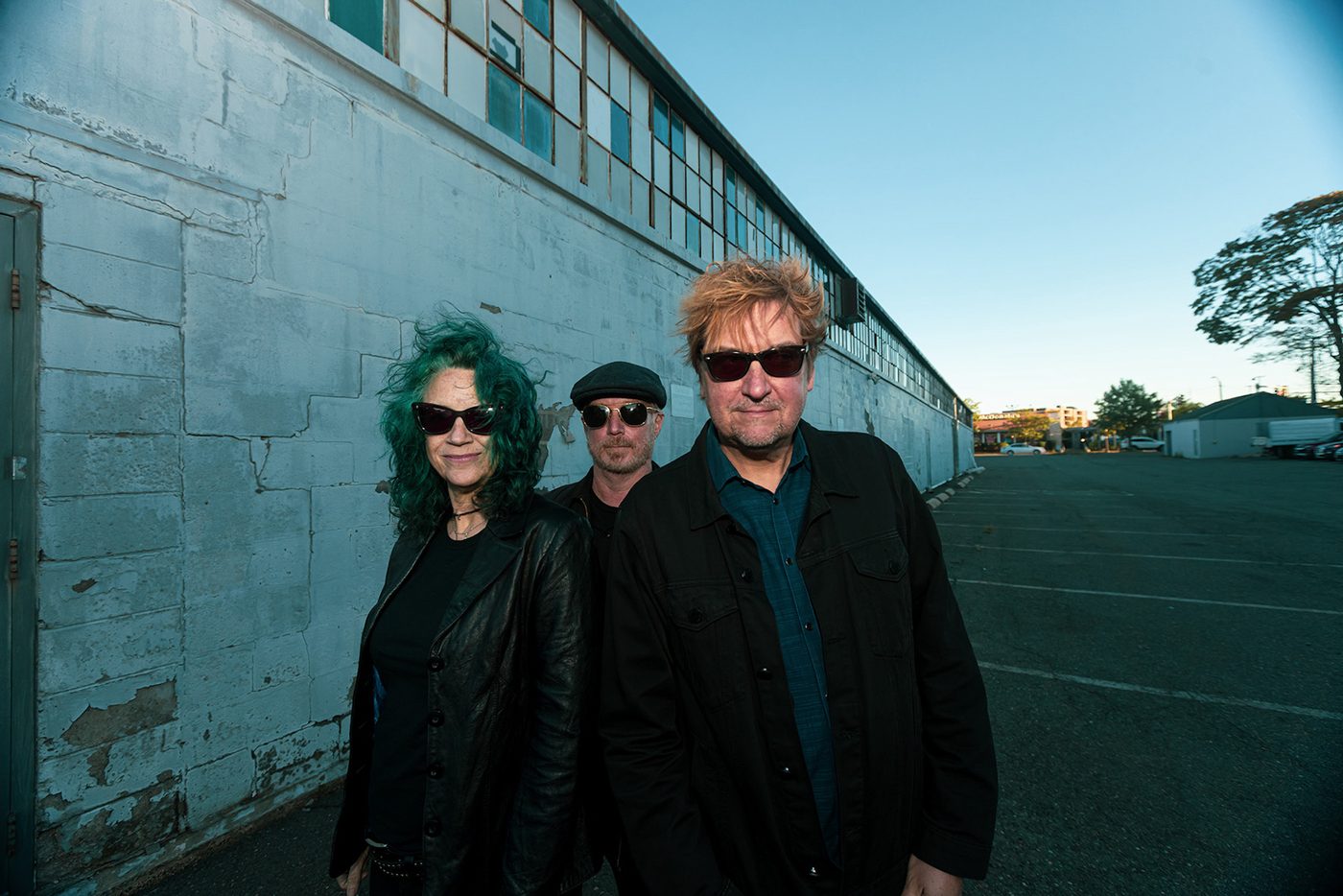
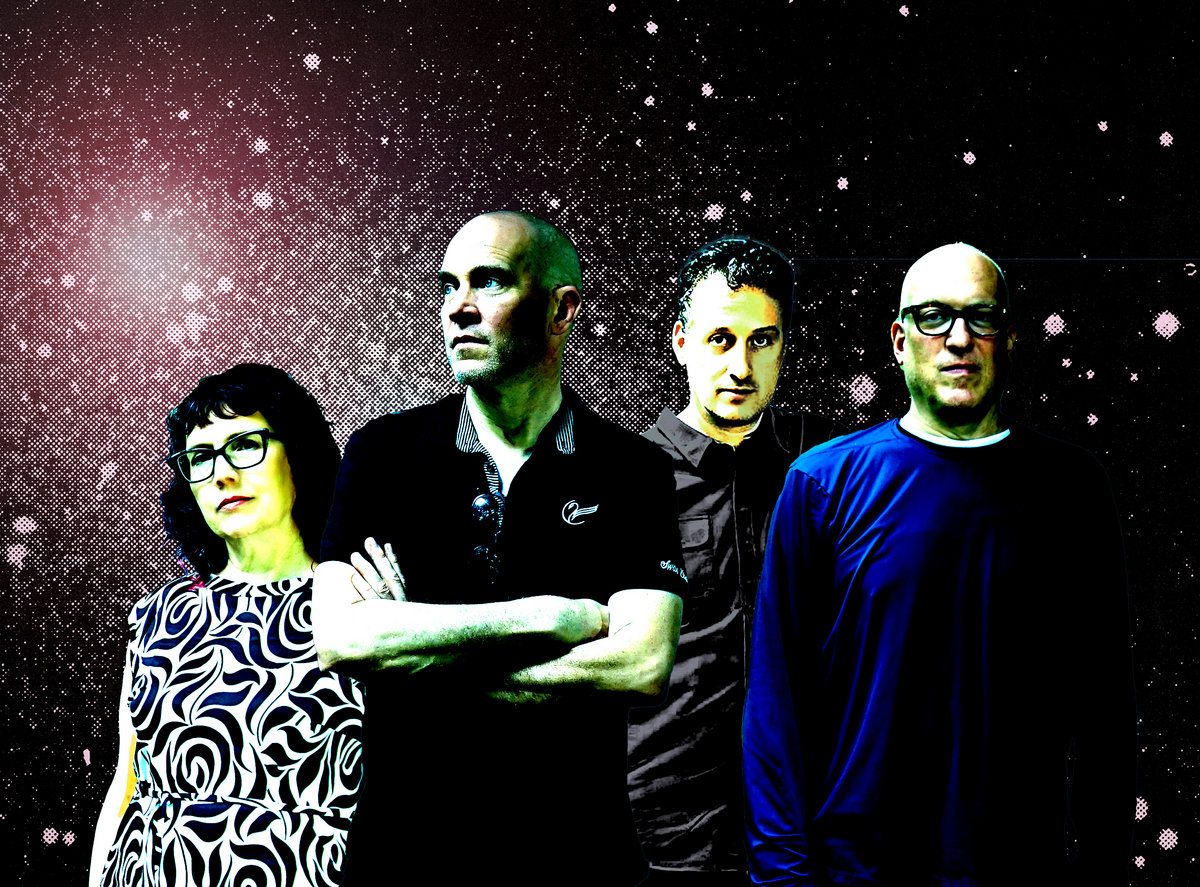
The new songs started arriving while Poem Rocket were still preparing for Dromfest 2024. The four musicians quickly found themselves writing together again, and by the time the show came around, they already had enough material for another album. Rehearsals continued, with Sandra Gardner, Michael Peters, Mike Knowlton and Peter Gordon working on the band’s first new record in 19 years.
Michael traces much of this unlikely reunion back to the unreleased “Lend-Lease” EP. Recorded with Knowlton in 1999, it had sat unheard for more than two decades before Silver Girl Records finally released it in 2024. That old recording had helped reconnect the musicians and given the label a reason to revisit Poem Rocket’s catalogue.
“The best accident for the recent rebirth of Poem Rocket might have been the fact that we recorded the Lend-Lease EP, slaved over it even, yet for some reason, Atavistic—though it intended to do so—never released it!”
The band have called their forthcoming album “Lidar Revelations (at the Trial of Cult. Inc.)”, with a release planned for late spring 2027. By then, the original “Felix Culpa” recordings will have been around for more than thirty years, and several of the songs that brought Poem Rocket together in their early days are back in the band’s live repertoire.
Michael’s thoughts about those years keep returning to the idea behind the title “Felix Culpa“. A recording that never came out, a chance meeting at a festival and an old guitar part that Knowlton agreed to learn have all played their part in getting the band together again. The same group of friends who once struggled to get their music released are now making another record.
“Evolution is not linear. And with one seeming little error, one seeming fuck up, somehow provides access for new worlds to open, new worlds you never thought were possible.”
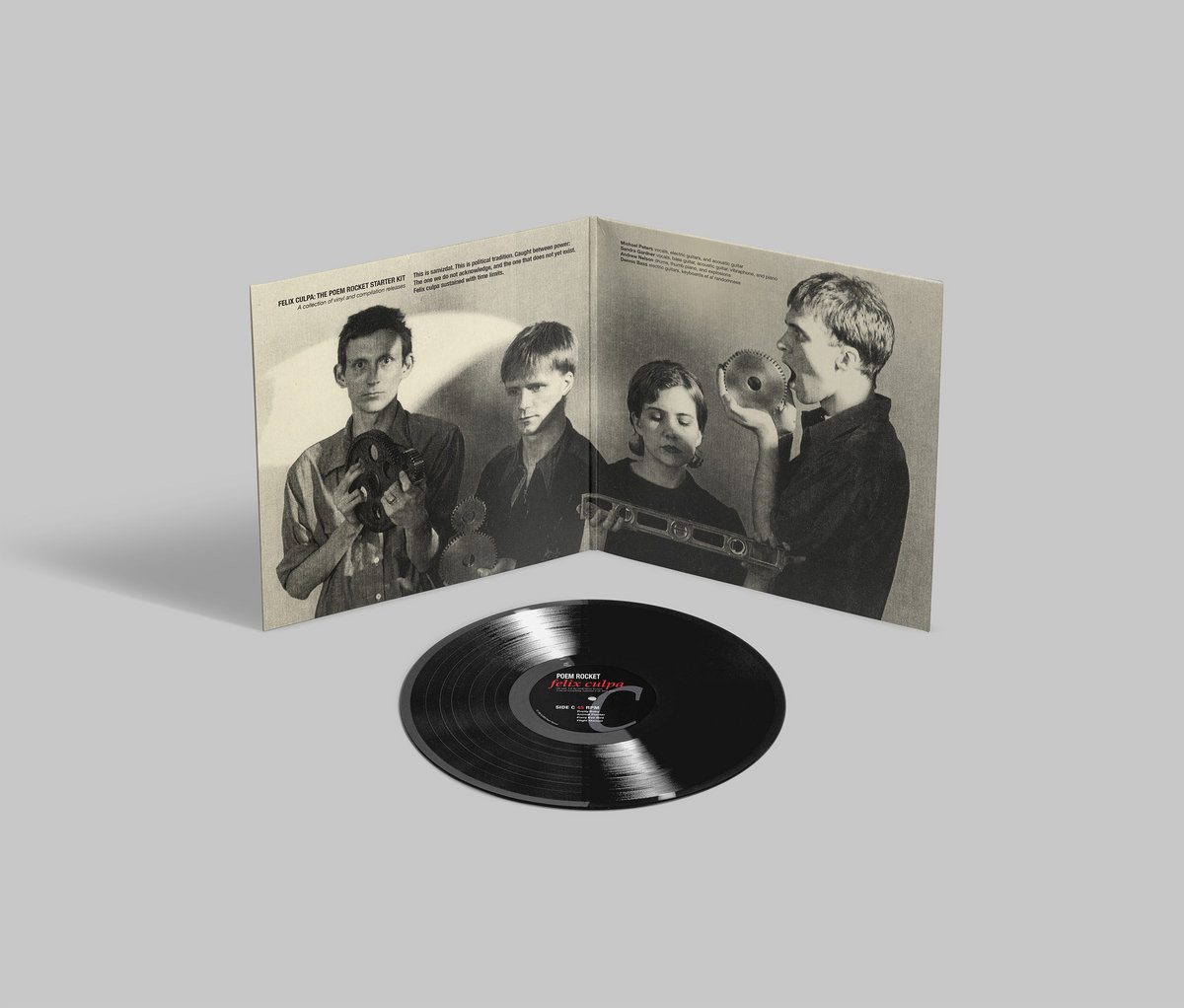
“Felix Culpa: The 30th Anniversary Edition” was released on June 4, 2026, by Silver Girl Records, following remastering by Kris Poulin in 2025. The reissue brings the recordings to major streaming services for the first time and includes all five songs from “Into the Æther”, compared with three on the original CD. The limited double LP edition comprises 200 copies on 180-gram black vinyl in a gatefold sleeve. The original CD had been packaged in a cardboard digipak partly because the band wanted it to resemble a vinyl record.
The album is available through Poem Rocket’s Bandcamp, Silver Girl Records and major streaming platforms. Silver Girl’s archival reissue programme is set to continue with “Infinite Retry on Parallel Time-Out”, while the band’s new album, “Lidar Revelations (at the Trial of Cult. Inc.)”, is expected in late spring 2027.