

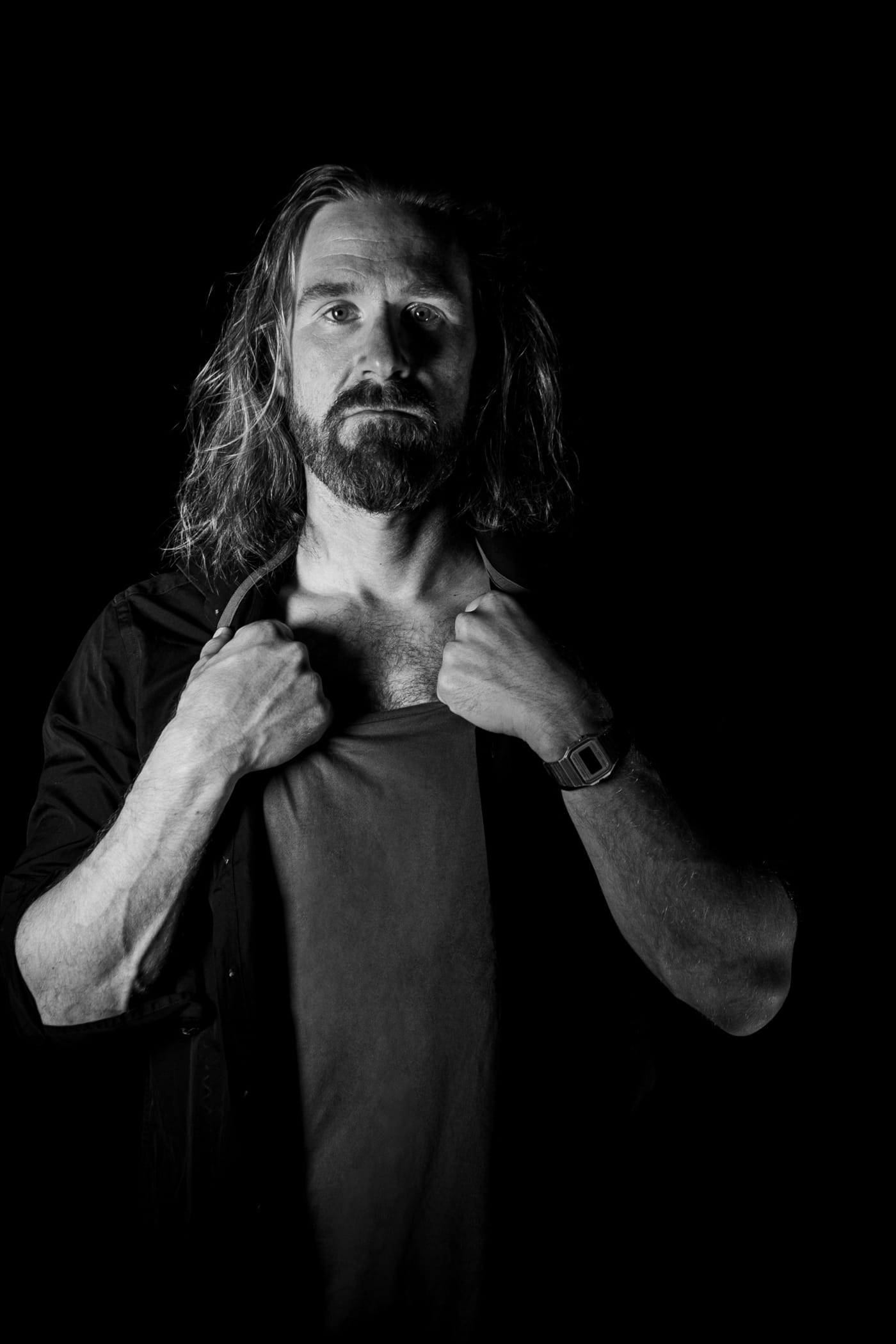
At a gig in RAW-Gelände near Berlin’s Warschauer Straße, Jouni Hirvonen found himself watching the crowd as closely as the bands. He can’t remember exactly what was on the bill, but he remembers leaving with a new idea about the sort of music he could make.
The Finnish-born musician had spent years playing in other projects, and here was a city where, as he saw it, people seemed willing to give almost any kind of art a chance. That experience stayed with him when he began working on “Grim Sailor“, a self-titled debut of dark alternative rock, progressive-metal rhythms and electronics, recorded alone in his Berlin basement.
The ten songs deal with obsession, isolation, the search for somewhere to belong and the uneasy feeling of losing touch with your own life. There’s plenty of weight in the guitars, but also unusual rhythmic ideas, synthesised parts and arrangements that Jouni allowed to develop wherever they seemed to be going. He’d wanted to make an album entirely on his own terms for a long time. Berlin gave him the confidence to try.
“I felt more liberated, I could do anything, I would not need to follow a certain style or trend or whatsoever.”
Wyświetl ten post na Instagramie
He’d noticed something similar in the way people dressed and behaved around the city. In his experience, Finland came with more expectations about what an artist ought to do and how their work should sound. He felt freer to follow his instincts in Berlin, and he began using more synthesizers and electronics, partly because they seemed right for the concrete buildings, industrial spaces and nightlife around him.
The clubs were a big part of it. Jouni was fascinated by Berlin’s underground techno culture, the parties held in concrete bunkers and the small gigs in old industrial places. Teufelsberg, the former listening station on a hill west of the city, also caught his imagination with its graffiti-covered buildings. He found plenty to think about in these places, especially the people who came out at night to be among others who accepted them.
That thought became central to “Chaopian”, the album’s opening track, which combines a 15/8 rhythmic idea with synthesizers, vocals and a closing section of heavier guitar riffs. Jouni was thinking about people who might pass unnoticed on the metro during the day, then spend their nights in unusual clubs where they could be themselves. He liked the beauty of that world and the freedom people found in it.
“I think there is a lot of beauty in the underground scene and we could learn something from there.”
The rhythm at the beginning of “Chaopian” had been sitting in his memory for years. Back in 2018, he’d watched “You Were Never Really Here”, the thriller starring Joaquin Phoenix, and one scene had stuck with him. Phoenix’s character was leaning against the rear window of a taxi, watching the rain and the city passing by. Jonny Greenwood’s music was playing over it.
The piece was “Dark Streets”, from Greenwood’s original film score. Jouni remembered its unusual 15/8 rhythm and wanted to try writing something around it. He didn’t return to the soundtrack for years, yet the pattern remained in his head until he wrote “Chaopian” in 2026.
He took that remembered beat and began building the song around it. Synthesizers and vocals enter over the rhythm, with the arrangement eventually moving into a heavier instrumental guitar passage. For that final part, he went back to the direct metal playing he’d enjoyed in his younger years.
“It all reminded me of my youth playing in metal bands in my hometown.”
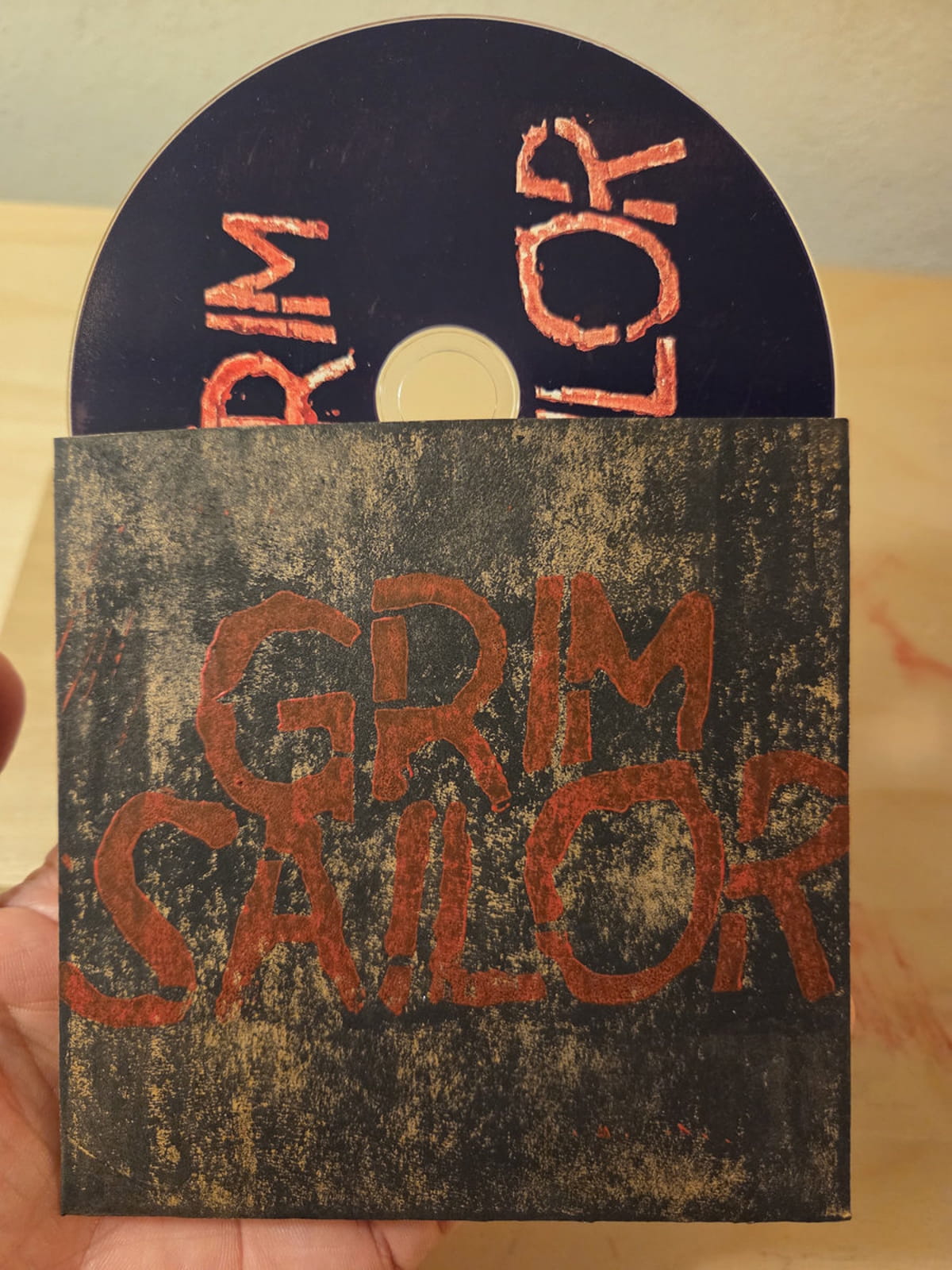
Jouni’s earlier musical life was largely based around bands and other projects, with two Finnish-language albums and several EPs behind him before Grim Sailor. The darker metal of Anathema, Paradise Lost and Type O Negative remained close to his tastes, while Faith No More’s willingness to move between styles offered another way of thinking about what a rock band could do. He also admired the Beatles’ sense of melody. Those interests were still there when he began making music under his own name, with Berlin adding a different set of sounds and experiences.
There was another side to the world he imagined for Grim Sailor, one that came from video games he’d enjoyed since he was young. “Fallout” appealed to him because of its vast abandoned areas, mysterious characters and damaged machinery. He liked imagining what might exist in those places, and the ruined technology suggested sounds he could experiment with in the studio.
“Cyberpunk” brought a different picture to mind. Its modern synthesizers, neon lights and busy city streets reminded him of a huge city with plenty happening after dark, including things hidden away in its less welcoming corners. Both games gave him ideas to play with, and some of those images fitted naturally with the Berlin he’d been getting to know.
By September 2025, Jouni had committed to making the full album. He’d spoken with Pekka Kupiainen, the Helsinki-based engineer who would mix and master it, and they had agreed on a deadline. Pekka’s summer schedule was already full, so the recordings and mixes needed to be finished by 1 May 2026.
That gave Jouni several months to work through the songs. Most days he would simply head downstairs and begin with whatever idea he had, whether it was a rough demo, a melody or an interesting sound. He tried to avoid judging everything too early, leaving himself room to find out where an arrangement might go before deciding what to keep.
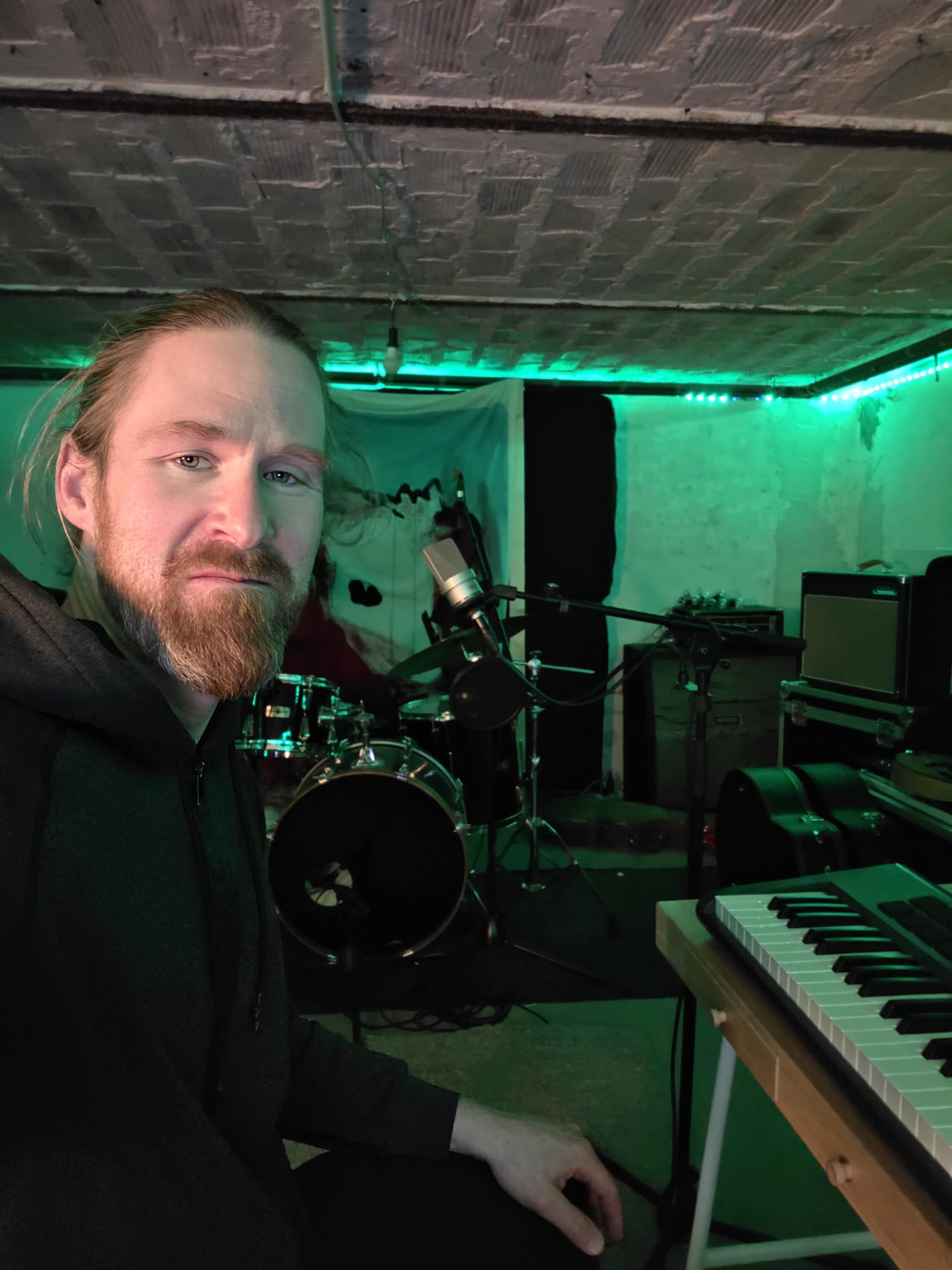
A song usually began with a quick acoustic guitar and vocal demo. Once he had the basic chords and melody, he’d work further on the lyrics, then record the drums, bass and guitars. Keyboards and vocals followed, with extra harmonies, effects and other sounds added as the arrangements developed. Sometimes he’d return to the structure and change it again.
Finished tracks went to Pekka in Helsinki, who would send back draft mixes. After one or two rounds of comments, they’d agree on the mix and prepare the song for mastering. Jouni handled the writing, playing and production of the record, with Pekka responsible for the final mixing and mastering. The detailed credits also name Pekka as a recording engineer on the earlier single “You Don’t Belong”.
Jouni had spent enough time playing with other musicians to know how useful those conversations could be. He valued the way a band could take an idea apart and make it better. In his basement, he could make decisions much faster. Whether a riff needed another bar, a lyric should change or the bass sounded better played with a pick was entirely up to him.
“All these small decisions I just made instinctively.”
The freedom was welcome, although being alone brought its own frustrations. When an idea stopped working, nobody was there to offer another suggestion. There was no bandmate to try a different part or tell him that a riff wasn’t worth saving.
“The downside of it was the lack of a mirror, lack of someone countering your thoughts or throwing good ideas when I felt stuck.”
He came away trusting his own judgement more. He’d happily record another album by himself, though the experience also left him interested in making a record with other people again. Both approaches had taught him something about writing music.
One of the more stubborn songs was “All These Walls”, which Jouni initially expected to be among the easiest to record. The parts seemed straightforward when he began working on them. Once he’d put the arrangement together, though, something kept bothering him.
“It felt too upbeat, too lightweight, somehow rushing too fast.”
He spent several days trying to work out what needed changing, returning to demos that never quite sounded right. Then he tried playing the song in half-time. The BPM stayed the same, but the drums and bass moved at half the previous pulse. The change worked immediately.
The finished track opens with a synth-bass riff, followed by verses driven by toms. The chorus has a slower, lower feel, with heavy guitar and drop-D bass coming in beneath the vocals. There are additional synthesizer layers too, including whistle-like sounds. Jouni had found a way to let the heavier parts move at the pace he wanted without changing the song’s underlying tempo.
The lyrics concern people who become trapped by their own fears. Someone desperately wants to approach another person, perhaps someone they love, but never does it. Jouni also thought about musicians who dream of recording something themselves and then spend years worrying that it might fail.
It was an example he understood personally. He’d wanted to make a solo album for a long time, and finishing “Grim Sailor” meant getting past those same doubts. He had to accept that some ideas would fail, make another decision and keep recording.
“Nightwatch” came together under rather different circumstances. A friend was visiting Jouni in Berlin and staying at his place. One morning, the friend headed into the city and challenged him to write a song before he returned. Jouni accepted and started thinking about the wild boars he’d encountered around Berlin at night.
The animals roam the outskirts of the city, knocking over rubbish bins, digging up the ground and looking for food. Jouni had come across a few himself, and he knew how unsettling it could be to find one of those large, dark animals staring back at him in the street.
He imagined a wild boar with an injured leg, struggling to move properly. Its uneven walk gave him an idea for a 7/8 rhythm. From there, the song began changing into a story about someone following another person through the streets, refusing to accept that their relationship had ended.
“Eventually the image of injured boar’s limp gave the song its crooked rhythm.”
The finished song deals with obsession and the urge to control someone who has already left. Its crooked rhythm came from that imagined animal, and the recording includes another experiment Jouni had been playing with in the basement.
He owned a damaged Rhodes Mark I electric piano, which he used on several tracks. Sometimes it sits quietly beneath the other instruments, adding a rougher texture. In the second verse of “Nightwatch”, he layered the Rhodes with a synthesizer to make the keyboard part.
There were beer bottles too. He struck them with drumsticks for a percussive part in the verses of “Stay With Me”. Elsewhere, the baritone guitar gave him a different character from his usual guitar sound. He associated it with the mysterious guitar tones of “Twin Peaks”, and its lower register can be heard in the verses of “Won’t You Let Me Go”.
These experiments became part of the record as Jouni kept following sounds that interested him. He’d been free to leave a damaged electric piano in the arrangement, build a rhythm around an odd image or let a heavy guitar section take over after several minutes of electronics. He could keep trying things until they sounded right to him.
The album also has a hand-carved visual identity. Erno Kettunen created its original woodcut logo and the associated logo artwork, giving Grim Sailor a distinctive mark to accompany the recordings.
“Nightwatch” had been released as a single on 1 October 2026, following earlier tracks including “Feet in Mud”, “Recover Me” and “You Don’t Belong”. With the full album completed, Jouni could begin working out how the songs would function outside the basement.
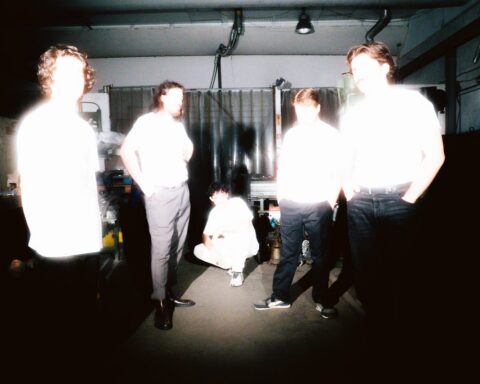
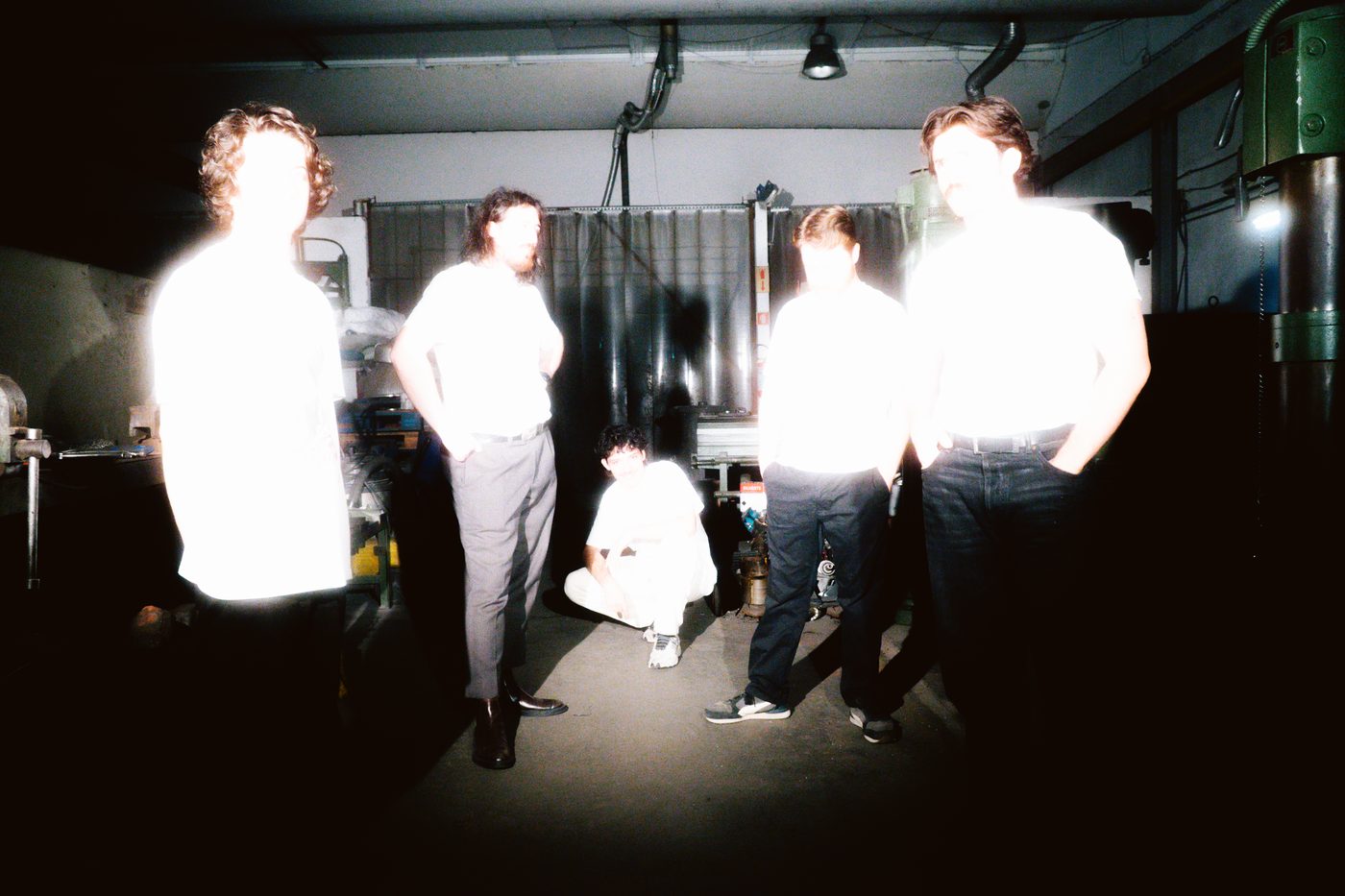
Grim Sailor is already developing into a live project. Jouni has been working with other musicians to play the songs and has started looking for gigs, initially in Berlin and Helsinki. He’s open to taking the band elsewhere too, although those two cities are the immediate focus.
He expects he may move back to Helsinki in summer 2027, bringing roughly three years of living in Berlin to an end. He still wants to keep a connection with the city’s alternative culture, continue playing shows there and perhaps bring other Finnish bands over to experience the local live scene.
“I hope we can continue playing gigs in Berlin, and maybe I could bring a few other interesting bands from Finland to experience the live scene here.”
There’s also a chance he could finish a second album before leaving Germany. He hasn’t settled on that yet, and he knows his music may change when he starts spending more time around Helsinki’s musicians and venues again. For now, he’s enjoying the freedom of having a working solo project and the possibility of bringing more people into it.
He hopes the experience might encourage other musicians to follow ideas they’ve been sitting on, even when they’re unsure they can pull them off. Recording alone taught him that he could make those decisions, finish the songs and put out the record he’d wanted to make for years.
“I hope I can help other musicians in the future to be brave and just create the music that is playing in their heads as it is.”
“Grim Sailor” was released on 6 November 2026 through Chilly Mazarin Records. The ten-track debut is available on Bandcamp and Spotify, with CDs available at shows and by request.
Wyświetl ten post na Instagramie
Years from now, Jouni wants to return to the album and hear what that period of his life sounds like to him. The songs were written during his time in Berlin, with its clubs, industrial spaces and people, but also during months spent alone making decisions and finding out what he could do as a musician.
“Maybe I put my words wrong, I just thought it will be interesting to hear what it will sound like in 30 years, as for me it is a reflection of a period in my life, like a diary. It is always interesting to read your old diary and understand what were you thinking about life at a certain point of time.”
🔔 IDIOTEQ is ad-free, independent, and runs on one person’s time. If you want it to stay that way: DONATE via PayPal or SUPPORT via Patreon.
NEW: IDIOTEQ Explore 🗺️ Browse 15+ years of our archive by city, country, and style. Find artists on the world map or trace related sounds through the styles map.
Stay connected via Newsletter · Instagram · Facebook · X (Twitter) · Threads · Bluesky · Messenger · WhatsApp.