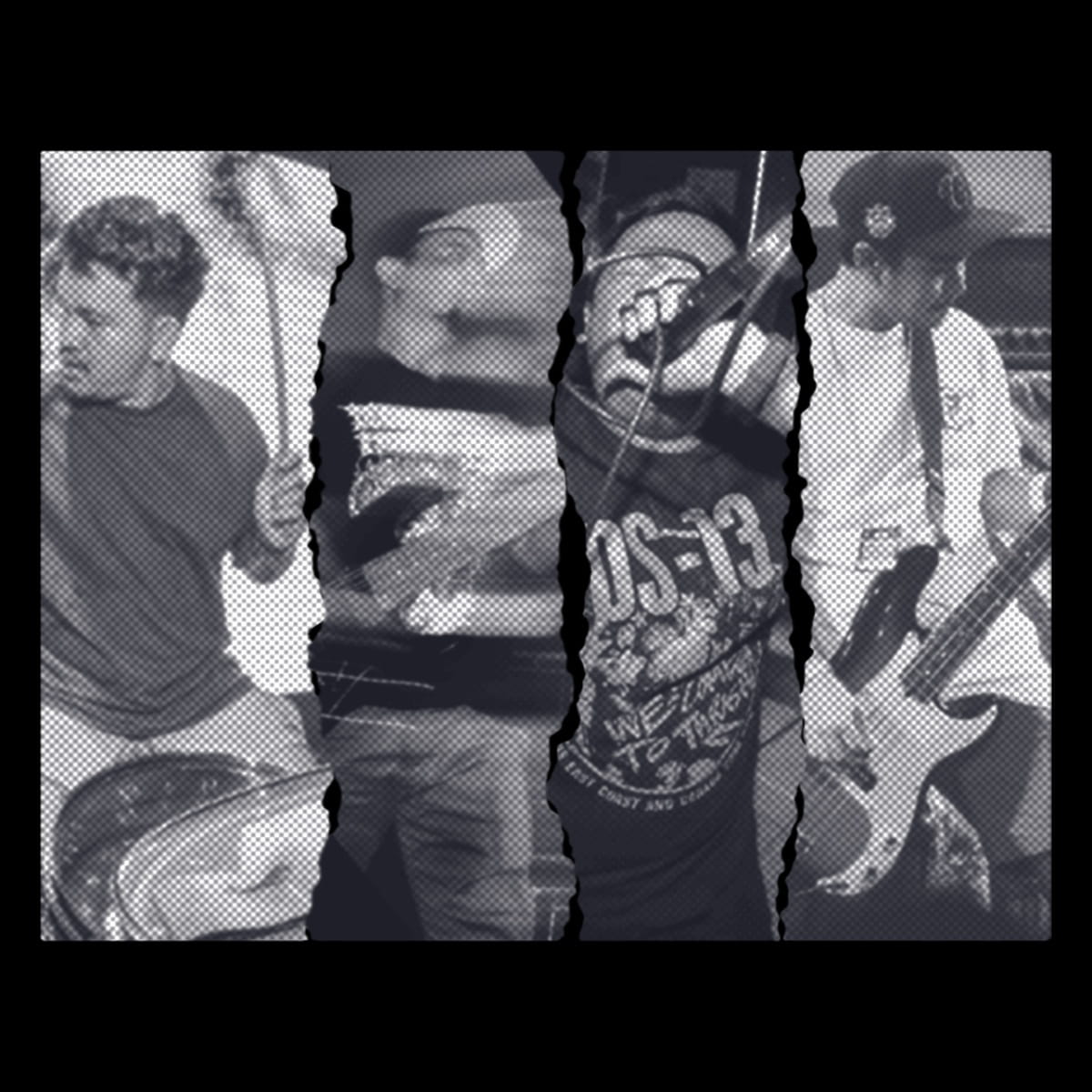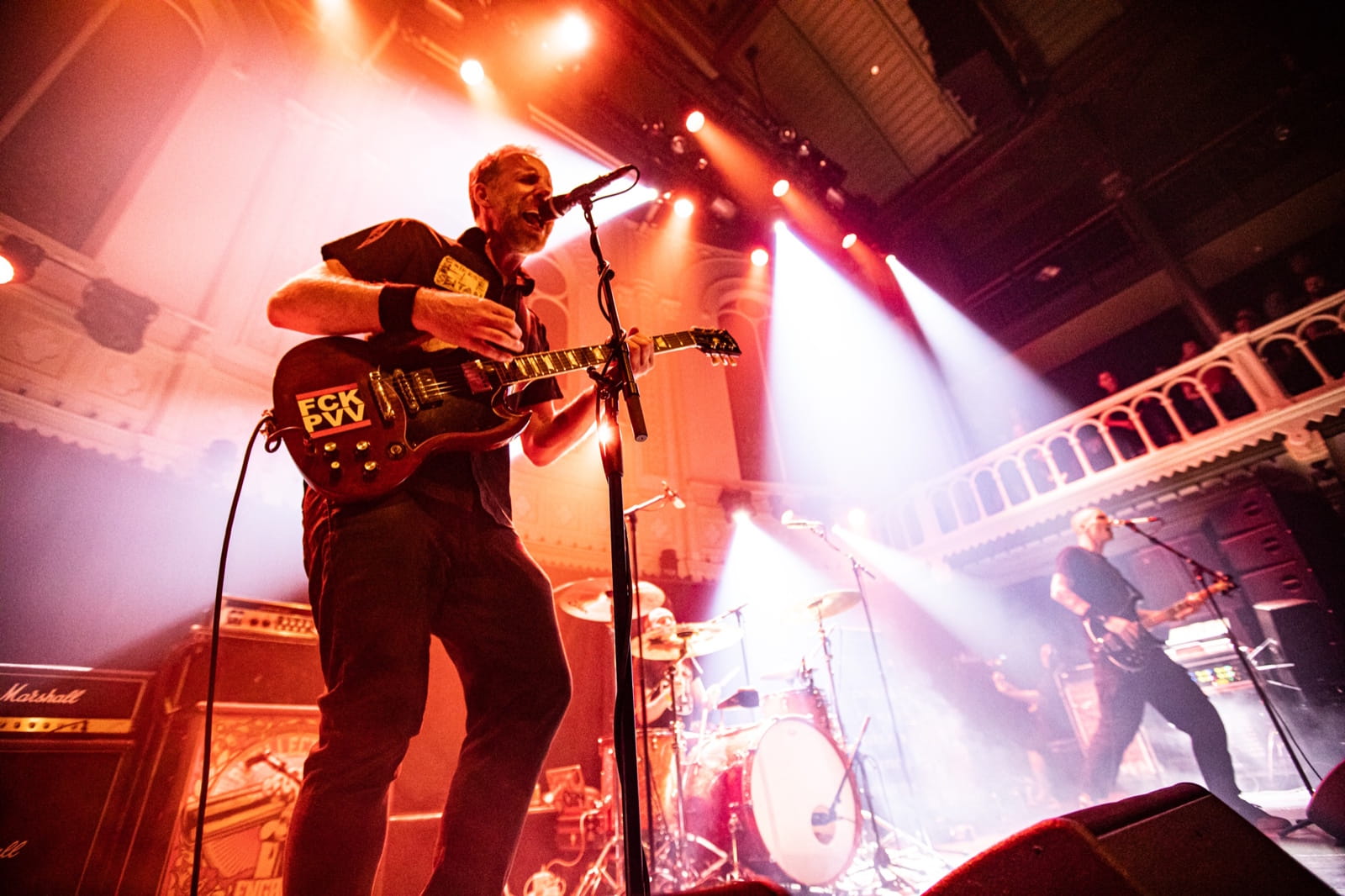


Keziah “KZ” Staska was at home, surrounded by peace, love and joy, and had no idea how to write another Dreamwell record.
“The first song I wrote for the album was ‘Plath,’ so I started writing this record from this place of fear,” KZ said. “I knew we were writing another album and I was at home, surrounded by peace and love and joy, and I thought to myself fuck… I literally don’t know what I’m going to do.”
For years, KZ’s lyrics had looked inward. Dreamwell’s songs dealt with whatever emotional crisis was closest at hand, finding religious language and violent images for private suffering. The Rhode Island quartet’s third full-length, “Hymns For The Denial Of God,” began when that familiar source had temporarily gone quiet.
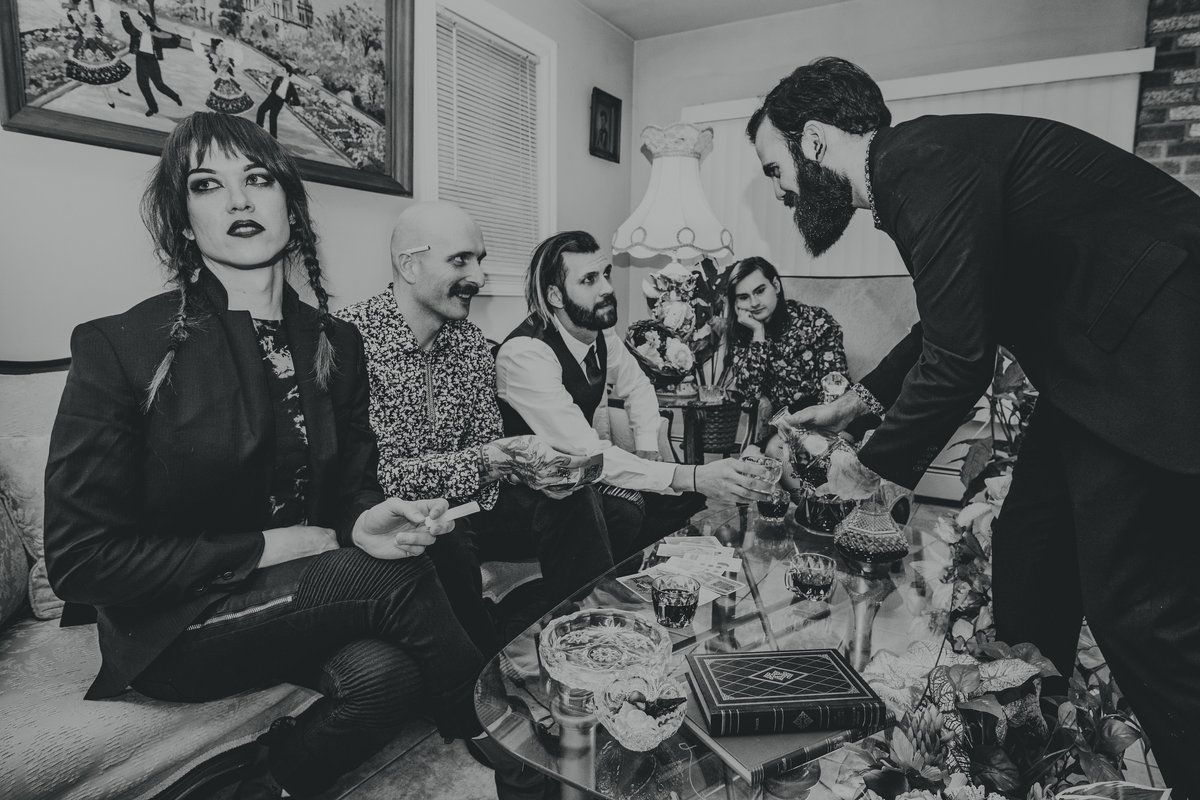
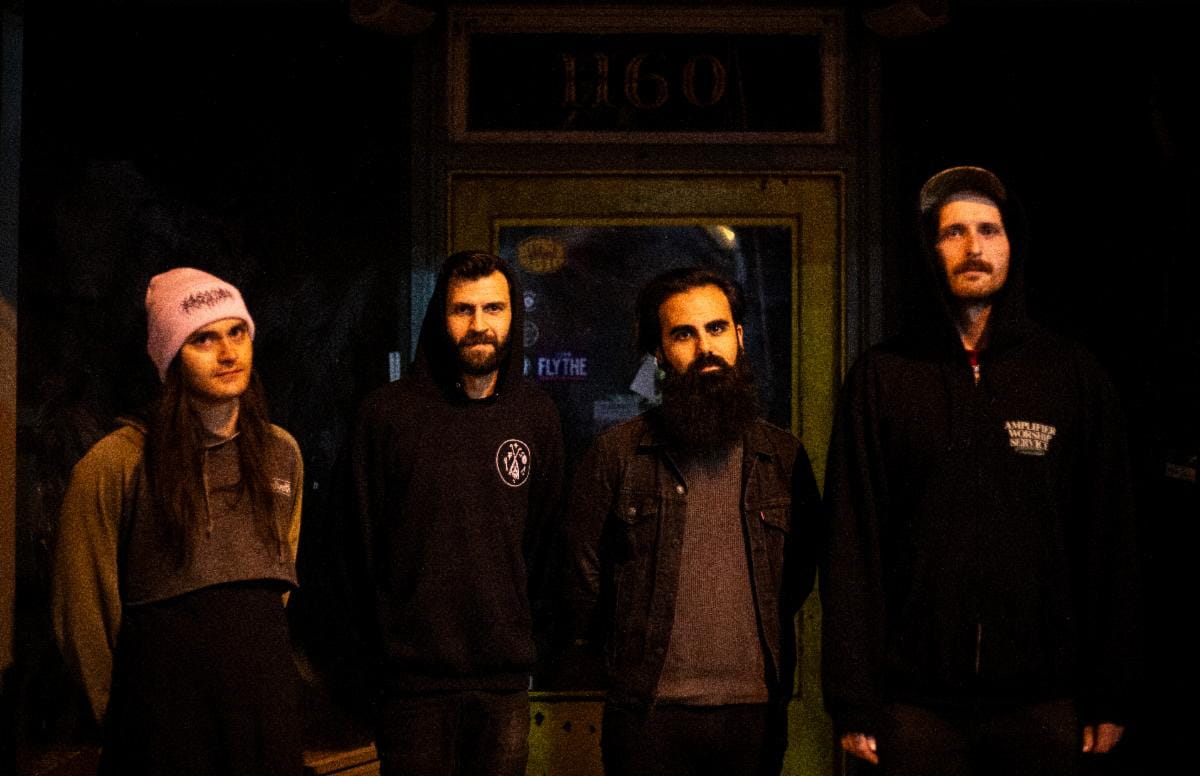
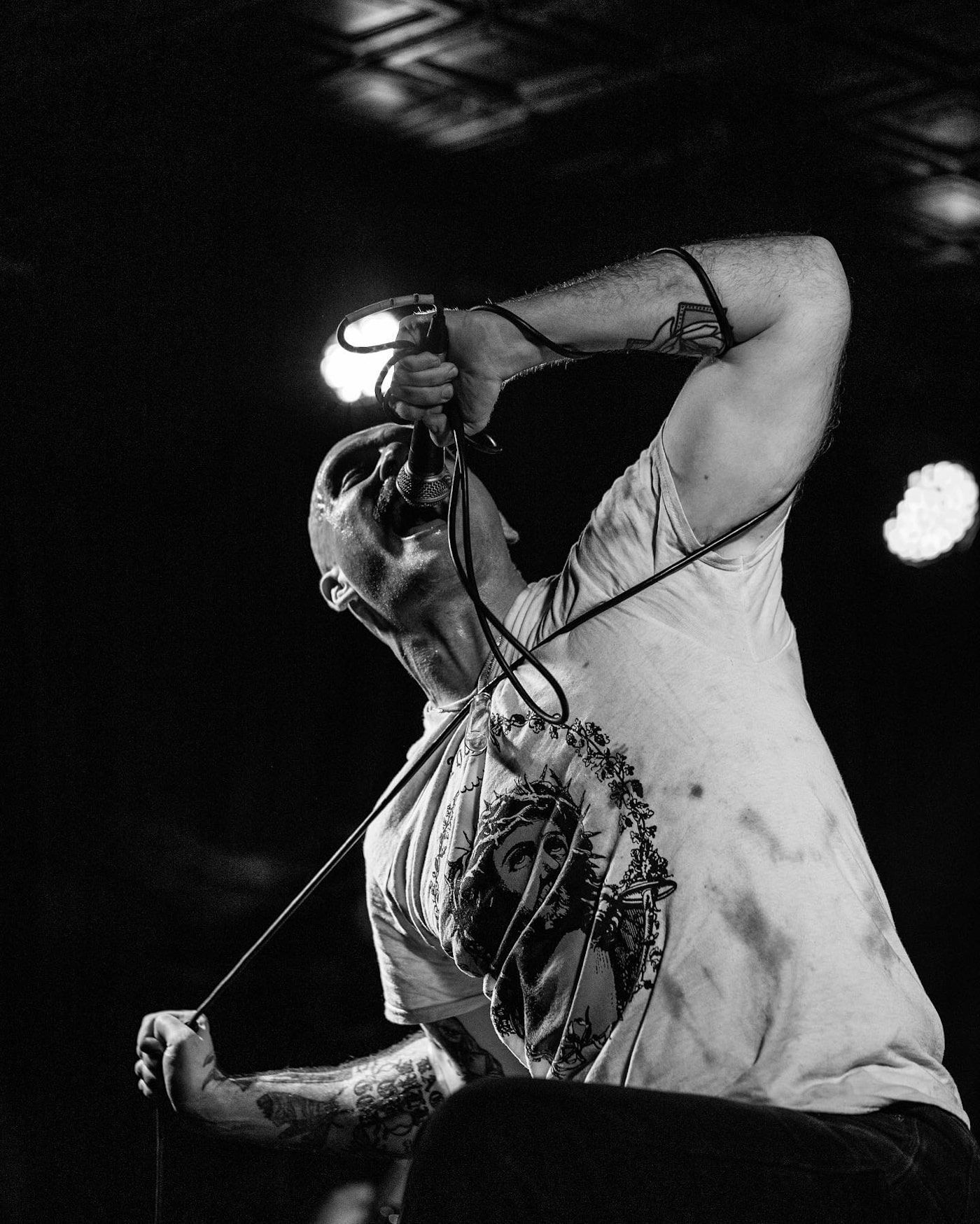
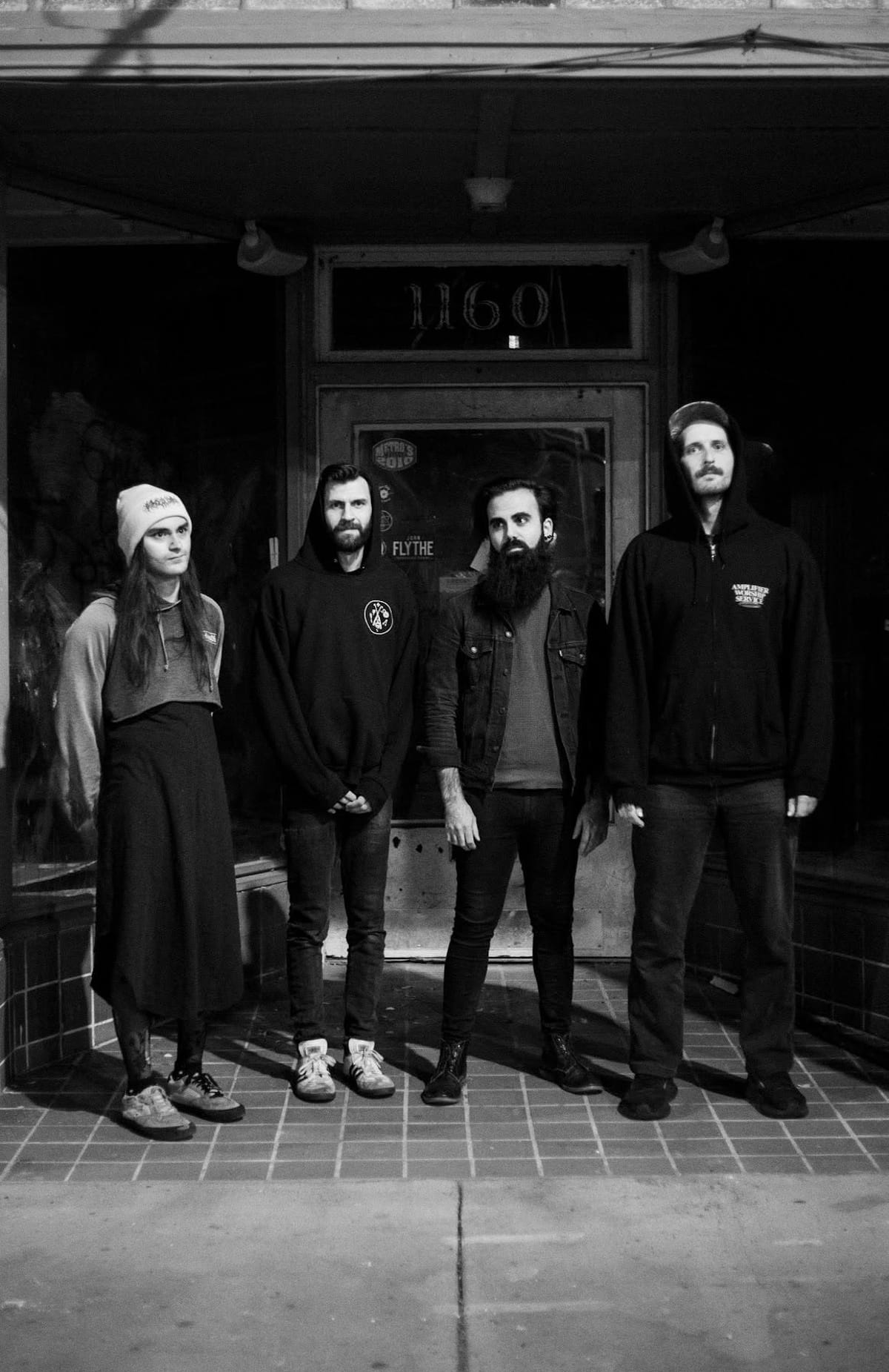
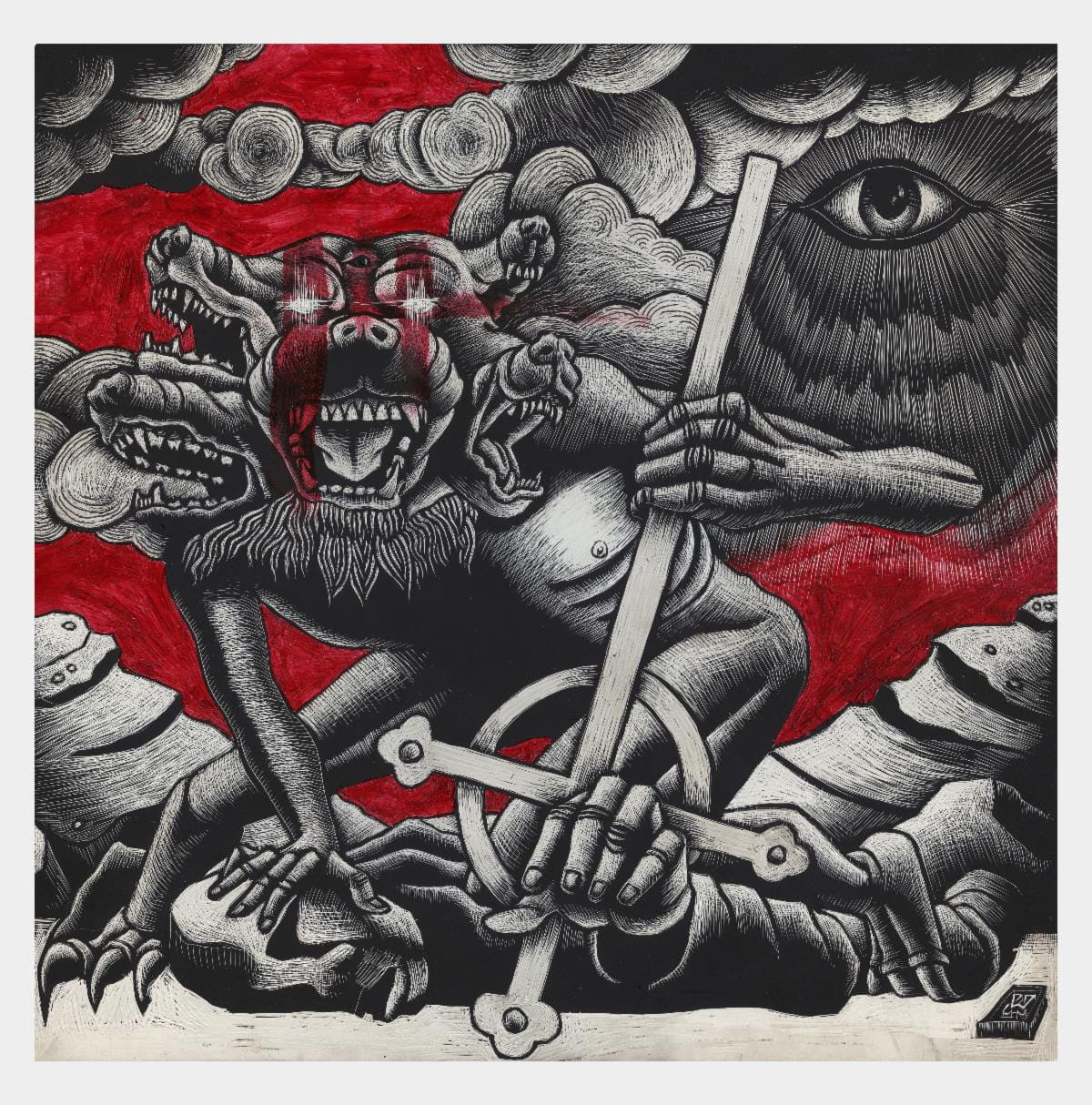
The album arrives digitally on August 28 through Prosthetic Records. The self-described post-skramz band are KZ on vocals, guitarist and backing vocalist Ryan Couitt, bassist Justin Soares and drummer Anthony Montalbano. Across ten tracks, they direct the instability of their screams, crooked riffs and mosh parts towards organised religion, the violence committed in its name and the idea that belief automatically confers morality.
But it is not a general attack on anyone who believes in God.
“The title embodies the theme,” KZ said. “In the past, I was so inwardly focused; most of our songs were about myself and whatever I was emotionally dealing with. I wanted to make a record that wasn’t extremely introspective. The album interrogates the negative impact of organized religion when it’s misused to justify violence, genocide, and hatred of others.”
“It’s not a purely atheistic statement either. I’m choosing not to believe in a God who’s invoked to validate evil. The prevailing narrative in heavy music is often, ‘If you believe in God, you’re stupid.’ This isn’t our narrative. Believing in God isn’t wrong. I don’t think the mainstream God in the political landscape is the one we should be looking for though.”
Dreamwell emerged in 2020 and moved from “Modern Grotesque” in 2021 to “In My Saddest Dreams, I Am Beside You” two years later. Flood Magazine wrote that the latter twisted a heavy-rock Rubik’s cube by introducing more confrontational metalcore. Stereogum picked up on the way “Obelisk Of Hands” moved towards metalcore before ending in a screamo collapse, while BrooklynVegan called the album “a post-hardcore triumph.”
The band also picked up attention from ChaosHour with Matt Heafy, Loudwire, Knotfest and The Mountain Goats’ John Darnielle. For the next record, however, the problem was not how to extend the sound. KZ first had to work out what remained when misery was no longer the only reliable starting point.
The answer began to form with “Carrion Birds On The Ark,” an older song idea that gave KZ a thread to follow after “Plath Vs. Kafka Vs. Romance.”
“It was a good jumping off point for me. I at least already had a thread to follow, so that song let me really focus on this new challenge of having to be really external about my writing,” KZ said. “It definitely ultimately felt like a new application for my old tools most of the time. I think I found my groove for the most part, and a lot of my writing has always been kind of biblical anyway so writing about God at least felt fairly familiar.”
Wyświetl ten post na Instagramie
The song moves on nervous cymbal work, a low bassline and power chords beneath one of the record’s bluntest singalongs: “There’s a Virgin Mary water stain in the missing children’s poster.”
KZ often begins with lines that appear without warning. They get written down, then connected when a pattern starts to show. If no pattern appears, the line becomes the point from which the rest of the song has to be built.
“I hate to say this, but the Virgin Mary line was an honest to god stroke of genius,” KZ said. “It’s one of my favorite things I’ve ever written, period. It’s just such a powerful visual, the moment I thought of it, I knew it had to be the centerpiece. It genuinely just appeared in my head one day, and I built the entire song around getting to use it.”
The image gives “Carrion Birds On The Ark” its argument. A supposed sign from God appears directly on evidence of a missing child, yet the people looking at it are more interested in divine intervention than the disappearance underneath it.
“Ultimately what it’s saying is people are so fast to just overlook all the evil shit the church has been behind throughout history just for the glory of God,” KZ continued. “If a Virgin Mary water stain appeared in a missing children poster, people wouldn’t even think twice about the poster, they’d be so transfixed by the sign from God.”
Wyświetl ten post na Instagramie
The album opens with “Hypercrucifixation.” Its first voice is not KZ’s, but the manic speech of a would-be street poet recorded while Dreamwell were on tour. Clean guitar comes in beneath the question, “What would you do if a voice spoke back?”
The song was built towards its closing lines: “For just a moment when you go to swing, it will look like you are opening your arms. I will count the wounds that you inflict.”
KZ imagines the second coming of Jesus as another of God’s tests. The same figure from the paintings would be too obvious. Instead, God would send someone vulnerable, one of the people Jesus told his followers to protect.
“For he who is least among you all is the one who is great,” KZ quoted from Luke 9:48.
“Jesus would come back as the ‘least among you all’ and see what his followers would do. And we know what the evangelist conservative movement does with the least among us. They persecute them. They bomb their villages. They pass laws to control them, to disappear them, to subjugate them. I think all the people waiting for the second coming are waiting for a test they’re bound to fail.”
The wound-counting image also carries a small connection to Pianos Become The Teeth. KZ loosely drew it from “Houses We Die In” and the line, “and as they applaud, I’ll count claps.”
The people most vulnerable to religious control are not abstract figures on this record. “Sissy Hate Machine” starts from KZ’s experience of being non-binary and the demand to fit within one of two accepted identities.
“You ask of me to be brick or mortar, but a mausoleum by any other name is still my soul’s confinement.”
KZ had been sitting on the idea for some time. Most songs grow from lines that eventually find their place somewhere in the middle or at the end. This one began exactly where its central thought begins.
“It’s saying that to me, being forced to either be a man or a woman, to align with a binary, is a limitation on my expression and sense of self,” KZ said. “Whether I identify more with the brick or the mortar, it’s still being used to build something that stores my dead body in the end. I’d rather reject the whole structure.”
On “Anti-Christ’s Testimony,” Dreamwell turn directly towards the use of scripture to justify the genocide of Palestinians.
“His voice is not confined to the burning bush of myth. I hear Him speak His indifference in every firebombing that happens under His watchful eye.”
The image works symbolically, but KZ also means exactly what the lyric says. God does not speak through the burning bush. He speaks through burning, and what comes through is indifference while people murder others in his name.
The song ends on the sentence that cuts closest to the album’s title: “My denial of God has nothing to do with whether or not He exists.”
“If the God that exists is the one that is allowing all of this to happen, I can’t bring myself to worship Him even if it’s proven that He’s real,” KZ said. “Why would I worship that?”
Another line, “I am the adversary,” is taken in full from Sleepytime Gorilla Museum’s “The Donkey Headed Adversary Of Humanity Opens The Discussion.”
The record keeps its arguments tied to stories, jokes and references that can look minor until KZ explains why they are there. “A Crisis Of Realization” retells the raising of Lazarus, but gives the biblical story a different discovery. Lazarus dies, learns that there is no afterlife and finds an overwhelming peace in non-existence. When he is brought back, being alive seems harsher after experiencing the absence of everything.
The whole story was constructed to justify a Cue Lazarus and Q Lazzarus double meaning. The second chorus ends with “a dead horse brought back to life,” while the two verse sections begin with “I said goodbye” and “So say goodbye.” Both point towards Q Lazzarus and “Goodbye Horses.”
The lead single, “Plath Vs. Kafka Vs. Romance,” returns to the fear that began the album. The guitars move through an uneven, seasick figure, with screams cutting across serrated distortion before the band reach a direct, catchy chorus: “All flowers turn into ash whenever I let my voice be heard.”
Dreamwell wanted to bring back the mosh-heavy early 2000s influence they had avoided for some time. The song gave them the place to do it.
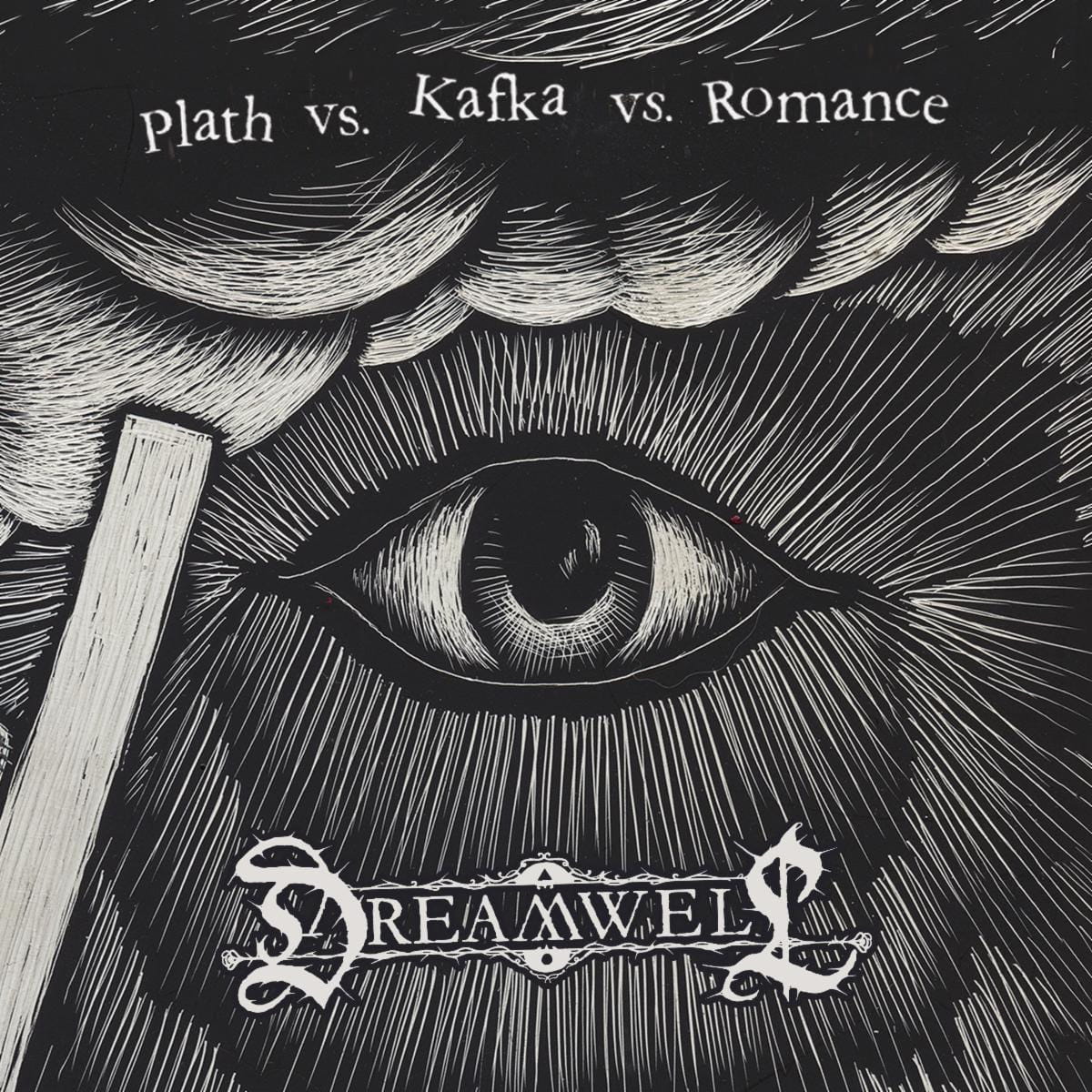
“We hit it here,” KZ said. “I wrote ‘Plath Vs. Kafka Vs. Romance’ at a time in my life when things were going pretty well for me. If I discussed being miserable in the lyrics, it would’ve been disingenuous. I don’t know how to write the songs I’ve come to be known for when things are okay though. It was scary to not know what my creative process was going to look like.”
“I’m basically saying, ‘I wish I knew how to write songs about being happy, but I don’t. I don’t know what to do with my writing when I’m not miserable.'”
The flowers become ash because KZ’s writing process has traditionally required beautiful things to pass through darker language before they can enter a song. That idea also leads to Franz Kafka’s line, “You are the knife I turn inside myself; that is love. That, my dear, is love.”
KZ has long related to the way Kafka wrote about love in his letters, using violent language to describe something tender. Another lyric, “A dark wind blows from my lungs through my horn,” joins two more references. The first is the phrase “and a dark wind blows” from the monologue in Godspeed You! Black Emperor’s “The Dead Flag Blues.” The second comes from Waxwing’s “Schoolmaker”: “Pick up your horn, blow out your lung.”
“I Dreamt I Survived An Extinction Event” is the third entry in Dreamwell’s “I Dreamt” series. Each song gives its narrator a dreamlike, apocalyptic crisis. This time it is the Rapture.
The chorus includes the line, “I see your silhouette in the yard at night. You’ve been digging lots of holes.” Its source was a true crime show KZ’s former partner was watching, “Worst Roommate Ever.”
The episode concerned a woman running a form of halfway home. Residents kept supposedly going on holiday and never returning because she was murdering them and burying them in the garden. One resident described calling the police after repeatedly seeing her digging holes outside at night. KZ borrowed the image almost directly.
“Just goes to show you inspiration can come from literally anywhere,” KZ said.
Dreamwell wrote the album together during in-person rehearsals before returning to Silver Bullet Studios in Connecticut. Chris Teti, who also worked on “In My Saddest Dreams, I Am Beside You,” produced the record and took an active role in reshaping what the band brought into the room.
An entire section of “Cherub Rock Of Gibraltar” had to be rewritten because Teti hated the original riff. The replacement did not exist before the recording session. The riff near the end of the second verse section in “Hypercrucifixation” also changed.
“I Dreamt I Survived An Extinction Event” was cut to almost half of its previous length. The sections screamed by Ryan in the choruses had originally sat in the verses, which were twice as long to accommodate them.
“Your Ichthys Decal Won’t Get You Into Heaven Anymore” takes its title from John Prine’s “Your Flag Decal Won’t Get You Into Heaven Anymore.” An Ichthys is the Christian fish symbol placed on cars and other personal objects as a public declaration of faith. For KZ, the sticker says little about how its owner treats anyone when they believe nobody is watching.
The song rejects the claim that morality requires God and that people without faith inevitably fall into wrongdoing. KZ hears something revealing in the argument. A person who believes fear of punishment is the only barrier against harming others may be describing their own impulses rather than the moral limits of atheists.
“If the only thing keeping you from harming others is the fear of God, you’re not actually a good person, you just behave yourself because you’re being watched,” KZ said. “Just because you believe in God doesn’t mean you’re a good person. Even if you’re doing good things, if you’re only doing them because some all seeing being is watching you, it doesn’t make you an innately good person.”
The song brings Flannery O’Connor into the same argument. “Maybe you need the unblinking surveillance of the Misfit’s revolver and .45 caliber rosary beads to be a good man” refers to her short story “A Good Man Is Hard To Find.”
The Misfit is an escaped killer who points his gun at a mean-spirited, racist grandmother. When she pleads for her life and calls him a good boy, he replies that she would have been a good woman if someone had been there to shoot her every minute of her life.
“This is exactly what I’m saying in the song,” KZ said. “These people who do good only because god is watching them are only doing good because ‘it’s someone there to shoot them every minute of their life.'”
For all the ways “Hymns For The Denial Of God” looks outside KZ’s life, its final song is the album’s most personal. “Cherub Rock Of Gibraltar” returns to the martyrdom complex KZ has carried for years, the belief that suffering is a purpose assigned by God.
In this private version of the world, happiness exists in limited supply. Some people receive it because others have agreed, or were chosen, to remain miserable. KZ sees themself as one of those people.
The title joins that belief to the myth of Prometheus. After stealing fire from the gods and giving it to humanity, Prometheus is chained to a rock. A huge bird eats his organs each day, and they regenerate so that the punishment can continue forever.
The biblical cherub often has four faces, depending on the translation. One is usually the face of an eagle. KZ imagined themself as Prometheus on the rock, tortured each day by one of God’s own angels.
The song begins, “I want to watch everyone that I love die. Let there be no one left to bear the weight of my absence when I’m gone.”
KZ has spent much of life afraid of dying before the people they love. Watching everyone else go first would mean carrying all of the grief, but nobody else would have to carry theirs.
“I’d rather suffer missing all the people I love than have any of them have to miss me,” KZ said. “It’s that martyrdom. I can be the one that suffers because it’s what I’m born to do anyway.”
One later line, “maybe I was never meant for ambrosia,” originally entered the song because its altered structure left a space that needed to be filled. It connects to another lyric: “I’ve never felt that spiritual hunger that makes some people long for something greater.”
That line refers to Peter Kreeft’s book “Heaven: The Heart’s Greatest Longing.” Ambrosia is the food of the gods, so KZ uses it to accept being excluded from heaven or other divine rewards. Even if they exist, they belong to somebody else. KZ’s assigned role is suffering.
The word carried another meaning that KZ did not plan. Rosie Tucker’s “Ambrosia” had been the love song shared by KZ and a former partner. The relationship has since ended.
KZ’s martyrdom complex includes a conviction that good things are temporary, arriving only to make the eventual loss hurt more. Dreamwell addressed the same belief on “It Will Hurt, And You Won’t Get To Be Surprised,” from the previous album.
When KZ now hears “maybe I was never meant for ambrosia,” the line sounds less like a passing mythological reference and more like confirmation: of course the relationship ended. You do not get to keep things like that.
“It wasn’t intended to be that,” KZ said, “but sometimes things change over time.”
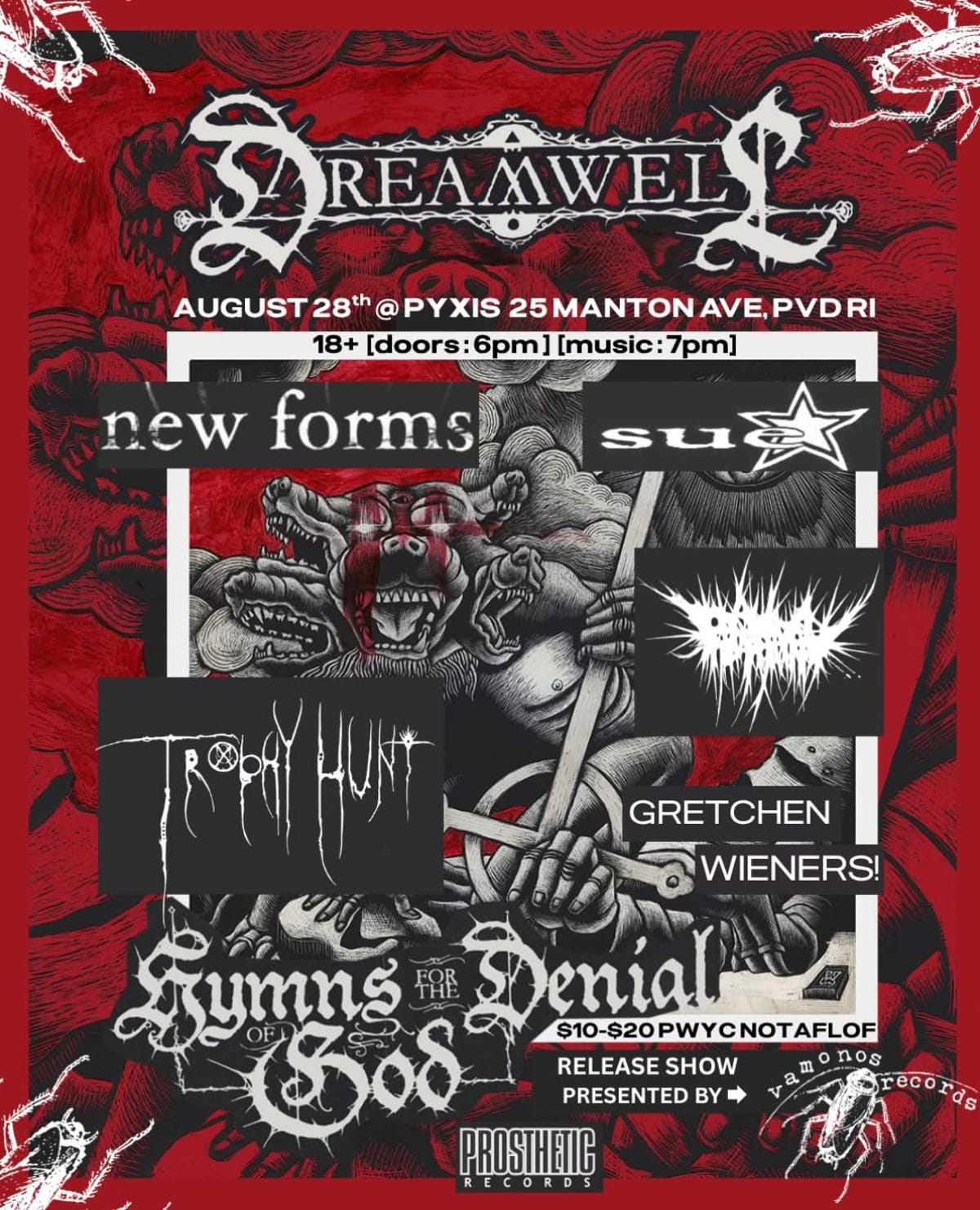
Digital preorders for “Hymns For The Denial Of God” are open ahead of its August 28 release through Prosthetic Records.The band will be celebrating the release of the album with 6 more bands in Olneyville, Rhode Island, just outside Providence.
🔔 IDIOTEQ is ad-free, independent, and runs on one person’s time. If you want it to stay that way: DONATE via PayPal or SUPPORT via Patreon.
NEW: IDIOTEQ Explore 🗺️ Browse 15+ years of our archive by city, country, and style. Find artists on the world map or trace related sounds through the styles map.
Stay connected via Newsletter · Instagram · Facebook · X (Twitter) · Threads · Bluesky · Messenger · WhatsApp.