
End of the Line started as a goodbye. Mike Down, who’d been screaming for Amenity and Forced Down through the 80s, was planning to leave hardcore behind, and the idea was a single show: Heroin functioning as his band, Matt Anderson moving from drums to guitar, one final ride. Down kept his word and walked. The rest of them didn’t.That one-off stretched to eight months.
End of the Line existed across the summer of 1991 in San Diego, played a dozen shows, started a label bidding war between Vermiform and Ebullition, recorded most of their album knowing the band wouldn’t survive long enough to promote it, and finished with a September gig alongside Fugazi and Jawbreaker. The record came out into a band-shaped silence and slowly became a cult document of early 90s West Coast hardcore.
Thirty-four years later, four-fifths of the original lineup is playing it again.
End of the Line and Downcast share two Southern California dates this June: Che Café in San Diego on the 13th, The Smell in Los Angeles on the 14th. Three Moments of an Explosion open both nights. It’s the first time the two bands have shared a stage since 1992.
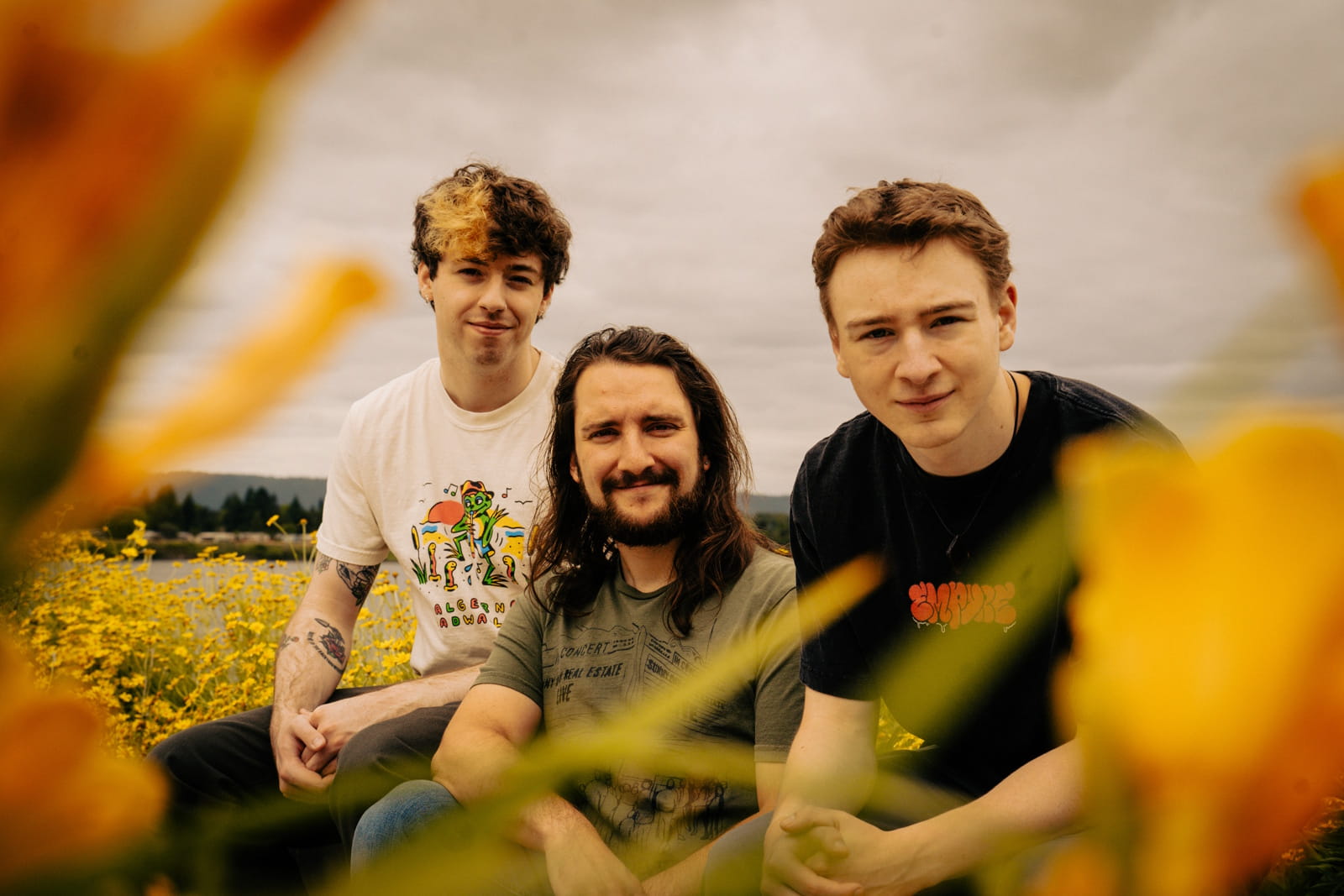
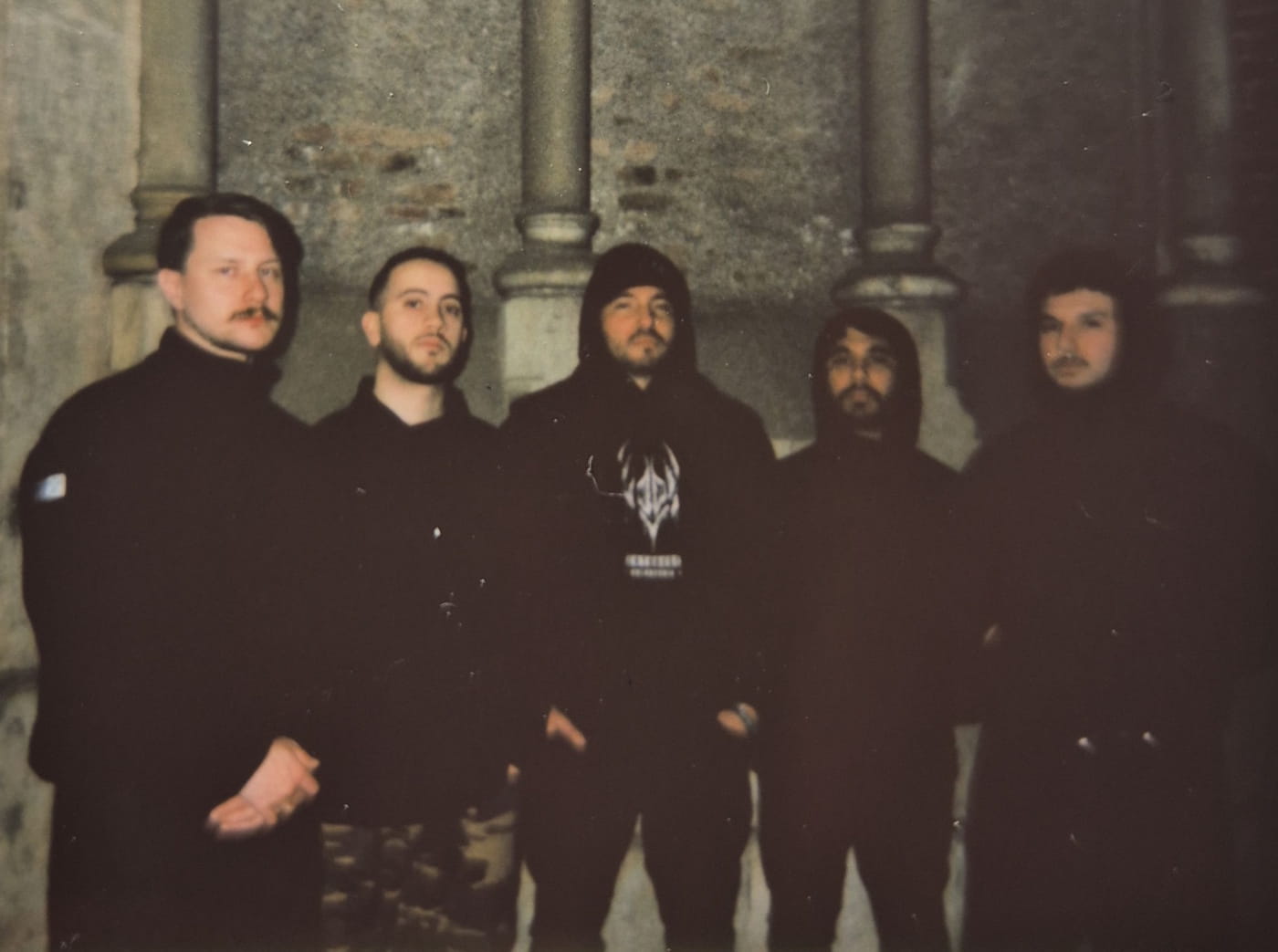
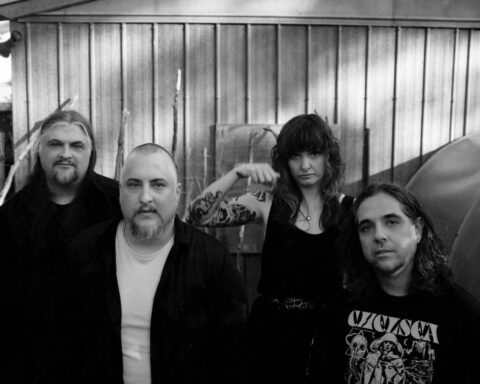
The 2026 lineup is Matt Anderson, Cory Linstrum, Aaron Montaigne, Ron Johnson, and Adam Eisenberg.
Scott Bartoloni, who played bass on the record after taking over from Ron, isn’t part of this run. Mike Down passed years ago. “It’s been a long time since those first shows, but I’ll always remember the energy and the scene,” Anderson says.
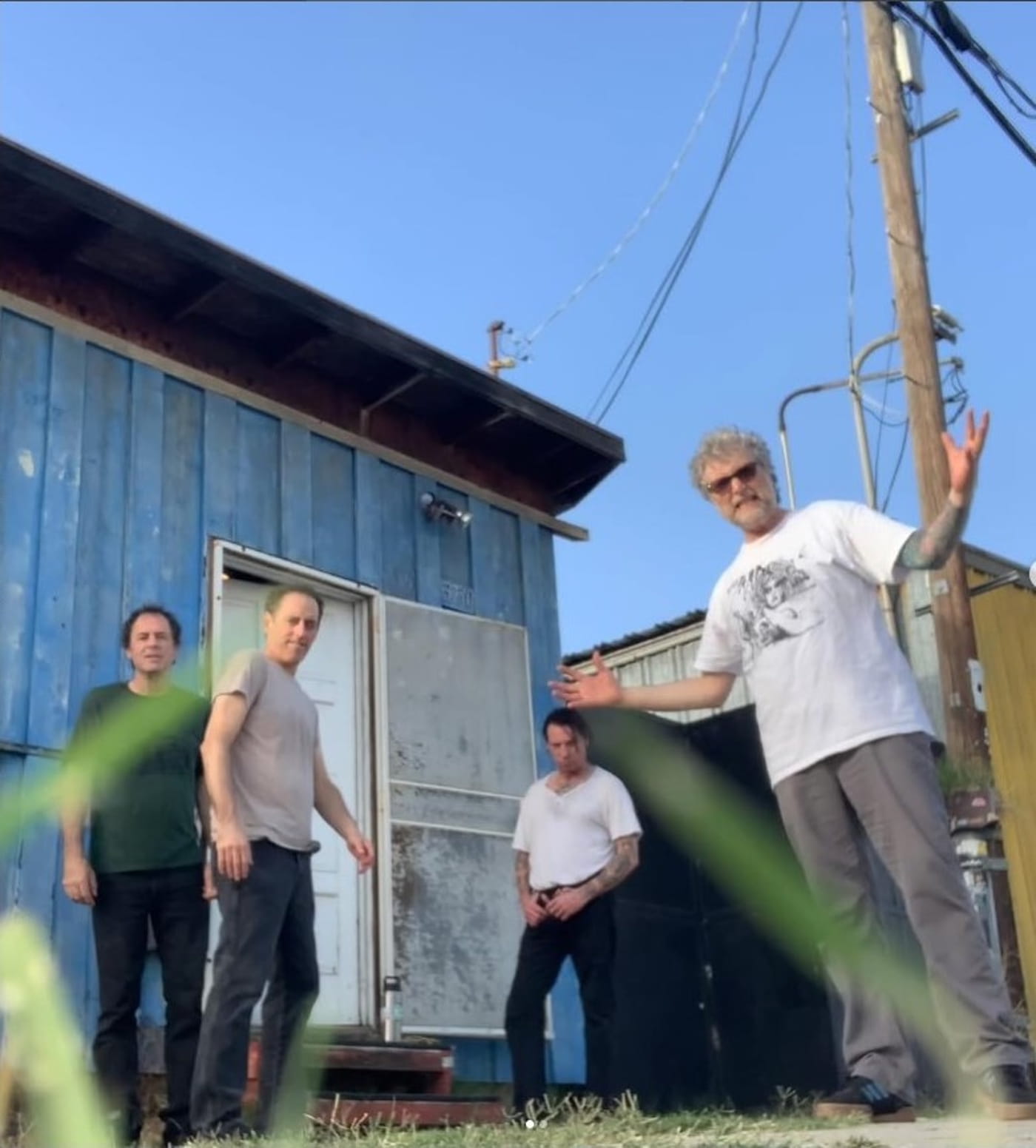
“First, we had Mike Down (RIP) from Amenity and Forced Down on vocals, then Cory from Brain Tourniquet came in, who I thought was one of the best singers from San Diego at that time, or ever.”
Linstrum was a friend of the band before he was the vocalist. He’d been putting on hardcore shows in his garage, including Born Against, and was already a figurehead in the local scene.
“Heroin had been playing for a while. We’d finally broken into the larger San Diego scene. End of the Line was a great side project for us, because it was with people we looked up to,” Anderson says.
“Mike D. had been our hero, and Cory was a friend known for putting on shows in his garage, like Born Against, and was a figurehead in the San Diego scene. Doing a band with either of them felt like everything was firing on all cylinders.”
The musical starting point was a shared stack of records: Bl’ast!, Faith, Void, SSD. The band steered hard into chaotic hardcore and punk from there. Cory’s approach reshaped the songs once he took over from Mike. “Mike D. had a hoarse, barking vocal attack, as heard in Amenity. I considered myself more of a throat-ripping screamer. I wanted to punish eardrums.”
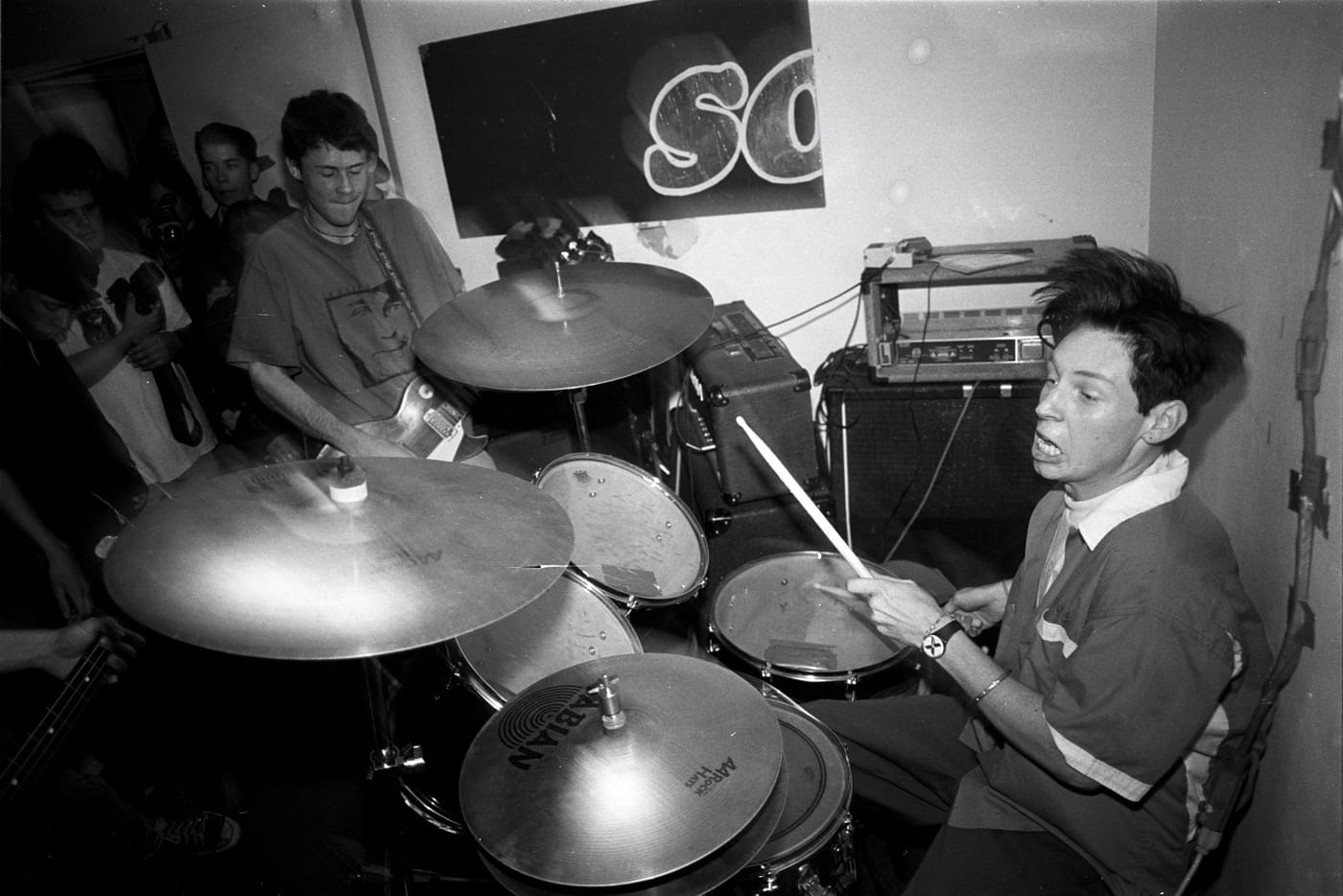
Instruments shifted around. Anderson moved off drums onto guitar. Bartoloni took over bass from Ron Johnson, which Anderson now flags as a less-than-cool decision at the time.
“End of the Line was no one’s priority at the time.” For the 2026 dates, Johnson is back, playing second guitar so they can recreate the overdubs and background layers on the record. Eisenberg, an old friend who’d played bass alongside Anderson in Spacehorse and designed the End of the Line album cover, slots in on bass.
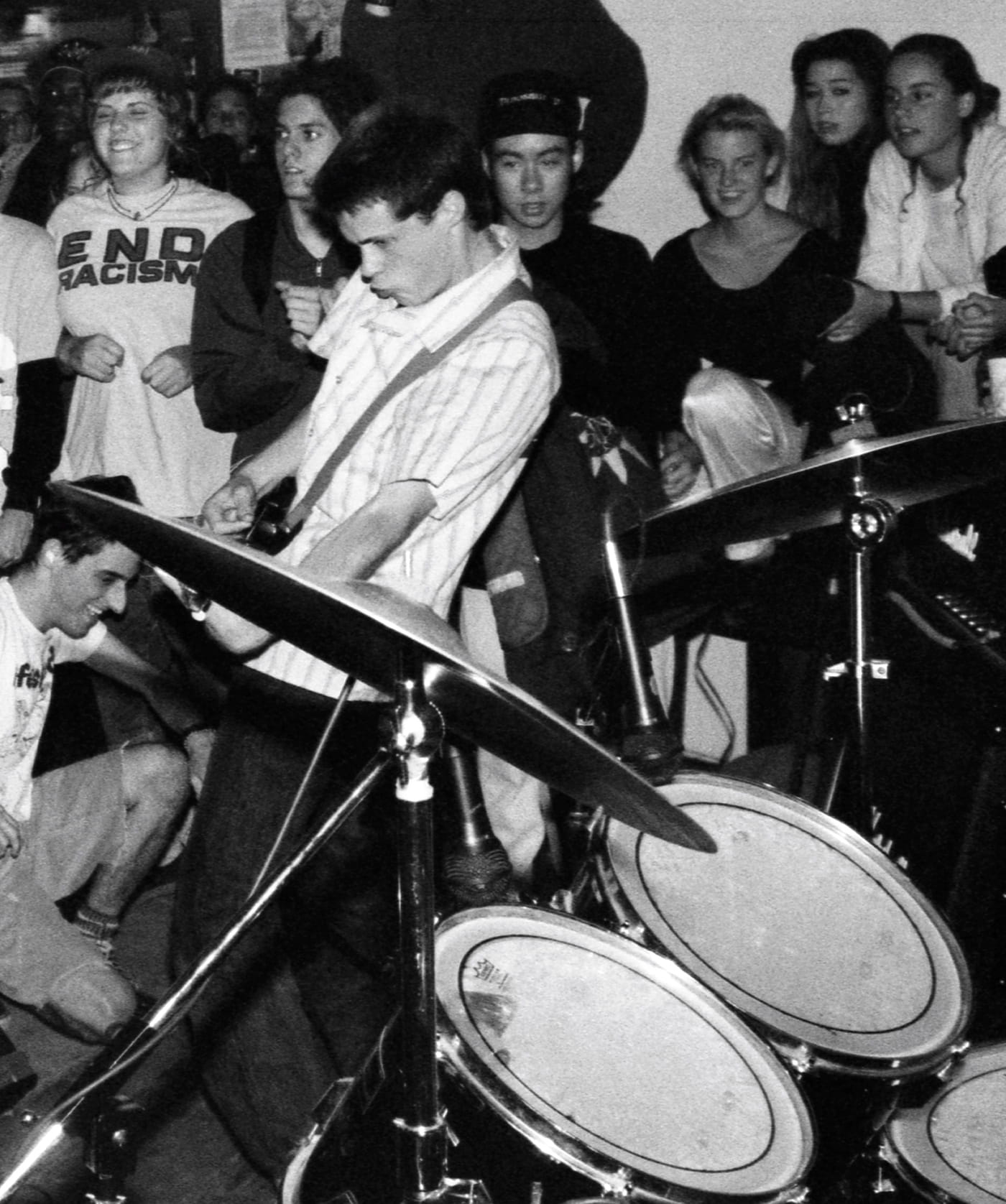
“Matt, Scott and Ron are multi-instrumentalists and had been switching instruments since Heroin’s inception. So, it was natural to bring that into End of the Line,” Linstrum says. “Currently, with Adam taking over for Scott on bass, we still have great chemistry. Adam’s been around since day one. He designed our album cover and was in Spacehorse with Matt and Scott. The ‘San Diego/Gravity sound’ is imbedded in our DNA.”
What pulled them onto Ebullition was a Born Against/Rorschach show. End of the Line opened, the room came undone, and word about what happened that night travelled east as the touring bands made their way home. Two label offers came in. Sam McPheeters at Vermiform wanted a 7-inch. Kent McClard at Ebullition wanted a full length. They took the LP.
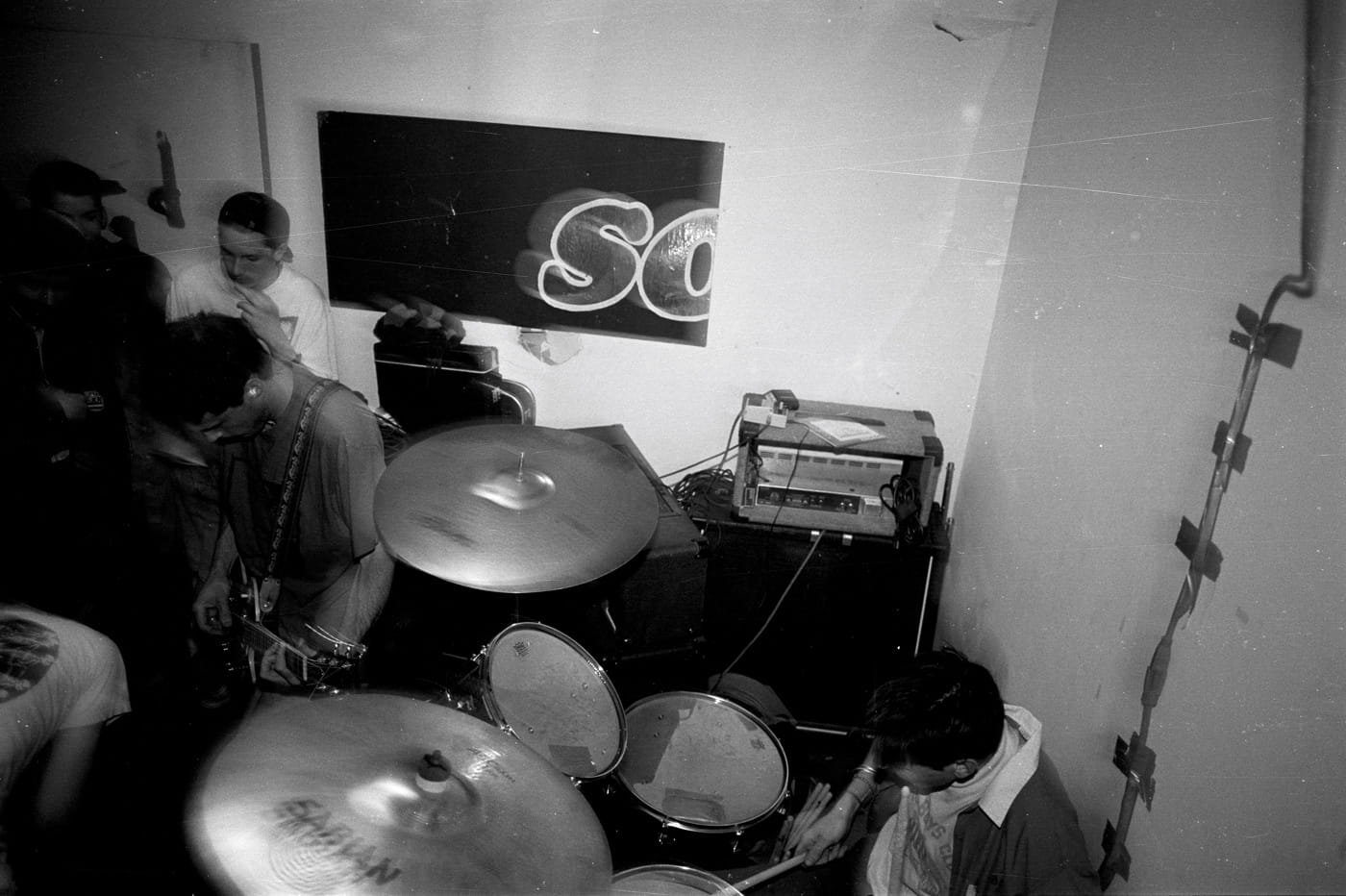
The recording started before the band ended and finished after it had already begun ending. Linstrum was moving to the Bay Area to front John Henry West. Heroin was about to leave on tour behind their own LP. “We wouldn’t have even recorded the record but Kent McClard from Ebullition really liked us. So did Sam McPheeters at Vermiform,” Anderson says. “So, we just went for it! The process was reckless. We didn’t worry about anything, because this was gonna be it. We did whatever we wanted, thinking we’d never play these songs after the record came out. We encapsulated this blast of energy. It has a pureness to it, which comes off on the record, even though the productionwasn’t the greatest. That’s how the band was; just laid it out there, without being self-conscious or over thinking it.”
The album sat unpromoted for years. In 2022 Three One G reissued it on color vinyl with a remix and remaster by Tim Green at LOUDER studios, pressed with a 3D cover and individually printed 3D glasses. Two of the three colorways have sold out. The Three One G connection is also what ties this billing together: both End of the Line and Downcast came out of the early Ebullition roster, and both now sit in the Three One G catalog.
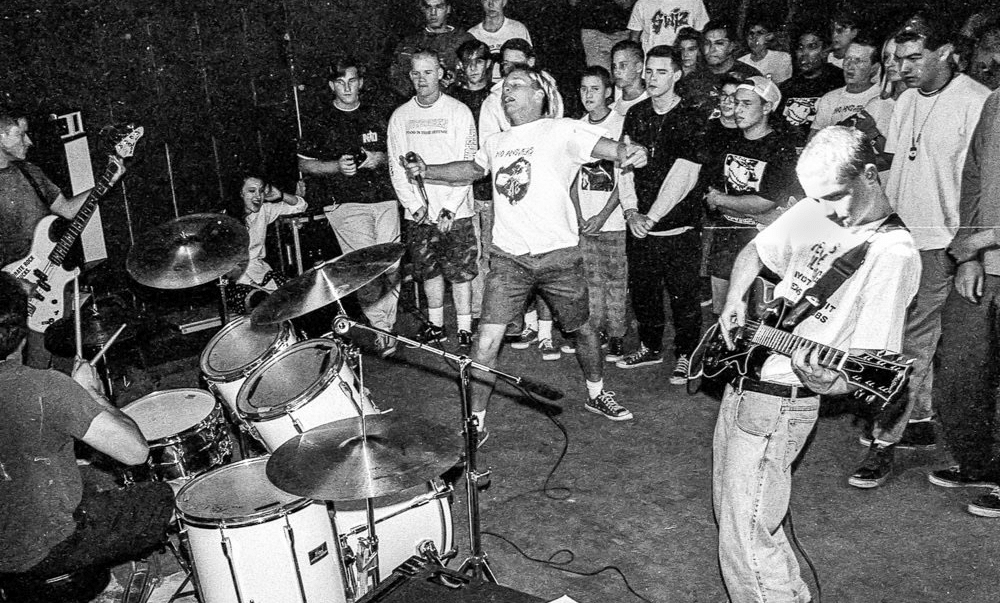
Linstrum lists off the old shows the way you’d list off people from a neighborhood you grew up in.
“Looking at old 90s flyers, it’s cool to see who’s still playing. Obviously, Downcast has been there since the beginning. We played shows with Struggle, who are life-long friends. We dug playing with Born Against and would do more gigs with them in our following bands. I’ll never forget the show with Aspirin Feast. That band blew my mind! My brother left San Diego for Seattle to play for Undertow. It was rad to hook up with them for shows. Same with Unwound. We played with them and became quick fans and friends. Of course we played with Rice! This pair of 2026 shows will be similar, as they involve people that were there from the start. The difference being that we’re adults now, with separate personal lives. Together, though, we’re End of the Line again and remain in-sync with what the band represents.”
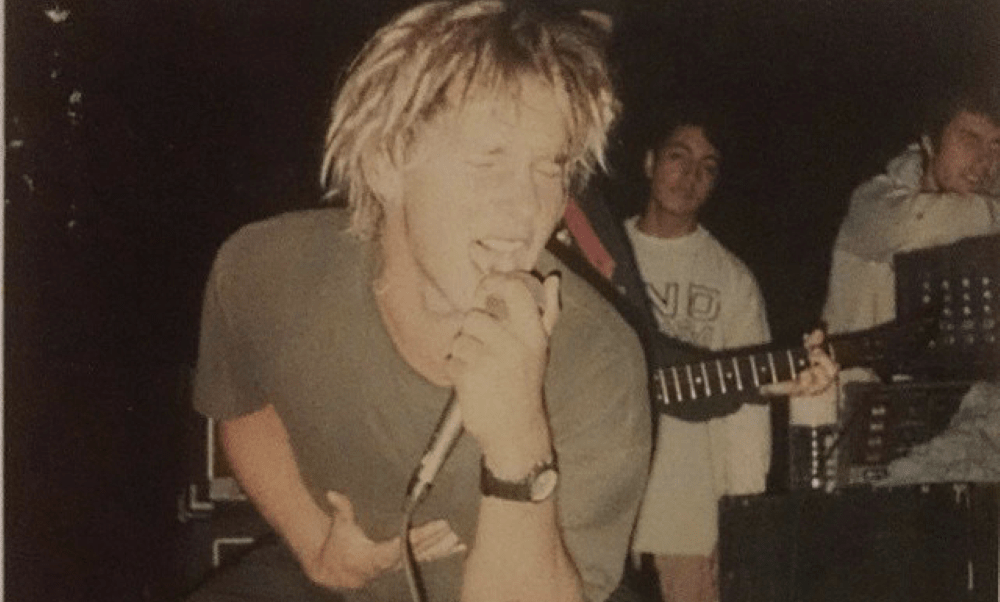
The venues at the time were small. House shows, practice spaces, the Red Barn in Goleta, the Che Café itself. There was also Chula Vista, ten miles south, where Club Mitch hosted hardcore shows for the local straight edge crowd. End of the Line played there with touring bands Billingsgate and Say No More.
The San Diego scene Anderson and Linstrum describe wasn’t one thing. Pitchfork and Amenity had broken up in 1990. Forced Down, Statement, Fishwife and Funeral March all split shortly after, leaving a hole. The Che Café started bringing in out-of-town hardcore bands like Infest, No Comment, Econochrist, Filth, and Downcast. Local groups picked up the energy. Struggle came out of this. Heroin came out of this. End of the Line came out of this.
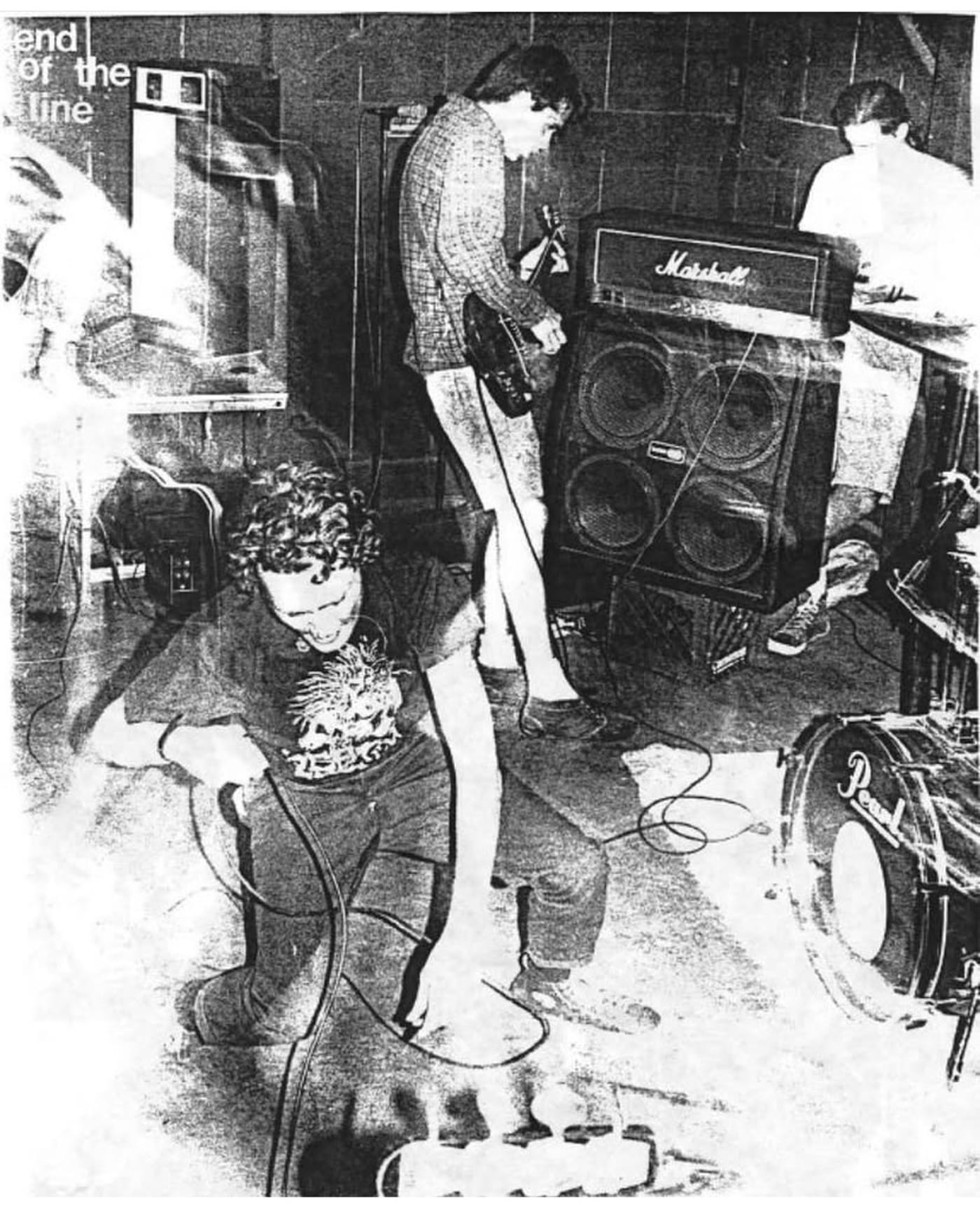
“At the time, San Diego was nothing. We hadn’t had a viable export since Battalion of Saints,” Linstrum says. “Amenity did two tours but had nowhere near the notoriety of similar bands on, say, Revelation Records. Our local bands really did play for themselves and small groups of fans. You could push your sound in any direction or angle and not be scrutinized by critics, such as writers for Flipside or Maximum RockNRoll. Bands formed and broke up on a regular basis. Short-lived projects were the norm. Going into End of the Line, knowing it would be over quick, was accepted and embraced. This encouraged us to do more in a short period.”
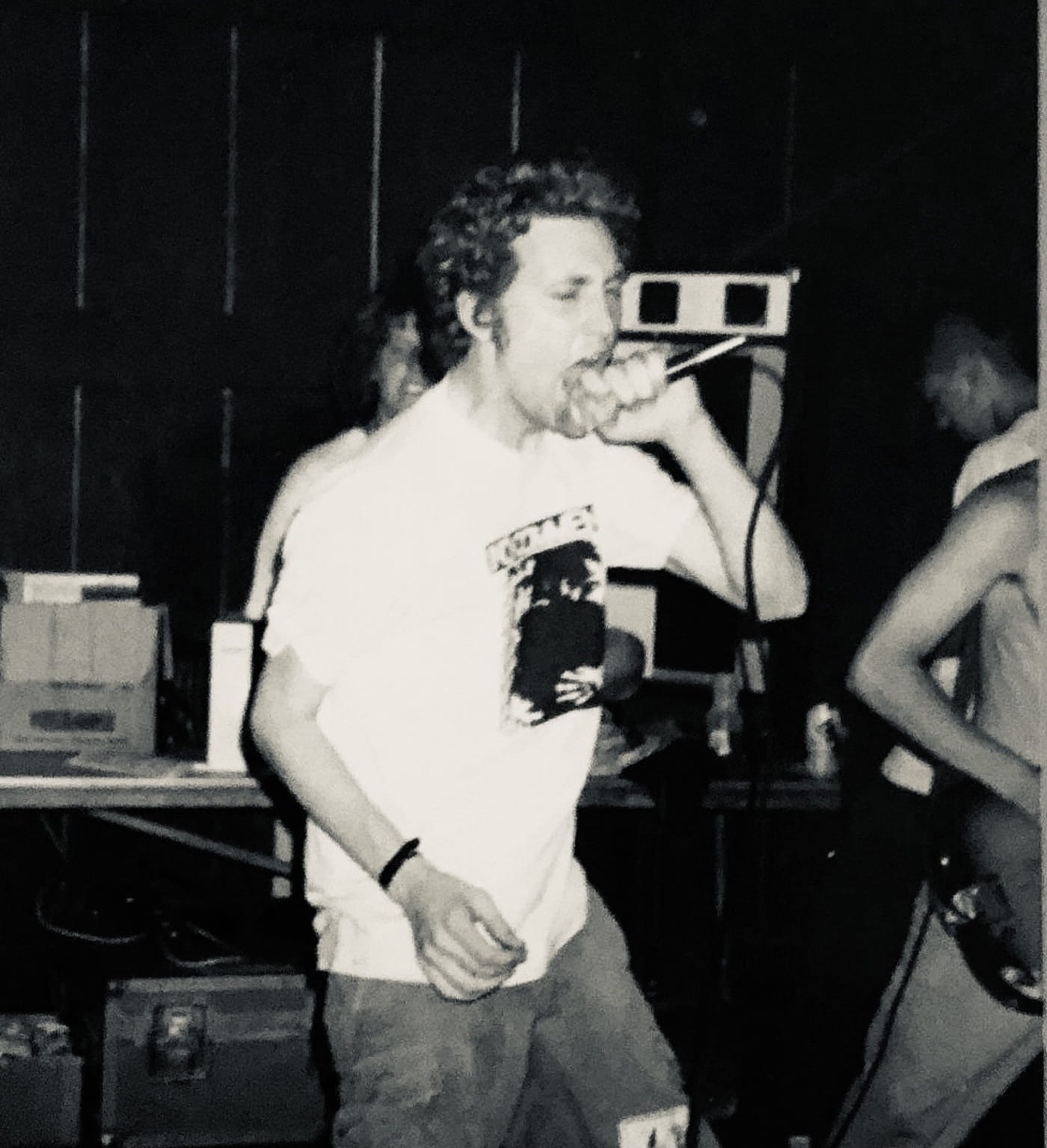
Anderson approaches the same period through a different angle. It wasn’t LA, San Francisco, or New York. Smaller scenes meant looser categories.
“We didn’t fit in with that. We decided to do our own thing (with a good helping of the DC influence, of course). It turned out to be eclectic. Being from a smaller city, you kinda got along with people in different styles of bands. We all played together and it intertwined.”
He sees the 90s in San Diego as a hardcore restart in a quieter room, kids hiding in places like the Che Café after a violent stretch of 80s shows.
“The HC kids of the 90s hid away in smaller places, like the Che Café, and rebirthed it in this romanticized way. We were a group of close-knit friends, and this was our thing. Being around these bands, who were our friends and people we knew, we may have taken it for granted. Now it feels special. I will say, the 80’s are when the best stuff happened. We were riding their coattails in the 90s.”
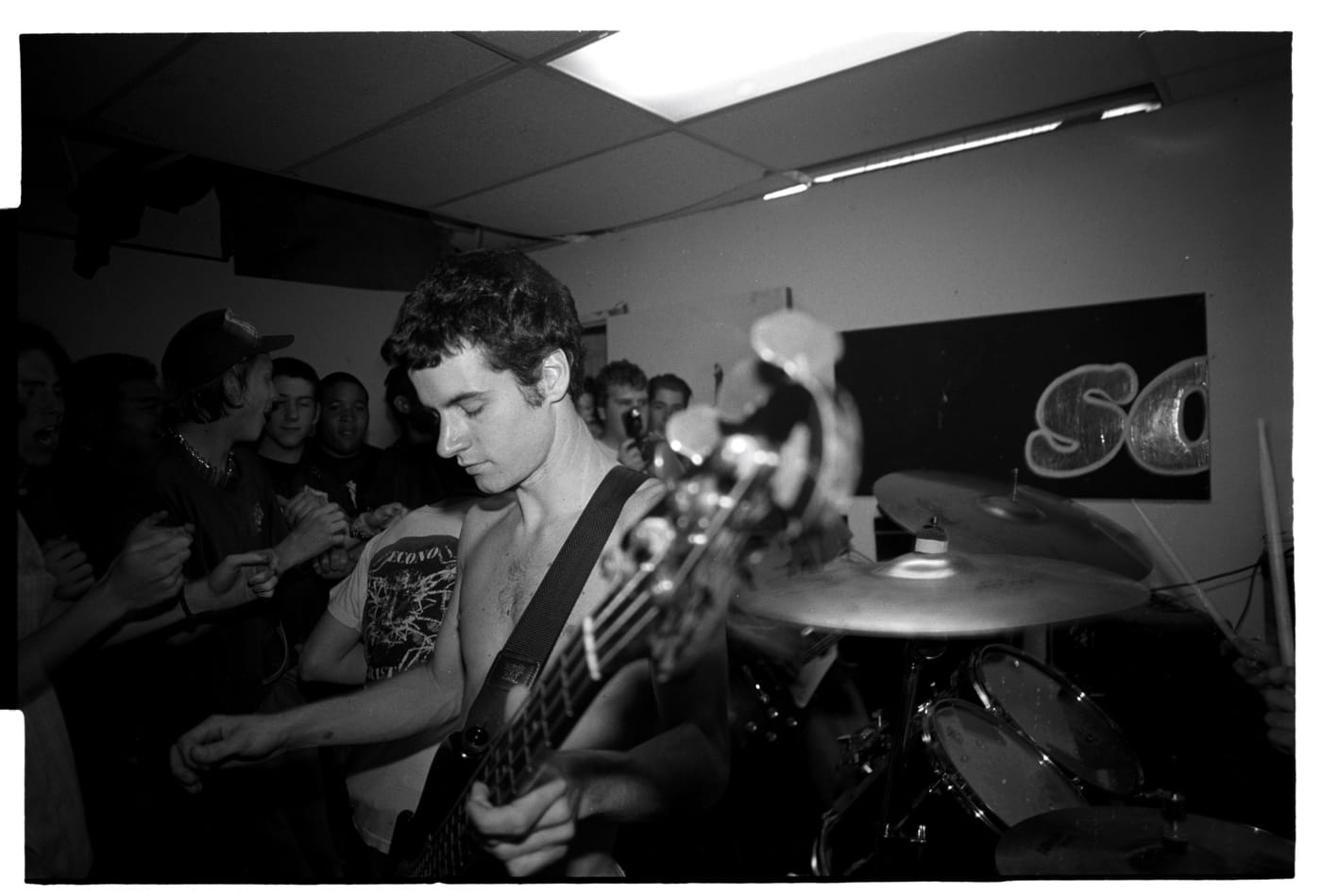
After End of the Line dissolved, San Diego picked up national attention through two parallel currents: the Heroin/Gravity world and the 21-and-up RFTC/Jehu/Casbah crowd that orbited the Casbah and Drive Like Jehu‘s circle. End of the Line were already over by then.
Playing the songs again, decades later, hits Anderson and Linstrum from different sides. Anderson talks about missing something he loved. He hasn’t been in a band for some years now and didn’t want to start a new hardcore one, but he wanted to revisit it.
“We have these songs and it’s a good excuse to hang out with old friends. It’s not like we’re milking it for money. The world is not asking for End of the Line. We’re just straight up doing it for the same reasons we’ve always done it. At this point, people would probably rather see End of the Line, anyways, than any new hardcore band we might do. We don’t all live in San Diego. The only way this will happen is if it’s End of the Line. Our live shows always came off better than the record. We’re gonna see how this goes.”
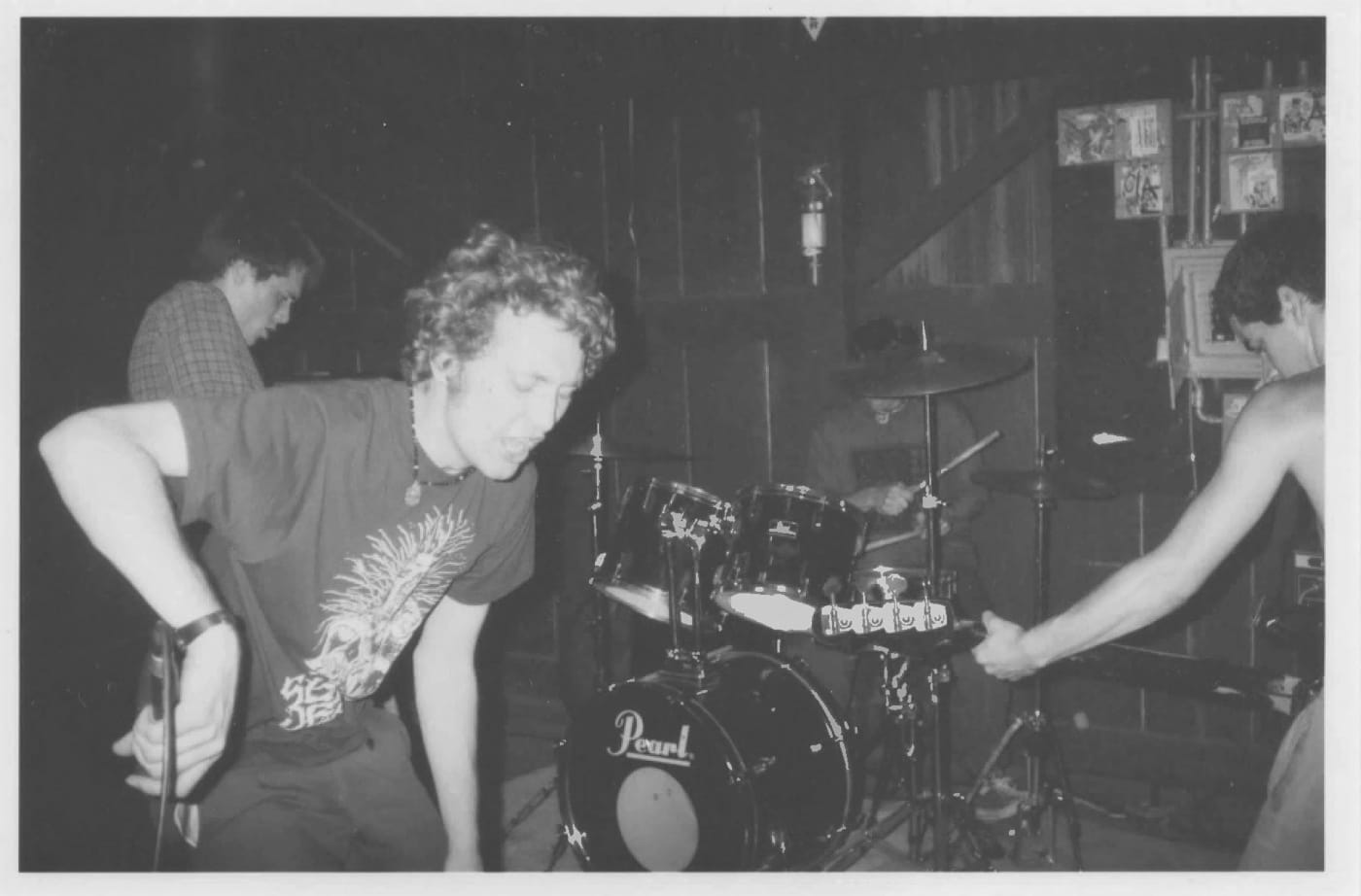
For Linstrum, the 2026 version is technically easier than the 1991 version. “The early 90s was a time when an audience of our peers was interested in hearing and seeing hardcore pushed to its limits. Bands like us, Heroin, Born Against, Downcast and a bit later, Antioch Arrow, John Henry West and Manumission, were moving hardcore beyond its traditional song structures. There were no boundaries to how far we could push it musically, emotionally or energetically. Returning to this in 2026, relearning the songs off the record, you’re required to rely on these unorthodox structures as a guide. Playing this material decades later, with a veteran’s approach, as opposed to being a twenty-year-old sonic explorer, is much simpler.”
A reunion didn’t seem likely for a while. The band is spread across California. But the offer landed and everyone said yes. “It was somewhat spontaneous, really,” Anderson says. “I don’t get to see the rest of the band often. So, this has been cool, getting together and hanging out at practice.”
Linstrum keeps it short. “It’s more of a ‘why not?’ rather than ‘why now?’ The songs remain relevant, if not more relevant, to today’s climate. We’re still angry and will always stand up for equality and remain anti-racist, anti-sexist and anti-homophobic.”
Anderson’s version is quieter. “It really comes down to still having that fire in you that never dies. Then realize you can express it at least one more time until it really is the end of the line…”
Wyświetl ten post na Instagramie
End of the Line and Downcast play Che Café in San Diego on June 13 and The Smell in Los Angeles on June 14. Three Moments of an Explosion open both shows.
Wyświetl ten post na Instagramie
🔔 IDIOTEQ is ad-free, independent, and runs on one person’s time. If you want it to stay that way: DONATE via PayPal 𝗈𝗋 SUPPORT via Patreon.
Stay connected via Newsletter · Instagram · Facebook · X (Twitter) · Threads · Bluesky · Messenger · WhatsApp.