

Four untitled songs, 21 minutes, one side of a 12″. Eretia built “The Autumn of Civilization” the way you’d build an essay: a single line of argument, broken into chapters but never really cut. The Cantabrian four-piece treat the autumn in the title as the inside of the record, not a label on its sleeve. The metaphor runs through every section, and so does the lyric, written as one continuous text that happens to land in four pieces.
The members come into this project carrying threads from elsewhere in the northern Spanish underground. Three of the four have screamo lineage through Tempano and Osoluna; the post-rock side comes through La Tumba de Nicolas Cage and Fürio. Eretia is the place those lines meet. On this record they’re reaching past the obvious touchpoints.
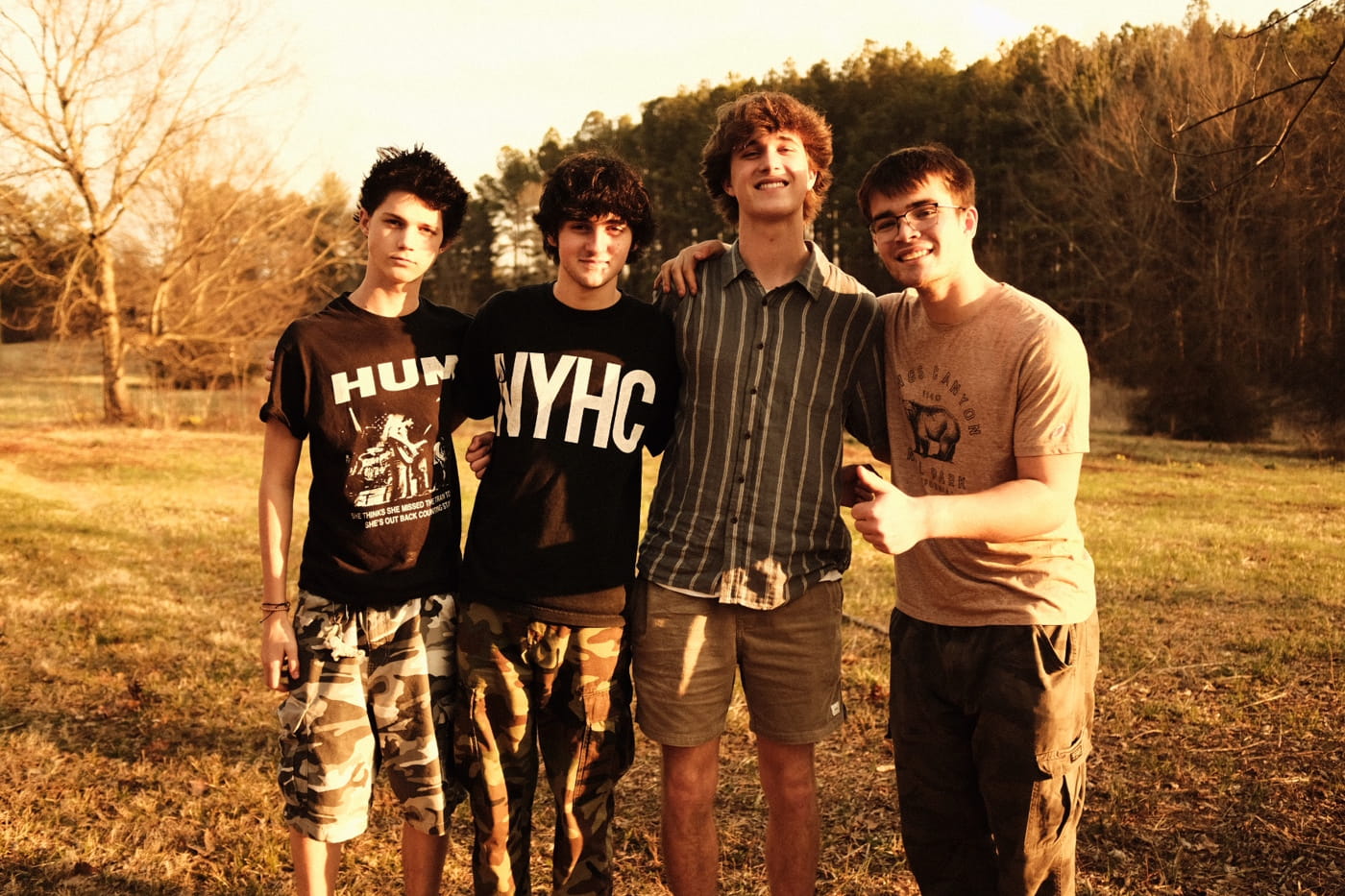
“In this project, we’re trying to focus on a different direction, letting our influences from bands like Light Bearer, ISIS, Aussitot Mort, Neurosis, and many more flow,” Carlos says. “We never intentionally try to make a part sound like one band or another, although the result in some parts might be that clear influence, and we’re aware of it.”
The list of bands all four members love, he adds, is short: Aussitot Mort, Kowloon Walled City, Lisabö, Amen Ra. “And not much else.”
Wyświetl ten post na Instagramie
The autumn in the title carries climate crisis, energy shortages, food and material scarcity, broken supply chains, rampant speculation. The opening passage of Carlos’s statement reads as the band’s position on what kind of record this is:
“We lived believing we could bend nature’s cycles without consequences, climate-control winters, import summers, and call oil dependency progress. Climate crisis, energy shortages, food and material scarcity, broken supply chains, and rampant speculation. This isn’t bad luck or a passing crisis; it’s the result of a model that exhausted the Earth as if it were infinite. We were warned for decades, and we chose to look the other way. ‘The autumn of civilization’ is a metaphor; it’s time to slow down, take care of what’s essential, relocate our lives, and decide whether we continue squeezing an exhausted planet or finally learn to live within its limits.”
The deeper reading sits underneath. Autumn historically wasn’t loss, Carlos writes; it was pause, reflection, getting ready for winter. That logic has been thrown away. The complex system everyone built, efficient and fast, has started responding to its own strain (climate change, wars, pandemics, catastrophes), and the responses are chaotic, unpredictable. The autumn of civilization isn’t immediate collapse, in his reading. It’s a transition. A slow descent into a world with less energy, fewer resources, more uncertainty. A forced return to cycles that were ignored.
“There is still room to adapt,” he writes, “but no longer from a place of abundance, but rather from an awareness of limitations.”
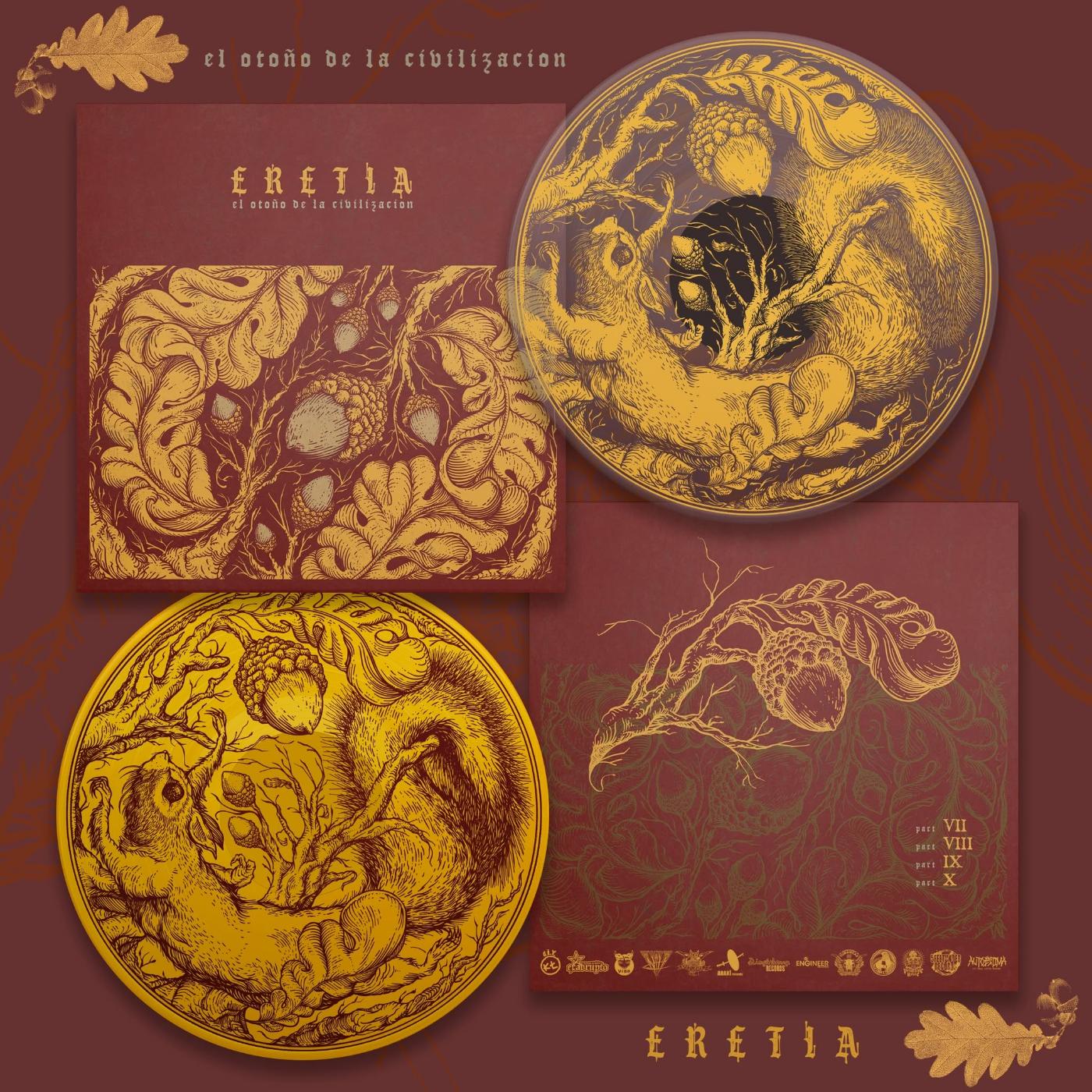
The lyrics use fragments of Benedetti’s poem “Autumn” as their backbone:
Let’s seize autumn
before winter lays waste to us
let’s elbow our way into the sun’s embrace
and admire the migrating birds
now that the heart warms
even if only for a while and little by little
let’s still think and feel
with the old affection that remains
let’s seize autumn
before the future freezes over
and there’s no room for beauty
because the future turns to frost.
The four songs share that text. Carlos handles all the band’s writing and is clear that breaking it apart track by track misses the point. “We use the same concept of untitled songs, all under the same theme, as if the four songs formed a single, unified set of lyrics.” The album is one statement that breathes in four places.
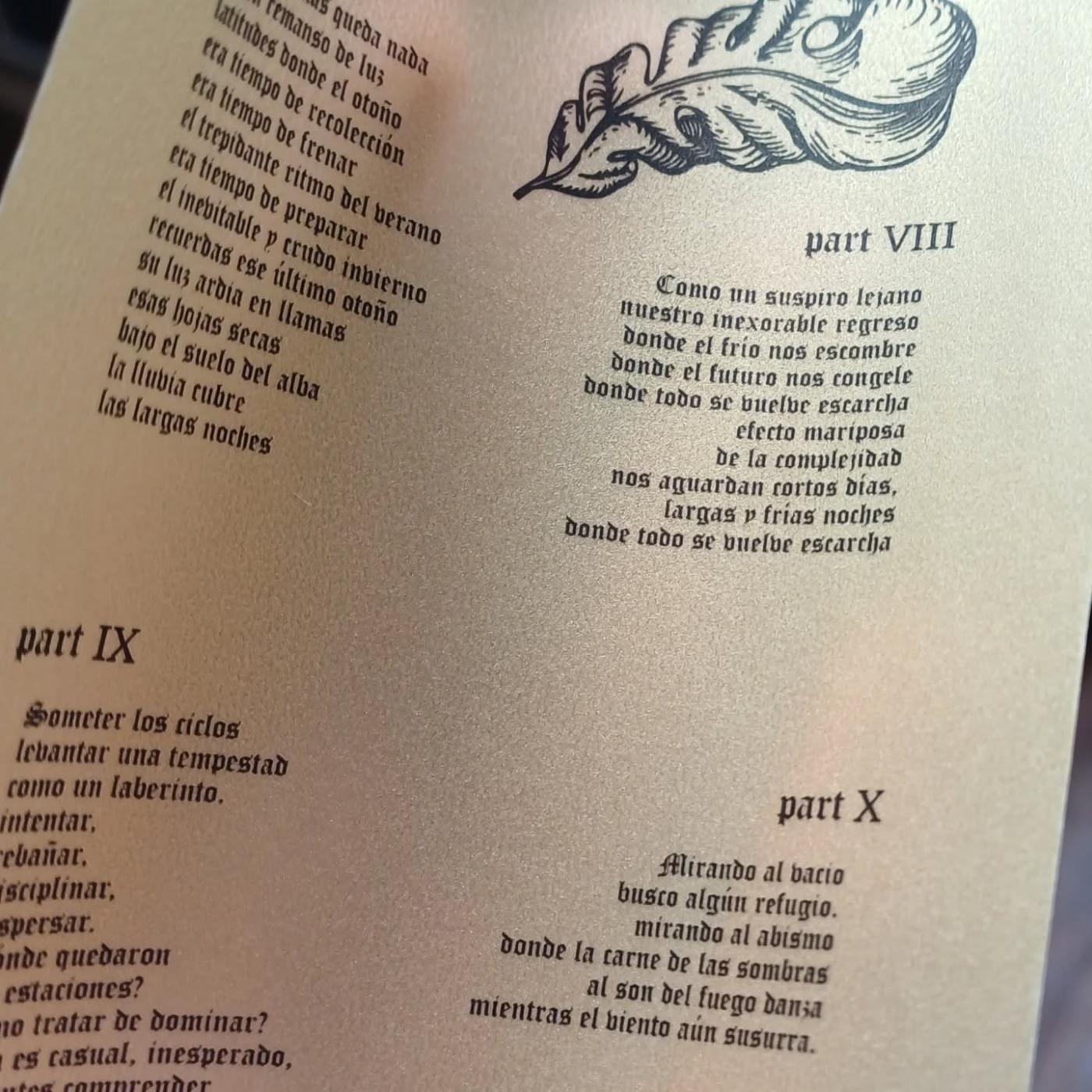
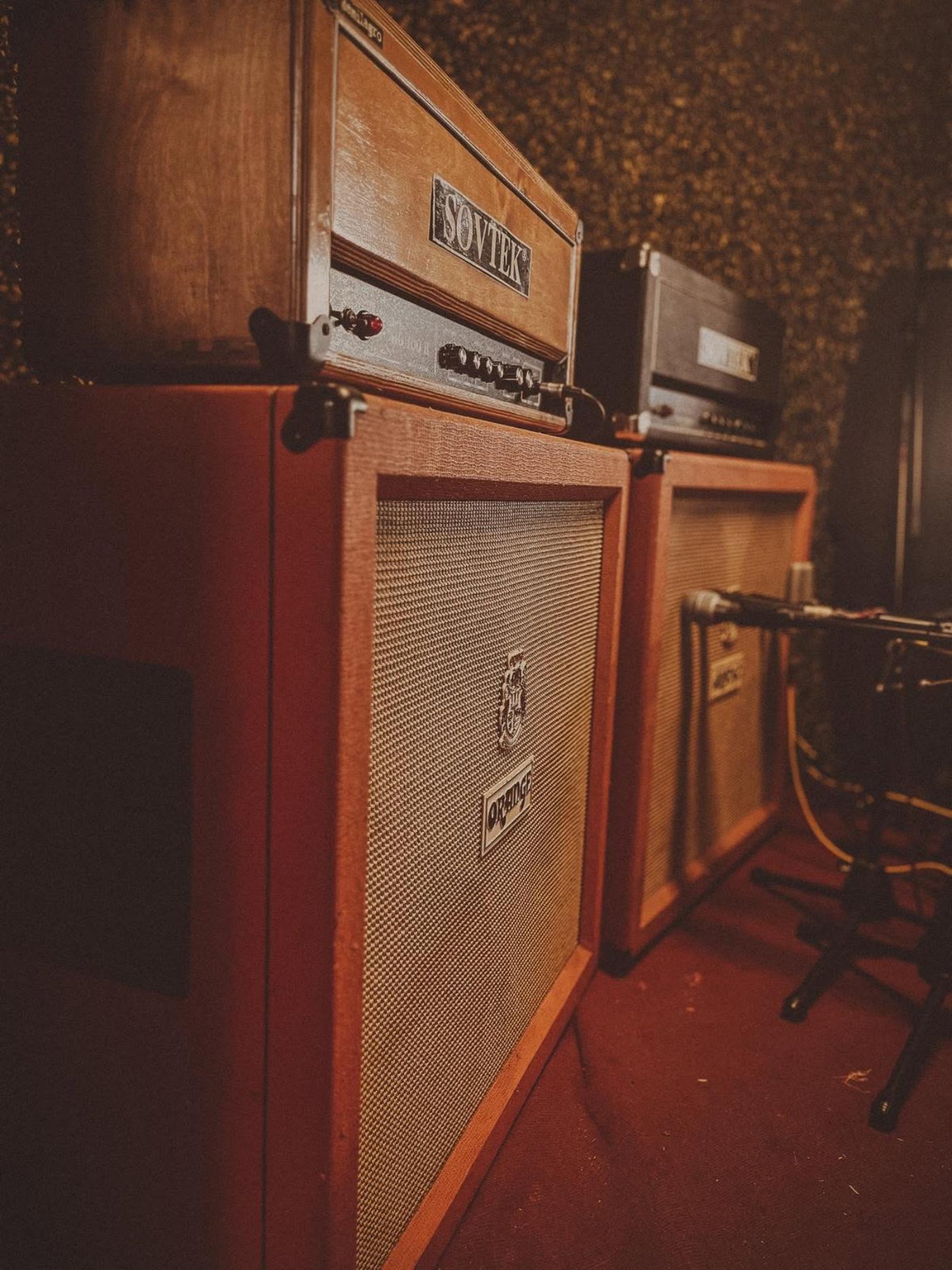
The recording started in a house being renovated. Eretia have worked with Dani “Papelillo” on every project they’ve done, and this time Papelillo had just bought a place that wasn’t finished.
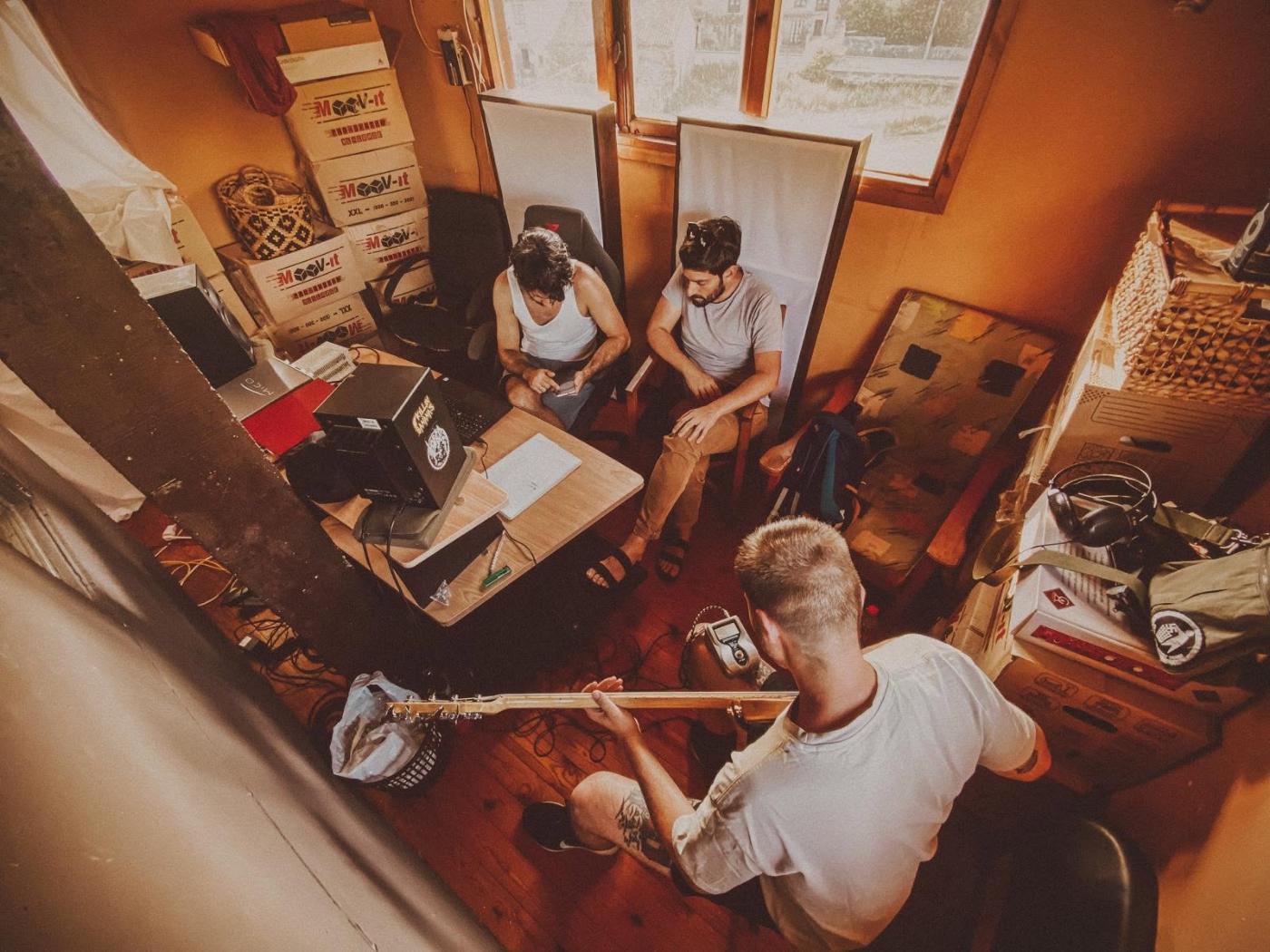
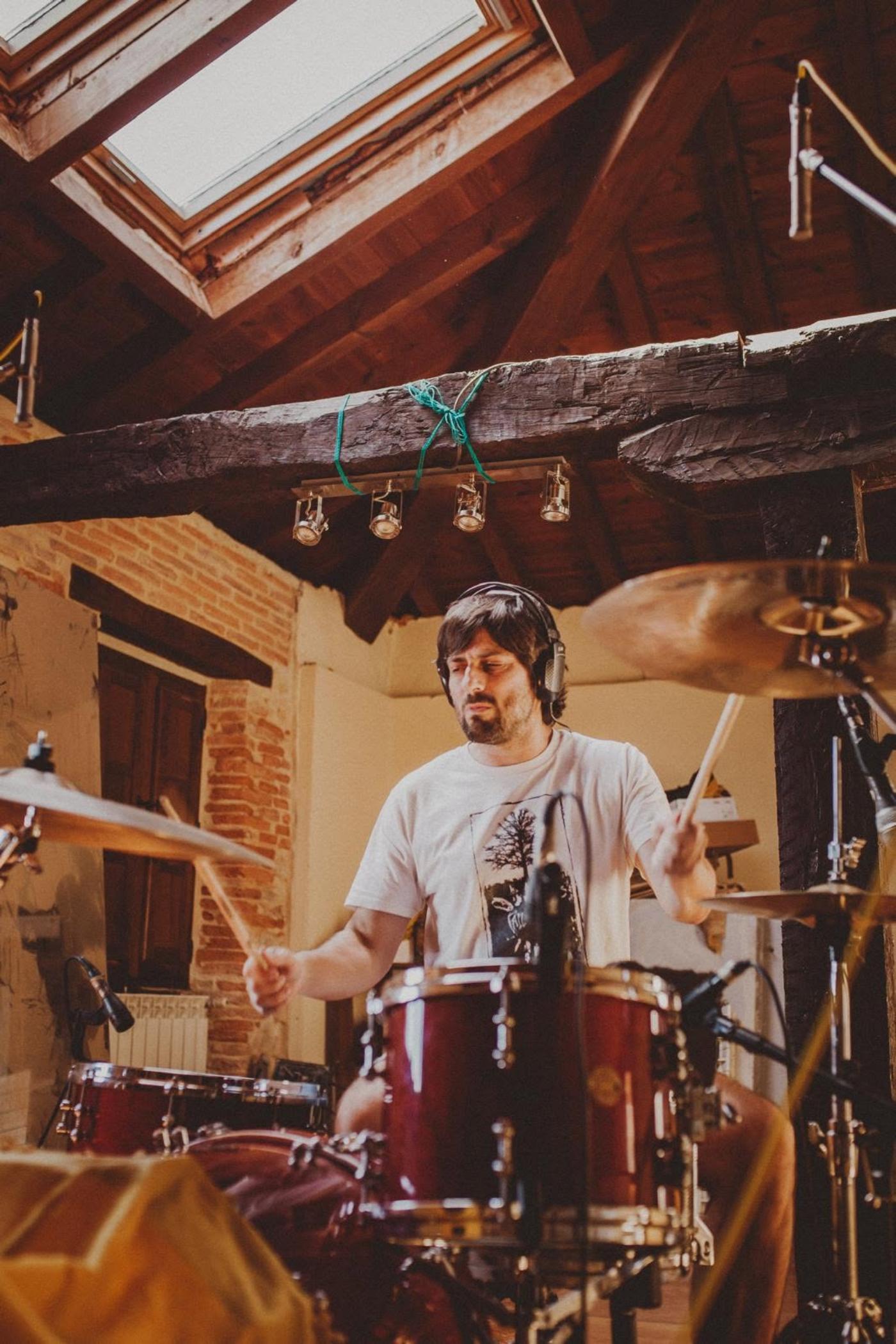
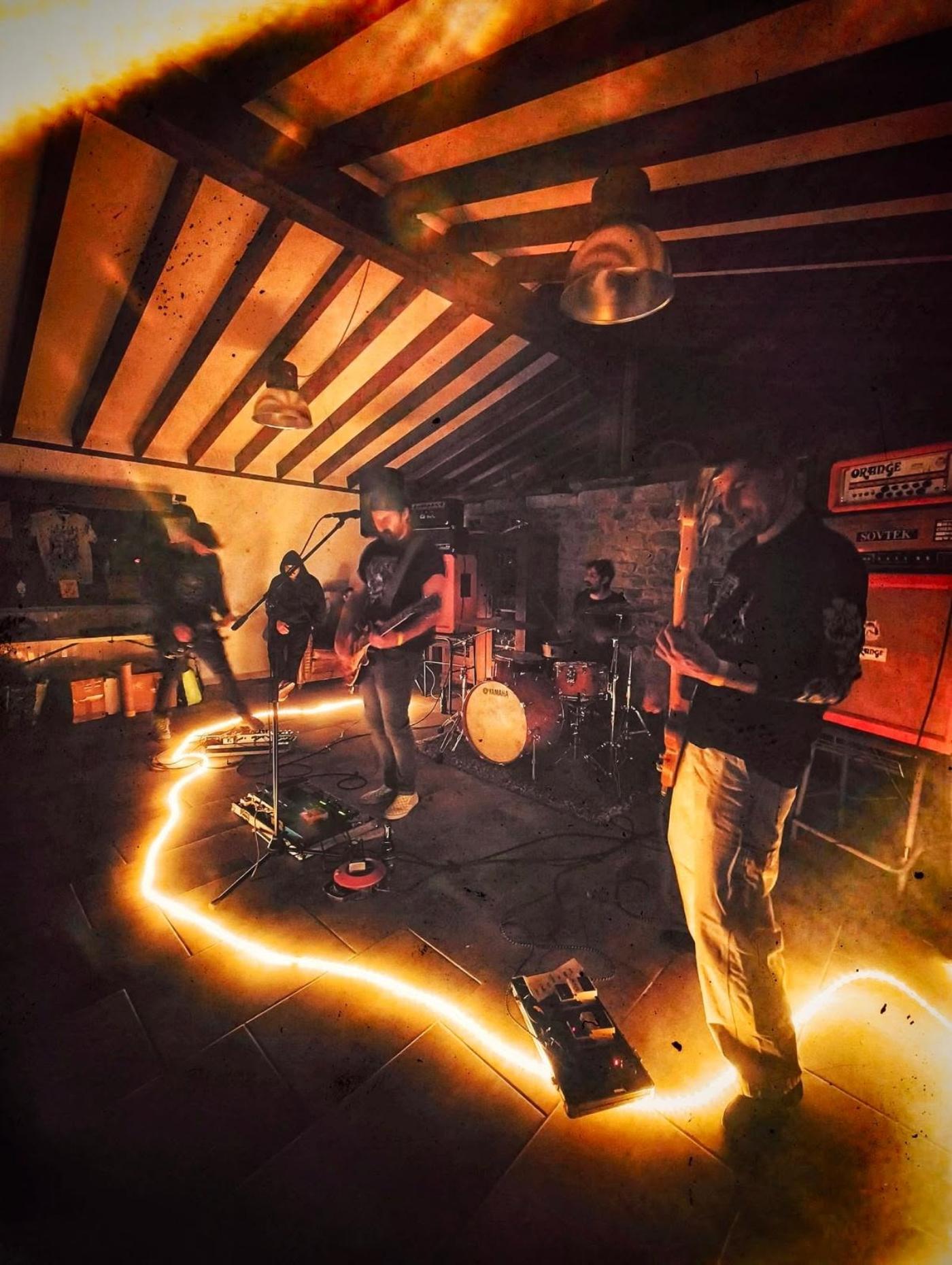
The upstairs was big and open with a wooden floor, no soundproofing, just space. They squeezed a weekend out of it to track the drums. The photos the band posted from the session show radiators piled up in front of the kit. The rest got cut at El Cubil, Papelillo’s small soundproof room. “He doesn’t have a lot of equipment, yet he does an amazing job with what he has, and it’s not his job, just a hobby,” Carlos says.
For mixing they asked Scott Evans. For mastering, Matthew Barnhart. Both names sit on records by Sumac, Neurosis, Pelican, La Dispute and Kowloon Walled City, and Carlos doesn’t dress up what asking them felt like.
“He works with the biggest bands in the genre, and we’re just a humble band who see the band as a big hobby and don’t have any grand ambitions. He said no problem and was happy to do the mixing for us.” The Barnhart pick had a route through Sumac, one of Eretia’s current favourites. The surprise came later: Neurosis recently re-released an album mixed and mastered by the same pair. “That’s why we feel privileged to have them on board.”

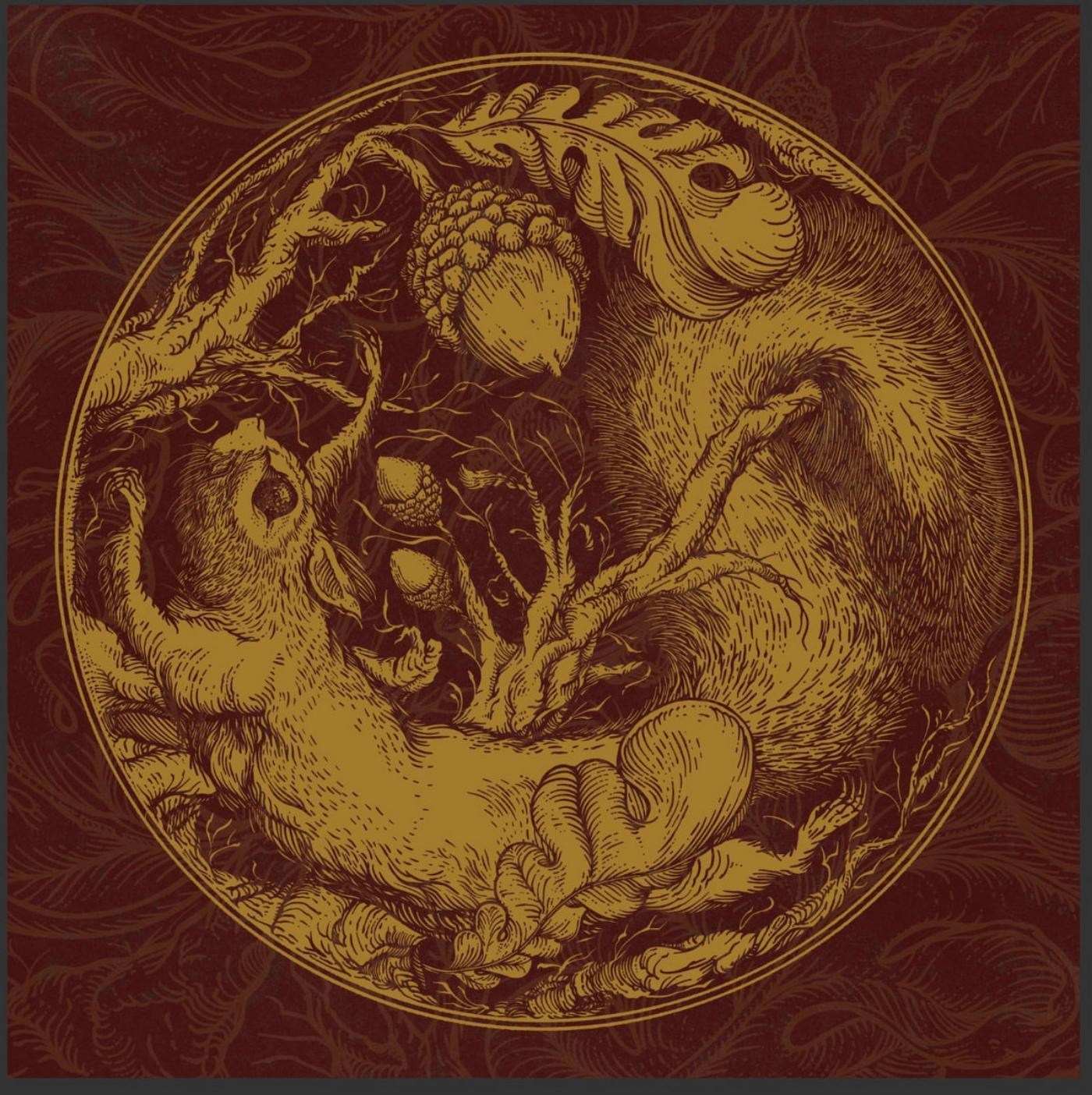
The cover comes from Adrian Asat, who got the lyric concept directly from Carlos and turned it into the image holding the record together. Eretia got back exactly what they were after.
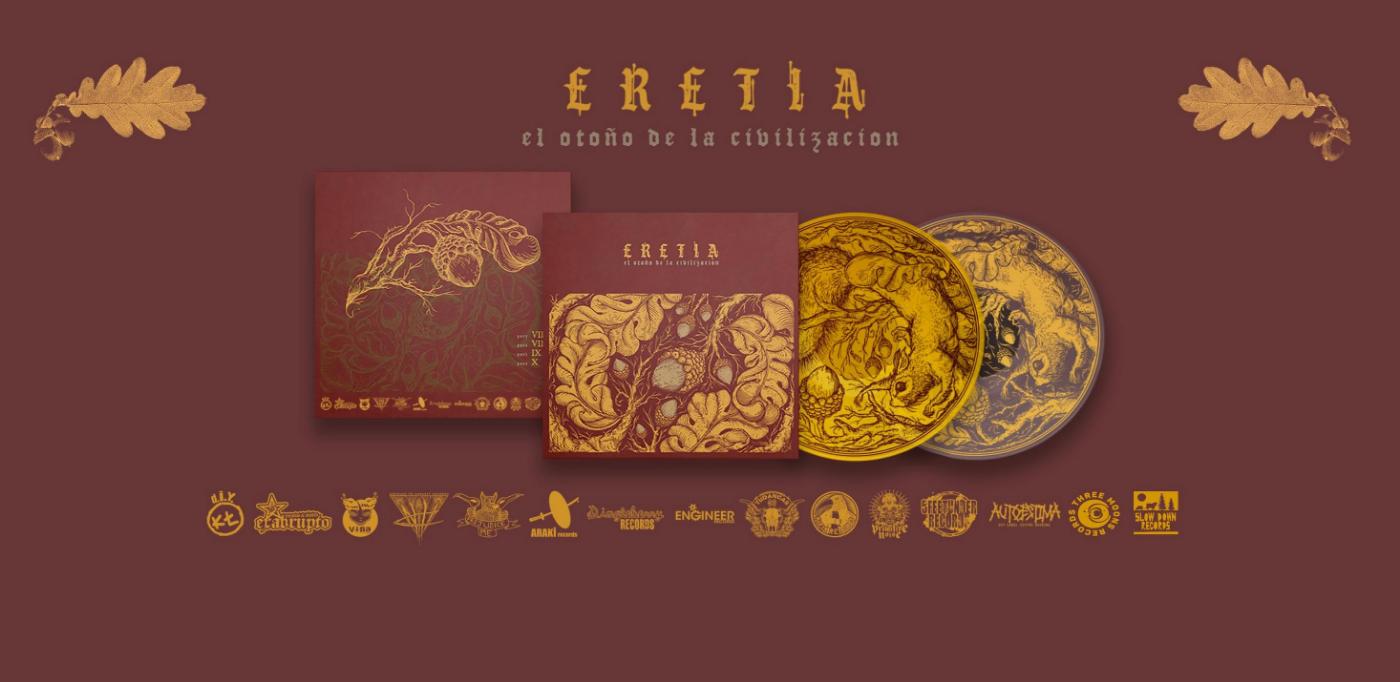
“The Autumn of Civilization” came out 15 June across 14 labels: Engineer Records (UK), Dingleberry Records (Germany), Nothing To Harvest Records (Greece), Araki Records (France), DIY Kolo Records (Poland), Vina Records (Italy), Exabrupto Records (Mexico), Prejudice Me (UK), 5FeetUnder Records (Norway), Pifia Records (Asturias/Mannheim), Producciones Tudancas (Cantabria), Primitive Noise Producciones (Cantabria), and Autoestima DIY (Cantabria). Tape comes via Three Moons Records (Poland), CD via Slow Down Records (Norway).
Pressing breakdown: 250 copies on ultraclear transparent vinyl, 250 on yellow transparent vinyl, 49 tapes, 100 digipack CDs. The vinyl screenprinting is being finished around the time this piece goes out. Carlos’s line on the cross-border logistics is short: “It’s a lot of work behind the screen, writing people and trying to get everyone on the same page.”

Lisabö sits high in Eretia’s shared list of favourites, and Carlos is specific about why.
“We’re big fans of Lisabö as musicians and their consistency in how they operate as a band: they have their own label, try to avoid playing festivals, etc.”
When the geographical link to the Basque scene came up, he was careful with it. “Cantabria doesn’t have the linguistic roots or reference bands that the Basque Country might have, where the cultural richness of music is vastly greater.” The nod stays a nod.
“The Autumn of Civilization” is out now on Bandcamp.
🔔 IDIOTEQ is ad-free, independent, and runs on one person’s time. If you want it to stay that way: DONATE via PayPal 𝗈𝗋 SUPPORT via Patreon.
Stay connected via Newsletter · Instagram · Facebook · X (Twitter) · Threads · Bluesky · Messenger · WhatsApp.