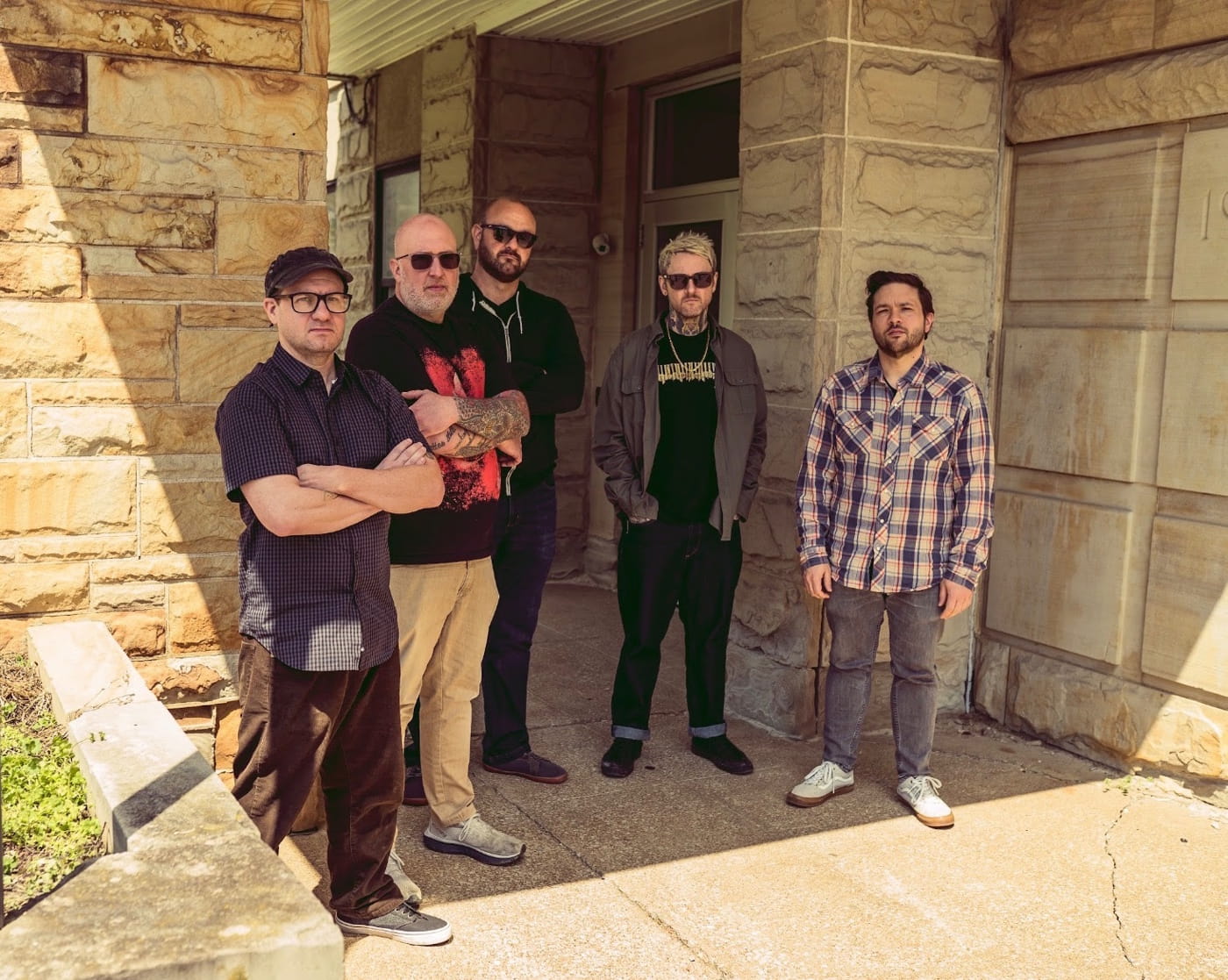

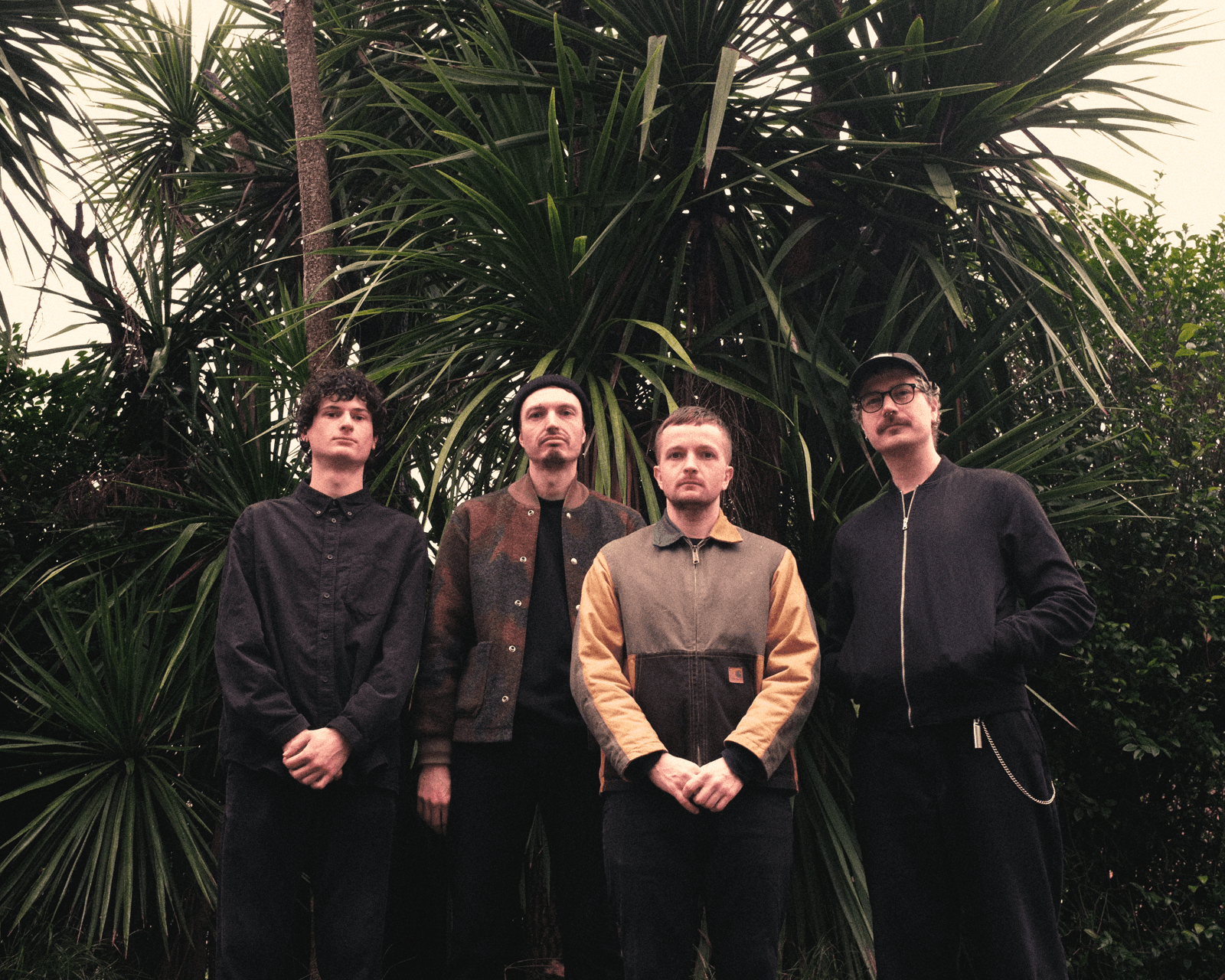
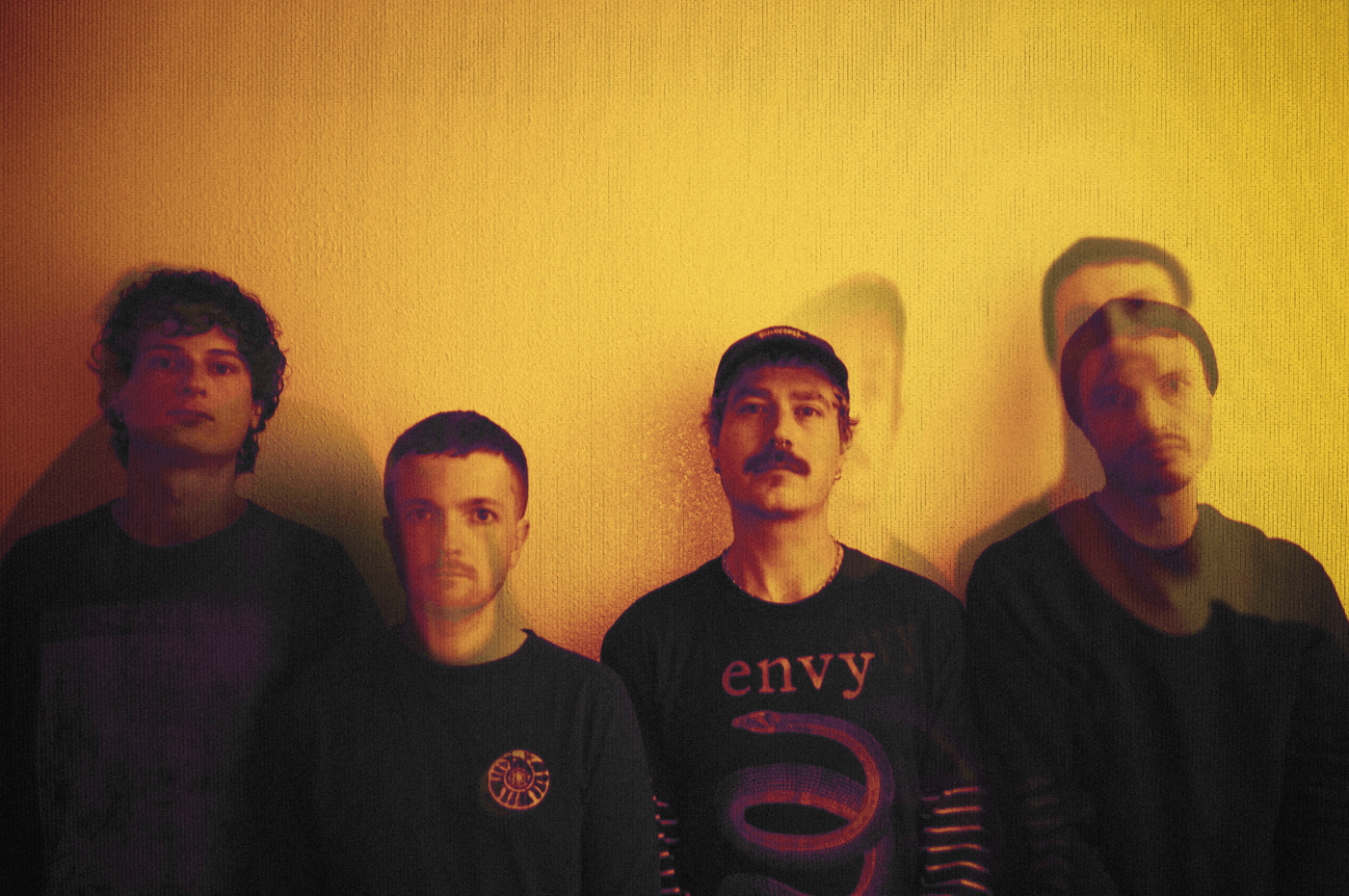
Mid writer’s block, during practice, Harry was scrolling his phone looking for something to shout over a bass hook Dudley had just played. He landed on a poem he’d started earlier and built from there. That became “Obelisk of Grief,” one of eight songs on Healing Wound’s debut album “Bodies of Heavenly Violence,” which IDIOTEQ premieres today, a day ahead of its May 29 release.
Two EPs sit behind the band already. They’ve shared stages with Pg99, Agriculture, Portrayal of Guilt and Inter Arma, with a notable set at Incineration Festival.
For the full-length they went back to Wayne Adams at Bear Bites Horse, with Brad Boatright handling the master. Guitarist Joey Pearson did the artwork, eight songs of metallic hardcore carrying sludge weight and screamo at the core, all of it circling grief, loss and forgiveness.
The way the record was built starts with the bass. Most of these songs began in late-night sessions, written first on bass and laid down over drums in GarageBand, then opened up through writing with Joey on phrasing and tone. Dudley and Joey have been making music together for over a decade and have written multiple records between them. From there the songs went into the practice room, where Max stitched the ideas together in a way that played to his strengths.

“Due to the initial writing and demos coming from a bass, I find myself placing equal value to rhythmic tension and release as much as tonal,” Dudley says. On “In Healing Wound this is often done by luring the listener into something vaguely cohesive, before quickly moving through new phrases, tonalities and rhythms that at first feel jarring and chaotic, but resolve to something coherent and whole.”
The reference points are specific. Tonally, Dudley and Joey point to “The Sum of All Fossils” by Flourishing and “Leaving Your Body Map” by Maudlin of the Well. Rhythmically, Dudley cites Magrudergrind’s self-titled album and Dead Congregation’s “Promulgation of the Fall.” Max’s drumming pulls from early Orchid and Jeromes Dream.
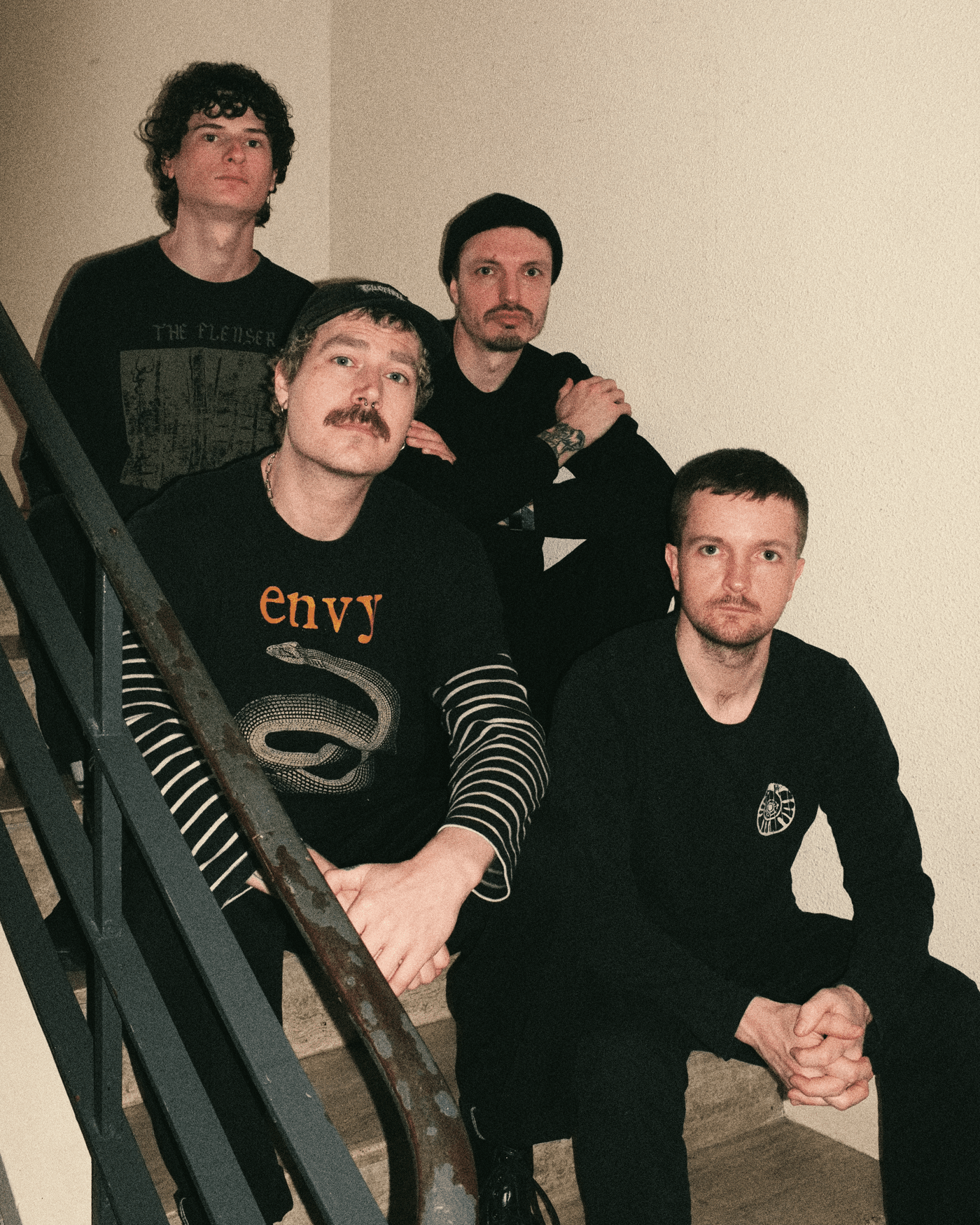
Lyrically the album is Harry’s, and it goes inward hard. “Purging Visions” came together before the band had even started writing the record, then morphed over time into its current shape. It’s about depression: “There were times throughout creating this album where I would spend days in bed living inside my head and how dangerous that can be,” he says. “There were times where I could feel my body turning against me and how depression completely takes over and weaponises your mind against you.”
“Obelisk of Grief,” the song built from that found poem, deals with the dissociation of familiarity with someone you’ve spent a long time alongside, two people effectively becoming strangers again. The line that holds it, “I understand what it means to be a tourist now, standing against the walls of your heart,” carries the image Harry attaches to it: going back to places that used to be shared, now alone, and wishing he wasn’t.
“The Loss of Lightness” turns toward acceptance and forgiveness, the bond two people hold together until they both drift and it breaks, and the sadness, confusion and anger that fill the space afterward. Writing it was a balancing act, Harry says, a self-reflective song he wanted to keep anchored to forgiveness rather than blame.
“Flesh Ridden” is about self-exploration, the feeling of having lost himself completely. “I was really pulling from the idea of shedding my skin from the old me, stepping outside of myself and leaving that unfamiliar part of me behind,” he says. The lyrics move between striving to become someone new and the viewpoint of the version of himself he wanted to forget.
“Fear of Silence” was the hardest to write. Harry calls it the most personal thing he’s ever put lyrics to, the result of a lot of private work understanding who he was. It’s about the neglect of his inner child, abandoning himself and going hollow and numb to everyone and everything. Sitting alone with that silence and letting it consume him was unbearable at times. “I’m extremely grateful I was given the space to explore that theme by the rest of the band.”
“Heavenly Violence” he describes as crazy, vocally vicious and desperate, written in the dead of winter when he wasn’t in a good place and felt like he was holding on. It’s still self-reflective, and it carries what Harry says runs through most of his writing: “There is always a ray of light at the end of most things I write, there is always an element of positive reflection and self introspection.”
“In The Shadow Of Your Absence” he calls self-explanatory. Everything routine and familiar in a relationship goes unfamiliar, and you build a new way of living once someone has gone. Harry liked working with the idea of the dead space someone used to occupy, a whole new world of sadness that churns up old patterns from youth around loss and grief. Exploring it served as a form of therapy.
“Trail of Human Wreckage” closes things, and the title is personal: what’s left after loss and grief. Harry wanted some light in it too, against music that runs heavy and chaotic. “There’s only one way out of this and that is through, look how far you’ve come.” In loss and grief, he says, there’s no way around it. You go forward, and that means through it.
The album lands straight into a June tour with Agriculture (see our interview here) across the US, Europe and UK.
“Bringing this album straight into the tour with Agriculture brings a sense of excitement and jeopardy,” Dudley says. “We are aware that we are going to be something new to a lot of people, and we can’t wait to share this album with them.”
🔔 IDIOTEQ is ad-free, independent, and runs on one person’s time. If you want it to stay that way: DONATE via PayPal 𝗈𝗋 SUPPORT via Patreon.
Stay connected via Newsletter · Instagram · Facebook · X (Twitter) · Threads · Bluesky · Messenger · WhatsApp.