
I joke pretty often that since Death Is Not Glamorous broke up, there has been a hole in my heart for that rough, hard, ridiculously melodic kind of hardcore punk. Every now and then an EP fills a bit of it. Wormbound’s “Senseless Nonsense” does.
The Philadelphia band get through four songs in 10 minutes and 36 seconds. Marc Juliano’s guitar work is heavy enough to explain why these riffs had nowhere to go in his pop-punk band Goalkeeper. Shawn Wiseley’s vocals stay yelled and the lines themselves carry strong melodies. Shawn thinks their punk roots are why listeners started calling them orgcore and connecting them with Off With Their Heads, Iron Chic, Direct Hit and I Am The Avalanche. Listeners put the tag on them.
Shawn traces the start of Wormbound to a pile of Marc riffs that were too heavy for Goalkeeper. He puts Polar Bear Club, Comeback Kid, Drug Church and Fiddlehead among the instrumental reference points. Marc sent Shawn the first three instrumental demos fully formed and asked if he could do anything with them vocally. Shawn came back 48 hours later with lyrics and melodies for all three.
“All credit to Marc, the songs are so catchy that I was able to materialize a vocal melody upon first listen to the demos, and it made my role incredibly easy,” Shawn said. “Then I just started writing about the things that had been affecting me at that time.”
“Calling Card” was the exception to that early setup. Song titles came later too. They usually started with a lyric Shawn thought fit the song, then sometimes changed because the band had already spent weeks calling it something else at practice. Marc also handled the rollout. Shawn calls him good at music marketing and says the band trusted him after he took advice from people who were good enough at it to make music their jobs.
Bass comes from John Guastavino, Shawn’s bandmate in Familiar Ghost and Uncle Dan. Across those bands, John has moved between guitar and bass. They met at the first Uncle Dan show Shawn played over a decade ago. John walked up after the set and told them, “If one of your guitarists ever leaves the band, please think of me”. One eventually did, and Shawn and John have played together ever since. Shawn says they mostly just have fun together, and he thinks that carries into the songs and the way they play live.
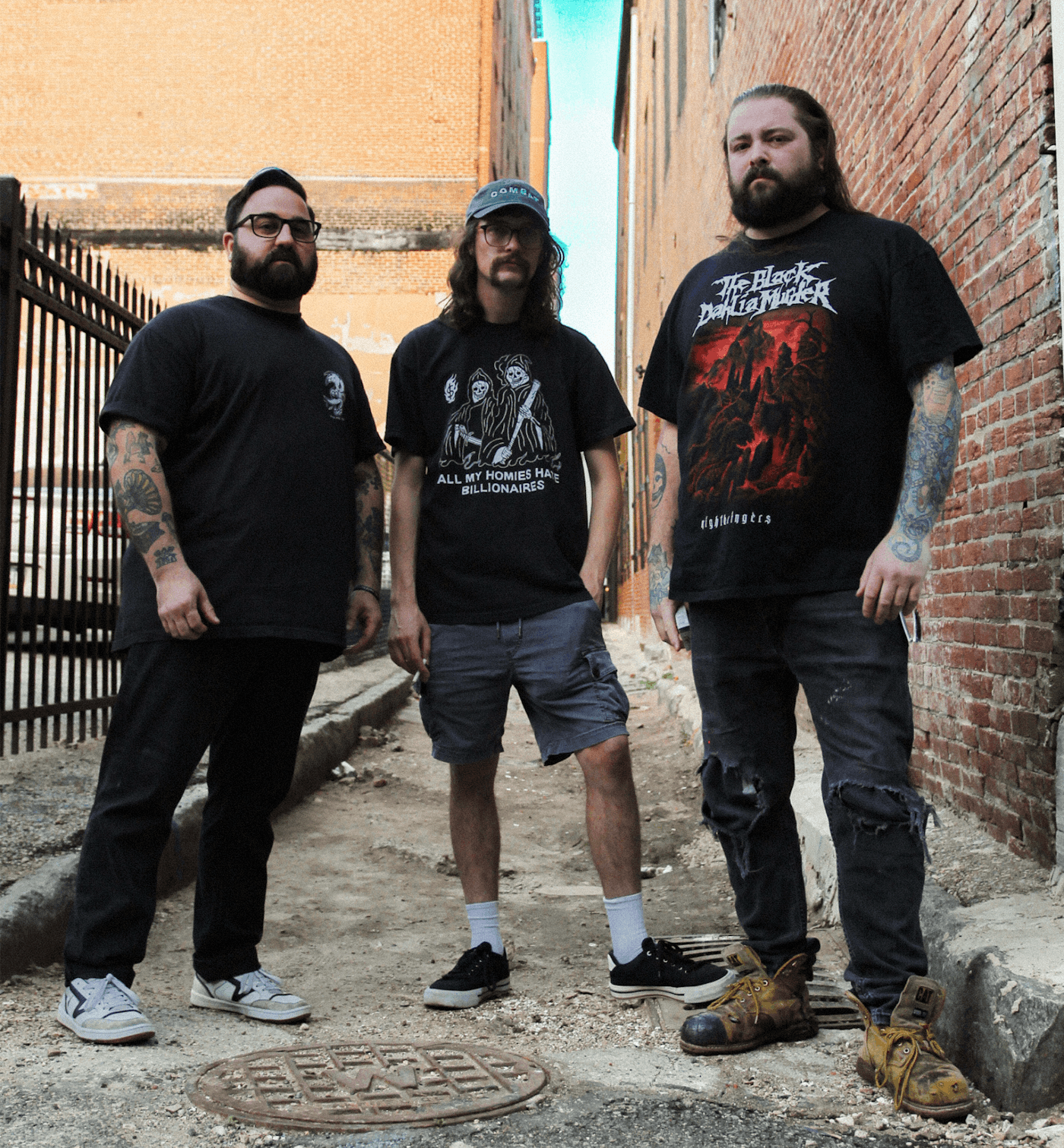
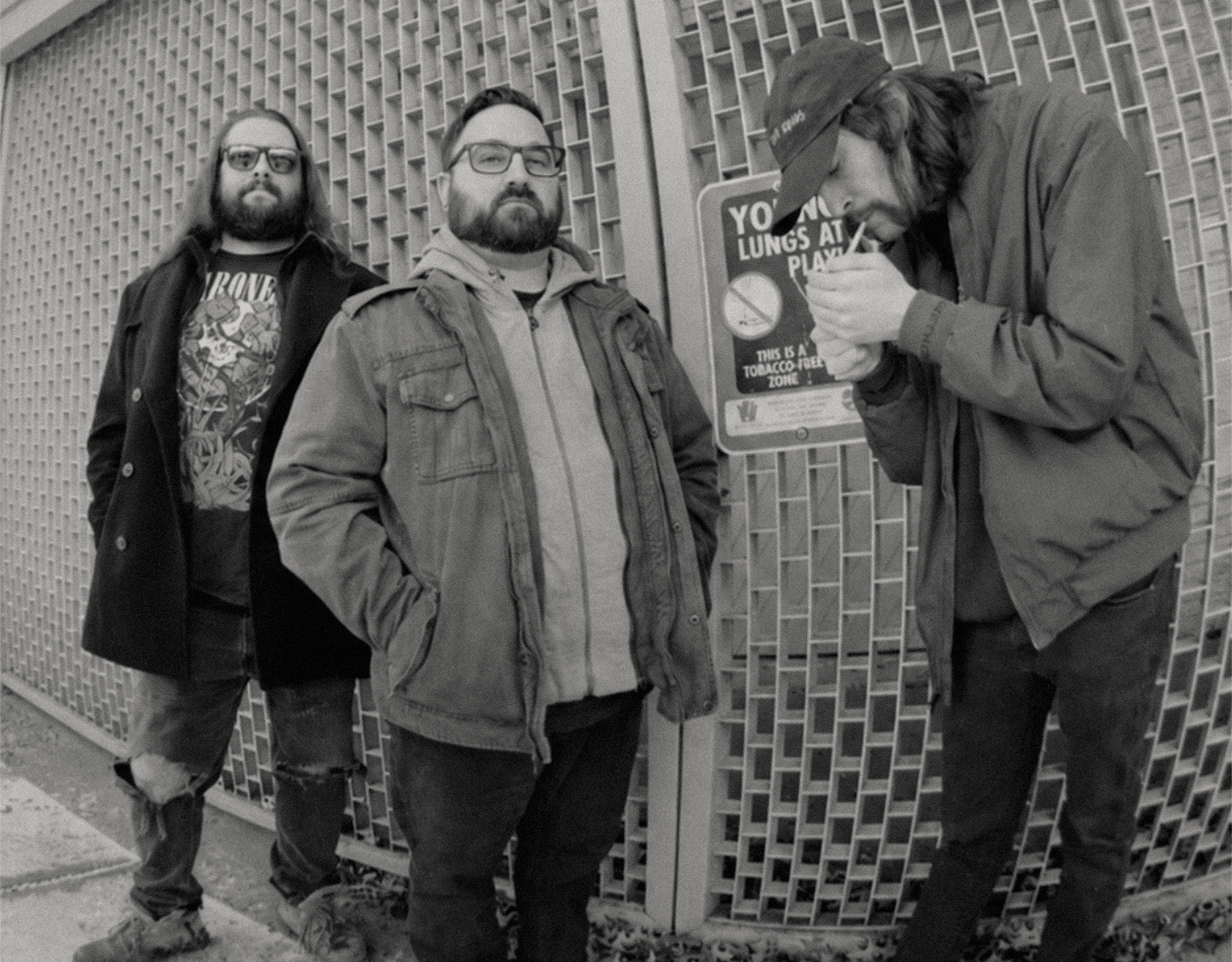
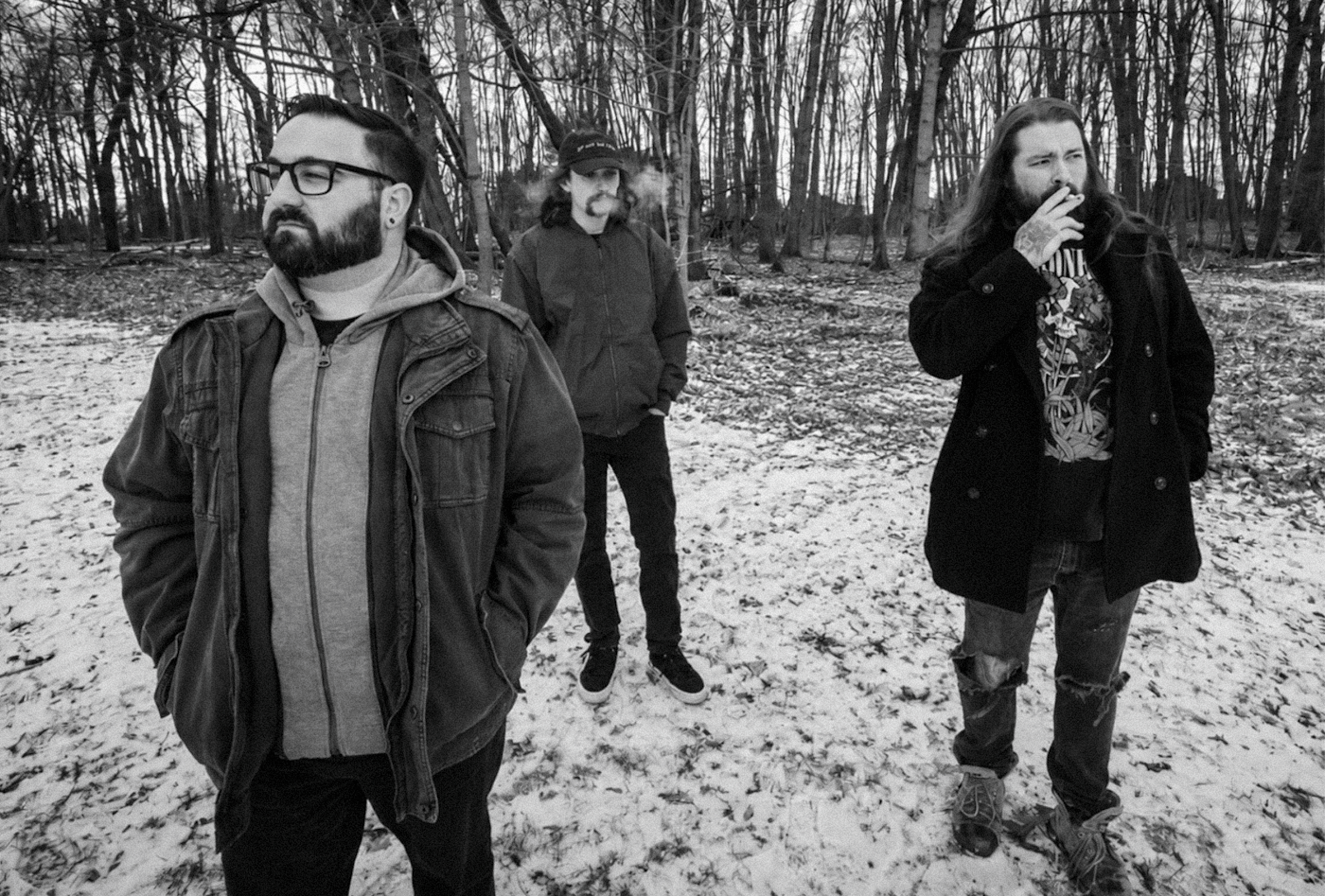
Wormbound still have no permanent drummer. Five people have already played drums with them, and there is no rush to make one of those arrangements permanent. The band want somebody they can spend serious time with at practice, in the studio and on the road, with the same basic values, compatible personalities and enough time for the project. Pete Long of My Cousins Girlfriend’s House and Above The Mendoza is their first call, though his other bands keep him busy and Wormbound do not want to pressure him into a full commitment. It is also why the early band photos show Shawn, Marc and John as a three-piece.
Jake Urtes from Shift Meal has also been brought into the live setup for lead guitar and clean backing vocals. Shawn knows him from Familiar Ghost shows with Shift Meal. The new Wormbound songs have more clean harmonies, and Jake gives the live band the extra guitar and voice needed to actually play those parts. Shawn sees that as helping them sit naturally between melodic hardcore and the punkier side people keep calling orgcore.
Wyświetl ten post na Instagramie
“Senseless Nonsense” was self-released on May 15, 2026. All four songs were written and performed by Wormbound. Nik Bruzzese engineered and mixed the EP at Gradwell House Recording, where Dave Downham handled mastering. Nik had already worked with Uncle Dan and Goalkeeper, so the trust was there before Wormbound booked him. Shawn calls Nik probably the band’s biggest supporter and somebody who genuinely believes in what Wormbound are doing.
Shawn calls the EP inherently political and describes the whole thing as a set of power struggles: what a person can change in their own life, and what happens when money, politicians, war and people with much greater power start deciding the conditions around them. He is frustrated with the rich and with people who support agendas he believes suppress anyone without financial security. He describes the current version of America, and the wider world, as a dystopian and simply “wrong” version of how things could be.
“The overarching theme of this EP is power struggles,” he said. “Whether that’s rationalizing your own power and ability to change your individual future or trying to fathom the powerlessness you have compared to the 1%: Those that control what we see on our screens, what we’re paid/what we can afford, what benefits and rights we’re ‘qualified’ for.”
His daily version is an hour in the car, nine hours at work, another hour home, chores, time with his fiance and cats, then trying to find enough energy for music. He is 31. He says most of his life is happy and he is grateful for the people around him. The darker writing tends to arrive on the days when he needs somewhere to dump what is going on.
“A lot of my songs read like a suicide note, and people who actually dive into the lyrics likely think I’m always depressed or suffering, but the truth is most of the time I’m happy and grateful for what and who I have in my life,” he said. “However, in those times, lyrics and melodies rarely flow through me. When I’m at my worst is when I need an outlet to let it out.”
“Licence to Chill” makes the political part clearest. The spelling is intentional, a nod to the James Bond film “Licence to Kill”. “Fighting wars for harmony” carries two meanings for Shawn. One is his view of US military action as participation in meaningless wars. The other is his own fight with being unable to control much of what happens around him, what he calls learning to live as “a pawn in the game”.
Jason Lubrano of Iron Chic is Shawn’s biggest lyrical influence. Shawn likes the way Lubrano writes lines with several possible readings and leaves the audience alone with them. “Foreign forces force my hand” works that way for him, carrying both outside political forces and the smaller daily fight with things he cannot change.
The line “we toast to those they took from us” also reaches into his own relationships. Shawn uses it for people he loved who later adopted views he considers bigoted or immoral, sometimes after absorbing information he believes is false. He wants the line to stay open.
Another part of “Licence to Chill” goes after financially comfortable people who tell everyone else to simply enjoy the ride. Shawn’s target is a type of person who, in his words, cannot understand why somebody with fewer options might have a cynical view of life. “Making light of someone’s life’s less hard / The farther you are from it” is his favourite line on the EP.
Shawn includes himself among the people who can be distant from lives they do not understand. He talks about sympathy and empathy as something he still has to learn, and says he wants to close that distance. In Philadelphia, he says the song has gone over fine. The local hardcore and punk crowd is tight, most of the people Wormbound play to share similar politics, and nobody has come up wanting to fight him over it yet. He also laughs that the band are probably still too small to reach many people who strongly disagree.
“Ode to the Stubborn” turns the argument inward. “To find the beauty in everything / You must be a trauma-less human being” is Shawn quoting his own subconscious. “Me and me are not on speaking terms” is the other half of it, two internal voices trying to work through the same thing. An earlier lyric sheet dropped the word “on”. There was no hidden meaning there. It was just a typo, and Shawn fixed it.
He has little patience for lines like “enjoy the ride” or “life’s about the journey”, partly because he knows there can be some truth inside them. He calls that chase a red herring. Hope may still be worth chasing, and “embrace the void” is where the song stops. Shawn wanted that ending from the second he heard Marc’s demo.
The title’s stubbornness gets much more ordinary in the final stretch. Shawn had people in mind, especially men, who refuse help or avoid seeing a doctor when something is wrong physically or mentally. He includes himself in that group and says he has done it more times than he would like to admit. His wider verdict is harsher: he thinks stubbornness is built into people and may eventually be our downfall.
“The Deficit” is the shortest song on the EP at 1:58, and that happened by accident. Wormbound stop songs when they feel finished and ignore the familiar verse, chorus, verse, chorus, bridge, chorus pattern. Shawn says adding another part simply to make the running time look more normal would weaken it.
The money words in “The Deficit” are literal. Broke, spent, indebted, benefits. Shawn hates talking about money because he worries it can sound whiny or ungrateful, and he is unusually open about one reason it gets under his skin.
“In all honesty, it mostly derives from jealousy,” he said. “Jealous that I’m unable to put all my time and effort into what I love (making and playing music) because I have to pay my bills.”
He knows that burden is common. In his view, plenty of musicians topping charts and selling out stadiums have never had to divide their time the same way.
He has long thought the existence of billionaires is immoral. Realising that some of his anger around money also comes from jealousy happened later. Shawn had already made the cover before he connected that jealousy back to his own money anger.
Wyświetl ten post na Instagramie
The artwork is Shawn’s own, built from a photo of his hand, a photo of his eye and a shot of the night sky behind his house, badly Photoshopped together by his own description. It refers to the Hand of Fatima, a symbol he connects with good fortune and protection, especially protection from jealousy. The darker version was intentional. He liked the irony. The image reaches for luck and hope. He calls the lyrics hypocritical and contradictory, full of questions and cliffhanger endings. Only afterwards did he notice how neatly the jealousy part connected back to his relationship with money.
The next Wormbound EP makes the arithmetic less vague. Six songs are already recorded and in the mixing stage for an early 2027 release. The band have not officially announced it yet, but Shawn gave the go-ahead to say it here. Recording cost $2,800, mixing $600, mastering $300 and merch $650. That is $4,350 before gear, instruments and the other costs of keeping a band moving.
That second EP has also changed the writing. A few songs arrived as fleshed-out instrumentals. Most began with riffs that Shawn and Marc worked through together. Marc once sent over a guitar part as a possible chorus lead for Shawn to sing on. Shawn’s answer was immediate: “Nope. This is the breakdown of the song. It’s too rad to ruin with vocals over top.” The riff now stands by itself in that section.
Another new song came out of Shawn’s old Familiar Ghost demo folder. He had written the instrumental years earlier and assumed it would stay there until John and Marc pushed him to bring it into Wormbound. Marc changed some chords, making them more dissonant and harsher. Shawn says Marc is a much better guitarist than he is, and the song now hits much harder than the old demo ever did.
“The Deficit” also carries the line “Too proud to beg though I’m indebted / To the falsest gods.” Shawn’s false gods are the rich and politicians who, in his view, have enormous power over people’s lives without the qualifications to justify it. “The dead don’t die” comes from a different kind of bottom. At his lowest, sadness and frustration can flatten into numbness. His own reading is simple: if he already feels dead inside, there is nowhere lower to go. “I got a little more left in me” is the bit that points back up.
“Calling Card” is where the record gets most personal. Shawn says he was drinking heavily from around 13, and passing out in the yard became common enough to give the song its central image. He likes the idea of a person’s calling card being the entire drunken version of themselves left behind from the night before. He still drinks now. He says it is social and for fun these days. Earlier in his life, he used alcohol to escape.
The therapy line reaches back just as far. In middle school, Shawn’s ADD and anxiety were severe enough that he saw several therapists and tried different medications. Teachers had originally suggested medication because he was constantly talking, getting distracted or doodling in his notebook. He describes what followed as becoming a “walking corpse”.
“No motivation, no laughing, no anything. Just go to class, do my work, go home, go to sleep,” he said.
Those same teachers asked his parents to take him off the medication and worked harder to keep him focused in class. Shawn remains grateful to them for preferring, in his words, “a kid be a kid trying and failing, than be a robot.” As an adult he returned to therapy and found it useful. He eventually had to stop after the therapist stopped accepting his insurance and he could no longer afford the sessions.
The final minutes of “Calling Card” were rewritten on the fly. Shawn and the band had the first verse and chorus and were preparing to write a second verse. Earlier that day he had listened to “Really?” by Prince Daddy and The Hyena and got stuck on its long build into the ending.
“That song has such a rad long build-up to the end, and that inspired us to say fuck it that’s the whole song, let start the outro,” he said.
That choice leaves the song hanging on a tense change. Earlier, Shawn sings “I’d kill myself to feel something.” At the end it becomes “I’ll kill myself to feel something.” He compares the ending to the sudden cut to black in “The Sopranos”. “Not every story has a happy ending.”
Those lyrics record how Shawn felt when he wrote them. He compares songs to tattoos or time capsules. There are songs from over ten years ago that he no longer identifies with, and he likes being able to hear the older version of himself in them. He expects the same thing could happen with the nihilism on “Senseless Nonsense” a decade from now.
Wormbound have only played around Philadelphia so far. Everyone in the band has toured in previous projects, including Goalkeeper and Familiar Ghost. Wormbound themselves wanted more songs before taking this band out of state. The second EP should change that in 2027. Shawn says performing the sadder lyrics when he is actually having a good night is one of his favourite parts of the band.
“There’s something cathartic about screaming sad lyrics to and with a room full of people,” he said. “It gives a sense of unity that we’re all in it together, and though these are tough topics that people often try to keep to themselves, there’s something a sense of comfort in knowing a lot of us are going through similar internal struggles behind the scenes.”
Shawn made the EP artwork under @thekeasbeyknight. Justin Mondschein, @justinlansdale, shot the black-and-white band photos. Cody Ritchie, @ritchieca20, took the colour photo.
Shawn leaves the final interpretation with whoever is listening. That part of Jason Lubrano’s influence runs all the way through his own writing.
“Music and art, as a whole, are subjective. If someone can find meaning in my lyrics that I didn’t intend, then I think that’s pretty rad.”
🔔 IDIOTEQ is ad-free, independent, and runs on one person’s time. If you want it to stay that way: DONATE via PayPal or SUPPORT via Patreon.
NEW: IDIOTEQ Explore 🗺️ Browse 15+ years of our archive by city, country, and style. Find artists on the world map or trace related sounds through the styles map.
Stay connected via Newsletter · Instagram · Facebook · X (Twitter) · Threads · Bluesky · Messenger · WhatsApp.