

In 2026, KMKZ did not have to look far for a record about a world already changing around them. The northern Polish hardcore punk band’s third album, “Szóste Wielkie Wymieranie” (“The Sixth Mass Extinction”), pulls in poisoned rivers, heat, drought, fires, floods, racism becoming ordinary, information chaos, money, power and the costs hidden behind a comfortable life. Then they put themselves in the same picture.
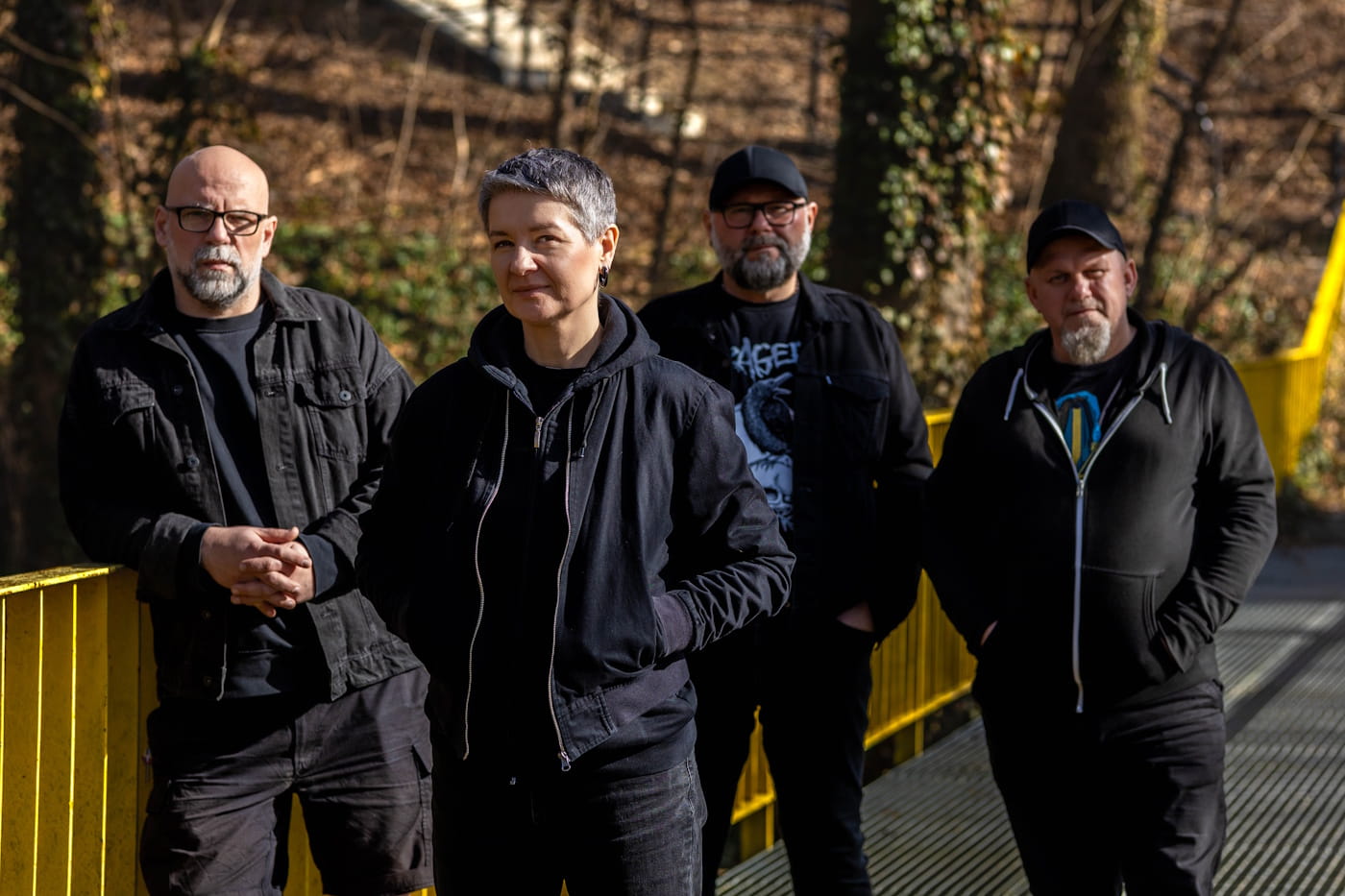
KMKZ live in two neighbouring towns in what they call the northern ass-end of Poland. They grew up under communism, when the kind of Western prosperity people now take for granted was something they mainly saw in American TV series. Today they have water, food, homes, safety, and children who can go to school and grow up in peace. Seen globally, they know that already puts them among the lucky ones.
“What is a luxury for one person can be completely normal for another.”
That became one of the harder questions behind “Szóste Wielkie Wymieranie”. How much of your own comfort are you actually willing to give up once you start thinking seriously about who pays for it?
“We don’t know exactly where the line between comfort and responsibility should be. And we’re not going to pretend that we’ve already found it ourselves, or that we’re a model of responsible living, because we’re not.”
There is no clean position outside this stuff for them. They use the same civilisation, buy things, drive cars, heat their homes and live in the richer part of the world. The album keeps coming back to what happens when the obvious answer is “the system”, but the person answering is part of that system too.
“Szóste Wielkie Wymieranie” came out on August 1, 2026 through Polish independent labels DIY Koło and N.I.C. Records. It has 12 tracks and is available on vinyl, CD, limited cassette and digitally. KMKZ’s base is 1990s-rooted hardcore punk: fast tempos, noise, aggression and a melodic streak, with songs that are happy to take a slightly crooked route instead of sticking to the straightest hardcore structure.
The album was recorded in February 2026 at Studio Dobra 12 in Białystok with Karol Kopeć, Piotr Polak and Michał Kuźmicki handling the recording. Grzegorz Iwaniec designed the cover and took the photograph used for it, while Piotr Everstraight from Depit handled the technical graphic work and layout.
Wyświetl ten post na Instagramie
The album did not begin as twelve chapters of a concept that had already been planned. Agnieszka writes the lyrics. The music usually develops separately, from old unused ideas, new parts and complete songs the band already have. At rehearsals they put the two together, changing words or music when the rhythm needs it.
“Although the lyrics are Agnieszka’s, we completely identify with what comes out of her head. She can put into words what we’re thinking too.”
The idea of the sixth mass extinction had been hanging around in Agnieszka’s head for longer. She had wanted to use it in an earlier project with another band that never happened. With KMKZ, a few finished texts and songs slowly started connecting. The running order changed. One song changed completely.
“Sto źródeł sensu” (“A Hundred Sources of Meaning”) originally had another lyric. It fitted some of the record and missed some of it, so Agnieszka scrapped the words and wrote a new version. “Pan R.” (“Mr R.”) happened at the other extreme. She brought the lyric to rehearsal, sang or half-recited it, the others started playing, and almost the whole song was there by the end of that one practice. It barely changed before recording.
The beginning and end eventually became fixed points. “Zaczęło się” (“It Has Begun”) opens the record because, for KMKZ, the sixth extinction has already started and its signs are around us. The closing title track begins with “this isn’t over yet”, and finishes with nobody left to receive another report.
“Zaczęło się” grew out of Jonathan L. Ramsey’s documentary “Można panikować” (“You Can Panic”) about Professor Szymon Malinowski, an atmospheric physicist involved with the Polish Nauka o Klimacie project. KMKZ compare Malinowski to Dr Randall Mindy from “Don’t Look Up”: somebody talking about what is happening while struggling to make people take the warning seriously. The lyric pulls together heat, drought, wildfires, floods, melting glaciers, changes in the oceans and species loss.
Gaia Vince’s “Nomad Century” gave them another part of that picture. The band’s notes pick up her Four Horsemen of the Anthropocene: Heat, Drought, Fire and Flood. They connect those conditions with large migrations as people leave places where finding somewhere fit to live becomes the immediate problem.
“Rzekobójca” (“River Killer”) is much closer to home. It started with the 2022 ecological disaster on the Odra and the sight of hundreds of tonnes of dead fish. KMKZ knew smaller rivers around them and saw the same basic treatment of water repeated elsewhere: rivers straightened, dammed, drained, polluted and handled as infrastructure.
The figure in the lyric wears a suit and carries a briefcase, a business plan and the right procedures. He talks about progress and development. That is all he needs.
“Bang Bang” began with a hunting tableau, rows of killed animals laid out after the hunt. Agnieszka’s lyric moves through the beaters, dogs, noise, early morning mist, a mother and her young woken up, and trophies at the end. KMKZ connect hunting for entertainment, tradition, adrenaline and a sense of domination with the wider human habit of deciding what the non-human world is there for.
“Hedonia” comes from ordinary comfort. The title turns pleasure, possession and forgetting into a figure that lets people enjoy full shelves, heated houses, cars, cheap flights and deliveries at the door without spending too long looking at the bill. For KMKZ, that bill ends up somewhere else: another country, another person, another species, another river.
Then comes the question that leaves them nowhere to hide: “Z czego dzisiaj zrezygnujesz?” (“What Will You Give Up Today?”)
The band do not claim that skipping one flight or one purchase will solve a global crisis. Their question is simpler and more annoying. Once you recognise the damage, what are you personally prepared to change?
They compare that first recognition to addiction.
“To change anything, first you have to see the problem and admit to yourself that you’re part of it.”
Their own lives are part of that calculation. Growing up in communist Poland, Western abundance looked distant. From where they stand now, a life that still seems modest locally can look extremely comfortable from somewhere else. Water, food, a roof and children growing up without war are enough to change the scale.
They take the thought as far as Plato’s cave. Walking away from civilisation and living in a forest is no serious mass solution, as they put it, because there would not be enough forest for everyone. Their starting point is seeing the comforts that have become normal and admitting the position they are in.
“We are beneficiaries of a system that is destroying us and the planet at the same time. We don’t know the answer and we don’t have a ready-made solution.”
“Nieodpowiedzialność” (“Irresponsibility”) brings the same problem down to doing nothing. You do not have to start the fire yourself. Standing to the side while something collapses, looking away from injustice or harm and pretending you cannot see it is enough for the song.
Elsewhere the record moves from physical damage to the mess inside people’s heads. “Sto źródeł sensu” is about living with more information than ever and having trouble separating knowledge from manipulation. KMKZ put social media inside that problem too, as something that can increase chaos and division.
“Nowy Ład” (“New Order”) and “Chaos” deal with money and power. The band connect them with Naomi Klein’s “The Shock Doctrine”, concentration of wealth, corporations gaining influence, and crises becoming opportunities for somebody to make money. Their lyrics also look at wealthy people trying to protect themselves from the consequences of those same systems, and at costs that eventually land on everyone else or get passed to future generations.
One of the most direct songs on the album came from two words.
Wyświetl ten post na Instagramie
“Domesticated racism” was an expression Agnieszka picked up from Anna Dąbrowska of the human rights organisation Homo Faber. “Pan R.” looks at racism after it has become part of ordinary public life: jokes, media, political messages, likes, applause and votes.
Sylwia Chutnik’s appearance on the track came through the punk scene itself. The writer and activist has been connected with punk for more than 30 years and previously sang and wrote lyrics for the now defunct women’s band Zimny Maj, who played fast punk with feminist lyrics.
KMKZ knew her from various scene-related situations. At some point somebody asked if she missed singing. She said that if she got an offer, she would sing again.
When “Pan R.” appeared, they remembered that conversation.
Chutnik received the finished song, the lyrics and the story behind them. KMKZ left the interpretation to her. She also appeared in the video, shot at Warsaw squat ADA Puławska. Agnieszka and Grzesiek came up with the video and filmed it. Outside KMKZ they also record video around the HCP scene and run a YouTube channel devoted to the music around it.
By the title track, KMKZ have moved from particular cases back to the wider human habit behind them: taking, building, collecting, consuming and assuming another chance will always be available. They point to the five mass extinctions in Earth’s history and the current discussion of a sixth one driven by human activity and the speed of changes to biodiversity and living conditions.
Their final explanation for making the record is also the simplest one they give.
“That’s why this record was made. Not as an answer. More as an attempt to name what we see and ask a few questions we can no longer push away.”
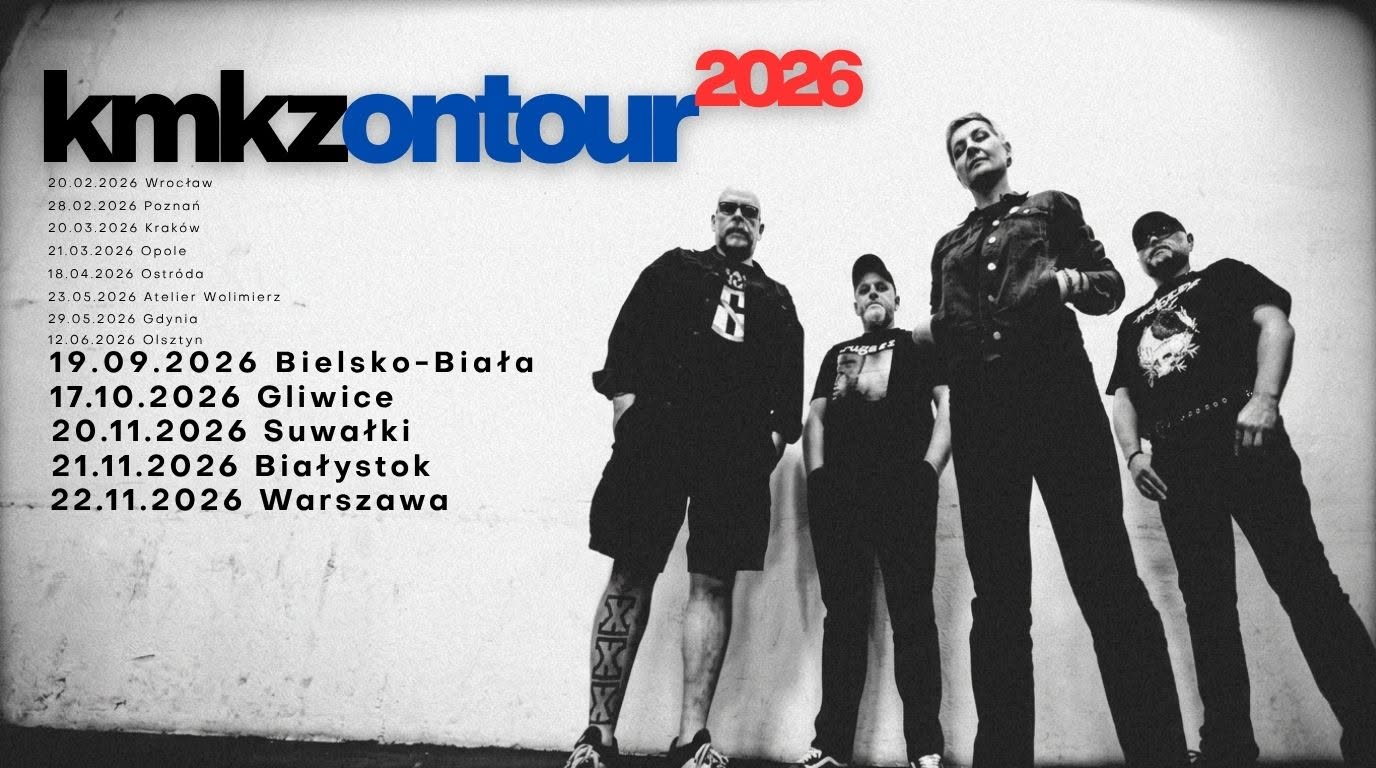
KMKZ are also staying busy live through the end of the year. Their next stop is PUNK! Generation at CKS Mrowisko / Klub Spirala in Gliwice on October 17, alongside Dezerter, Skorupa, Profanacja, Tribute to Siekiera, Radykalna Wieś and Meluzyna.
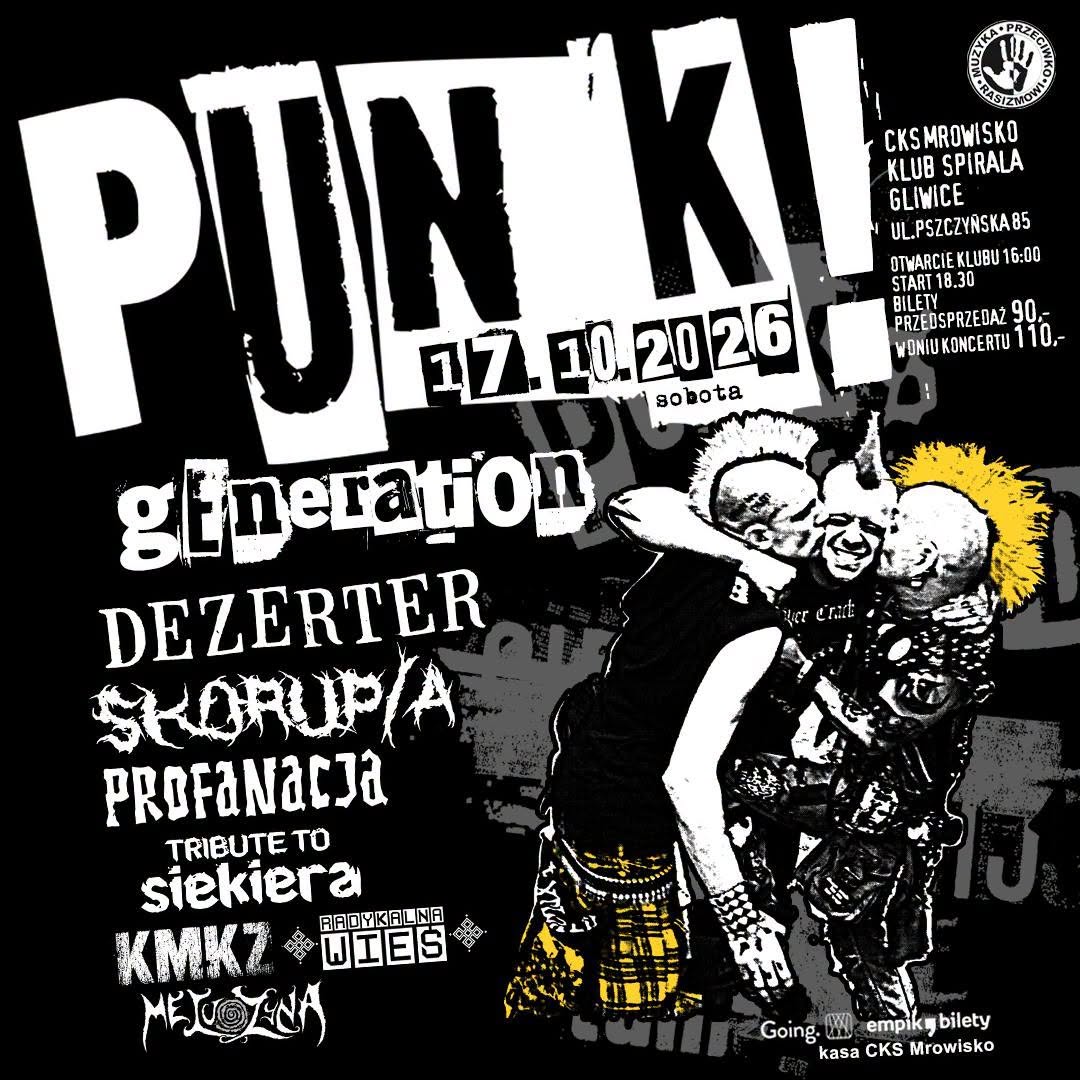
November then brings three more dates: Suwałki on November 20, Białystok on November 21 and Warsaw on November 22.