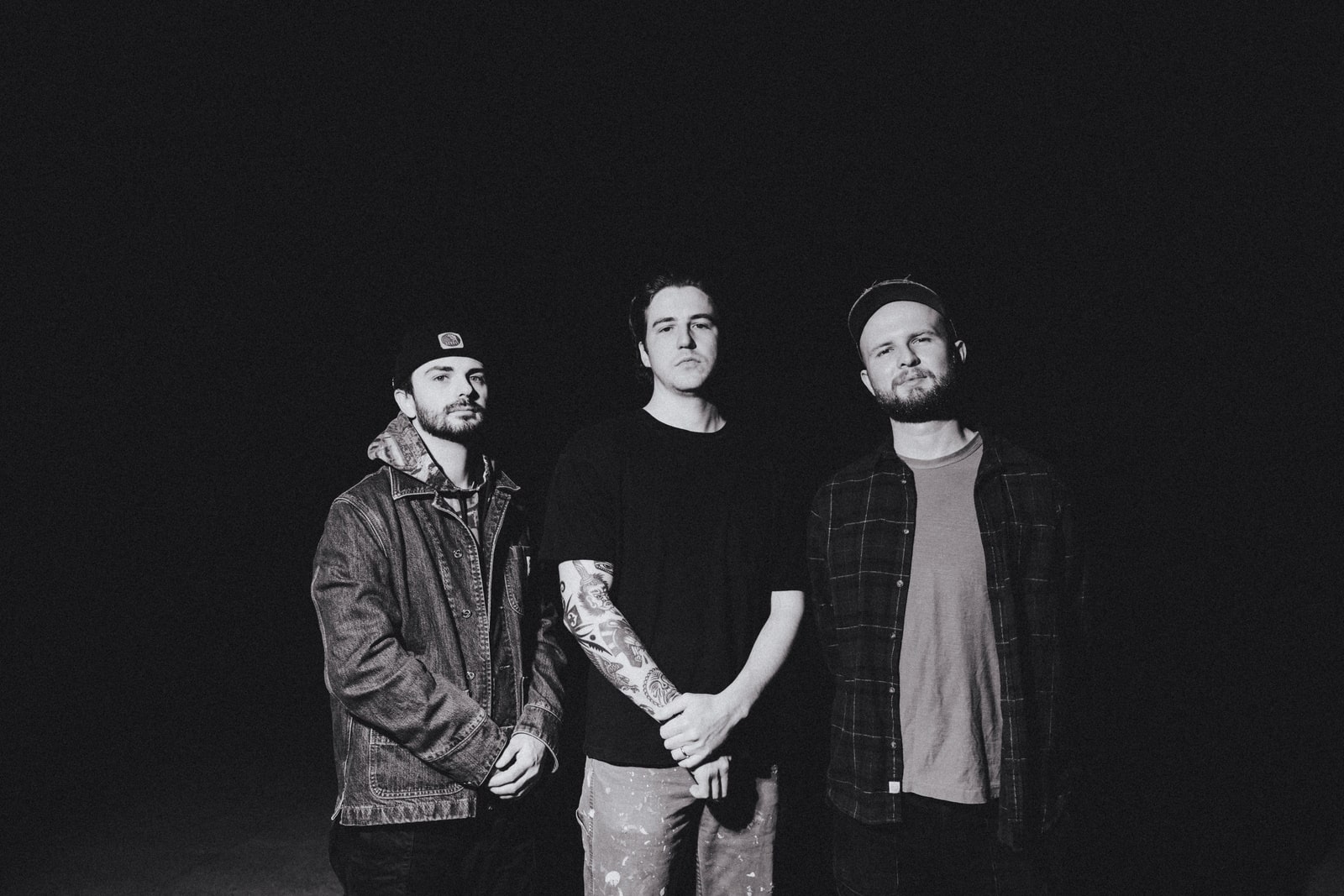


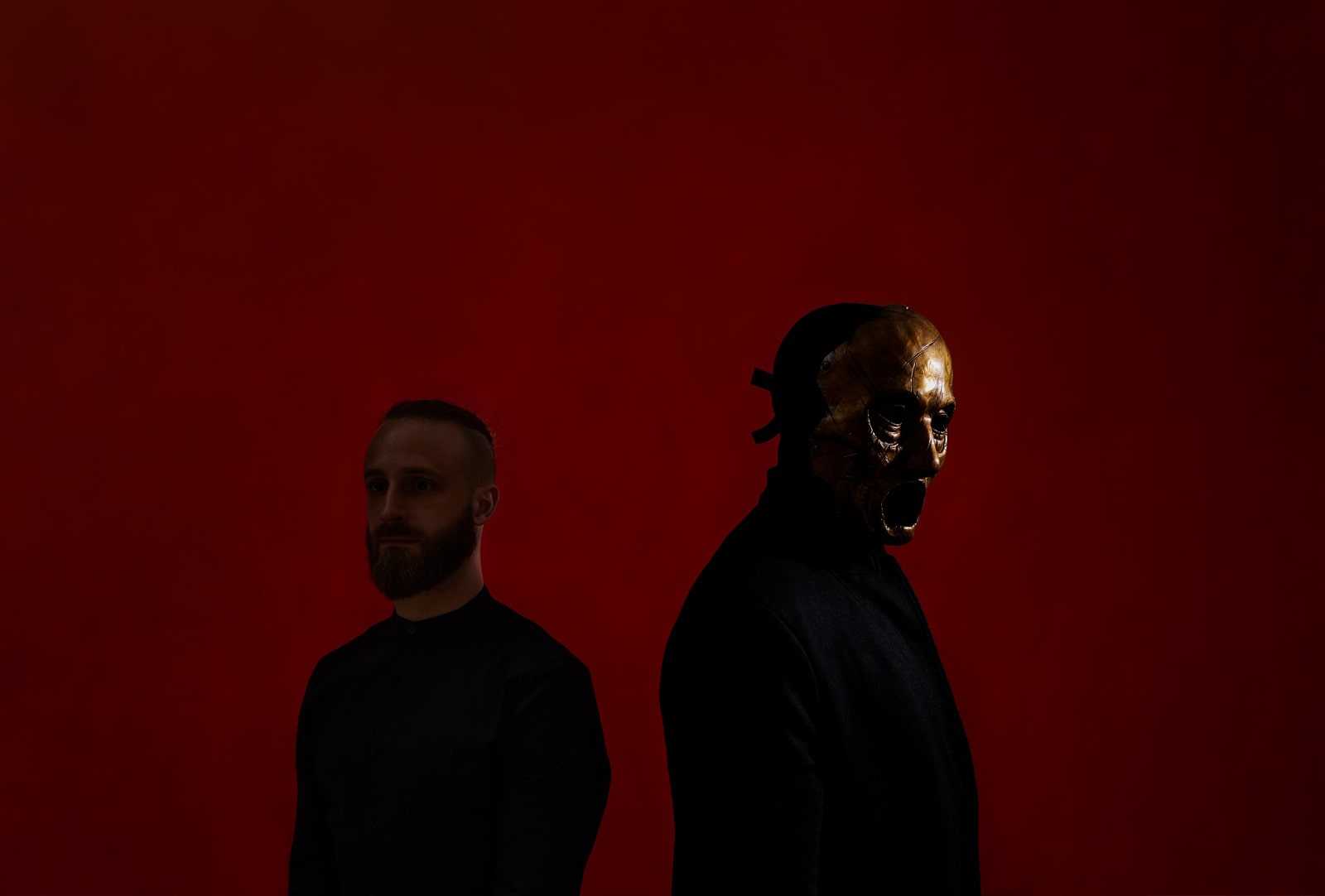
Composed of chief-songwriter Him and James Stewart (Decapitated / Vader) on drums, with album production handled by Scott Atkins, “Of Golden Verse” by atmopsheric progressive metal band SERMON shows a heavier side to the band’s unique craft without losing their more melodic inclinations. The album represents an intense and dynamic follow-up to its predecessor, delving deep into the corridors of corruption and compromise with startling heaviness.
“James is the other side of this. I’ll give him the demo of a whole album and the drums will be written, and he likes me to do that, but when we get in the studio, he makes his suggestions and it often becomes this whole other thing. It wouldn’t sound remotely the same with another drummer. Meanwhile, Scott is the George Martin of the piece. So really Sermon is a trio. I give them something that’s fairly well formed, it’s almost there, and they add into it because they’re far more skilled than I am.” – says Him.
Produced by the renowned Scott Atkins and recorded at Grindstone Studios, the album was entirely written by the enigmatic Him, but achieved its final form through the collaborative efforts of the band, with drummer James playing a particularly vital role.
While the first SERMON album was marked by grief and introspection, “Of Golden Verse” takes a more outward-looking approach, recoiling in horror at humanity’s twisted morality.
With tentative plans to evolve SERMON into a more tangible project, the band’s second coming promises to deliver more and better live performances, emerging from the shadows and into the light. As if written in the stars, “Of Golden Verse” stands as a devastating artistic statement from a band on the rise.
Track by track commentary:
The Great Marsh
Having just a naked, singing vocal starting an album is something I always wanted to do, especially on something metal, as it felt brave. So here it is. As the title suggests to all you prog heads out there, I unashamedly stole it from Camel’s ‘The Snow Goose’ record. While it’s not melodically the same, it sort of functions in the same way that Camel’s song does as an introduction to the album. The melody playing is the same as the chorus to Royal, to get that track-to-track imprint.
Royal
This was actually the first song I wrote for the album. I tend to write most songs in chronological order so I can ensure the next song fits with the one previous. Royal is musically as close to a djent song that I think we’ll ever come to. It’s chugging throughout, until the middle, at which point the song breaks out of it’s suffocating rhythm, and into something much more spacious and dreamy before circling back into syncopated chug.
The military snare part in this song, I had in my head for years. I’d wake up with it running through my head, finding myself tapping it on the fridge door or on tables in the pub. When that kind of thing happens, you know you have to put pen to paper, just to exorcise the demon.
Light the Witch
I wanted to have a straight up kind of rock song on the album. Stabby intro, jagged verse and a belting chorus. However, when I made the demo, something was always missing. The drum beat kinda sucked, the vocals didn’t soar and there wasn’t enough emphasis between the sections. It took a lot of tweaking. It was actually the first mix I heard back, and the chorus just wasn’t right. It was sung an octave lower and it just didn’t drive the part.
It put me in a bit of a panic about the whole album. However, when working with Scott Atkins, we did a day of loose end tying up and I suggested I wanted to re-record the chorus vocals. He was a little reluctant at first, but we gave it a shot and it came out far better. Suddenly the song had emphasis. I like the lyrics to this one too; it’s a description of being burned at the stake, as an analogy of our unforgiving behaviour towards one another, #deep.
In Black
I always imagined our segues to be played by the whole band live, I didn’t want simply just a keyboard player pressing a single synth note, or backing track to just run in-between the songs, I want the album to be the live show more or less, played as a whole, by real people. So for any segue that happens on this album, it’s kind of more of a musical jam that bridges the gap between the pieces.
The Distance
Most songs for me start with a drum beat or a guitar melody. The Distance on the other hand began with the words ‘They Run. They Fall’. Again, one of those things that just wouldn’t leave my brain.
The meaning of this song is a fairly challenging issue that I’m nervous to publish. Broadly speaking its about the hairline moment in suicidal ideation, when thought becomes action. A moment that I feel is an incredibly fragile and finite pinpoint, that could happen to anyone, and could be the difference between life and death depending on the potency of their emotions.
It’s a moment we should discuss more, and try to forgo the fear and shame of feeling something that I think is more common than we might realise. I feel like doing so may just save a life.
Senescence
It may not sound like it, but this was the hardest song to record on the album, for a couple of reasons. First, it’s not about blunt force, it’s about tenderness and the second, is that I’m still not quite sure that it’s finished. It was always a bit of a problem child in the demo stage, but I knew the album needed it structurally. In the end though, it came out fairly well.
It’s a common trap with writing these things, it’s almost never done. You can always chisel away at something to strive for perfection, but I think it’s much more fruitful to try and get it to a good general impression and let go of it. Even if it’s just for your own sanity.
Wake the Silent
It was a small, sad little dream of mine to make a song you could bang your head too. I know that sounds juvenile, but after swimming in an ocean of prog songwriting habits, I wanted something more straightforward and pummelling, Sermon style.
Scott felt this was the red-herring of the album, the one that maybe didn’t fit with the rest. I can see his point, but it’s also got all the flavours of the rest of the album, just in a more meat-and-potatoes kind of way and I’m not sad about it.
The song heavily relies on the drums (like most Sermon songs), but James wasn’t happy with the repetition of the main beat, so he took it under his wing to play around the measure more. The end result is a savage beast that I think is going to come off pretty effectively on the stage.
Golden
I think this is my favourite song I’ve ever written. The chorus riff is something I’ve had in my mind since I was about 14, and 20 years later, finally it became something good.
Songwriting, I always felt was a little like a compulsion, but recently I’ve felt it is more like an annoying companion. So annoying, that your companion won’t let any of your ideas go to a subject that it feels isn’t worthy. Because you know that little fragment holds some value and it must wait for the right conditions until it can bloom properly.
I think this might be the ultimate Sermon song so far, it’s kind of got everything. A writhing, building song structure, that’s really just a giant crescendo for 7 minutes, interspersed with a soaring chorus to keep you listening.
It also has the best take I have ever seen James Stewart do at the end of the song. His finest work he’s ever done in my eyes. And that truly is saying something.
Centre
I’m obsessed with Mellotrons and I think that obsession has got us somewhat lobbed into a crowd of prog bands, even though I don’t think we’re particularly ‘prog’ at all.
I wanted something like King Crimson or Camel though, as an interlude. Layers of different strings and keys that build. The melody for the piece is the primary theme in Departure, the final song, and is a wash of hissing synths and delay guitars to swell into the final track. Magical.
Departure
The final song and the fastest song. It’s been a small goal of mine to make a blast beat listenable. The only way I could figure out how to do that was to make a hooky lead or vocal over the top. I’ve become fascinated in trying to find ways to make things accessible, but also challenging and I think we made a good go of it here.
This is James’s home turf of playing, and because he had just finished the latest Decapitated record ‘Cancer Culture’, Vogg had whipped those blasts into atomically tight shape. I’m also pretty sure it’s the longest straight blast he’s done to date (Quick, somebody give the Guiness book of World Records a bell).
Also, the final line in this is ‘time to look out from the sky’, which, while clearly is about death, also feels in it’s own way, uplifting and therefore a fitting end to a piece of music that was mostly years of agony to create.