
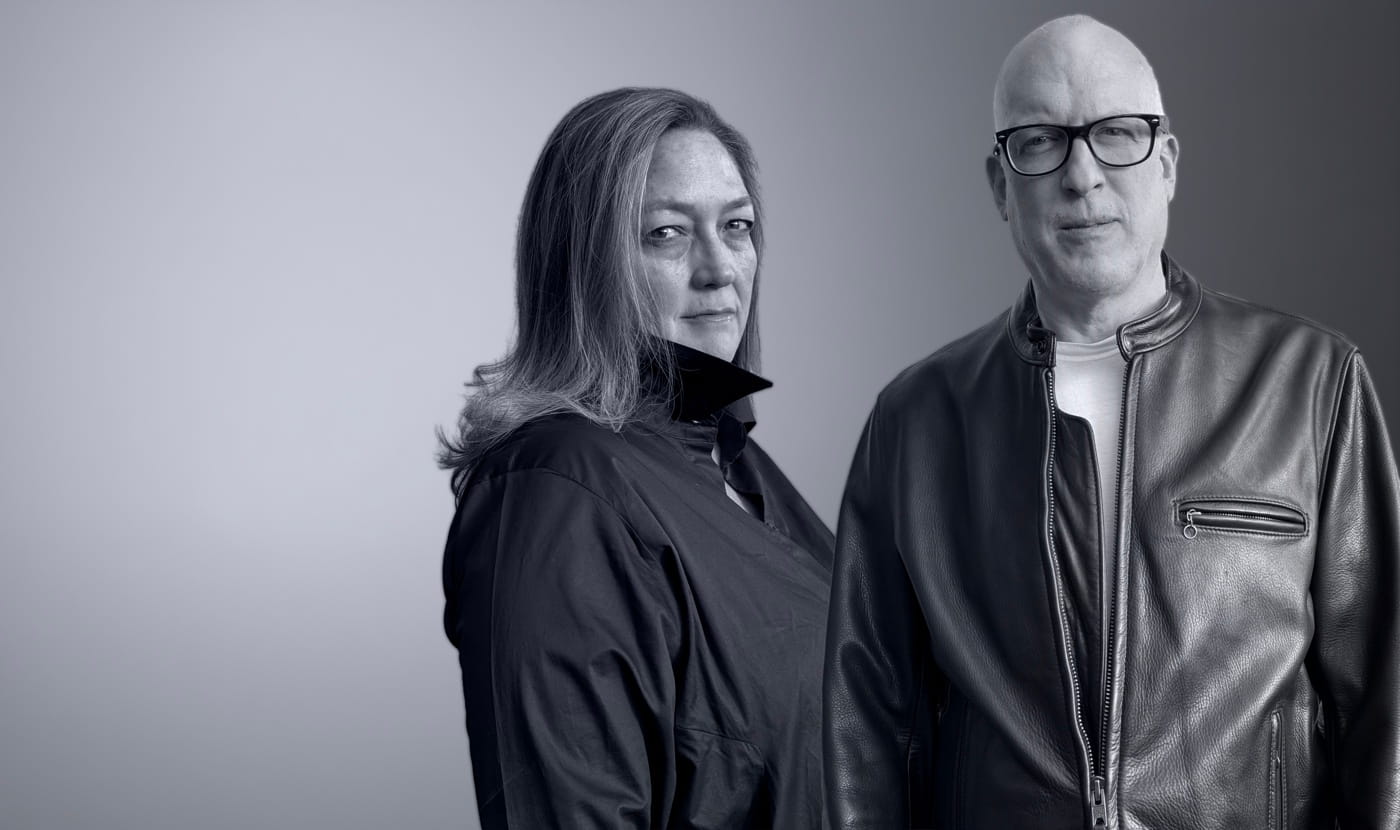
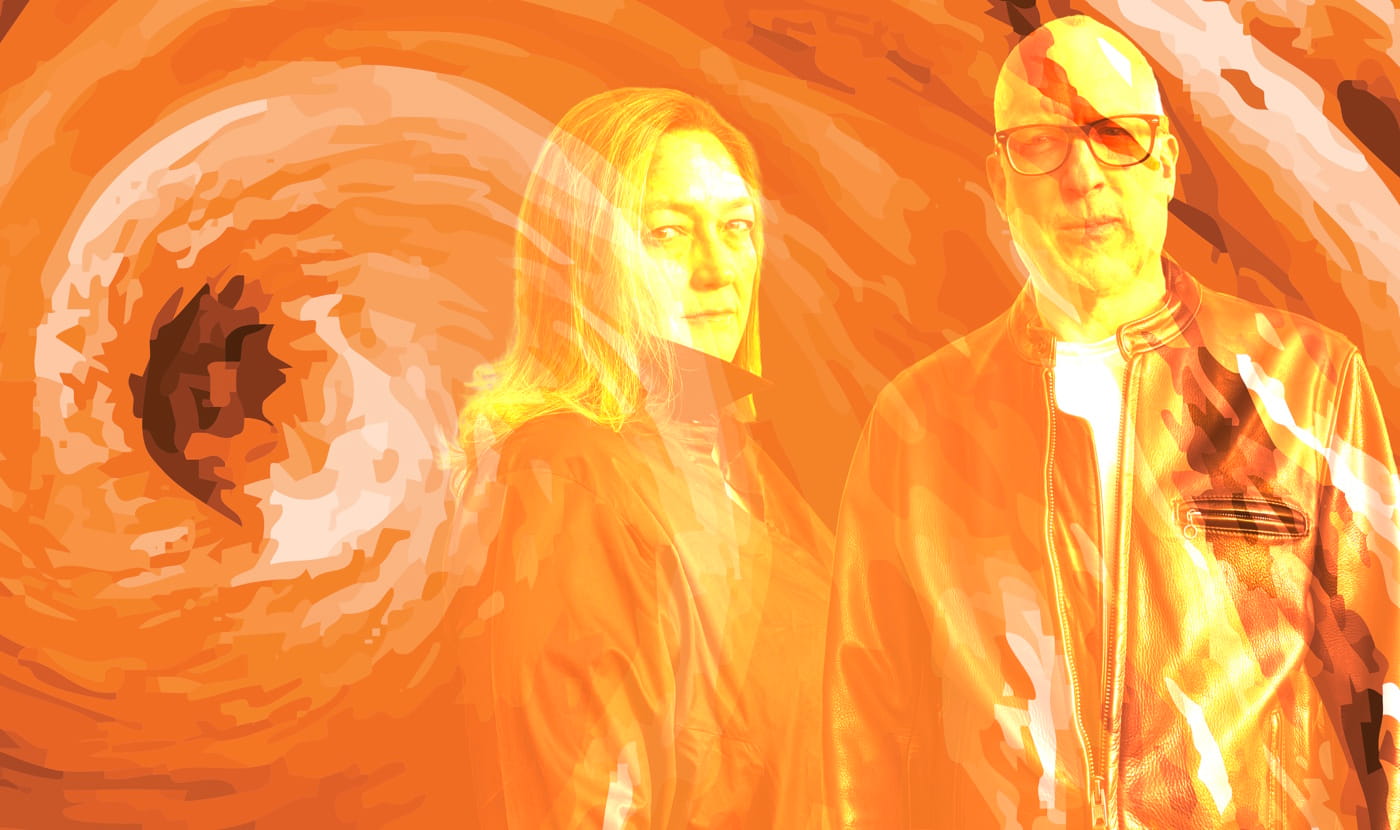
The bowl in the title is a geographic feature, the kind of depression where weather and pressure accumulate without a clear release valve. The cover art is an abstracted hurricane. Mike Knowlton lives in Southwest Florida, which means the image isn’t theoretical.
“Devil’s Bowl,” the new Unlettered LP out today, was written and recorded inside that pressure. Eleven tracks of guitars that grind low and patient, basslines that settle into a room the way an amp keeps humming after the cab is unplugged, drums that fall somewhere between programmed and breathing. Stand inside the album long enough and the air starts vibrating. Knowlton refuses to tell you whether that vibration means collapse or transformation. He says he genuinely doesn’t know.
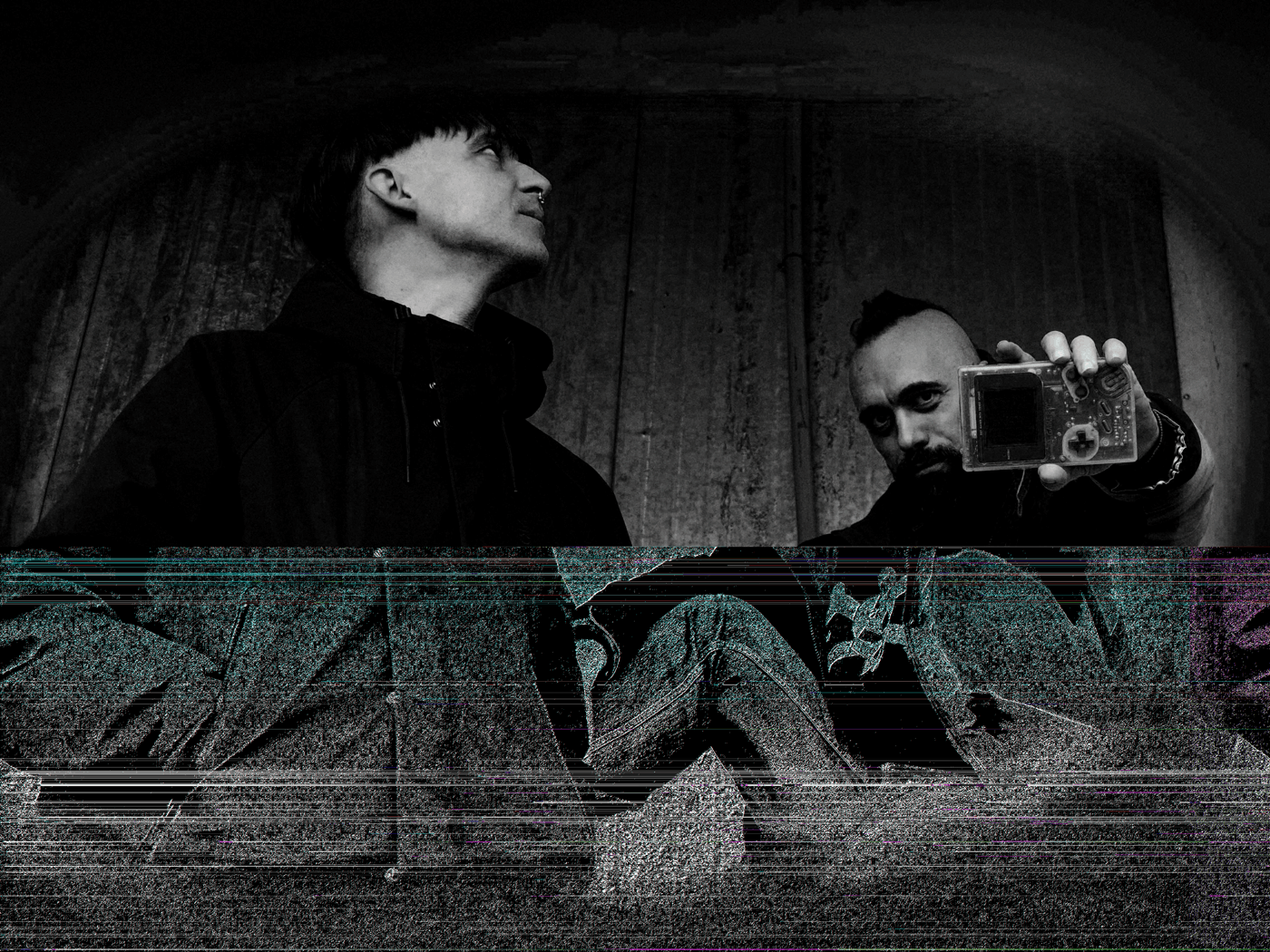
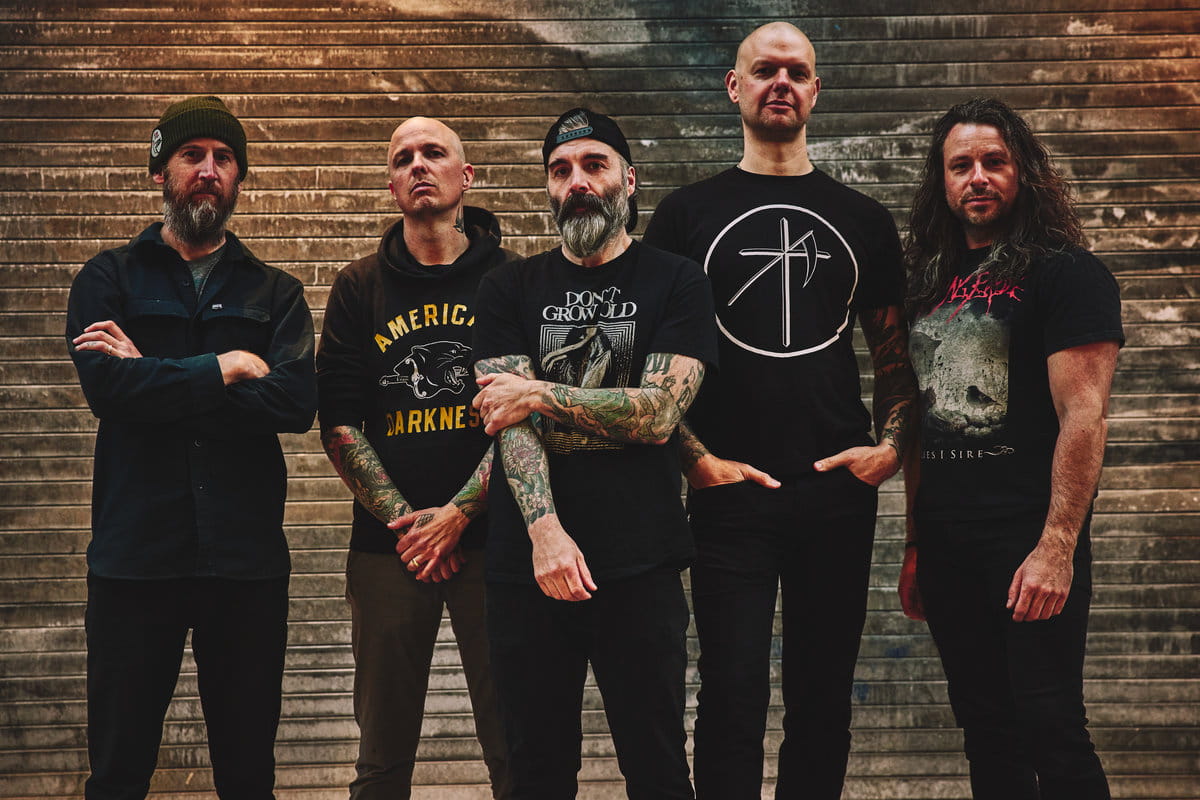
Unlettered is a studio project led by Knowlton, the multi-instrumentalist behind Gapeseed and Poem Rocket, with Kelly Grimm as co-lyricist. Knowlton plays, programs, writes, and engineers most of the album himself at The Swamp, his studio in Englewood, Florida. On “Candy Girl” and “Before::After,” Peter Gordon, Knowlton’s longtime bandmate in Gapeseed and Poem Rocket, sits in on drums, connecting the present tense of Unlettered back to the physical momentum of its past. Nicholas Bolton mastered the record.
If “Five Mile Point” traced personal transition, loss, and the weight of what lingers, “Devil’s Bowl” widens the aperture. The grief turns structural. The introspection turns civic. Knowlton says he didn’t see the shift while it was happening.
“My writing process doesn’t start with a specific goal in mind. My goal is often based around creating something with propulsion, both musically and lyrically. I saw it clearly only after the songs for what would eventually become ‘Devil’s Bowl’ started to come together. While writing these songs I was just following what felt urgent, and what felt urgent had changed. The raw material was different but I wasn’t thinking of it as a deliberate pivot. That framing came later.”
What he did track was a different kind of writing. “On ‘Five Mile Point‘ the songs usually arrived with a clear emotional center. I knew what I was writing about before I finished it. On ‘Devil’s Bowl’ I would complete something and not fully understand what it was reaching toward until weeks later after I could live with it. The subject was more diffuse, harder to locate, spread across everything around me rather than rooted in one personal event.”
What “Devil’s Bowl” isn’t, by design, is a protest record. It isn’t a manifesto either. Knowlton is explicit about pushing both modes away.
“Many of my favorite punk artists like The Clash, Dead Kennedys and Minutemen wrote amazing albums with biting political commentary and positions. From my perspective, a protest record is trying to bring listeners around to a position. Both assume a conclusion that precedes the work. What I was pushing against is that declaring a position shuts down the conversation before the listener has a chance to enter it.”
“The songs on ‘Devil’s Bowl‘ are observations, not verdicts. I think of it as a musical documentary of the times we live in. If I had focused them into verdict territory they would only work on people who already agree with me. I’d rather make something that gets under the skin of someone who sees things differently, and might make them think deeply about that, than make something that flatters an audience that already agrees with me.”
That refusal of the verdict pose is also why the press materials describe the record as a “fever reading” rather than a diagnosis. Asked what that meant as a guiding instinct, Knowlton was direct.
“A diagnosis requires expertise and distance. I have neither when it comes to the culture we’re all living inside right now. What I do have is a set of observations and a way of processing them through music. ‘Devil’s Bowl’ is a musical document of the times, not a prescription for fixing it. Thinking of it as a fever reading felt more honest than diagnosis because it doesn’t claim to know what’s wrong, only that something is.”
That instinct lands hardest on track eight. “Saudade” is the only Portuguese word on the record, and one of those words that doesn’t translate cleanly. The word sits inside a specific texture of longing without resolving into it. Knowlton says he doesn’t remember exactly when he first encountered it.
“I don’t remember where or when I first encountered this word but as I started working on new songs for what would eventually become ‘Devil’s Bowl,’ it seemed like an apt description for some of the material. I kept coming back to the specific texture of the longing it describes. It’s not a clean memory of something gone. It’s a longing for a version of something the memory may have distorted. That ambiguity was useful. It let the song sit with uncertainty rather than resolution.”
“Saudade” wasn’t planned for the spot it ended up in. Knowlton wrote it first, before the rest of “Devil’s Bowl” existed.
“In retrospect, the timing of its sequencing on the album was not initially planned. Saudade was the first song I wrote after ‘Five Mile Point’ was released. I had just released a record that was focused almost entirely inward, processing my father’s death and that period of transition. This song was the first signal that these next set of songs would be more outward focused. The word surfaced and stuck. I didn’t plan it that way but it fit.”
On a record about collapse and provisional ground, that kind of longing carries something more than personal.
“That longing is definitely more civic, but it’s also honest about its own unreliability, which is why it felt right. I’m not claiming the past was objectively better. But there did seem to be more collective hope when I think back to the past.”
“There was a time when culture felt like it had aligned ambitions, even imperfect or contentious ones. What I see now is people more concerned with their own ambitions and settling scores. The public square still exists but it’s louder and emptier at the same time. Saudade felt like the right word to describe that perspective.”
“Before::After,” the second single from the record, sits at track seven and lives inside that civic uncertainty too, even though the language reads more interior.
“‘Before::After‘ is about what happens at the threshold, the moment just before everything changes. You can feel it coming but you can’t stop it. The ground shifts and suddenly you’re living in the after whether you’re ready or not.”
“Burn After Reading,” which opens the album and arrived as the lead single, holds a different angle on the same broader subject. Performance of self in a moment where authenticity is itself the product.
Knowlton: ‘Burn After Reading’ is about the performance of self in a moment when authenticity has become just another strategy. Everyone’s running an optimized version of themselves calibrated for approval, engineered for acceptance. The song is about the gap between what gets shown and what gets concealed and how that concealment has become deliberate, even celebrated.”
The two singles land one after the other. “Before::After” rolls straight into “Saudade” in the running order, threshold into longing, and Knowlton says he didn’t engineer that move. The music made the call.
“It landed. Sequencing for me always starts with the music. I look at the emotional temperature of each song, how one ends and the next begins, where the record needs to breathe and where it needs to push or pull. The narrative thread is something I notice after the fact rather than engineer in advance. When ‘Before::After’ was placed leading into ‘Saudade’ during the sequencing pass I recognized immediately that it worked on both levels. The threshold of change rolling into longing for what existed before that change. That felt like real emotional logic. But the music got there first. I’ll take the lucky accident!”
Wyświetl ten post na Instagramie
The album title arrived after the songs were done, and so did the cover. The art is an abstracted hurricane that doesn’t show weather so much as how weather feels coming on.
“The album title came after the songs were finished. I needed to hear the record whole and live with it before I could name it. Once I could, ‘Devil’s Bowl’ felt right in a way that was hard to argue with. A bowl in geography is a depression where forces accumulate, where pressure builds without a clear release valve. The album art is an abstracted hurricane, which connects to living in Southwest Florida but also to that image of a bowl, a place where weather gathers and intensifies and you can feel it coming before you can see it.”
The record’s last gesture is to refuse to resolve that gathering. Stand in the bowl long enough and the air begins to vibrate. Whether the vibration signals collapse or transformation, Knowlton doesn’t say.
“The vibration is unresolved because I don’t know the answer. I genuinely don’t know if what we’re watching is falling apart or becoming something else. Those two things feel identical from inside them. Tipping the record one way would have required a certainty of the outcome that I don’t have, yet.”
Earlier coverage of Unlettered has tracked that pressure system across previous releases. Rosy Overdrive called it work that “explores a dark post-punk sound through some low-end-heavy explorations in a hypnotic and captivating way.” Bandcamp described “big, booming rock that favors slow clobbering riffs and minor keys — hypnotic and ominous.” The Big Takeover wrote that “like all good music, you can’t pigeonhole what Unlettered does — brilliant swirls and spirals between sonic worlds.” Monolith Cocktail called the project “a time box of sonic explosions, a musical box of unease and bewildered fuzz bass whimsy… takes the influences of JAMC and early Pavement and covers the tracks in a slightly tainted fairy dust of its own.”
“Devil’s Bowl” tracklist runs: Burn After Reading, Bric-A-Brac, Candy Girl, Control No Eyes, Slide Bite, Fraction Anthem, Before::After, Saudade, Green Blood, A Breeding Storm, The Ormolu Gaze. Music written, performed, recorded, and programmed by Knowlton. Lyrics by Knowlton and Grimm. Peter Gordon on drums on tracks three and seven. Produced and engineered at The Swamp in Englewood, Florida. Mastered by Nicholas Bolton.
FFO Shame, Lungfish, Sonic Youth, Unwound, Polvo. The album is out today on all digital platforms. Stream and buy at unlettered.bandcamp.com.
🔔 IDIOTEQ is ad-free, independent, and runs on one person’s time. If you want it to stay that way: DONATE via PayPal 𝗈𝗋 SUPPORT via Patreon.
Stay connected via Newsletter · Instagram · Facebook · X (Twitter) · Threads · Bluesky · Messenger · WhatsApp.