

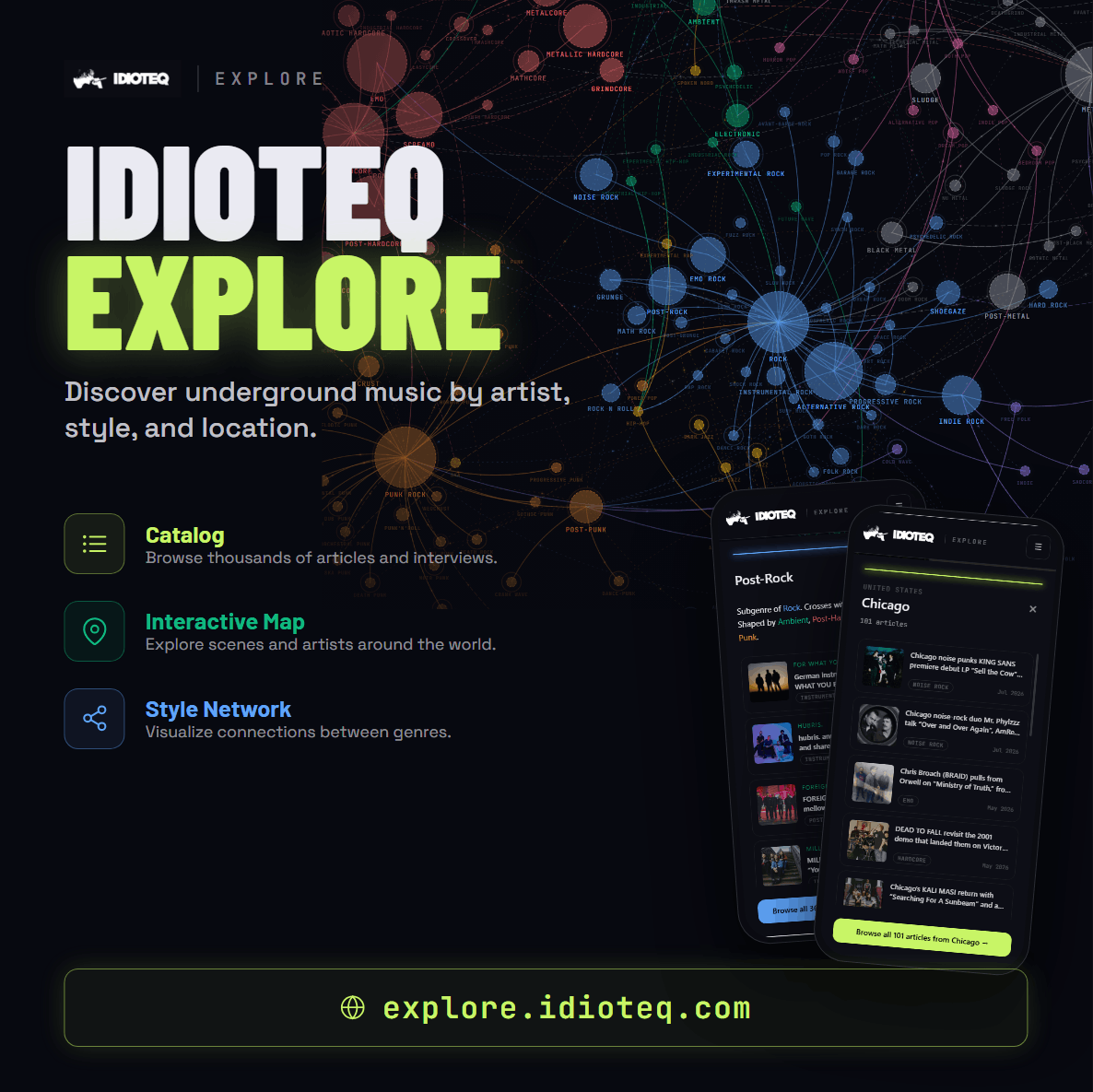
For most of the site’s run, the IDIOTEQ archive has lived as one long chronological feed, with every article we’ve published exclusively since 2006 sitting in the order it went out. That’s fine as long as you know what you’re looking for, but it doesn’t help much when you want to pull every Berlin band we’ve covered, every screamo release from 2018, or every record that came out on Zegema Beach Records.
Those queries needed a Google search and a bit of luck. We wanted something better, and Explore is what we ended up building. It went live at explore.idioteq.com on July 1.
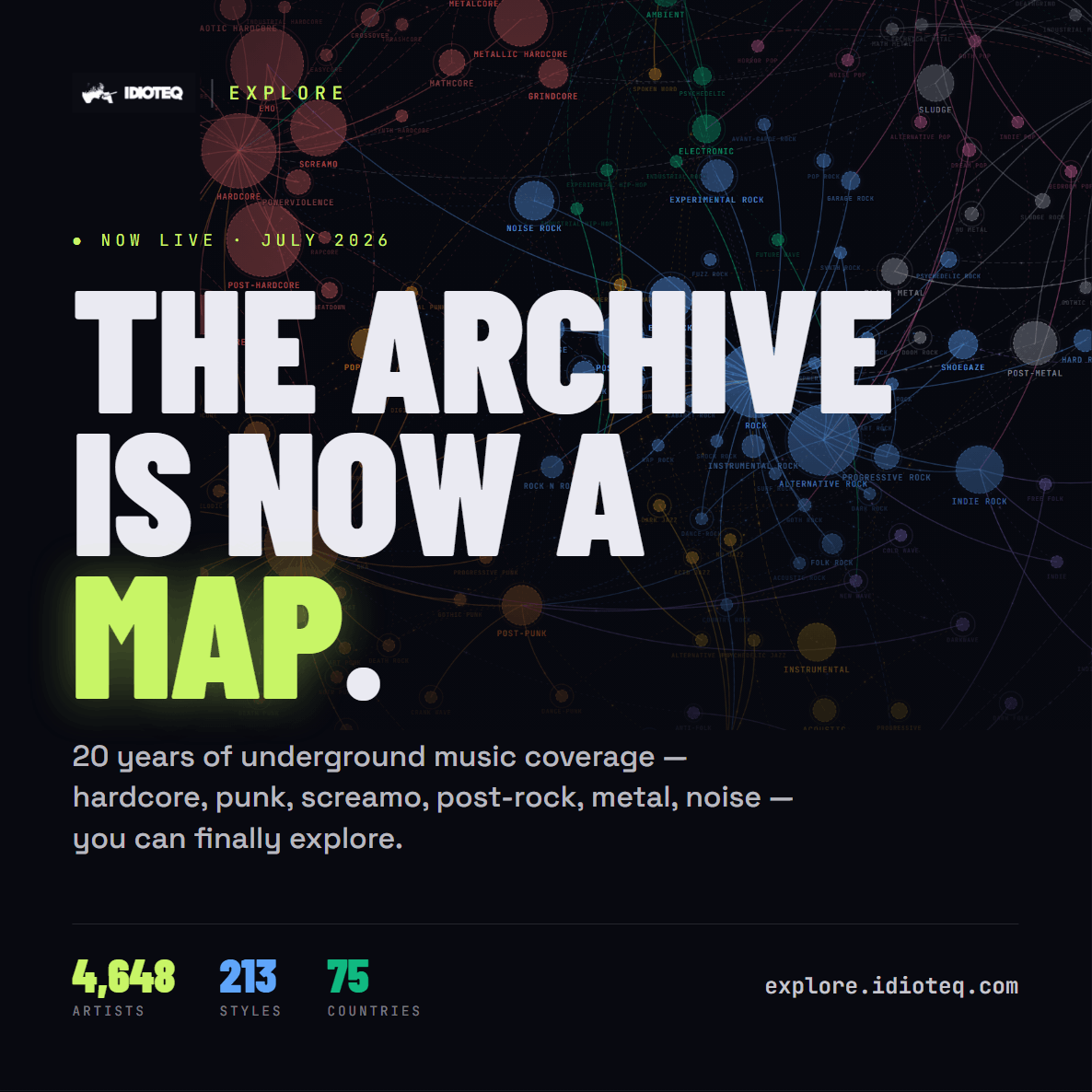
At launch, not counting thousands of news entries, the site holds 5,079 exclusive articles, premieres, interviews, tour reports, multi artists features, etc, across 4,647 artists, 213 styles, and 75 countries, covering hardcore, punk, post-hardcore, screamo, metal, post-rock, noise, and everything adjacent. There are four public views: Catalog, Map, Styles, and Stats. All of them are open.
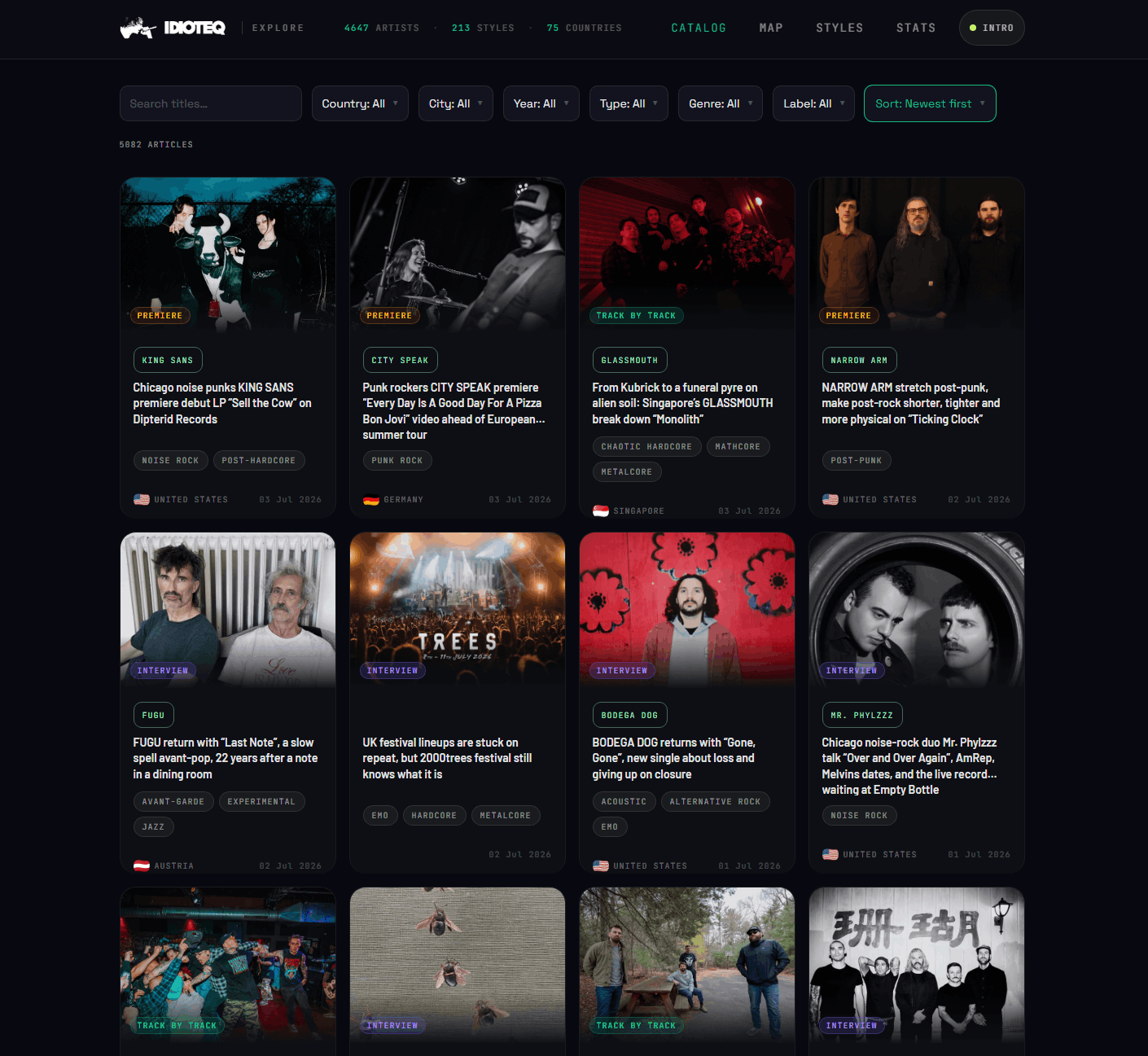
The Catalog is the most familiar of the four.
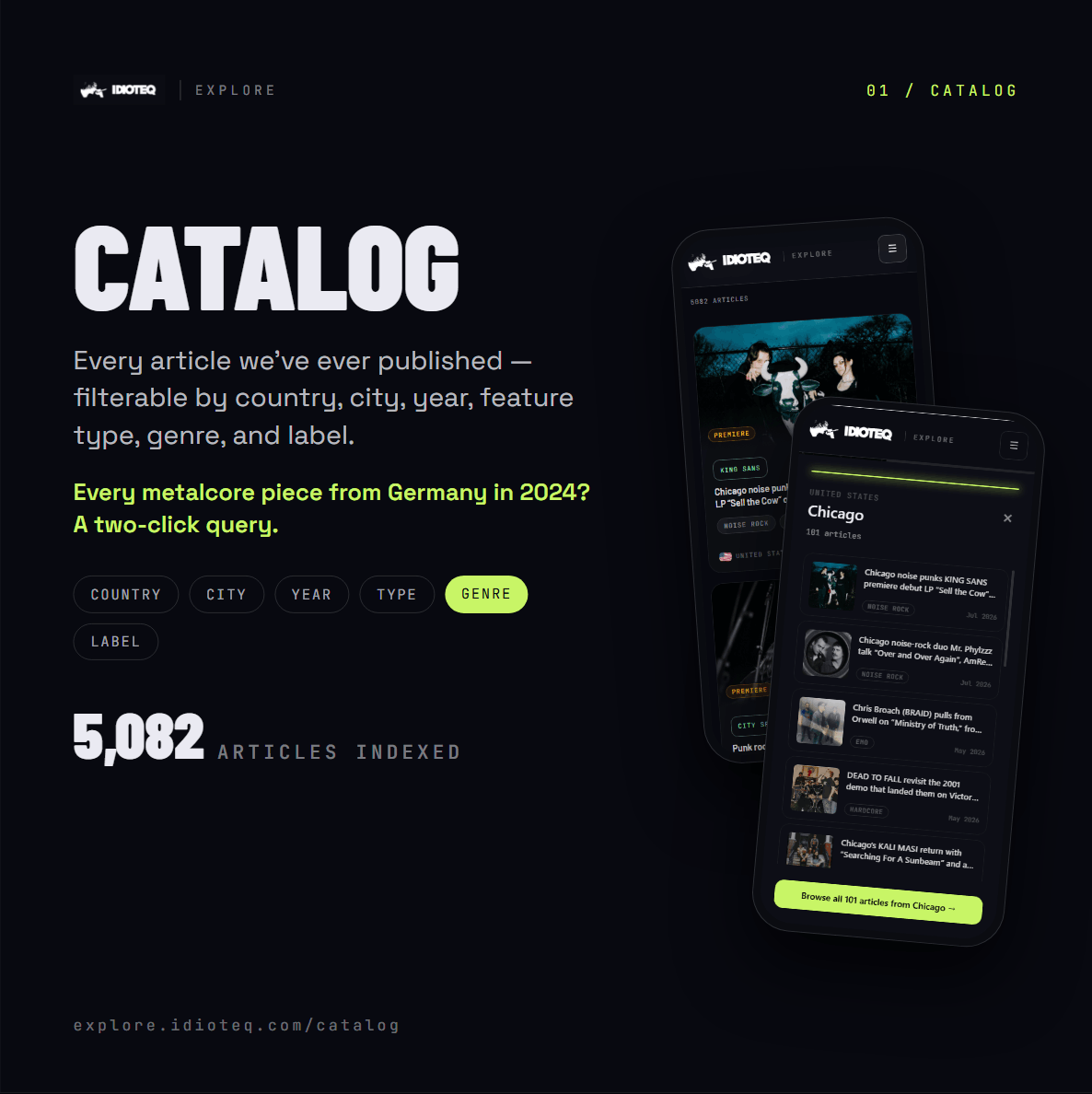
It’s a searchable, filterable feed of every article in the database, with filters for country, city, year, feature type (premiere, interview, track by track, tour diary, and so on), genre, and label, plus sort options for newest or oldest first.
If you want every metalcore piece from Germany in 2024, that’s now a two-click query rather than a full evening of scrolling.
World Map
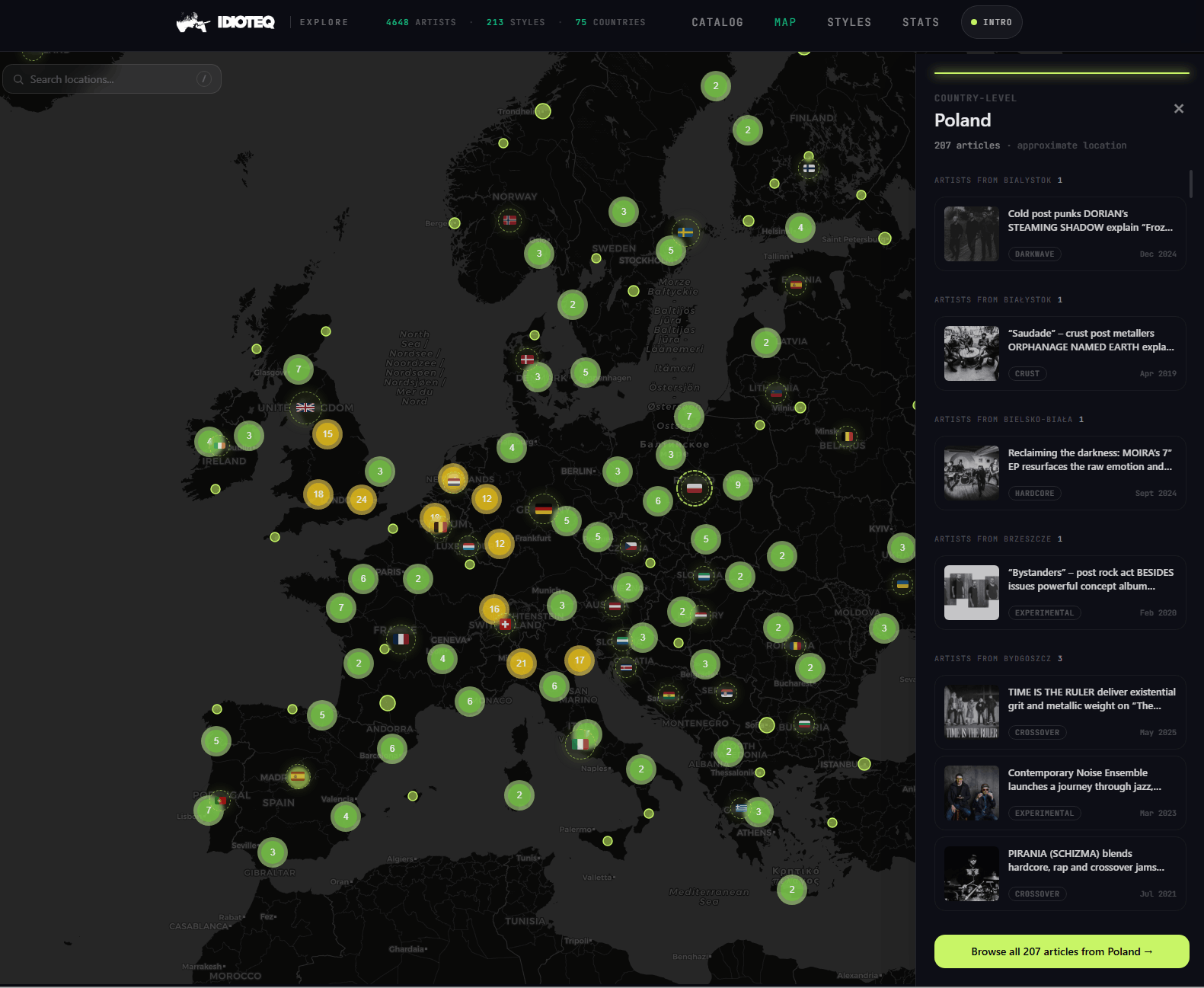
The Map is the one we spent the most time thinking about. Every article in the archive was given a location, and the map surfaces them by city with cluster counts.
Berlin sits at 78 stories, Paris at 76, Chicago at 101, and there’s a long tail of smaller scenes running down to single-article towns.
Clicking a cluster opens the full list for that city, with thumbnails, release dates, tags, and links back to the original piece on idioteq.com.
Genres constellation
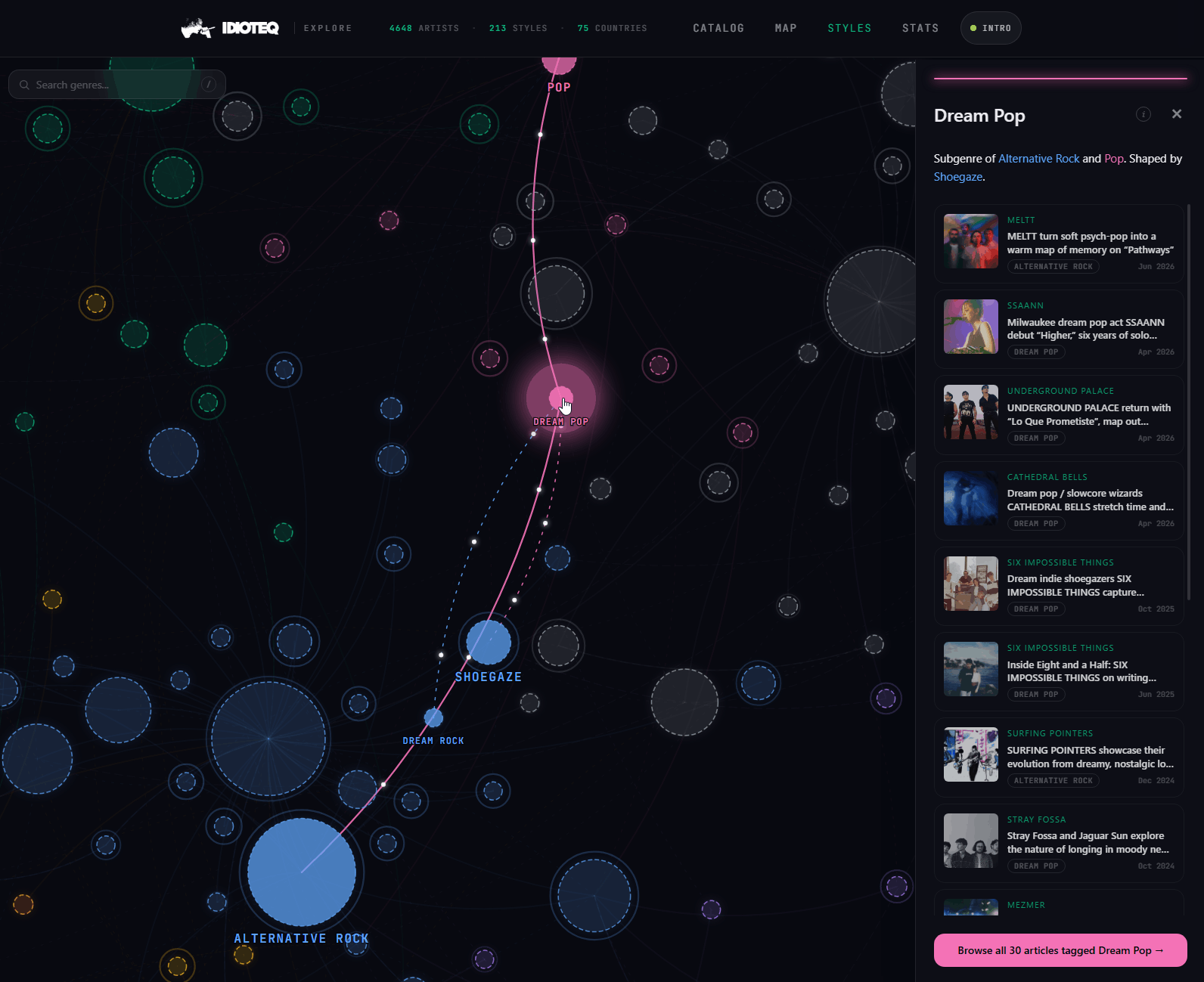
The Styles view is a graph of the 213 genres represented in the archive, connected by how often they appear together across articles.
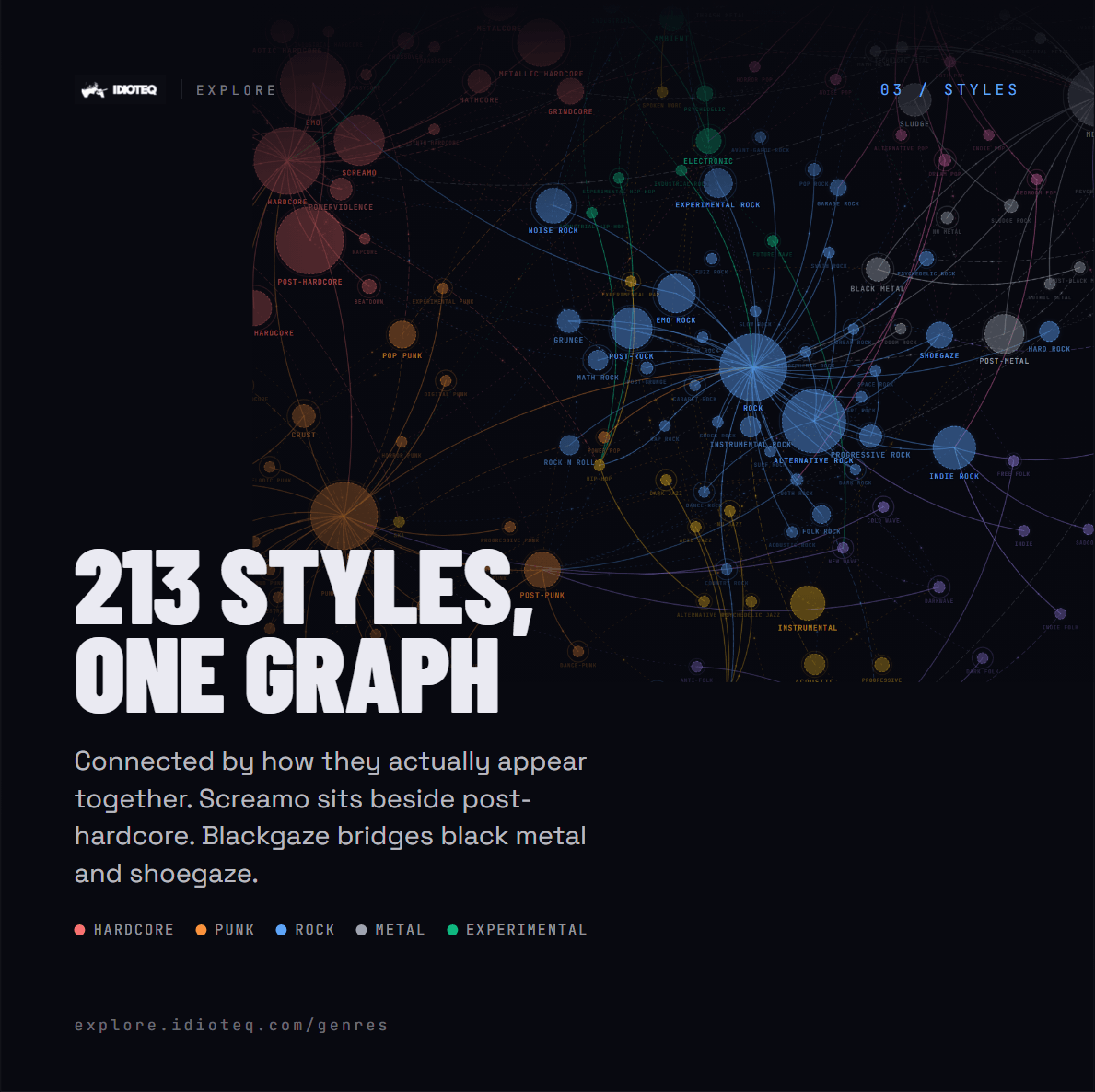
Screamo sits close to post-hardcore. Blackgaze bridges black metal and shoegaze. Emoviolence pulls off screamo and powerviolence. You can search, zoom, click nodes, and follow the edges to see how the underground actually maps onto itself in our coverage.
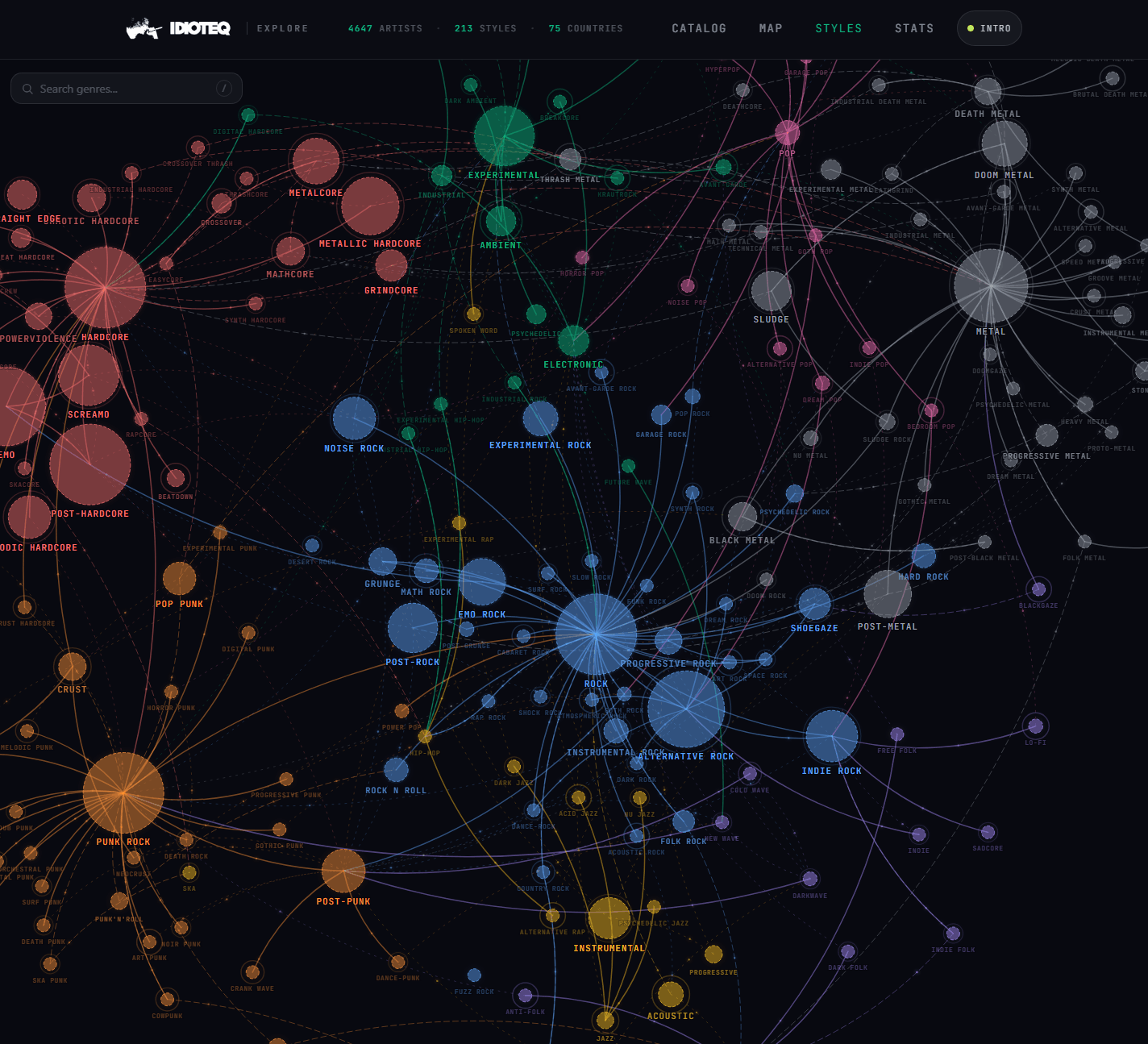
Some of those connections are still being tuned. If you notice a mislabel or an obvious missing link, please email us. That view exists because of scene feedback and it’ll keep shifting because of it.
Stats
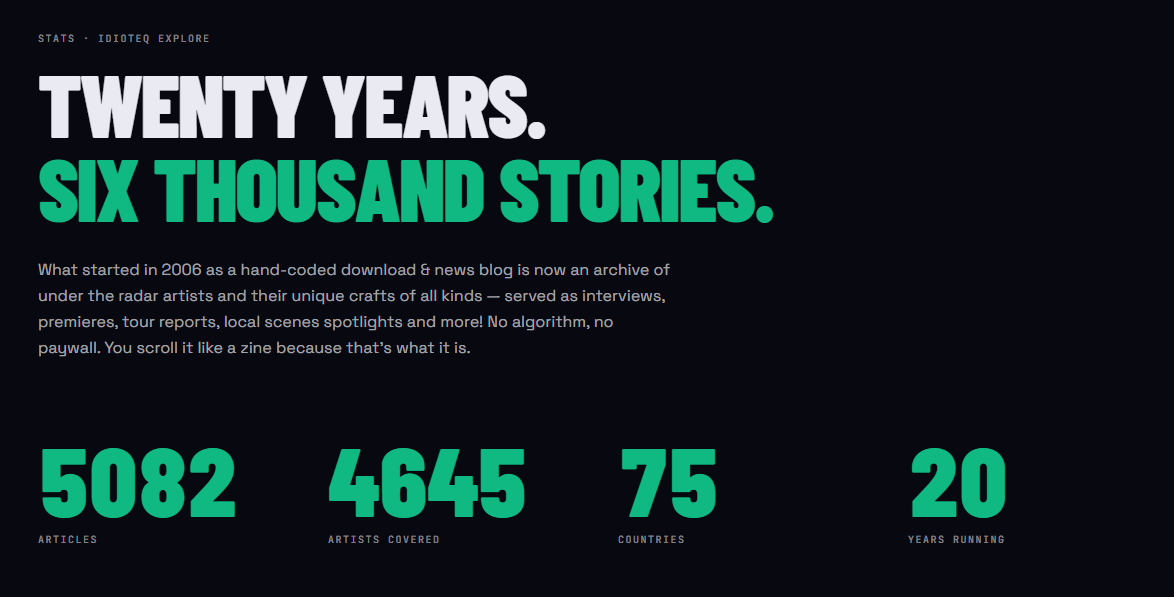
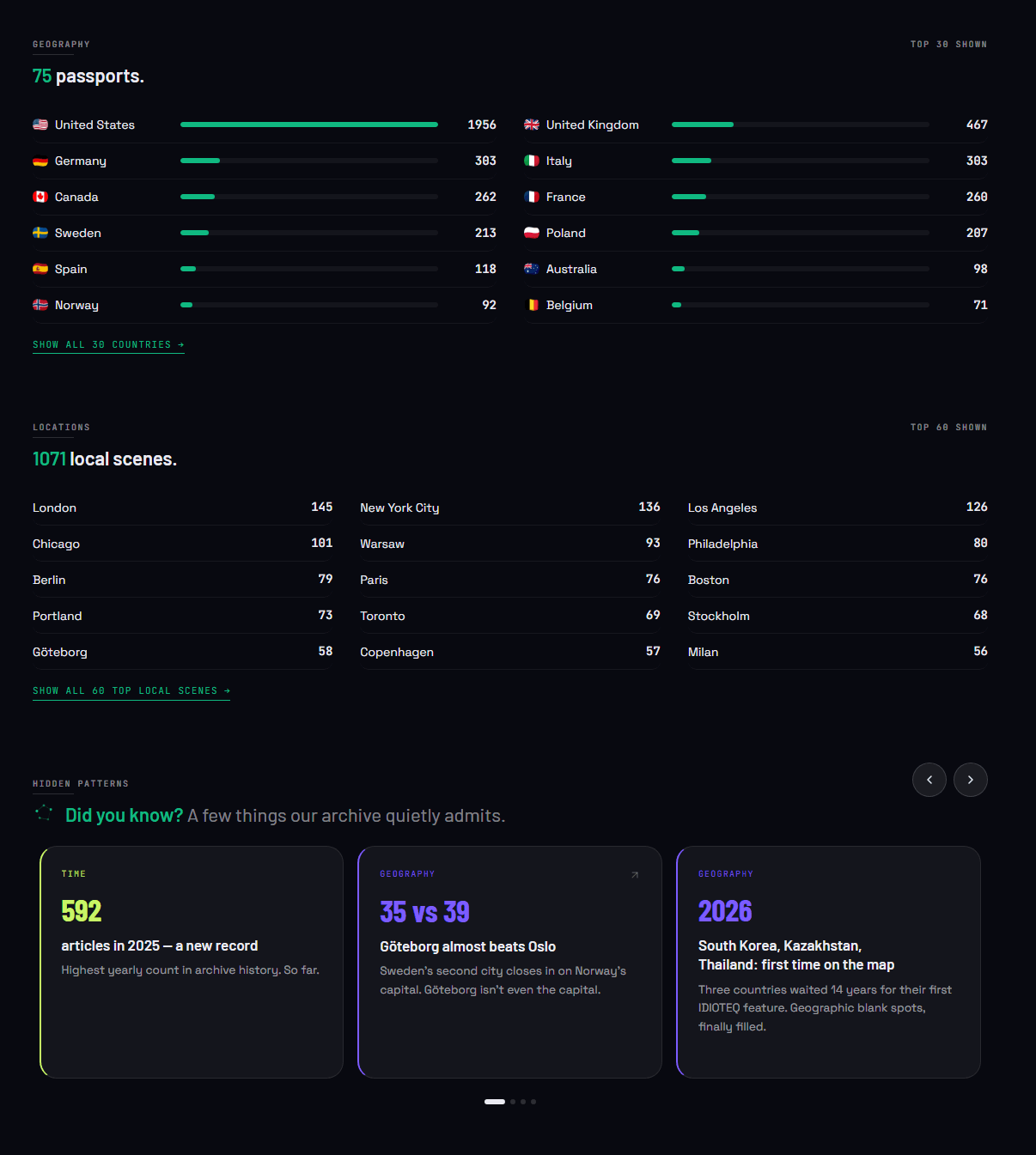
Stats surfaces the underlying data in ways that were harder to see before.
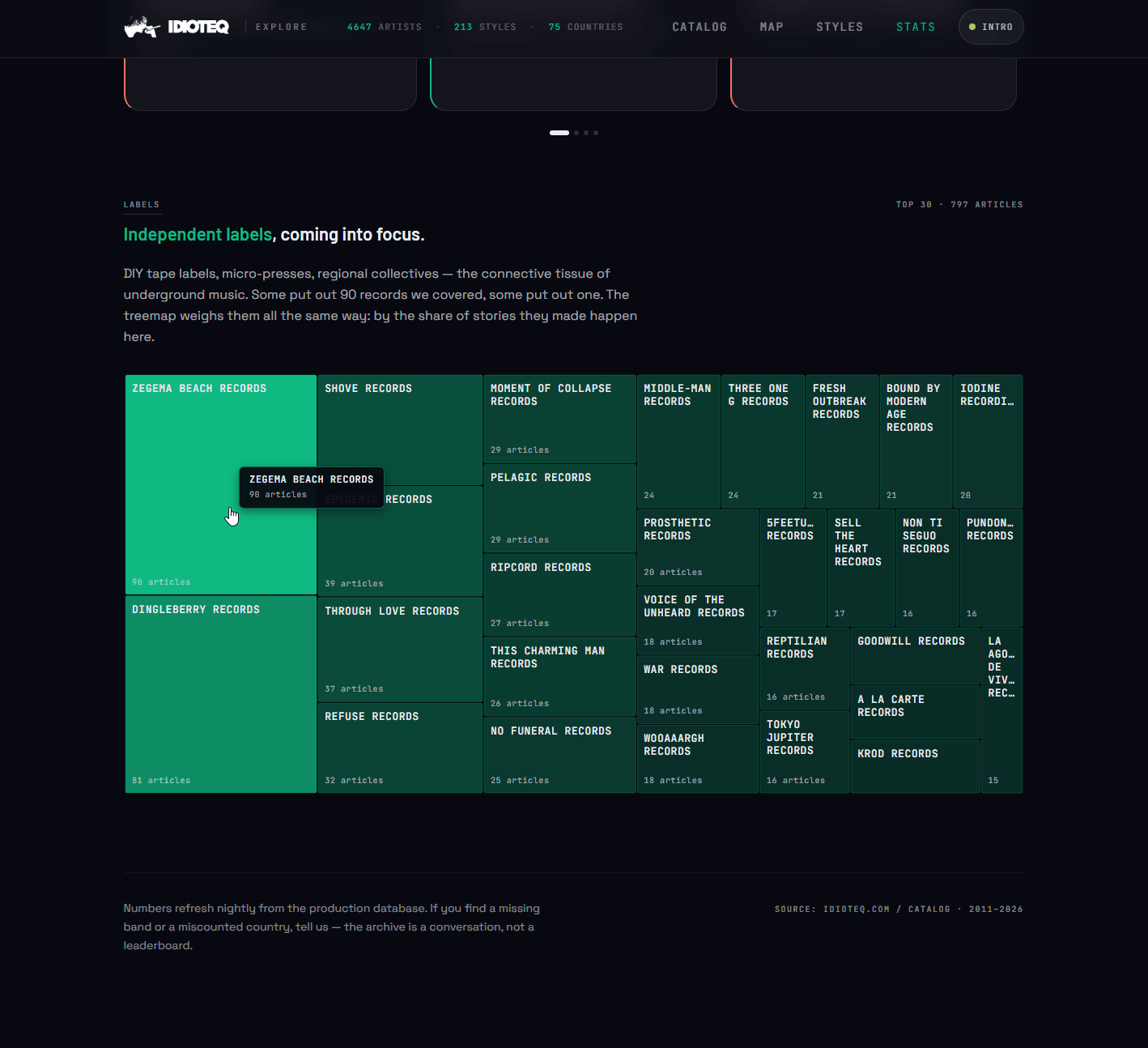
The independent labels treemap is one of our favourites. Zegema Beach Records leads at 90 articles, followed by Dingleberry at 81, Shove at 39, Through Love at 37, Refuse at 32, and then hundreds of tape labels, micro-presses, and regional collectives that put out one record we covered and never came up again.
Every single one of them made the archive what it is.
Onboarding
We also built a small intro flow for first-time visitors, which opens as a two-tab pop-up on entry. The first tab is a country onboarding: pick United States, Germany, Italy, Sweden, whichever scene you’re curious about, and you land on a page with total artists and articles from there, the top styles, and recent coverage to jump into.
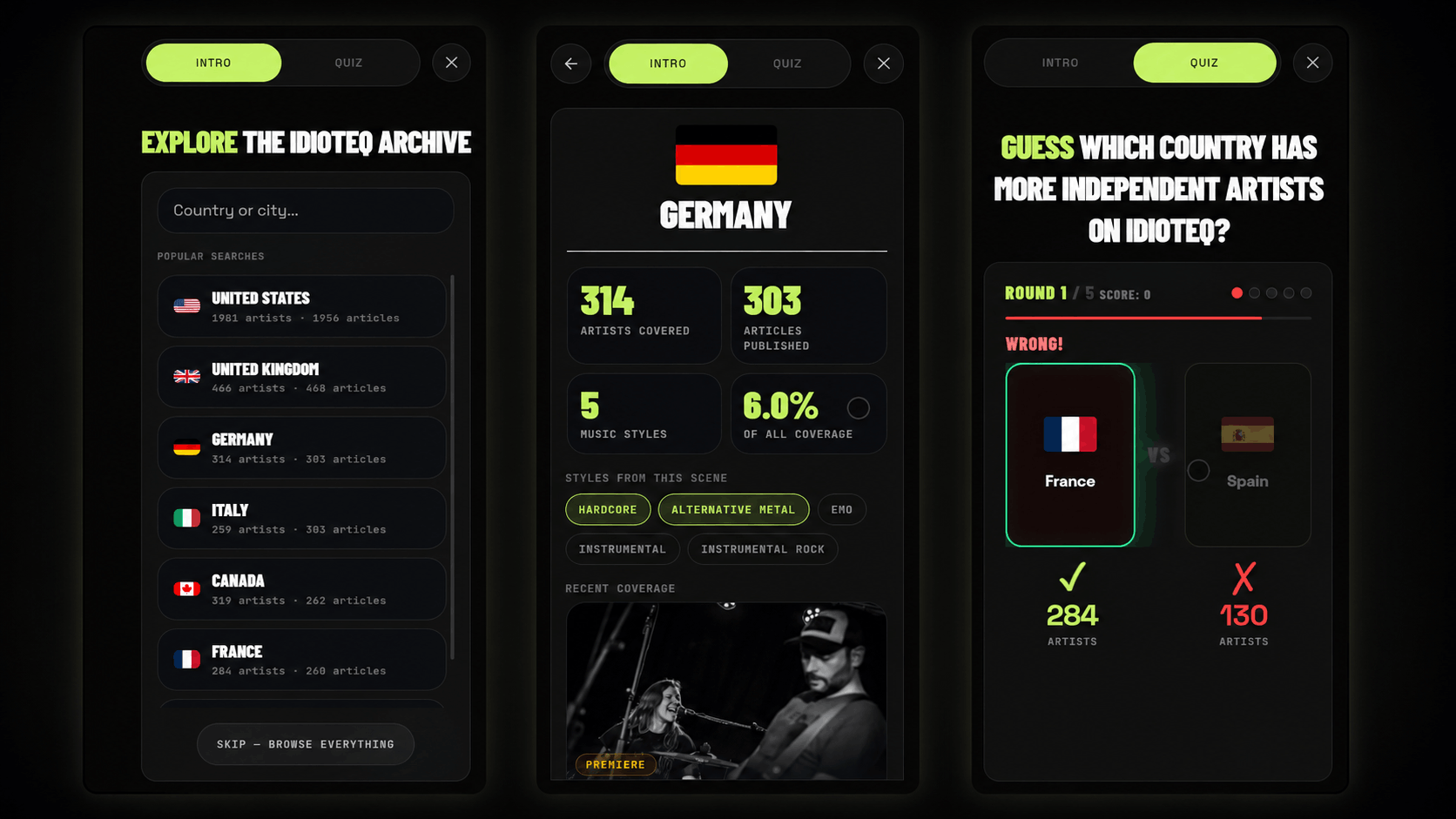
The second tab is a five-round guessing game that pits two countries against each other and asks which one has more independent artists in the archive. Italy or Canada. Sweden or France. It’s half a joke and half a way to show how uneven the coverage actually is once you look at it head-on. If you’d rather browse everything straight away, there’s a skip button at the bottom.
On the technical side, new IDIOTEQ articles sync into Explore automatically twice a day. That means new coverage shows up within hours instead of waiting overnight.
This is a first beta.
There will be missing locations, some rough edges on the genre graph, and probably a few articles where the extraction landed on the wrong band. If you spot something (wrong city, wrong genre, missing coverage, weird connections on the Styles view), tell us.
The archive has always been shaped by people in the scene talking back to us, and this view of it is no different.