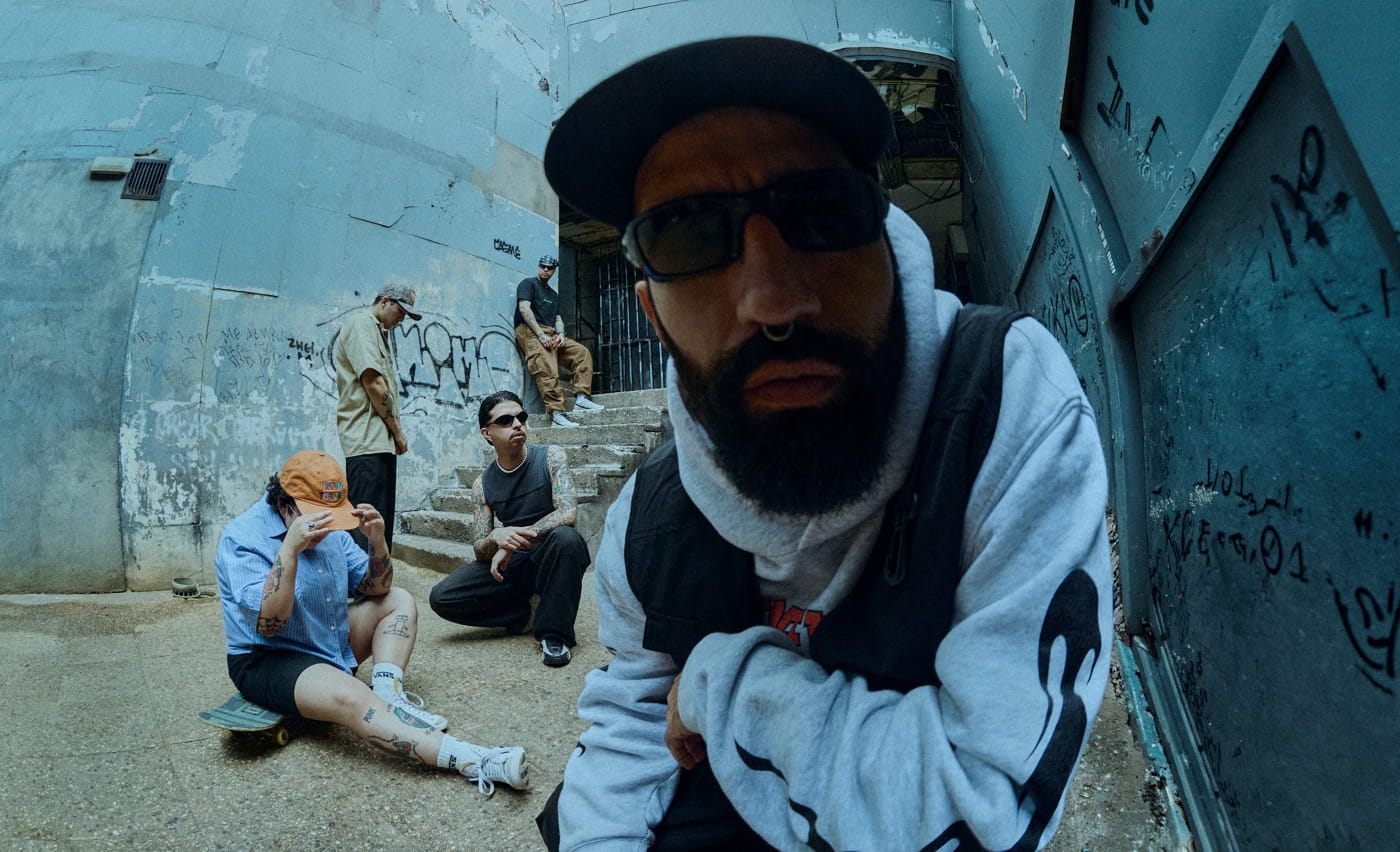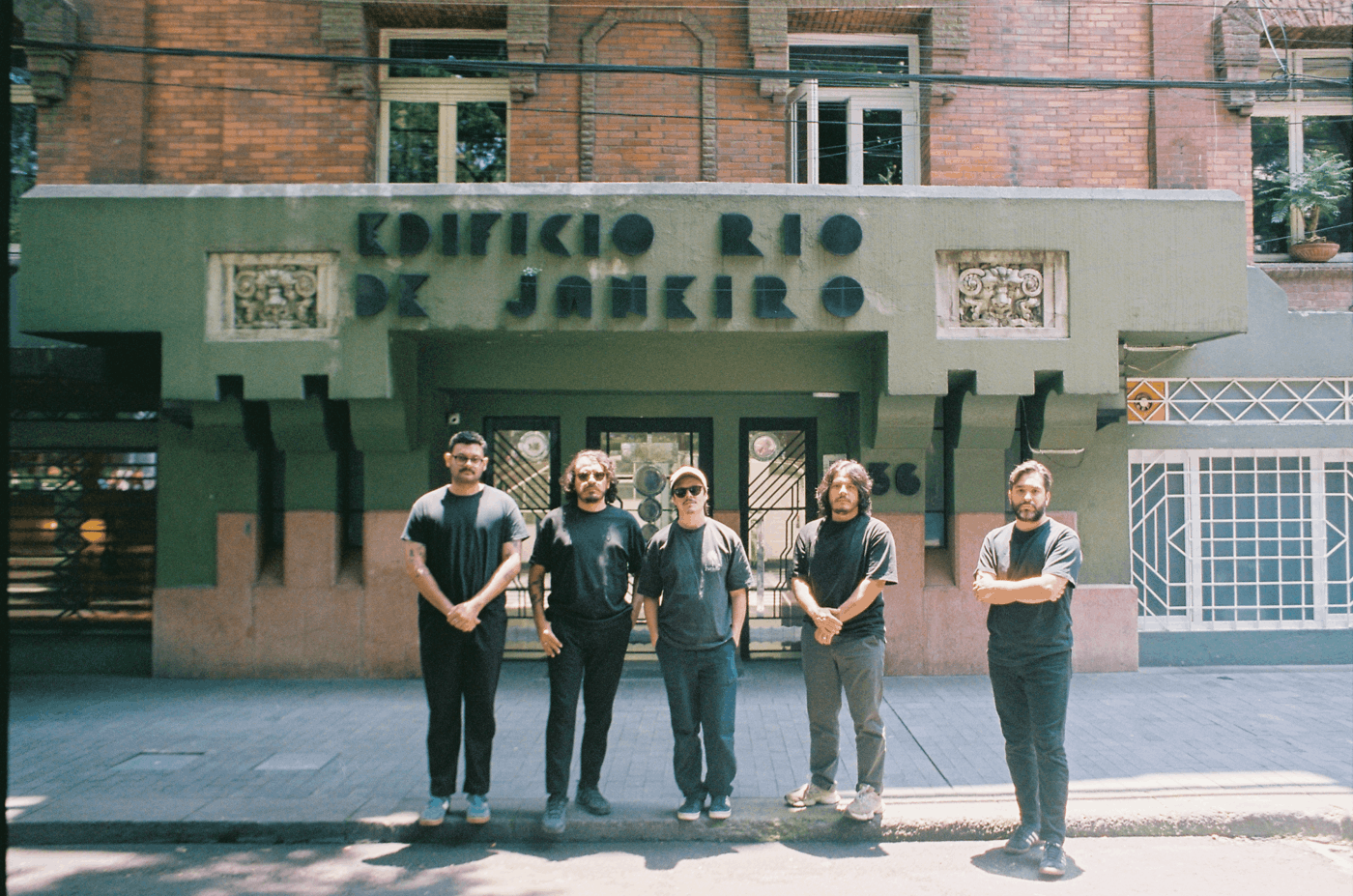


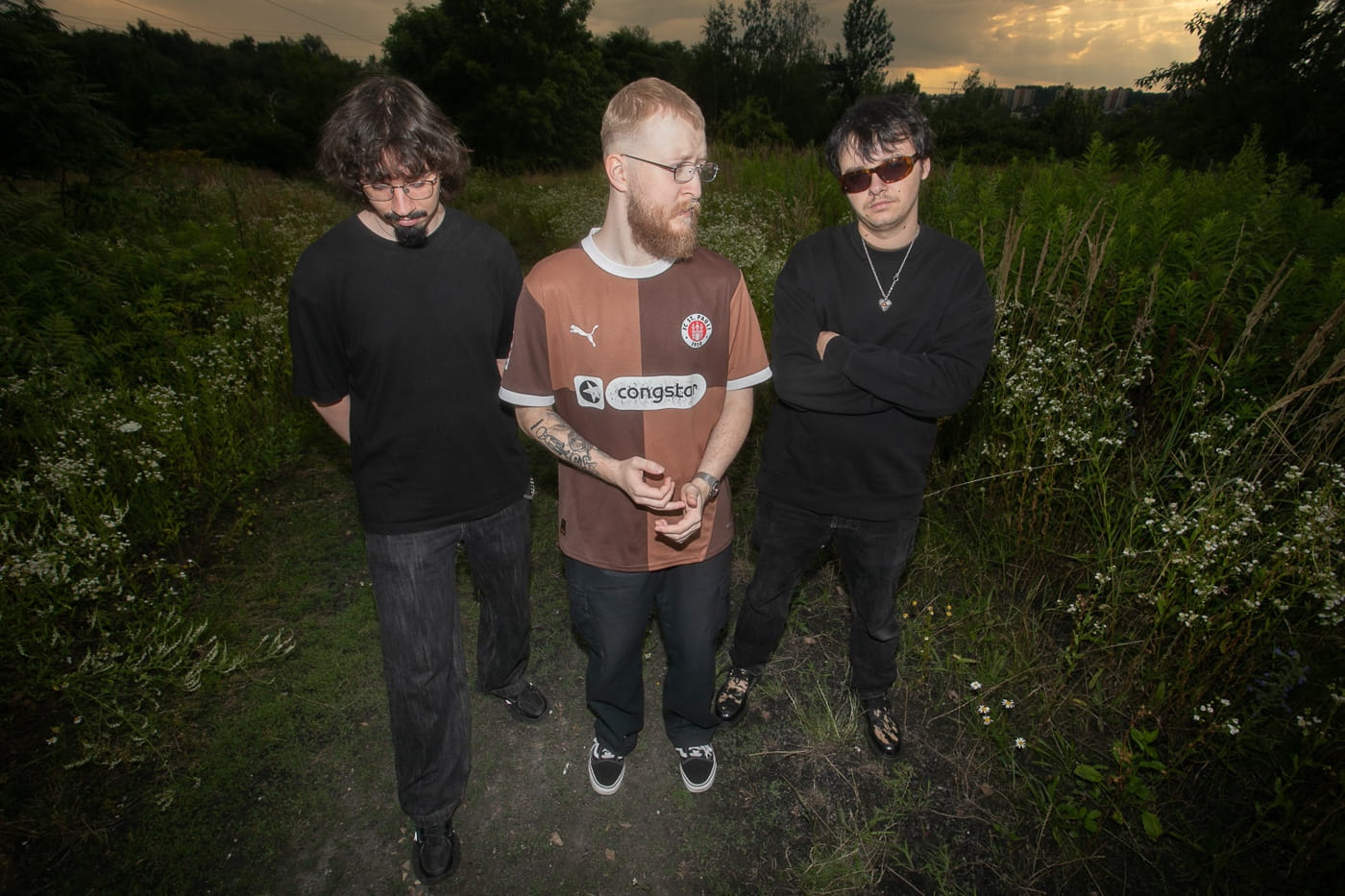
przeprosiny started with Piotr Kalita alone in a rented room in Katowice. Work on the first EP began in 2021, during a period when he had dropped out of technical school, saw little prospect of returning to education and was badly depressed. The room itself ended up in those songs as a coffin.
By the time they got to “femme“, the sound had opened up considerably. There is plenty of fuzz-heavy emo and shoegaze, with post-hardcore bite and bits of black metal cutting through it, but the record can also drop into acoustic guitar, mandolin, violin, synths and field recordings without sounding like a different band. Some parts hit hard and messy, others get very close and quiet, which is a big part of why the Polish-language vocals work so well across the whole thing.
“I was sinking into depression and felt kind of misunderstood, so I started the project alone because I didn’t have friends who liked this sort of music,” Piotr says. “On the first EP, the room is a metaphor for a coffin because I felt like I was rotting in there. Every day I was scared I’d die before I released this music. I really wanted something to be left behind.”
The self-titled EP came out in May 2023. Piotr had recorded and mixed the songs himself, and he wasn’t expecting much beyond getting them out of that room. The response was bigger than he expected. Friends started pushing it, more people found it, and about a month after release Maciek invited him to Warsaw to play with malk(rip) and son of deni. Until then, Piotr hadn’t even expected to perform those songs live.
“I’m not famous or some nepo kid,” he says. “It just somehow reached a wider audience completely out of nowhere.” He also credits the band that grew around those songs with helping him get onto better ground personally. He is now studying for a bachelor’s degree and says that, even when things get difficult, he would no longer describe himself as depressed.
The first call went to Wiktor Skora, an old friend who had already tried making music with Piotr in the past. Wiktor wasn’t particularly into emo or the other stuff feeding przeprosiny, which was exactly why Piotr hadn’t originally thought of asking him. Once playing live became a real possibility, he asked anyway.
Jasiek Szczepańczyk came in through Wiktor. Piotr had met him before and remembered seeing a photo from a Blush Cannon show where Jasiek happened to be holding a bass. That was enough to plant the idea.
Jasiek had spent several years actively avoiding bands. Around 2019 he stepped away from group projects, concentrated on solo work and helped other musicians. He released several records during that stretch, including “The Healing”, which arrived around the same time as the przeprosiny EP. He loved what Piotr had done, particularly the video for “we śnie”, and the usual instinct to dodge another band invitation disappeared once Piotr asked and he learned Wiktor would be behind the drums.
“I’d got pretty good at getting myself out of those situations,” Jasiek says. “Here I didn’t hesitate at all. I really believed in Piotrek’s idea, and I already knew and really liked Wiktor. It was a quick and easy decision.”
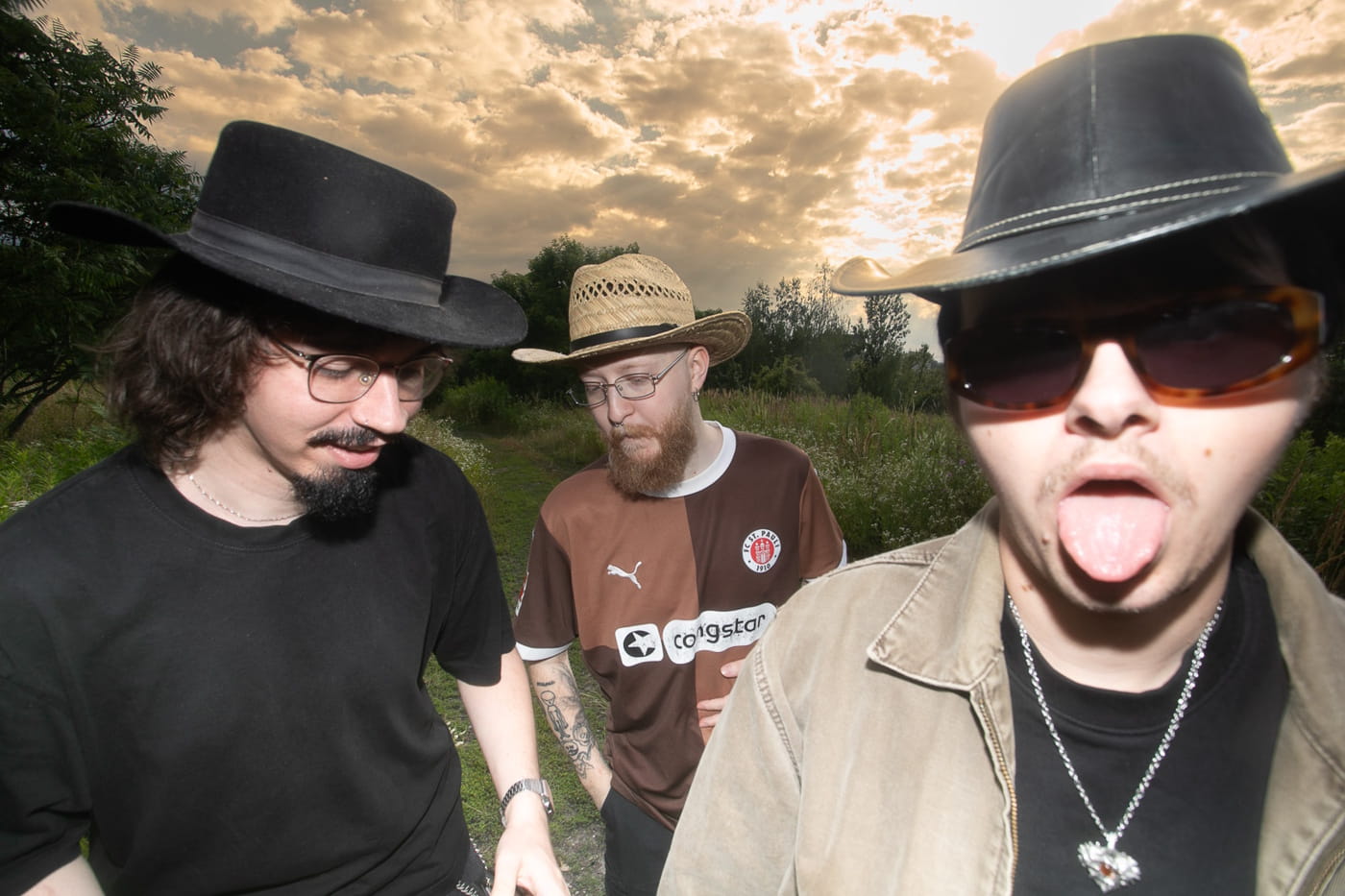
Their first show already included the then-unreleased “józefowiec”. Piotr remembers saying in an early interview that przeprosiny would always remain his project, full stop. He doesn’t talk about it that way anymore.
“Now I can’t imagine this band with anyone other than the people who are in it,” he says. “A band is a bit like a relationship. You have arguments, obviously, but I still think the three of us fit together perfectly.”
Wiktor had some doubts about whether he would fit music he barely knew, but they were gone once the first rehearsals started. The first gig was stressful right up until he went on stage, then immediately became something he wanted to keep doing. Looking back at those first practices, shows and trips still makes him emotional. The three also became close friends outside the rehearsal room.
Wyświetl ten post na Instagramie
Jasiek took on far more than bass and backing vocals. Recording, production and mixing became part of his job, and one of his priorities was keeping the things he recognised in Piotr’s EP: heavily compressed drums, fuzz on the guitars and that hard upper-mid push. Wiktor brought a very different listening background into the rhythm section.
By the time “femme” arrived on August 25, przeprosiny were Piotr on guitar and vocals, Jasiek on bass and backing vocals, and Wiktor on drums. The 35-minute-plus album followed the self-titled EP and a split with trujące kwiaty. “sęp” and “xylometazolin” came out beforehand.
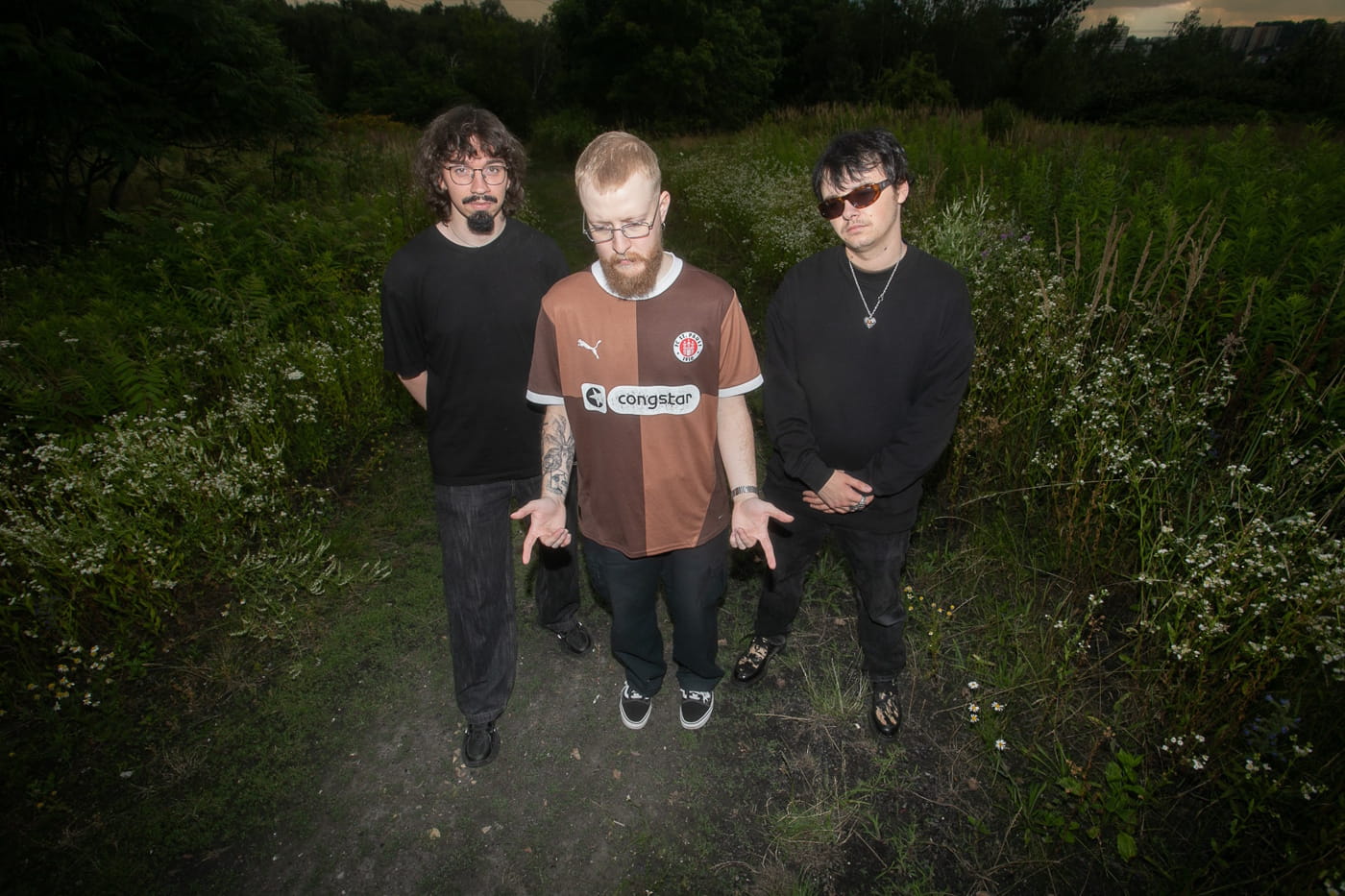
It was also their first physical release and the first record where the work around the music grew to this scale. Wiktor took care of promotion, Jasiek dealt with the tour, and the three spent much more time working through arrangements and instrumental parts together. Piotr and Jasiek recorded the album, with Jasiek handling the mix and mastering.
The record still has the fuzzy, compressed guitar-band base Jasiek wanted to protect, but the three of them keep dragging other things into it. There is emo and shoegaze, sections fed by black metal, folk and americana, Wiktor’s interest in jazz and fusion, plus keyboards, mandolin, violin, synths and field recordings. Nobody sat down and designed an eclectic record.
“We all listen to different music and it naturally gets into what we’re writing,” Jasiek says. “I spent a lot of time with black metal, Piotrek did too. I love americana and folk stuff, Wiktor is into jazz and different fusions. We don’t force ourselves to play complicated music.” Piotr is less interested in finding the correct genre name at all. He struggles to think of a type of music he categorically dislikes.
Wyświetl ten post na Instagramie
I’ve always had a soft spot for Polish bands that take our language, beautiful as it can be and occasionally a complete pain in the arse to fit around this kind of music, and somehow make it work. przeprosiny do it brilliantly. There’s a really good pull between the post-hardcore and emo side of the record, with some of that nervous, almost spoken-screamed emotional urgency I associate with La Dispute, and this much more intimate, fragile kind of writing that reminds me of Artur Rojek. Polish listeners will obviously know him from Myslovitz and his solo work, but for me the closer reference here is Lenny Valentino. The language sits naturally across all of it, from those more strained, conversational post-hardcore passages to the quietest parts of the record.
Twenty-odd years ago, Odszukać Listopad were one of those bands for me. Listening to “femme”, I’m starting to wonder if I’m about to get properly back into Polish-language emo again. This is a seriously good record.
The idea Piotr brought to “femme” came before the songs. He had been thinking about “Twin Peaks“, Neutral Milk Hotel’s “In the Aeroplane Over the Sea” and his own dreams. Dreams have been feeding his lyrics for years, particularly the strange aftermath of waking from one that has managed to feel as settled and emotionally real as ordinary life.
He has dreamt about meeting somebody and loving them with an intensity he had never experienced while awake, then suddenly finding himself back in his room.
“The moment you wake up is painful and confusing,” he says. “The whole next day feels a bit like nursing a hangover. It’s not only about that one example. It’s any dream where you go through a huge amount of emotion.”
For a while he even wanted to build a large ARG around the album. It got too unwieldy and he dropped the idea.
The dream story was there from the beginning, but Piotr doesn’t want “femme” reduced to a clean plot where each track can be marked as dream or reality. The lyrics mix both until the border stops being useful, sometimes on purpose making things hard to place. He would rather leave the individual songs open.
Femme herself also means something different to each member. For Piotr, she is “the deepest feeling of love that is impossible to reach.”
Wiktor hears the record in much more personal terms. He had never taken part in making a release this large before przeprosiny, and “femme” became his biggest musical, creative and emotional act of putting himself out there. He remembers the earliest sketches being discussed in their basement and now looks at the finished album with a sense of pride in what the three managed to make from them.
Jasiek barely thought about the title character as somebody meaningful to him personally. He wrote part of the chorus to “a więc jestem tylko głupcem oślepionym przez blask słońca” and the calmer second part of “jej dotyk“, putting himself inside the person dreaming instead.
For his section of “jej dotyk“, he pictured the character waking up again, opening a notebook and writing down fragments, memories and thoughts after the first rush of emotion had passed.
“The title femme didn’t really mean much to me,” he says. “For the lyrical and musical character of the record, she meant literally everything. That was the part that mattered to me.”
A lot of the personality of “femme” comes from the way individual songs were allowed to wander away from the obvious guitar-band setup.
“księżycowe pustkowia” lived as an idea for months. Jasiek plays mandolin and violin and wanted to build the song from those instruments with acoustic guitar. Piotr came to Kraków to record guitars and work on it with him. Once the guitar session was done, the power went out across Jasiek’s block.
They carried on by candlelight, trying different ideas without electricity. The simplest motif became the demo, Jasiek developed the instrumental side himself, then Piotr sent over his vocal part and lyrics.
Jasiek’s attachment to the song also comes from how plain those words are. He has little patience for Polish music that piles stylistic tricks onto lyrics while leaving little underneath. For him, the directness of Piotr’s writing was the better fit.
The folk angle also connects back to “In the Aeroplane Over the Sea”. Piotr calls the Neutral Milk Hotel record “a bit of a red-flag album” that he listened to heavily for a period. He was fascinated by its story and its fixation on going back into the past for Anne Frank, and wanted one folk-oriented song on “femme” as a small nod towards it. “księżycowe pustkowia” became that song.
“byłaś tylko snem” developed in almost the opposite order. Its second section had been ready for a long time, while the quieter acoustic opening kept refusing to settle. Piotr eventually sent vocals that gave Jasiek something solid to work around.
Most of Jasiek’s solo music is built around ambient music, so he filled the acoustic guitar and voice with soft synth layers, violin, additional vocals and field recordings. A piano appears at the end and points back to “sęp“. Its sound came from a piece Piotr showed him from the soundtrack to one of the older Resident Evil games. Jasiek likes that kind of internal callback, taking a small motif and letting it appear again elsewhere on the record.
“jej dotyk” goes back much further into Piotr’s own hard drive. Long before przeprosiny, he had tried to make a solo black metal project. Several unfinished songs are still sitting there. “jej dotyk” began as one of the first ideas for “femme” and became his chance to return to that older work.
Even then, it nearly stalled again. They recorded a demo and left it sitting for about a year before picking it up. Piotr thought it might end up binned. It finally made the record.
The Angelic Process were another direct reference. “How To Build A Time Machine” gave Piotr a guide for the sound and mood he wanted from “jej dotyk“, while the red cover of “We All Die Laughing” fed into the look of “femme”. Piotr handled the album artwork, with the girl illustration by Magdalena Maria Suszyna. Tarot cards also crept into some of his visual and conceptual ideas, despite Piotr being quick to point out that he isn’t much of a tarot person.
“sęp” carries a different kind of weight. It was the first song they recorded for the album and they were already playing it at shows before release. Piotr still calls it probably his favourite przeprosiny song to play and sing, partly because its vocal, lyrics and the physical act of playing it all sit differently for him from the rest of the record.
Wiktor’s closest song is “a więc jestem tylko głupcem oślepionym przez blask słońca“. He can struggle to keep tears back even during rehearsals. The instrumental section and the tension built through it are a big part of that, along with Piotr’s vocal performance. He hadn’t expected one of his own band’s songs to end up among the pieces of music that affect him that strongly.
His second choice is “no cóż, żegnaj“, partly because of how often it changes section and mood, and partly because he likes the drum part he wrote for it. The keyboards and the heavy breakdown towards the end are two of the details he keeps coming back to.
The references behind the rest of the record get stranger once all three start listing them.
Piotr comes back to “Twin Peaks” and its question about the dreamer living inside a dream. He doesn’t want to pin the album to one specific dream of his own. The feeling that remains after waking is more useful to him than a literal story.
Jasiek barely watches films, which he finds funny because he went to film school. David Lynch is one of the few directors who got through quickly, and that gave him and Piotr an easy shared obsession.
His musical references go elsewhere. Eberhard Weber’s “Chorus” and Bohren & Der Club of Gore’s “Piano Nights” are two records he reaches for when trying to explain the kind of despair he likes in music. He also makes a distinction between the feeling that inspires the music and the state he wants to be in while making it. He works best when he is doing well, then draws on feelings that might be his own, somebody else’s or completely fictional.
He is also quite happy to admit there are plenty of supposedly essential records he has never heard.
“I’ve been told loads of times, ‘if you make this kind of music, you should know this record.’ Well, no, I don’t have to,” Jasiek says. “If I’m making emotional guitar music, I’d rather get ideas from something other than more emotional guitar music. I honestly think that’s a lifehack to becoming a more interesting musician.”
Wiktor couldn’t narrow his own list down to one film or album. The place where they recorded “femme” means more to him.
Friends let them use a room where they rehearse and record drums. Outside the building is a bench looking onto a garden in a quiet spot. Wiktor sits there alone when he is practising or with Piotr and Jasiek during breaks, and those few minutes outside have become part of how he remembers making the record.
Katowice itself has been sitting inside przeprosiny since before there was a trio. Their logo refers to the old Hotel Katowice neon that Piotr could see every evening from his room in Superjednostka, where the project began. Stawowa Street fed into the earlier song “puste”, and one of its tenement buildings appears on the first EP cover.
Then there is Drzwi Zwane Koniem, the Katowice venue where they keep organising shows. Piotr simply calls it “the only place like it in Katowice.”
Since the lineup came together, przeprosiny have played around Poland, including Warsaw, Kraków, Łódź, Poznań, Wrocław and Katowice. A September tour was part of the plans around “femme”.
The album also made all the unglamorous work around being a band harder to ignore. Wiktor was dealing with promotion. Jasiek was sorting the tour. There was more time spent pulling individual songs apart and composing instrumental sections together. For Piotr and Wiktor, finally having their own record as a physical object was a big deal.
Jasiek’s clearest memory came after Wiktor finished the drum recordings. The two sat together choosing takes. The songs were still missing Piotr’s vocals and much of what would later fill the mixes, but Jasiek could already hear enough to know what they had.
He remembers being proud of Wiktor in particular, who had set himself difficult parts and got through them. Jasiek calls himself sentimental and says there were several moments during the album where that got to him. This is the one that stayed.
Wiktor’s version comes slightly later. Once Jasiek finished the mix, he listened to “femme” from beginning to end and found himself replaying different moments from the writing, rehearsals and recordings in his head. For him, it is difficult to separate one memory from the rest because the album ran from tiny shared sketches, through arrangements, into the final recordings as one long stretch of work.
Piotr picks the “xylometazolin” video shoot with his friend dibonek. They spent the day making the clip themselves, then played Kielce the following day. By that evening Piotr was exhausted and went to bed.
Jasiek and Wiktor stayed up recording a song about Chuck Norris, roughly a week after Norris died. The song turned into one of the band’s inside jokes. They still put it on when the three of them are in the car together.