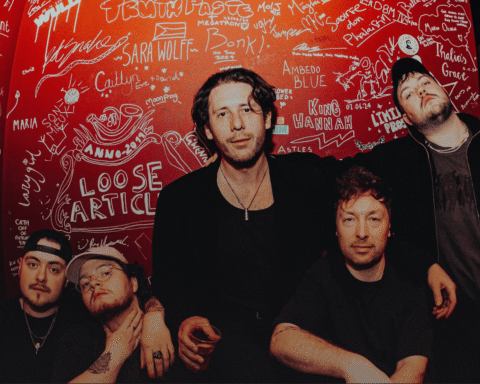


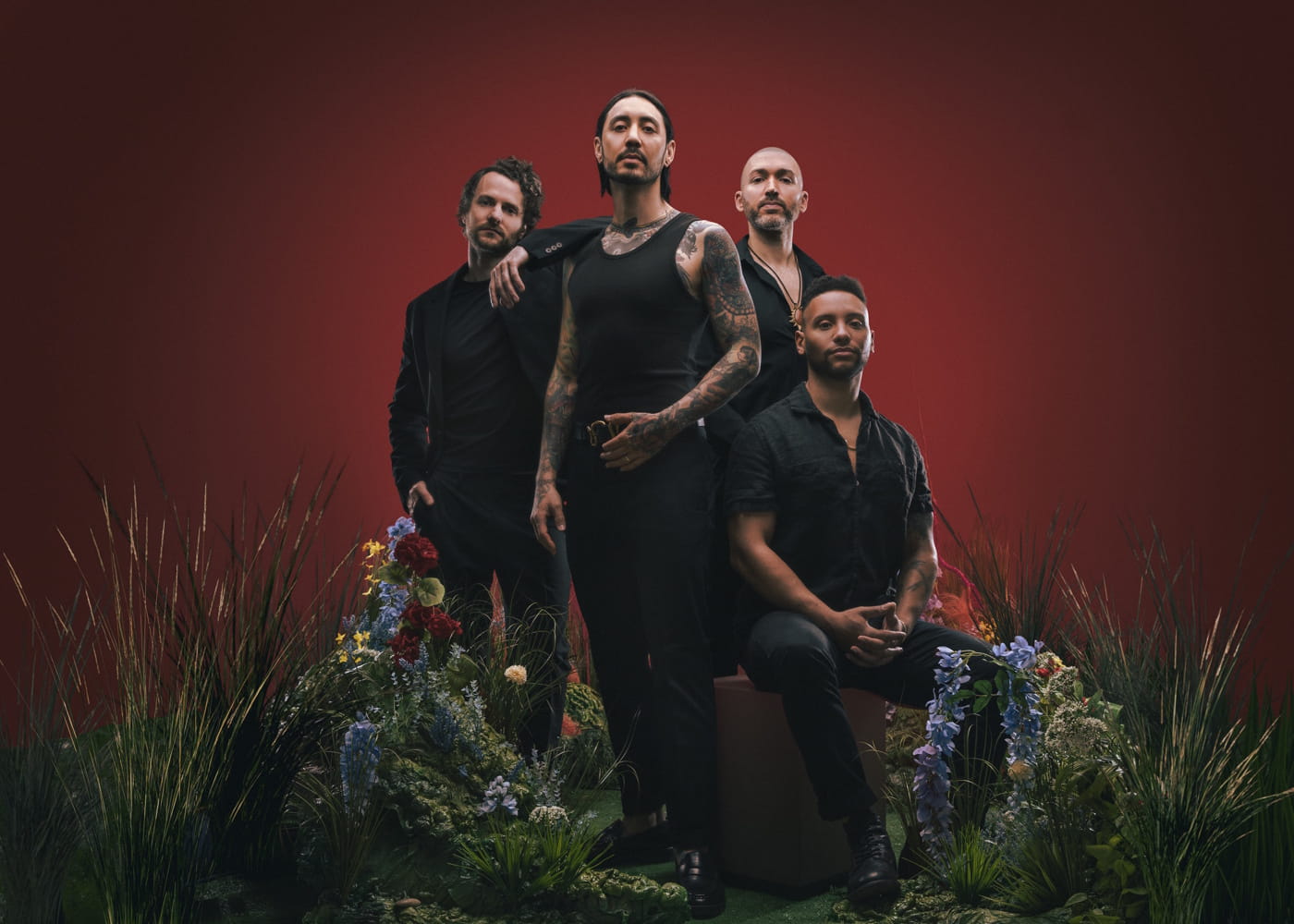
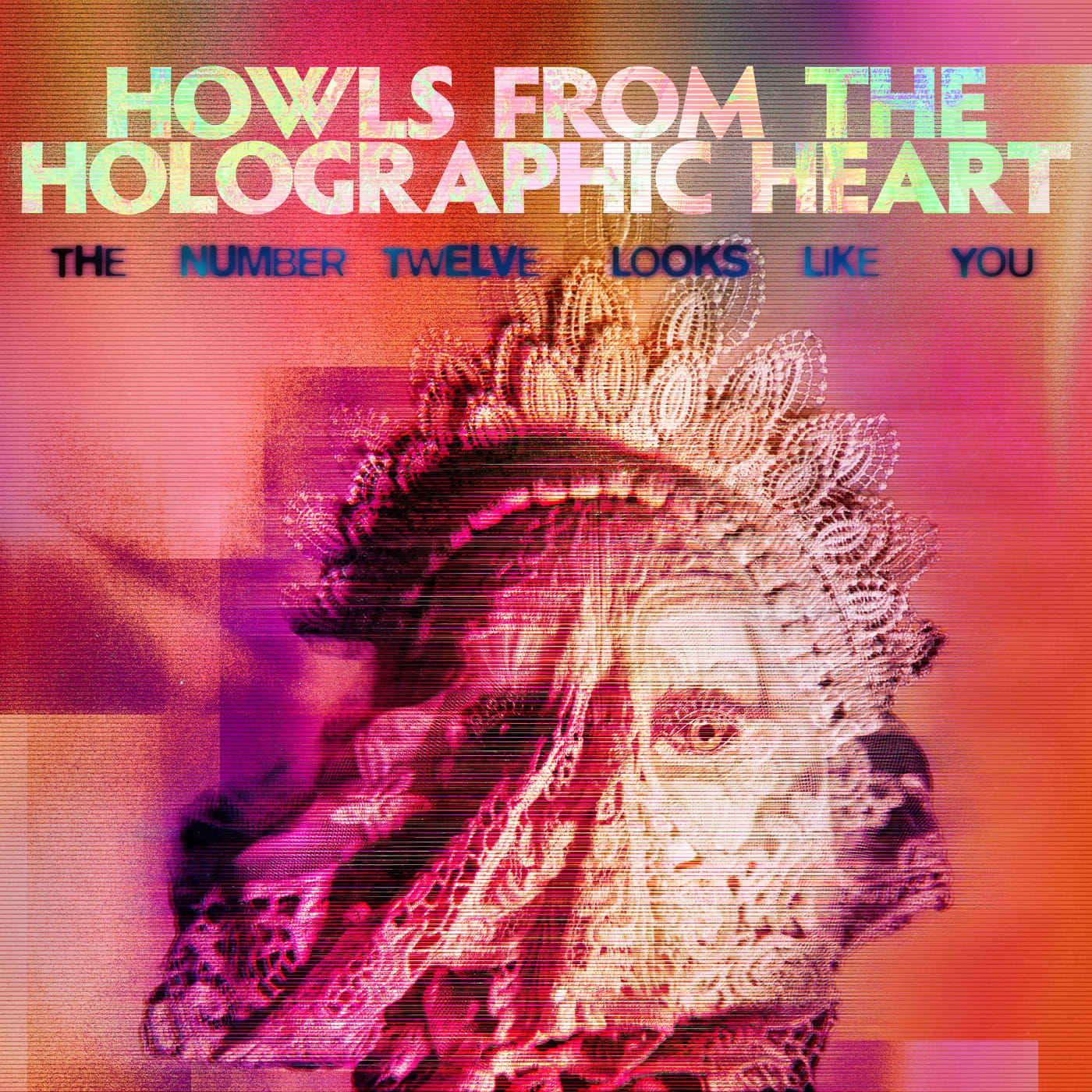
The Number Twelve Looks Like You have two records to deal with this autumn, nearly twenty years apart. The New Jersey mathcore veterans are playing their 2007 album “Mongrel” in full for the first time, just as they prepare to release “Howls From The Holographic Heart”, their first full-length since 2019.
Some of the old songs have never been performed live, and drummer Michaelangelo DeMarco is now playing stuff he used to cover with his friends in high school. The band’s history has come around in a strange way, with the same musicians who helped establish their frantic mix of mathcore, grindcore, screamo and experimental heavy music now making an album with two members who grew up knowing those records.
View this post on Instagram
Vocalist Jesse Korman and guitarist Alexis Pareja have been involved since the band’s early years. Bassist Cody McCorry and drummer Michael joined shortly before recording “Howls From The Holographic Heart“, and their contributions grew considerably as the sessions went on.
The new album opens with the chaotic screamo of “Trust Chaos“, moves into the progressive pop territory of “Glow In The Dark Skin” and eventually reaches the salsa and death-metal combination of “Joy Is A Weapon”, featuring Foxy Shazam. Jesse moves between full-throated screaming on “Trust Chaos” and more extended melodic singing on “Become A Ghost”. It is a wide-ranging record, even for a band whose songs have regularly changed direction without much warning.
There’s also a considerable amount of life between these albums. The Number Twelve Looks Like You ended in 2010, returned with a low-key Kingston show in 2016 and released “Wild Gods” in 2019, only to have the pandemic cut short much of the activity surrounding it. Jesse continued working in film, while Alexis spent five years teaching music in a high school and playing in other projects.
When the band started writing again, neither felt especially interested in repeating what they’d already done. Cody and Michael joined a group with a substantial history, but were encouraged to put their own ideas into the music.
We wanted to get the four of them talking about where the band actually stands in 2026, including the years away, the new songs, what they’ve learnt from rehearsing “Mongrel” and how much of the old Number Twelve is still present in what they’re making now. Their answers also took us into the recording process, Jesse’s relationship with Foxy Shazam and his filmmaking, and a couple of objects from the band’s early days that have somehow survived.
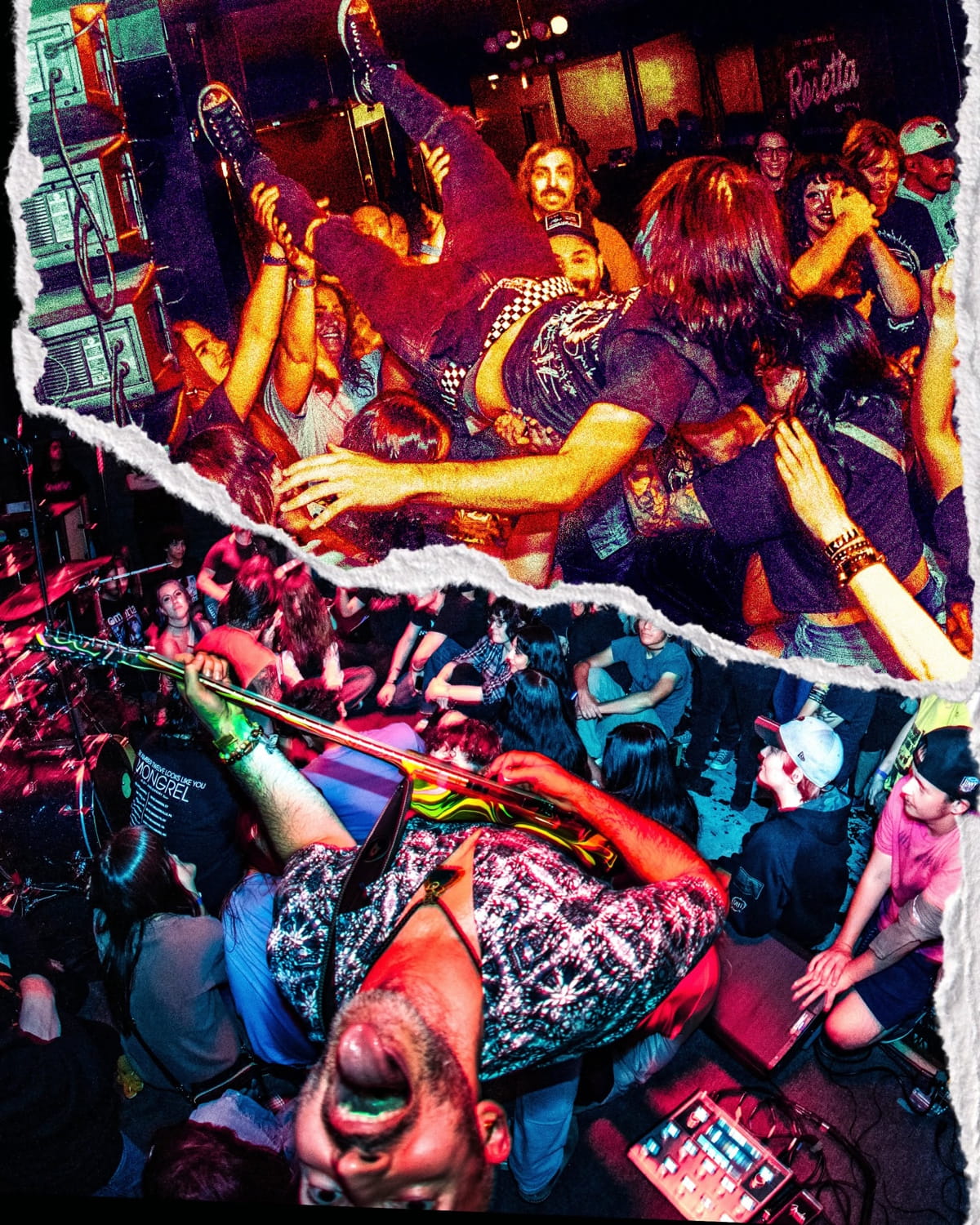
The original breakup remains an important part of that history. Jesse and Alexis had spent much of their youth playing in The Number Twelve Looks Like You, and stopping in 2010 gave them time to experience things they’d missed.
“The band ending when it did was exactly what we needed to grow into real adults in the world,” Jesse told us. “We had been doing #12 since we were teenagers, and because of that, we missed out on a lot of the things everyone around us was experiencing. That breakup gave us the space to grow into our own individual lives, figure out who we were outside of the band, and finally understand what it meant to be home.”
Alexis took a job teaching music to teenagers, which he did for five years. Working with students brought him into regular contact with a younger generation whose relationship with media was already very different from his own. He also kept writing and recording, releasing the solo ambient album “Composite City” and playing in the instrumental fusion projects Voyeur’s Kaleidoscope and The Hive-Mind.
The return in 2016 eventually led to “Wild Gods“, the band’s first album after the lengthy absence. Alexis remembers the pressure that came with making heavier music again, especially with new members involved. He wanted to reconnect with the energy of the band’s earlier records while taking what they’d learnt into account.
“That album felt like reconnecting to a certain energy the band explores, yet with some refinement.”
After the touring cycle for “Wild Gods”, Alexis wanted to try musical ideas the band hadn’t explored before, and revisit areas where he thought they could do better.
The record arrived in 2019, and the following year brought everything to a halt. For Jesse, the pandemic was the clearest moment that changed how he looked at the world during the seven years leading to “Howls From The Holographic Heart”.
“for me I would say it was likely the pandemic. Having to be sheltered and have no human contact really made me see the world differently.”
The isolation also worked its way into his lyrics. “Dancing Before The Flood“, one of the songs on the new album, comes from his response to the pandemic. Jesse has described the full record as a timestamp of those seven years, continuing his habit of writing about what is happening around him and in his own life.
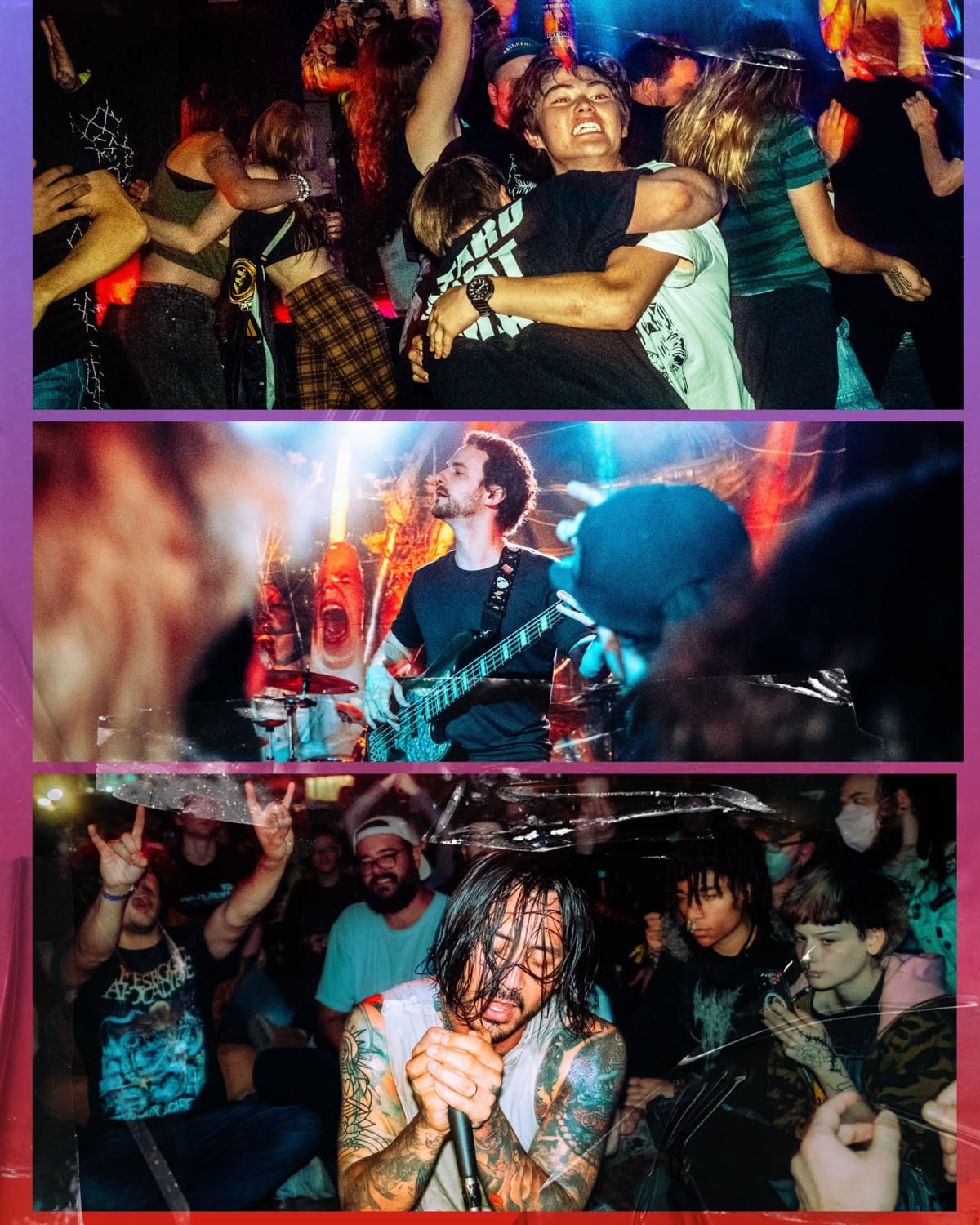
Meanwhile, “Wild Gods” had barely been given a proper run of shows. Only two songs from the record made it into the band’s live set. Alexis still wants to return to some of that music because he thinks several parts would have a stronger impact in concert. He doesn’t consider the new record an attempt to finish the previous one, though. “‘Howls’ is a complete fresh start and approach.”
Getting there involved a gradual change in how the current band worked together.
Cody and Michael arrived shortly before recording began, and the initial demos were already quite different from the Number Twelve songs they knew. Jesse and Alexis had written much of the early batch, with Alexis and producer Jeremy Comitas directing the arrangements. Cody’s first job was largely to add bass parts to music that was already in place.
He had been impressed by how little Jesse and Alexis seemed concerned with keeping the band’s established sound intact. As the sessions continued, three later songs gave Cody and Michael much greater freedom: “Trust Chaos”, “Fangs Out” and “Joy Is A Weapon”.
Cody compared the writing to the anything-goes approach of “Wild Gods”, with even more room for unexpected turns on the new album.
“I wrote basslines to a lot of material they had already prepared; Trust Chaos, Fangs Out and Joy Is A Weapon were late additions that I contributed more to. I think that moment, when we added those three songs (which are probably my favorites) made me realize that Number Twelve is a band that will never stop developing and redefining itself.”
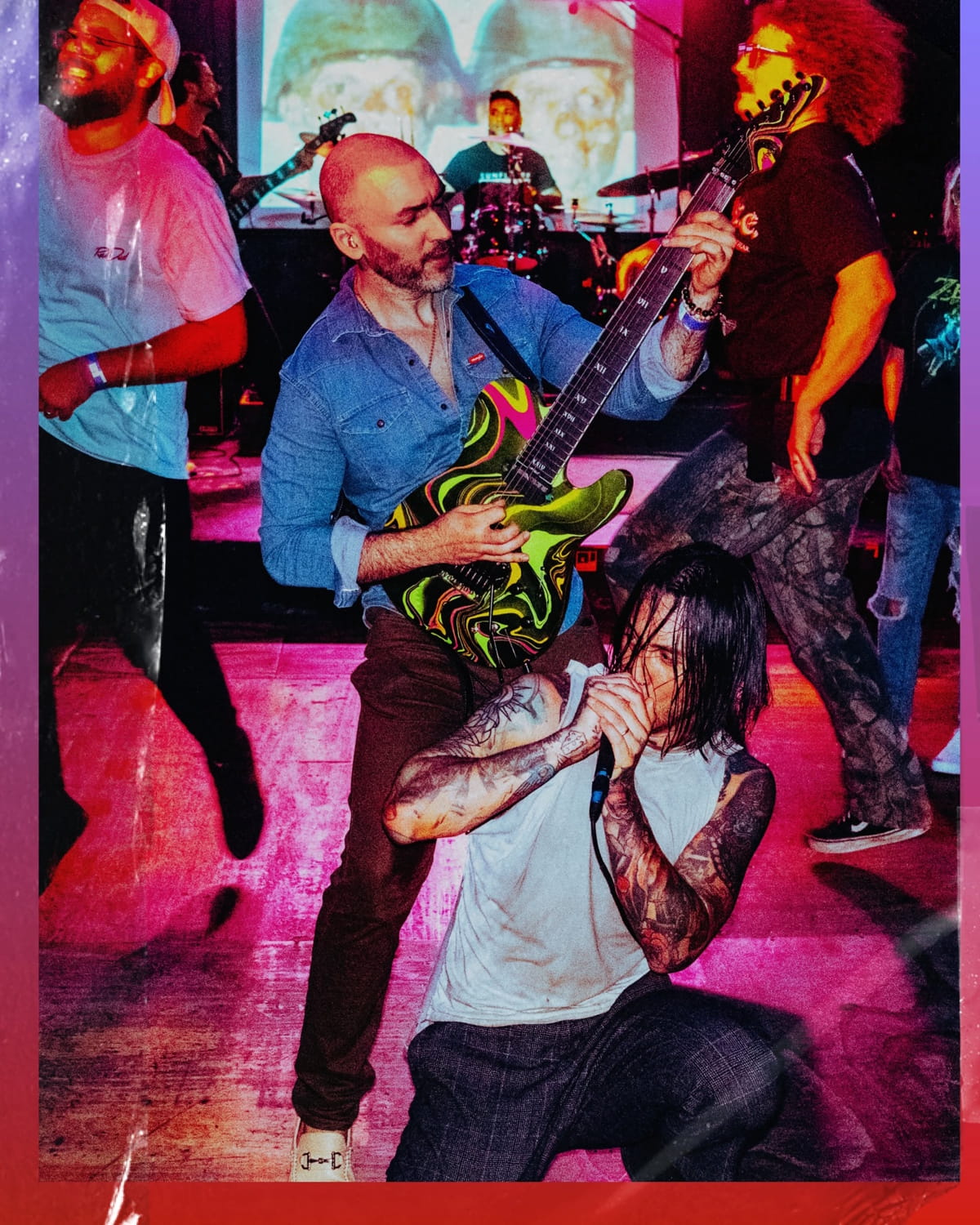
Michael also identifies those three tracks, along with parts of “Glow In The Dark Skin”, as the places where the two newer members contributed most directly to the band’s writing.
“I think our identities shine through the most on those tracks.”
“Trust Chaos” gives a particularly good example. It started after Michael was asked to play an open, free-form drum solo. Alexis spent time listening to it, picking out possible guitar melodies and riffs, before he and Cody began freely writing around the percussion. Usually Alexis approaches drum grooves as something supporting the guitar and bass. Starting with Michael’s drumming took the song through turns he wouldn’t normally have planned.
Cody remembers it as one of the late additions that immediately sounded different from the rest of the demos. Michael had recorded the initial drum piece alone, leaving the others to find their parts afterwards. Alexis credits that approach with producing several of the song’s more unusual changes.
The recording sessions followed a similar split. Jeremy handled most of the album, while Trae Titus worked with the band on “Trust Chaos”, “Fangs Out” and “Joy Is A Weapon”. Trae and Michael had previously played together in Pangaea, and Michael found his former bandmate’s ideas particularly well suited to the heavier songs.
“We recorded the majority of the album with Jeremy, and we worked with Trae on ‘Trust Chaos’, ‘Fangs Out’, and ‘Joy Is A Weapon’. I particularly enjoyed recording those because we all recorded independently and hearing the finished result was a surprise.”
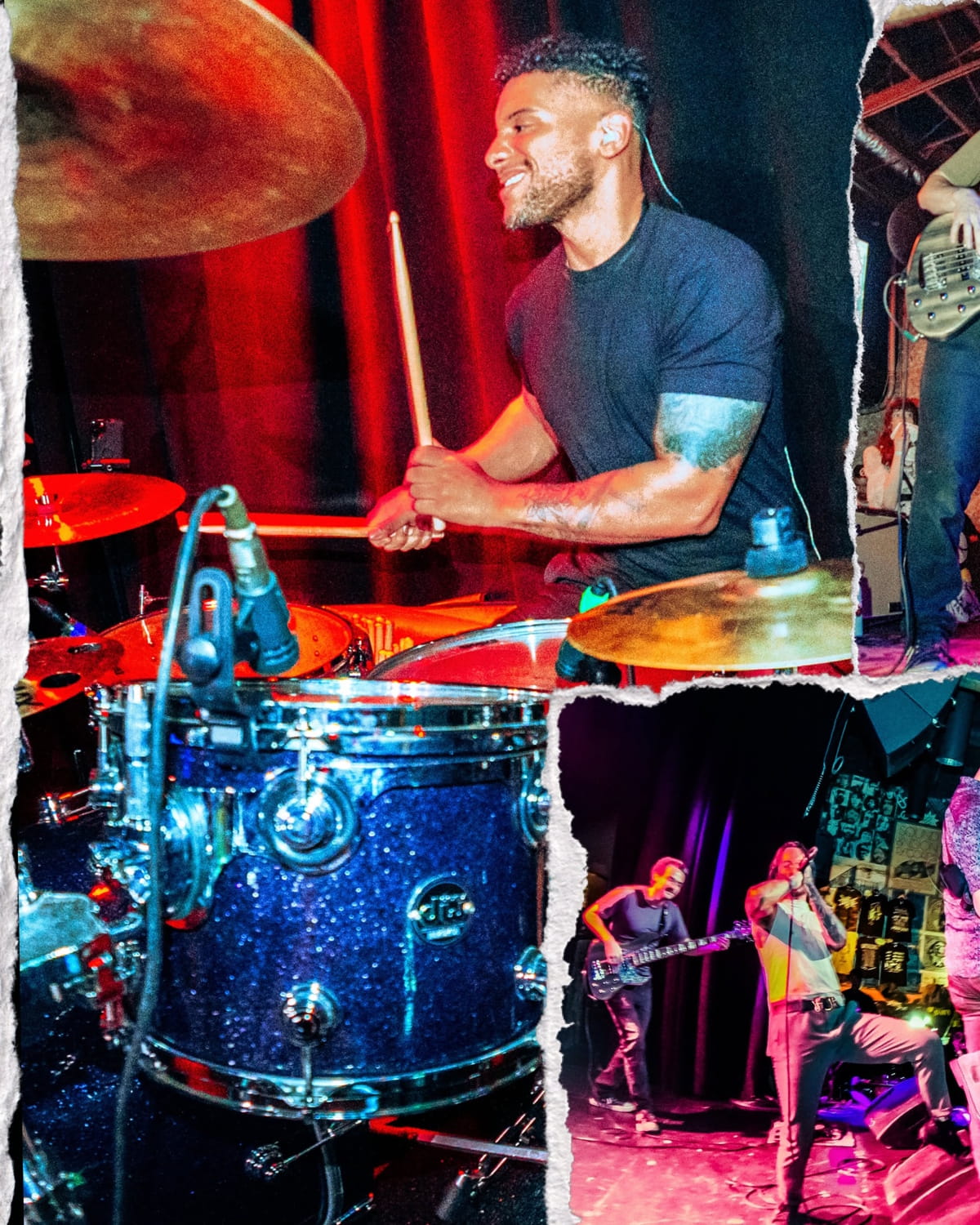
Those later recordings also gave Cody a chance to move beyond adding bass to completed arrangements. The musicians were writing together more freely, and he could hear his own compositional habits becoming part of the band’s music.
There had already been one important moment for him during the earlier sessions. On “False Face“, he wrote a bassline that he felt gave the song extra drive. His reference was Flea’s playing with Thom Yorke in Atoms for Peace, an influence he brought into a band usually associated with a very different approach to heavy music.
Alexis had to reconsider some of his own working habits too. Jeremy brought an outside perspective to ideas that sometimes had been sitting in demo form for a long time. He was enthusiastic when something started working and encouraged changes to arrangements that the band might previously have kept intact. Alexis has become more comfortable cutting parts when a song benefits from it, even after spending months getting used to an earlier version.
“When you have demos that have sat for some time in preproduction it is very easy to become attached to those versions,” he explained. “It is helpful to hear alternative ideas that can push the arrangement in evoking a whole new experience of the song.”
The finished album also includes a collaboration with Foxy Shazam on “Joy Is A Weapon”, a song about refusing to let anger or the people who have hurt you decide what kind of person you become. The band see the search for joy as a response to violence and bitterness, and Eric Nally’s appearance gives the song a particularly unruly character.
The two bands spent a substantial stretch of 2025 touring together, although Jesse’s relationship with Foxy Shazam goes back much further. He managed the group for more than a decade, has been close friends with the musicians for roughly twenty years and continues to collaborate with them. His own appearance on Foxy Shazam’s “Ghost Animals”, from their album “Introducing”, was one of those earlier collaborations.
“And the song needed a certain kind of mad man energy that nobody else in the world can create other than Eric Nally.”
Jesse’s work outside the band has also become an increasingly regular part of his musical life. His horror film “Yellow Eyes” connects to the earlier Number Twelve singles “Eyes On The Fireworks” and “Indeciso”.
The latter deals with being caught between opposing impulses and unable to make a decision, and its music video, directed and edited by Kyle Laurin, was filmed in Phoenix during a particularly hot July.
Jesse has also been directing music videos himself. He worked with Kevin Veselka on the video for “Glow In The Dark Skin” and co-directed “Joy Is A Weapon” with Tom Haas, with Eric Nally also involved in making the clip.
Film and music now occupy different parts of his working life, and each tends to make him miss the other.
“I think working on films actually makes me more excited to work on music. The more time I spend away from one, the more I start to miss it and feel that pull to come back. And it works both ways, when I’m deep in music, I start craving making movies again. They both fulfill different parts of me, and somehow they’ve learned to coexist”
“Glow In The Dark Skin” deals with the desire to be properly seen by other people, including the worry that someone might only notice what’s underneath when it has already begun to disappear. Given the band’s own history of disappearing, returning and changing members, the song invites questions about ageing and how people remember a group after so many years. Alexis keeps its meaning open to the listener’s own life.
“The concept of this song lies more on what any given individual may experience in their lifetime.”
That freedom also applies to the broader expectations around a band that has been around for more than two decades. Jesse has said that, at this stage, they have nothing to lose by making the music they want. Alexis takes a similar view of the possibility that longtime fans won’t necessarily like every direction they choose.
“This band has always opted to take on paths that stray from what is expected of us. It will always disappoint someone.”
View this post on Instagram
Rehearsing “Mongrel” while introducing all this new music has brought a different set of challenges. The group announced the first complete performances of their 2007 album for their autumn US tour, their first headlining run in seven years. Kaonashi, Blind Equation and Differences are joining on different sections of the itinerary, putting younger experimental hardcore and mathcore bands around a group whose older records helped shape much of that music.
Michael has a particularly personal attachment to this period. “Mongrel” and its follow-up, “Worse Than Alone”, were his favourite records by The Number Twelve Looks Like You long before he joined. He and his friends played covers from those albums while they were still at school. Working through the songs as the band’s drummer has brought him back to music he already knew, this time from inside the group.
Cody has found “Mongrel” the most difficult part of the Number Twelve repertoire to learn. He and Michael already know a substantial portion of the band’s catalogue, but the 2007 record has demanded a different level of attention.
“Learning Mongrel top to bottom has definitely been illuminating. Michael & I both know a good portion of the repertoire now, with Mongrel being the most difficult by far, so in a funny way I feel really qualified to write material for this band now.”
One thing he hadn’t noticed before was how often the band repeats figures in groups of three or six, where many other heavy bands would use two or four. Those repetitions can make the songs move in ways that are difficult to anticipate even when the individual parts are familiar.
“I definitely never realized how often this band repeats things in 3’s and 6’s as opposed to 2 or 4 – it’s a great way to make a song feel more linear and non-repetitive.”
View this post on Instagram
For Alexis, returning to those songs also brings back the circumstances in which they were written and recorded. He remembers the people, the places and the ordinary details surrounding the original sessions.
“Friends, places, jokes, bad days, writing processes, recording, etc all come back.”
There are things he would write differently today, but he is happy with what the band made at the time. His compositional interests have kept changing, and playing the old songs again has helped him recognise certain parts that still excite listeners. Some of those ideas are feeding into what he writes now.
Michael is curious about where all this will lead after the “Mongrel” tour. The newer record has already allowed plenty of experimentation, and revisiting the older songs seems to have made the members interested in pushing some of the stranger elements further.
“There’s a lot of cool experimentation going on with Howls and after touring Mongrel, it seems like we’re all eager to possibly lean into the chaos a bit more.”
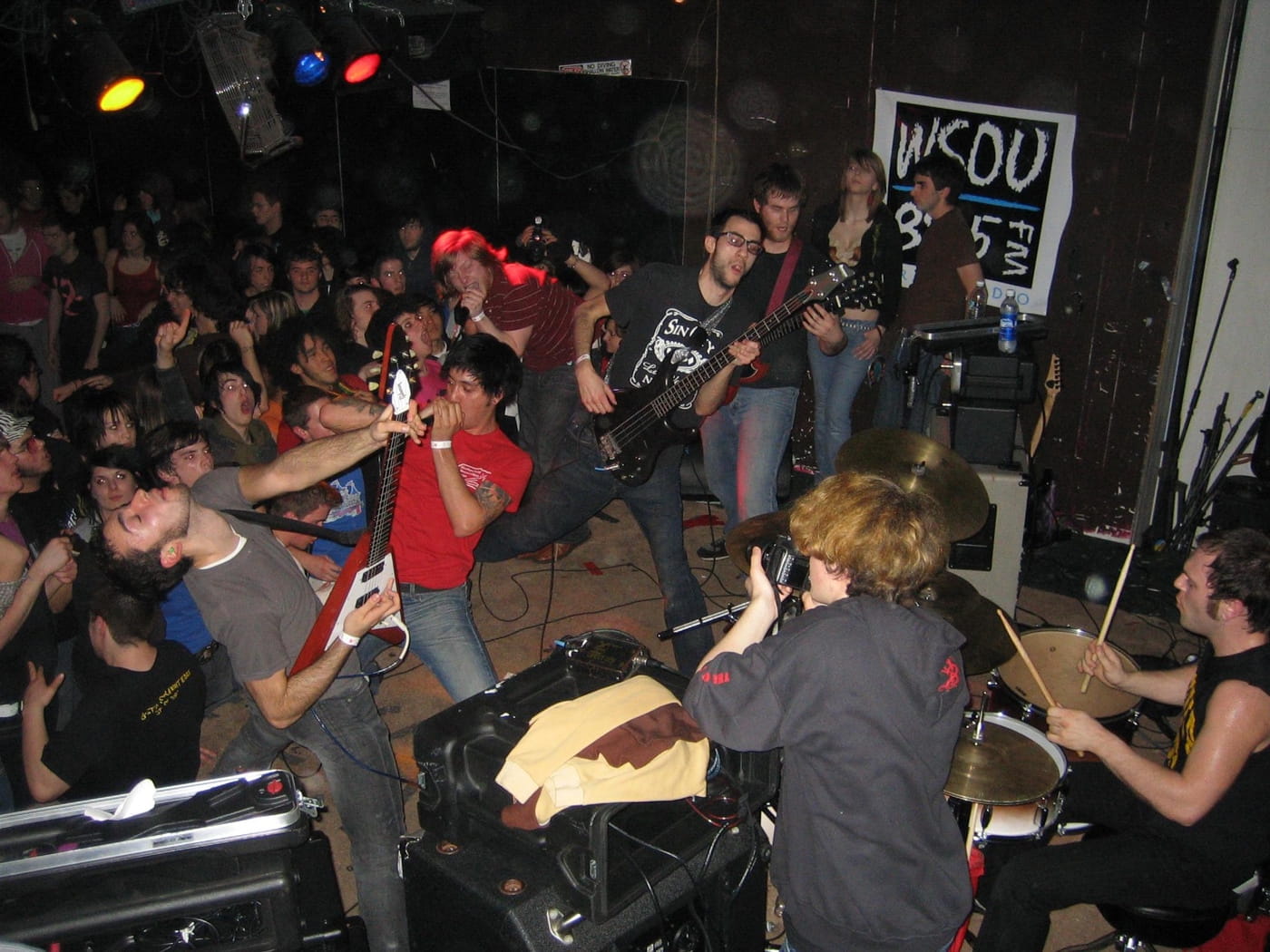
We also asked the band to pick something physical from their history and explain why they had kept it. Jesse chose an early live photograph, taken at a time when the group were beginning to realise that their music might take them somewhere.
“I love keeping this photo in my phone. It reminds me of the whole machine starting up and it feeling like my life was going to change”
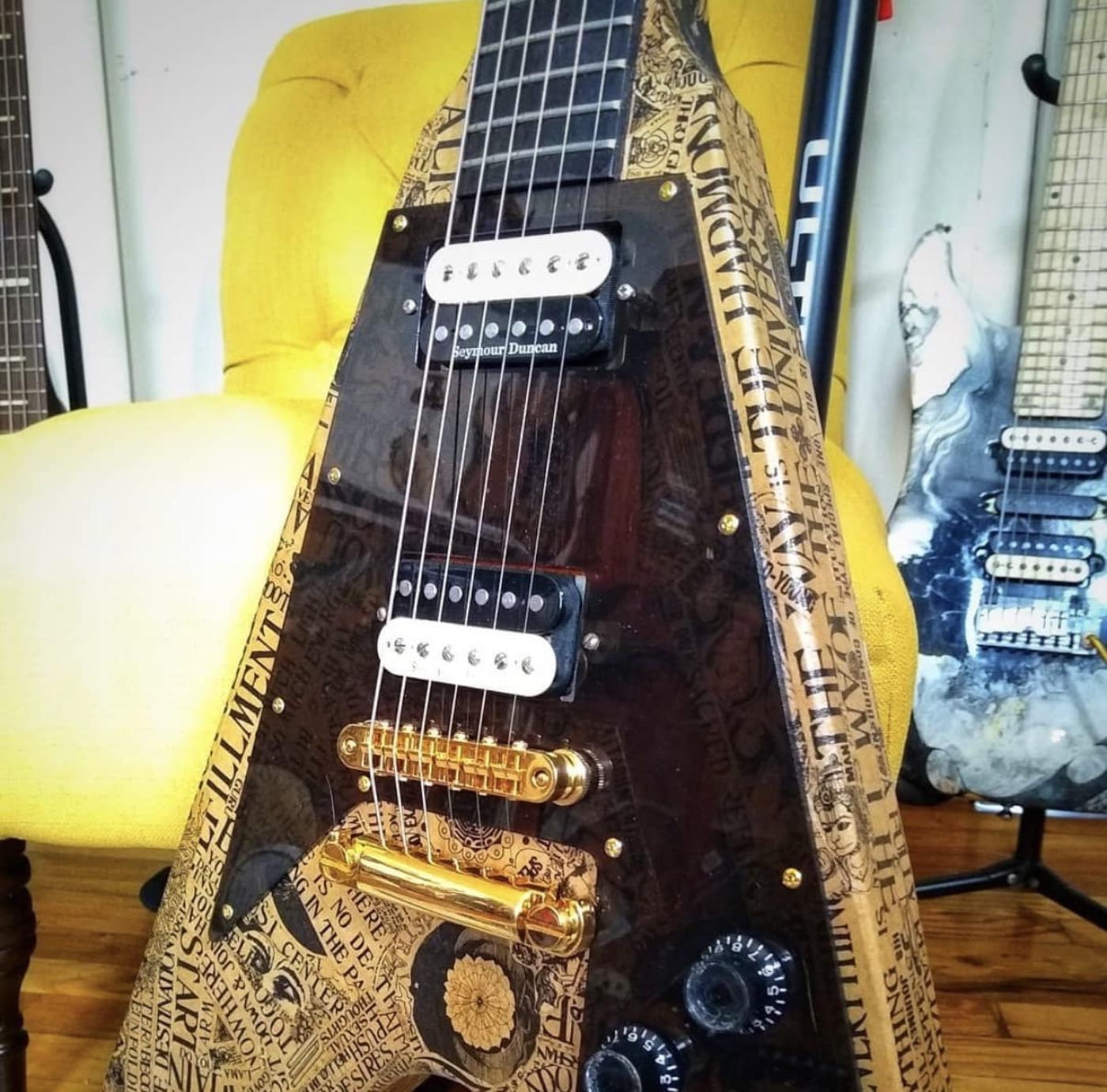
Alexis chose his restored Gibson Flying V, which has a more complicated history. He used it during many of the band’s early performances, and it survived some fairly unfortunate incidents before spending years out of commission.
“The Gibson Flying V I resurrected is an important piece of our early beginnings. I used it in many of our first shows and once broke it on Jesse’s head causing him to get stitches. On another occasion I also broke it when I swung it and it hit a fan’s head. That was the end of that guitar for many years since the headstock had a nasty crack and I went on to play 7 strings. Many years later though I was able to have a luthier friend fix it and I refinished the whole guitar with pages of a favorite book.”
The band’s current situation has also made the musicians think about what somebody might take from this period if they returned to these records in another ten years. For Cody, one of the most satisfying things about being in the group is that the older songs are still there to be played, and the members remain free to write something very different next time.
“I think it’s important to acknowledge that bands can evolve in whatever direction they want while still being true to who they were previously; I think that’s a big theme on this tour. There’s really nothing this band is putting off limits as long as we’re all into it.”
View this post on Instagram
Alexis also sees the audience as part of the process, especially when a band has accumulated twenty years of expectations. He wants the freedom to keep trying new things, but recognises that listeners bring their own history and preferences to every record.
“Creativity in songwriting or any of the arts shouldn’t have to be at the mercy of what is expected of you as an artist. That being said, there is a feedback loop with the audience. Finding that balance where both the audience and artist can be introduced to new exciting ideas is a challenge that shifts with culture, social movements, and personal experiences.”
Cody is already thinking about whatever follows the current album.
“I think all of us are into striking a new balance of chaos & clarity as we move forward into whatever comes after Howls.”
“Howls From The Holographic Heart” arrives on **16 October 2026** through Equal Vision Records in partnership with Rude Records, produced by Jeremy Comitas, Trae Titus and Alexis Pareja. The album is available to pre-order. A remastered vinyl edition of “Mongrel” is scheduled for the same day.
The band’s US tour continues through 30 October, finishing at Mahall’s in Lakewood, Ohio.
View this post on Instagram