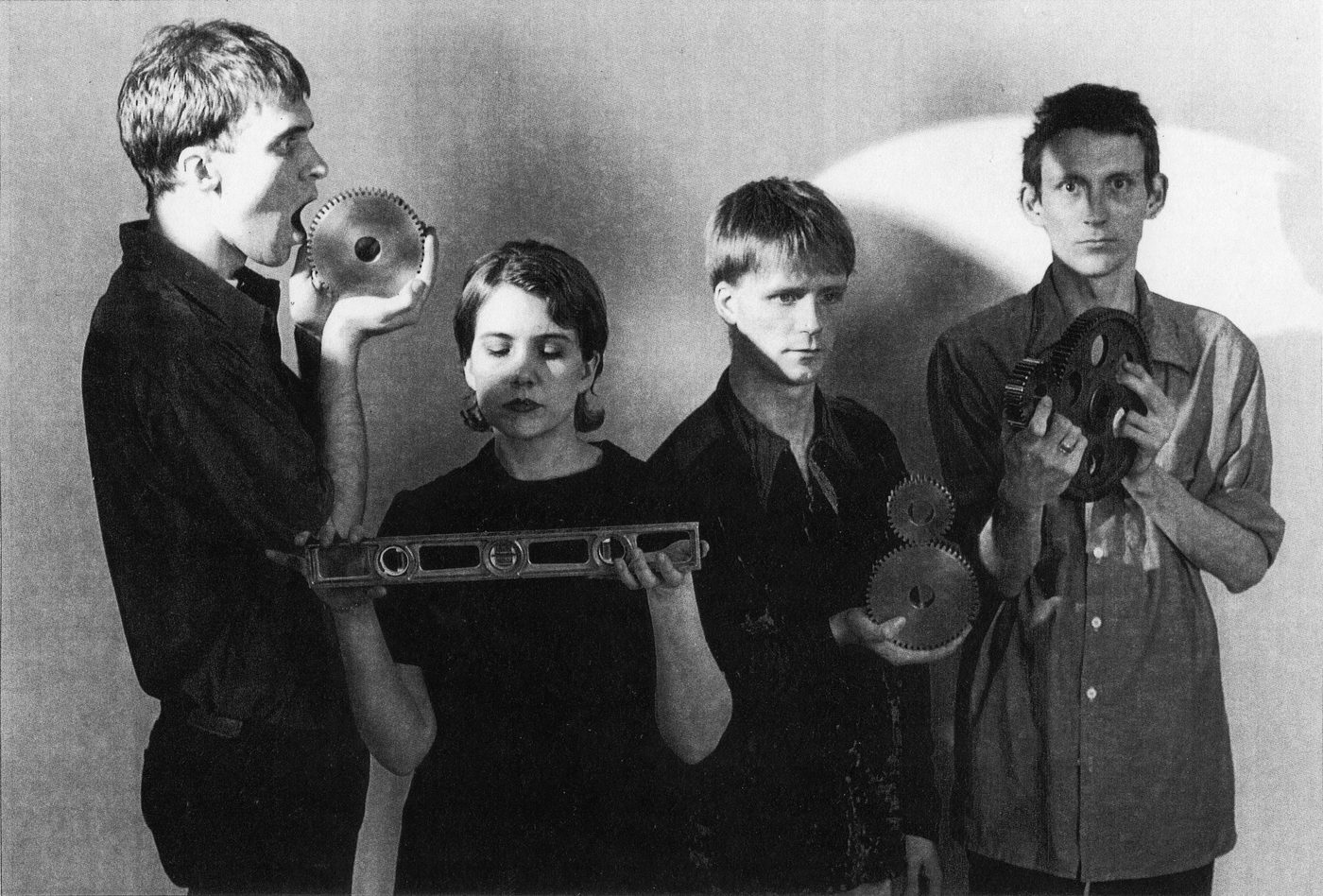


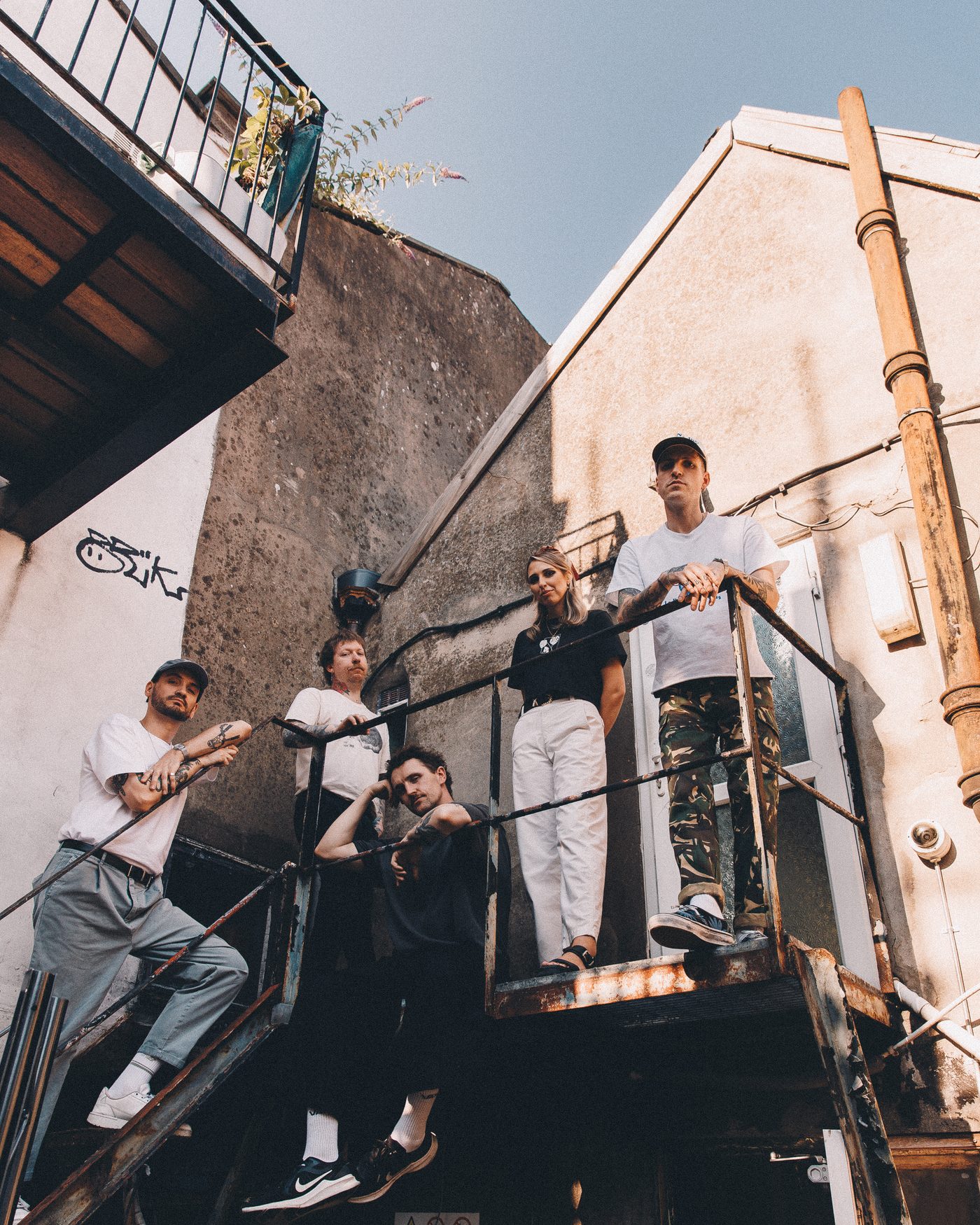
Guillotine had almost reached the finish line with “A Lesser Key” when a record label rang. The South of England five-piece, whose music moves between heavier post-hardcore and the more melodic side of alternative rock and emo, had spent months preparing to release the record themselves. Everything was ready for 17 July 2026. They’d paid for it, recorded it largely on their own terms, and had a whole release campaign lined up. With barely a day left, they suddenly had a different offer to consider.
The label wanted to take on the release, and Guillotine had only a few hours to make up their minds. Going ahead meant sticking with the independent plan they’d spent so long organising. Accepting meant cancelling the imminent launch and waiting for a new date.
“This was a big decision because it meant delaying the campaign and the hard work. It was quite stressful (we literally had a matter of hours and quite a lot scheduled) however ultimately, as a small band the support releasing through a label can offer us on the digital side wasn’t something we could turn down.”
Guillotine accepted the offer, and the July release was put on hold. They agreed with Venn Records that putting out these seven songs as an EP made sense, leaving a full-length album for the band’s next release. “A Lesser Key” finally arrived on 16 October.
So “A Lesser Key” has finally arrived, three months later than expected, with the support of a label Guillotine already know from their earlier years.
Venn released their self-recorded “Weakness” back in 2018. By that point, Guillotine had been around for two years, picking up BBC Radio 1 and Kerrang! Radio airplay through their early DIY campaign and releasing their debut EP “Sapphire” on Failure By Design Records in 2017. They’d also played alongside Basement, Tigers Jaw, The Maine, Brutus and The Movielife.
Then the band went quiet for roughly six years.
Wyświetl ten post na Instagramie
When we caught up with Guillotine in April, they were getting back into the swing of things with a new lineup and were quite happy handling the business themselves. Atonal Agency were helping on the live side, but there was no record label involved.
“There’s no real buffer which means we’re putting everything into it ourselves,” they told us at the time. “Working with Atonal on the live side has helped give things shape, but everything else is very much ours to figure out.”
They couldn’t have known quite how quickly those arrangements would change.

The band had never really considered themselves permanently finished during the long break. Half-written songs, little recordings on phones and other ideas had been hanging around for years. Eventually, a lineup came together around people who had known each other through other bands and friendships. Ash Green, previously of Holding Absence, and Sam Woolley of Wallflower joined Daniel Fisher, Callum Heffy and Nix Boulton.
Most of the work on “A Lesser Key” happened during weekends in a converted barn in Hereford. They would spend long stretches there writing, rehearsing and recording, often spending just as much time talking about films and visual art as they did about the songs. That shared interest in cinema eventually became particularly relevant to the finished EP.
One of the more unusual decisions Guillotine made was to have the recording deteriorate as it plays.
It starts with the sound of a tape machine coming to life. From there, small amounts of clipping, distortion and glitching begin entering the mix. As the seven tracks progress, the stereo image gradually narrows, until the sound becomes much more restricted.
The band took inspiration from found-footage horror, imagining an old tape that becomes progressively damaged during playback. They worked that idea into the production of the whole record, connecting it to the increasingly troubled situations described in the songs.
The differences are subtle at first, and Guillotine know that some listeners might miss them entirely. They’re easier to follow when hearing the seven songs together, especially once the more noticeable distortion and narrowing begin to appear later in the sequence.
And the order was settled almost from the start.
“Interestingly, the sequence didn’t really shift. Even the demos were written with this specific order in mind. We approached the record as a whole rather than writing seven individual songs and figuring out afterwards how they might fit together.”
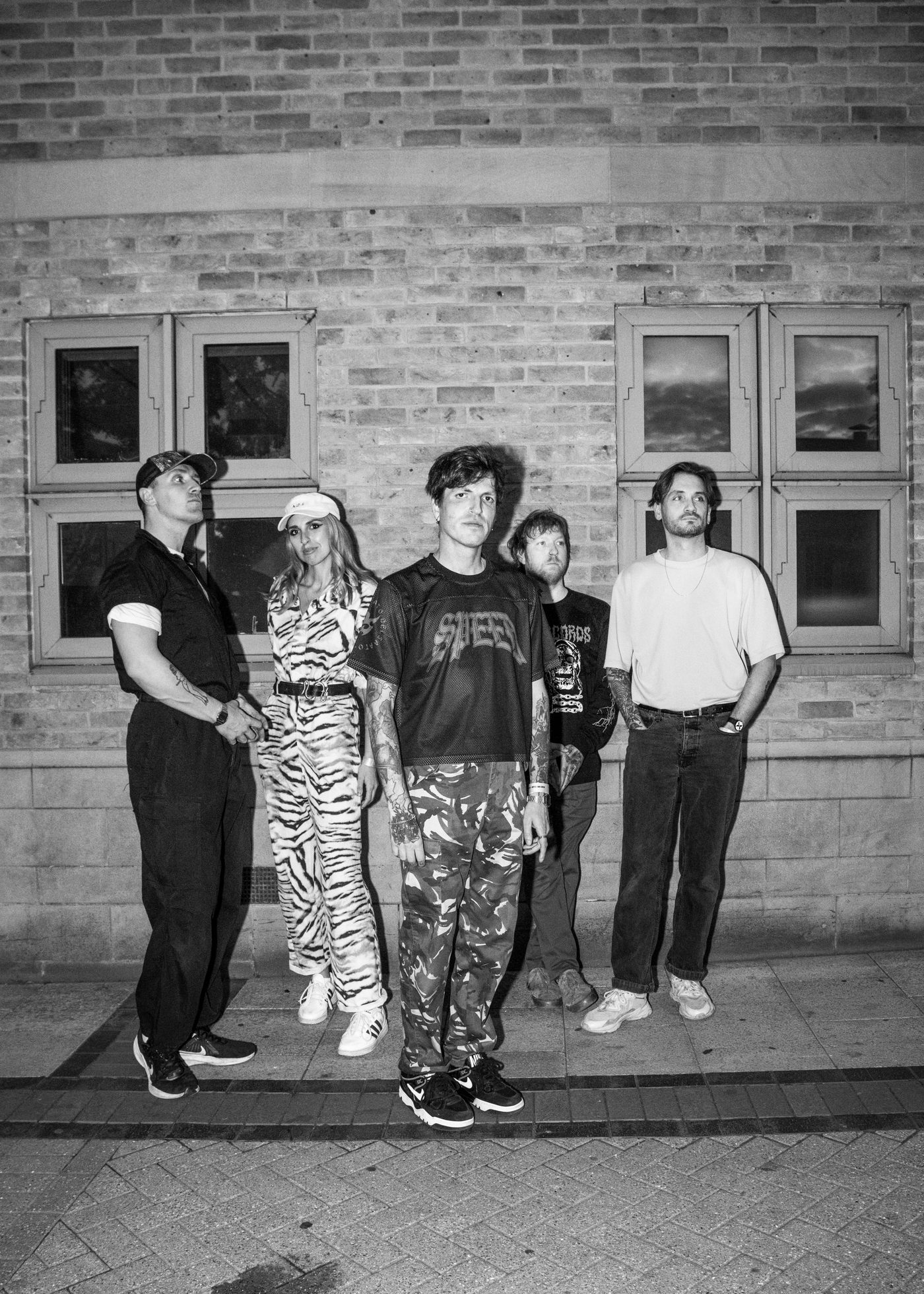
That early planning also explains why there was relatively little rewriting once the band started recording the final versions. The demos were already close to finished songs.
“The surprising thing is how little changed. Once we’d found the core of each song in the demos, we tried very hard not to overwork them. Most of the evolution happened in the details (samples, effects, transitions, guest vocals and production decisions). The songs themselves survived largely intact.”
Recording and production were shared between Daly George and Daniel Thomas Fisher, with Hamish Dickinson also credited for engineering and for performing the drums at Phoenix Sound. George handled the mixing and mastering. The final sessions gave the band room to work on transitions, samples and the gradually changing recording quality they’d planned.
It’s quite a lot of attention to put into the details of a record whose songs were already largely finished, though there’s a good reason Guillotine wanted them to stay that way. The seven tracks were written with their place in the running order already in mind.
“Down the Well” was the first song written for “A Lesser Key”, and its opening position was established early. It follows someone losing their grip on reality as relationships around them begin falling apart. Paranoia gradually takes over, making it increasingly difficult to work out which threats are real and which are coming from their own thoughts.
That uncertainty continues through “Haunted“, one of the first songs completed during the sessions and the single that brought Guillotine back onto IDIOTEQ in April.
The band remember writing it fairly quickly, following their instincts and leaving space for the song to develop without endlessly revisiting individual parts. Its heavier, tighter guitar sound was already a noticeable step from the earlier singles, although the writing remained closely connected to the more emotional side of their music.
Old habits, past relationships and previous versions of ourselves all find their way into the song. There’s also a more personal concern underneath the title, particularly the difficulty of allowing another person to see parts of yourself that you’d prefer to keep hidden.
“Real love asks you to let someone see parts of you that you’d probably rather keep hidden, and that’s a terrifying thing.”
Some of those ideas also appear in “Does It Make You Feel”, which deals with regret, redemption and the lasting consequences of words spoken between people. The band consider how obsession can become confused with love, and the difficult conversations that continue internally after a relationship or argument has ended.
It’s worth remembering that these are subjects Guillotine have often discussed in broad terms. Nix Boulton, who answered our follow-up questions, was quite clear that certain experiences behind the songs would remain private.
“A lot of these songs are rooted in very personal moments, but we’ve always preferred to write around those experiences rather than document them literally. The specifics belong to us; the emotions belong to everyone.”
“Gouge” gets into some of the darker memories people carry from childhood. Its starting point was the strange feeling of waking from a dream and finding that something from years ago still seems unresolved. The lyrics deal with painful experiences that have been pushed aside for a long time and eventually have to be confronted.
The song also came together in a slightly unusual way for Guillotine. The members wrote their individual parts separately, bringing them together later. They liked how those different approaches met in the finished song, particularly as the EP was already beginning to deal with divided perspectives and an increasingly unstable sense of self.
Released as a single on 8 September, “Gouge” also features Will Gould of Creeper, whose connection to Guillotine goes back many years.
The two bands share roots in the same small music scene, and Will had been a friend and supporter of Guillotine long before this recording. His involvement became especially important during a difficult period when the band had reached a point where they were seriously considering abandoning the project.
Will was one of the people encouraging them to keep going and finish what they’d started.
Will’s contribution came at the end of “Gouge”. Daniel Thomas Fisher had written the spoken-word outro, but the band struggled to get it sounding right until Will recorded his part.
Having Will appear on the finished record meant a lot to Guillotine, particularly given how far back their friendship goes and how close the band had come to shelving the recording.
He’s one of several people who added parts to “A Lesser Key”. Talisa May Barton and Freya Volk of Kahlla also contribute additional vocals, while Joe Smith plays pedal steel. These were among the additions made as Guillotine worked on the final arrangements, along with the various effects and transitions.
By the middle of the EP, those production details have become increasingly noticeable.
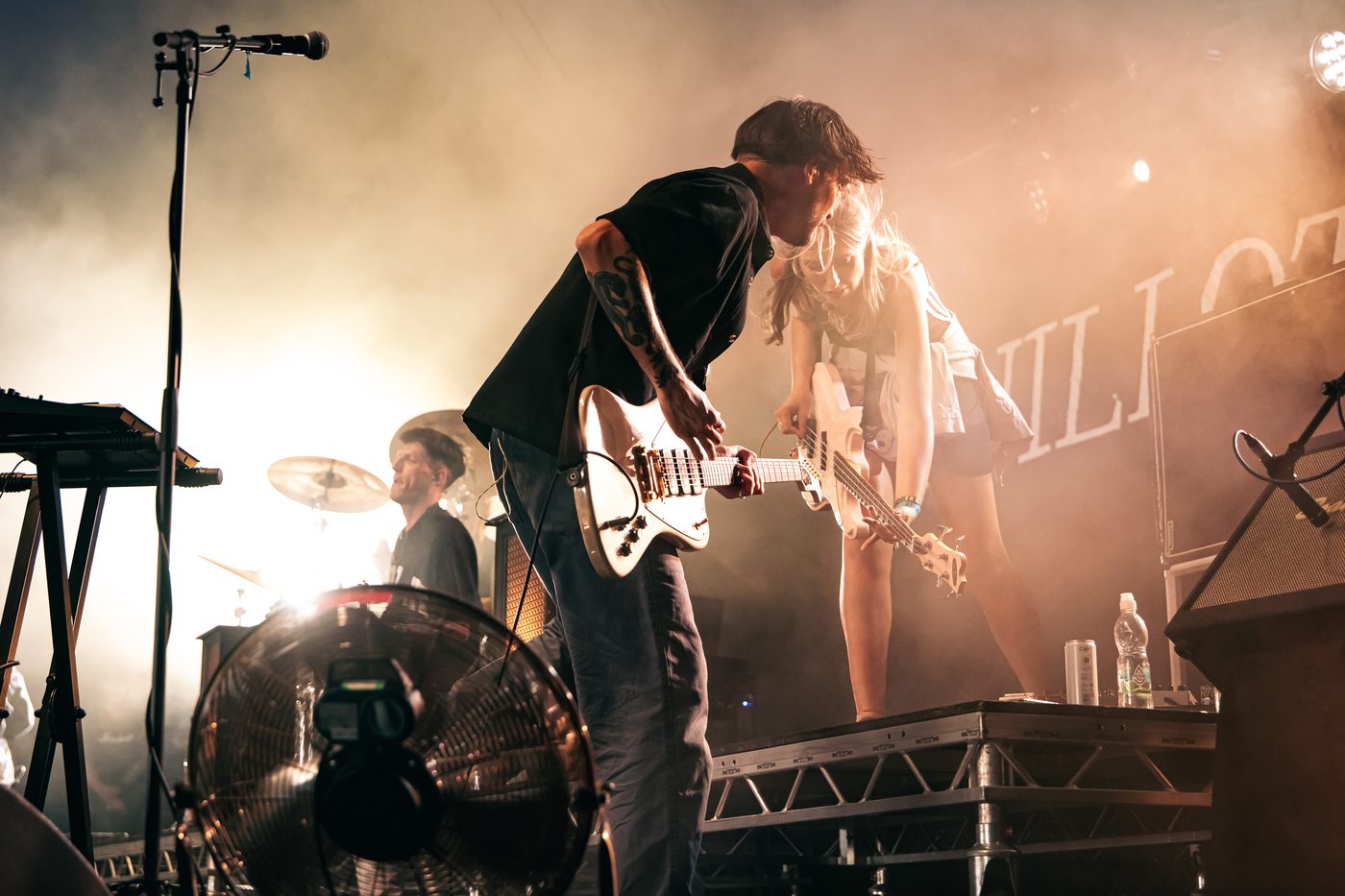
“The Fifth Gate” is where the band place the point of no return. Its title refers to old mythology surrounding the seven gates of hell, with the fifth representing the stage beyond which turning back is no longer possible.
There are no lyrics on “The Fifth Gate”. Instead, it contains a sample of a man being interviewed about his split personality disorder. By this point, the distortion and changes to the stereo image have progressed far enough that the recording itself is beginning to sound noticeably damaged.
Guillotine have kept the mythology fairly open. They were interested in using the seven gates as part of the record’s progression, although they haven’t committed to a single explanation for what each reference represents.
That also applies to the title “A Lesser Key”.
“The title means different things to each of us, and we’d rather listeners find their own meaning in it. What we did know was that it felt like the only title capable of holding all of these songs together.”
There’s a change in subject with “Half as Bright”, one of the earlier singles that helped Guillotine reintroduce themselves before “Haunted”. It deals with nostalgia and the unreliable way people remember their past.
As the years pass, earlier periods of life can start to seem warmer and easier than they actually were. The song concerns the temptation to keep looking backwards, particularly when the future is uncertain, and the difficulty of recognising what is happening in the present.
By this point, the EP’s recording has already passed through several stages of degradation. The way the music has been mixed continues changing, even as the subject moves away from the more openly paranoid situations of the preceding songs.
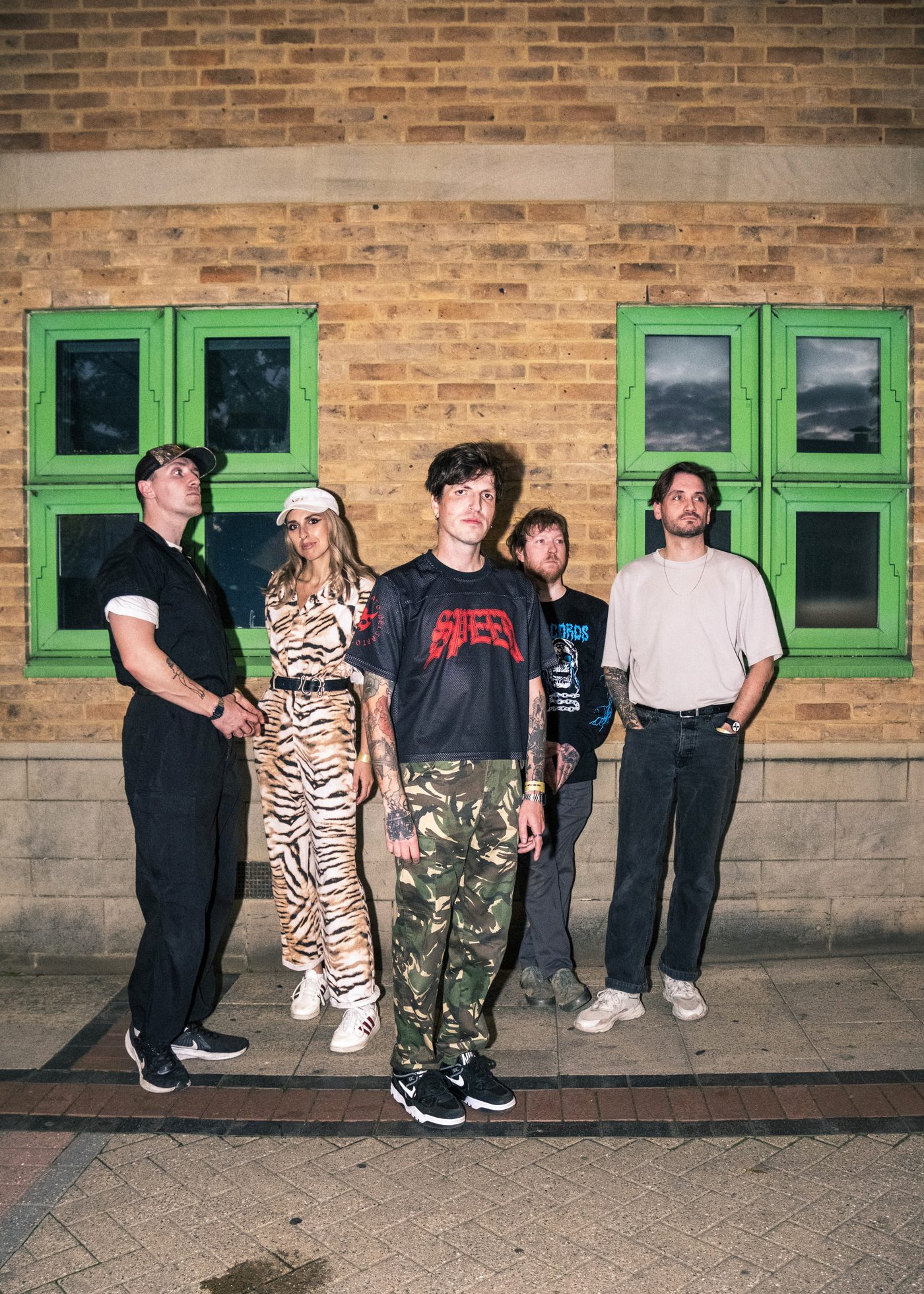
“At a Loss” was always intended to finish the record.
The song is about mourning the loss of parts of yourself. It’s about letting older versions of who you were die so you can move on, and the grief that comes with that.
Guillotine wanted that sense of mourning to close the record, after everything that had happened across the previous six songs.
Its place at the end was settled before the record was finished. The band had already developed the sequence around the unease introduced in “Down the Well”, the increasingly fractured middle section and the final mourning of an older self.
“Down the Well feels like opening the door, The Fifth Gate is the point of no return, and At a Loss brings everything to its natural conclusion.”
Nix also handled the artwork for “A Lesser Key“, continuing the interest in visual art that had been part of those weekends in Hereford. The band were already thinking about the record as one continuous piece during writing, and the finished artwork sits alongside that shared interest in film and imagery.
Of course, Guillotine have also spent much of 2026 playing these songs in front of people.
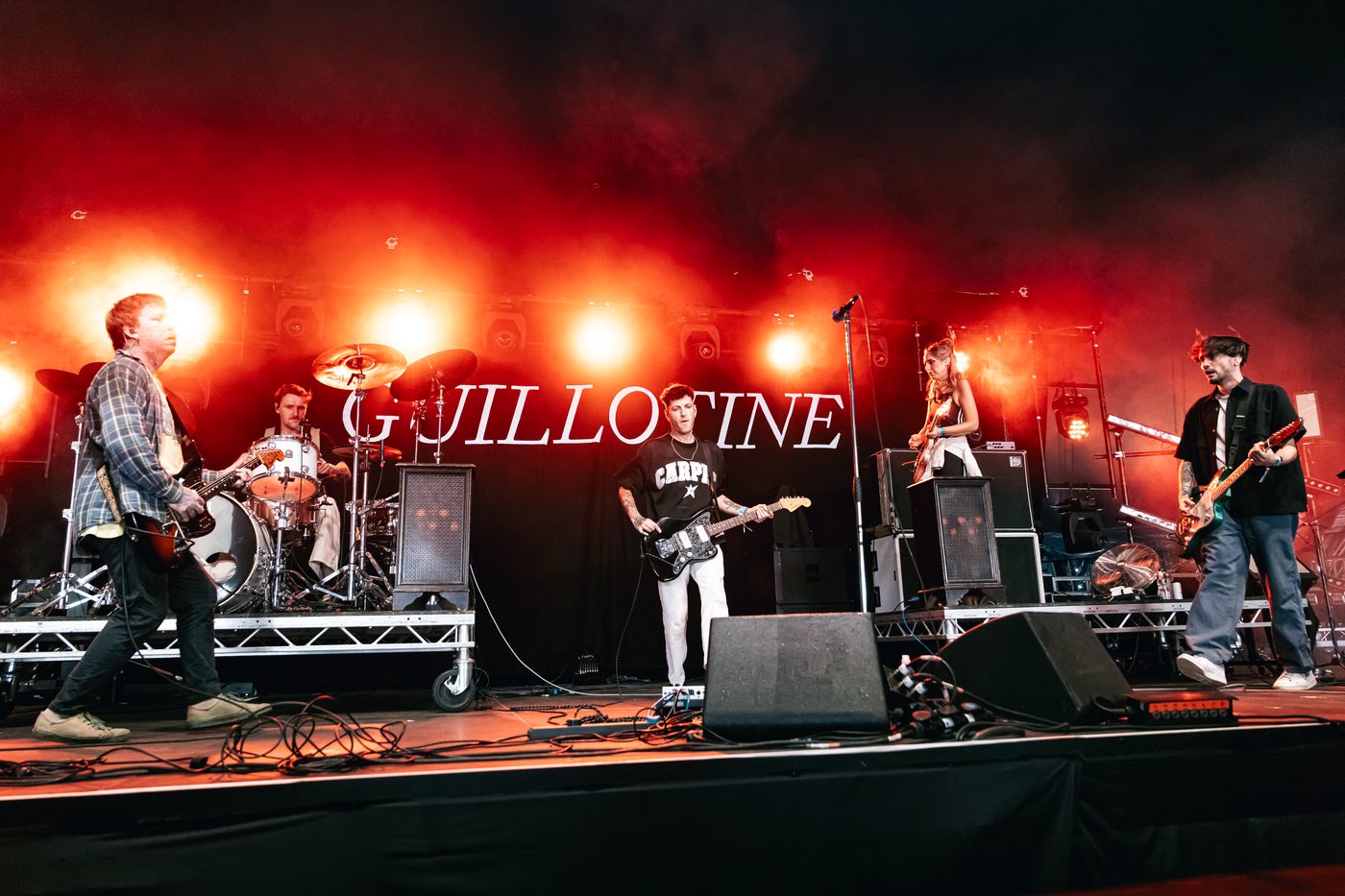
They supported Black Foxxes in April and shared bills with Hawthorne Heights and Madina Lake in May. June brought Goatfest in Weymouth, followed by a busy July with Chicago’s Footballhead, Los Angeles band Car Underwater and a headline show at Clwb Ifor Bach in Cardiff.
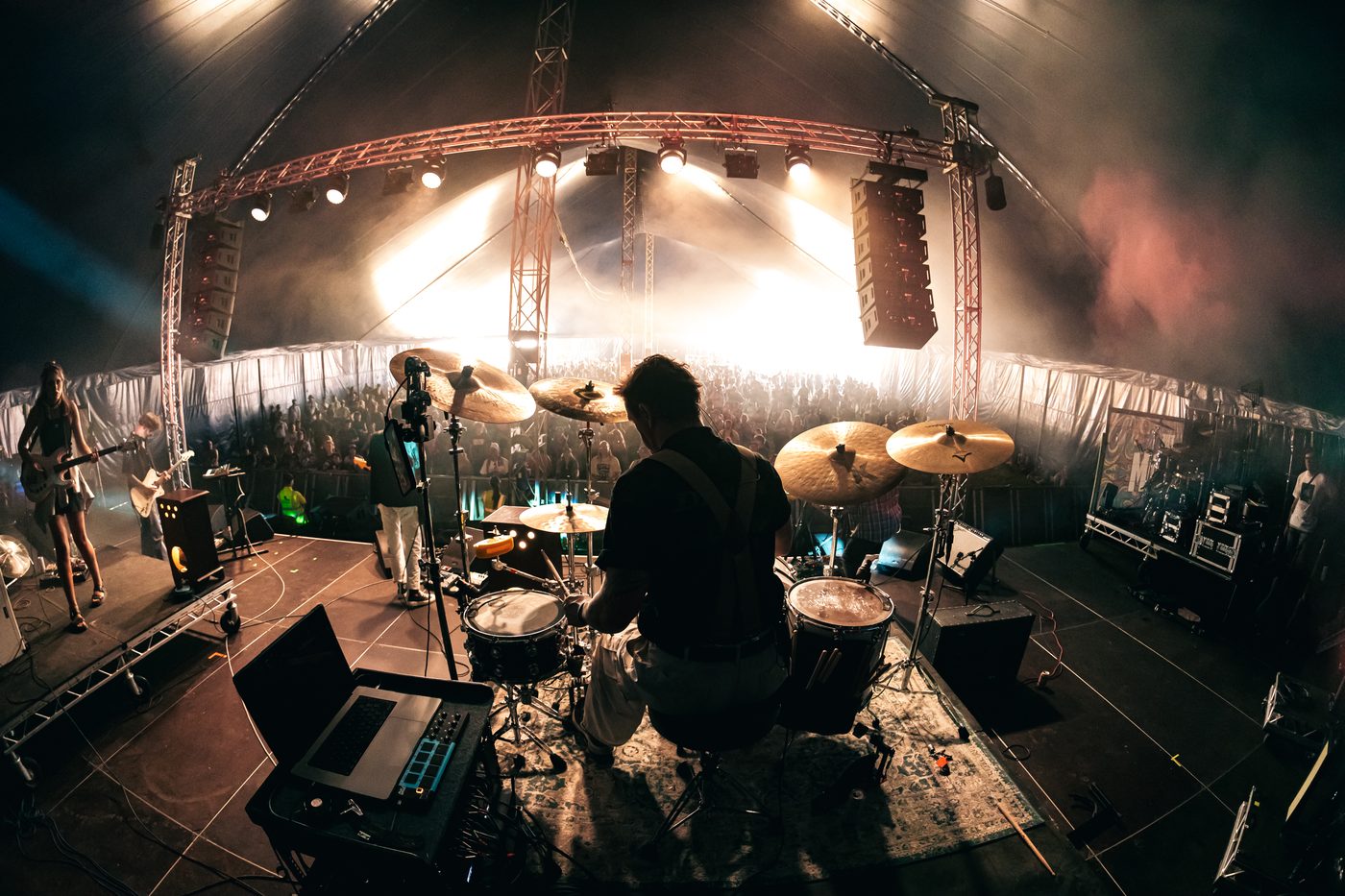
Their set at 2000trees Festival was another substantial moment for the returning band, opening the Friday on the festival’s second-largest stage to a packed crowd. Their calendar also included Beers & Tears, Burn It Down Festival and Castlefest, with Atonal Agency now representing them for bookings.
By the time the October release date arrived, some of the songs had been played live for months. The arrangements have continued developing with the current lineup, and Guillotine are already working on more music.

“When we finished A Lesser Key, it felt complete. Since then, we’ve carried these songs around the country, watched them change on stage and seen people start connecting with them in ways we never expected.”
“The new lineup has already taken these songs somewhere different live, and it’s been amazing hearing them evolve in that environment. We’re in a really good place with the band now, and we’re excited for people to finally hear A Lesser Key in full as one journey, from beginning to end. We have so much more to come and we’re already writing whats next.”
For the band, the finished recording already documents a slightly earlier version of the songs than the ones they’re playing on stage today. The change of release plans added another three months between completing the record and sharing it in full, but the seven songs and their original sequence remained intact.
“A Lesser Key” was released on 16 October 2026 through Venn Records, eight years after the label put out Guillotine’s “Weakness”. The band are already working on their next full-length record.
You can find “A Lesser Key” through Guillotine’s official release link and follow the band through their official channels.