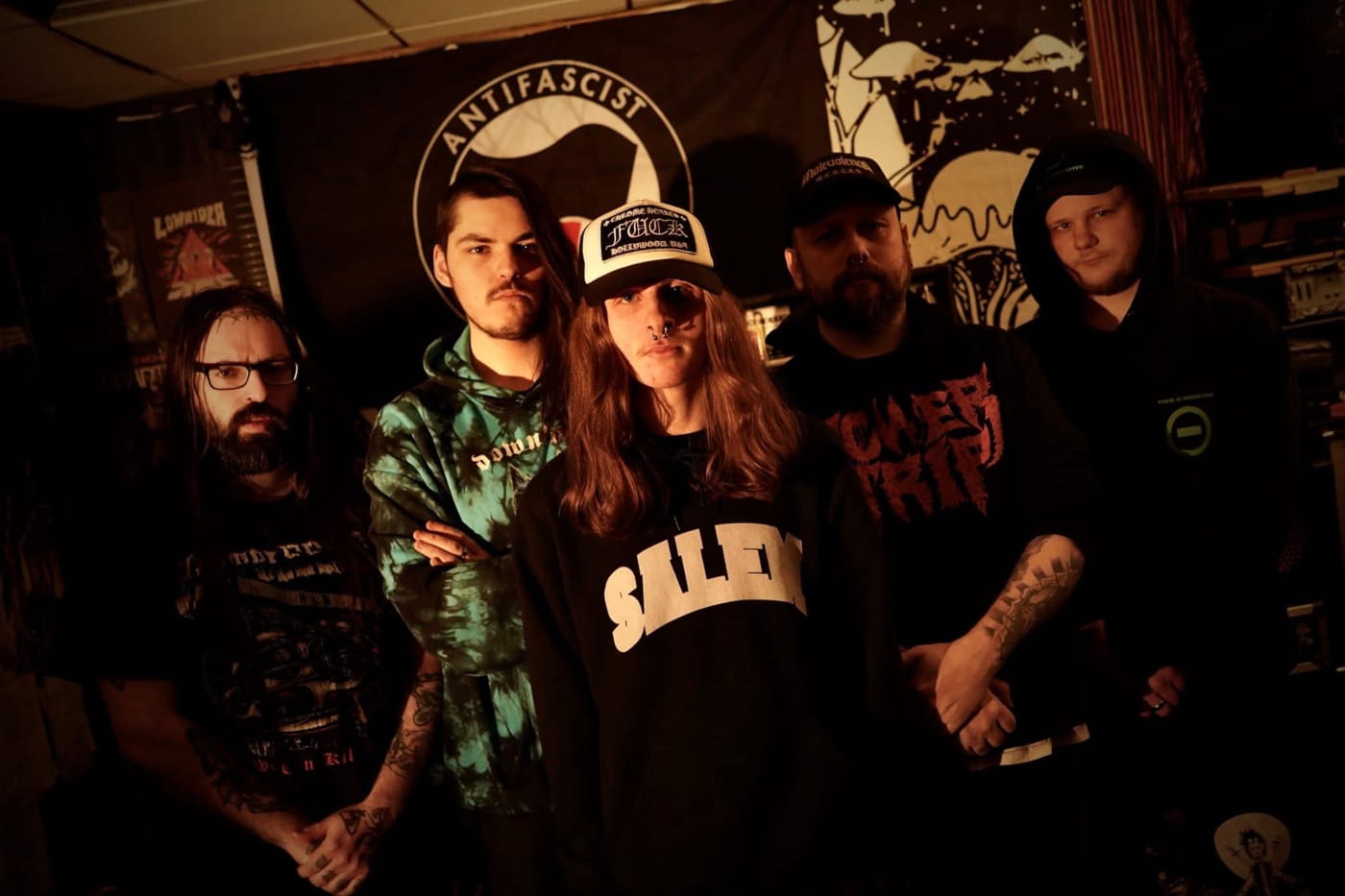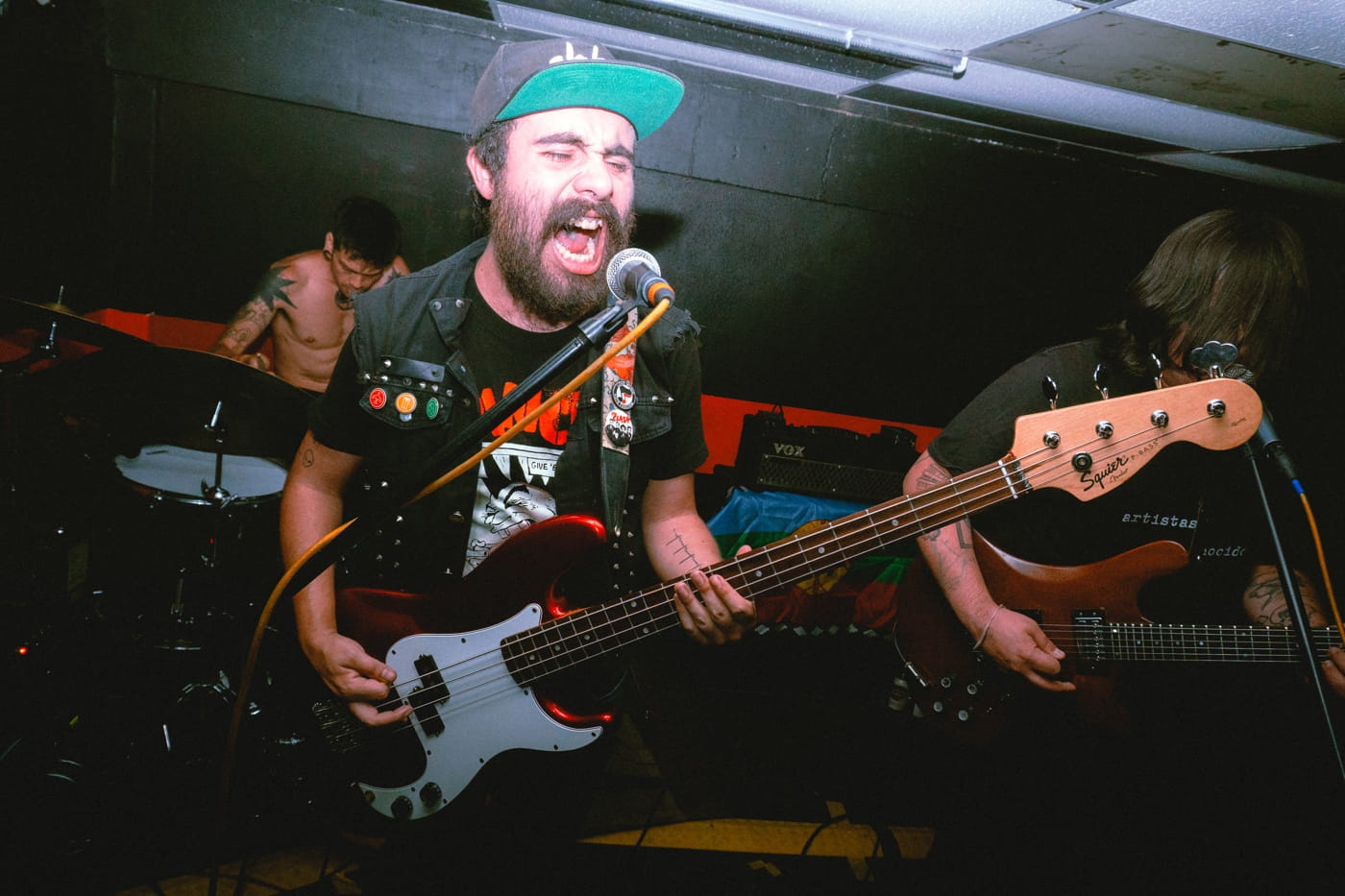


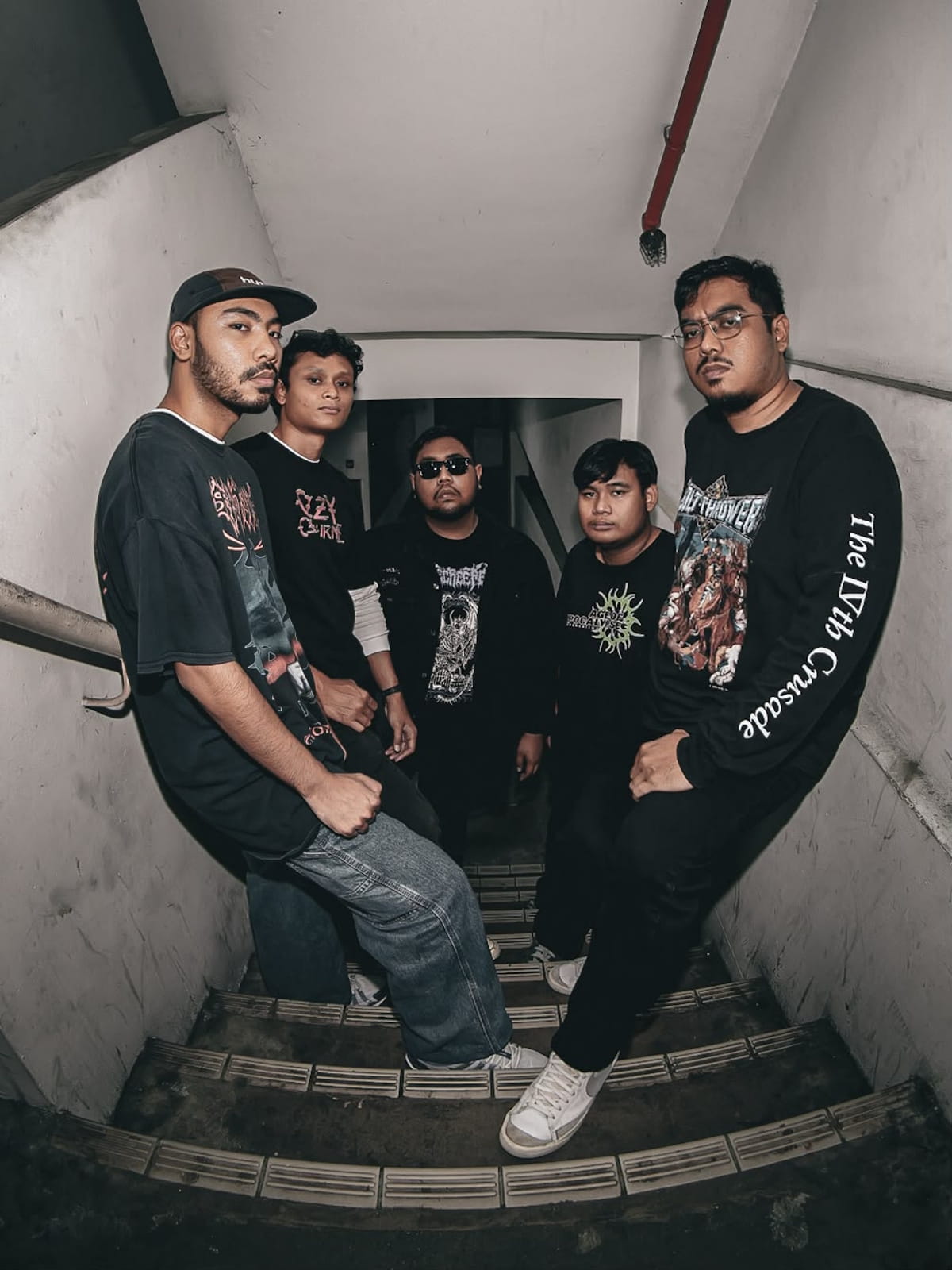
For a good part of the six years between “The Void of No Return” and “Last Stand“, Deceased were still together, but not much was actually happening. Jobs got in the way. Family commitments changed what Amie and Asri could give it. Dinie was finishing university and working out what came next. Drummers kept coming and going for personal reasons the band would rather leave alone. There was no big collapse, just less and less movement until, as Amie puts it, the attitude became “fuck it”.
They had already done this once. Deceased went on hiatus around their National Service commitments, and bassist Endry was the one who got everybody back together in 2017. They had already brought Deceased back once.
Nobody was especially keen to throw it away again. Hilmi eventually joining on drums gave the lineup some stability and fresh ideas, but the album really began piling up for a more ordinary reason: Deceased had enough shows coming in that they were sick of playing the same songs from their 2020 EP. They started writing new ones for the set, fighting over riffs and whole arrangements, sometimes loving a song one day and wanting to bin it the next. Eventually there were enough of them for the obvious realisation: “Fuck, we actually have an album now.”
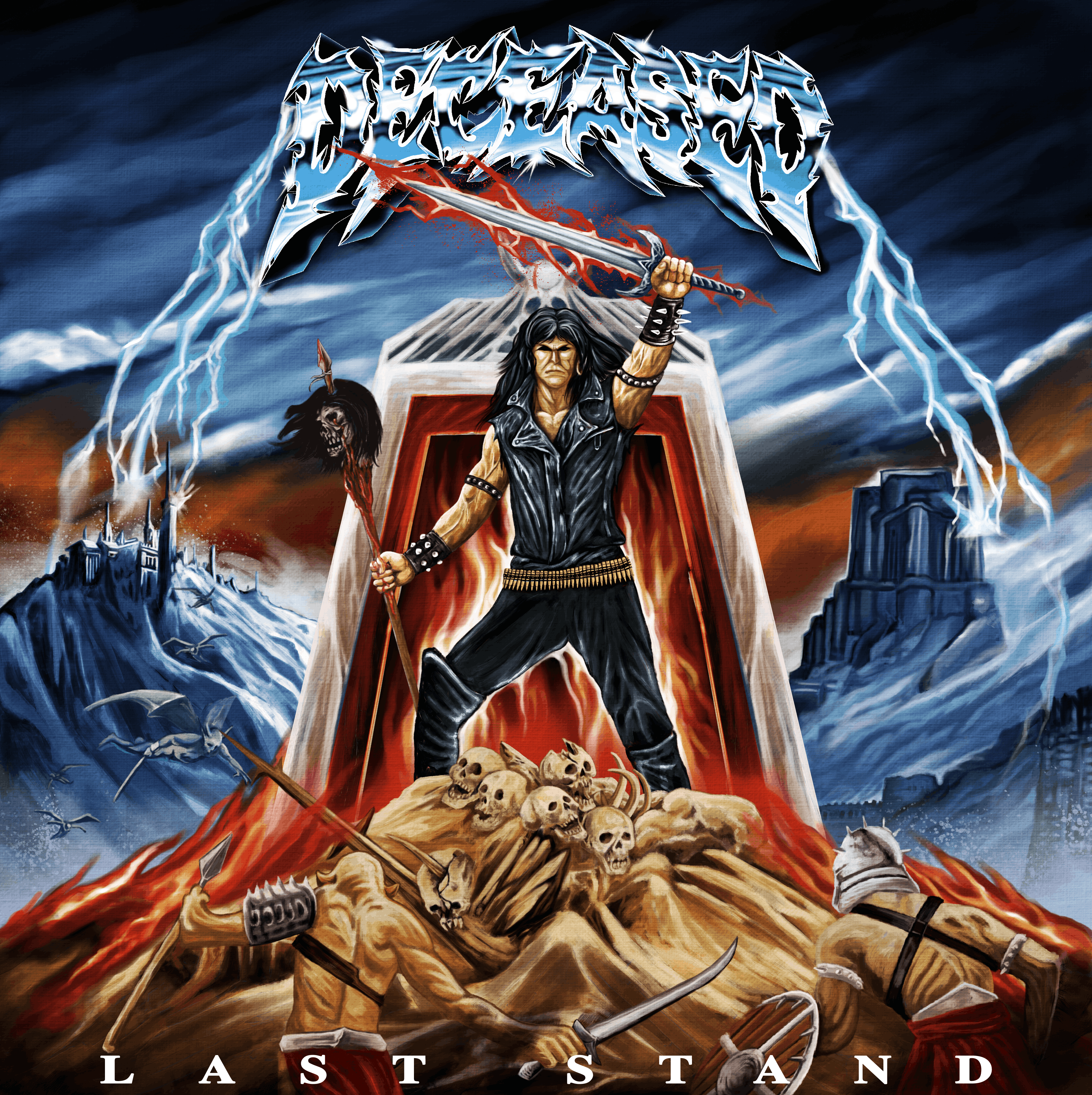
Released on 8 August, “Last Stand” is a direct continuation of “The Void of No Return“. The band see it as a continuation of the same story, but the lyrics get pretty specific once you go through them.
“Cursed To Die” opens in complete fatalism, with its narrator carrying a curse and expecting no rescue. “Deceiver“, with Syam of Plague Bearer, goes straight at oppression, false leaders, lies and innocent lives caught underneath them. “Sword of The Almighty” brings in the Dio-shaped language Amie grew up with, turning justice into swords, knights and punishment. “A New Age“, featuring Chuck of Asidhara, deals with betrayal, vengeance and taking back control. The title track is blunter still, calling out genocide and the oppressor directly. By “Challenger’s Oath“, the fight becomes something to leave behind for whoever comes next, while “Eternal Suffering” closes things with the Grim Reaper, death and no way back.
That language comes straight from the records Amie grew up on: Ronnie James Dio, Rainbow and Black Sabbath’s Dio years. Words like “Almighty”, “Divine”, “Oath” and “Evil” stuck with him.
Sometimes he uses them literally, sometimes as religious or fantasy imagery, sometimes simply because they are big enough for what he is trying to say. “Evil/Divine” and “Opening Fire” arrive without lyrics on the band’s Bandcamp page, so there is no point pretending we know more about those two than the band have told us. The 29-second “The Reckoning” is easier to place: Asri says it was written as a short lead-in to “Eternal Suffering”, giving the final track a longer entrance.
Then there is the practical side of keeping a crossover band going in Singapore. Deceased rehearse weekly, and before a 45-minute show they will book three hours and run the entire set three times, sometimes already exhausted after the first.
Venues disappear. Pink Noize, White House, LCube and Decline are gone, while Room 526 and Wire Entertainment are among the newer spaces taking their place. Recording, rehearsal rooms, physical releases, flights, accommodation and putting on shows all come out of the same lives that also contain jobs and families. Even after all that, there is still the question every small promoter and band knows too well: after weeks of planning, is anybody actually going to turn up?
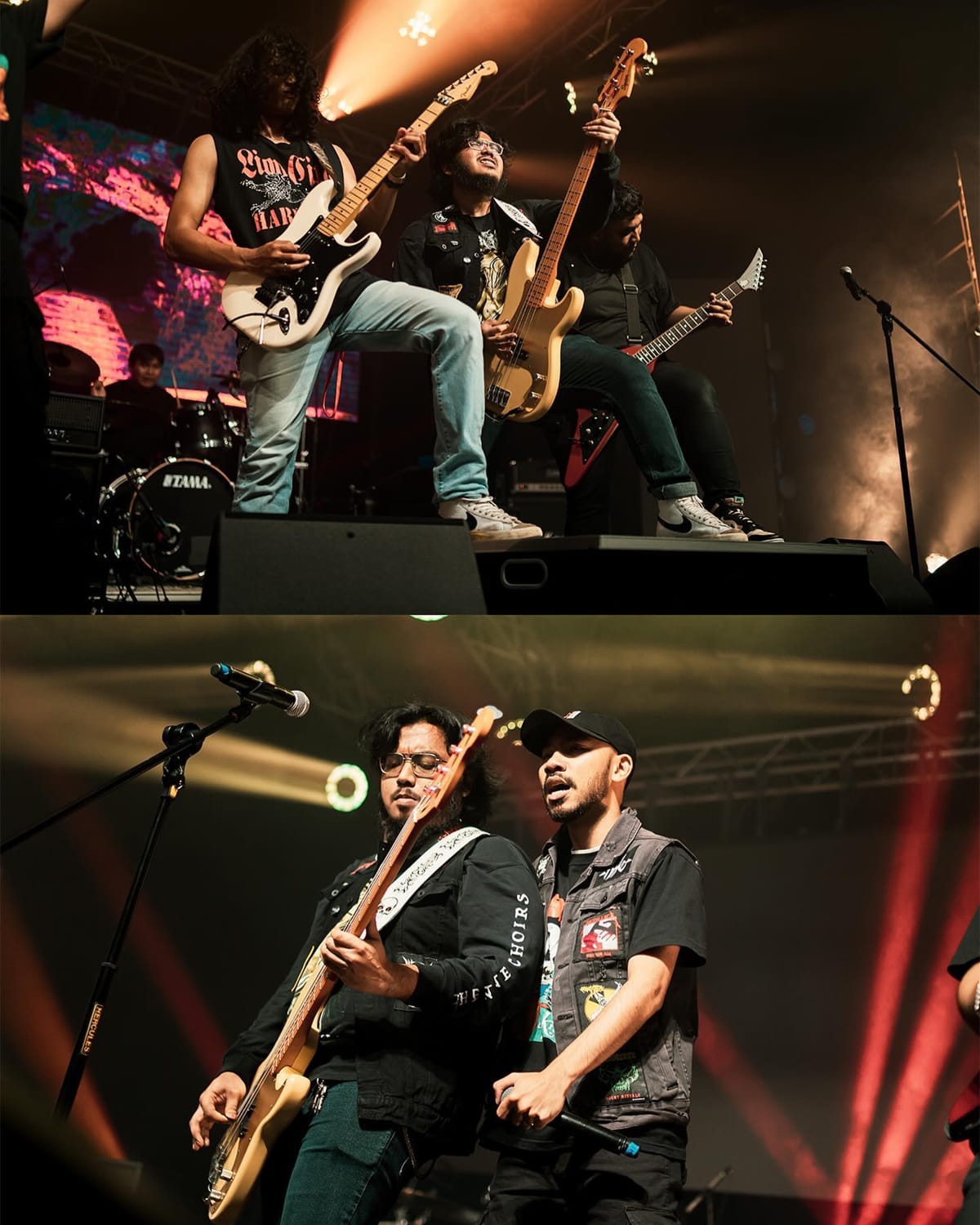
“Last Stand” is being pushed through six labels.
Brigad3 Records are handling CDs in the Philippines, Fever Joint Records and Tarung Records tapes in Indonesia, RVDA Records CDs in Malaysia, Smoothie Records tapes in Thailand and UK Thrashers CDs in the UK.
Deceased approached all of them themselves. The point is not a six-logo flex. They want the record moving through different local networks, and they want whatever contacts they build to eventually work both ways for other Singapore bands too.
An Indonesian tour is coming, and the official “Last Stand” release show happens in Singapore on 19 September. Still, one thing Amie says hangs over the whole conversation: “To be dead honest, deep down we’ve always felt like we’re not really accepted.”
Read the full interview below, where Amie and Asri get into the six years between releases, the periods when Deceased barely moved at all, the revolving drum seat, writing “Last Stand”, the Singapore scene, six-label release setup, guest spots, Dio, disappearing venues and what keeping this band going actually costs.
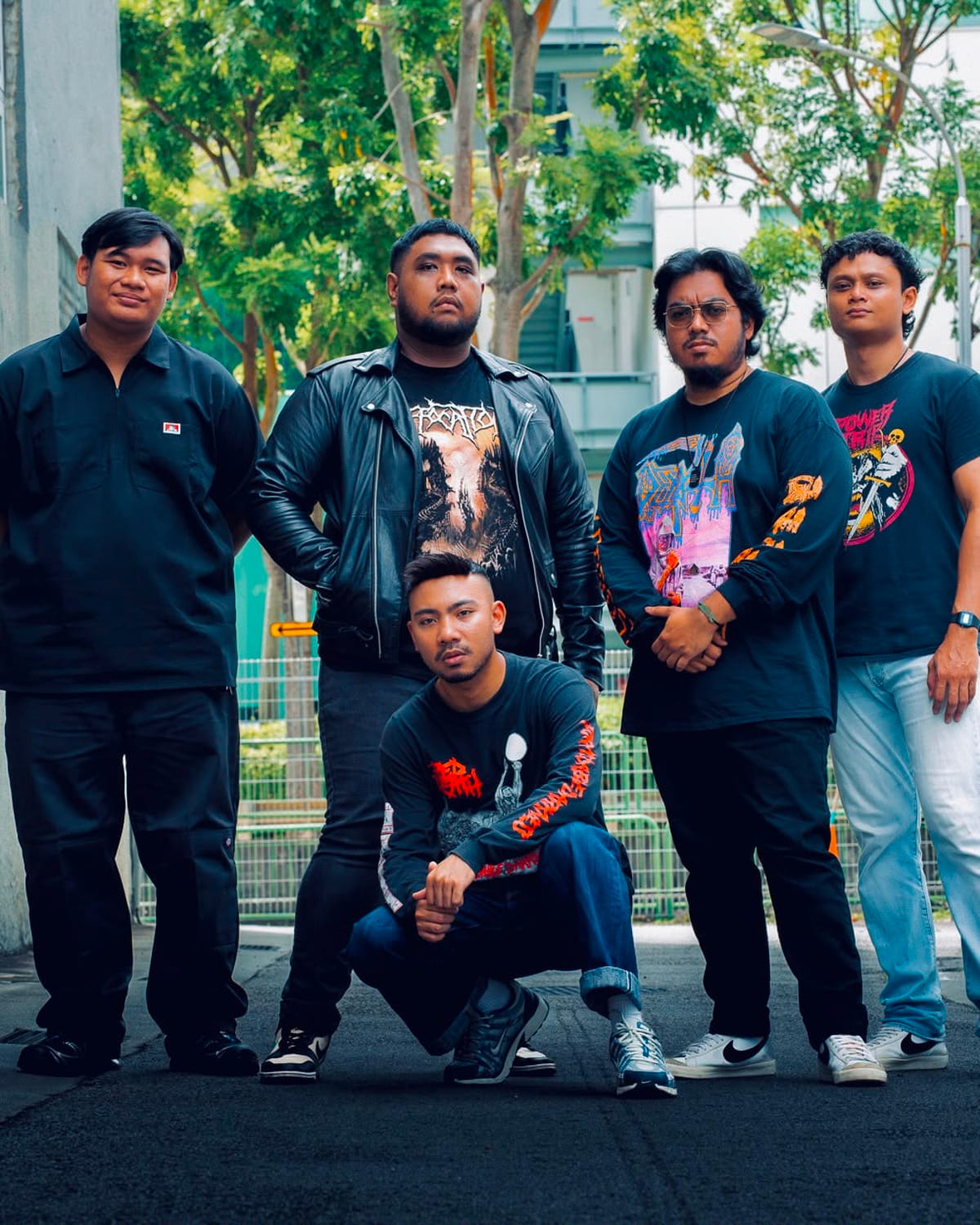
Take me through the six years between the EP and the album. When did the band nearly stop, what specifically kept it going, who left or stepped back and why.
Amie: After The Void of No Return came out in 2020, the EP was actually received really well, especially outside Singapore. We made a lot of connections internationally through that release, and honestly that was one of the things that kept us going. We always had the idea that after the EP, we wanted to do a full-length.
But then life happened.
We started getting jobs, dealing with family commitments, trying to figure out what we actually wanted to do with our lives and, I guess, just adulting and shit. Dinie was also in university during that period and was figuring out what to do after graduating and finding a job. Everyone had their own things going on, and the band slowly became stagnant. There wasn’t much drive anymore. We kind of lost our sense of direction.
No core member actually left the band during that period. The drummers were different though. We went through drummers one after another, which was honestly pretty crazy. I don’t really want to go too much into the reasons because most of it was personal, but having that happen repeatedly definitely didn’t help the situation.
Asri and I also had a period where our lives changed because of family commitments. So it wasn’t like one day we decided to stop the band. It was more like, slowly, everyone had their own things happening and Deceased just wasn’t moving.
At one point it became a bit of a “fuck it” attitude. One by one, we were getting unmotivated. The drive just died. We weren’t saying, “Okay, let’s break up the band,” but at the same time, we weren’t really doing much either. We were just stuck.
I think what stopped us from actually giving up was simply the love for the music and the genre. We genuinely love creating music together. We’ve been doing this for about 12 years now, and Deceased is quite personal to us. It’s more than just music at this point. If we quit, it would honestly feel like breaking up a family.
We’ve already been through a hiatus before. Endry was the one who brought us back in 2017, so if we quit now, it would feel like we’re letting go of something we’ve fought really hard to keep alive.
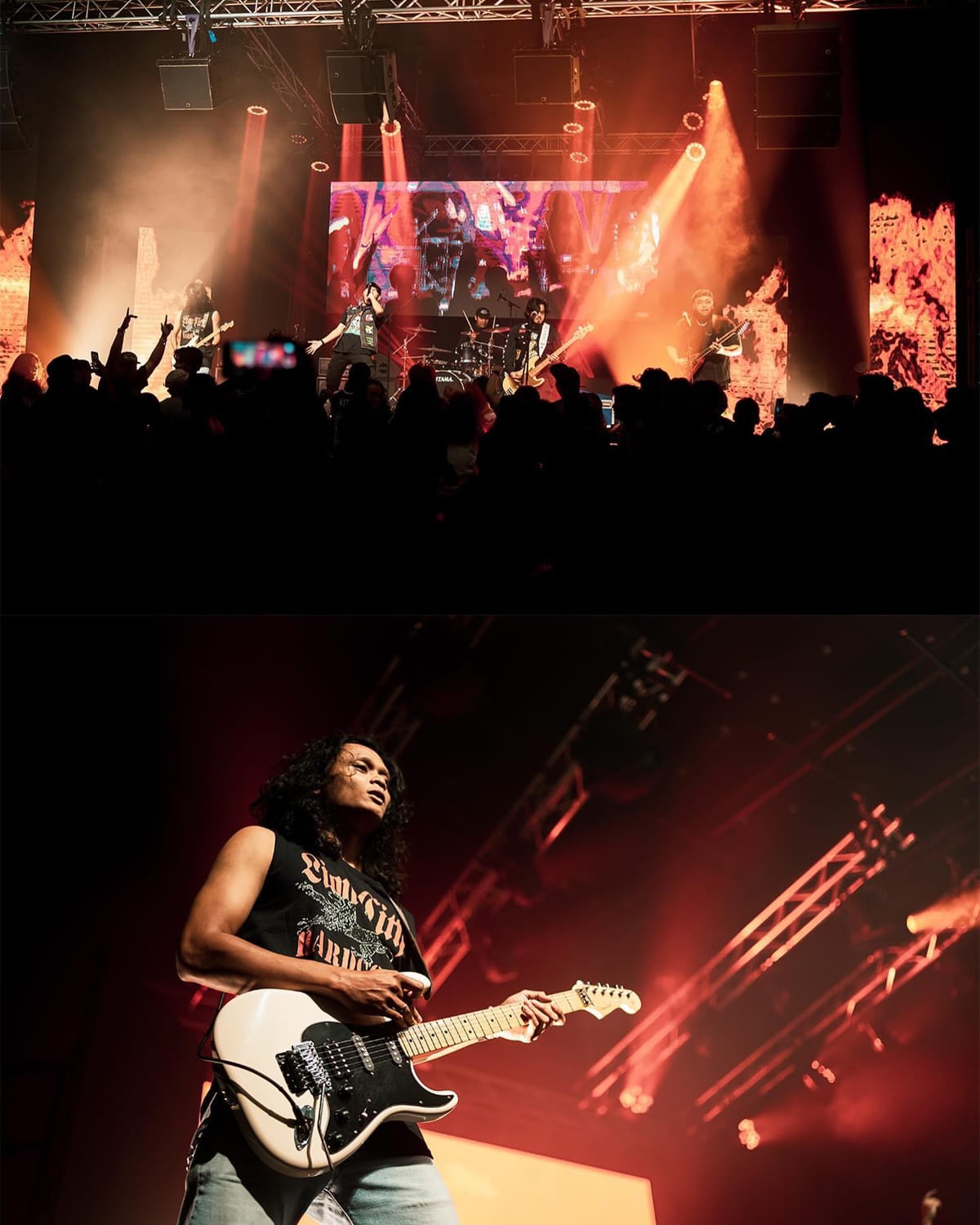
The big change for us was when Hilmi joined the band on drums.
When Hilmi came in, it really felt like the band was complete again. His dedication and the ideas he brought into the band gave us a new drive. It made us want to start writing again and actually finish the album instead of just talking about it.
The goal was always there. We wanted to record a full-length after the EP. We already had the concept in mind, but we needed the right energy within the band to actually make it happen.
And I think everyone played a big role in Last Stand. It wasn’t like one person suddenly came in and saved the band. Hilmi definitely gave us that push and helped complete the lineup, but all of us contributed to the writing and the direction of the album.
Looking back, the six years were basically us trying to figure out how to keep Deceased alive while life was happening around us. There were times when we honestly didn’t know if the band was going anywhere.
But somehow we’re still here.
What was the moment you knew “Last Stand” was actually going to be finished rather than another thing that stalls?
Amie: We always knew the goal was to release a full-length album. The problem was actually getting ourselves to the point where we had the momentum and the material to finish one.
There was a period where we had a lot of shows booked and we were honestly getting tired of playing the same songs from The Void of No Return. That gave us the motivation to start writing new songs. As the shows kept coming, we kept writing and adding new songs to our set.
At the back of our minds, we knew these songs were for the full-length. It wasn’t like we suddenly decided, “Okay, let’s make an album.” The album was always the goal. We were just slowly building it through the songs we were writing and playing live.
But honestly, the songwriting process was fucking hard. Finalising a song was a whole different thing. One day we would be like, “This is fucking great,” and then another member would listen to it and be like, “Nah, this is shit.” Then the next day we’d be talking about scrapping the entire song and starting again.
There was a lot of going back and forth like that. We were all very involved in the songwriting, so everyone had their own opinions and ideas about what worked and what didn’t. Sometimes we would spend so much time on a song and then question the whole thing again.
Eventually we had so many new songs that we realised, “Fuck, we actually have an album now.” I think that was when it started feeling real. We weren’t just talking about making a full-length anymore. We actually had the material for one.
Six labels on one debut. Walk me through how each one came in. Who approached who, what each one is actually handling, whether any of them nearly didn’t happen.
Amie: Honestly, with all the labels, our main goal was pretty fucking simple — we just wanted to spread Deceased’s music as far as we fucking can. We didn’t want to just stick the album with one label or keep it within one region.
Having different labels from different countries involved also gives us a chance to connect with different scenes. For us, that’s important because we want to build bridges between Singapore and the rest of the scene out there. Hopefully, whatever connections we make through Deceased can also help other bands from Singapore too. Whether it’s getting their music out, finding labels, playing shows, or just knowing the right people and making connections.
At the end of the day, if Deceased can help connect our scene with other scenes and open some doors for other local bands, then fuck yeah, that’s a good thing.
For the Philippines, we approached Brigad3 Records because we wanted to get the album into a part of the Southeast Asian scene that we haven’t really reached yet. They really liked Last Stand and offered to handle the CD edition, which is currently in production.
We’ve never played the Philippines before either, so hopefully this is the start of something there. Brigad3 has been actively working with bands across Southeast Asia, and they’ve also mentioned bringing us over to play there someday once we’re ready to tour. So hopefully we can make that happen. It’d be cool to actually go there, play, meet the bands and people there and see where it goes.
For Indonesia, Fever Joint Records and Tarung Records have actually been on our radar since The Void of No Return. We’ve known about them for a while and always wanted to work with them.
So when Last Stand was coming up, we thought, why not revisit that connection? We approached them and thankfully they were down to work with us. Both Fever Joint and Tarung are handling the tape edition for Indonesia.
Indonesia is also important for us because it’s so close to Singapore, but there’s still a lot of the scene there that we haven’t really reached. And now we’re actually going back for our upcoming Indonesia tour, so we’re looking forward to building that connection properly. Not just putting the tape out there, but actually going there, playing shows and meeting everyone.
For Malaysia, RVDA Records is a new one for us. We’ve never worked with them before, but we’ve been seeing what they’re doing and they’re very active in pushing the Malaysian scene, doing releases and compilations and supporting local bands.
So we approached them for Last Stand and they were down to work with us. They’re handling the CD edition for Malaysia. It’s basically the start of something new, so hopefully we can build from there and have more collaborations with the Malaysian scene in the future.
For the UK, we did quite a bit of research into the metal and thrash scene there. We looked at different labels and people who were actually active in the scene, and UK Thrashers fit what we were looking for.
So we approached them and it worked out. They’re handling the CD edition for the UK. It’s another scene that Deceased hasn’t really reached before, so hopefully the record can get out to more people there and we can build some connections too.
For Thailand, it was pretty much the same thing. We did some research into the scene there and came across Smoothie Records. They were already familiar with The Void of No Return, which was cool. They heard the EP and were keen to work with us on Last Stand, so when we got in touch and everything lined up, we just locked it in.
They’re handling the tape edition for Thailand, and hopefully this can help us reach more people in the Thai scene too.
Honestly, none of the six really nearly fell through. Everything was pretty straightforward once we started talking to them, which we’re really thankful for.
We weren’t just trying to get six labels from six different places for the sake of it. We wanted people who are actually active in their scenes and who can help push the record there. At the same time, we’re also getting to know their bands and their people, and hopefully they get to know what’s happening here in Singapore too.
That’s the whole thing for us. Get the record out as far as we can, make connections, play shows, help each other out and see where it goes. If those connections can also help other Singapore bands in the future, then even better.
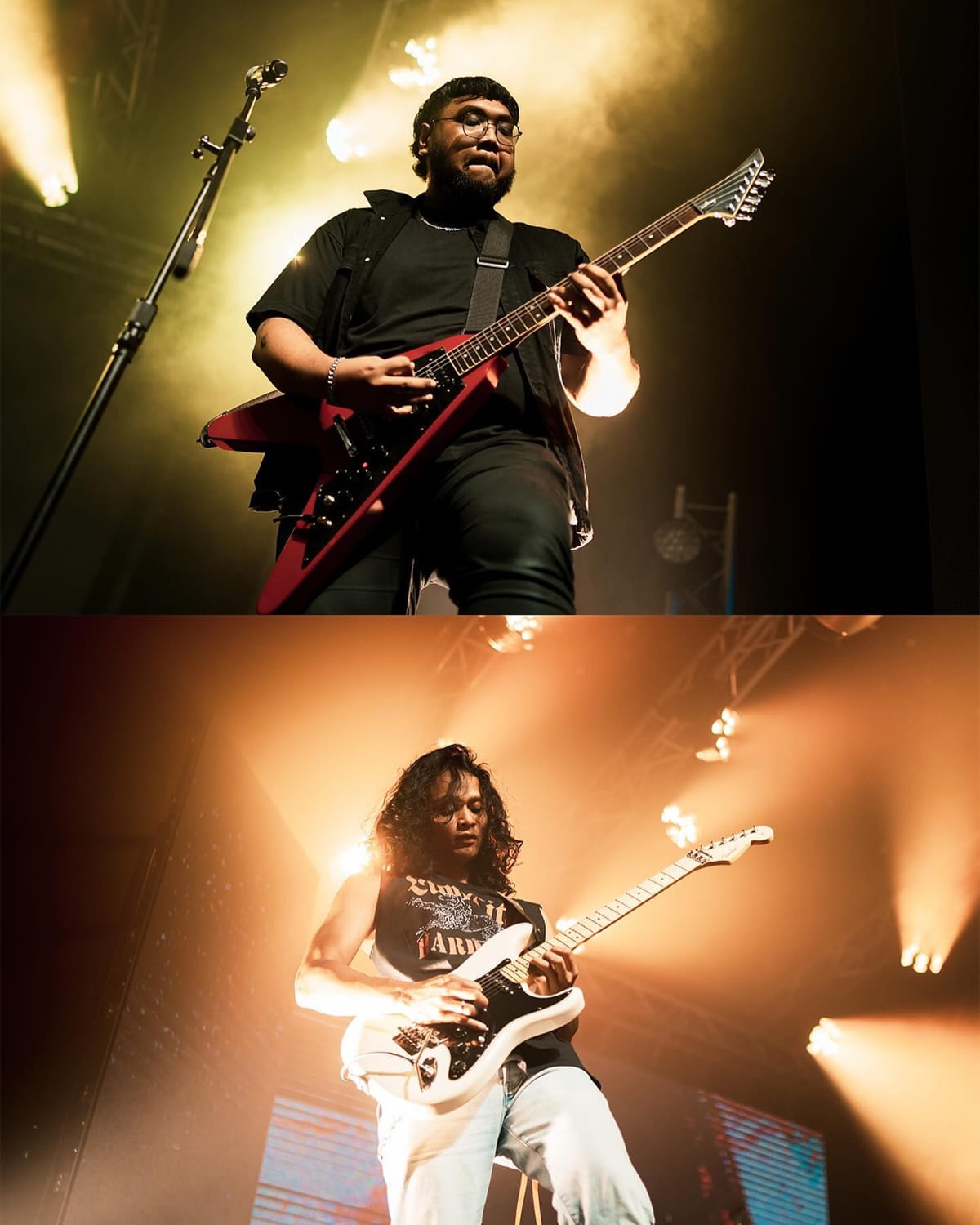
Fronting Deceased in Singapore. What does that look like day to day, at shows, in the practice room, with people outside the scene?
Amie: Day to day? Honestly, getting fucked by the band members because they believe you can do more. Hahaha.
But that’s actually how it is. Everyone in the band pushes each other because we know what we’re capable of, and sometimes that means calling each other out when we feel someone isn’t doing enough. It’s not always comfortable, but I think that’s part of why Deceased keeps moving.
Our rehearsals are seriously chaotic. One guy is talking, another guy is stupidly playing guitar and just doodling around, someone else is probably doing something completely unrelated. Hahaha. We don’t really argue about songs or arrangements though. Sometimes we’ll just stop and go, “Fuck, didn’t we already play this riff before?” Hahaha.
We practise once a week, and when we’re preparing for a 45-minute set, we’ll usually book a three-hour studio session and play the whole set three times. Sounds easy on paper, but by the time we’re halfway through the second or third run, we’re fucking brain-dead and tired as hell.
The funny part is sometimes we’re already dead after the first set and we’re looking at each other like, “Fuck, we still have to play this two more times.” Hahaha.
Before a show, I’m nervous for sure. It’s more like that feeling where you feel like you’re going to fucking puke. Hahaha. But for me, the whole thing is about getting my headspace right before we go on.
I need to feel connected with the crowd. The stage presence, the aura, the way we carry ourselves — all that shit is important to me. We’re not just going up there to play the songs and get off the stage. I want the crowd to feel something from us.
For me, it’s an experience for the crowd, not just a show. If someone comes to watch Deceased, I want them to remember how it felt being there, not just remember that we played 10 songs for 45 minutes.
So sometimes before we go on, I might look calm or just be fucking around, but in my head I’m already getting into that space. Once we step on stage, that’s when everything needs to switch on.
People in Singapore do know about the band, especially within the scene, but obviously not everyone is going to understand this kind of music. That’s normal. You can’t expect everyone to hear crossover, hardcore or thrash and be like, “Yeah, I get it.” Hahaha.
Our family supports it though, which we’re really thankful for. They might not fully understand the music or why we’re doing all this shit, but they know it’s something we’re serious about and they support us.
I think the hardest part is honestly money and time. Everything costs money. Recording, pressing physicals, merch, rehearsals, studio time, travelling, flights, accommodation, even just putting on a show. And we’re doing all of this while still having our own jobs and responsibilities outside the band.
Time is another big one. You have to plan everything way ahead, especially when you’re trying to play overseas. It’s not just, “Oh, let’s go play Indonesia next month.” You have to work around everyone’s schedules, book flights, find places to stay, sort out the shows, equipment, leave from work, all that shit. Sometimes the planning takes longer than the actual trip.

Venues can be a pain too. Singapore is fucking small, so there aren’t that many places where you can just say, “Let’s put on a metal show here.” You have to find a venue that’s affordable, works with the kind of show you’re doing, and hopefully doesn’t make you jump through a million hoops.
And then there’s getting people to actually come to the shows. That’s always the scary part. You can spend weeks or months planning something and then you’re standing there wondering if anyone is actually going to fucking show up. Hahaha.
I think that’s the reality of trying to push Deceased from Singapore. We don’t have a huge scene or a huge market here, so if we want to take the band further, we have to put in the work ourselves. We have to reach out to labels, promoters, bands, book shows, send the music around, organise tours and keep the thing moving.
It’s tiring as fuck sometimes, but nobody is going to do it for us. If we want Deceased to go further, we have to push it ourselves. That’s just the reality.
Let’s discuss Syam and Chuck. How far back do you go with Plague Bearer and Asidhara, and why those two voices on those two songs specifically?
Amie: Syam is actually a close friend of ours, and he’s my neighbour too. Hahaha. So we’ve known each other for quite a while and we’re already pretty close outside of music.
Chuck is a bit different. We were actually on the same record label for our previous release, The Void of No Return, so that’s how we got to know each other and his band, Asidhara.
For Syam, the main reason was pretty simple. He plays in Plague Bearer, and honestly, there aren’t that many active crossover bands in Singapore. And I mean actually active — playing shows, putting out music, doing stuff.
So with Deceased and Plague Bearer, we thought it would be cool to combine forces and do something special. Syam is already a close friend of ours and my neighbour, so it wasn’t some random collaboration. We’ve known each other, we’ve played together and we’re already part of the same scene.
When we were working on “Deceiver”, it just made sense to have him on it. It’s a Deceased song, but having Syam come in with his own voice and his own character gives the song something different. And for me, it’s cool to have two active crossover bands from Singapore coming together on the same record.
For Chuck, it’s a bit different. Since the release of Killing Rites from Asidhara, we’ve always had this thought as a band that somehow, someway, we were going to collaborate with him.
We were already on the same label for our previous release, The Void of No Return, so we knew each other from there. But after hearing Killing Rites, we really liked what Chuck was doing and his voice, and we always thought it would be fucking cool to have him on a Deceased song someday.
So when Last Stand came around, we finally had the chance to make it happen. It wasn’t something we suddenly decided on — it was more like, “Fuck, we’ve been saying we’re gonna do this, so let’s actually do it.” Hahaha.
For Syam, it’s also the way he delivers his vocals. He has this particular flow — I don’t really know how to explain it properly, but you can hear it when he sings. There’s a certain rhythm and movement to the way he delivers his lines, and I felt that would work really well on “Deceiver.”
With Chuck, it’s more about the body of his voice. His vocals have a certain weight to them, and when you put that together with mine, they complement each other really well. You can actually hear the difference when our voices come together.
So yeah, we didn’t just pick them because they’re our friends or because we wanted features on the record. Those songs were made for them. Hahaha.
The words on this record. “Sword of The Almighty”, “Evil/Divine”, “Challenger’s Oath”. Where does that vocabulary come from for you, and does using it land differently in Singapore than it would somewhere else?
A lot of the vocabulary comes from the stuff I grew up listening to, especially Ronnie James Dio — Dio, Rainbow, Black Sabbath during the Dio years. There’s something about the way those records use words like “Almighty”, “Divine”, “Oath”, “Evil” — they just have a strong weight to them.
I like words that feel bigger than just everyday language. When you hear something like “Sword of The Almighty” or “Challenger’s Oath”, there’s already a certain image and feeling that comes with those words before you even hear the song.
It’s not that I’m trying to write like Dio or copy what he did. It’s more that I like that kind of vocabulary and the way it can make a song feel larger. For me, those words fit the kind of stories and ideas I’m trying to put into the songs.
A lot of it is all of the above, honestly. Sometimes it’s literal religious ideas, sometimes it’s fantasy and metal imagery, sometimes it’s a metaphor for conflict and struggle, and sometimes it’s just the language that fits the story I’m trying to tell.
I’m not trying to make every word have one fixed meaning. “Evil” doesn’t always mean some literal evil force, and “Divine” doesn’t always have to be about religion. Sometimes those words are just the strongest way I can describe an idea or a feeling.
As for Singapore, honestly, I don’t really think I write those words differently because we’re from here. When I’m writing, I’m thinking more about a wider audience. I want the lyrics to be understood and connect with people wherever they’re from.
We’re a Singapore band, but we’re not only writing for Singapore. If someone in Indonesia, Japan, the Philippines, the UK, Europe, the US or wherever can hear the song and connect with it, that’s what matters to me.
What is “Last Stand” a last stand against?
Amie: Honestly, Last Stand is a fucking statement.
We’re still here. After everything, we’re still here, and we’re still making the music we believe in. The album is about opening new doors, creating new opportunities and seeing how far we can actually take Deceased.
We’re proud of our craft. We put a lot of fucking work into this record, and we’re proud of what we’ve made. So honestly, fuck y’all who don’t believe in us. Hahaha.
The battle continues. That’s what Last Stand means to me. Whether we win or we lose, we fight. We’re going to keep pushing, keep playing, keep making music and keep opening whatever doors we can.
It’s not about knowing whether we’re going to win in the end. It’s about the fact that we’re still standing and we’re still willing to fucking fight for it.
Anything about the last six years you’ve never said publicly and are willing to now.
Amie: To be dead honest, deep down we’ve always felt like we’re not really accepted. That’s about it.
We know we’re not everyone’s favourite. We might not have the biggest crew, we might not be the most active band, and we might not always be the band people are paying attention to. That’s just reality.
But at the end of the day, we’re doing this for ourselves. We’re making the music we want to make, and we’re still here because we fucking love doing it.
Maybe we’re not everyone’s cup of tea. Maybe some people don’t believe in us. That’s fine. We’re not going to stop because of that.
Six years later, we’re still here, still making music, still playing shows, still trying to open new doors and still fighting. That’s really it.
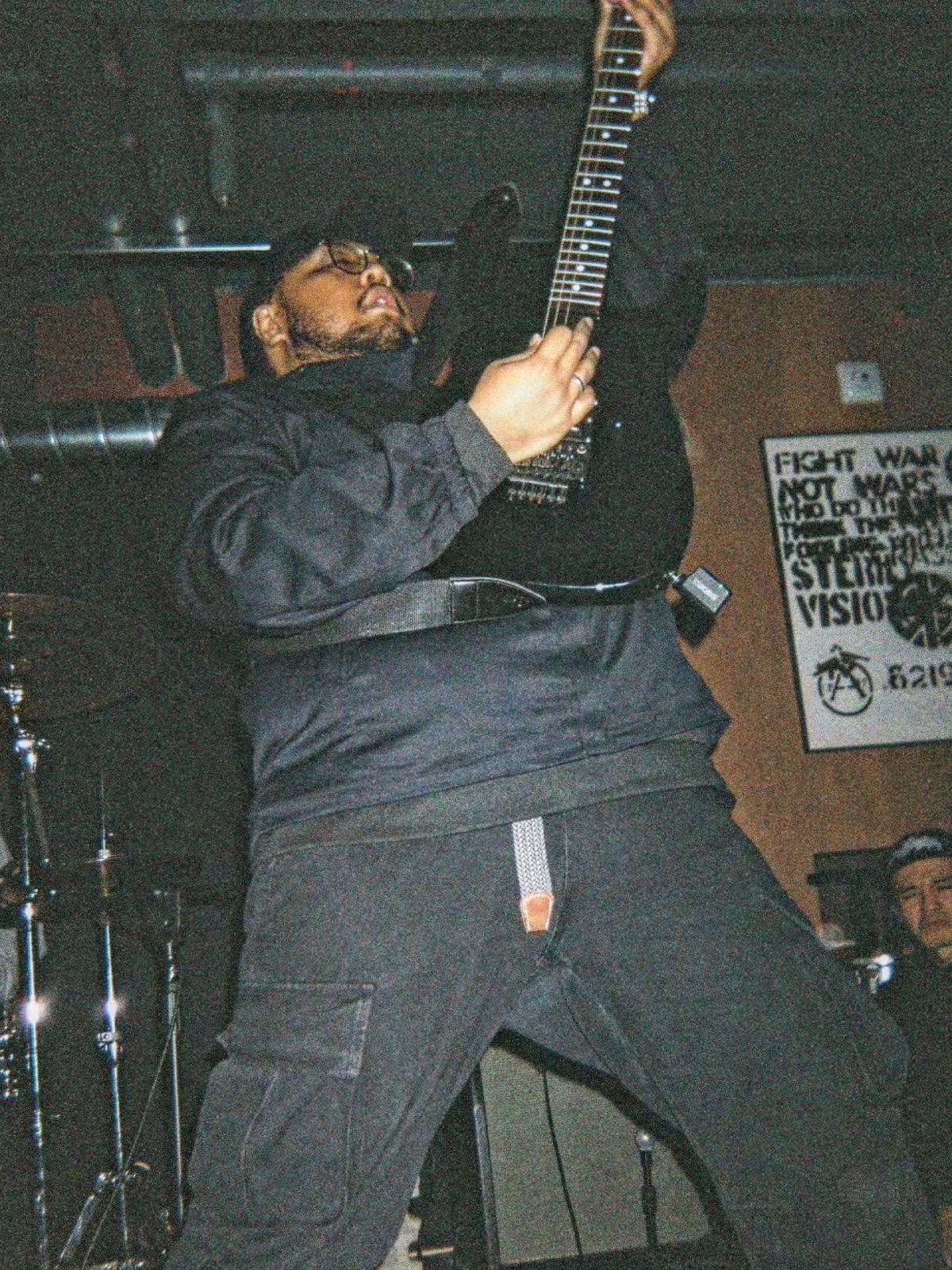
Take me through the six years between the EP and the album. Not a timeline of releases, the actual sequence: when did the band nearly stop, what specifically kept it going, who left or stepped back and why.
Asri: Back in 2017, DECEASED went on hiatus as most of us had to fulfill our National Service commitments. Naturally, the time away caused us to temporarily lose some of the momentum and drive we had built as a band.
After some time apart, our bassist, Endry, took the initiative to bring everyone together again, determined to reignite the fire and passion we once shared for DECEASED. His efforts played an important part in getting us back into the same room and moving forward as a band once again.
Throughout the years, DECEASED has also gone through several changes behind the drums. We are sincerely grateful to every drummer who has been part of our journey and contributed their time, energy, and talent to the band. Each of them played a role in shaping DECEASED into what it is today.
Their departures were due to personal circumstances, and out of respect for them, we prefer to keep those matters private. Regardless of how long they were with us, we will always appreciate their contributions and the part they played in our history.
Every setback, change, and period of uncertainty has been part of the journey that brought DECEASED to where we are today.
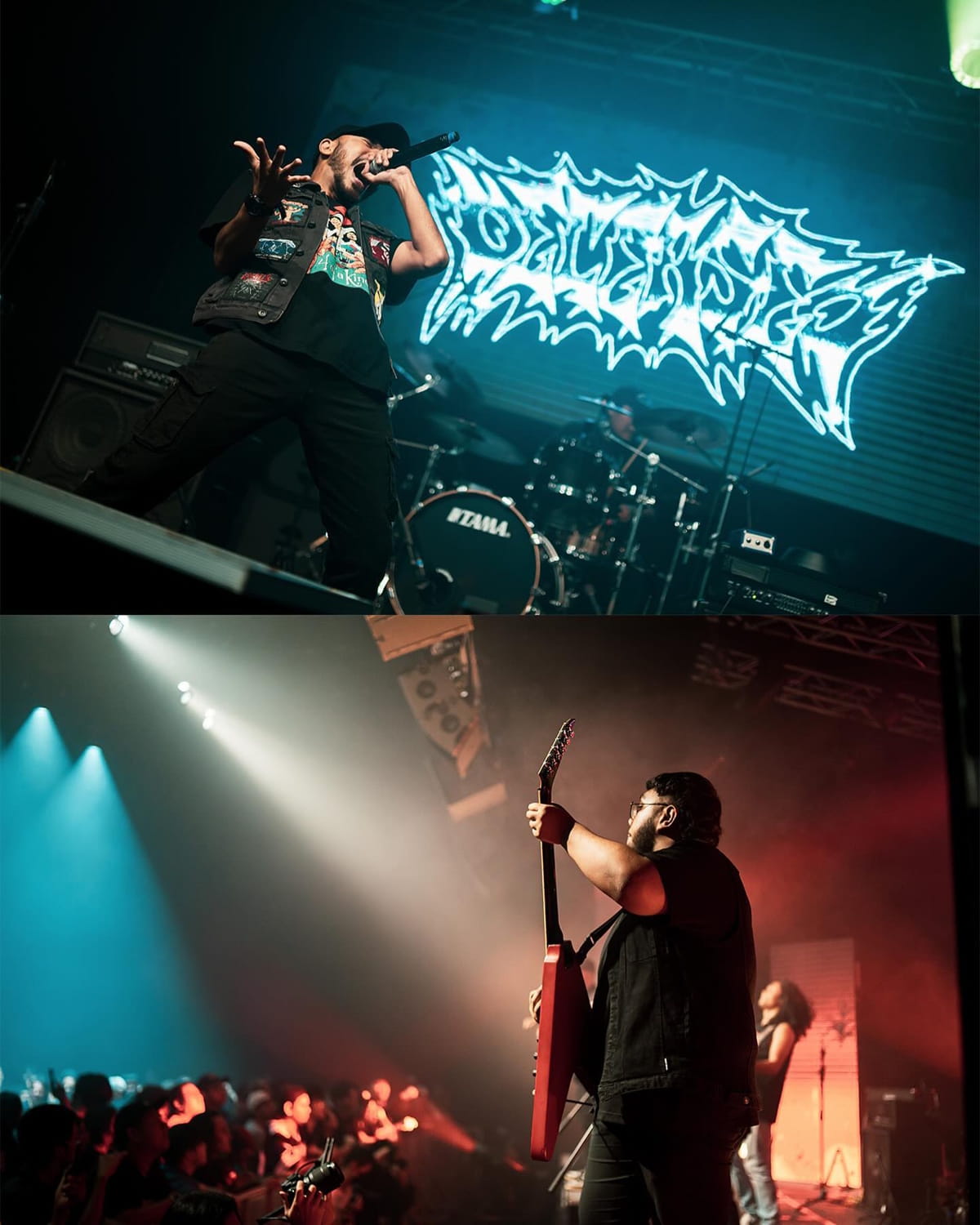
Asri, what is Amie like in the room that people don’t see at a show?
Asri: Amie has always been one of the main foundations of DECEASED, taking on much of the responsibility behind the scenes—from managing bookings and schedules to looking after the overall well-being and direction of the band.
While some may perceive his approach as “controlling,” the reality is that he is the glue that keeps the band together. His leadership helps keep everyone focused, disciplined, and moving in the same direction.
We take our practice sessions seriously, and Amie is especially particular about maintaining that level of commitment and discipline. At the end of the day, everything he does comes from wanting the best for the band and ensuring that we continue to grow and move forward together.
Wyświetl ten post na Instagramie
Ok guys, so I’m curious about that sequencing. “The Reckoning” is 29 seconds, “Eternal Suffering” is over four. Who fought for that running order and what was the argument?
Asri: Definitely it was intentional as the Reckoning is supposed to be an intro filler leading up to Eternal Suffering in order to make a suspense intro.
And how about recording & mixing with Benson? What was hard, what got redone, what nearly didn’t make the record.
Asri: We’ve worked with Benson before on our previous EP, The Void of No Return, so coming back to work with him again felt very natural. Thankfully, the experience has been just as great as it was the first time around.
If we could say that we gave 110% of ourselves to this album, we honestly believe Ben put in even more. There’s a reason we like to call it “Ben’s Magic.” His dedication, creativity, and attention to detail played a huge part in shaping the final sound of the record.
Of course, like any recording process, there were moments of back-and-forth discussions—deciding what needed to be added, changed, or removed. But we see that as an important part of creating something we can all stand behind.
Ultimately, what you’re hearing now is the combination of our ideas, energy, and vision together with Ben’s Magic. The result is DECEASED – Last Stand.

What does the Singapore scene look like from inside the band right now, practice spaces, venues, cost, who is still showing up?
Asri: Singapore’s music scene has grown significantly compared to the pre-COVID years. Regardless of genre, there is a space and community for everyone, and it’s encouraging to see different scenes continuing to develop and support one another.
Of course, we’ve also seen several venues that played an important role in the local music scene close their doors over the years, such as Pink Noize, White House, LCube, and Decline. These were places that many musicians and gig-goers have fond memories of, and they each contributed to shaping the scene in their own way.
At the same time, new venues such as Room 526 and Wire Entertainment have emerged, providing fresh spaces for bands, organisers, and audiences to come together. Venues may come and go, but what matters is that the scene continues to evolve. As long as people keep supporting local music, attending shows, organising gigs, and giving bands a platform to perform, Singapore’s music scene will continue moving forward.
The official “Last Stand” release show takes place in Singapore on 19 September, with doors at 5:30pm and support from Light of the South, Web of Lies, Conditioned 2 Die, Ursula, Overthrown and Stonetab, who will be playing their debut show.
Wyświetl ten post na Instagramie