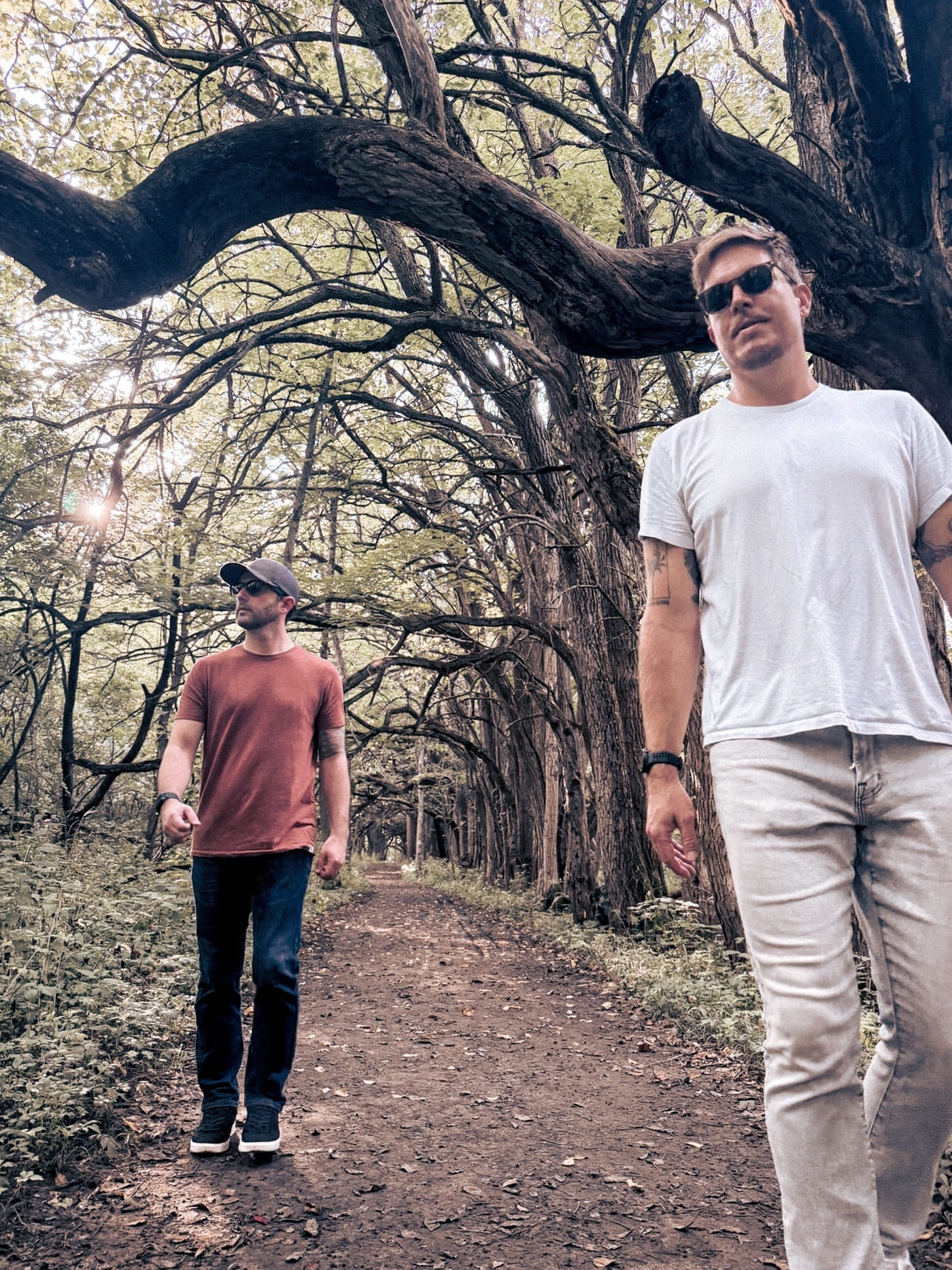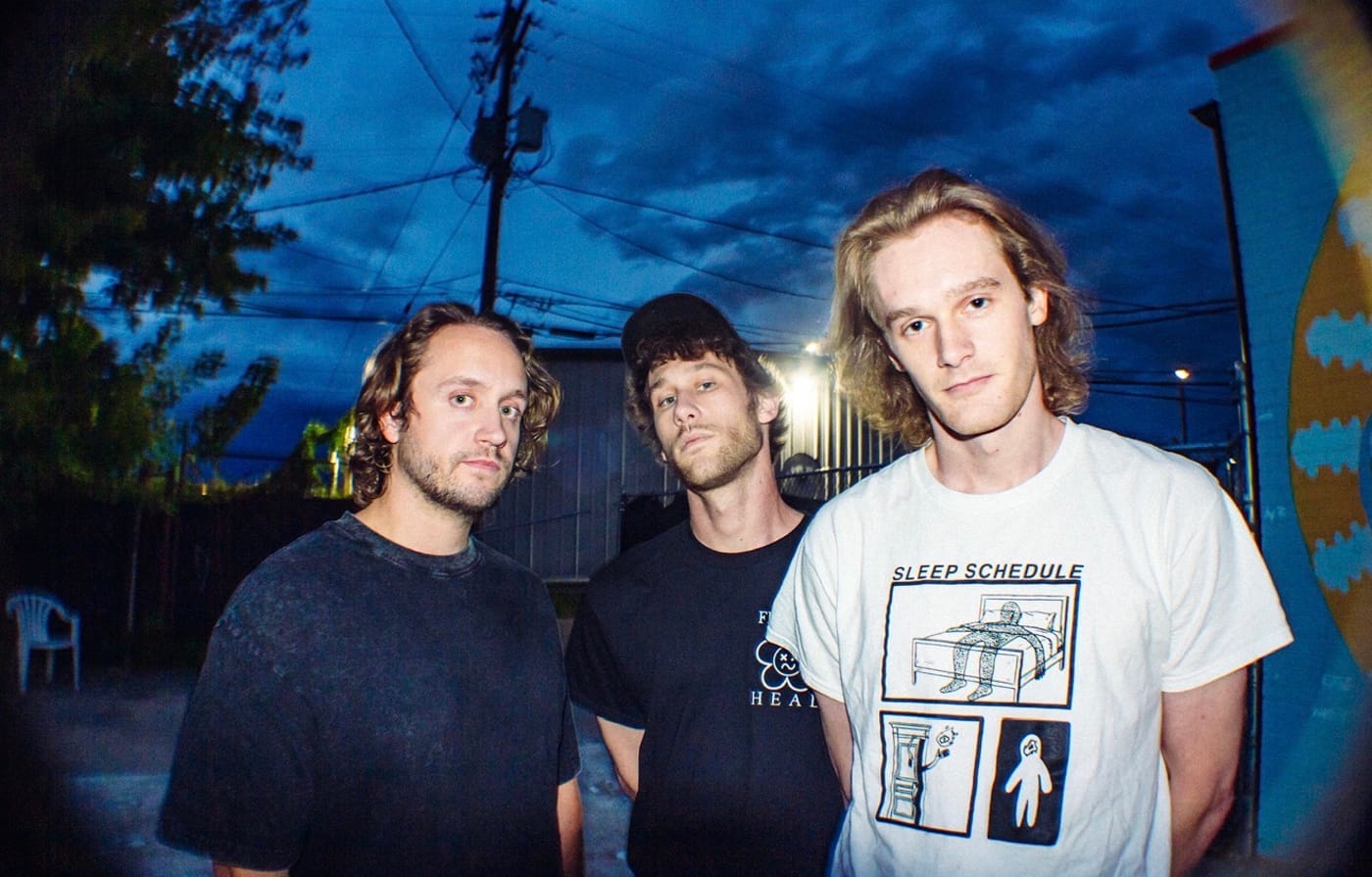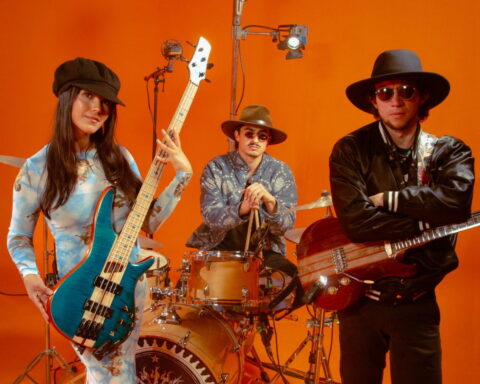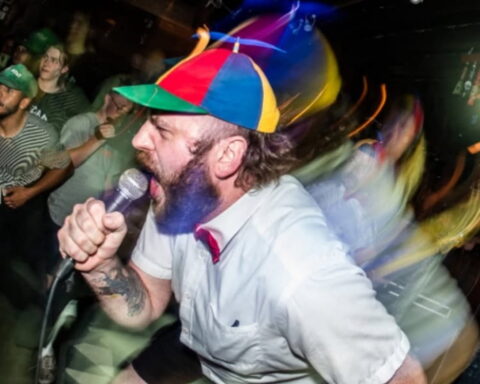


At this point, the multi-artist screamo feature is probably our favourite version of the roundtable format. We have done a few over the years, and here we go again: seven bands from Sweden, Italy, Catalonia, Spain and the Italian-Slovenian border are meeting in Parma this Saturday for a festival that still costs €5 to enter.
Alle Foglie Fest returns on 19 September for its sixth edition at Arci PWCC, Strada Vallazza 36. Doors open at 6:00 PM. The festival started in 2021, when gathering spaces had been cut off by the pandemic, and it has kept the same basic aim since then: get people together, keep participation easy, and let independent music do the rest. This year it is organised with Collettivo La Défense.
Wyświetl ten post na Instagramie
It’s a pretty broad screamo bill, with bits of skramz, emo and post-hardcore running through it too. Barabbas, du förtappade are coming from Stockholm, Shizune from Lonigo, Damasco from Barcelona, Catalonia, Irma from Lodi, Neboas from the Vega Baja del Segura region in southeast Spain, Chevalier from Forlì, and Falesia from across Trieste and Slovenia.
A lot of what they talk about has very little to do with just playing a set. It’s people putting each other up, lending gear, helping with shows, meeting again in another country a few months later, or turning one night into a new friendship or another tour date. Alle Foglie becomes one of those meeting points for a day, with people arriving from a bunch of different local scenes.
Seva answered for Barabbas, du förtappade, Enrico for Shizune, Moi for Damasco and Marco for Irma. Abraham, Tomás and Pedro answered together for Neboas, Lore, Fede and Pesca for Chevalier, and Saša, Ivan, Tommaso, Emanuele and Riccardo for Falesia.
Alle Foglie is openly anti-fascist and anti-capitalist, and the organisers put it in pretty everyday terms: sharing matters more than buying, hanging out matters more than consuming, and talking matters more than shopping. There’ll still be food, drinks, distros, self-produced stuff and independent merch around the venue, with vegetarian and vegan options too.
Once the bands get into it, things get pretty practical pretty fast: class, gatekeeping, rising costs, autonomous spaces, and the basic problem of how people are supposed to keep DIY going when everything around it keeps getting more expensive. They agree on plenty, but they clearly do not all see the scene in the same way.
Some are more hopeful, some are much more critical, and a few are pretty blunt about where it still falls short. That difference is part of what makes the answers worth reading side by side.
Alle Foglie Fest began in 2021, when gathering spaces had been cut off by the pandemic. Five editions later, what does a small independent festival give you that online networks, touring circuits and larger events cannot?
Barabbas, du förtappade: What we receive short-term from self-organised and DIY spaces like this is the feeling of friendship and the exchange between curious and engaged people, something that always gives us so much energy and inspiration. In the long-term, it really is a testament to the fact that if we believe and act together, we can achieve a more living and beautiful world. Another world really is possible.
Shizune: It offers what big stages and screens can’t fake: genuine human connection, an intimate space where community is built face-to-face.
Damasco: DIY, community and the space needed to share outside of capitalistic circuits. The genuine spirit of punk, where we all move as one. Is always a great way to meet new people and being able to really connect with other individual, learn and share a lot.
Irma: We believe that DIY remains the only way to put passion and social commitment before the commercialization and standardization of art.
Shows and small festivals organized by collectives first and foremost give many bands the opportunity to express themselves, but, above all, to do so within an inclusive and supportive space. For us, music is a means of conveying meanings and values, not an end in itself. No major event could ever match the feeling of being united by the same passion and sharing the same ideals, both on stage and in the crowd.
Neboas: We believe that, above all, festivals give us the same thing they give to the people who attend them and the people who organise them. For us, their value lies in creating, occupying, visiting and/or discovering new spaces where incredibly positive synergies can emerge, always from an antifascist perspective.
The most important thing is to maintain an international network of mutual support, based on respect and solidarity rather than financial gain. As a band, of course, it gives us great visibility and the opportunity to reach more people, but that’s not the first thing that comes to mind for us. What matters most is everything we mentioned before.
Chevalier: The humanity that gives body and strength to the punk community can only live in small independent spaces, where everyone is on the same level and there are no barriers, either physical or digital.
All three of us and most of our friends were drawn into the hardcore scene right after the pandemic especially because of this communal and political sharing of time, space and breath that was not available anywhere else in our lives.
The fact that a small reality like Alle Foglie, as well as many other festivals in Italy and Europe at large, is able to last and grow in these uncertain and frail times really means that the sentiment that brought us here is deep and necessary, and we are really glad to be part of the reaction to the nothingness that we felt before.
Falesia: It gives a strong sense of community and it’s in diy festivals like this that you always get to meet people that share the same values and passion as we do.
Wyświetl ten post na Instagramie
The festival openly identifies as anti-fascist and anti-capitalist. What should those positions change in the daily practice of a scene? Where do underground spaces still fail to match their own politics?
Barabbas, du förtappade: Capitalism finds its way to recreate itself, and it finds its way into our minds even as actors within the DIY sphere. We see the results of a class society even within our so called scene – with choices, privileges and actions of people and bands being affected by their class and their possibilities.
We can’t always blame individuals, but I think we all have to continue to strive to be both self-aware and open for critique, as well as mindful of how to communicate said critique to others. Being political should also mean being able to reflect and rethink, not just state slogans. I don’t want our slogans to become commercial symbols.
Shizune: They require turning values into action through fair labor, accessible entry, and community care. We fall short whenever we talk about liberation but practice gatekeeping, internal elitism, or performative politics.
Damasco: All of our actions, stands and words have a political charge, it is important to be able to discuss and improve them and have a sense of responsibility and self awareness by doing so. Working on keeping the spaces safe for everybody participating in them, welcoming. More than being a walking slogan, what we do on a day to day basis and how we act with the rest is important. That includes the scenes that you might be included too.
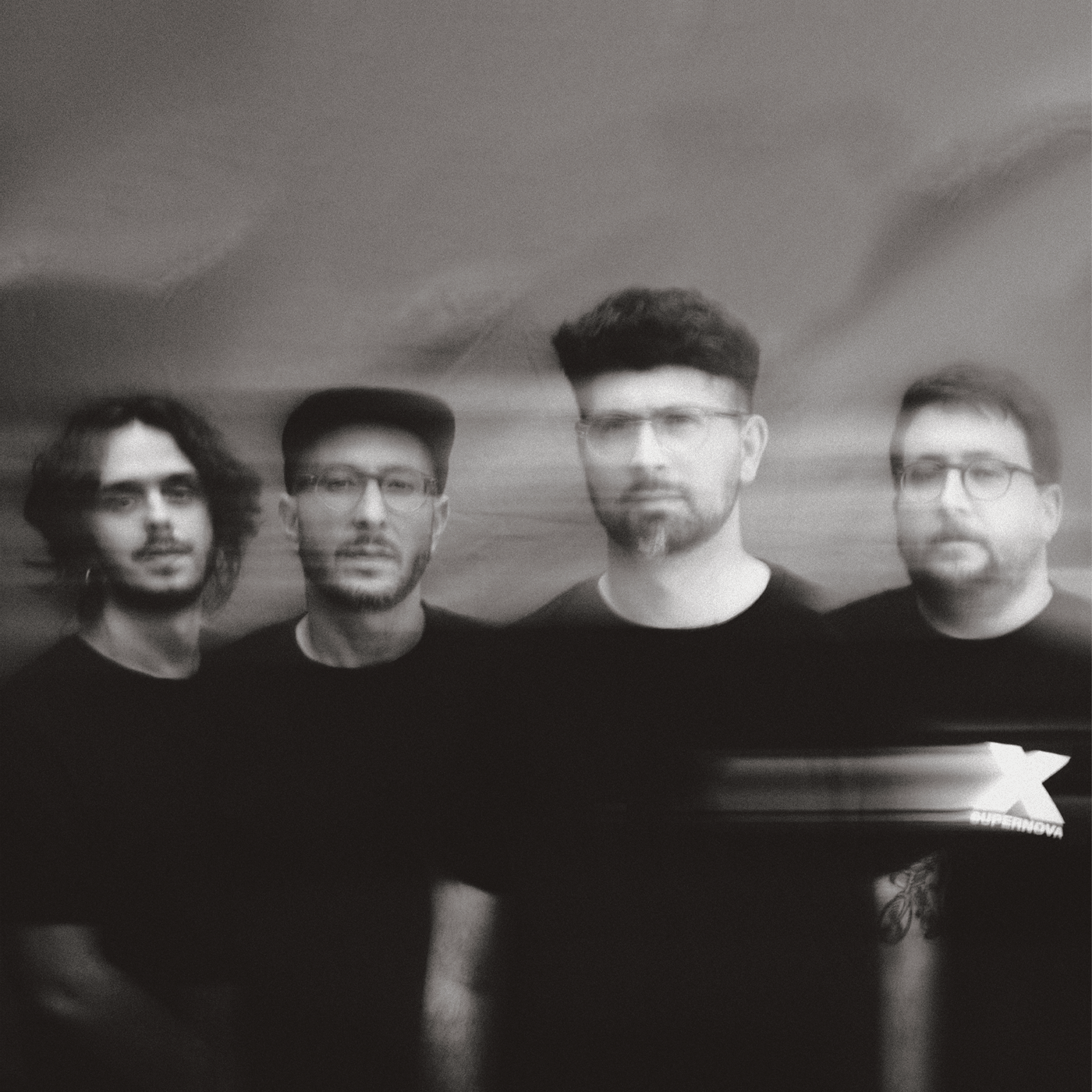
Irma: Our band is named after a young partisan killed by fascists. This choice defines who we are and what we do: we believe in music as a collective practice, in solidarity, self-organization and sharing, against the logic of profit and competition. Many bands and organizers share our beliefs to varying degrees, and we have rarely encountered indifference when calling for commitment and action from the stage. The scene we are part of is alive, engaged, and fiercely committed. We are proud to be part of it.
Neboas: Well, we think that we often set ourselves standards that, as individuals, we simply aren’t able to meet, and that can often lead to anxiety or other mental health issues. At the end of the day, a scene is made up of individual people organising together, and as individuals, we understand that modern capitalist life makes it extremely difficult to keep up with everything. So, for us, the very fact that an antifascist space has managed to stay alive for five editions already feels like a more than worthy and admirable form of anti-capitalist resistance.
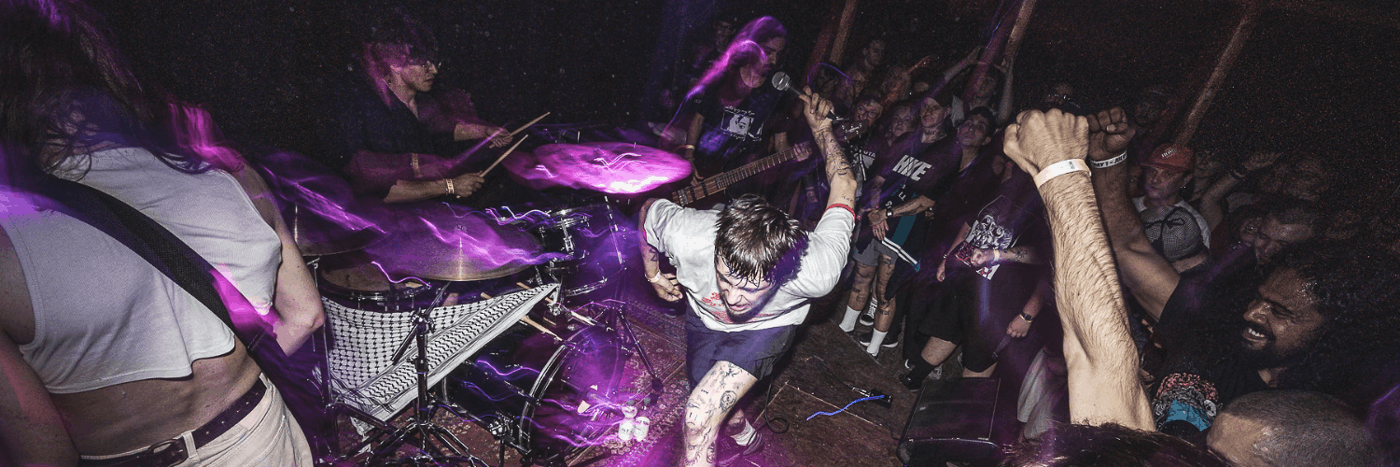
Chevalier: Punk and particularly screamo for us are strong political stances: their DIY ethos is not a slogan and does not only apply to music, but it’s a revolutionary action against the whole society we live in.
Being part of the “scene” is not just sharing a musical taste with a passive audience, it’s praxis, reaction, community building and a glimpse in a world without exploitation.
Despite many social spaces in Italy have been shut down in recent years by state repression, some like the ones in Parma are still able to present us the option of a horizontal society, where change is driven by participation, something that unfortunately many even in our circles tend to overlook in favour of a polished consumer experience. What we need more than everything else now is to direct the anger we say we put in our music towards the protection of these spaces and experiences, to keep punk political, open and aware.
Falesia: Underground spaces that take a political stand should avoid selling products from brands that are not aligned with the same values; it would be also time for spaces like that to start serving only vegan food, since it’s with those that we can really avoid oppressions of any kind. These positions should make people coming to the events think about how we live our daily lives and on what we spend our money.
Admission stays at €5, there is no advance booking, and the event is built around access and participation. Costs, travel and basic survival keep rising. How can DIY festivals and bands remain sustainable without copying the commercial logic they reject?
Barabbas, du förtappade: Let’s be real, we all struggle. It’s the love that keeps us surviving and it’s this love for what we do and what others do that keeps us prioritising doing this. We see the love that organisers of DIY festivals put into their work, and it’s also the respect for this that keeps us going. I think this is also why the hardcore-adjacent communities are alive, 45 years later – it keeps regenerating itself because people see how giving the work is and how much belonging you get for doing it.
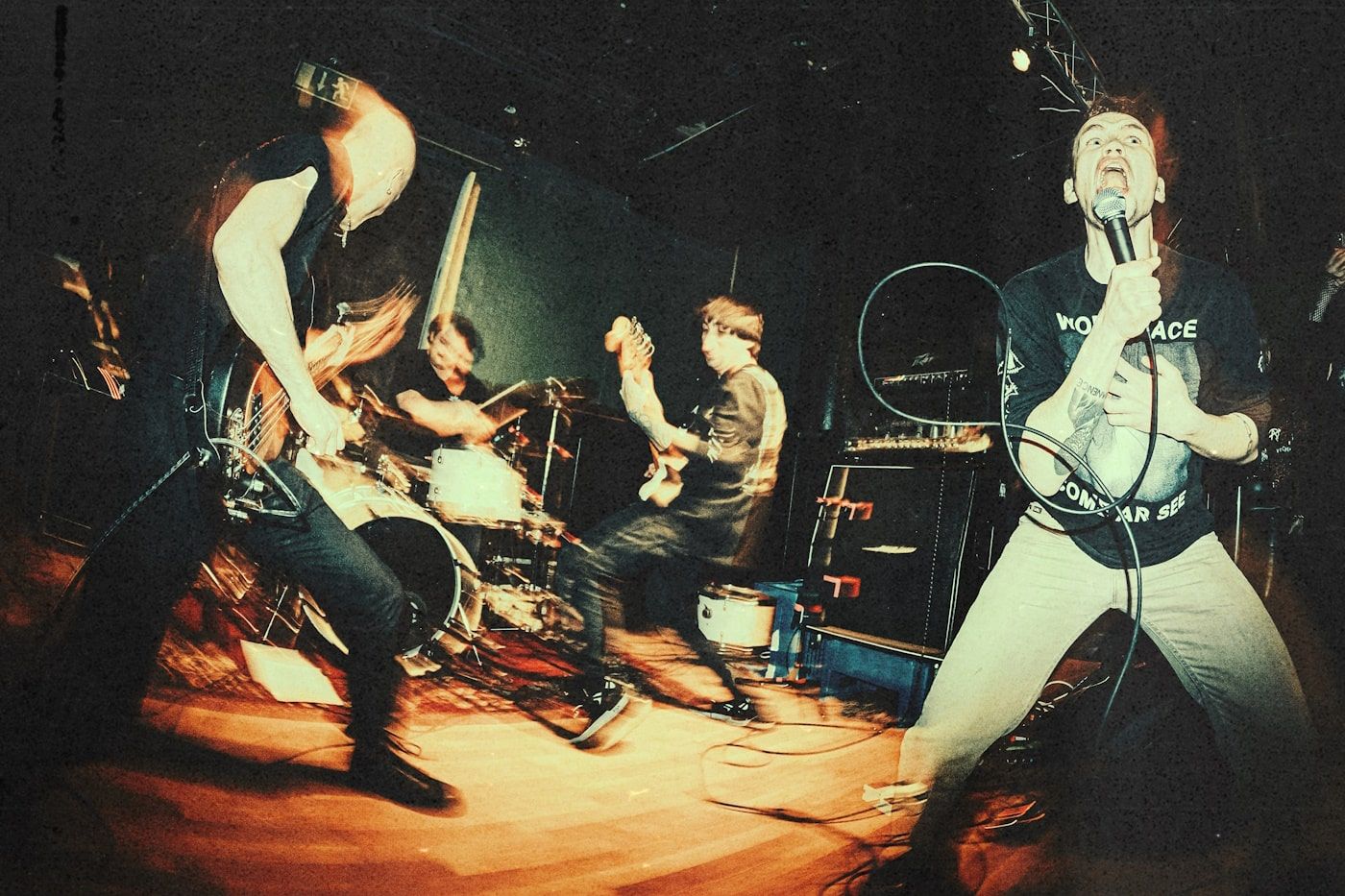
Shizune: Through radical solidarity and shared responsibility. DIY survives not by scaling up, but by scaling deep, relying on mutual aid, fair solidarity prices, and strong networks that prioritize people over profit margins.
Damasco: Solidarity, helping each other out and ultimately remembering that we do this for the genuine love that we have for our music and art expressions. That is why we need to keep the spaces available up and running, participating in our local and nearby scene, rejecting the so called “commercial” circuits.
Irma: A DIY festival inevitably has to confront the increasingly strict and suffocating logic of the market. However, it can rely on one great resource: people. We believe that the strength of a DIY festival lies precisely in preserving and spreading, as much as possible, a sense of community, solidarity, and full acceptance of differences, while keeping prices fair and paying attention to small details. We are convinced that the audience can recognize and support these values.
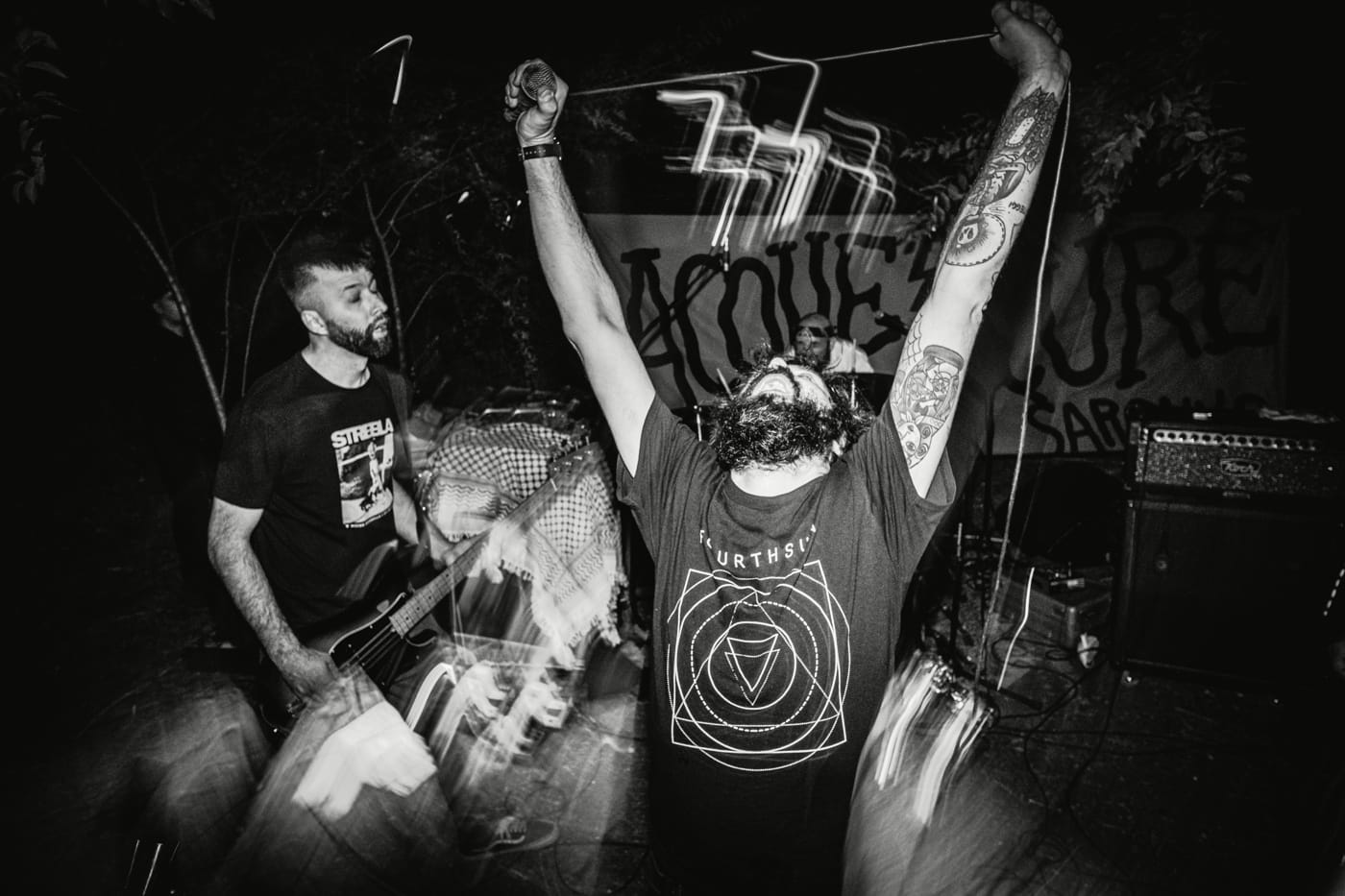
Neboas: Quite simply, they can’t. Realistically, DIY and self-managed festivals are kept alive by the people who attend them, by solidarity-based or voluntary admission fees, and by funds carried over from previous events.
That’s the harsh reality. On the one hand, the working class shouldn’t have to bear the cost of keeping the scene alive; but on the other, the alternative would be to reproduce the capitalist logic of management, advertising, online campaigns, huge commercial festivals, and so on. So, in a way, everyone tacitly accepts this as the lesser evil.
At the same time, we get our revenge by squatting spaces and avoiding paying for licences, venues, and all the other fees we would be expected to pay within the capitalist circuit.
Wyświetl ten post na Instagramie
Chevalier: Despite the hardships, the main thing of underground shows are the community and experience exchanges that arise from sharing the space with like-minded people, being them old friends in your hometown or complete strangers half the world away from home.
Most of the time the profound beauty of a new friendship is well worth long drives, sleepless nights and high costs, and it’s really what motivates us to keep on making music. That’s the difference from the mainstream: those heartfelt connections cannot be bought and sold, and we believe them to be more important than the sacrifices we’re taking right now.
We were able to do all the wonderful things we’ve done thanks to the generosity of all the people we’ve met, and that’s what we love about the scene: we never had to worry too much about money or places to sleep or to play, as the network of solidarity of which you take part when you become an active member of the community is thriving and everpresent, and this is all that matters.
Falesia: The financial support from public/fans it’s crucial for sure, and at the end is also connected to where and to whom we decide to give our money; there’s definitely a big difference, for example, if you buy a shirt from a diy band or from one of the big brands.
This line-up connects Italy, Sweden, Catalonia and Spain. What is happening in your local screamo or DIY scene right now that people outside it rarely see? Name a space, collective, band, label or person that deserves more attention, and explain why.
Barabbas, du förtappade: The past few years, the Swedish DIY scene has reached so many young people. A bunch of bands are starting up – some will disappear soon and some will go on for a long time, but that’s part of the development and it’s fun to follow it. To focus on the screamo side of things, shout out to Fröken Agda from Umeå, Floriography from Gothenburg and Pixieseawynde from Stockholm.
Shizune: What stays hidden is the tireless backend work: bands hosting each other, sharing gear, and financing underground networks through pure dedication.
Collective efforts like Collettivo La Défense deserve far more attention; they consistently create physical spaces for raw, independent music without ever compromising their ethical foundation.
Damasco: These past years the Peninsula has been blooming with a lot of collectives and new proposals, truly welcoming and kind individuals.Focusing on Catalonia, we could start mentioning collectives like MyHeartYourMouth, who, with their annual Emostiu (plus other concerts all year long), have revitalized the most alternative scene (screamo, hardcore, powerviolence, queercore and so many other styles under this umbrella).
Ojalá estë mi bici are old acquaintances in the scene, supporting the most dissonant voices since 2008. Just as CKUD, a true landmark and reference for hardcore, not only in Barcelona, but internationally, bringing us the best bands in both the national and international scenes with their annual festival (and so many other events throughout the year). LittleJoy is new in the scene, but they have proven themselves an interesting actor with a fine filter to organize events.
To mention more countercultural within the punk scene, La Plaga are relentlessly supportive as an alternative to big concerts. Soroll i Glitter are also relatively new, and they carry on an absolutely necessary fight as a transfeminist collective, always giving voice to dissenting identities away from the patriarchy that is sometimes embedded in hardcore punk. Discos Pinya has always been pushing forward the most interesting bands carrying the DIY flag.
As a refuge and icon of the necessary resistance in this city, we have to mention Blokes Fantasma, a true oasis in the middle of the real-estate speculation that is devouring Barcelona and making life in the city impossible for so many people. We couldn’t forget our beloved podcast El Ecualizador, with a number of years of relentless fight, interviewing the bands whose voices are often forgotten. Last but not least, we want to recognize our favorite record shop in the city: Ultra-local Records.
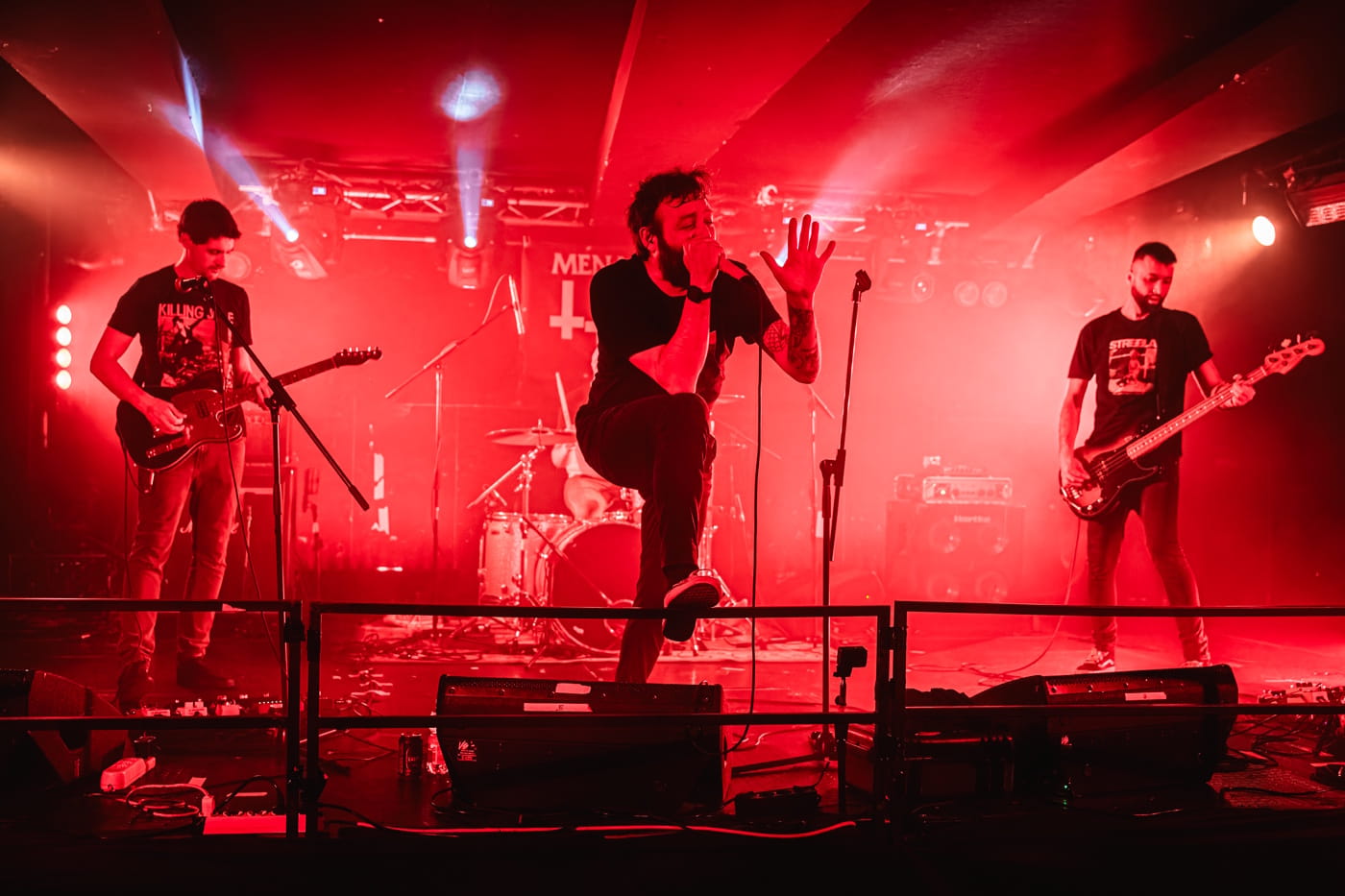
Irma: The Italian scene is very much alive and, in recent years, has managed to grow and reinvent itself. Collectives, venues, independent festivals, as well as labels and fanzines, are growing in number, offering countless opportunities to anyone who wants to be part of this world.
The game is open to everyone, no one excluded. Above all, we are happy to see more and more young people attending shows, first as audience members and then as musicians. So there are many positive things we often overlook, even though they are truly remarkable.
Neboas: There are currently a lot of venues and collectives doing a great deal for the underground scene. In our area, the Vega Baja del Segura, we have La Carretilla, with people from different bands from Elx and the surrounding area doing some really interesting things and bringing back the countercultural activity that the city should never have lost.
In Murcia, the people from Extrematika are also organising a lot of events and activities. The same is happening across the rest of the country. Málaga, Almería, Madrid, Euskal Herria, Galicia… there are many places where things are happening.
Chevalier: The Italian scene is very much thriving and alive, new incredible young bands pop up every couple of months and there is really a deep ecosystem of underground shows and collectives, tying screamo, punk and hardcore into one thing! ‘
In the last couple of years many people outside the usual cities and regions in the north have started organizing and making music, with many new bands coming out from Sardinia (Nivra, Daerke), Apulia (Espira, Parvenza, Tossina), Marche (Corvena), Campania (Silent Sentient Cliffs) and much more. Many of these bands are yet to release music but they’re for sure to watch out.
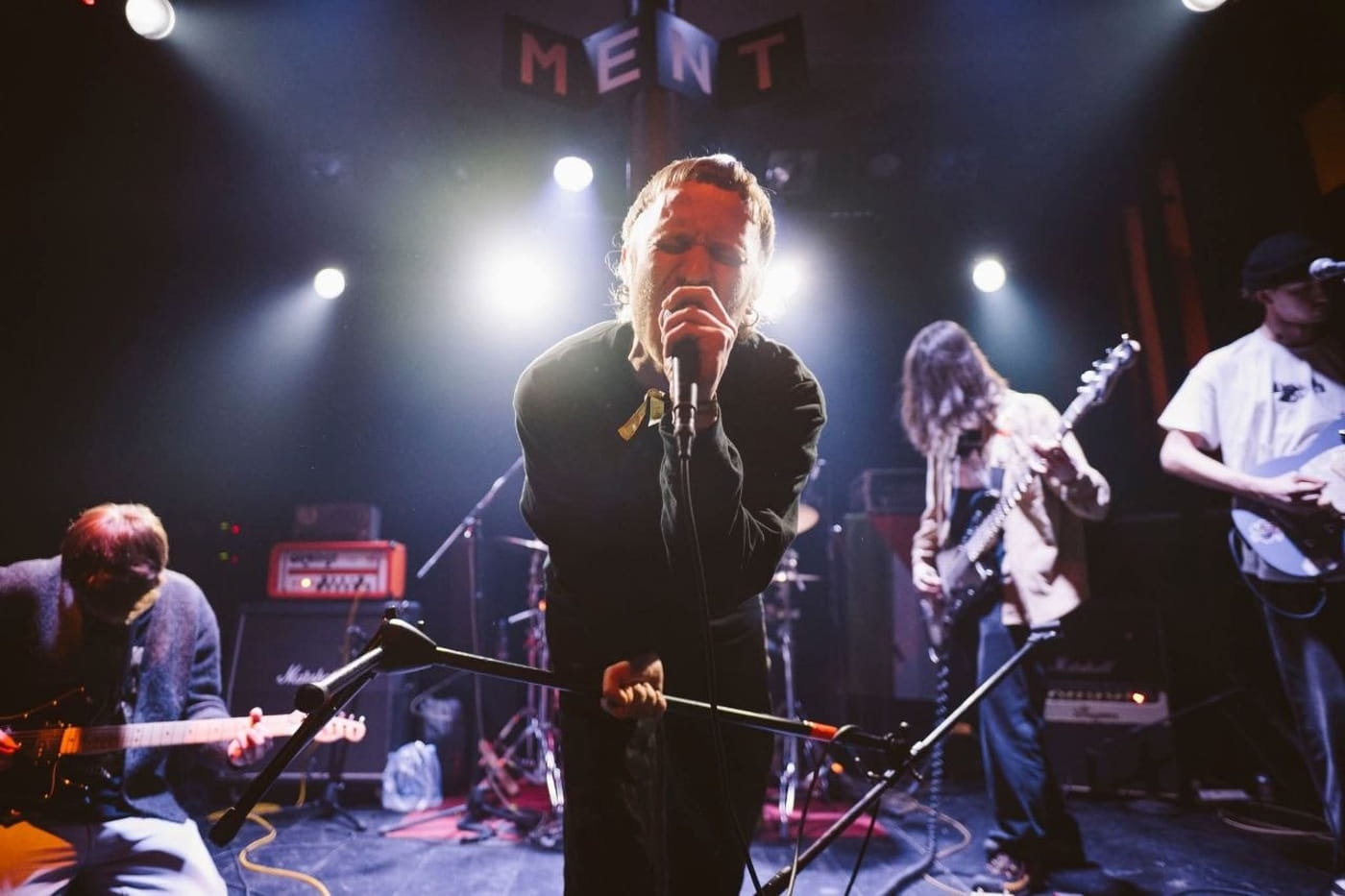
Falesia: Since half of us are from Slovenia and there’s no real emo/screamo scene anywhere in the country we’ve been trying to create some events also for our niche near the border with Italy; the Youth Centre of Koper really helped us by hosting and financing twice a screamo-based event last year with a third already confirmed for this December, and it’s clear that there is quite a big interest for these genres also in Slovenia especially among the younger generations.
Looking across this specific line-up, which existing relationship matters to your band, and who are you most curious to meet or watch in Parma? What do these international exchanges change once the show is over?
Barabbas, du förtappade: We still get surprised when we realise that we know people from so many places and that we can meet people dear to us in Italy or wherever. The feeling of this community gives us a lot of inspiration that we take back into our rehearsal space.
Shizune: What matters most are the bonds already formed along the way, while the real magic is always meeting new people and discovering bands live for the first time.
Once the show ends, these international exchanges turn a single night into lasting infrastructure: future cross-border shows, shared projects and genuine friendships that keep the global underground alive.
Damasco: Old friends and a lot of new people to meet. These events are the perfect opportunity to meet like-minded people and also step outside our comfort zones. Experiencing the energy shared there will be awesome for sure. It always renews our passion and inspiration to keep creating and sharing.
Irma: At the fest, we’ll meet up with old friends we’ve already shared the stage with, and we’re sure to make some new ones too. In previous editions, we came as part of the audience; this year will be a little different, but before and after our set, you’ll find us in the crowd, supporting every band.
Wyświetl ten post na Instagramie
Neboas:We’ve known some of these bands for a long time, almost since they started. It’s great to see the music of bands that come from such different places somehow enter into dialogue with each other. That’s precisely what’s beautiful about this: so many different things coming together in the same space at the same time.
Chevalier: We’ve never been able to take part in the previous editions of Alle Foglie, even just as an audience, so the first thing we want to experience is the fest itself! DIY shows let you breathe a different atmosphere than normal life, and we know this one will be special.
Wyświetl ten post na Instagramie
This year we’re also extremely lucky to share the stage with some friends we’ve made in the last years of concerts and we’re very excited to meet them again. At the same time we can’t wait to see and chat with Neboas and Damasco, as we’re really fond of the Iberian screamo/hardcore scene and we really want to learn more about it!
The festival says that sharing matters more than buying, and chatting matters more than shopping. What would you like people to carry home from Alle Foglie Fest besides records, shirts and photos?
Barabbas, du förtappade: Energy to change your life and the life that surrounds you for the better.
Shizune: A sense of shared responsibility and empowerment, the feeling of belonging to a real community and the motivation to keep building independent spaces everywhere is what actually stays.
Wyświetl ten post na Instagramie
Damasco: Extending kindness no matter what, expanding our worldview and welcoming new and old people to our community. We always encourage everybody to create and share: take pictures, start a band, start a blog, recommend music to your friends, Get inspired and don’t be shy to share! … DIY is alive thanks to our collective efforts.
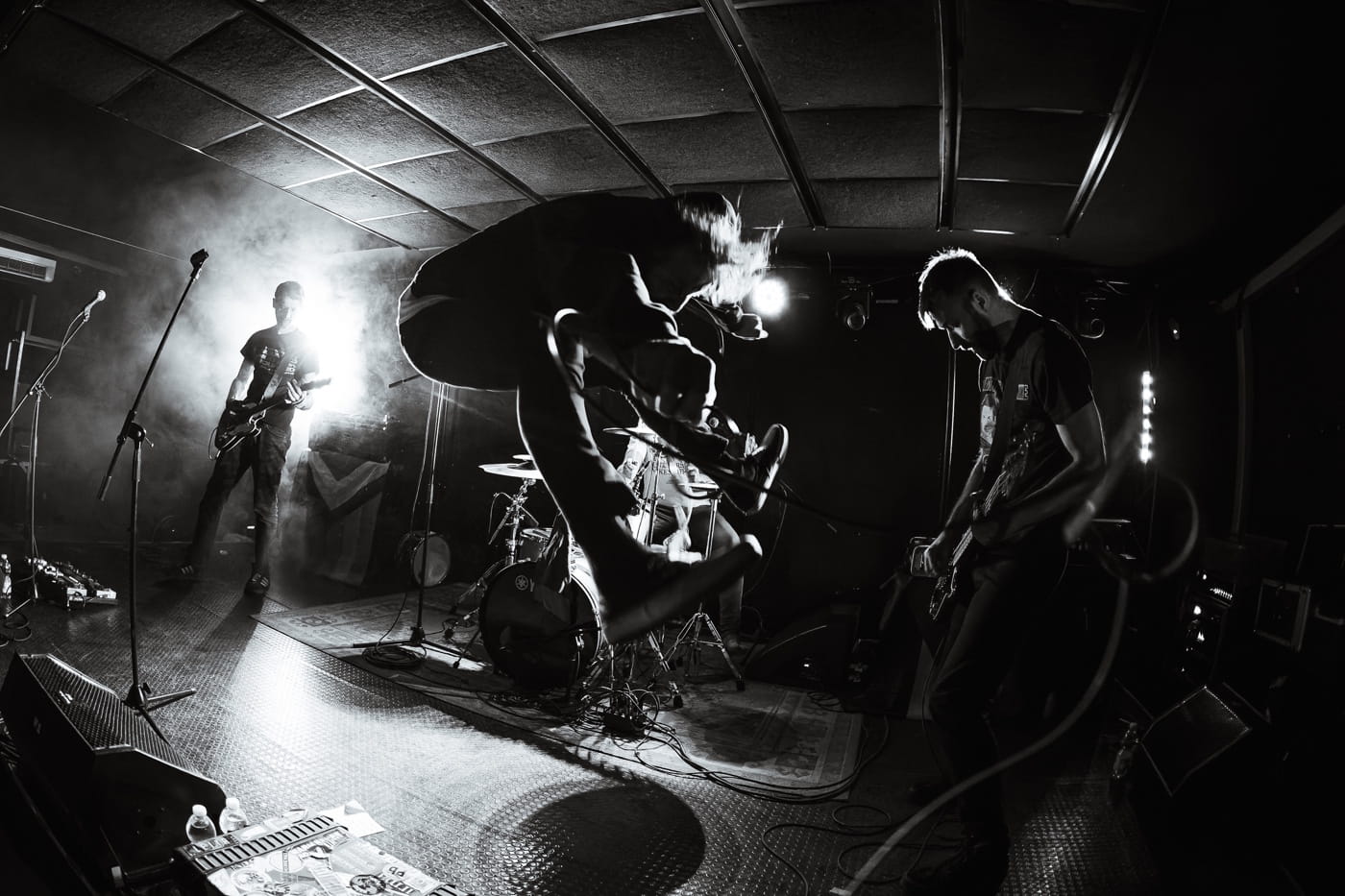
Irma: We know how this goes! We’ll go home with the feeling that, once again, we’ve saved rock ‘n’ roll from those who would reduce it to a commodity and a source of profit, erasing its collective and rebellious spirit :)
Neboas: We would humbly like people to leave with the idea that there are people in this scene who see it as an end in itself. They — or rather, we — are not involved in this as a means of gaining something from it.
We are here because we genuinely believe in the transformative power of art: in its ability to speak out against injustice without becoming didactic or preachy — people do not need everything to be made explicit for them —, to create connections, to open up spaces, to interpret the present we live in, and to explore the many different ways human beings have of existing in the world.
Ultimately, we hope it can inspire and encourage people to reconnect with a more authentic way of living, both with others and with themselves.
Wyświetl ten post na Instagramie
Chevalier: We know we sound like a broken record but community is what matters :) These meetings are as much a form of catharsis through the music and audience involvement as much as a way to feel we’re not alone, and turn the simple friendship in a much more profound kinship that is the basis of political action.
Merch and photos are cool and we’re definitely guilty of indulging sometimes too much on these things, but we’ve never felt that they were the end of the story, as they’re always perfect starting points to connect with someone else in the scene.
🔔 IDIOTEQ is ad-free, independent, and runs on one person’s time. If you want it to stay that way: DONATE via PayPal or SUPPORT via Patreon.
NEW: IDIOTEQ Explore 🗺️ Browse 15+ years of our archive by city, country, and style. Find artists on the world map or trace related sounds through the styles map.
Stay connected via Newsletter · Instagram · Facebook · X (Twitter) · Threads · Bluesky · Messenger · WhatsApp.