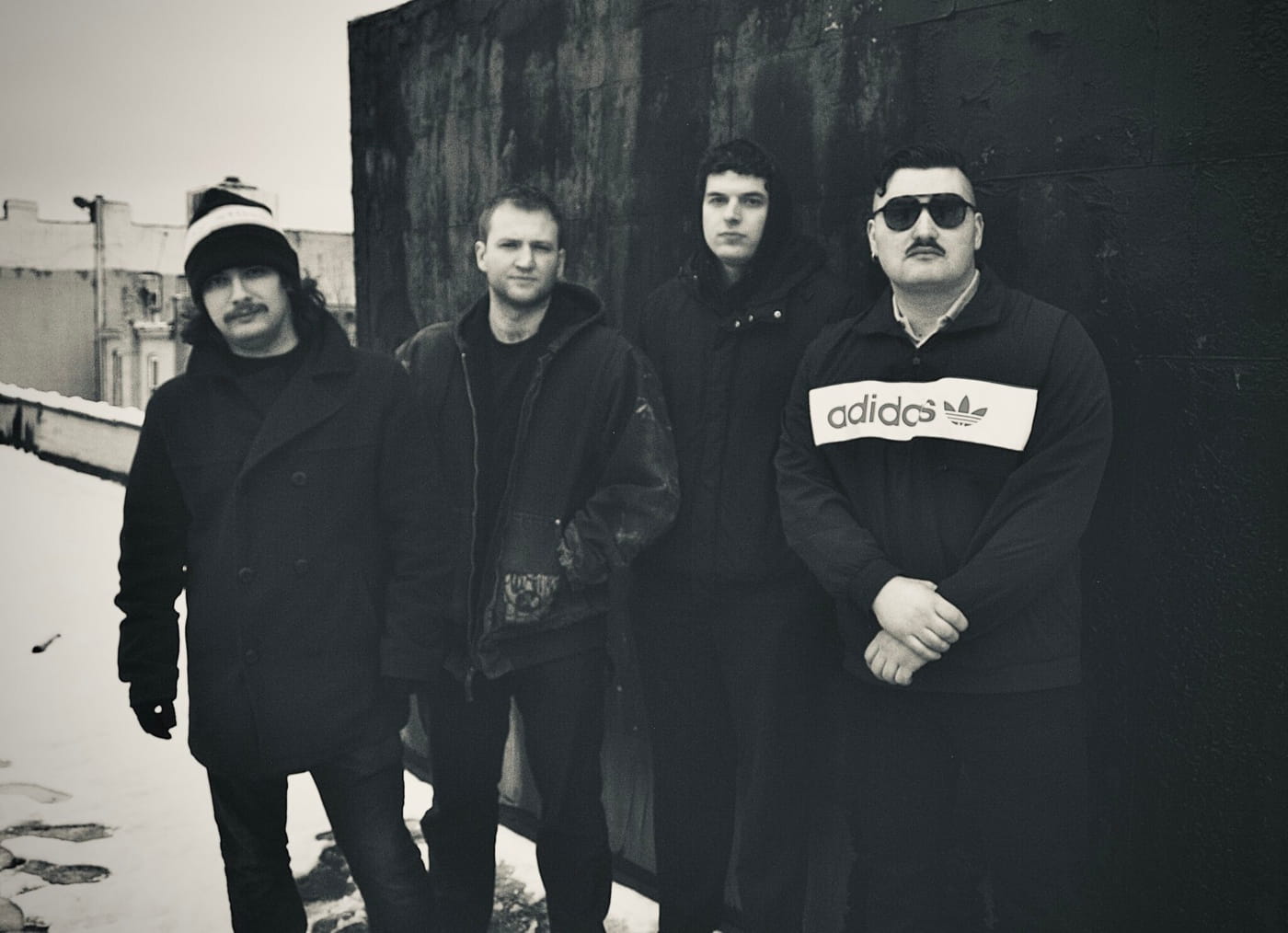


SPLIN are a new band made up of people who have already spent years in Polish punk and hardcore through AFTER LAUGHTER, MOIRA, BRUDNE CZYNY, ZAWODY and SLAVENKUST. Each of them came in with an idea they had not fully pursued before. Tomek finally had room for the simple youth crew riffs that had been sitting with him since his time in MOIRA. Paula wanted to move away from her heavier MOIRA vocals, while Daniel brought fast bass parts and d-beat picking from a background in metal, grindcore and punk.
Their debut 12-inch, “Type of Love”, runs on fast hardcore rooted in early 1980s Washington DC, the later Dischord years and a harder Scandinavian edge. Those references are clear, though the band have one simple rule during rehearsals: whenever a part starts sounding too much like a specific band, they stop and find another idea. Paula took a similar approach to the cover. She used one of her own photographs, built around ice, an old damaged bathtub and a fresh rose, and wanted people to wonder what kind of record they were looking at before hearing it.
Maciek Dzikiewicz recorded and mixed the album at his own Waiting Room Studio in Oświęcim, where he had two jobs at once: SPLIN’s drummer and the person making most of the production decisions. He set up each instrument together with the person playing it and tried to settle the sound during recording, before sending the first mixes to the rest of the band. Brian McTernan later mastered the record at Salad Days. Robert from Refuse Records suggested working with him after Paula had met Brian while MOIRA and Battery were playing the same hardcore festival in Zduńska Wola.
Refuse are issuing “Type of Love” on limited splatter and black vinyl. Paula handled the cover photograph and art direction, with the layout prepared by Arkadiusz Jaźwiec and Jarosław Składanek.
Wyświetl ten post na Instagramie
Bielsko-Biała is just as present in the band’s story. Przestrzeń Wolności gives local crews a small room with no stage or barriers. Zadyszka keeps many of its shows cheap or almost free, bringing younger people through the door, while Vagina Dentata Fest, Nacjonalizm Nie Dziękuję! Fest, Bielsko-Biała Moshers and several independent organisers keep different parts of the city’s punk life moving.
Our March feature on Noc Walpurgii’s 30th-anniversary return to Warsaw brought SPLIN together with the other nine acts on the bill to discuss women and queer people in the underground, awareness teams and the work required to keep DIY spaces open. SPLIN pointed to the progress visible across broader hardcore punk, while naming strictly hardcore, straight edge and Oi as parts of the scene where women can still be counted on one hand.
Paula takes that subject further here. When women or non-binary people challenge somebody respected within the scene, she has seen others minimise what happened, defend that person through their reputation and tell those speaking up how they should understand their own experience. Her answers also reach into gender, personal boundaries and the political power addressed in “Their Law”.
Check out our full interview below.
“Type of Love” was mastered by Brian McTernan at Salad Days, and recorded at Maciek’s own Waiting Room Studio in Oświęcim. Tell me about that combination. What did you want from a room you already know inside out versus what Brian added at the mastering stage, and did anything on the record only click once it came back from Baltimore?
Paula: The idea of having Brian master the record actually came from Robert of Refuse Records. The previous year, I had the pleasure of meeting Brian at the HC Fest in Zduńska Wola, where he was playing with Battery and I was playing with Moira. One of the nicest things for me was hearing that he really enjoyed my performance. It meant even more because I’ve always respected him as a vocalist, and Battery was one of those bands I listened to a lot in the past and I still love going back to them today. We ended up exchanging a lot of very nice compliments about each other’s performances, but more importantly, I think we both immediately felt that we were dealing with a genuinely warm and sincere person. Brian is a truly great, humble, and genuine guy. When Robert suggested to Brian if he would be into doing a mastering of recordings of a new band of Paula from Moira, he reacted very enthusiastically. In short, he approached us completely in the DIY spirit, which meant a lot to me. Just having the opportunity to work with him on this record was something really special. At the same time, Brian himself said that Maciek had done a very good job with the mixes, but those final touches by Brian brought out more depth in the recording. I think that’s part of why I so often hear people say that the album sounds really well played and produced. It was a great combination: we recorded the album in a place where we felt completely comfortable and trusted the person behind the desk, and then Brian gave the finished material that final polish.
Wyświetl ten post na Instagramie
Maciek, you’re in a slightly unusual position here because Waiting Room Studio is both your workplace and the place where SPLIN recorded the album. Did being the person behind the desk ever clash with being a member of the band? Was there a moment when Maciek the musician wanted one thing and Maciek the recording engineer knew it wouldn’t work?
Maciek: That’s a good question. In both SPLIN and my other band, AFTER LAUGHTER, I make the final decisions myself.
Since I handle the entire recording and mixing process, I obviously have my own vision for the sound of the album. But I always send the initial mixes to the rest of the band so they can give me their suggestions. Then we listen to everything together and decide what needs to be changed, etc. However, as the engineer/producer, I make most of the decisions already during the recording process. Every instrument we recorded was set up together. I follow this principle in my work, not only whenrecording my own bands: the sound should be achieved during the recording itself. It’s an old but very good method. In this business, decisions should be made fairly quickly. From my experience, if you don’t make these decisions early enough, the mixing and production process can drag on for a very long time. We are a band, so everyone has an influence on the sound of their own instrument. That’s the foundation. I then put everything together into one coherent whole. That’s why my work as an engineer never conflicts with working on our own material. It’s mostly a collaborative effort
Bielsko-Biała keeps coming up as a place that punches above its weight in Polish hardcore and DIY. From the inside, what makes that scene work? Who runs the shows, which spaces matter, which people show up when nobody else will.
Tomek: Bielsko-Biała has never really been an empty place when it comes to concerts, but the creation of Przestrzeń Wolności was definitely a strong catalyst for the local scene. It’s a small space with no stage and no barriers, which fits perfectly with the ethos of hardcore and punk shows. A really nice division of roles has developed over time. There’s Tomek from Eye For An Eye, who has probably been organizing shows in Bielsko forever. Apart from the annual Nacjonalizm Nie Dziękuję Fest!, he brings in bigger international bands. Zadyszka focuses more on local and underground acts. Then there’s the crew behind Vagina Dentata Fest, and Paula is probably the best person to talk about that, since she co-organizes it. The scene is still alive to a large extent because of Przestrzeń Wolności. A lot of hardcore shows are organized by the Zadyszka collective, and I’m very happy to be part of it. We try to keep ticket prices very low, sometimes almost free and because of that, a lot of younger kids come to the shows. Big shoutout to the Bielsko-Biała Moshers crew.
Paula: There are actually several different crews involved in organizing things, but one of the biggest strengths of our scene is that we don’t really compete with one another, we support each other. Of course, it’s not perfect. There are disagreements within different crews and sometimes between them, but I think that’s completely natural. Different people have different perspectives, different ways of organizing things, and sometimes that creates friction. I actually think a scene has to go through those moments from time to time if it wants to remain healthy. People need space to disagree, to clash, to express different views. Sometimes things have to explode a little before they can settle again. Despite that, I think the Bielsko scene is a very friendly place. There’s a lot of mutual respect and willingness to help one another. We have feminist fest Vagina Dentata Fest, which I have the pleasure of co-organizing. We have Zadyszka, Nacjonalizm Nie Dziękuję! Fest, a huge number of shows happening through Przestrzeń Wolności, as well as concerts organized by Tomek Oczyński, Bart Don Pedro, and smaller crews. And we shouldn’t forget all the other initiatives, events, and happenings taking place around the city. None of this would be possible without so many great and committed people.
Nacjonalizm Nie Dziękuję! Fest is where you first crossed paths with Robert. What does that event mean to the local scene beyond the lineup? Would SPLIN exist in this shape without it, or is that overstating things?
Tomek: Nacjonalizm Nie Dziękuję! Fest was actually my first proper show experience as a kid standing in the crowd. If I hadn’t ended up there, it’s very possible that I wouldn’t be involved in the whole hardcore world today.
Paula: Nacjonalizm Nie Dziękuję! Fest is where Robert’s and my paths crossed for the first time, so it’s definitely an important event for all of us in one way or another. It feels good to live in a city where people are actively involved in creating something, and where there is a festival that has been expressing such a strong anti-nationalist position for so many years. I think the festival has carried slightly different meanings at different points in its existence. Right now, when the brown tide is growing stronger, taking over parts of the internet and increasingly spilling out into the streets, it feels even more important to make it clear that we do not accept this. We have to show that we are not afraid. And I think it’s important to remember that these are the things that last: organizing shows, creating music, building good initiatives, being kind and helpful to others, not spreading hatred, violence, and fear.
“Their Law” as a title carries obvious weight in Polish context right now. Without spelling out the lyrics, what pushed that song to the top of the tracklist for you, and what were you actually reacting to when you wrote it?
Paula: For quite a long time now, Polish politics has been moving steadily to the right. On top of that, the far right has been gaining more supporters and becoming more powerful. With this song, I wanted to express the way we are treated, the way so many things are supposedly done “for our own good,” while in reality it usually turns out that the only people benefiting are those who rule over us. They play us however they want in the name of “higher values,” but in the end it often comes down to power, money, and simply wanting more and more. It was never really about the common good. As for its position on the tracklist, though, that wasn’t connected to the importance of the lyrics. The songs were arranged in a way that we felt flowed well sonically, so that the album works as a whole when you listen to it from beginning to end. There isn’t any hierarchy in terms of the messages behind the songs.
“Nie ma” is the only Polish title on the record. Was that a deliberate closer, and why did that song refuse to be translated?
Paula: The song is fast, rhythmic, and simple, so it worked really well as the track that closes the album. But who knows, maybe on the next record it will be the complete opposite. I felt that the song needed a slightly poetic but still simple lyric in Polish. Using Polish gave it even more power. I decided not to translate it because I wanted the layout of the lyric sheet to remain consistent. If I translated “Nie ma” into English, I would have had to translate the English lyrics into Polish as well. I preferred to keep each language as it was. And honestly, if someone who doesn’t speak Polish is curious enough to look up the meaning and find out what the lyrics are about on their own, I think that’s only a positive thing.
Paula, you shot the cover photo and handled the art direction yourself. What were you trying to make the record look like before you knew what it would sound like finished, and did the visual side change once the mixes came in?
Paula: That part of the process gave me a lot of pleasure. It definitely required a lot of work, but I’m really happy with how everything turned out. I started thinking about the cover while we were still working on the mixes. One thing I really didn’t want was a typical hardcore record design, the kind where you look at it and immediately think, “Oh, here comes another hardcore band.” I wanted someone who came across our record to have to stop and think for a second: What kind of music does this band actually play? What am I even looking at? I already knew that I had one of my own photographs that I wanted to use, and I felt that it would work perfectly here. I’ll admit that not everyone initially shared my vision. I don’t think everyone could fully imagine how it would look in the end. But the most important thing is that, once everything came together, everyone was really happy with the artwork. For me, it was important that the visual side connected with the lyrical layer of the album as well. There are small details that everyone can interpret in their own way: ice, an old and damaged bathtub, a fresh, intensely colored rose… different “types of love”.
Daniel came from a much heavier, grindcore background. What does someone with that muscle memory bring to a Dischord-leaning band that a lifer wouldn’t? Any moments in rehearsal where his instincts pulled a song somewhere unexpected?
Daniel: As I gradually moved away from metal and became more immersed in punk music and the punk scene, I started listening to all kinds of things, from the most aggressive hardcore to much more delicate music. I should also mention that I’ve been skateboarding since I was a kid and played pretty much every skateboarding game imaginable. Those games always had great punk soundtracks. For example, in THAW there was a Minor Threat cover by Thrice, “Seeing Red / Screaming at the Wall,” and that was one of my favorite tracks. When it comes to the Dischord sound, I mainly knew the more obvious bands, like Fugazi and Minor Threat. When Paula wrote to me and asked if I’d be interested in playing this kind of music, I agreed almost immediately. Contrary to what people might think, the music we make in SPLIN and Slavenkust has quite a lot in common from the perspective of the bass.
Both bands have fairly fast parts, and hardcore is a solid foundation in both cases. My instincts definitely show up in certain moments where I try to play as fast as possible or use more of a typical d-beat-style picking approach. I think that might be one of the things that distinguishes me from someone who has been playing this kind of music for years and is completely immersed in it. I approach it a little differently. When we’re writing songs or when I’m creating a bass line, I don’t just think, “How would Joe Lally from Fugazi play this?” I try to find my own approach instead of directly imitating other musicians. Most of all, I just love playing bass and experimenting with different styles without putting too many limits on myself. SPLIN gives me the opportunity to diversify my playing even further.
Wyświetl ten post na Instagramie
Tomek stepping away from Moira to start SPLIN is a significant move. What was he chasing that Moira couldn’t give him, and how much of the guitar language on “Type of Love” is him working out that itch?
Tomek: I’ve always been drawn to playing simple riffs in the spirit of Youth Crew. There wasn’t really much space for that in Moira, so developing that kind of material was pretty difficult.
In Zawody, I managed to write one song in that style shortly before the band went on hiatus, so I guess that idea had been sitting somewhere inside me, waiting and slowly developing.
Between all four of you there’s history with After Laughter, Moira, Brudne Czyny, zawody, Slavenkust. When you’re writing as SPLIN, do those past projects show up as instincts you lean into, or as habits you actively push away from?
Paula: I think each of us naturally brings something of our own into SPLIN. That feels completely natural to me. But it’s not about deliberately forcing our individual directions onto the band, it’s more about what each of us genuinely likes and feels. For example, I knew that vocally I wanted to explore a different direction. I wanted to move away from the heavier vocals that were more typical of Moira and try something that felt more directly rooted in hardcore. But nobody really imposes anything on anyone else. The whole process is very fluid, and I have to admit that most of our rehearsals are very productive. I think everyone has a pretty clear feeling for what direction the band should take. And beyond all that, we genuinely have a lot of fun creating this material.
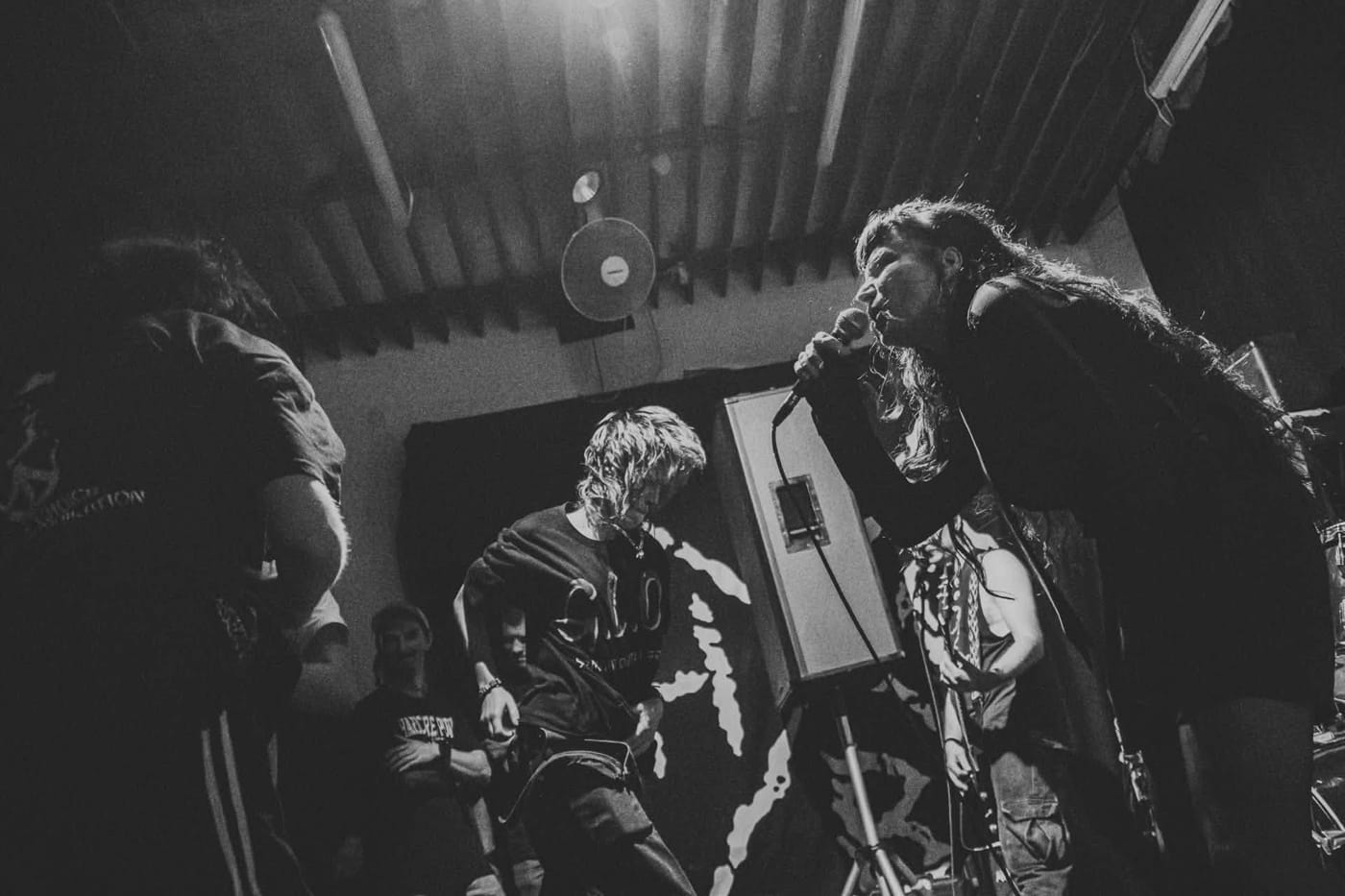
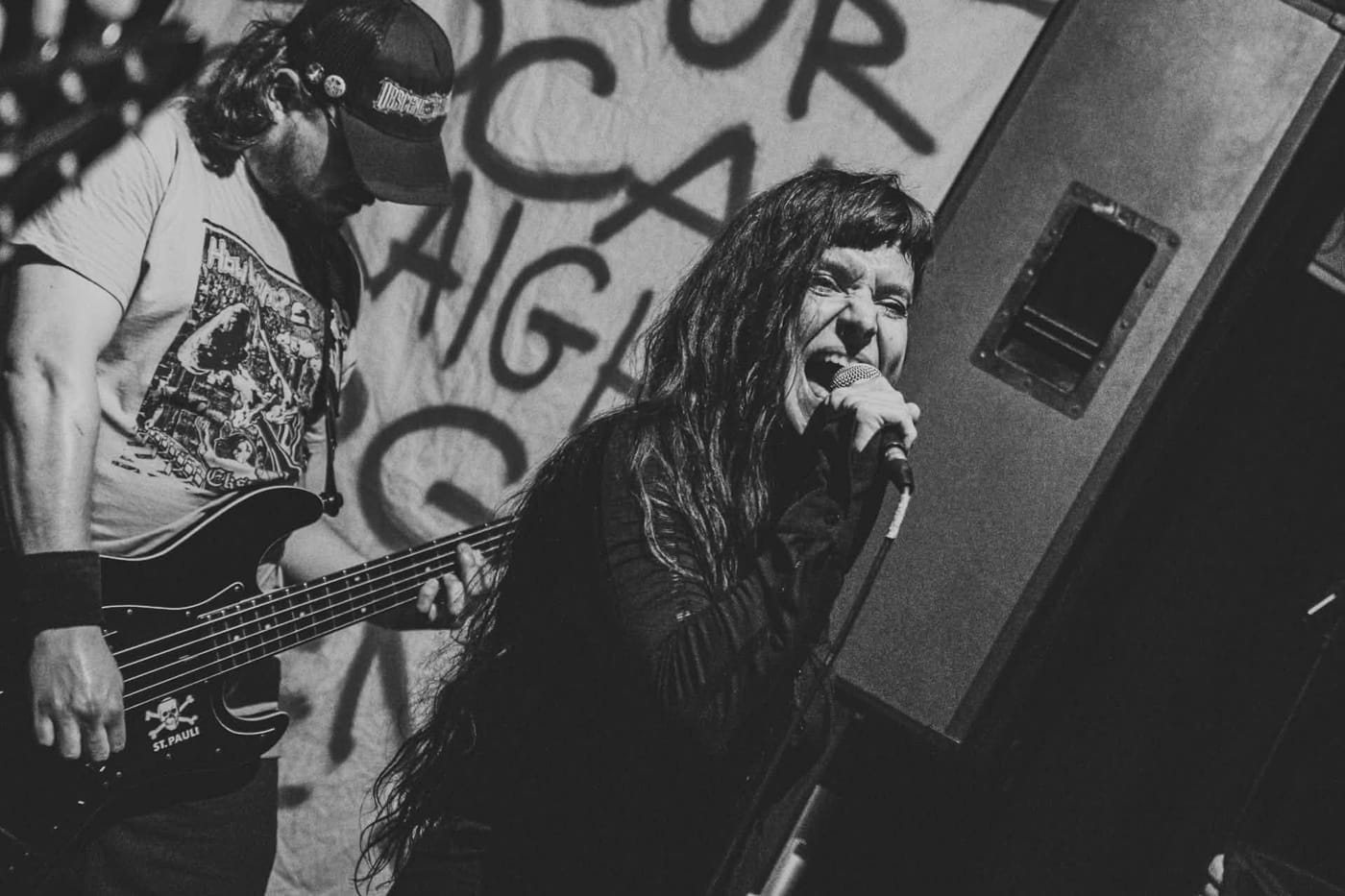
Paula, in the No Echo piece you talked about how few women there are in strictly hardcore bands in Poland, and how the wider DIY scene is where change is actually happening. What are the concrete moves you’ve seen work? What are the moves that get talked about but don’t move the needle?
Paula: The biggest positive change I’ve noticed is that there are simply more girls playing in bands now. But, as I mentioned before, I’m mostly talking about the wider DIY scene. Strictly hardcore bands are still almost completely lacking in women, which is a shame, because it would be great to see more girls playing this kind of music. Maybe the audience itself isn’t always particularly welcoming either. On the positive side, though, women are becoming much more visible, not only as musicians, but also through different initiatives and forms of organizing. I would even risk saying that, within the DIY scene, this is starting to become something close to normal.
The same goes for non-binary people. Of course, you can still encounter all kinds of unpleasant and questionable behavior: disrespect, condescension, or people simply being dismissive. I think there is still a lot to work through on the Polish scene. Religion has played such a strong role in shaping us from childhood, and the traditional idea of the family where everyone is expected to have a clearly defined place, still sits very deeply inside us. But don’t get me wrong. I believe religion can have a positive influence on many people, and for many of us it can be something important and necessary.
The problem is that it is often used for harmful purposes, especially by those who hold positions of power within religious institutions. And this isn’t something that applies only to Catholicism. Unfortunately, in most religions, the role of women is still reduced to someone subordinate to men and devoted primarily to the family: someone perceived as weaker, as someone who supposedly cannot take care of herself, let alone be strong, fight for herself, and take her own life into her own hands.
The particular problem in Poland, however, is that religion is deeply intertwined with Polish identity. It is very difficult to separate ourselves from it because, to a greater or lesser extent, these ideas have been passed down from generation to generation and shaped us within our homes. I honestly think it may take several generations before some of those patterns really disappear. A lot of people on the scene talk loudly about equality and supporting women and non-binary people, but sometimes it feels like that support only exists as long as those people express themselves in ways that don’t make anyone uncomfortable. It’s almost like: “Sure, rebel, but do it on our terms, in the way the punk scene taught you to do it. If you rebel in a way we’re not used to, then sorry, but you won’t have our support.” And I think that’s something worth confronting.
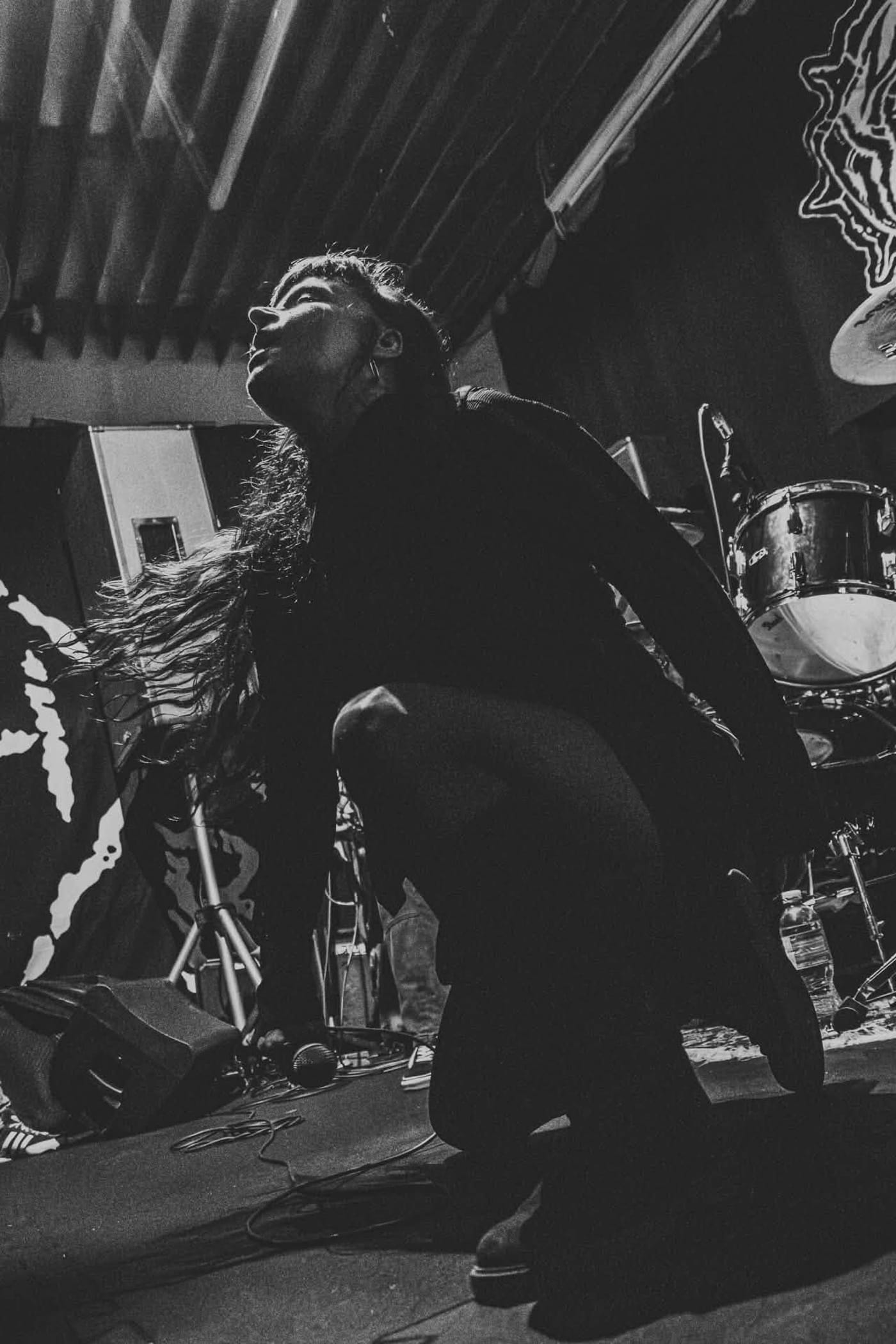
You said that support for women and non-binary people in the DIY scene sometimes lasts only until they rebel in a way the scene itself isn’t comfortable with. What does that actually look like in practice? Without naming people, where have you seen that supposed openness hit its limit?
Paula: I think you can often see this in all kinds of heated situations, especially when it comes to issues around gender, sexual freedom, how we define ourselves, and the crossing of personal boundaries. Unfortunately, in situations like these, there is often a certain pattern. People try to reassure us that nothing really happened, that nothing actually took place, that we simply misunderstood, or that “it wasn’t really like that” because someone like X or someone like Y couldn’t possibly have meant it that way.
After all, they’re a good person, a respected member of the community, or someone who has always been seen as one of the good ones. There is also a tendency to tell us that what we are feeling isn’t actually what we think it is, that someone else knows better and can explain to us what really happened and, ultimately, how we should feel about it. You can even see this in environments that consider themselves feminist. Sometimes people try to “put us in our place” simply because they have been involved in the scene for many, many years.
They seem to believe they have a monopoly on the truth and start speaking to us in this patronizing, almost teacher-like way, as if they need to explain to us how things really are. Personally, I think that’s pretty unfair. Especially because we’ve been talking for a long time about how dismissive and unjust it is to silence people or tell them how they are supposed to feel about their own experiences. Because apparently we can’t even decide that for ourselves, right?
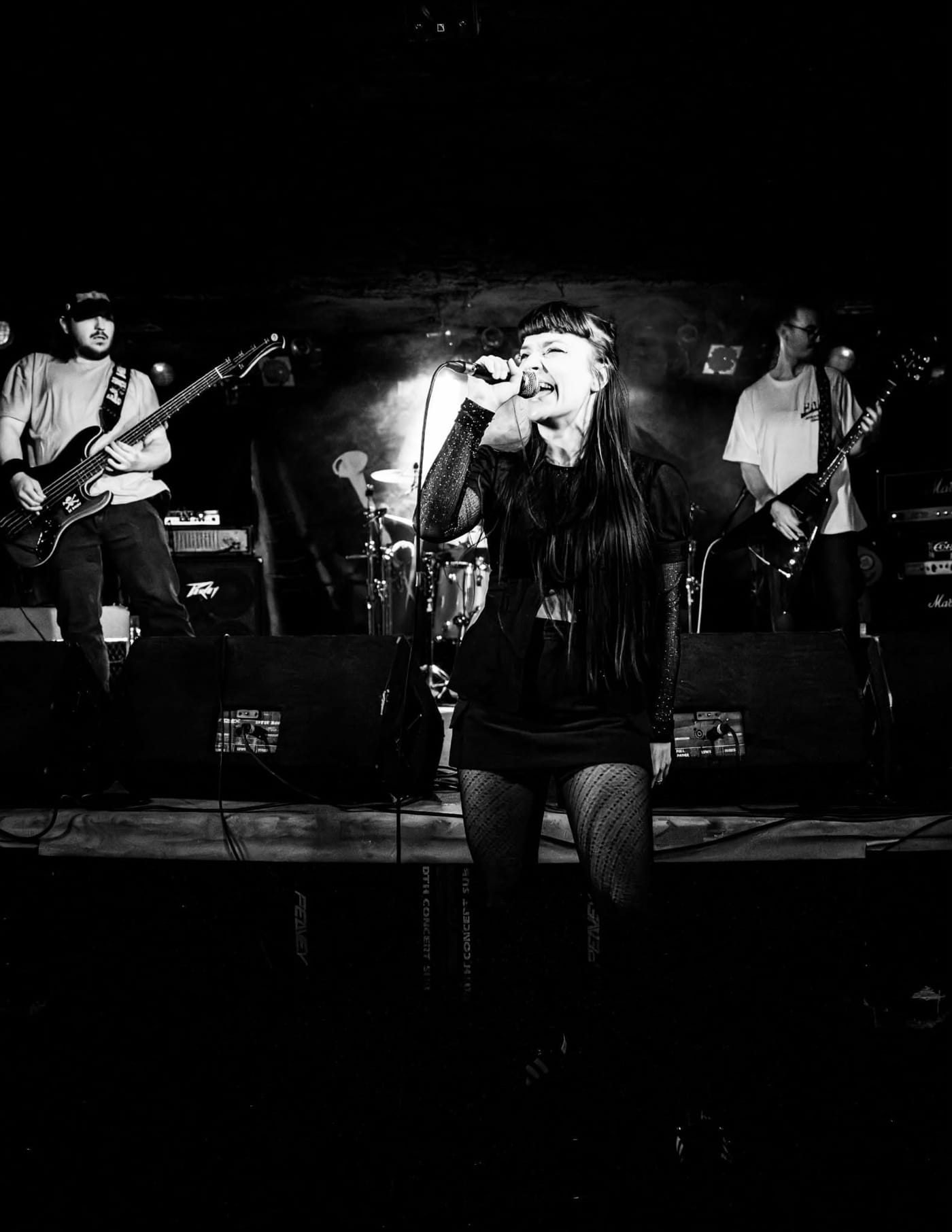
The record leans on early 80s DC and Revolution Summer era stuff, but it doesn’t sound like a nostalgia exercise. What did you deliberately not copy from those records, and where did you catch yourselves getting too reverent and had to pull back?
Paula: We never wanted this to be a copy or some kind of historical reconstruction project. It was meant to be a subtle inspiration. We wanted to immerse ourselves in a particular musical current and take certain elements of its form and spirit, rather than copying everything from A to Z. We wanted the overall sound to reference the Dischord style, but in a distinctly modern way.
Of course, there are moments during rehearsals when we start improvising and suddenly something sounds a little too much like Band X or Band Y. When that happens, we usually just stop and say, “No, this is getting too obvious,” and move on to another idea. The goal was never to recreate the past. It was to take inspiration from it and make something that belongs to us.
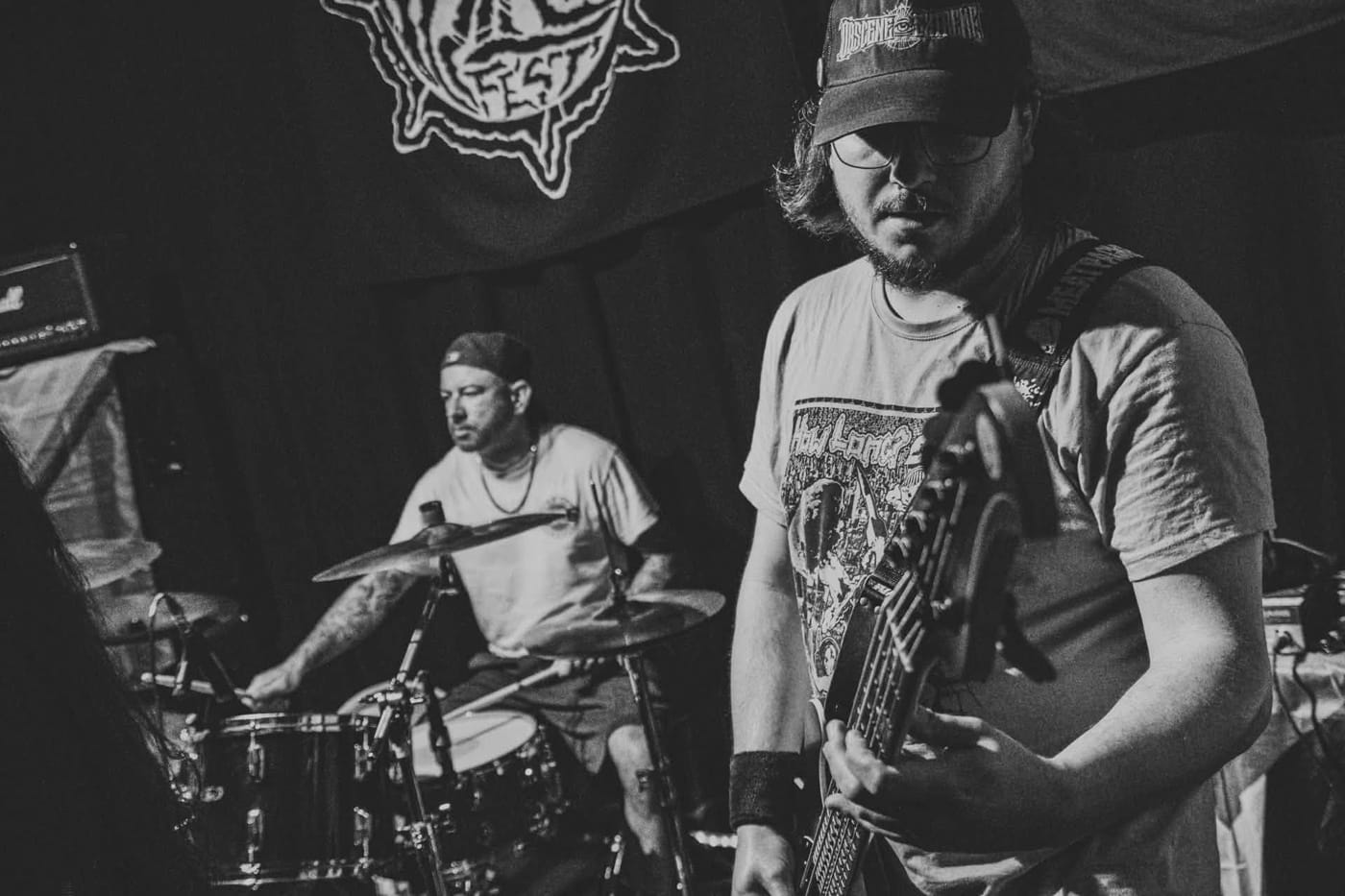
What’s the plan post-release? Shows abroad, second record already sketched, or is it too early to say. And what does success look like for SPLIN, honestly, one year from now?
Paula: We actually have quite a lot of plans, everything from more serious touring ideas to smaller shows that are equally important to us. We’re not booking any more shows for the rest of the year. We agreed to play one more show in Slovakia because the people organizing it are absolutely wonderful, and the venue where we’ll be playing is great as well, Kolaj 22 in Poprad.
I really recommend checking it out. Apart from that, we don’t plan to play anything else before the end of the year, even though we’ve received quite a few offers, including some really great ones. One of the reasons is Maciek. His studio is his main source of income, and as you can imagine, most bands prefer to record on weekends.
We don’t want to take away his opportunities to work and earn a living. The second reason is that we want to finish working on the new material by the end of the year. I hope that SPLIN’s second LP will materialize sometime next spring. That’s what I wish for myself and for all of SPLIN.
Catch the band live at the following shows:
Wyświetl ten post na Instagramie
21.08.2026 Zadwiedyszka Fest, Bielsko-Biała, Przestrzeń Wolności, Poland
04.09.2026 Outside Fest, Wojcieszów, Poland
19.09.2026 Unbroken Fest, Fürstenwalde/Spree, Parkclub, Germany
25.09.2026 Refuse Records Showcase, Warszawa, Mechanik, Poland
26.09.2026 Refuse Records Showcase, Częstochowa, Muzyczna Meta, Poland
27.09.2026 Kraków, Warsztat, Poland
03.10.2026 Płock, Rock’69, Poland
11.11.2026 Nünchritz, JUZ Kombi, Germany
12.11.2026 Luzern, Sendel, Switzerland
13.11.2026 Lyon, France
14.11.2026 Paris, La Télévision, France