
Doug Harrison has spent years hearing other records inside his own ideas and then working the resemblance down through thousands of small decisions. On the new six-song Slug Comparison EP “Cold in Cold out“, released today, September 10, he chose to leave one of those connections fully visible.
Opener “Tongue of the Hollow” sounded so close in spirit to Nirvana’s “Something in the Way” that Harrison followed the connection further, adding a cello synth to the chorus and recording the guitar on a £20 nylon-string instrument from a Help the Aged shop in England.
That story takes up plenty of space here because Harrison gave us a detailed account of how the song came together, but “Cold in Cold out” deserves to be heard as a complete 26-minute record.
Slug Comparison are working at a slower pace across these songs, with Harrison’s voice sitting right at the centre and enough space in the arrangements for the melodies to stick. It is a very well put together EP. The production is clean and full without sounding crowded, and the songs have an intimate quality that suits Harrison particularly well.

There is also a slightly mystical pull running through the writing. Physical things keep coming back: bodies, beds, hunger, breath, pain and exhaustion. Around them Harrison places light, death, souls, time and other stranger images. The combination gives “Cold in Cold out” a sense of mystery while keeping the songs tied to recognisable human situations.
“To Whom Would You Answer” puts someone inside an interrogation, surrounded by questions about who they are and whose portrait deserves a place in the hall. “Back to the World” catches somebody returning after a long period of despair as the narrator admits how far he has disappeared from his own life. On “Burden of Life“, someone stays in bed while even hunger loses its power to move them. The burden eventually becomes smaller.
The title track stretches its view across an entire life. “Cold in Cold out” begins with a cry, ends with a moan and keeps returning to the question of when people finally get to put the load down. “No Healer” closes the EP with the body, pain and time pushed together into some of its strangest imagery. Its answer is bleakly simple: “no healer to come but the passage of time”.
Slug Comparison are Harrison’s solo project in Victoria, British Columbia. He is also the vocalist and guitarist of progressive rock and metal band Fen, alongside drummer Randall Stoll, who plays across “Cold in Cold out”. Harrison started Slug Comparison with “Bringer of Doom” in 2014 and released the self-titled debut later that year. The Ringmaster Reviews said it “simply engulfs the imagination and emotions.”
Dutch label Rock Company released “When You Were Living Here” in 2019, with Something for the Weekend? praising Harrison’s “amazing voice and his ability to communicate a deep sense of meaning and emotion in his music.” After six years away, Slug Comparison returned in 2025 with “A Battle to the End Fought on the Edge of a Knife”. Mandatory Music called that record “modern, emotionally rich, an album with just enough grunge to hit us right in the feels.”
Harrison’s writing process usually starts with accepting that some trace of somebody else’s music is probably going to appear.
“Almost everything I write reminds me of something I’ve heard before,” he said. Sometimes that resemblance is faint enough that he simply notes it and keeps moving. The path between the first idea and the finished recording is long, and Harrison described making thousands of decisions along the way to pull a song closer to something recognisably his own.
Working titles sometimes record the influence before anything else does. One unfinished idea is called “Tootl Ripoff”. Harrison loves the riff and has left it alone because the resemblance is still too obvious. “Original music should be, well…” was where he left that thought.
“Tongue of the Hollow” was different from the beginning. Harrison did not even have a guitar riff when it started. He wanted to improvise some vocals, tuned the guitar to drop D and droned the open strings, thinking about the use of drones in traditional Indian music. An occasional extra chord only needed one finger. Then the first vocal phrase appeared: “Don’t they know…”
“When the first melody line ‘Don’t they know…’ came out, I knew a song was forming.”
Listening back created another problem. Harrison could hear “Something in the Way” in the guitar part, the tempo and the general dirge-like pace. He knew exactly where the resemblance was coming from, and he also knew that pulling the song apart enough to hide it would probably destroy the part he wanted to keep.
“The influence was obvious,” he wrote, “and yet the pull to make a song out of it was incredibly strong.”
Nirvana had been Harrison’s favourite band when he was 15. He took the ferry to Vancouver to see them and kept wearing the concert shirt until it had turned yellow and was mostly holes. After Kurt Cobain died, Harrison recorded television news reports and specials about him onto VHS and bought magazines whenever Cobain was on the cover.
Three decades and another long list of favourite bands later, that music was still sitting somewhere inside his writing. Harrison described the first version of “Tongue of the Hollow” as coming out during an unfocused, judgement-free state where he was following his musical subconscious.
“It’s a beautiful thing to carry another artist’s music inside you.”

He even ended up Googling the meaning of “homage” to work out whether that was what he was doing. Almost ten albums into his own recording history, this would be his first.
Once Harrison accepted the idea, he let it affect some of the production decisions too. “Something in the Way” uses cello in its chorus, so he wrote a cello synth part for “Tongue of the Hollow”. He told mixing engineer Sheldon Zaharko what he was doing, and Zaharko added a doubler to the lead vocal that Harrison believes was also used on Cobain’s voice.
The guitar was about as modest as the rest of the setup.
“I recorded using my crappiest guitar, a nylon string I got from a Help the Aged thrift store in England for 20 pounds.”
Harrison later learned that Cobain had recorded “Something in the Way” while lying on his back. By then his own vocals were finished. He was happy about the timing, mostly because he records vocals at home and lying on the floor would have covered him in cat hair.
The cats ended up much closer to “Tongue of the Hollow” than he originally expected anyway.
Harrison left Cobain’s lyrics alone. He thought about the way poets answer other poets across generations, “something like a rap battle over the centuries”, but a direct lyrical reply seemed likely to become forced. The words had already started arriving with that first melody.
“Don’t they know that I’m not well.”
Harrison calls this one of the parts of writing where he feels most helpless. He mentally scrolls through experiences, searches his imagination for situations and follows whatever the music seems to suggest until the words start making sense.
By the time he finished, he understood “they” to be a flat full of cats. The narrator is their owner, bedridden and approaching death. The animals continue clawing and rooting for attention because they do not understand why their owner has stopped moving around the flat. The place has become filthy, nobody knows where their next meal is coming from, and the person in the bed is still conscious of what is happening around them.
There is one small source of comfort upstairs. Another resident walks across a creaking floor and sings in the evening, giving the dying narrator something beautiful to hear while the cats move around the room.
That ordinary domestic setting fits the wider EP surprisingly well. “Cold in Cold out” spends a lot of its time with people whose bodies or minds have stopped cooperating with them, people trying to come back, people wondering how long they can keep carrying what they have. Harrison keeps the language personal, then lets stranger images creep around the edges.
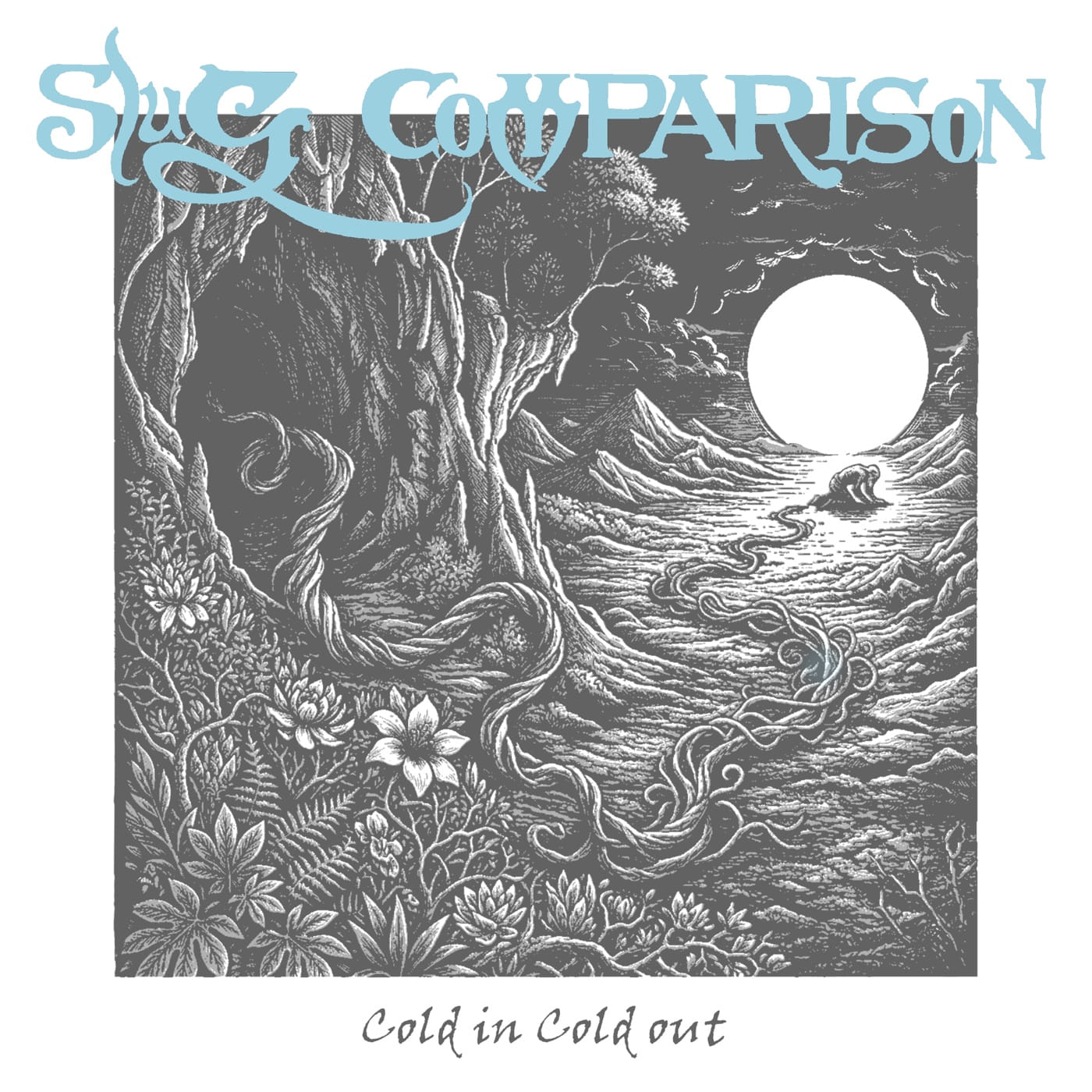
All six songs were written and produced by Harrison, who handled vocals, guitar, bass and programming. Randall Stoll plays drums. Sheldon Zaharko mixed the EP and recorded the drums, with Brock McFarlane mastering it at CPS Mastering. Inkantation made the cover drawing.
The digital EP is out independently today. At 26:42, it is short enough to take in as one piece, and the consistency of the production helps the six songs stay together. There is real care in how these arrangements are put together. Harrison’s melodies are immediate, his voice carries the quieter setting easily, and the cello synth on the opener gives a hint of what these songs could become in a fuller live setup. Hearing the whole EP arranged for a room and a stage would be worth seeing.
“No Healer” gets the last word: “no healer to come but the passage of time”.