

Kali Yuga, Buddhafield and a Messiah complex run through the titles on Viscera///‘s fourth album, but none of them promise enlightenment. Michele Basso is interested in the darker end of spiritual belief: dogmatism, superstition, suprematism, manipulation and cultural denial. On “4. Assets for Psychedelic Warfare“, religion can carry someone towards bliss or leave them in a mental void.
The Italian post-metal group released the album on July 24, 2026 through Time To Kill Records. It is their first full-length since “3”, released nine years earlier. During that time, Viscera/// returned to a two-guitar set-up, pushed the melodic and psychedelic parts further, and found more room for clean vocals without losing the harsher side of the band.
Godflesh is still an obvious reference in the low, mechanical guitar weight. The faster bursts come from black metal and grindcore, while electronics, psychedelia and dark wave make more room for melody and clean singing. Nasum, Sonic Youth, Emptiness and Ultha are useful reference points too, but none of them explain the whole record.
“Our approach to spiritualism is based on digging into the most obscure part of it, or rather what is supposed to be enlightening but turns out bleak, such as dogmatism, superstition, suprematism, manipulation and cultural denial,” Michele said. “Speaking of the album’s more related titles, they tell about apocalyptic visions, cults and psychological drifts. As rationalists, we can’t unsee how the abandonment to religions leads the individual either towards positive bliss or mental void. The whole extended topic is very fascinating and deeply human. It casts metaphors and lore that can be used as a vessel for our soul-searching intents.”
“The Messiah Complex” may sound like another mystical reference, but Michele uses it in its psychological sense. It describes a state in which someone feels responsible for all the evil people do. The title belongs beside the album’s cult imagery, though its subject is personal burden rather than religious belief.
Every Viscera/// full-length is a concept album, and the first three belong to a wider trilogy. Michele puts that down, at least partly, to his inability to keep things short. The same applies to the sequencing: the music keeps running until the physical record is over. On “4”, he returns to the effect that everyday reality, belief and psychological pressure can have on people who are already struggling.
Wyświetl ten post na Instagramie
“Usually I follow this narrative pattern: shock, awareness, reaction, as the album was set like a standard three-act play,” Michele said.
“Wipe Out” and “Agents Of Kali Yuga” make up the shock. They establish the context and issue the record’s first warning. “Wipe Out” acts as a disclaimer before the heavier argument of “Agents Of Kali Yuga”: the individual is small inside a world built on nothingness, and peace of mind becomes the only shelter, regardless of what has to be done to reach it.
“Radiant” moves the record into awareness. Its subject is the way an ultra-demanding and hypocritical environment crushes people who try to live with less attachment to possessions and status.
“At The Buddhafield” interrupts the main sequence as a psychedelic intermezzo. Its references and samples point back to the religious cult in the title, so even this apparent detour belongs to the record’s central argument. Michele puts the turn plainly: “From here the psychedelic warfare actually begins.”
“The Messiah Complex” follows. Then “El Magico” and “Autoberserk” bring in the action Michele described. Primordial anger and disillusion take over, leading towards the album’s proposed solution: stand tall and isolate yourself by whatever means are necessary.
Wyświetl ten post na Instagramie
The nine years between “3” and “4” were intense and crowded. Viscera/// have never had a stable line-up, but the band learned to use that rather than fight it. Michele sees the group as a wider collective, including photographers, graphic and video artists, sound designers and engineers who all feed into the same result. Some stayed, some left, some returned, and each left a mark on the releases they helped shape.
“All these people came, went, returned and left again leaving their substantial mark on every release,” Michele said. “Of course it means constant changes, but we have dealt with it in the most natural way possible. Nothing of the band’s own essence was ever discarded or really abandoned.”
During that period, Viscera/// returned to two guitars and spent more time on the melodic and psychedelic parts of the band. They were not trying to clean up the older aggression. The aim was to keep it in reserve and let the chaotic rushes out when the songs actually needed them.
Wyświetl ten post na Instagramie
Clean vocals are central to that work, though they are not new to Viscera///. Michele points back to the band’s second demo, where conventional singing was already present. The problem was finding music that could support it and developing a voice that did not sound like a metal singer temporarily attempting something proper.
“When you grow up in the ’90s it’s almost impossible not aiming to sing catchy tunes, even if destiny brought you into extreme music,” Michele said. “Problem is you’ve got to be good at it, or at least acceptable.”
Wyświetl ten post na Instagramie
Getting there took time. The songs first had to leave space for conventional singing, which was difficult while the band’s taste remained heavily weighted towards extremity. Michele sees the first three albums as a gradual move towards the band’s current form. He introduced his “real” voice in small doses, getting himself and the audience used to it, then pushed it further with each release. He also wanted to avoid sounding like a metal vocalist trying to sing properly. The goal was simpler: write vocal lines people could remember and sing along with.
“Then came ‘Spirit of ’86’.”
“Spirit of ’86” was the point where the change finally made sense to everyone around the band. Michele says it established Viscera/// as a “weird metal band” and convinced them that this direction was worth following. Putting it on an EP gave them room to try the idea without gambling an entire album on it. Once it worked, they had the confidence to go further.
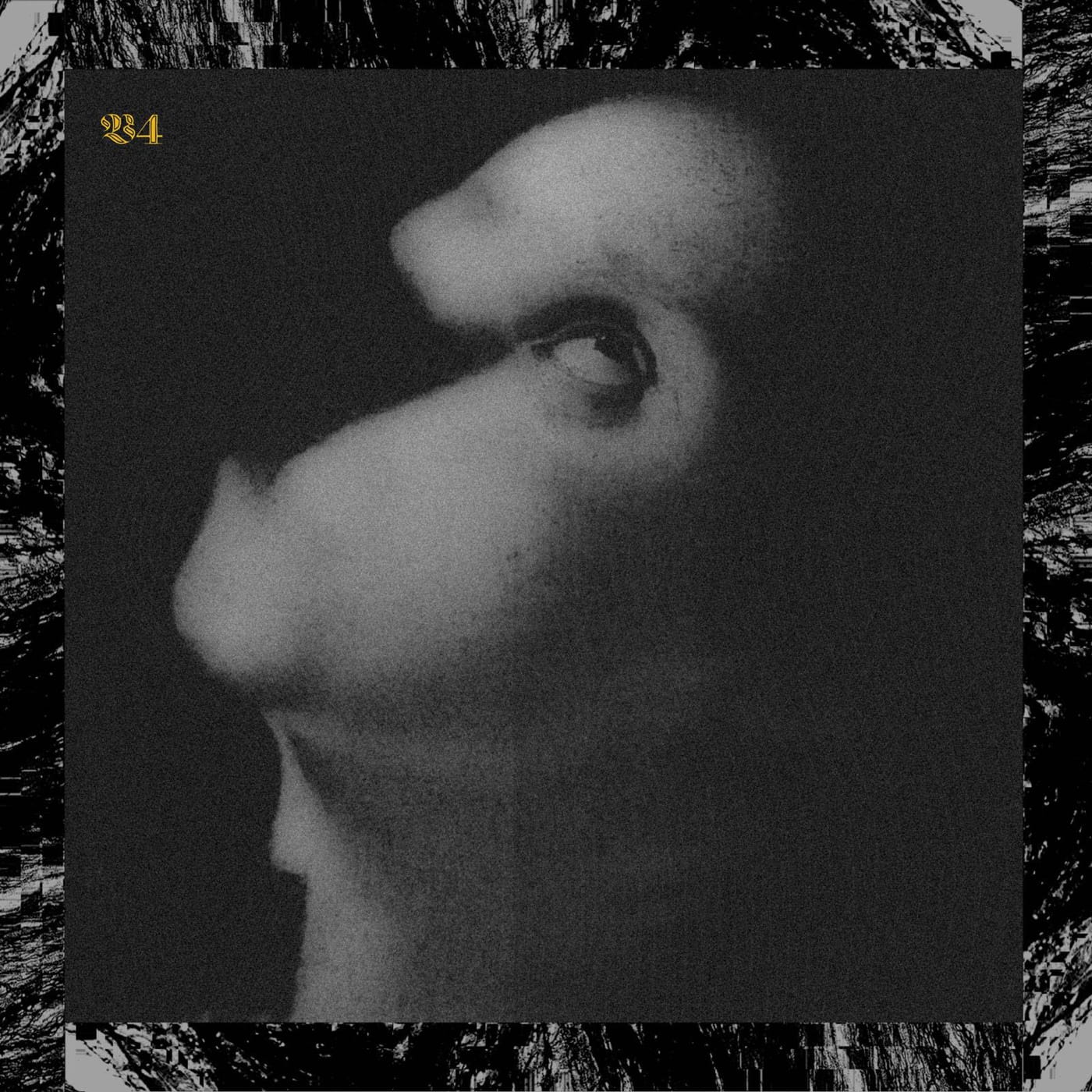
When work on “4” began, the melodic songs arrived naturally and Michele concentrated heavily on the vocal lines. He also places “Celebrate Death”, from the split with Tons, between “Spirit of ’86” and “Radiant” in the story. It had first been discarded and was later rearranged, making it an important transitional piece even though it was not written for this album.
“With ‘Radiant‘ we wanted to dive even deeper into the hypnotic and gloomy side of our sound, blending heavy riffs with dark, immersive atmospheres,” the band commented. “It’s a natural evolution of the path we started exploring with ‘Spirit of ’86’, pushing those vibes further into something even more intense and psychedelic.”
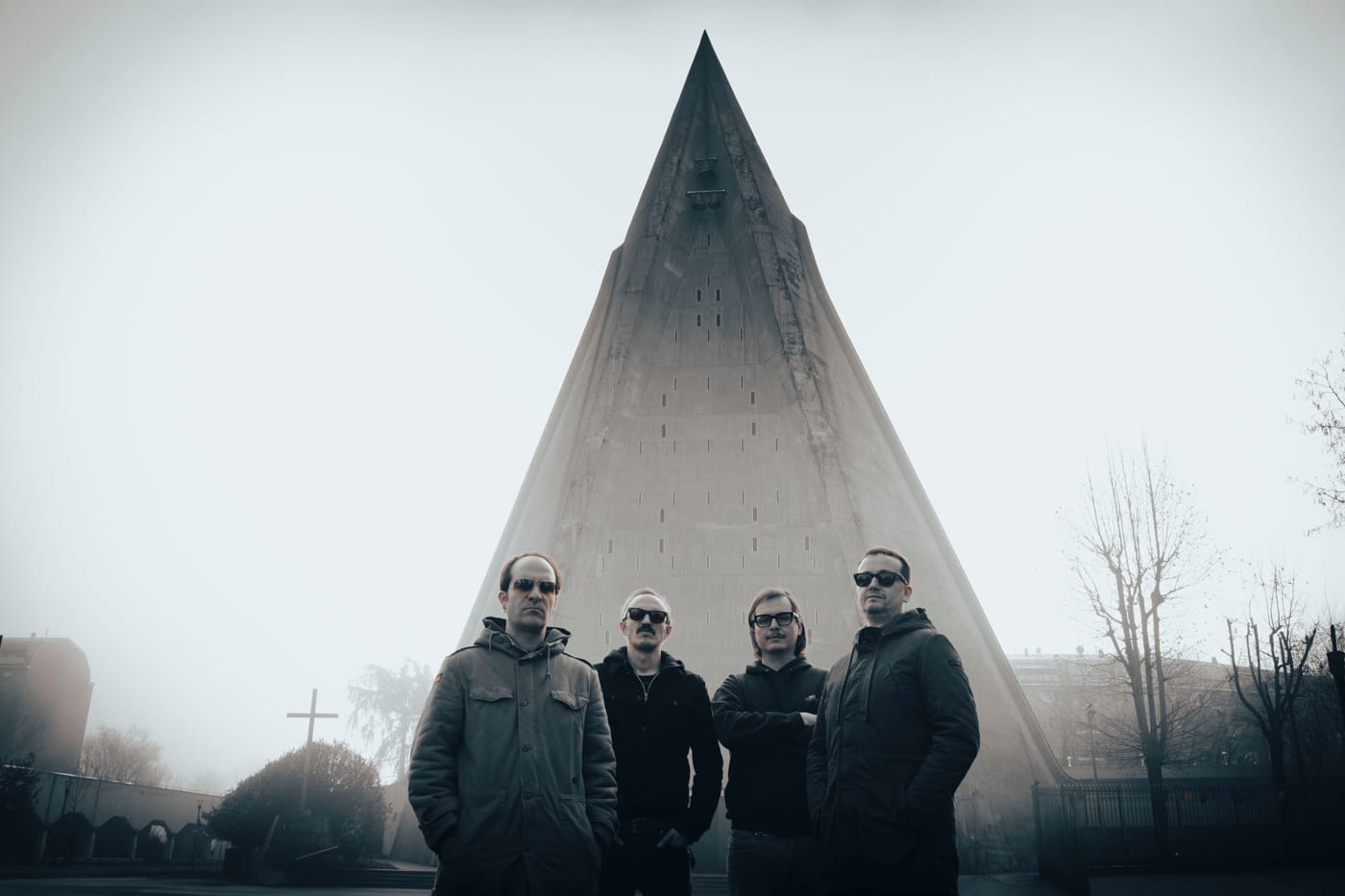
The line-up heard on the album is Michele Basso on vocals, guitars and electronics, Marcello Bellina on guitars, Gian Lorenzo Cantù on bass, and Federico De Bernardi di Valserra on drums. The current line-up keeps Michele, Gian Lorenzo and Federico, with Riccardo Brembilla now playing guitars.
When Marcello left for the second time, the others did not search for a copy. They wanted a lead guitarist with a personality that could alter the songs rather than reproduce an existing role. Michele describes both guitarists as one-of-a-kind people with artistic instincts that cannot be replicated.
Marcello brought a distinctive guitar style and extensive knowledge of electronics and sampling. He and Michele have worked together inside and outside Viscera/// for around 20 years, and Michele expects that relationship to continue in other forms.
Riccardo comes from a stronger grind hardcore background, but he also wanted room to experiment and prove himself. He was already a fan of Viscera/// and saw the band as a place where he could try ideas that did not fit elsewhere. He settled in quickly, and the others were impressed by what he brought to both the new songs and the older catalogue.
“Of course it feels different, but in a very positive way,” Michele said.
Viscera/// have now spent 26 years in the Italian and southern European underground. Michele has seen younger people return to heavy music, start new bands and bring in a fresh audience after a difficult period. Their part of Italy remains peripheral to many subcultures, so everything takes more effort. It also creates the hunger, anger and initiative he calls “fuel for the soul”. Every small step can feel like a conquest.
Michele’s scene report is not romantic. Most people are fine, he says, but the same small systems of money and exposure also produce posers, cheats and primadonnas. Experience has made the band careful about trust and wary of public opinion for its own sake.
“We learnt things the hard way and basically understood that nothing is to be taken for granted, trust is something to sip with extreme care and, most important of all, your opinion is not always required. So it’s a good choice to shut the hell up, especially in public.”
🔔 IDIOTEQ is ad-free, independent, and runs on one person’s time. If you want it to stay that way: DONATE via PayPal or SUPPORT via Patreon.
NEW: IDIOTEQ Explore 🗺️ Browse 15+ years of our archive by city, country, and style. Find artists on the world map or trace related sounds through the styles map.
Stay connected via Newsletter · Instagram · Facebook · X (Twitter) · Threads · Bluesky · Messenger · WhatsApp.