

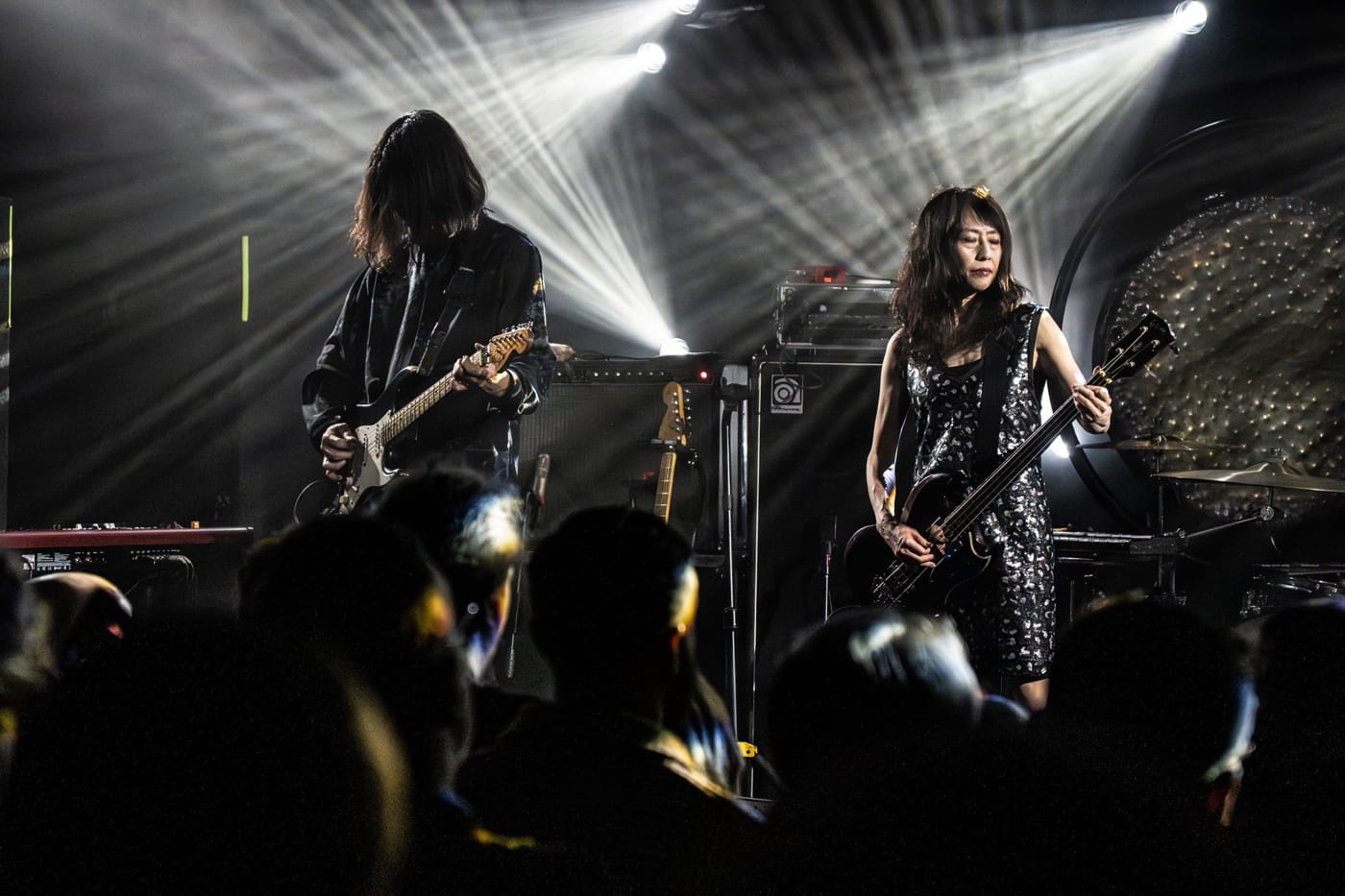
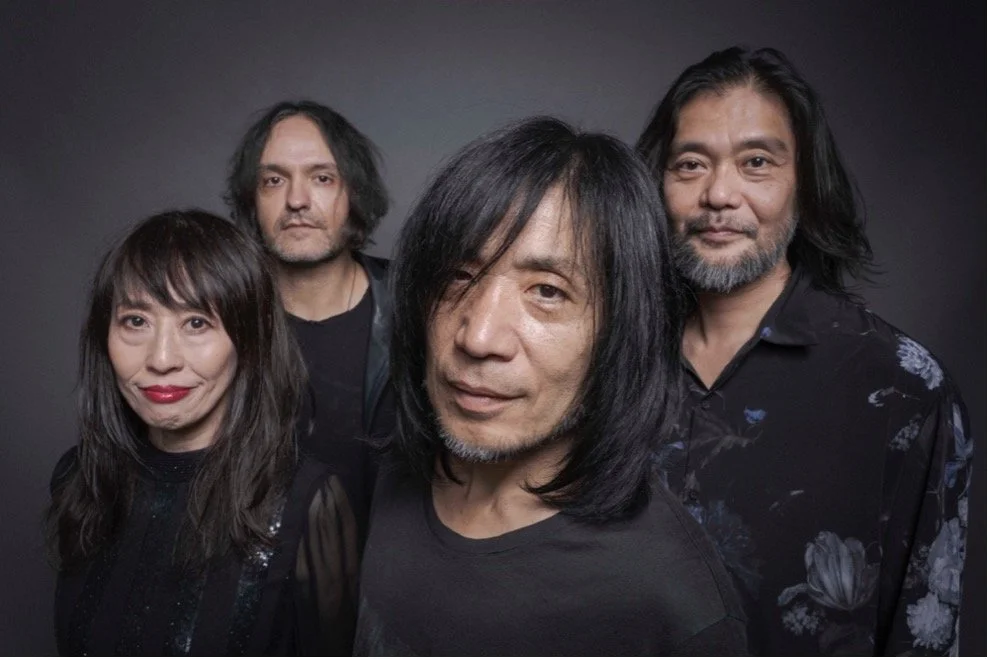
Talking to Mono is a real honor. Twenty-seven years in, thirteen studio albums deep, a quartet who have shaped what serious instrumental music in this register can sound like, and Taka still writes back to interview questions personally and at length. Sitting down for a long Q&A with them about a record this personal is not something we take for granted at IDIOTEQ.
The Tokyo band just put out “Gerbera“, the second single from their upcoming album “Snowdrop“, out 12 June via Temporary Residence Ltd. and New Noise. It follows “Winter Daphne“, the first single, which still feels like one of the most extraordinary things Mono have released.
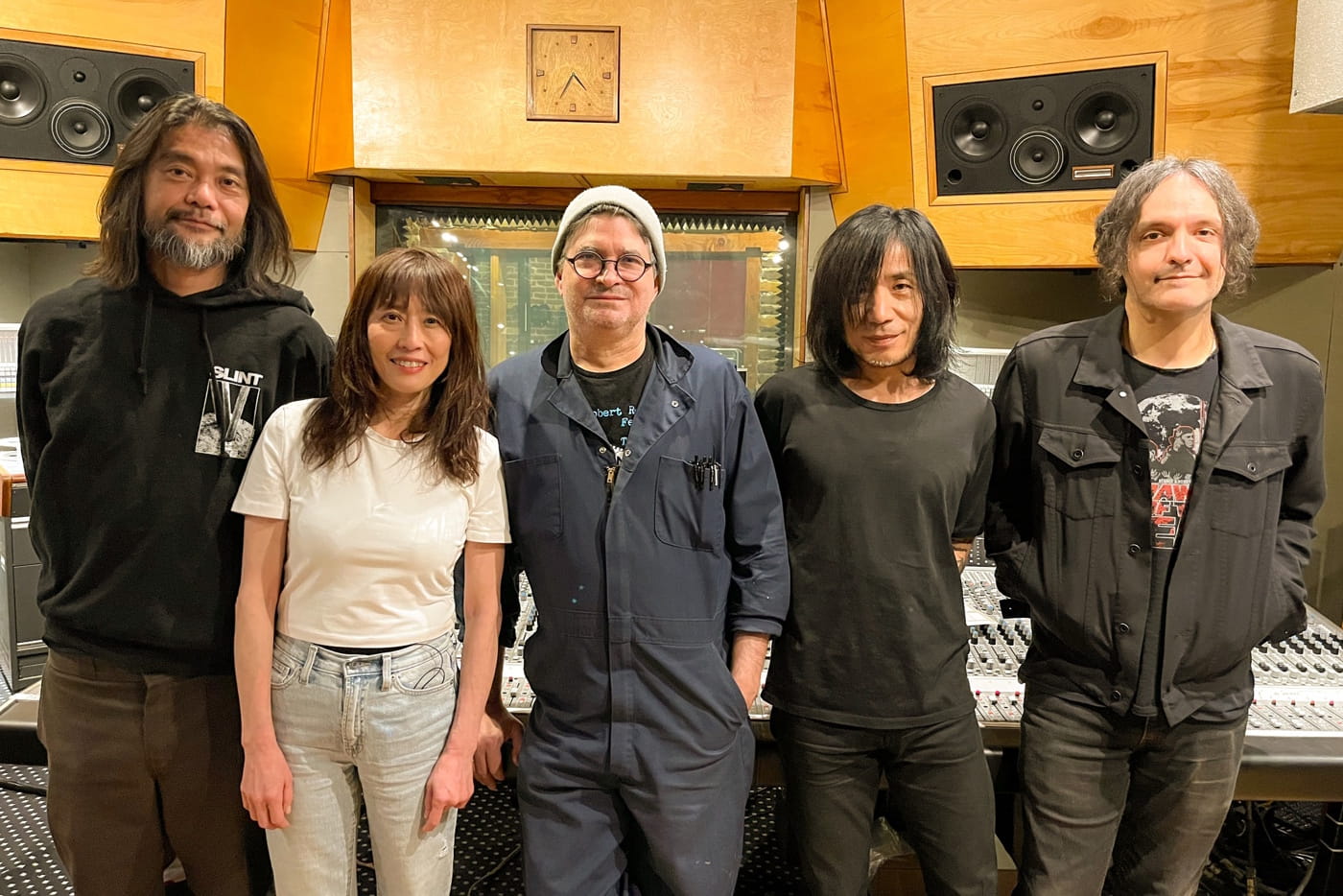
Both songs sit on an album Mono made without Steve Albini for the first time in over two decades, recorded with Brad Wood at Albini’s Electrical Audio in September 2025, mastered by Bob Weston, with a 10-piece orchestra and an 8-piece choir conducted by Chad McCullough.
This is post-rock that doesn’t sit politely in the background. Mono write the kind of long, slow-burning piece where four minutes in you suddenly realise you’ve stopped doing whatever you were doing, the kind of music that scores a scene without a film being there.
A lot of emotion, a lot of those heavy moments where the whole thing opens up at once. Ready-made soundtrack for the most gut-wrenching cut in some film that hasn’t been made yet. You probably know exactly what I mean. If you don’t, the two singles from “Snowdrop” out so far are the place to start.
Wyświetl ten post na Instagramie
What makes the conversation below worth your time is how directly Taka writes about loss. He talks about Steve’s passing, about his own father, who died four years ago, and about his father-in-law, who passed away on 1 January 2025.
He talks about the funeral on 11 January, where the officiant asked him to pick a song to play, so he chose one he had written for his wife and recorded with Steve in Chicago, still unreleased to this day.
The atmosphere at the funeral was full of light, he says, almost like a wedding. The next day, 12 January, he sat down with all the music he had been writing for years, and watched the dots become a line. That line became “Snowdrop“.
Over the course of the Q&A, Taka walks through almost every angle of the record. He talks about the days after Steve’s passing, when his close friend and partner Jef called and told him simply to keep writing songs.
He covers the decision to bring in Brad Wood (made in a conversation in Chicago with Jeremy from Temporary Residence and drummer Dahm), the choice of Bob Weston for mastering and what that bond back to Steve meant to him, and what it felt like to walk into Electrical Audio knowing Steve wouldn’t be there.
He explains why the song titles are arranged in the order the flowers bloom, why “Winter Daphne” was rewritten on 12 January and why “Farewell to Spring” closes the record on a choice rather than an inevitability, why the choir came in on “Winter Daphne” first and ended up on four tracks total.
There are smaller details too: the photo of him and Steve that’s still on his iPhone lock screen, the moment most of the album was captured in single takes, and one of the sharpest lines in the interview, on what changed in the room compared to every Mono session that came before. “Everything was exactly the same as always, except for the one fact that Steve wasn’t there.”
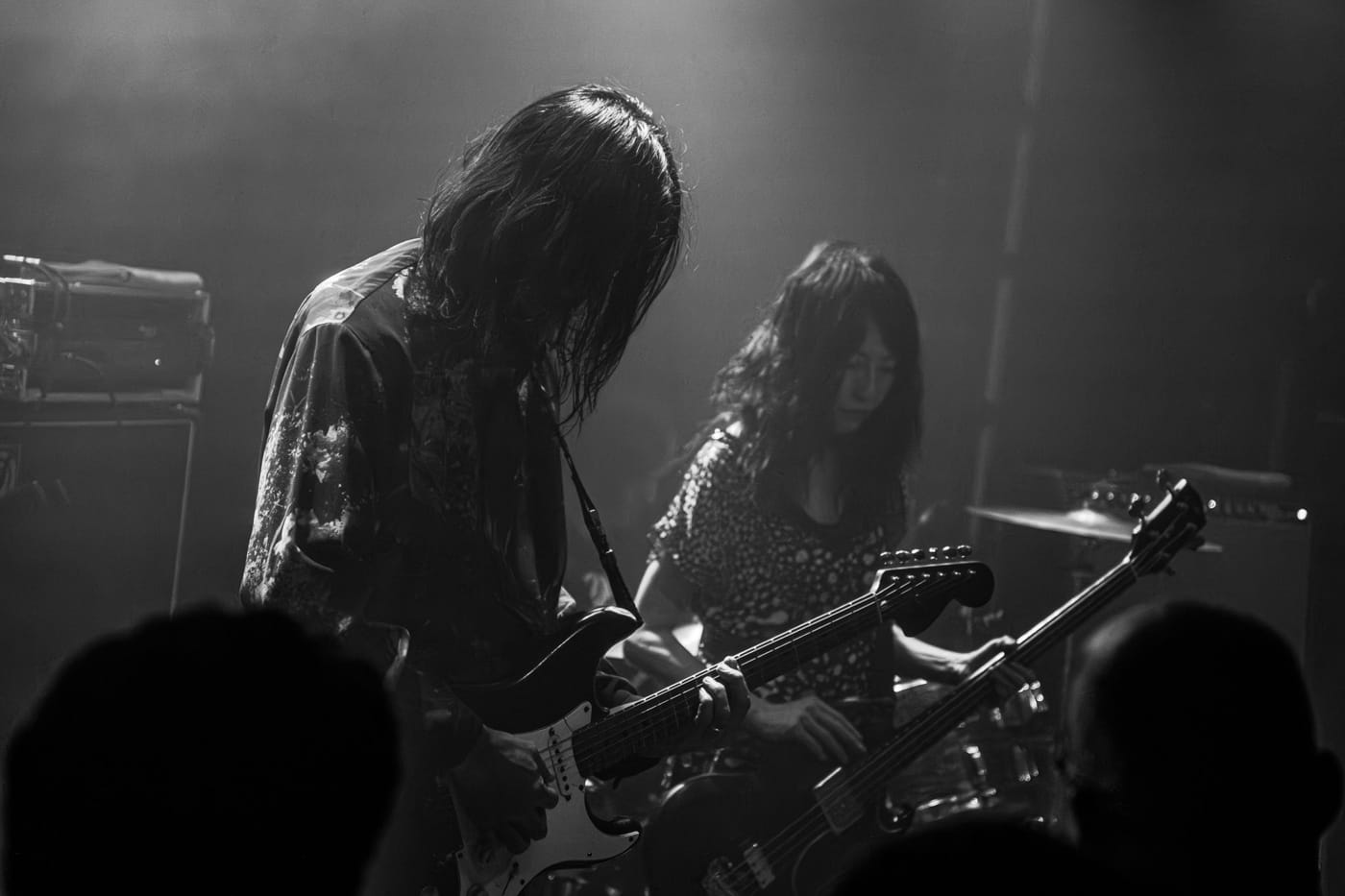
Read the full conversation below. Taka talks the days after Steve Albini’s passing, the phone call from Jef that got him writing again, three funerals across four years, the flower language threaded through every title on “Snowdrop“, rewriting “Winter Daphne” the day after his father-in-law’s funeral, how “Farewell to Spring” closes the record, choosing Brad Wood and mastering with Bob Weston, returning to Electrical Audio in September 2025, the 8-piece choir and Chad McCullough’s arrangements, what he learned from Steve that has stayed in his playing, the Tokyo “Forever Home” show, performing “Snowdrop” on tour through Asia and Europe in 2026 and 2027, and what he wants the album to give a stranger who puts it on five years from now with no memory of any of this.
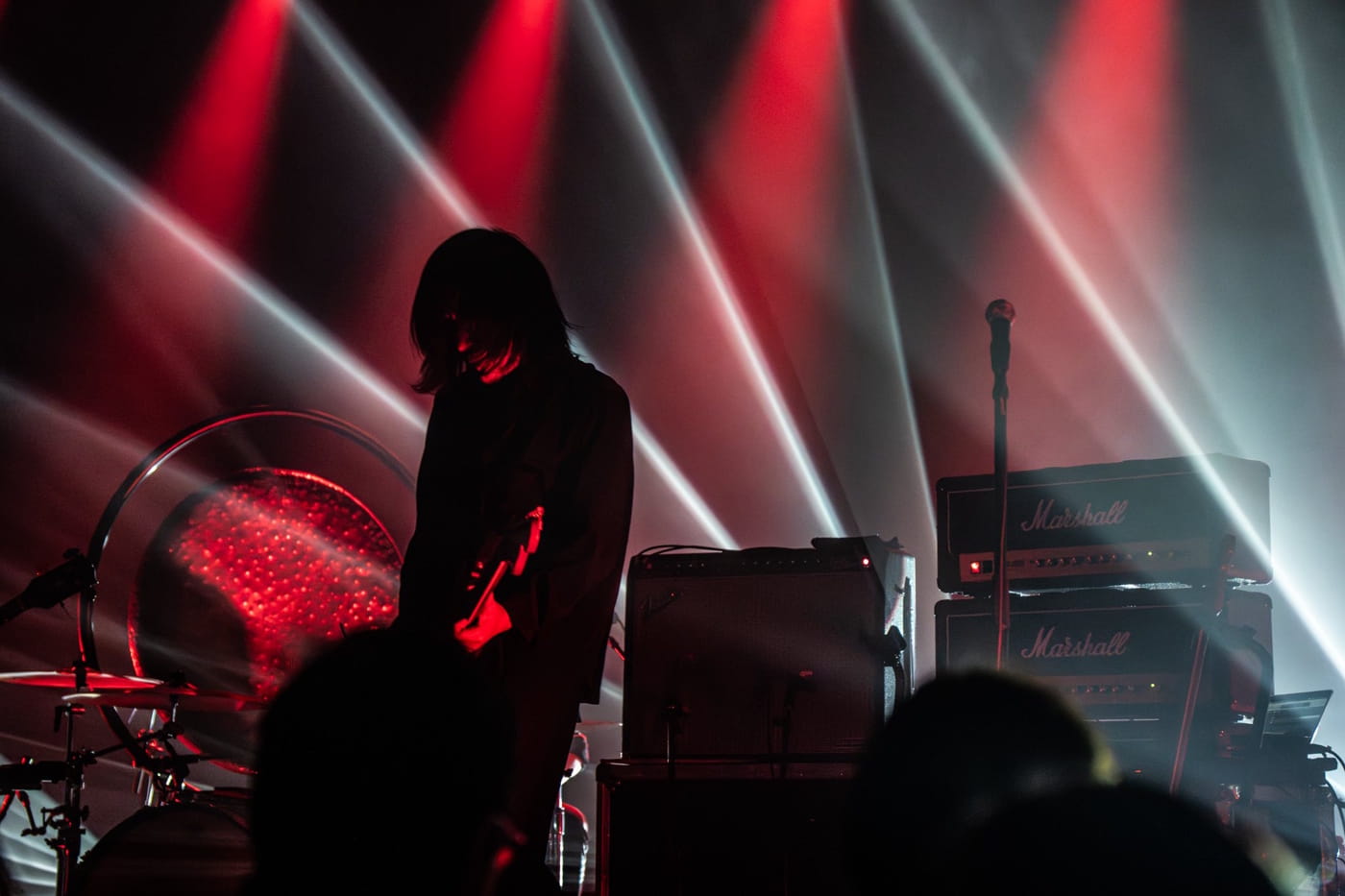
I want to start at the quietest point – the period right after Steve’s passing, before any of “Snowdrop” began to form. What did those days actually look like for the four of you? Not the public tribute side, but the practical shape of a week where you suddenly knew there wouldn’t be another session with him.
After Steve’s passing, it took me a long time to accept reality. I remember crying incessantly for at least three days. It felt as though there was a gaping hole in my heart; I had no energy and I couldn’t even think straight either. Despite that, my head was filled with questions that I couldn’t find answers for.
That was when Jef—a dear friend and one of our long-term partners—called me and said, “Taka, keep writing songs. Keep writing just as you have been.” From that day on, I returned to my daily life and immersed myself in songwriting. By doing so, I was able to overcome the sorrow and the grief of the uncertain future.
Was there a point where you genuinely weren’t sure MONO would make another studio album at all, or did that thought never fully land?
Once I was able to accept Steve’s passing, I deliberately tried not to think about anything. However, I was certain that the right person—someone truly wonderful—would always appear exactly when needed.
There’s a line in the album description about finding “renewed focus in the freedom of unknowing” – that one stayed with me. How did you arrive at that specific framing, and what did not-knowing give you that certainty couldn’t?
I felt that the most important thing was to focus on the solution rather than the problem. Instead of clinging to things, I chose to direct my consciousness towards positive light and love. We cannot change the past and the future remains unknown. It is simply about the determination to live this present moment consciously and with strength.
The language of flowers threading through the titles – flowers traditionally given to the deceased, each one carrying its own meaning – is a real centerpiece of how “Snowdrop” is built. When did that concept enter the writing? Was it the frame you built the album around from day one, or did it surface as a way of making sense of pieces that were already coming?
Going back a bit, I lost my father four years ago. I remembered him saying to me while he was still alive: “Why don’t you write a song dedicated to your own precious wife?” So after his passing, I wrote a song for her for the first time in my life. I recorded that song with Steve and an orchestra in Chicago; though the song is yet to be released at this moment.
After Steve’s death, while I was continuing to write music every day, my wife’s father also passed away on January 1, 2025. We held the funeral on January 11. At that time, the person officiating the service said to me: “Taka, if there is a song you would like us to play during the funeral, please let us know.” I decided to use the song I had written for my wife. The atmosphere of the funeral wasn’t heavy or sad like those I had experienced numerous times before. It was overflowing with light. It felt almost like a wedding, where one renews a vow of eternal love.
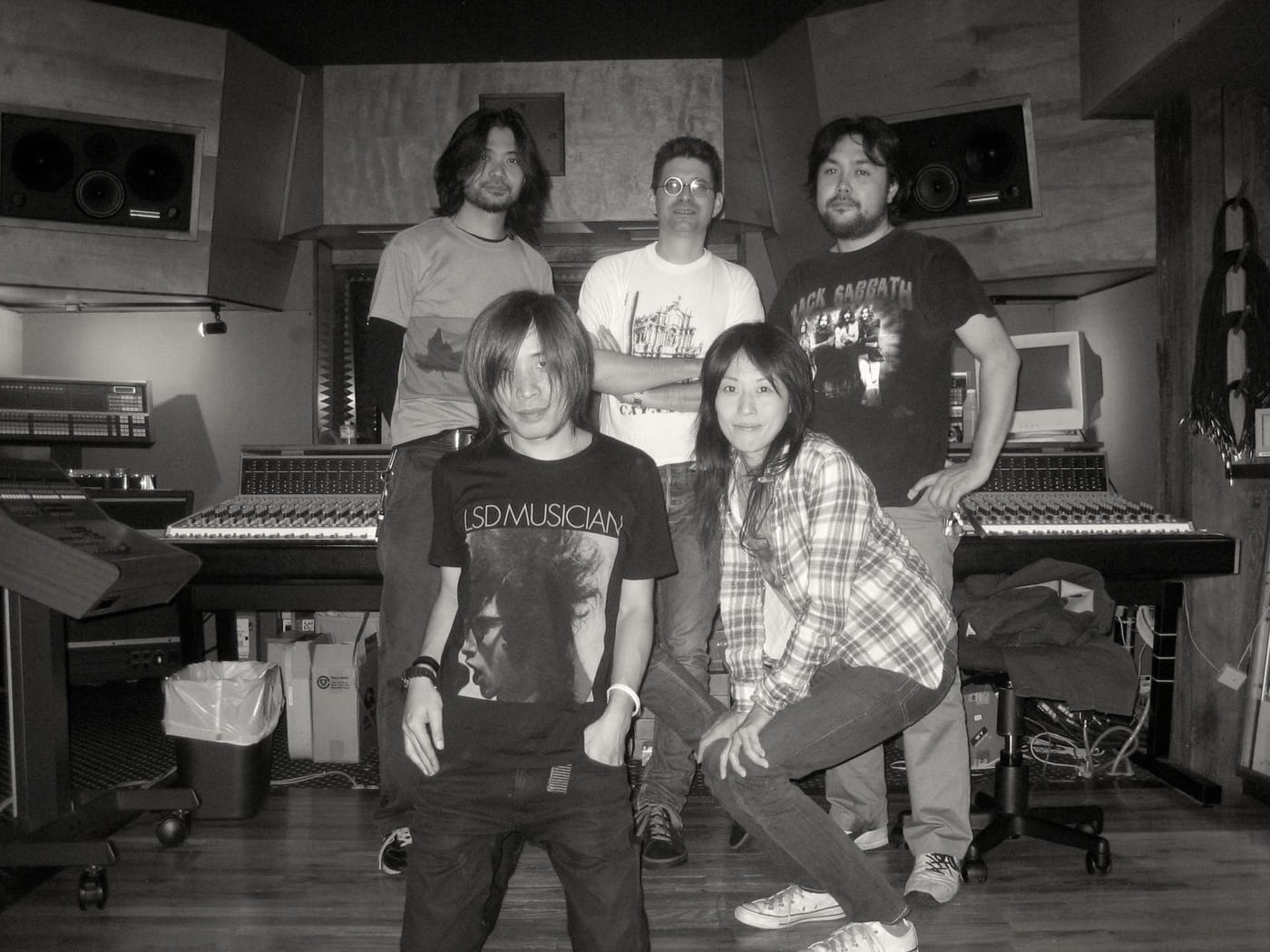
It was the first time I had ever listened to MONO’s music at a funeral, and it made me realise once again that our music can heal the pain and sorrow of those left behind and offer them light. As I watched the family and friends bring flowers one by one to the coffin where the deceased lay, I also found myself wanting to understand the meaning behind offering flowers. I learned that every flower has its own meaning—its own “language”—and that people use them to convey a final message to the departed in place of words. On January 12, I returned home and listened back to all the songs I had been writing over the past few years. My father, Steve, my wife’s father—all these separate partings and the various unsettled emotions I held suddenly connected. The dots became a line. That became the album “Snowdrop”.
“Winter Daphne” – final surge of life, glory, eternity – that’s an enormous weight to hand to a single piece. Did the flower come first and shape the composition, or did the piece already exist and the flower arrived later as the right name for what you’d made?
This song—both the title and the second half—was originally completely different from the current version. I rewrote it on January 12. The main melody from the intense first half, featuring strings and guitar, reappears in the second half as a chorus within a different worldview. This was because I wanted to express the final explosion of life, and the image of a person peacefully ascending to heaven, wrapped in gentle love and light.
It was several months later that I realised the title “Winter Daphne” and its flower language were the perfect fit for this song. It was as if it had been decided from the beginning; it suddenly caught my eye as a flash of inspiration. It felt like finding the last piece of the puzzle.
And on the other end, “Farewell to Spring” as the closer is interesting. Spring is the thing that comes back. Saying farewell to it reads as a choice, not an inevitability. Why that as the last gesture?
When I decided to use flower names for the song titles, I wanted to arrange them in the order they bloom, starting from winter. Through the course of a year, you gradually accept and overcome the parting from those you have lost, until finally, a new spring arrives. That spring is different from before; it is the beginning of a new chapter in life. I wanted to write about that moment of saying farewell to spring and beginning to walk your life’s journey on your own once more—carrying irreplaceable, precious memories and a sense of gratitude in your heart.
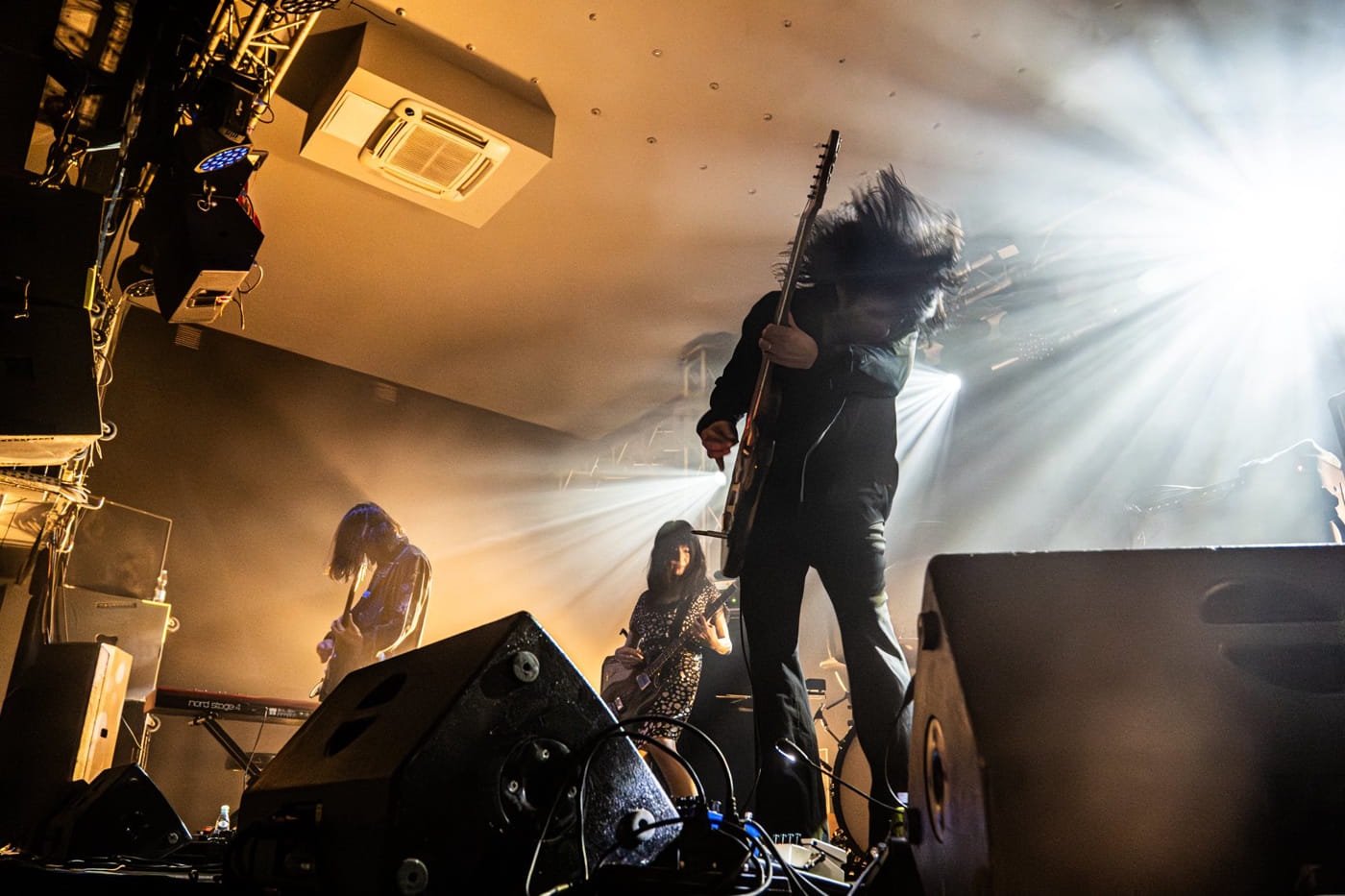
Shifting to the decision around Brad – what stands out isn’t only that he already knew your process, but that he and Steve were friends for decades. Was that closeness to Steve a comfort going in, or did it make the sessions emotionally heavier than if you’d worked with a complete outsider?
During Steve’s memorial service in Chicago, I sat down with Jeremy, who is the owner of Temporary Residence Ltd.— the label we’ve been working together for over 20 years—and our drummer, Dahm, to discuss who our next engineer should be.
Both of them recommended Brad. Brad approached the project with an immense amount of respect for us and for Steve. He was sincere, professional and did a truly magnificent job. The studio was constantly overflowing with creative, positive energy—it was a wonderful atmosphere, almost as if Steve was watching over us with a smile. I am filled with a deep sense of gratitude for Brad.
What’s something Brad did differently in the room – a specific decision, a moment, a silence, a suggestion – that you wouldn’t have gotten from anyone else?
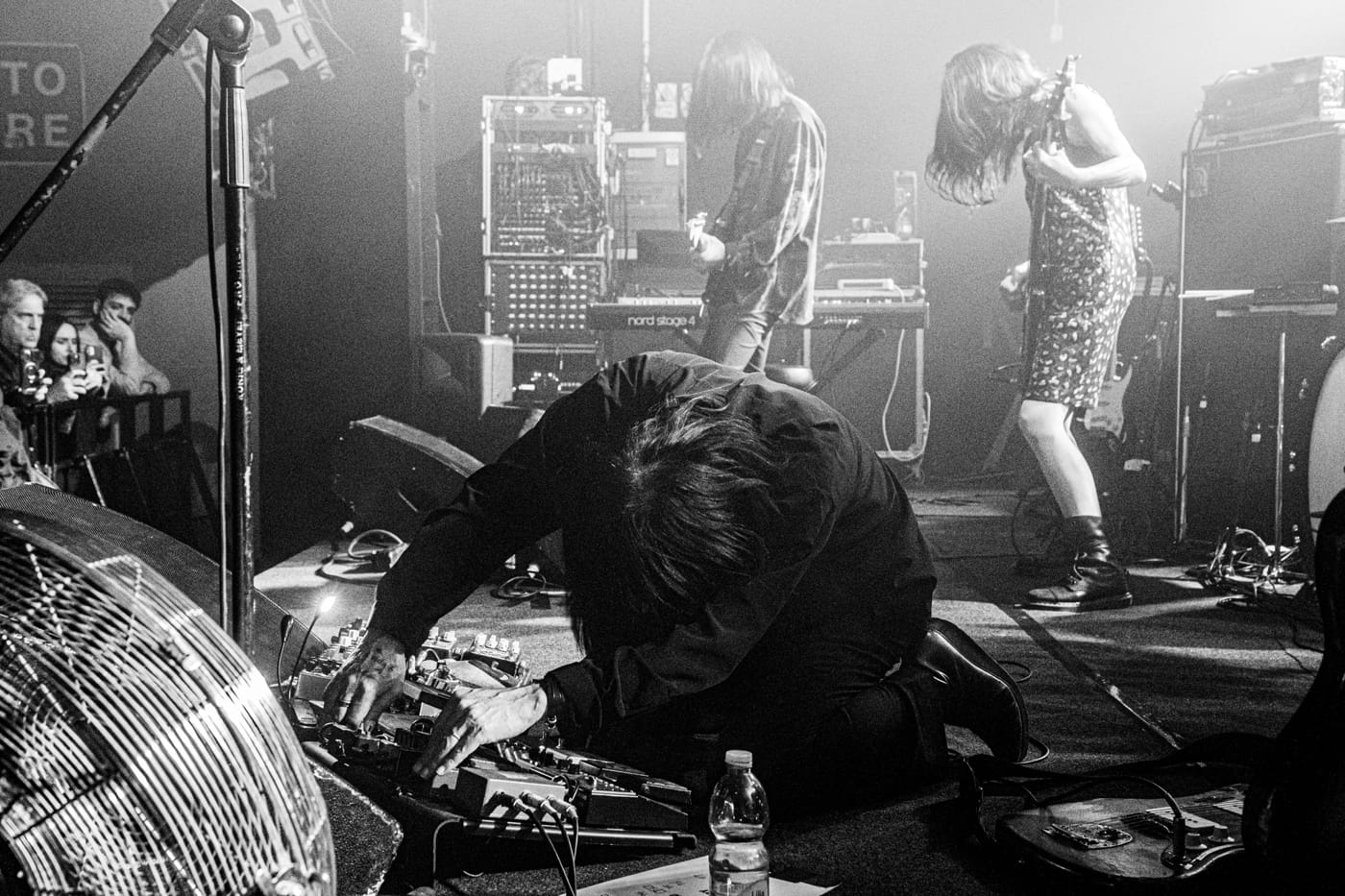
The recording finished much earlier than originally planned—instantly, like it was almost a blur. As always, we performed just as we do live, and we captured most of the songs in a single take. That’s how much the sound Brad delivered resonated with our hearts and souls, and the atmosphere was calm and relaxed throughout. It didn’t feel like anything out of the ordinary. It felt like we simply did what we had to do and everything we were hoping for manifested in its perfect form. It was as if everything had already been decided—as if we were being led to exactly where we were meant to be.
Having Bob Weston master it keeps the thread back to Steve’s circle running. Was continuity through the people he trusted a conscious plan, or just the natural choice of the people you already trusted yourselves?
That’s right. Bob is the engineer we trust more than anyone else—he is a precious partner and, as you mentioned, he represents our bond with Steve.
On Electrical Audio itself – walking back in there in September 2025 must have been strange. What caught you off-guard about being in that room without him? Were there moments you caught yourself expecting to hear his voice through the talkback?
Walking into his studio without him felt very strange at first, but throughout the recording, I always felt Steve’s presence. I believe it’s because he lives on in every single sound that resonates within that magnificent studio he left behind.
You’ve always recorded live, the four of you in the same space at once. Did that hold steady on this session, or did grief change something in how you played together – the attention, the patience, the eye contact?
Everything was exactly the same as always, except for the one fact that Steve wasn’t there.
Moving to the arrangements – you’ve worked with Chad McCullough before, so the orchestra isn’t new, but eight voices in a choir is a real step. Why now for human voices specifically? What were they able to hold that guitars alone couldn’t reach?
Fundamentally, with every album, I set a theme of incorporating new elements that we have never explored before. The reason for wanting to use a choir this time was the new arrangement for “Winter Daphne” that I mentioned earlier. I asked my trusted friend and partner, Chad, to assemble the singers for us.
Was there a specific moment during tracking when the choir came in on a piece and it shifted something in your head about what the song was actually about?
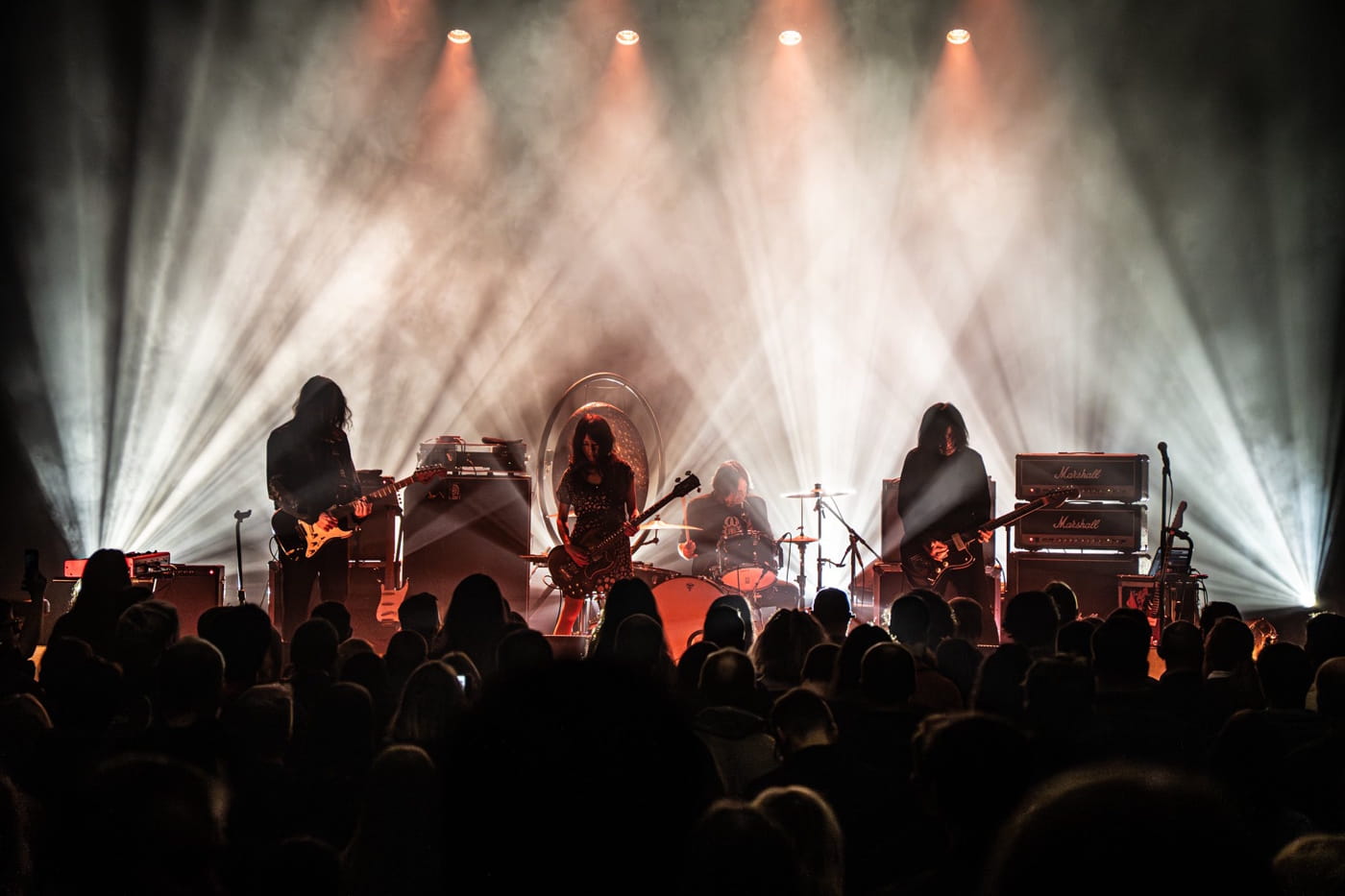
Over the course of about a month, I worked closely with Chad—while getting advice from him—and carefully prepared everything, including the male and female parts, the number of singers, and the specific vocal styles. We used the choir on four tracks this time and the process was incredibly smooth. It came together exactly as I had imagined. I feel that this new experience and process led to various musical discoveries that will influence our work moving forward.
You’ve said before that you write albums like novels and EPs like short stories. Did composing through grief change the shape of your writing this time – did pieces come out longer, shorter, more fragmented, more patient?
I believe the way I express emotions like pain, sorrow, darkness, suffering, loneliness and anger has changed. In the past, I think I was simply crying out from my heart without direction. Now, I am always focused on love and light. So even when a melody feels sorrowful, it always coexists with a sense of hope. Even in scenes depicting darkness, I have started writing music in a way that always looks up toward the light.
Some composers describe grief as making them write compulsively. Others describe a total shutdown. Which one was closer to true for you, and did that move across the months?
In my case, I felt that within music, I was allowed to say anything. Whether it was sorrow, fear, anxiety, anger, or a scream—I wanted to leave every emotion I held within the songs. I believed that music was the only place in this chaotic world where I could be truly honest, and the only place where I could remain sane.
However, in recent years—particularly since the pandemic—I’ve experienced a major shift in my heart. I began to realise that in the finite time we call life, things I once took for granted were not guaranteed at all. I became aware of the many wonders and miracles around me: the preciousness of everything I already had and a deep sense of gratitude toward all the people who have supported me. After years of touring without pause, I was finally able to settle down and truly face myself. This has made a massive difference in my life.
Related to that, was there anything you wrote during this period that got cut from “Snowdrop” because it felt too exposed to keep? Or did you hold onto everything?
I write music constantly on a daily basis, so I always have a large number of both finished and unfinished songs. For this album, much like a film, I selected the specific tracks needed to weave the concept together. If I felt a certain “scene” was missing, I wrote new music specifically to fill that gap and complete the story.
Pulling back a bit – you’ve been in MONO for 27 years now. When you look across the room at Tamaki, Yoda and Dahm after a loss like this, what’s the unspoken thing that keeps the four of you locked in?
It is to fulfill the divine mission we have been given, as a team and as a band.
You once said meeting Steve felt like meeting a hero, a mentor, a teacher, a best friend and a guide all at once. Now that you’ve finished a record without him, do you feel him differently in your playing, or is he more absent than you thought he would be?
Everything I learned from Steve has made me who I am today. I feel incredibly lucky and proud of that, and that will never change. Even now, the lock screen on my iPhone is a photo we took together just before he passed away.
You’ve said in the past that the Japanese market is still heavily J-pop and J-rock, with very little room for instrumental or heavier underground stuff. Has anything shifted since you said that, or does the gap still feel the same?
We released our Tokyo show from the 25th anniversary world tour, under the name of “Forever Home”, as a record of that tour.
I have never been as moved by our activities within Japan as I was then. Surrounded by an incredible audience, as well as the staff and friends who supported us, it was a dream-like, wonderful time that left me filled with a deep sense of gratitude.
Thinking ahead to the Asia and European shows next year – is there something about performing “Snowdrop” live that’s going to force you to play differently than you played “OATH”? A different kind of restraint, or maybe the opposite?
For the new tour, I want to express the strength of the bonds between people, and the bonds that transcend life and death. My hope is that our music becomes a source of love and light for someone, somewhere in the world.
Last one. If someone puts on “Snowdrop” five years from now with no context – no knowledge of Steve, no memory of 2024 or 2025 – what do you want the album to give them on its own terms?
I would be happy if they could feel that love is what should be prioritised above all else, and that even if you feel completely trapped right now, if you look up, the sun is there, and there is light and hope.
Thank you, Taka
Catch MONO live on tour at the following dates:
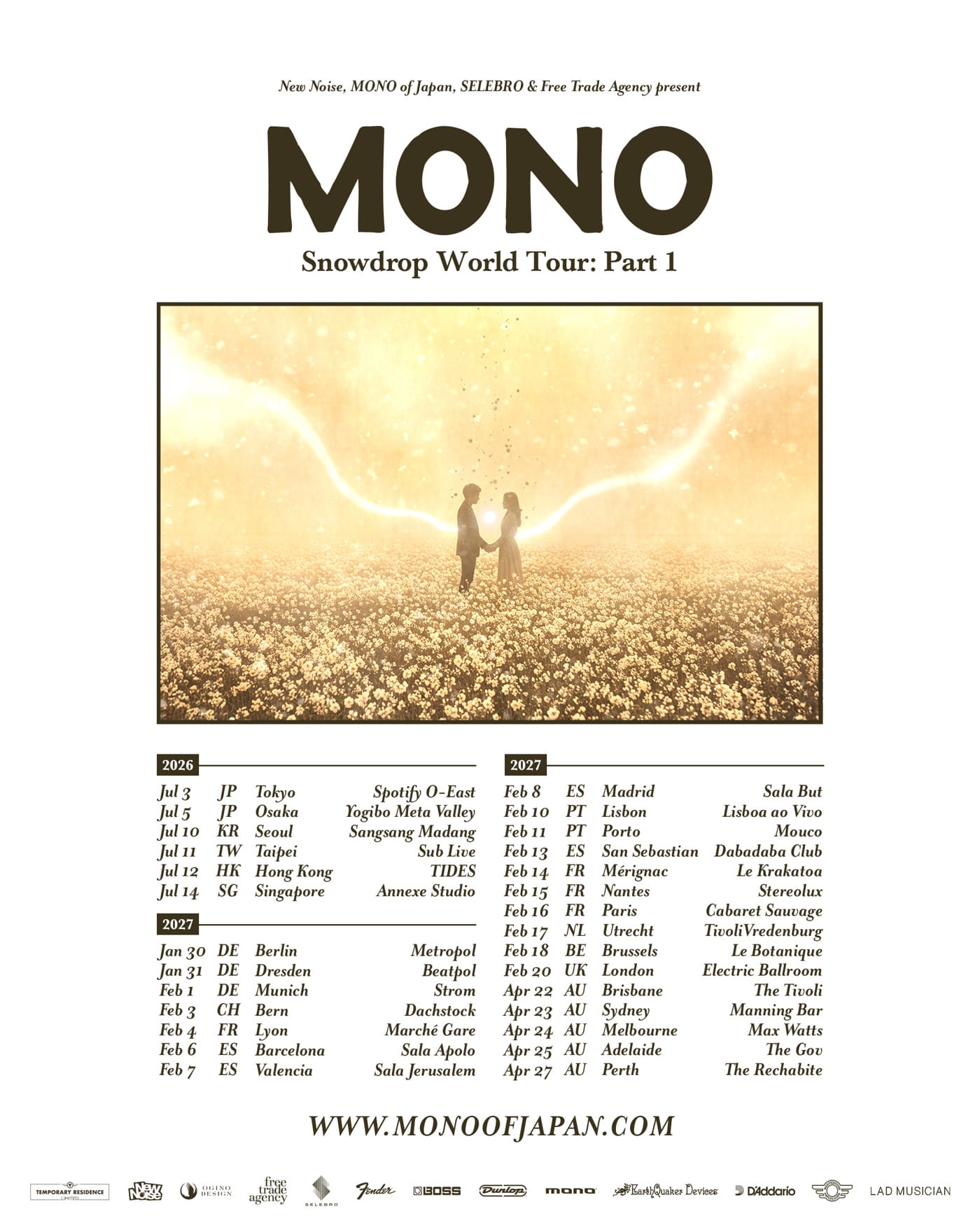
Jul 3, 2026 / JP Tokyo / Spotify O-East
Jul 5, 2026 / JP Osaka / Yogibo Meta Valley
Jul 10, 2026 / KR Seoul / Sangsang Madang
Jul 11, 2026 / TW Taipei / Sub Live
Jul 12, 2026 / HK Hong Kong / TIDES
Jul 14, 2026 / SG Singapore / Esplanade Annexe Studio
Jan 30, 2027 / DE Berlin / Metropol
Jan 31, 2027 / DE Dresden / Beatpol
Feb 1, 2027 / DE Munich / Strom
Feb 3, 2027 / CH Bern / Dachstock
Feb 4, 2027 / FR Lyon / Marché Gare
Feb 6, 2027 / ES Barcelona / Sala Apolo
Feb 7, 2027 / ES Valencia / Sala Jerusalem
Feb 8, 2027 / ES Madrid / Sala But
Feb 10, 2027 / PT Lisbon / Lisboa ao Vivo
Feb 11, 2027 / PT Porto / Mouco
Feb 13, 2027 / ES San Sebastian / Dabadaba Club
Feb 14, 2027 / FR Mérignac / Le Krakatoa
Feb 15, 2027 / FR Nantes / Stereolux
Feb 16, 2027 / FR Paris / Cabaret Sauvage
Feb 17, 2027 / NL Utrecht / TivoliVredenburg
Feb 18, 2027 / BE Brussels / Le Botanique
Feb 20, 2027 / UK London / Electric Ballroom
Apr 22, 2027 / AU Brisbane / The Tivoli
Apr 23, 2027 / AU Sydney / Manning Bar
Apr 24, 2027 / AU Melbourne / Max Watts
Apr 25, 2027 / AU Adelaide / The Gov
Apr 27, 2027 / AU Perth / The Rechabite
🔔 IDIOTEQ is ad-free, independent, and runs on one person’s time. If you want it to stay that way: DONATE via PayPal 𝗈𝗋 SUPPORT via Patreon.
Stay connected via Newsletter · Instagram · Facebook · X (Twitter) · Threads · Bluesky · Messenger · WhatsApp.