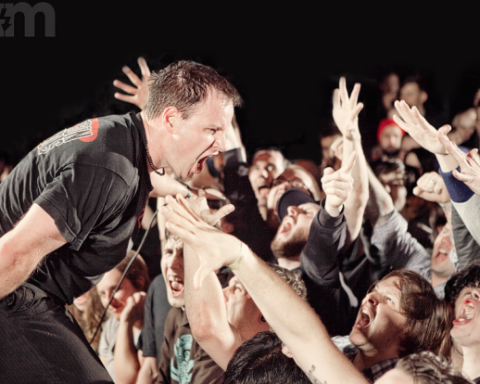
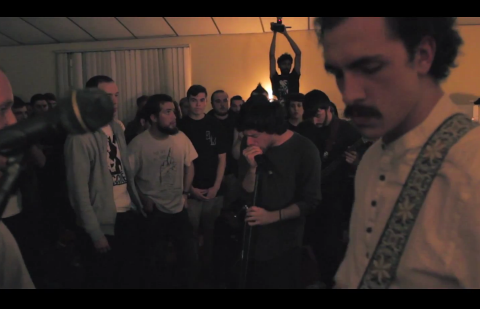
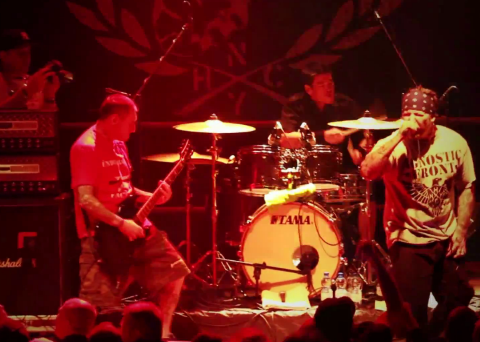
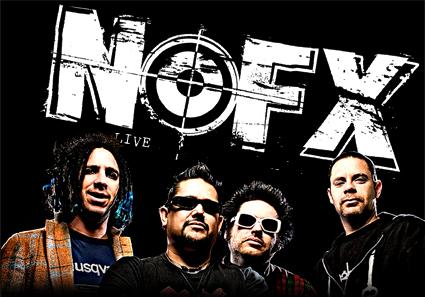
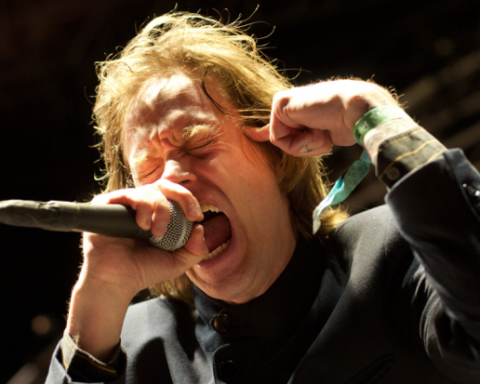
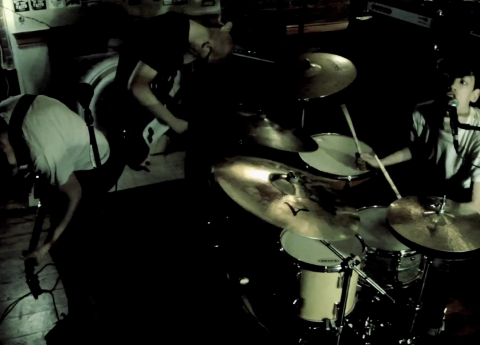
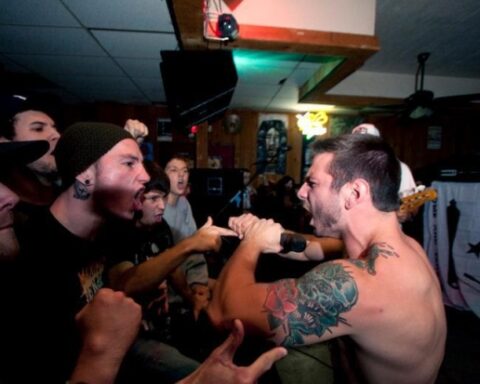
Hardcore punk pushes punk rock toward faster tempos, heavier rhythmic pressure and direct physical force. Distorted guitars rely on fast power chords, drums act as the engine, and vocals come as shouts, screams or gang chants. The rush can break without warning: an abrupt tempo change drops the song into a breakdown and changes how the crowd moves.
Several scenes developed around the turn of the 1980s, especially in Southern California, San Francisco, Washington, D.C., New York and Vancouver. Black Flag, Bad Brains, Minor Threat and Dead Kennedys established different versions of the early sound. Alison Braun’s account of photographing early-1980s Los Angeles stays inside those rooms: cheap shows, flyers at record stores, punk zines, guest-list trades and a stage diver ripping the flash from her camera.
Bands booked their own tours, ran small labels and organised all-ages shows where entry did not depend on access to a bar. Straight edge began in Washington, D.C., linking abstinence and self-control to that all-ages culture. Refuse Records, a long-running Polish label, was distributing tapes in 1993 and booking shows at Warsaw’s Hybrydy by 1994. IDIOTEQ interviewed the label in 2012 and returned for its 25th anniversary in 2018. In Linköping, the history runs through Skylten, a run-down factory handed to young people, and through old tapes, flyers and VHS recordings gathered for Linköping Hardcore: The Movie.
Discharge’s characteristic drumbeat gave d-beat its name and fed directly into crust punk. Melodic hardcore moves melody forward in the guitars through harmonies and octave chords. Powerviolence cuts songs down to seconds and keeps yanking between speed and breakdowns. Crossover brought more metal riffs into hardcore. Youth crew organised straight edge around brotherhood, unity, vegetarianism and community values.
Recent IDIOTEQ pieces carry those different versions of hardcore punk between Gothenburg, Tacoma, Belgrade and São Paulo. Modern Guilt discusses straight edge as a source of unity. Wake of Humanity connects vegan straight edge to songs about ICE violence, police killings and systemic oppression, then documents a European run in a tour diary. Blankfile brings a Belgrade perspective through records, a video conceived closer to an independent film, and the band’s first major European tour. Questions connect the São Paulo scene to an older international lineage through their 2026 Strife cover.
Coverage ranges from first releases and early tours by smaller bands to interviews with long-running names such as Strife and Good Riddance. It also follows labels, venues, photographers, filmmakers and the people keeping regional scenes documented.
IDIOTEQ has used the hardcore punk tag since 2011 across daily news and longer editorial work: interviews, premieres, track-by-tracks, scene histories and tour diaries. Much of it overlaps with the broader hardcore tag. Punk rock, melodic hardcore, d-beat and crust give this archive its clearest internal distinctions.