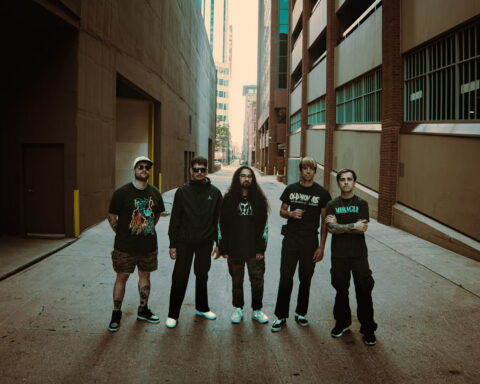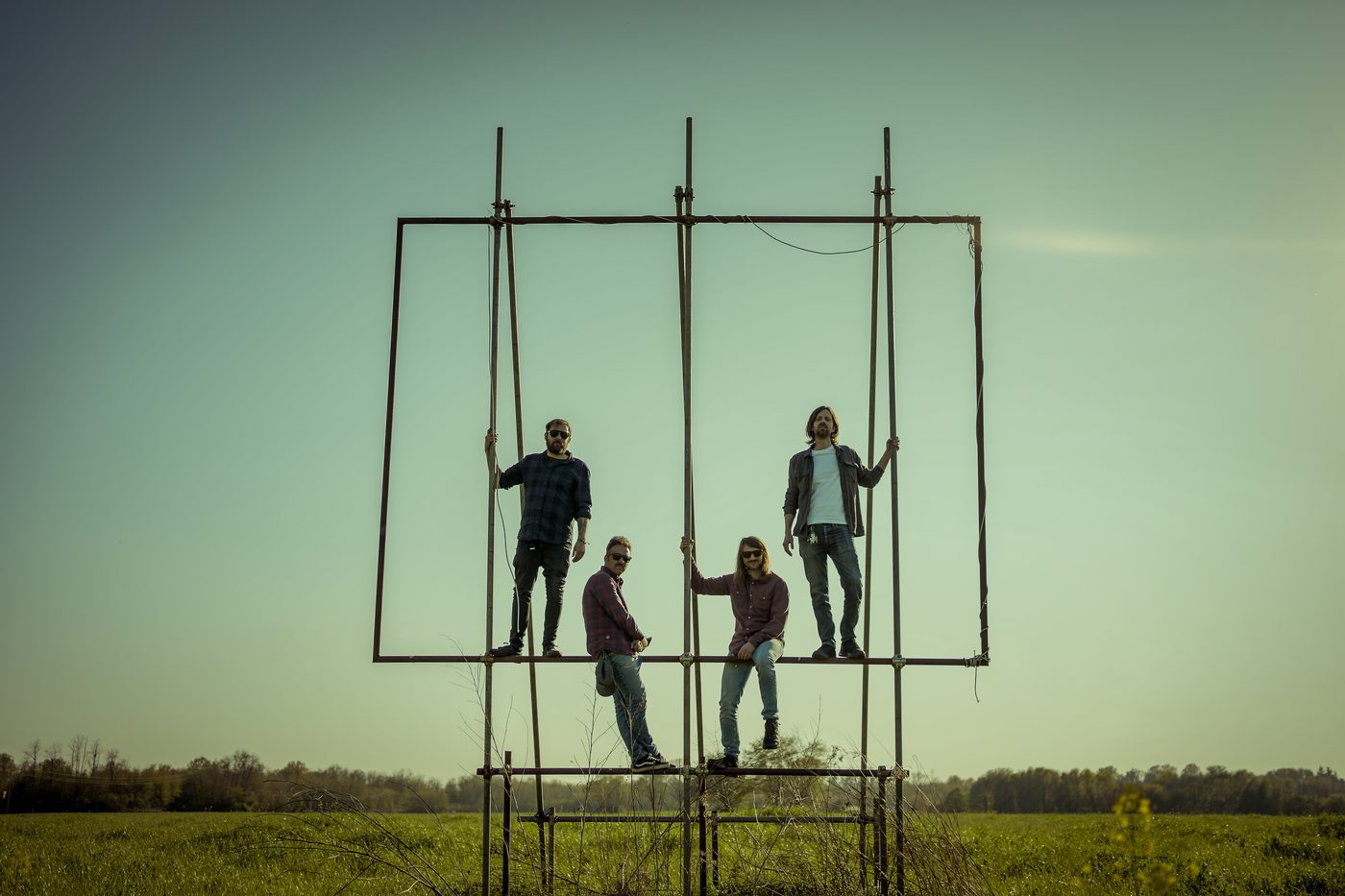


MISERE have that kind of German post-hardcore where the vocals can get pretty vicious, yet there’s still loads of room for melody and all the emotional stuff that made early-2000s screamo so good in the first place. The five-piece from Ludwigsburg are now wrapping up their first run of singles with “Mistral“, a song about growing inequality, people constantly being told to tighten their belts, and the strange obsession with getting back to a supposedly better past. Today we’re premiering its lyrics video alongside the entire debut EP, “Ein Horizont am Tellerrand“, a day ahead of the official release.
The EP is being released with help from Through Love Records in Germany, Dancing Rabbit Records in Germany, Strictly No Capital Letters Records in the UK, Shove Records in Italy and New Knee Records in the US.
If you caught our premiere of “Lichtschacht” back in June, you’ll already know these guys have a pretty good handle on combining aggressive vocals with some genuinely touching guitar work. “Mistral” takes its time getting going. Delay-heavy guitars lead things in, gradually making room for the drums and bass before the chorus gives the song its first proper push. From there, the band keep shifting the intensity until the final section brings everything together.
Micha’s vocals are sharp and almost biting, and there’s a real sense of frustration in his delivery. But listen to what’s happening around him. The guitars keep picking out these melodic lines, the bass has a nice punch to it, and the drumming carries the song without burying all those little changes. There’s plenty of force in the heavier sections, with enough space between them for the emotions to come through. That balance is something we’ve always loved about the German emo and post-hardcore tradition, and MISERE seem to understand it instinctively.
You can hear the early-2000s emocore roots in the way they build their songs, pull sections apart and bring them back with a slightly different energy. Yage, The Saddest Landscape, early Caravels and Just Went Black are among the bands MISERE use to place themselves musically. Those references make sense as a starting point, especially if you appreciate hardcore with restless guitars, strong melodies and screaming that comes from a more personal place.
And on “Mistral“, those personal feelings get tangled up with some pretty grim observations about where society is heading.
The lyrics are in German, opening with “kannst du sie hören?”, asking whether you can hear the impacts getting closer. Fear turns into anger, perceived catastrophes keep arriving, and people find themselves stuck in a permanent struggle to avoid slipping further down. There’s a line about moving at a snail’s pace while feeling as though you’ve been running for years, which is a pretty good description of that exhausting sense of getting nowhere.
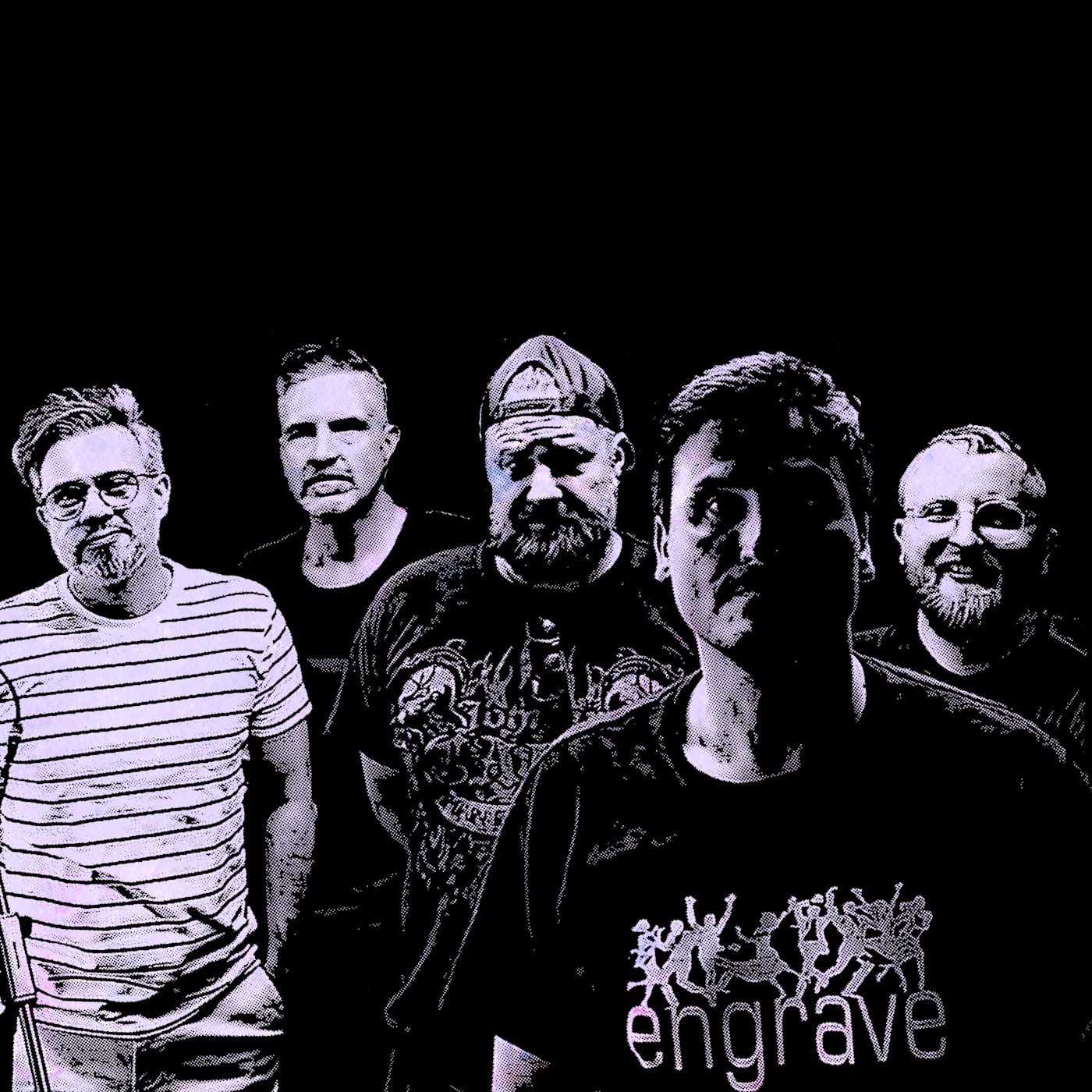
Micha, who handles the band’s lyrics, spent a long time thinking about one particular expression before finally putting it into the song:
“Lyricwise ‘Mistral‘ is about watching the socio-economic gap widen while being told it’s just how things work now. ‘Erwartungsvoll rückwärtsgewandt’ (‘expectantly backward–looking‘) was a phrase I sat with for a long time before I used it in this song. To me it seems like people keep defending a distorted version of a past that’s not only gone but mostly never happened, hoping it still owes them something. The way I see it this exact feeling of being stuck provides an ideal breeding ground for dismantling social security and selling it as pragmatism, not political decisions. But there’s nothing neutral about who ends up paying for that. The people who have less keep losing more, and somehow that’s framed as the only reasonable path back to ‘the glorious past’.”
That phrase, “erwartungsvoll rückwärtsgewandt”, keeps coming back in “Mistral“. At one point, the lyrics suggest there’s only a promised land behind you. Later, you’re looking backwards again, desperately defending whatever you still have.
Around it, Micha keeps returning to the words “erlernter Sog”, a learned pull that repeatedly leaves people divided. The current in the lyrics knows only how to kick downwards, and eventually comes that familiar demand to tighten your belt another hole.
There’s quite a bit of anger in those few lines, especially when you consider how often cuts to social support are presented as common sense, with the actual consequences left to people who can least afford them.
The song finishes with “Wer hat dem wird gegeben”, roughly “to those who have, more is given”. It’s a reference to the Matthew effect, the idea that people who already hold an advantage tend to accumulate even more, leaving those with less increasingly far behind. It’s a bleak line to end on, and one that gets straight to the point.
Wyświetl ten post na Instagramie
The EP title itself appears earlier in the lyrics. “Ein Horizont am Tellerrand” plays with the German expression “über den Tellerrand schauen”, about looking beyond what’s immediately in front of you. Micha takes that familiar saying and turns it into something much more restrictive.
“The phrase »Ein Horizont am Tellerrand« refers to the issue of a whole worldview shrinking down to the size of what’s directly in front of you. That phrase ended up giving the EP’s title because for us it says something about the limitations of a reactionism that’s seems to become more hegemonic by the minute.”
Wyświetl ten post na Instagramie
It’s a pretty fitting name for a record concerned with people’s personal vulnerabilities and their place in an increasingly difficult world. MISERE write from that personal starting point, then bring in the wider political stuff, whether it’s the value of standing together or the social and economic pressures people are living under.
There’s an interesting connection to “Lichtschacht” here, too. That first single was about finding strength through social relationships, with the image of a narrow opening towards the sky. On “Mistral”, the horizon has shrunk to the edge of a plate. The two songs approach that sense of being boxed in from different directions, and Micha’s lyrics give each its own very concrete imagery.
Singing in German is a big part of how MISERE approach all this. When we spoke to Micha for our first feature, he talked about how using his mother tongue made writing about personal vulnerability and politics feel “more familiar, somehow, more exposed”. His other band, Cages, use English, and although both bands share a similar musical background, MISERE have gone for a more direct kind of post-hardcore.
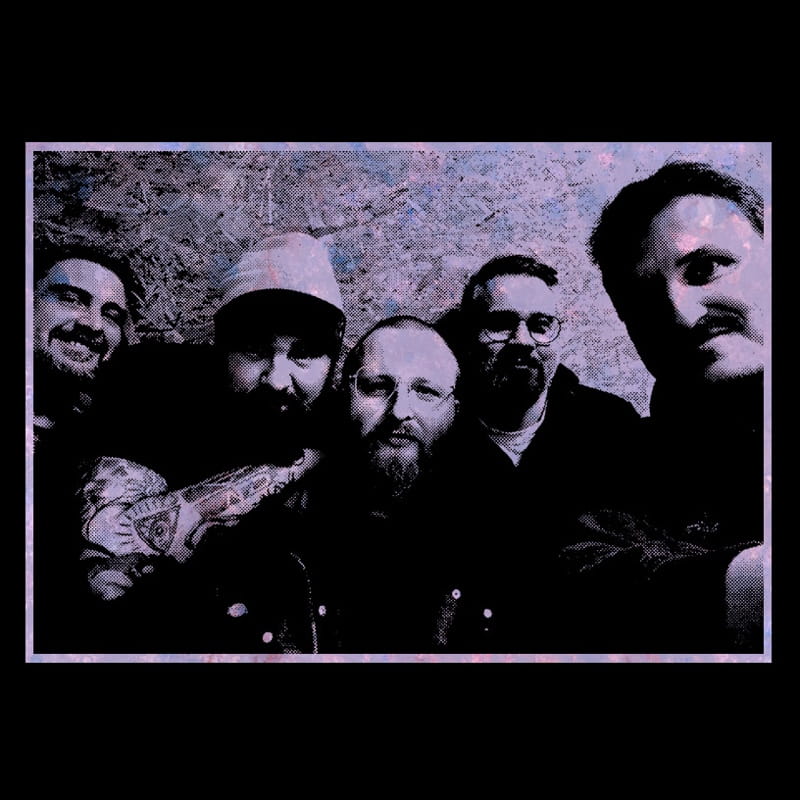
Micha and guitarist Serkan play together in Cages and previously shared time in We Had A Deal, while Micha also played in Schönleben. The rest of MISERE have been around the DIY circuit for a while as well. Guitarist Mike previously played in Shove It, bassist Sven in Xiao Pangzi and drummer Pete in Royal Tea Club. There’s plenty of experience between these five, and you can hear it in how naturally the songs move between the heavier and more melodic sections.
The whole EP has been coming together publicly for several months. MISERE started with “Lichtschacht” in June, introducing themselves through a lyrics video, and kept putting out the other songs one by one. Micha had made videos for each track, so the lyrics were always going to have a big part in how people first encountered the music.
Three of the four proper songs were already out as singles before today’s premiere, with the record also containing an intro. “Mistral” was the last one still waiting to be heard. There were some delays at the pressing plant along the way, pushing the physical release further into October, but the band now have everything lined up for the 16th.
There’s also plenty of DIY work behind the finished record. All five members are credited with the music, with Micha writing the words and taking care of the artwork, including the cover and the band’s other visuals under his schwarzerrand name. The same guy responsible for those pretty intense screams also handles much of how MISERE look on record and online.
For the recordings, they worked with Ferdinand Führer at Fieser Schwan Recordings, who recorded and mixed the EP. Will Killingsworth at Dead Air Studios took care of mastering, and there’s additional piano from Micha Schlüter. The guitars have room to move around each other, the bass stays present, and the more open parts retain their detail even when the band turn things up.
They’ve also gone for a pretty cool physical edition. The EP comes on a limited, single-sided 12-inch vinyl with an etched B-side, released with help from a small network of independent labels across Europe and the US.
For anyone into the emotional end of post-hardcore, particularly the stuff that came out of the European DIY scene in the early 2000s, there’s a lot to get into here. The guitars have that familiar nervous energy, Micha sounds properly worked up, and the songs leave space for some really good melodies. “Mistral” is a fine example of how MISERE manage to keep all those parts moving together, with lyrics that deserve a closer look.
You can watch the “Mistral” lyrics video below.
“Ein Horizont am Tellerrand” arrives 16 October 2026, digitally and on limited single-sided 12-inch vinyl with an etched B-side. MISERE are releasing it with help from Dancing Rabbit Records, Strictly No Capital Letters Records, Shove Records, Through Love Records and New Knee Records. With “Mistral” finally out, all five pieces of the EP can now be heard together.
The full EP will be available through MISERE’s Bandcamp from release day, with physical copies available through the label links above.