

Oshera’s debut is the kind of screamo record that keeps moving. The Austin four-piece run through blast beats and frantic punk sections, then open the songs up for violin, spoken word and quieter passages. Across nine tracks, the pace and mood rarely stay put for long.
“On Love and Ruin” was written across the band’s first three years and two different lineups. Jordyn Cox’s lyrics move between his son Cooper’s serious heart condition, the death of the family cat Marley, “Warszawa“, and the political anger behind “The Dead Colossus“. It sounds like a wide spread on paper. Jordyn sees the same reason underneath all of it.
“Even the more abrasive, politically charged songs on the album ultimately come from a place of love. There are people we love, our communities, our families, ourselves, and it pains us to see them being abused. We are angry because we care and want a brighter future for all.”
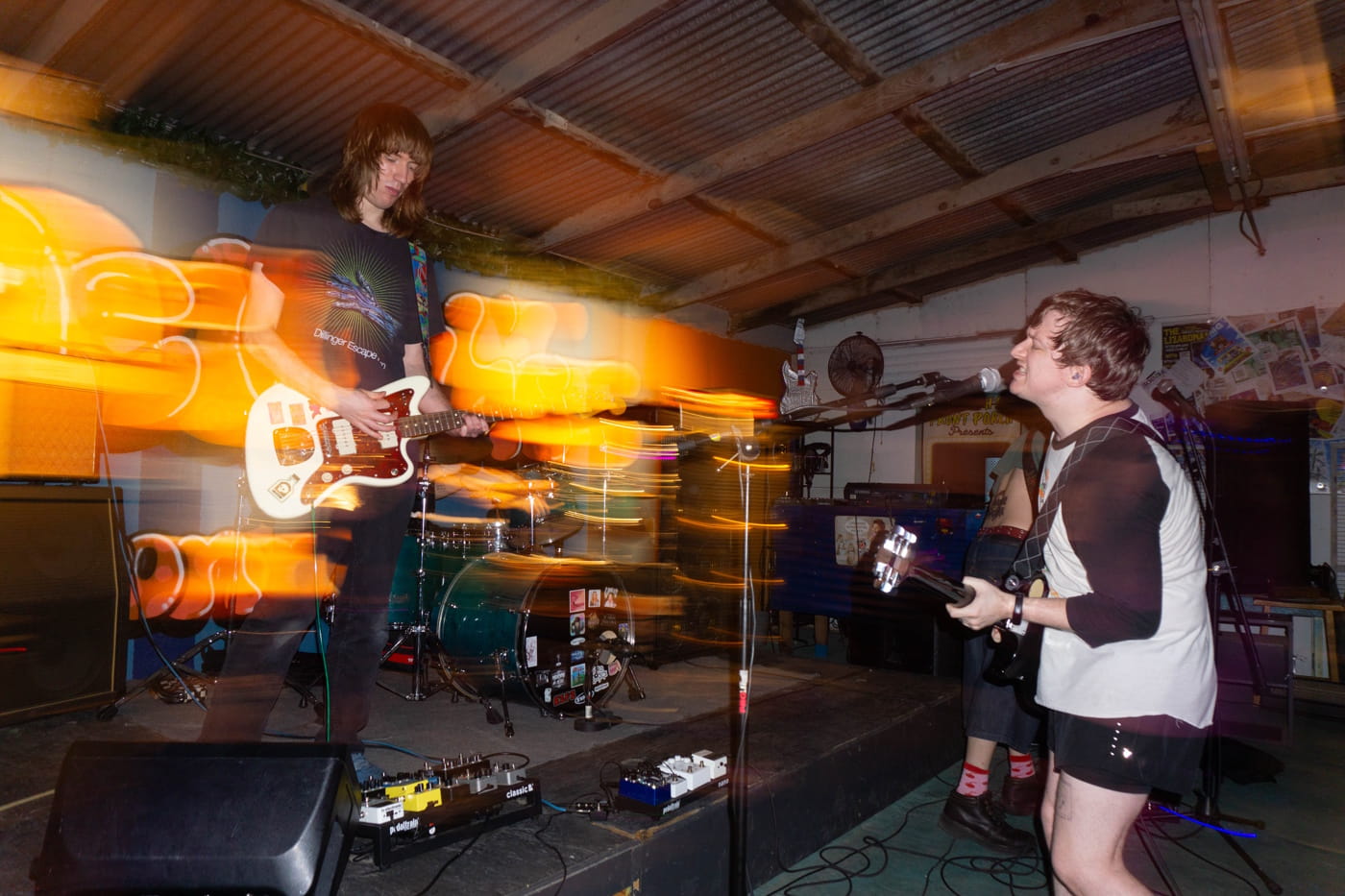
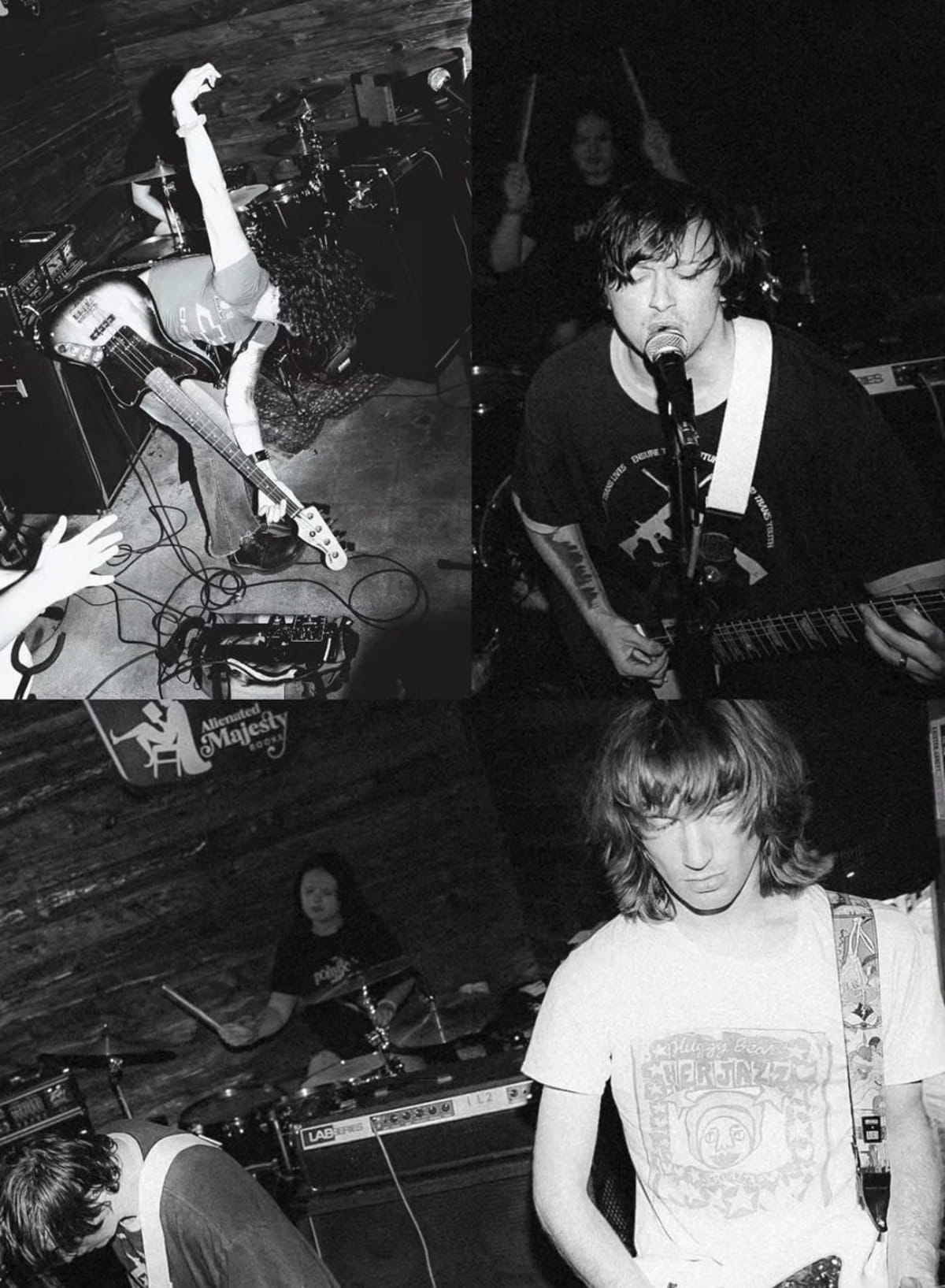
Jordyn started Oshera in Austin in 2023 with lead guitarist Jacob Harding, handling vocals and rhythm guitar himself. The band spent about a year as a four-piece before going quiet for a while. Jordyn and Jacob brought it back in May 2025 with Soria Blicblum on bass and Emily Austen on drums.
About half of the debut had already been written by then. The new lineup went back through those songs instead of simply recording the old versions.
“All of a sudden we had more low-end and a drummer who doesn’t even break a sweat playing a set full of blast beats. We realized those older songs could have more depth. Our hope is that the new versions of these old songs fit right in with the more recently written ones. I’d say we’ve achieved that!”
Jordyn is keeping the exact split between the two periods to himself. “See if you can tell which songs are from which era.”
The current lineup spent the following period playing across Texas and the Midwest and released a split with fellow Austin emoviolence band Tamsen in 2025. By spring 2026, Oshera were recording the album in the living room of Nicholas “Nick” Garza’s home in San Antonio.
There is a lot going on in the arrangements without the record losing the nervous speed that sits underneath much of it. “Yahweh” is gone in 1:34. “Quiet Loss” stretches to almost five minutes. “The Dead Colossus” begins with a measured spoken reading before the band crashes into the frantic punk rhythm Jordyn describes. Elsewhere the songs slow down, leave room around the guitars and vocals, then jump back into faster sections.
Nick’s violin runs through “Escaping or Chasing (Cathedrals)”, “Hummingbird (Cooper’s Song)” and “Tethers”. The band had discussed using it before tracking started, and more opportunities appeared during the sessions. Jordyn calls Nick a “musical virtuoso”, pointing to his experience in numerous bands and his skill with string arrangements.
“We had already floated the idea of featuring his violin on the record before tracking all of the songs; but as we got further into the album, Nick saw more opportunities to really drill that emotion into a few key moments.”
The spoken voice on “The Dead Colossus” belongs to Molly Cardenas, an important figure around Oshera’s Austin circle who also plays in Rebecka, BFF and Woodcutters. Emily came up with the idea of opening the song with “The New Colossus”, Emma Lazarus’s 1883 poem associated with the Statue of Liberty.
They wanted Molly specifically for the way she spoke.
“Calm, somber, with just the right amount of grit. After she sent the voice memo of her part, I told her she should consider a career in audiobooks. Not a joke!”
Her reading sits alone before the band comes in. Emily’s idea was partly musical, taking the song from a soft spoken section straight into a much faster attack, and partly tied to the words themselves. Jordyn heard Lazarus’s poem as a reminder of what the United States was supposed to stand for and how far, in his view, the country had moved from that idea.
Wyświetl ten post na Instagramie
“The Dead Colossus” came together during a period when his social feeds seemed to bring another bad story every time he opened them. Jordyn recalls seeing reports of families separated by immigration enforcement, protesters being shot and killed, and new proposals he believed threatened LGBTQ+ rights and workers’ rights. Closer to home, he was watching DIY venues in Austin close and people from the community die.
“I, and millions of others, felt helpless and confused. We are told to vote to make change, but what happens when those we’ve put in power refuse to listen to their constituents? What are we supposed to do when we exercise our right to protest, to bear arms, to due process, but an officer determines we are an enemy of the state? Why are our tax dollars being used against us instead of FOR us? It is exhausting, but if we lose hope, we lose this battle.”
That anger also reaches the final track, although “Harvester” had a much stupider starting point: ants.
Central Texas had just had a lot of rain and anthills were appearing everywhere. Jordyn has hated ants since kindergarten, when fire ants covered his arms in bites. He began writing about exactly that.
Then the song started looking at ants as a species. A colony works collectively to keep itself alive. Jordyn began comparing that with people repeatedly doing things that hurt themselves, each other and the world they depend on.
“The tense monologue halfway through the song pretty much sums up the theme of this song, like maybe we aren’t as great as we think we are, maybe if we worked together like a single unit, we’d accomplish more. Ants do what is needed for their colonies to persevere; people seem to enjoy working against their best interests.”
One line from that monologue says it cleanly:
“We hurtle toward the breach and pretend we weren’t the ones who cut our own brakes.”
The final question in “Harvester” is whether you can reach the end with a clean conscience after the way you treated the world and the people around you.
“We may not be able to stop what we’ve started, but we can do everything in our power to be better to this home we share.”
A very different kind of fear sits near the beginning of the album. Jordyn wrote “Hummingbird (Cooper’s Song)” while his son was still in utero. He and his wife had learned that Cooper’s heart had developed on only one side. He would need open-heart surgery immediately after birth, followed by more surgeries and procedures as he grew.
The song came from waiting for a future they did not know they would get to share with him.
“The entire song is riddled with anxiety of the future, and if we would have the privilege to share it with Cooper.”
Its final line stayed with Jordyn after Cooper was born.
“Make it through another year, and I’ll give you everything.”
He says he thinks about it almost every day when he looks at his son. The September 24 release date for “On Love and Ruin” was chosen to coincide with Cooper’s second birthday.
“Tethers” was written under a deadline of a very different sort. Jordyn wrote it the day before he and his family put down their senior cat, Marley. The mobile vet had already been booked. Everyone in the house knew what the following day would bring.
“Suddenly this member of our family that we had spent years caring for and loving… they’re just gone. Where does that love go?”
Jordyn does not pretend to have an answer.
“I’d love to think there’s an afterlife where we’ll meet again, but I’d be lying if I said I truly believed that. Some days I swear I still see him in my peripheral.”
“Quiet Loss” deals with people who are still alive. The song came from relationships Jordyn had ended because staying close had become unhealthy, including family relationships, friendships and romantic relationships. Love can remain even after contact has to stop.
“They may still exist and be living their lives, but for the sake of my well being, they are dead to me, and I mourn them.”
Long before most of those songs existed, Oshera had “Warszawa“.
Editor’s note, October 8, 2026: An earlier version of this article included personal biographical details about the relationship Jordyn Cox described as the inspiration for “Warszawa”. A person identifying herself as the former partner directly disputed those details after publication. IDIOTEQ has removed the disputed personal account while we review it; the article otherwise remains unchanged.
“Warszawa” was also the first song Oshera ever wrote and the first they recorded in any form. A demo appeared on the Tiny Sounds Collective Sampler in 2024 alongside unreleased songs by other Austin bands.
Jordyn now hears it as a simpler, earlier version of what Oshera became.
“So even though it feels like a simple, more primitive song, it’s one that our closest friends know every word to, and it holds a special weight for this band.”
Screamo and skramz are the obvious home base, but “On Love and Ruin” keeps changing pace inside it. Oshera can tear through blast beats and faster punk sections, then open a song up around the guitars and vocals before pushing forward again. The longer tracks leave more room for those shifts, and the mood can change quickly within the same song.
The violin on “Escaping or Chasing (Cathedrals)”, “Hummingbird (Cooper’s Song)” and “Tethers” adds another texture to those changes, while Molly’s spoken word completely alters the entrance to “The Dead Colossus“. That movement was one of the first things that stood out on our listen. The record can get very fast and ugly, slow right down, then return somewhere else without every song following the same shape.
Nick recorded the album in his San Antonio living room in spring 2026. Jane Cadogan and Eleanor O’Caseigh mixed and mastered it at Eden Labrys, while Jane and Jordyn handled the artwork and layout. Molly Cardenas appears on “The Dead Colossus”, reading Emma Lazarus’s 1883 poem “The New Colossus”.
“On Love and Ruin” was released on September 24, 2026 and is available digitally outside Spotify. Larry Records, Oliver Glenn Records, Far From Home Records and Friendly Otter Records are handling vinyl editions. Black Dice Records have the CD, and Middle Man Records have the cassette.
“As the title suggests, this record is as much about the love we have for each other as well as the obstacles that stand in our way, and how those two are not necessarily mutually exclusive, but most of the time interconnected.”
Photo credits: Karolina Perez (@eternalkaro_photography) and Justin (@justin_aaaaaaaaa).