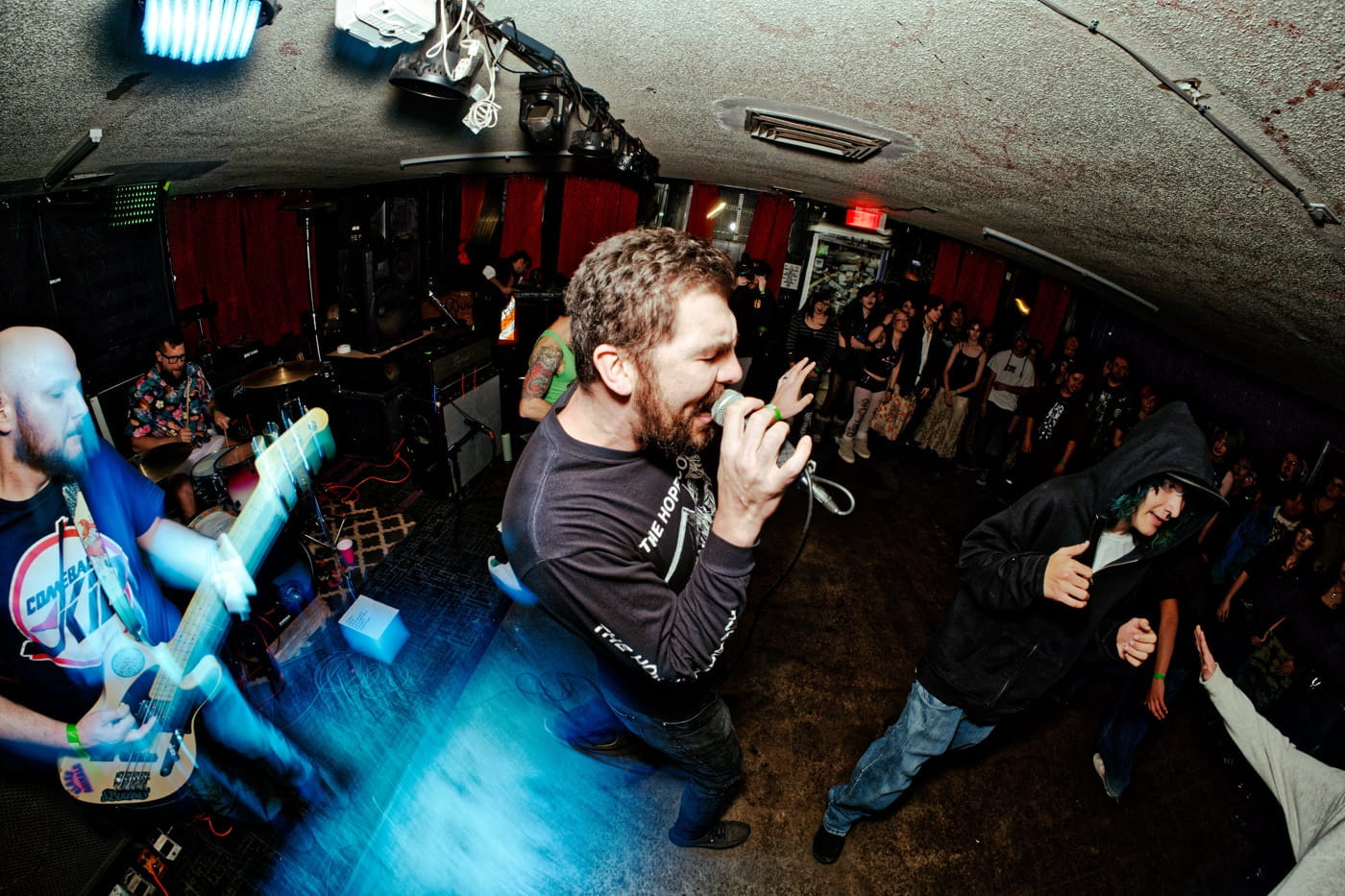


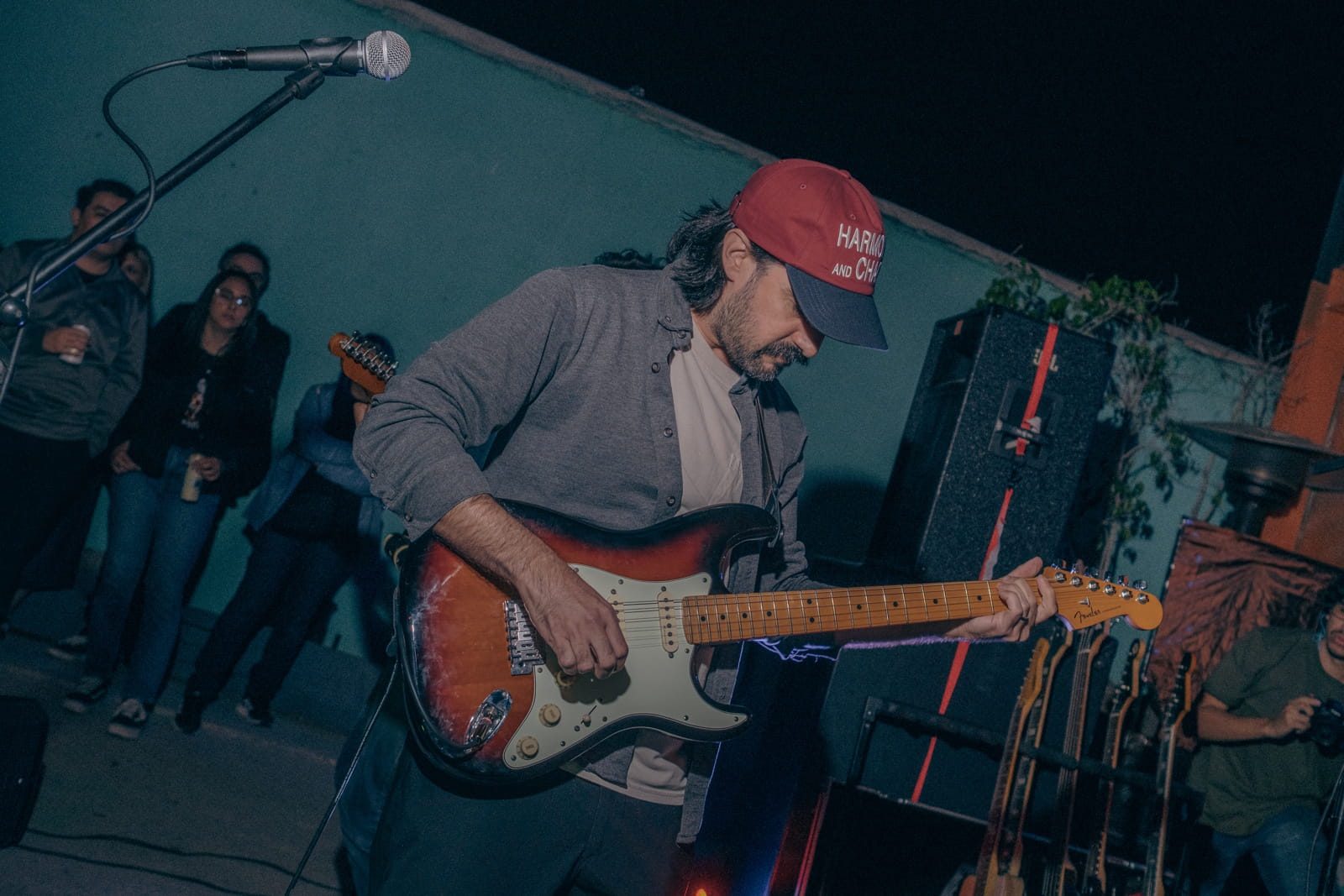
Last October, Andrés Pérez was in Tijuana for work. His wife suggested he reach out to a local promoter and try to put together an acoustic show before flying back to North Carolina. Through the online Mexican emo network he was connected with Ezequiel “Zeki,” who drums for Falsos Palíndromos and a long list of hardcore bands around the Tijuana/San Diego corridor.
Zeki had heard of Gol Olímpico and agreed to set something up. A few weeks later, Pérez got a DM from César “Kar” Cossio of Accidents, asking if the band would be open to expanding the acoustic gig into a full-band bill. Pérez said yes immediately. His band, scattered between Monterrey, North Carolina and British Columbia, agreed to make it happen. None of them had really met Kar before.
What came out of that night turned into “respirar en cuadro,” the new single from Gol Olímpico, out today on Árboles Caídos and Sello Furia, with Kar on guest vocals and behind the mix and master. It drifts more than it pushes: six minutes of fuzz, reverb and delay with vocals that stay quiet right up until the final stretch, sitting closer to shoegaze than anything the band has released so far.
Kar’s music had shaped Pérez since he was 16. Hearing “todo lo que no te dije” by Siempre Me Dejas, Kar’s old acoustic project, wrecked him at the time. He’d been writing MySpace demos in English up to that point, trying to imitate Dashboard Confessional with a laptop mic.
Kar showed him the same thing could be done in Spanish. “It helped me reclaim, not only my language, but also my Hispanic/latino identity as an artist and songwriter,” Pérez says. “Hearing that song made me want to write a thousand songs. I spent a long time trying to rip him off, and would cover his songs on most every show I played during that time. I never wrote a song in English again.”
At the Tijuana show, sharing a stage with someone whose songs he used to cover felt unreal. He’d seen Kar play live before but never heard “hoy soñé que te amo” in person. When Accidents played it that night, it knocked him sideways. “It transported me to being 14 years old, and moved me to the point of tears and just feeling grateful to be alive. Full circle type moment. A reminder that I am first a fan of the music I am trying to create.”
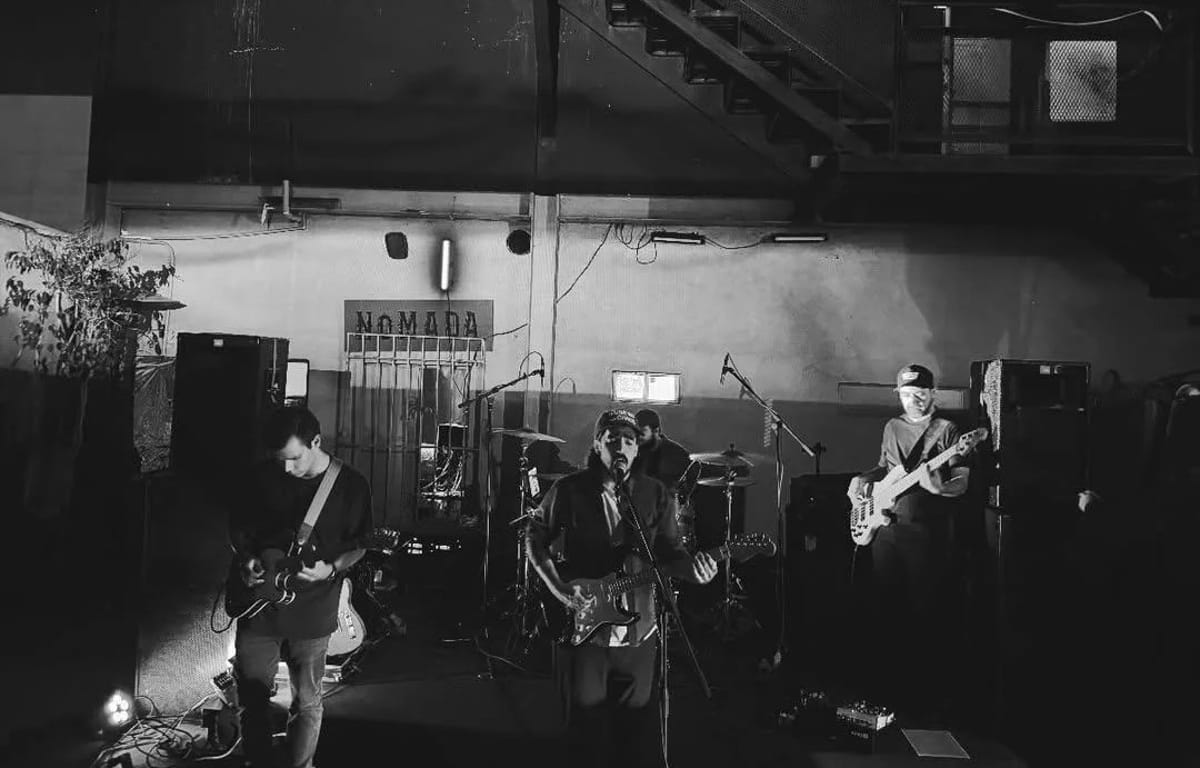
After the set the two hung out in the empty venue, drank some beers, and talked. Kar asked what was next for the band. Pérez explained the geography (bandmates in three countries) but said they wanted to collaborate.
The idea of Kar mixing and mastering a track came up. Pérez said yes on the spot. They went outside, swapped band t-shirts the way footballers do at the end of a match, and went separate ways. Kar drove back to Mexicali. Pérez crossed into San Diego for an early flight, killing time walking the pier until his coworker woke up to let him into the hotel.
On the last leg of the coast-to-coast flight home, right before takeoff, Pérez sent Kar a demo of “respirar en cuadro.” The song had been an afterthought on the original setlist: he’d pulled it out of his demo folder when the band needed a closer with some volume, figuring its six-minute length would either work as a left-field finale or “shock” people on the way out. It wasn’t supposed to make the EP. The original plan was to release it on a split. But people kept asking when it was coming out, quoting the lyrics back at the band on Instagram, and by the time he sent it to Kar it had become a centerpiece of the live set without anyone really planning it.
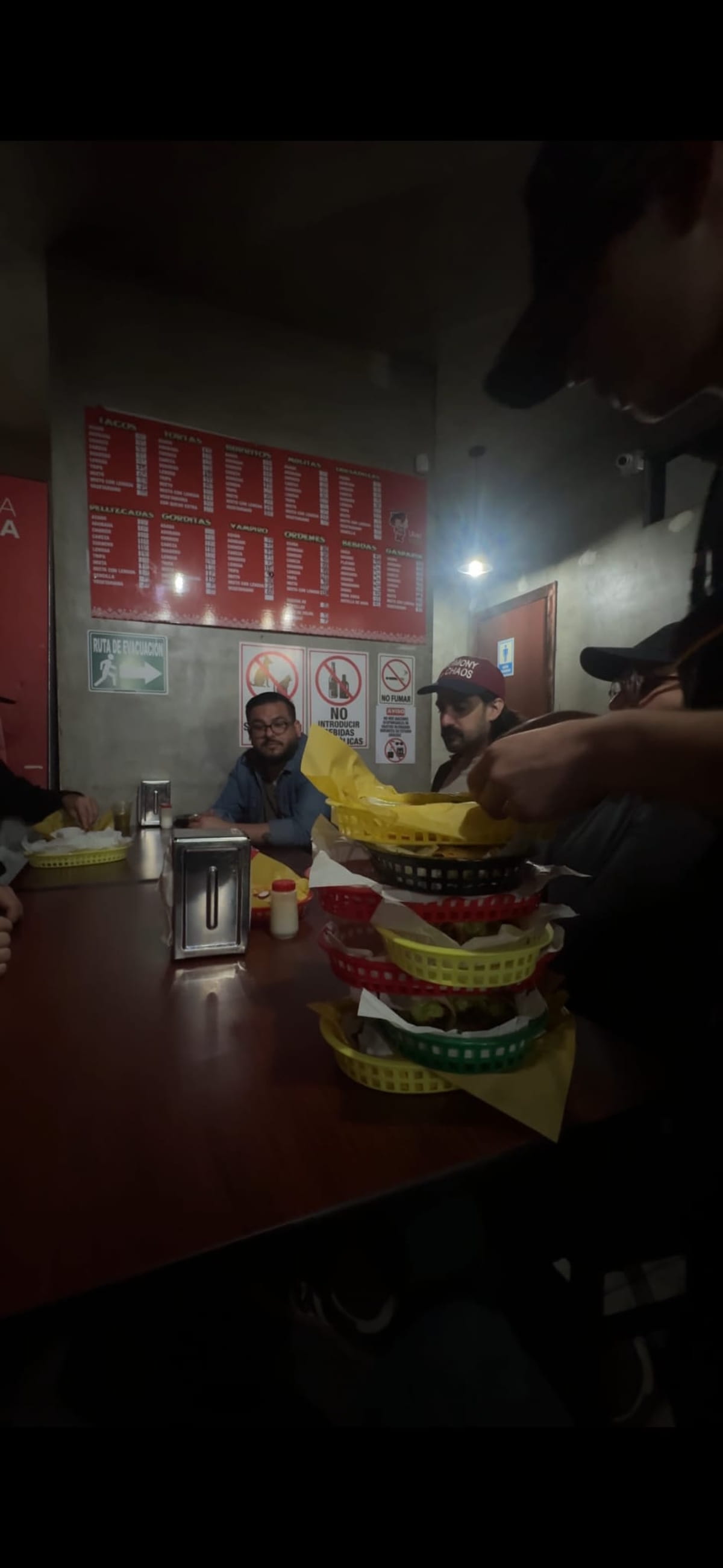
“I had no idea what Kar would think of it until I landed,” Pérez says. “I tried to take a nap and forget about it but couldn’t help think that I had just sent a four-chord song, that spanned over six minutes, to one of my biggest musical influences.” When he landed, Kar’s reply was waiting and it was nothing but encouraging.
The song’s title translates as “box breathing” or “square breathing,” a calming technique Pérez learned from his therapist after a panic attack. The first time the band played it live, he introduced it by saying “if you’ve ever had a panic attack, this song is for you.”
He doesn’t remember writing the lyrics. He remembers going into a closet and singing different lines until he landed on “todo es temporal” as the mantra. The guitar parts came from a single hot afternoon of looping fuzz, reverb and delay until he found a tone he couldn’t reproduce later. Most of those demo guitars stayed on the final version. The vocal demo takes did too. Throughout the whole thing he wanted to scream, but kept holding back, singing as low and calm as he could.
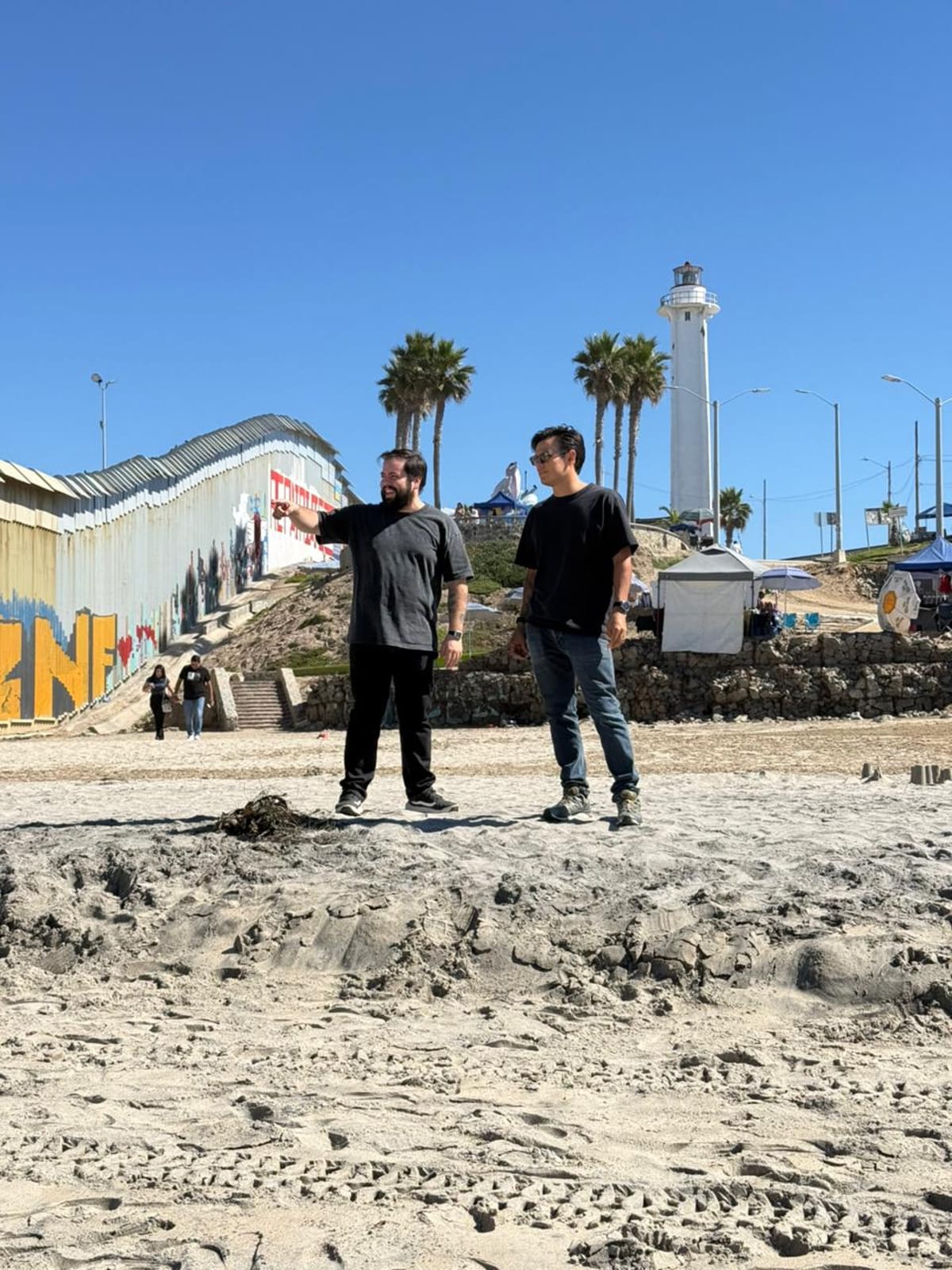
Drums (Andrés Malo) and bass were tracked at Sign Studios in Monterrey with the band’s home producer Jorge “Pingo” Ávila. Pérez recorded the rest in North Carolina. Jonathan Lipps tracked synths in British Columbia, the last layer to go on, and the one that brings in the kind of nostalgic pull that’s run through Gol Olímpico’s sound from the start.
The end-section vocals were originally meant for Ema from Adios Cometa, but their schedules wouldn’t line up. Pérez asked Kar if he’d be willing to step in. “When I got the track with his vocals, I was blown away by how much he could communicate with so little,” Pérez says. “It’s the same line over and over again and yet his delivery added the conclusion the song needed.”
Kar’s pass on the song also stripped out what didn’t need to be there. Pérez had recorded five or six extra guitar tracks that got cut. “By not including them, allowed the vocals to sit front and center in the mix and guide the journey. His mix and master expanded our sound to places we didn’t know we could go.” What stayed with Pérez most was the attention to detail and Kar’s willingness to keep working on the song as long as it took.
“respirar en cuadro” is the first single from Gol Olímpico’s second EP, “Todo es temporal,” due in September 2026. It works as a side B to “Reflejos de un ayer.” The two were written together, originally intended as one LP, then split into two EPs when the timeline got unwieldy. The plan is to eventually pair both on a 12-inch. The difference with this batch of songs is that most of them were road-tested live before going to tape, which changed how they ended up sounding on record.
The other guests on the EP came together the same way Kar did, out of shows the band actually played: No Hay Niños En El Parque from Monterrey, and Miraflores from Mexico City. “Same as with Kar, our collaborations are born out of a physical sharing of space, which has allowed us to connect with people that we admire and opened doors for collaboration.”
🔔 IDIOTEQ is ad-free, independent, and runs on one person’s time. If you want it to stay that way: DONATE via PayPal 𝗈𝗋 SUPPORT via Patreon.
Stay connected via Newsletter · Instagram · Facebook · X (Twitter) · Threads · Bluesky · Messenger · WhatsApp.