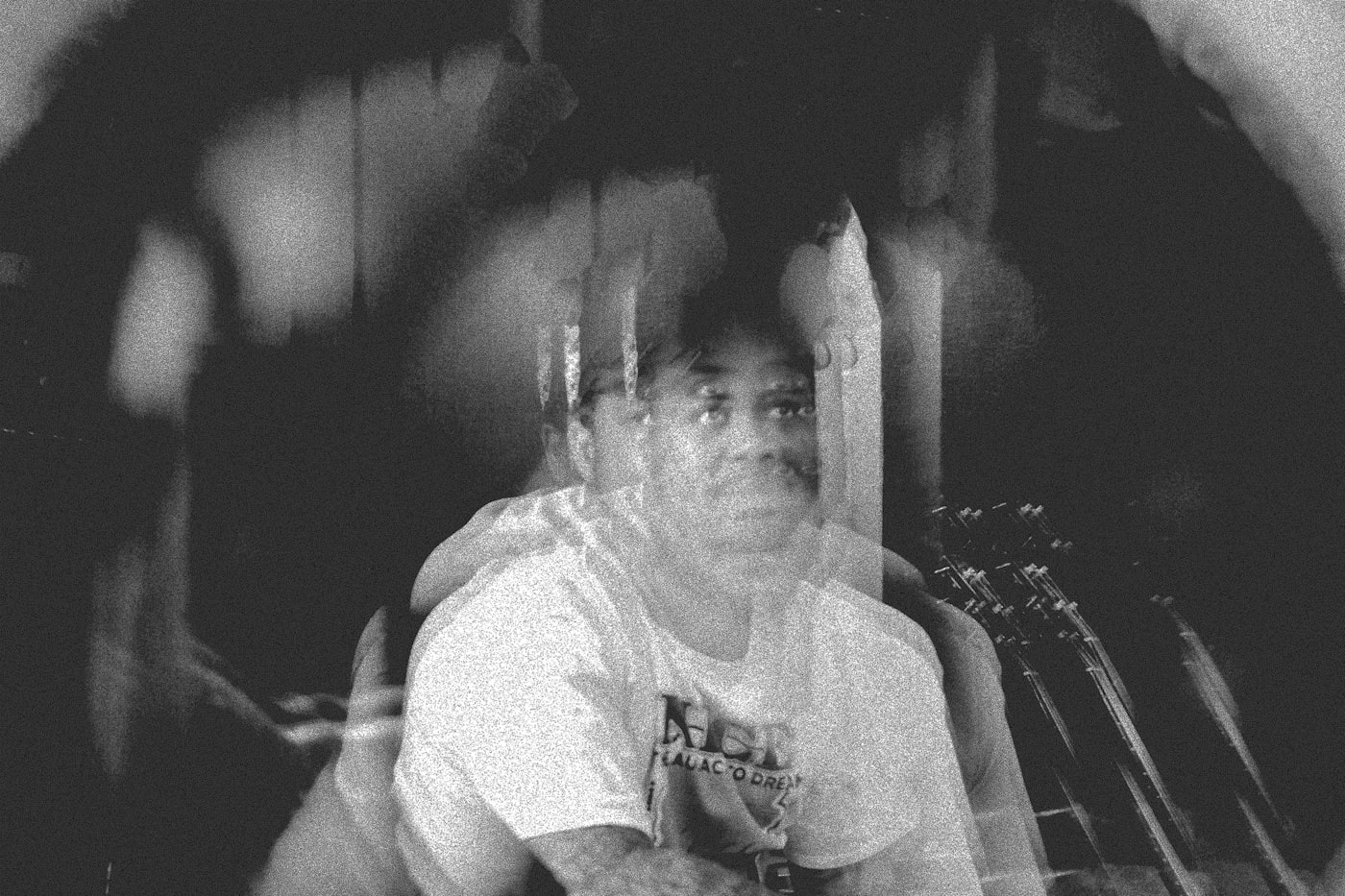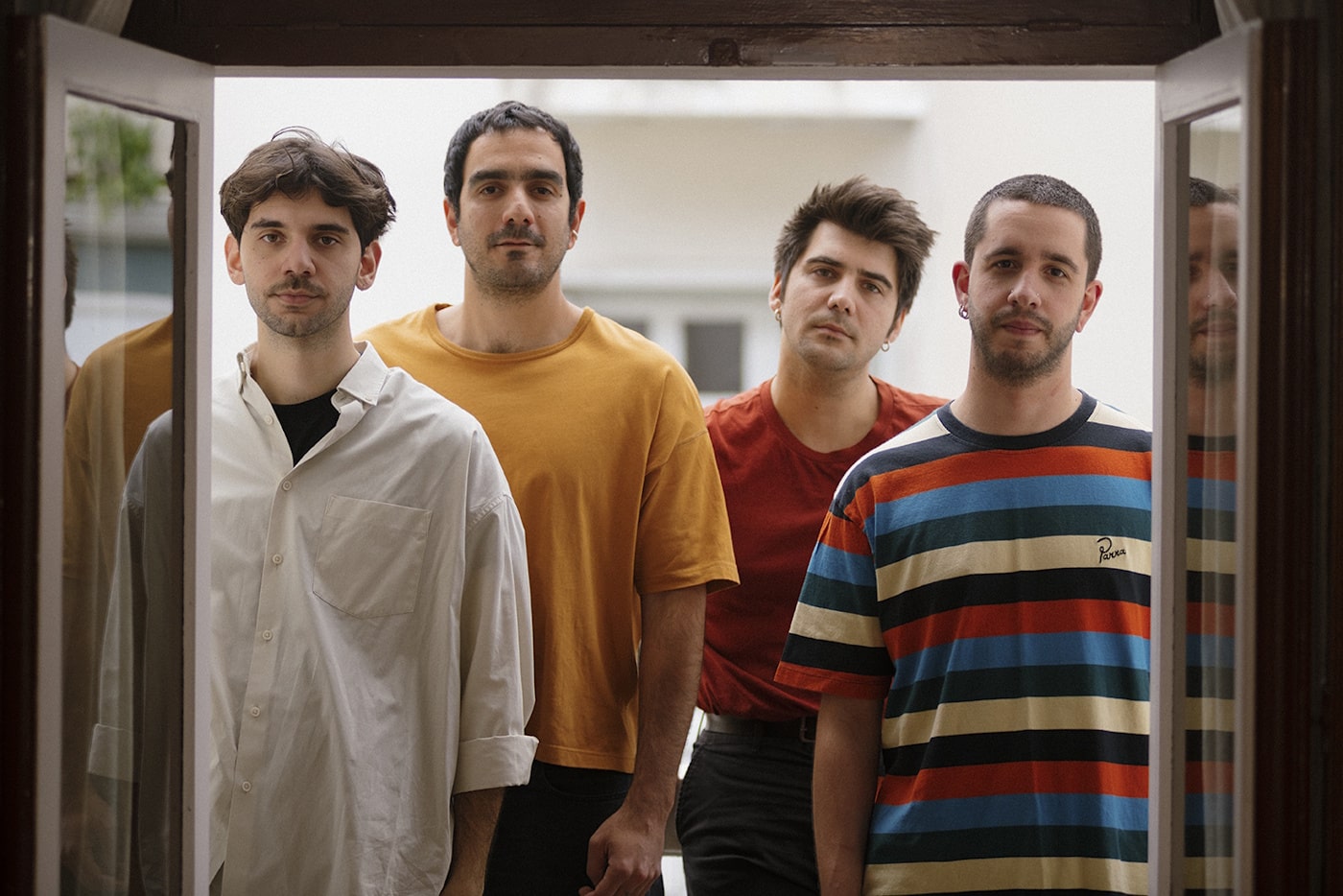


There’s a point in MASSA NERA’s new record, “The Emptiness of All Things,” where the voice of progress feels almost soothing. It speaks in the language of slogans — “Heavy industry with low emissions,” “Invest in success” — as the world burns quietly around it. That’s “Mechanical Sunrise,” a song built on the delusion that innovation can save us from ourselves, and the centerpiece of the band’s upcoming album, out October 31 via Persistent Vision Records.
Today, we are hosting a special deep dive into the themes of the record, alongside the streaming of three early tracks: “Avalon Cove,” “Mechanical Sunrise,” and “Lavender.”
This album started as an assignment — a commission from the Gabriela Lena Frank Creative Academy for Music asking the New Jersey quartet to write about the climate crisis. But instead of a sermon or manifesto, they built something that breathes, mutates, and ultimately corrodes. “For me,” drummer and vocalist Mark Boulanger says, “the album is primarily about our inability to extricate ourselves from obviously harmful systems, specifically Capitalism, even when those systems are literally bringing us to the point of total collapse.”
View this post on Instagram
He talks about it not as an outsider’s critique but as a condition we’ve all accepted — “We cling to this delusional belief that reform will save us, that the free market will inevitably allow some genius to invent a product that saves us from our self-made problem without necessitating that we change anything.”
That tension runs through the first half of the record, where the concept of “Green Capitalism” becomes both target and character. “Each song until ‘City of Mines’ has lyrics directly pertaining to this idea,” Mark explains. “The declaration ‘I’ll tame both land and sea’ in ‘Pèlerin,’ the first two stanzas of ‘Avalon Cove’ (‘our camps are built to leave no trace’), the entirety of ‘Mechanical Sunrise’ (‘we’ll cruise the streets in electric cars with the wind in our hair’).”
View this post on Instagram
“The Emptiness of All Things” unfolds like a civilization convincing itself it’s doing fine. “Avalon Cove” opens with catalog-luxury imagery — “Designer gourmet kitchens, granite countertops, a view of New York City” — before slipping into decay: “Forty tons of carrion wash upon the shore.”
“Mechanical Sunrise” marches forward on a pulse that sounds clean and automated, like a future ad for itself. “Lavender,” featuring Tony Castrati of Crippling Alcoholism, drags that illusion into filth — professors beating off in classrooms while the world burns, computers naming names “with peak efficiency.”
View this post on Instagram
By the time “City of Mines” arrives, any illusion of control has collapsed. But there’s no moment of revelation waiting. “There’s no epiphany, no sense that rights will be wronged,” Mark says. “If anything, the closest thing to an epiphany is the realization that our comfort runs so deep, our complacency so bone-level, we’d make all the same mistakes again if given the chance.”
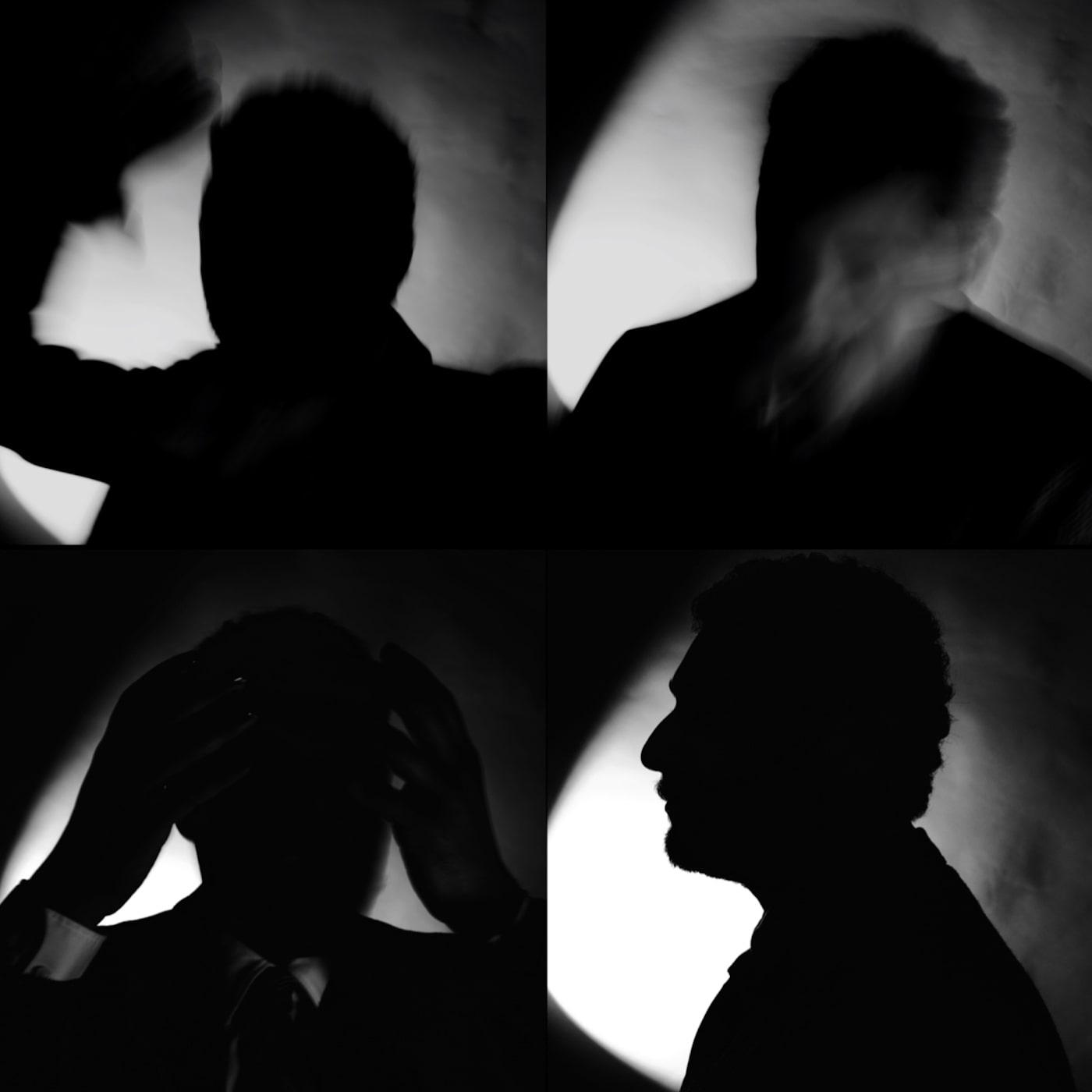
MASSA NERA don’t approach that subject politely. Their songs twist between screamo, post-hardcore, post metal, and spoken word; their rhythms lurch instead of glide. “Where once our songs bounced,” the band wrote, “they now alternately lumber and convulse. An impulse towards dance has mutated into a desire for destruction.” Beauty appears only in fragments — sharp, trembling, and fleeting — the way nostalgia sometimes hits seconds before the crash.
View this post on Instagram
Recorded in late 2024 at Viva Studio in Fairfax, Virginia, and later in Linden and Jersey City, the album was produced and mixed by Matthew Michel alongside the band, then mastered by James Plotkin. Its credits list four equal parts of the same restless organism: Aeryn Jade Santillan on bass, synth, and vocals; Allen Núñez on guitar and vocals; Christopher Rodriguez on guitar, sound manipulation, and vocals; and Mark Boulanger on drums, percussion, and vocals.
View this post on Instagram
The artwork and design — handled by Rodriguez with Fulgenico Bermejo III, and photography by Wendy De Armas Dominguez — echo the record’s architecture: fractured beauty and industrial stillness coexisting uncomfortably.
The band describes the process as both exhausting and necessary. “This album was a true undertaking, exciting and torturous in equal measure. It was not cathartic in the least,” they said. “We hope people feel better listening to it than we did making it. Not too much better, though.”

The record will arrive in two vinyl editions — Blue & White Galaxy and Coke Bottle Clear with Black & White Smoke — limited to 250 copies each, through Persistent Vision. Instead of pushing digital sales, the band redirects fans toward causes like Movimiento Cosecha, the Palestinian Youth Movement, and the Middle East Children’s Alliance, asking listeners to put their money where their politics are.
If “The Emptiness of All Things” feels like a funeral for optimism, it’s one the band conducts without self-pity. It’s about the moment you realize the system you’re inside is also the one keeping you comfortable — that any fix offered by the market is just another layer of anesthesia. “We chose to live like this,” they write in the title track, smoke curling through its final minutes.