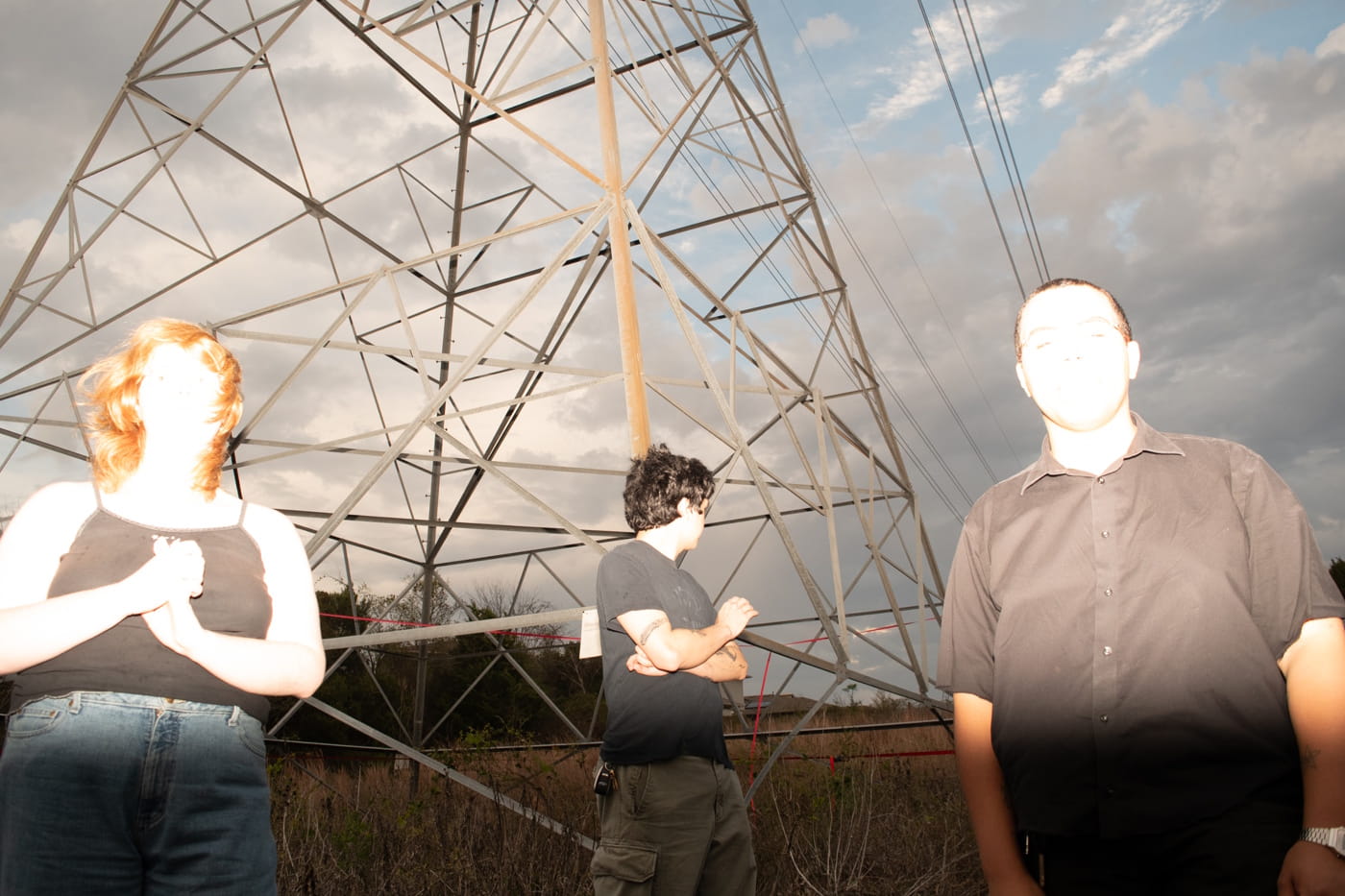

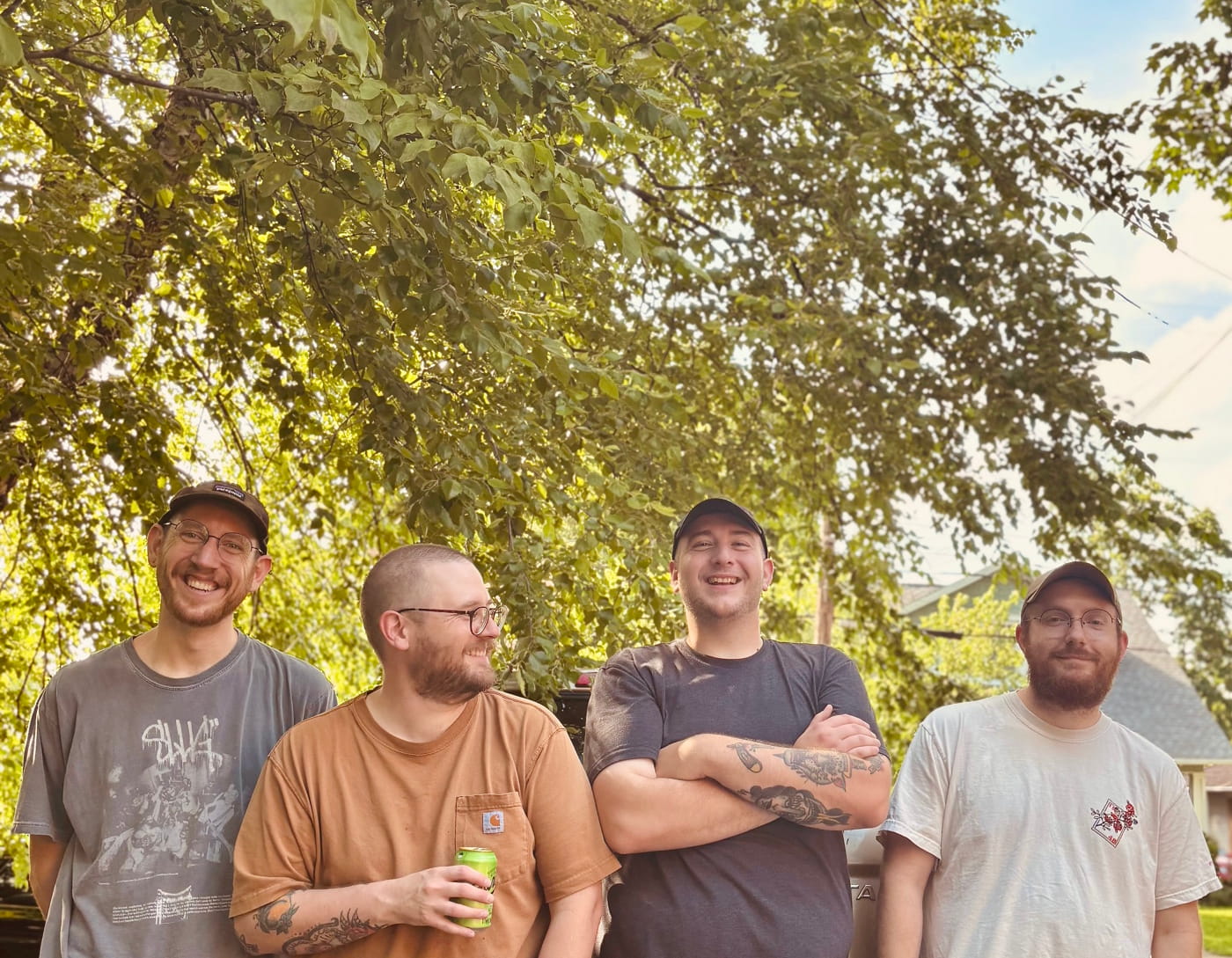
Six songs of meandering clean guitars, vocals that crack right at the consonants, and choruses where the whole band ends up at the mic. Mock Bishop call themselves emo revival revival on Instagram, and the music backs the joke. It’s midwest emo of the looser, group-vocal-heavy kind, dynamic and heartfelt, vulnerable where it lands, with the lived-in feel of records made by people who’ve toured enough basements to know what holds up at 1AM.
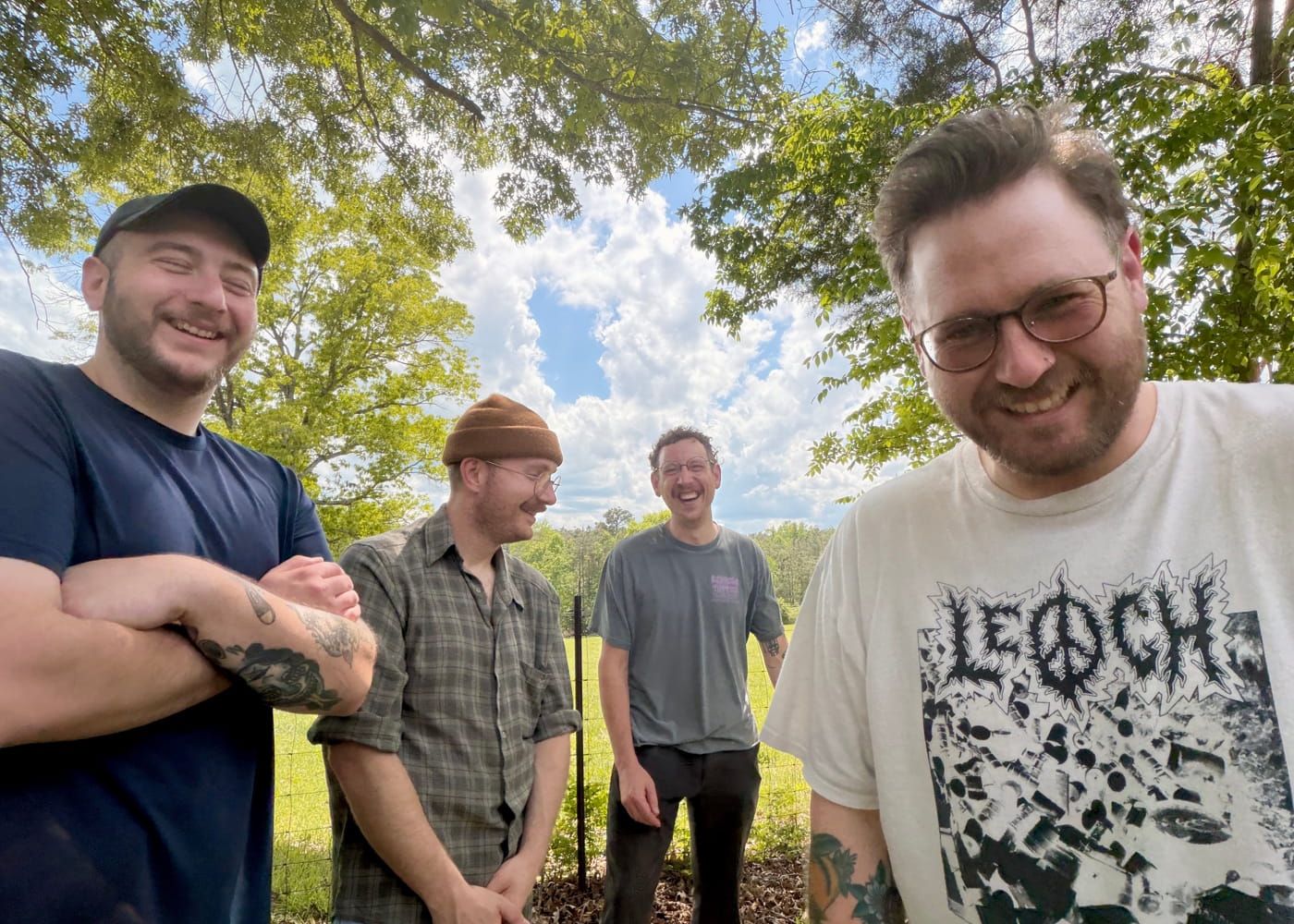
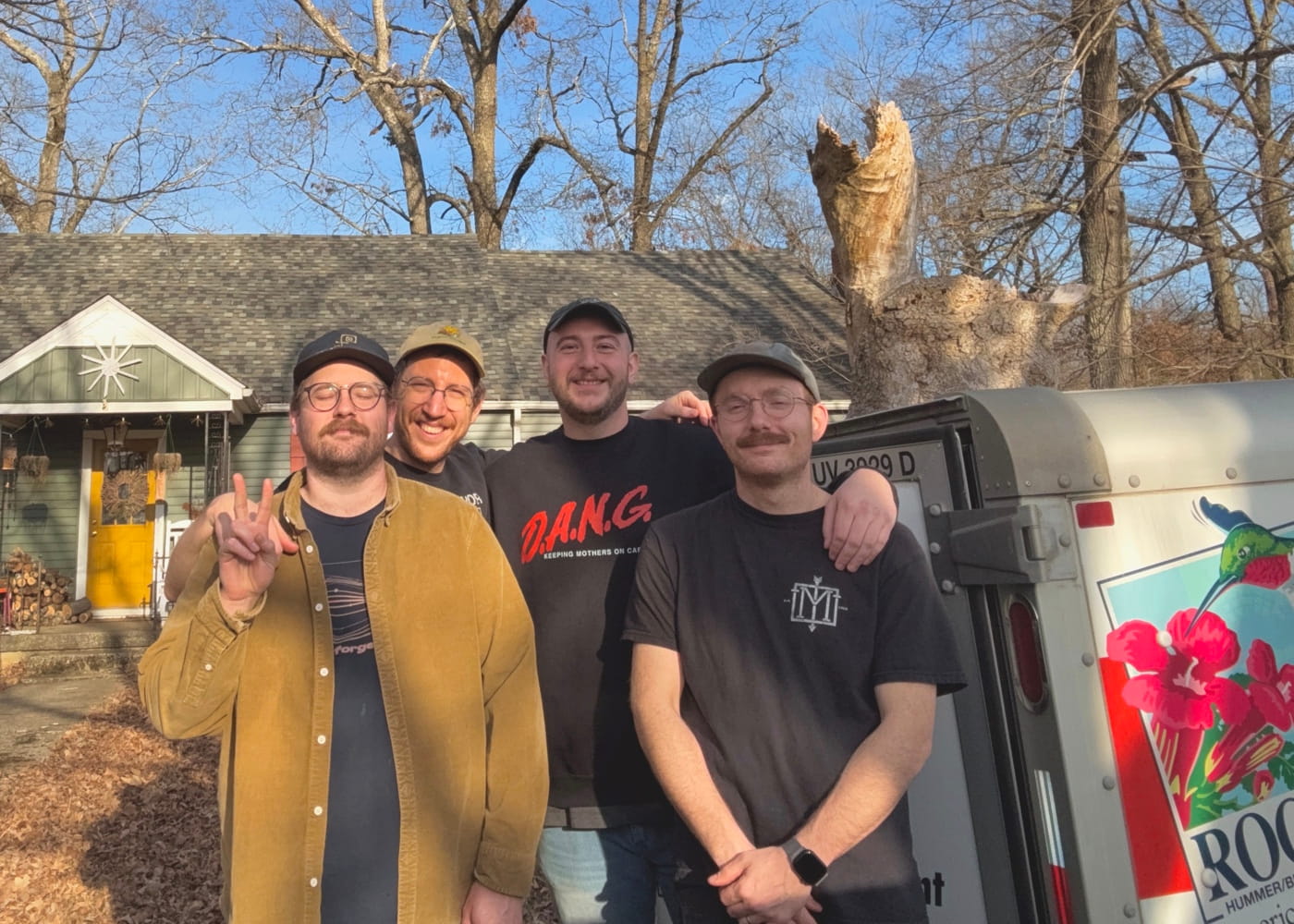
The four-piece is split between Kentucky and Tennessee, two states and three cities, and its members came up in Mayweather and Father Mountain.
Over the years they’ve shared stages (or basements) with Mom Jeans, Microwave, Dikembe, and Oso Oso.
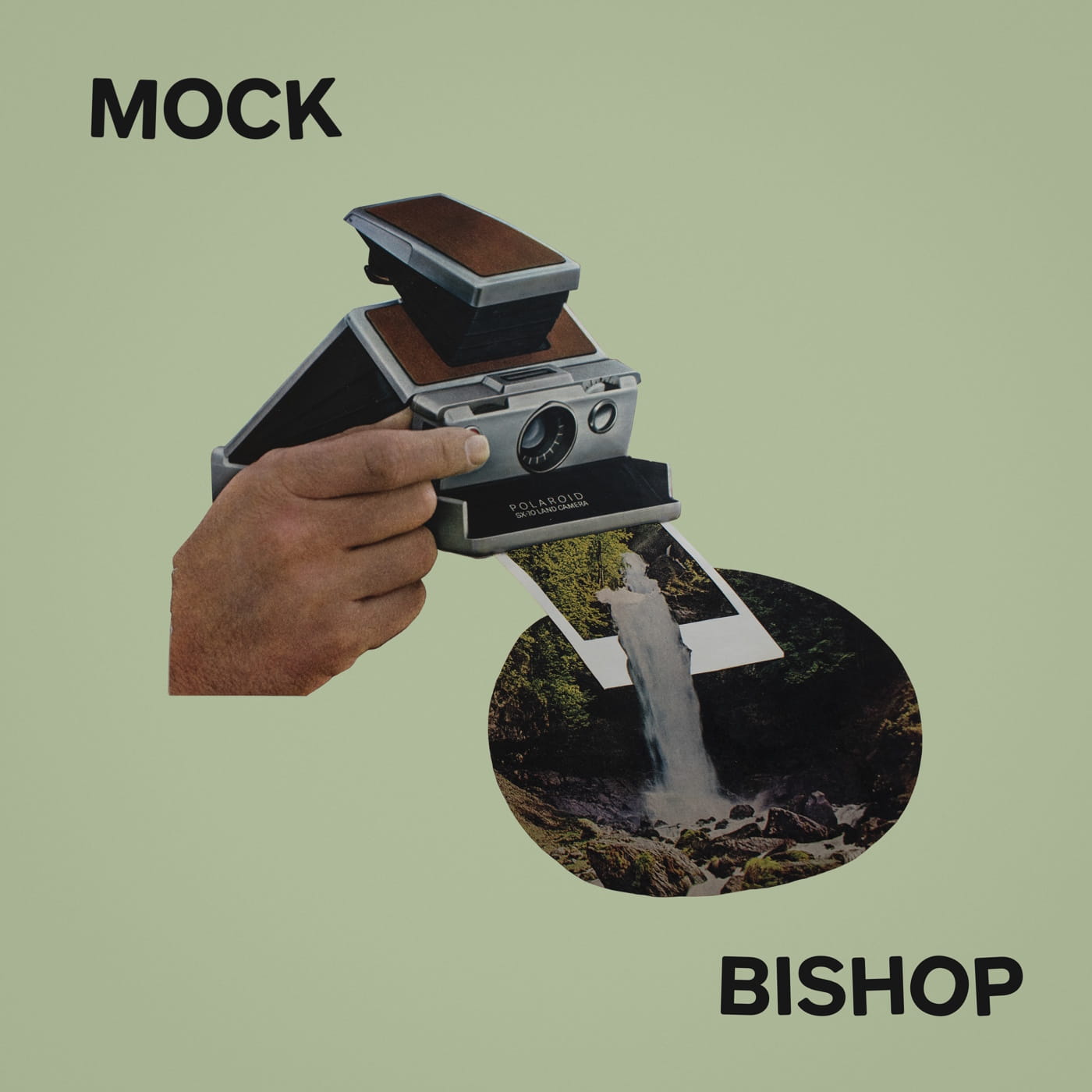
The new self-titled EP is out tomorrow, but we’re stoked to have the full stream one day earlier: six songs about drift, addiction, identity, and the apartments and friendships you can’t quite hold onto. The group vocals show up exactly when the lyrics get heaviest, the guitars wander before they commit to the next chorus, and the whole thing is built for the back end of June with the windows down.
The band wrote their own walkthrough, song by song. Vocalists and guitarists Austin Hohiemer and Dillon Casey trade off depending on who wrote what, with drummer Travis Cox stepping in throughout. Process, decisions, what got cut, what showed up at the last minute.
Across the six songs, the threads keep crossing. “Rose Street” is about an apartment in Lexington that became a sitcom for a few years and then didn’t. “We still cool?” wonders whether old friends remember the same things you do. “Prescriptions” and “Spins” sit on either side of Dillon’s decision to stop drinking, one written in the months leading up to it, the other reaching back nine years to a verse he’d been carrying since the bottom. “SSMF” is Austin’s closest thing to a love song, built around a riff he wasn’t sure had a home. “Stare” came out of a riff Austin filmed in 2015 and a shared lyrics doc the band has been adding to since 2021. Group vocals, trumpet, two tracking sessions in December and March, a song that needed a room and one that needed paper.
Here’s the band on all of it, in order.
Wyświetl ten post na Instagramie
“Rose Street”
The first song Mock Bishop started, one of the last to finish. The intro and a chunk of the backing vocals didn’t get nailed down until the closing days of tracking, partly because the band lives in three different cities and partly because some songs need a room to land.
“This band is spread across two states and three cities, so a lot of the work is sending incremental demos back and forth,” Austin Hohiemer says. “But I think this one needed to be finished in a room together. It ended up being one of the happier-sounding songs on the EP, and something about the juxtaposition of brighter melodies and group vocals with lyrics about loneliness feels like solidarity.”
The lyrics came from a real apartment.
“During the last couple of years of college, I lived in an old, run-down-but-charming apartment on Rose Street in Lexington. I lived there with two of my best friends, rent was super cheap, and more good friends lived across the hall and across the street. It felt a bit like a sitcom, where someone could show up at your door and you’d spend the rest of the day hanging out. That apartment became a sort of character in the lives of a few of my friends, the scene of a lot of pivotal moments.”
“After college, I had a hard time making new connections or finding that same sense of community. For a long time, it felt like all of my friends were the same people I knew in school, only now we were spread across the country. I’d come through their cities once or twice a year on tour and we’d catch up. But after a few years, I stopped touring and the pandemic put us all inside, anyway.”
“I wrote the first few lyrics to this song a year or two into the pandemic, in a winter when people were starting to go out and that universal sense of isolation was being replaced with a more individual sense of isolation. Later on, I found out that a friend of a friend now lives in that apartment on Rose Street. I saw some photos of a whole new group of people making memories in the same place, and the pieces started to fit together.”
Wyświetl ten post na Instagramie
“We still cool?”
“To me, this is a song about growing up, growing apart, and wondering if your fond memories are mutual,” says drummer Travis Cox.
It was the first song Mock Bishop wrote together as a band, and the arrangement traveled a real distance from the first demo to what landed on tape.
“It started with a chord progression and a short demo of the first verse that was much poppier, with palm mutes and a meandering little indie rock riff,” Hohiemer says. “When we first got in a room together, it pretty quickly turned into what you hear now. After our first practice, Dillon went home and fleshed out the story with the rest of the lyrics. It came really naturally and I think, for all of us, helped reinforce our excitement to be making this music together. Listening to it now, it feels a bit like a meta-character study of the people we’ve been.”
“Prescriptions”
The song that traces Dillon Casey’s first months away from drinking. First draft November 2024, full sobriety by February 2025. The song’s arc tracks the months in between.
“This song started taking shape in the midst of guilt and shame around how I had been carrying myself, especially in regards to alcohol consumption,” Casey says.
“The first draft was written in November of 2024, and by February of 2025 I had decided to stop drinking entirely. Writing this song helped me take the first few crucial steps towards making that decision. In the process of writing, I understood that I had been blaming my environment for my addiction rather than taking ownership of my own choices and actions.”
“Sonically, the song started off as a lighter demo with two guitars and vocals. But it quickly changed into our heaviest song once we all got in a room together. This is the most emotionally raw song I’ve ever taken past the demo phase and it represents that period of growth for me.”
For Cox, the song is also the one that left the longest fingerprint on his playing.
“This is one of my favorite songs to play. When I was writing the drum part at ‘crutches made of chemicals’ during practice, I had to loop it until Dillon’s voice was going out. That weird little groove is now the first thing I play any time I sit down at a drum kit. The dance beat came when I was goofing around with Dillon before tracking. It stuck, and I ended up loving it.”
“SSMF”
A riff Hohiemer carried around for weeks before it found its lyrics. The rest of the song arrived in one wave once the first four lines clicked.
“For a while, this song was just the riff in the intro. I loved that part, but I didn’t know if it had a place in this band. It bounced around in my head for a couple of weeks until the first four lyrics came to mind, based pretty directly on conversations I’d been having with my partner. After a few more weeks, the rest of the song came to me in one wave. We have this document of one-liners we’ve written that don’t have a home yet, and I used a few of those to tie the ideas together. This is a really personal song for me, and it’s the closest thing to a love song I’ve been able to write so far. Like life (at least in my experience), it feels like a story of hope and resolve trying to break through the reality of just getting by day-to-day.”
The arrangement came together in layers, added over the year before they recorded.
“The bulk of this song was finished for almost a year before we recorded the EP. Over time, we added layers piece by piece. I was originally pretty attached to this long instrumental before the last line, but Dillon had an idea for background vocals that would begin under the main vocals and carry through the instrumental. Now, it feels like it’s so key to the song. The trumpet part came next, and the group vocals at the end were a last-minute addition that I really love.”
Cox wrote his drum part the same day, in the worst possible circumstances.
“Although deeply personal, these lyrics are very much about a common experience. Struggling through daily life is an idea I think we’re all familiar with. I’m thankful for the wonderful people in my life who make the struggle not so bad. This drum part was written in my living room in like 20 minutes one afternoon. Home from work, sick and miserable.”
“Spins”
The second verse of “Spins” was written nine years ago: someone home alone, drunk, hoping things would change. The rest of the song came together much later, when things actually did.
“The original demo sounds nothing like the final product (for the better, for sure),” Casey says. “The vocal melody and lyrics were what I was married to when I shared the first demo, and it went through several rounds of changes to end up where it is. The second verse is where the idea started nine years ago: sitting home alone, drunk, hoping things would get better. Fast forward to when the rest of the song was written, and things finally started changing because I was finally actively working to change what I didn’t like about myself. This song serves as a memoir of the cycles of addiction that I’ve put my partner through in our relationship. It felt important to document that, specifically, because focusing on only myself has always led me back to harmful cycles. Thinking of how it’s affecting my loved ones has always been what’s pulled me out of those cycles.”
The recording took two sessions to land. Vocals from the first session got scrapped entirely.
“We recorded these songs in two sessions, first in December and again in March. Dillon wasn’t happy with the main vocals on this song from the first session, so we fully re-recorded those and then figured out backing vocals in the studio in March. All four of us ended up singing on this one, and I love how different voices come in and out and intersect under Dillon’s vocals,” Hohiemer says. “We wrote the trumpet part with no real understanding of horns and were lucky enough to find someone who nailed the performance on the first try.”
“Stare”
For most of the writing process, the song was called “2015,” because that’s where the riff came from.
“Austin stumbled across a video of a riff they wrote in 2015 (which is what we called the song all the way up until mixing),” Casey says. “That riff became one of the two guitar parts in the first verse. When I got the video, it gave me all kinds of guitar part ideas, and one of those became the layered guitar running throughout the second half of the song.”
The structure took a while to crack. They eventually had to lay it out on paper.
“This song bounced around as a demo for a long time before we figured it out. We had a hard time nailing down the structure and ended up mapping the song out on paper, rearranging sections and breaking verses apart until it felt right. The tempo was another challenge, but deciding to break the song into two separate tempos with the gradual slowdown towards the end felt like the final piece of the puzzle,” Hohiemer says.
Cox on the lyrics, which came partly from a shared document the band has been adding to since 2021.
“Some of these words were pulled from a shared lyrics doc we started in 2021. Mostly incomplete writings about identity, how I exist in the minds of others, the roles I’d been trying to fill compared to the ones I wanted to fit into, all this dissonance in my head. I was realizing how much anxiety can make you feel like everyone is looking down at you while you’re just trying to figure things out. But in reality, they’re probably too busy figuring themselves out to care. The delivery of the last verse, right before the gradual tempo change, has become my favorite vocal delivery on the EP.”
The EP is out today. Mock Bishop are playing shows around Kentucky and Tennessee through the summer.
🔔 IDIOTEQ is ad-free, independent, and runs on one person’s time. If you want it to stay that way: DONATE via PayPal 𝗈𝗋 SUPPORT via Patreon.
Stay connected via Newsletter · Instagram · Facebook · X (Twitter) · Threads · Bluesky · Messenger · WhatsApp.