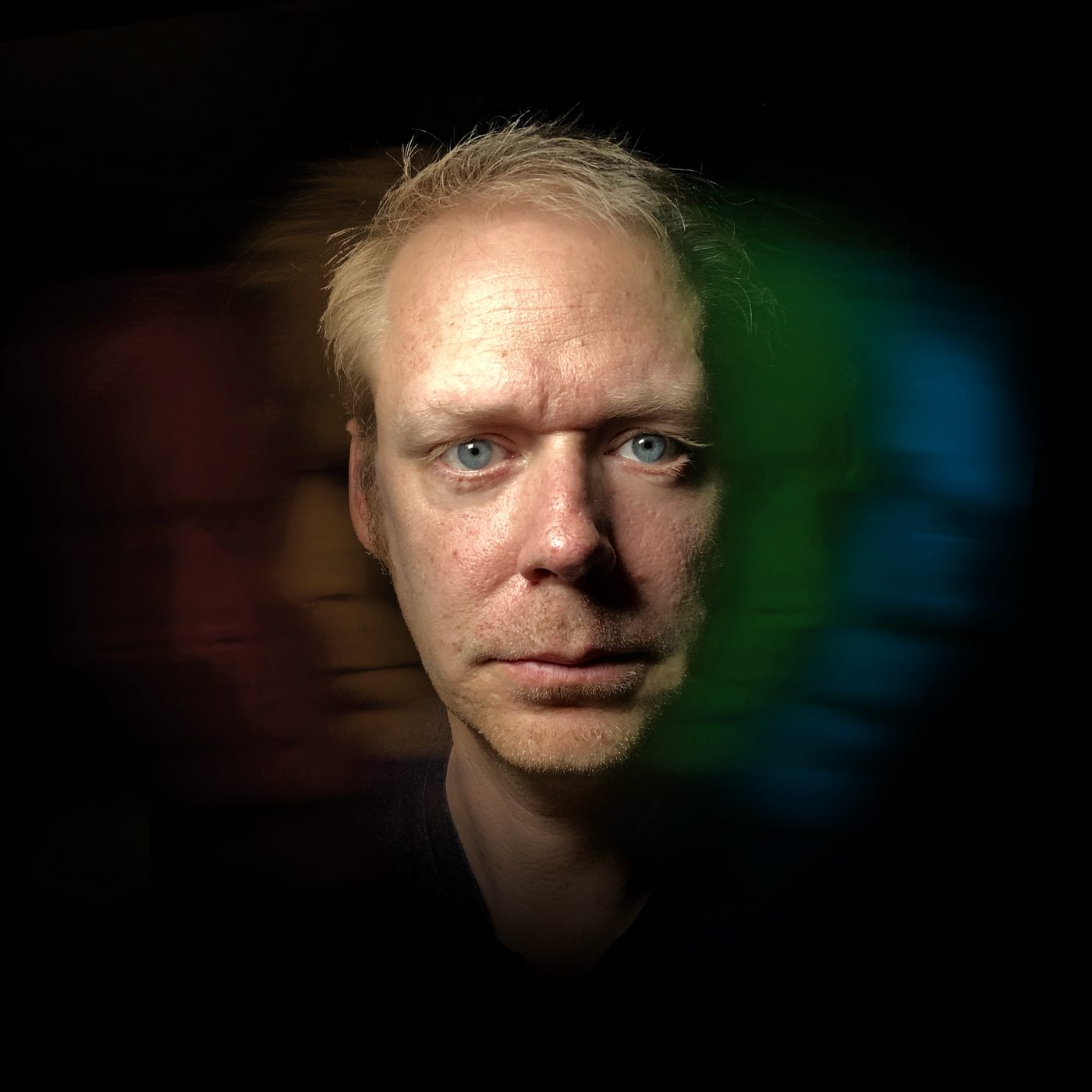


The first words on Ruina’s debut LP arrive in two screamed voices: “Sale el sol en el abismo“, the sun rises in the abyss. It’s a return to “Abismo floral”, the five-song EP the Lleida band released in 2023, and an early clue to why sunlight keeps turning up in the new songs. The record is called “Todavía se ve el sol detrás de las montañas”, or “You can still see the sun behind the mountains”. Yet one of its quieter tracks is about closing a door from the inside so you never have to see the sun again.
Across twelve songs, the Catalan screamo and post-hardcore pack have made room for dissonant, metalcore-influenced guitars, an in-your-face punk song built around one chord progression, and music that pares things back to piano and vocals.
Love has rotted into something unrecognisable on one track. Elsewhere, leaving home means watching the harbour disappear behind a boat. The words keep returning to loss and memories that won’t leave anybody alone, with brief moments when a way out becomes imaginable.
Ruina wrote it during 2025 and 2026, while Adri was living away from the other three members in Mallorca. Their rehearsals in Lleida generally went ahead without him. The band used to finish plenty of songs together in the practice room; with Adri away from Lleida, they took more of the writing home.
Josmi says: “A lot has changed, really. The way we organise ourselves is completely different from when we made our first record.”
“We used to finish writing a lot of songs together in the rehearsal room, but with one member living far away, that’s become more difficult. These days, we do almost everything from home.”
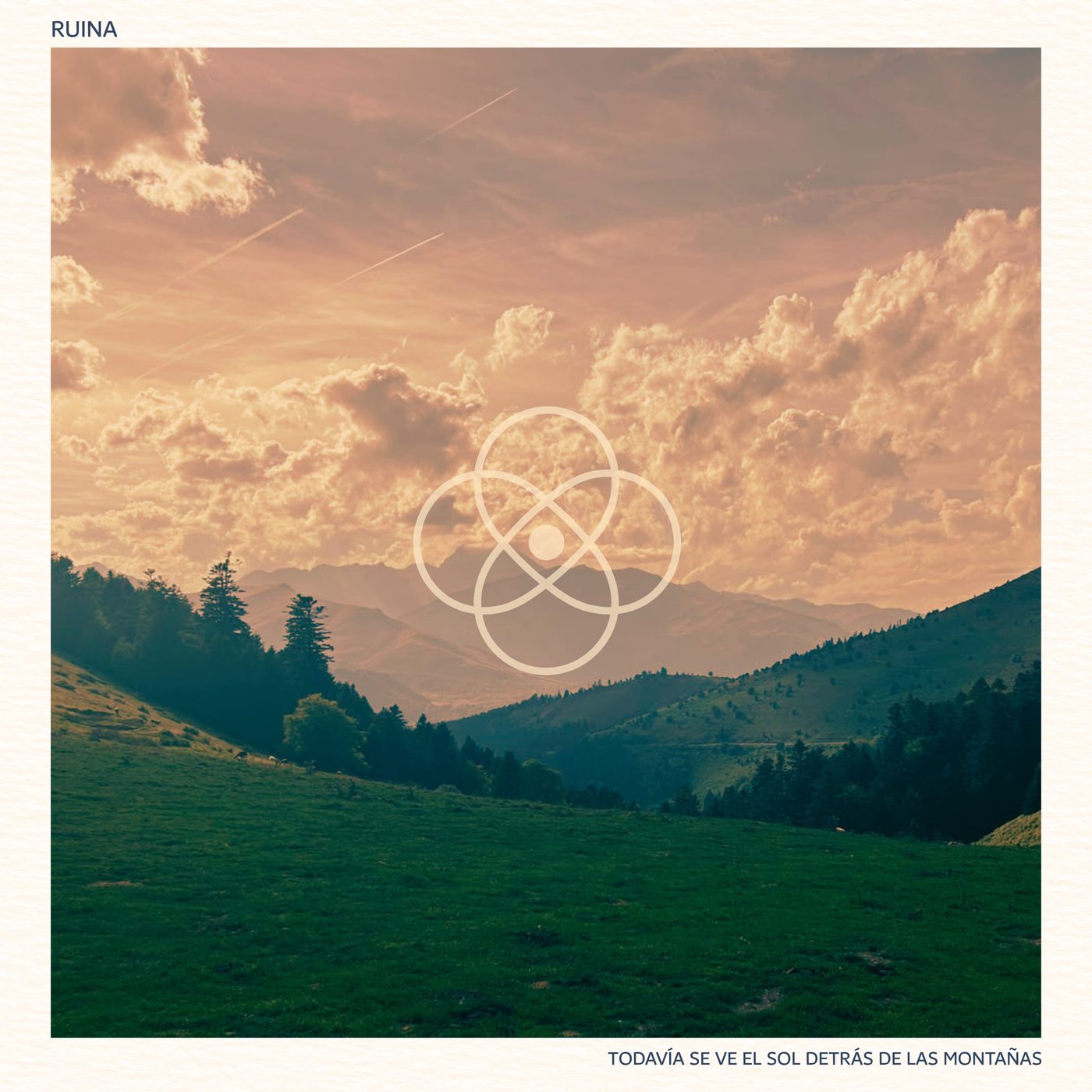
The name of the album came from a member’s experience of moving to a new place and watching sunrise over a skyline they didn’t recognise. The view is different; the sun still comes up. One song, “Marea baja”, tells a version of the same departure from the deck of a boat heading towards Mallorca. The cover has its own view of the outdoors: a sunlit sky above wooded hills, based on a photograph by the band’s friend Lolo. Marc designed the sleeve and Josmi made the circular logo placed across the picture.
Ruina formed in 2023. IDIOTEQ featured “Pequeña Flor” that November, before “Abismo floral” arrived on 8 December. It was a compact five-track introduction to their mix of screamo, hardcore and melody, with flowers, winter and the remains of relationships all over the lyrics. Roger, a friend of the band who works as @thebeast_shots, shot and edited the “Pequeña Flor” video.
The next release was “Bellum”, a 2024 split with NØMÉS TØT. Ruina contributed “Barro y sal” and “Mirada atrás”, continuing to write about love, separation and memories that don’t settle easily. They then recorded “Dormir en soledad” and “Despertar en silencio” live at EM Estudi in Terrassa in April 2025, releasing the session that May. The band had been considering those songs for the LP, but decided they belonged to an earlier stretch of writing. Xavi Escribano produced that live recording, and Ramón Sanmartin handled its accompanying video. Both songs were kept as a separate release.
That leaves the new LP’s opener, “Otra despedida”, to revisit those first years on purpose. The screamed “Sale el sol en el abismo” looks back to the debut EP, and “Invierno que nunca acaba” points to the first song the four wrote together. It’s the old winter returning at the beginning of an album named after a new sunrise. Josmi wanted both references heard straight away, delivered by two voices at full force.
The first song the band took into the studio for the LP was actually “Un altar para las ratas”. The song helped set the course for much of what followed. Its lyrics picture the places that once held a relationship, including a house with someone’s clothes still inside, left to decay. Love becomes a corpse and the corpse becomes food for rats.
“It tries to portray the abandonment of the spaces, both physical and abstract, that love once occupied. Love is represented as a decomposing body, turned into an altar where rats come to feed.”
Josmi calls it some of his darkest writing. The guitars are sharply dissonant, with a noticeable metalcore pull, and he connects the ugliness of the imagery to the weight of the music. It’s a long way from the gentle parts still to come, but Ruina haven’t abandoned the melodic instincts of the early EP.
Wyświetl ten post na Instagramie
They chose “Corre el mercurio” to introduce the album. All four members were especially fond of it, and they knew it sounded different from their earlier releases. It runs on one chord progression, stays short and direct, then builds to a punk crescendo. It’s also the first song they’ve written with an openly political subject.
The lyrics deal in poisoned words, black smoke and the remains of an empire collapsing under its own weight. Josmi works for a trade union and was involved in activity around a general strike while talking to us in November. He hasn’t tied the song to one specific strike or incident; he’s thinking about the political and social climate more widely.
“We’re living through a pretty fucked-up political and social moment, and I think it’s impossible for that not to find its way into the lyrics, because it ends up affecting all of us in one way or another.”
Roger returned to direct, shoot and edit the “Corre el mercurio” music video. He pulled together footage filmed throughout Ruina’s three years as a band, so the first single from the LP arrived with an informal record of everything that had happened since “Pequeña Flor”.
“The concept is almost metaphorical. It brings together footage filmed over the three years we’ve been active, capturing many of the moments we’ve shared along the way. It almost feels like closing one chapter and opening another.”
On “Marea baja”, the destination is much more personal. One of the musicians is leaving behind the life he knew in Lleida, carrying the good memories along with the bad ones as the boat pulls out of the harbour. Salt settles on the deck and the future is unclear. The move to Mallorca had already changed Ruina’s rehearsals. Here it becomes a song in its own right, with the physical journey taking the place of the usual images of rooms, flowers and discarded things.
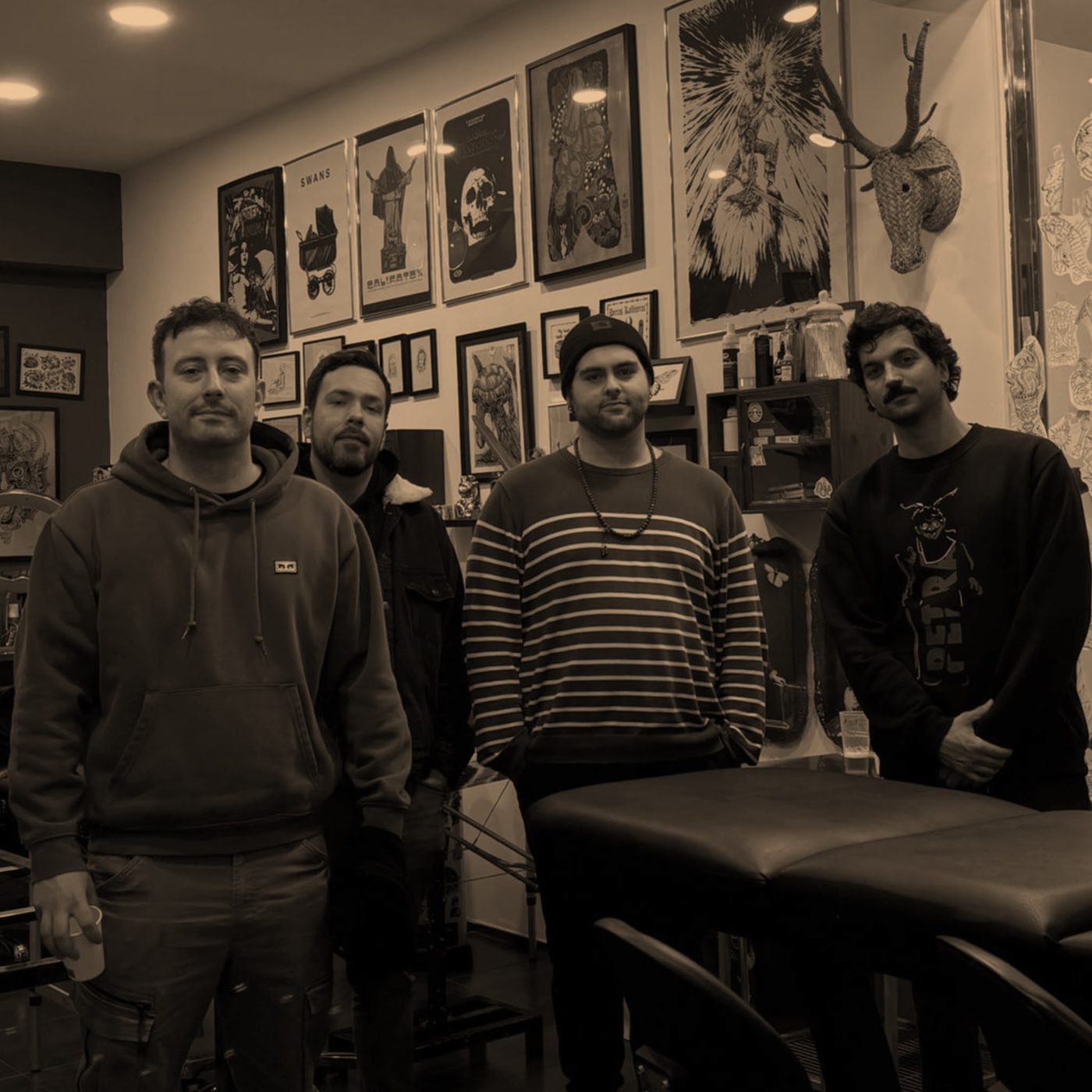
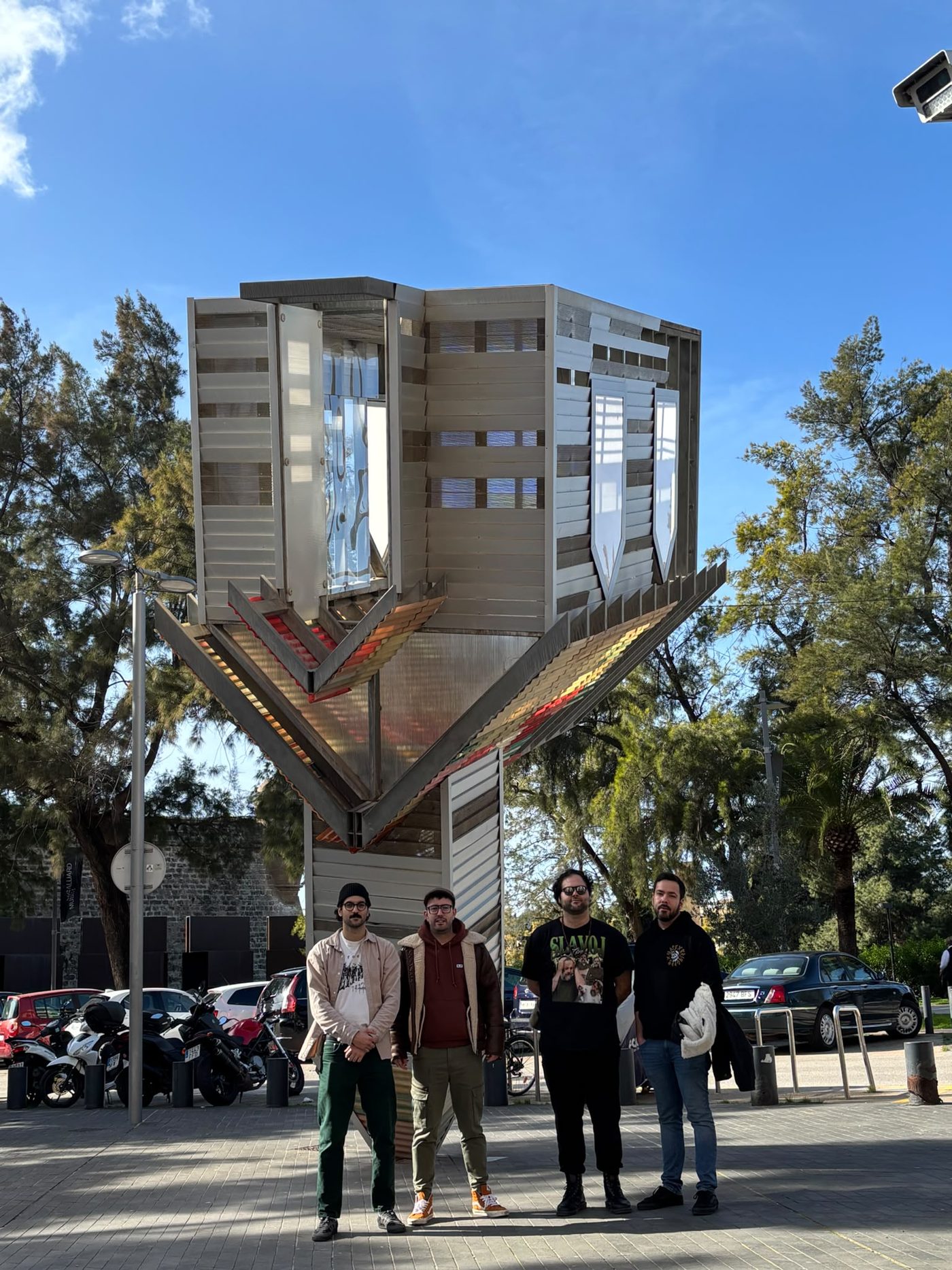
The band did make the trip to see Adri and play on the island. In January 2026, they appeared at Grandma Fest in Mallorca. Two of the new promotional photographs come from that visit; Josmi credits the festival organisers, @grandmatattoo.manacor, a tattoo studio in Manacor.
Playing shows back home takes effort of a different sort. Josmi says Lleida has plenty of underground bands and very few places to put them on. He singles out Grans Records, Proemethea and the more recent La Puntxada project as people keeping gigs and other local activity going. Grans Records is a record shop with a bar, and its owner, Domènec, has been a close supporter of the band, helping with both of their main vinyl releases.
“We come from a city with a fairly active underground scene and plenty of bands, but very few places where things can happen.”
The band are grateful for the people doing the work. “We’re lucky because, even in a scene where keeping things going can be so difficult, there are still spaces and people we look up to who do everything they can to keep that flame alive.”
The LP’s first side moves towards quieter playing through “El incendio”, which has only a couple of vocal lines at the start. Its opening minute is fast and heavy. Then the piece changes almost completely: the playing thins out, with chorus and reverb shaping a much more minimal instrumental passage. It’s one of the clearest changes of pace in the album’s arrangements.
That leads into “Cerrar la puerta”. It’s just a voice and piano, and it closes side A. The song is set in the final days of a relationship, with somebody wanting to get out before it becomes worse. Its lyrics ask where the door is and picture closing it from the inside, shutting the world away. The album’s title appears in those same words, followed by the wish never to see the sun again.
“It’s an entirely minimalist song, built around nothing but piano and vocals. It’s about the final days of a relationship and that feeling of wanting to jump ship before it sinks.”
Ruina start side B by trying something they initially couldn’t bear hearing themselves do. “Cenizas” uses choral vocals, a new problem for four musicians who didn’t consider themselves good singers. Their first attempts sounded awful to them. They kept recording until they were happy.
“We wanted to see how some choral vocals would work, and at first we thought they sounded horrendous: none of us are gifted singers. But we got serious about it and, after a thousand attempts, well, we really liked how it turned out.”
Fire is central to the words. What has been destroyed can be burned away, and something can begin again. It’s the clearest point on the album where the destruction in a song is also imagined as a kind of cleansing.
For “Forma y vacío”, Josmi hears a connection back to “Corre el mercurio“. Both rely largely on clean vocals, and the instrumentation has a similar feel. The lyric revisits the record’s personal concerns after some time has passed, allowing for a different perspective on events that were once much closer.
Gorko recorded, produced, mixed and mastered the new LP, and Josmi thinks his work is especially easy to hear on “Forma y vacío”. The band had a clear idea of how they wanted the whole album to sound and credit Gorko with getting them there.
The opening of “Azul sobre azul” is gentle and unhurried. Josmi wanted the instrumental part to suggest sitting still, looking out at the sea and sky, with nothing much to interrupt the view. He puts it simply: “Just the sky, the sea and your thoughts.” After “Marea baja”, it’s another song that gives the water and the horizon a place in the record, this time with a much calmer outlook.
“Cristalina” pares things down again, using delicate, clean guitar. The words are unusually personal, and Josmi isn’t entirely comfortable with how he wrote them now. He’d approach them differently today. He wouldn’t rewrite them out of existence, though.
“The lyrics are very personal, and looking back, I probably would have approached them differently. Even so, they faithfully reflect what I felt when I wrote them, so it would be hard to make them any more genuine.”
That question of what changes when you revisit your own experience comes through on “Pensamiento en espiral”. Its introduction gives the bass and drums a more prominent role than the album’s other instrumental openings, and Josmi thinks it almost stands as a small instrumental piece in itself. The lyric deals with thinking about the same event so often that you begin to change your understanding of it, even the feelings you associate with what happened.
The last song has a more roundabout origin. The band had been looking for a way to play the piano-led “Cerrar la puerta” at gigs without having to bring a piano. Víctor wrote a new instrumental while working on an adaptation, and the vocal part fitted it despite the music having moved quite far from the original. They liked the new version enough to give it a place of its own.
“Nunca ver el sol” became the LP’s closer. Josmi says: “Although it clearly sounded very different, the vocals fitted perfectly. We liked the result so much that we ended up including it as the album’s closing track.” A song that began with the problem of how to perform another song live now finishes the record, returning to the words about never seeing the sun.
“Todavía se ve el sol detrás de las montañas” comes out on 27 November 2026, with a vinyl edition co-released by Quebranta Records, Demons Records, Navalla Discos, Hold Your Ground Records, Erraldoi Records, Salto Mortale Music, Carcosa Records, Gato Encerrado Records and Grans Records. The 12-inch ultra-clear pressing has green, brown and gold splatter and is limited to 265 hand-numbered copies. There’s an advance album stream for those who want to hear the whole thing, and the record can be pre-ordered digitally or on vinyl.
🔔 IDIOTEQ is ad-free, independent, and runs on one person’s time. If you want it to stay that way: DONATE via PayPal or SUPPORT via Patreon.
NEW: IDIOTEQ Explore 🗺️ Browse 15+ years of our archive by city, country, and style. Find artists on the world map or trace related sounds through the styles map.
Stay connected via Newsletter · Instagram · Facebook · X (Twitter) · Threads · Bluesky · Messenger · WhatsApp.